fbpx
Home Blog Page 14

Hairy Caterpillars: A Foal’s Life Saved

Abortions and premature births can happen when pregnant mares are accidentally exposed to some types of hairy caterpillar.

In this article, Equine Reproduction Specialist Dr John Chopin shares a case that could have ended in tragedy but resulted in a healthy foal thanks to their early intervention.

Take home message:

  • Equine Amnionitis & Foetal Loss (EAFL) is the veterinary term used to describe abortions and the birth of compromised foals when pregnant mares are inadvertently exposed to some types of hairy caterpillar.
  • A less severe form of EAFL is now recognised as Focal Mucoid Placentitis can cause premature birth.
  • These conditions are very common and a significant cause of reproductive loss in Australia.
  • Early intervention and targeted treatment can protect the pregnancy and result in a healthy foal.
  • Having your mare under the care of an experienced veterinarian or a reproduction specialist who can identify the condition early can save lives.

A pregnancy in crisis

One of our mares presented with signs of precocious udder development six weeks before she was due. Over the next few days she developed premature lactation. As you can see in the photo below, her udder was swollen with milk dripping and splashing on her hind legs.

Hairy Catterpillars: Chirazz bagged up and dripping milk
The mare was bagged-up and milking six weeks before the foal was due

Clinical evaluation did not show any abnormalities in her vital signs (heart rate, temperature, etc.), but when we examined in more detail the events leading up to her presentation, we determined there was weight loss about 3-4 weeks before development of these clinical signs.

We performed a high risk pregnancy evaluation using an ultrasound machine. A rectal examination with the ultrasound machine did not reveal any abnormalities but the abdominal ultrasound revealed a focal area of placentitis  (inflammation of the placenta) in the ventral body of the uterus with a thickened amnion (the protective membrane enveloping the foetus) and a slight increase in echogenicity of the amniotic fluid.

(Echogenicity refers to the ability to bounce an echo, that is, return the signal in ultrasound examinations. The higher the echogenicity, the lighter the colours on the ultrasound image.)

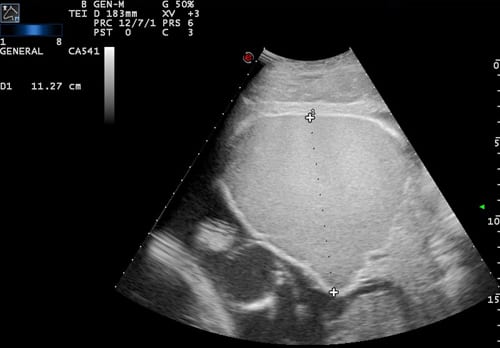
Below is a transabdominal ultrasonogram of a different and more severe case of Focal Mucoid Placentitis where the measured area is an accumulation of pus between the endometrium and separated chorion. The foetus is on the lower left.
Placentitis in the mare
Transabdominal ultrasonogram of a severe case of Focal Mucoid Placentitis

In order to protect the mare and foal, we initiated therapy with broad spectrum antibiotics and anti-inflammatories.

Chirazz's foal was born 5 weeks early
The filly was born 5-weeks early, in lean body condition, with meconium staining of the hooves and amnion along with diarrhea from the anus.
Chirazz's foal survived exposure to hairy caterpillars
After 72 hours of treatment, she was totally independent and willing to take on life! She is still thriving today.

The mare responded with cessation of milk loss and a reduction in the size of the udder. After a week of treatment, she birthed a filly foal that was 5 weeks early, had evidence of meconium staining, poor body condition but was initially bright and responding to stimulus normally.

Dr John Chopin, Equine Reproduction Specialist

Antibiotics were started immediately and the filly was fed colostrum via a nasogastric tube. Over the next few hours, she could not stand without assistance. She was set up in a stable and nursed over the next 48 hours. She was given intravenous plasma within 6 hours and a follow up IgG test of the foal’s serum at 24 hours revealed adequate levels of antibodies.

The filly responded to treatment and improved in strength, eventually she was able to rise and stand, and started searching for the udder.

By 72 hours she was sucking well, was no longer on intubated feeds and antibiotics were stopped. She continued to progress well in the days and weeks after.

In the images above, the first picture is in the first 24 hours with an indwelling nasogastric tube for feeding. By the end of 48 hours she was strong enough to stand and eventually found the udder to suck.

By 72 hours she was totally independent and willing to take on life. She continues to thrive.

The pathology

Examination of the foetal membranes after birth revealed signs consistent with EAFL (Equine Amnionitis and Foetal Loss). The amnion was thickened and discoloured (yellow), the amniotic portion of the umbilical cord was thickened and discoloured.

There was a focal area of chorionitis (a bacterial infection) in the body of the uterus with loss of chorionic villi, a pale exudate with granular bodies coating the area of pathology.

(The chorion is the outermost membrane between the developing foetus and the mother. Together with the amnion, they make the amniotic sac. The chorionic villi that were reduced in this case, are the tiny finger-like projections that sprout from the chorion to provide maximal contact area with maternal blood.)

Below is a picture of the chorionic surface of the foetal membranes showing the area of focal inflammation and infection (mucoid placentitis).
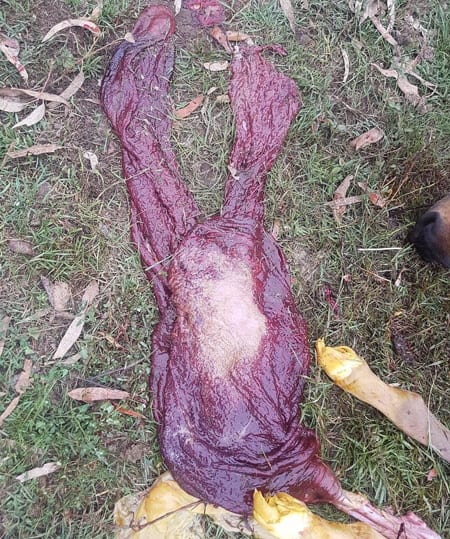
foetal membranes after birth revealed signs consistent with EAFL
The foetal membranes show the infected area and point to Equine Amnionitis & Foetal Loss.

EAFL was initially characterized in the Hunter Valley in 2004 and shows similar characteristics to MRLS (Mare Reproductive Loss Syndrome) described in Kentucky, USA, in the 2001/2002 foaling season.

The disease is caused by exposure to the hairs of the Processionary Caterpillar (Ochrogaster lunifer) when horses accidentally ingest them while grazing pasture or eating contaminated feeds.

The process of the disease

The caterpillars grow in nests that resemble huge tents in the branches, or at the base, of trees.

Each caterpillar moults (sheds its outer covering, or exoskeleton), up to eight times within the nest. Once the larvae leave the nest, the nest falls apart and the discarded exoskeletons (hairs) are dispersed by the wind into the environment.

Hairy caterpillars nest
Processionary Caterpillars in a cocoon shelter.
Hairy caterpillar nest in tree branches
An early cocoon nest with small larvae exiting to feed.
Hairy caterpillar nests breaking up
An old cocoon bag that is breaking up and falling to the ground.

Horses accidentally ingest the hairs while grazing or feeding, the hairs then migrate through the lining of the gastrointestinal tract and invade the deeper tissues.

A large dose of the ingested hairs can cause illness and endotoxaemia. Smaller doses might go unnoticed or have mild symptoms like low grade colic, weight loss or urticaria might be noticed.

The body takes about six weeks to break down the hairs and there is quite an inflammatory focus around these hairs.

The threat to pregnant mares

In pregnant mares, the uterus lies above the large colon and the caterpillar hairs can leave the colon and enter the pregnant uterus.

The hairs migrate through the tissues and are commonly coated with environmental bacteria. Focal areas of infection (mucoid placentitis) occur when the hairs travel through the uteroplacental unit.

Hairs that travel further into the allantoic fluid can lodge in the amnion and/or umbilicus and cause inflammation +/- infection.

This condition has varying severities, from mild changes in health to severe illness in the adult to severe infection of the foetus, foetal death and abortion.

The infection can be mild to severe

An important variation of this condition is focal mucoid placentitis, which refers to a small area of infection of placental tissues and is an early stage or a mild form of EAFL.

In these cases you may not realise there’s been a problem until you examine the foetal membranes post-partum, but they still require investigation, particularly when there are other expectant mares on the property.

Focal mucoid placentitis used to be called nocardioform placentitis but there was never a sound pathogenesis for nocardioform placentitis. Through work I performed, I produced a causative link and association with the processionary caterpillars and other hairy caterpillar species around the world.

Focal Mucoid Placentitis is now recognised as a mild form of EAFL and is recognized in areas where there are other species of hairy caterpillars. While it may be mild, it can be the cause of premature birth and become severe when the infection spreads to other spaces.

Protecting your horses from caterpillars

The aim is to prevent exposure and provide safe pasture environments by removing nests from trees and disposing of them.

While prevention is always the best medicine, it is also important to know that pregnancies can be protected if the condition is identified early and treated appropriately.

Today, we know much more about these conditions and how to treat them to ensure the situation doesn’t end in tragedy, but early intervention is paramount.

Having your mare under the care of an experienced veterinarian or a reproduction specialist who can identify the condition early can save lives.

The website eafl.net.au contains excellent advice and information about this condition and the life cycle of caterpillars.

On the eafl.net.au website you can download a print version of this poster:
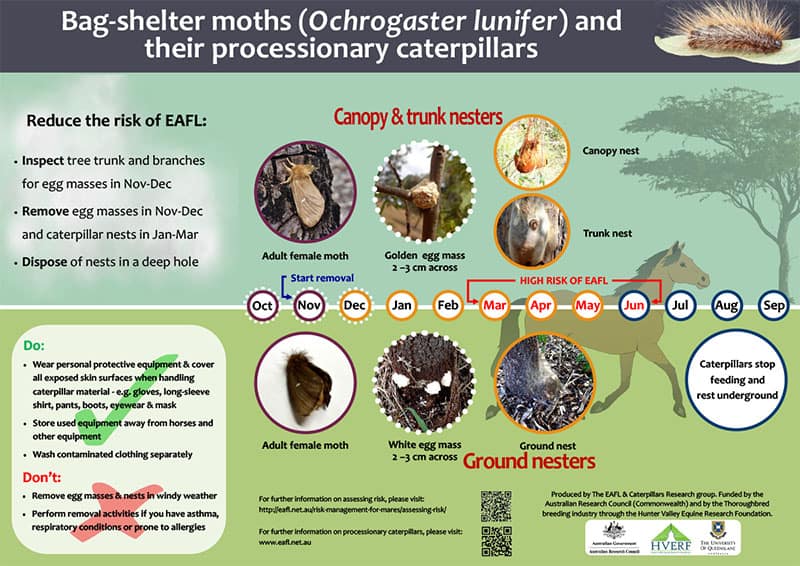
Broodmare owners should become familiar with the caterpillar life cycle, seasonality and timing which will vary depending on the species and the region’s climate.

Processionary caterpillar moths in Australia emerge in late spring, lay eggs, and then die. The eggs hatch, and by late fall or early winter the caterpillars are mature and ready to pupate (they form a cocoon and turn into a moth).

In Australia, mares are most likely to be exposed to caterpillars while grazing around trees where nests are present or when caterpillars form long lines (“processions”) as they move between trees. In the Southern Hemisphere (including Australia), mares appear most at risk of exposure to these caterpillars from about early fall to early winter (March to June).

Take care when removing nests: Caterpillar nest material can cause irritation to humans in the form of allergic skin reactions and eye, nose, and mouth irritation. Individuals with asthma should be hypervigilant and avoid such material. Further, personal protective garb—including disposable coveralls, gloves, head cover, etc.—should be worn when working with nests.

For disposal, deep burial is better than burning, as nest material appears to be dispersed by burning. Nest material is very light, so avoid working in windy conditions that could spread it further.

It is imperative to thoroughly investigate every case of placentitis, premature birth and abortion on a property.
Mycotoxins in Horse Feeds

0

Mycotoxins are poisonous compounds that are naturally produced by certain types of moulds (fungi) which can contaminate horse feed and pasture plants.

Although contamination of commercial horse feeds is not very common in Australia, it can occur, particularly under warm and rainy conditions.

At the Fuelling Wellness Global Animal Nutrition Summit which took place during August in Guleph, Ontario, Dr. Younes Dr Charfi from the University of Montreal presented a webinar lecture on Mycotoxins in Horse Feed.

Dr Charfi, an Associate Professor at Montreal with both DVM and PhD degrees, defined mycotoxins as organic compounds associated with toxicosis in animals. Being monogastric, horses and pigs are affected to a greater degree than ruminant animals.

Dr Charfi said the incidence of contamination is fairly low in Canada but more prevalent in feed imported from the United States, especially from southern areas. However, he warned that warming climates may cause increasing contamination worldwide and horse owners should remain vigilant. It is estimated that 25% of the world’s agricultural commodities contain mycotoxins.

Mycotoxin contamination can occur in cereal grains, commercial feed, hay, pasture and straw used for bedding. It is important to note that grinding and mixing preparation of commercial feed does not destroy the mycotoxins.

Most mycotoxins are produced by fungi, but the presence of fungi alone does not mean there is contamination. This is because fungi tend to produce harmful mycotoxins when they are under stress, as a result, for example, of extreme weather conditions (especially excess moisture), improper storage, overgrazing, and insect and disease damage.

This is why a particularly rainy season may result in greater amounts of toxins in the next growing season. Harvesting grain and hay in overly moist conditions will also result in molds producing harmful substances.

The conditions which favor the growth of mycotoxins are humidity in the feed between 10 and 20%, relative atmospheric humidity greater than70%, temperature above 20 degrees Celsius and the availability of oxygen. The toxins themselves persist, even if the fungi which produced them are destroyed.

One fungus can produce multiple mycotoxins and multiple fungi may produce the same toxin.

There has not been a lot of research on tolerance levels in horses, but more research has been conducted with pigs. In the few studies involving horses, they appear to have a higher tolerance than pigs.

Common types of mycotoxins and their related affects

The main contaminants discussed in Dr Charfi’s presentation were: deoxynivenol (DON), T-2/ HT-2, zearalenone, fumonisin, fusaric acid, orchratoxin A, and ergot alkyloids.

DON and related compounds can occur in cereal grains. It binds to the ribosomes in cells, thus inhibiting protein synthesis and at least during the initial exposure, causing a reduction of grain intake but not forage consumption. It also causes an increase in liver enzyme activities. While it’s been found to weaken immune response in pigs, so far, no effect on immune response has been shown in horses. Many other toxins also show a decrease in concentrate feed consumption, but it is unclear if this is caused by the horse smelling the contaminant or an actual biochemical reaction to consumption of the effected feed.

Zearalenone is similar in chemical structure to estrogen and thus binds with estrogen receptors and generates an estrogen-like response including enlargement of the uterus, vulvular prolapse, feed refusal, prolapsed vagina, internal hemorrhage and flaccidity of genitals in males.

Fumonisin contamination (also known as moldy corn disease) results in neurological symptoms such as drowsiness, hyper excitability, tremors, jaw paralysis and enlarged left brain hemisphere.

There have been limited reports of T-2 symptoms in horses, but in pigs it causes decreased feed intake and performance, skin lesions, tail necrosis, and intestinal hemorrhage.

Ochratoxin produced by aspegillus and penicillium can cross the placental barrier in pregnant mares and may affect the fetus, but there has been little research on this.

Fusariums cause a synergistic effect, increasing the reaction to other mycotoxins present.

Ergots and related fungi found on paspalum, perennial ryegrass, tall fescue and rye results in vasoconstrictors which cause lameness, reproduction disorders, abortion, foal death and lack of milk production. This can best be prevented by switching to ergot resistant or endophyte free varieties of hay, pasture and grain. It is also important to remove pregnant mares from such pastures or hay a few months before foaling.

Staggers is another disease seen in perennial ryegrass infections. The horse may suddenly tremble or lose coordination.

Rhizoctonia or black patch on red clover and other legumes causes excess salivation, lacrimation, colic and diarrhea.

Sweet clover poisoning occurs in molded sweet clover hay and prevents blood clotting. It is treated by removing contaminated hay and dosing with Vitamin K to aid clotting mechanism.

While Dr Charfi did not mention specific respiratory effects in horses, he did say that mycotoxins can also have a negative effect on the respiratory system.

Various feed additives are sold which claim to alleviate some of the results of mycotoxin contamination. In experiments in pigs, a blend of antioxidants and amino acids gave the best results when combined with DON contaminated feed. The aim of additives is to bind the toxins or degrade them.

Testing feed stuffs for mycotoxins is difficult because the contamination is often concentrated in ‘hot spots’ and not evenly mixed in the feed. This is why feed sampling for testing should be conducted multiple times, in multiple locations.

Mycotoxins are so prevalent that complete elimination is difficult. But careful management of harvesting, feed storage and pastures help to eliminate the risk.

A well managed, biodiverse pasture and preventing overgrazing helps avoid pasture and hay related problems. And careful observation, both visual and olfactory, of any feedstuff can alert the handler to problematic hay or grain.

Researchers Compare the Welfare of Competition vs Leisure Horses

Tough question time.

Which horses have better health and welfare: leisure-riding horses? Or competition horses?

A recent Swiss study has just shown that competition horses generally face greater limitations on their movement freedom. But leisure horses tend to be more obese and have slightly poorer-fitting saddles.

And meanwhile, both groups have equivalent rates of back pain and low-grade lameness that frequently go undetected by their riders.

“There’s so much criticism in the equestrian world, from rider to rider but also within groups and disciplines, and it’s time to stop pointing fingers,” said Marie Dittmann, PhD, researcher at the Equine Sports Medicine Unit at the University of Zurich in Switzerland.

As part of a larger study on orthopaedic issues in horses, Dittmann and her fellow researchers took advantage of data they were collecting in order to compare some basic health and welfare indicators in horses used in competition circuits and those used mainly for leisure riding. Nearly 250 Swiss riders responded to an online survey containing 34 questions about their disciplines and the horses’ husbandry, health, training, and tack. Their horses then underwent onsite physical evaluations by trained veterinarians.

They found that leisure riders tended to have a “more horse-centred” approach with their husbandry, keeping horses with free access to the outdoors in groups without shoes, Dittmann said. Competition riders, on average, more than doubled the Swiss law of minimum turnout time of two hours per day, so outdoor time was similar to what the researchers found for leisure horses. However, their access to free movement and to other horses was more restricted, which could have a negative effect on their welfare, she said.

On the flip side, though, these horses benefited from more frequent saddle checks and slightly fewer saddle fit issues, and their riders took more lessons with instructors, which could lead to better riding and, consequently, better orthopaedic health for their horses, she said. They also had better body condition scores, as leisure horses tended to be more obese.

Overall, orthopaedic issues in both groups were “relatively frequent,” with competition and leisure horses alike showing a similar prevalence of signs of back pain and low-grade (1 to 2) lameness, Dittmann said. (For ethical reasons, horses with overt lameness (grade 3 or higher) were excluded from the study, as the larger study project required that the horses be ridden.)

“Our study indicates that competition horses aren’t necessarily in a lower state of health or welfare than leisure horses, and that leisure horses aren’t necessarily in a lower state of health or welfare than competition horses,” Dittmann explained. “In a way, I was actually pleased to see that they weren’t so different, as maybe this can help calm the debates and constant critiques from one group to another.”

The health and welfare issues detected by the researchers should raise a flag for both groups, she said. More education could help these riders better recognize problems with orthopaedic, body condition, and saddle fitting issues in order to improve them and, hence, their horses’ quality of life.

Still, it’s important to view these issues on a scale of relativity, she added.

“Sure, we picked up on health and welfare issues in these Swiss horses, and of course there should always be an effort to improve the way we care for our horses, whether they’re used for competition or leisure activities,” Dittmann said.

“But we also need to keep in mind that these aren’t life-threatening problems—and many of them don’t warrant the severity of some of the criticism we see in the industry or on social media,” she said. “The horses in our study are all living relatively good lives. The issues revealed in our research—obesity, subtle lameness, back pain, sub-optimally fitting saddles—are definitely relevant for the affected horses, but these are issues that should be optimised, not sensationalised.”

“From my personal experience and based on the data, Swiss competition riders could allow their horses more access to free movement and social contact with other horses. Whereas leisure riders could have their saddles checked yearly and closely monitor if the food intake of their equine companion matches the exercise regime, to prevent obesity. Owners often smile at fat ponies or think it’s cute that they are a bit chunky, but many forget that obesity can be a serious health issue.”

Riding Out 2020

Having access to horses is helping this young Victorian ride out the lockdown and ongoing challenges of 2020.

On the front cover of the September-October 2020 edition of Horses and People Magazine we have a portrait by Louise Sedgman of Ashelee Capizzi and her first pony Mary. A veteran in her early thirties, Mary is now retired but helped Ashelee learn to ride and rekindled her love of horses after a break.

The photo was taken three years ago when Ashelee and Mary were winning pony club ribbons. It is a cherished memory of more certain times. There is no doubt that 2020 is exceptionally challenging but, for the Capizzi family as well as many other Australians, the upheaval started much earlier – with a long drought that brought many rural communities to their knees and was followed by the most horrific fire season on record.

Gippsland, where Ashelee’s family lives, was one of the worst hit areas. Hundreds of thousands of hectares and many homes burnt to the ground but the Capizzi’s property was spared. “The fire came up to our back fence” says Ashelee. “We had helicopters water bombing the area but the wind changed direction” she explains.

Ashelee and her brother were evacuated and stayed with their grandmother for a week while their parents, Nicole and Steve, remained to defend the property. No sooner had the fires gone out that the next crisis hit.

Victorians have simply had no time to recover. While compared with other countries Australia had early success controlling the first COVID-19 outbreak, Victoria is currently living through a more deadly second wave and a second round of restrictions, including a nighttime curfew.

The Capizzi’s home is in a rural area but close enough to metropolitan Melbourne to fall within Stage 4 restrictions. Ashelee and her brother are back to home schooling.

“It’s alright. You get used to it after a while. It could be worse” says Ashelee who then adds, “it’s been a week today… five more to go.”

We talk about her horses, her riding and what she enjoys about it. “I love learning new things about them. Having new experiences. I like riding them and learning what they are capable of.

“My dad is my teacher and has taught me everything from day one. That helps. He teaches me new stuff, different mindsets and different skills I can take to teach myself.”

Her pony Mary, who she says still has the ‘go’ of a two-year-old, is happily retired and a companion to Ashelee’s second horse, Ebony, a 14-year-old stockhorse with a background in campdrafting that she hopes to compete in Western Pleasure, cutting, team penning and even jumping events, when the lockdown eases.

“I am looking forward to trying team penning” says Ashelee. “I have a team I can practice with, and the grounds are across the road. There’s a big adult riding club that normally gets together once a month to do cutting, team penning and other events.”

In the meantime, Ashelee continues enjoying her daily rides. “We have our own arena and the property” she explains. “Home schooling is just as boring this time around but we have a routine now. We know when to login to our classes and we get in and get it over and done with.” After school work is over Ashelee can go on a trail ride on Ebony around the property and practice a few different activities.

“Riding is definitely helping during the lockdown, definitely helps with my mental health” she continues. “Helps after being cooped up in the house doing schoolwork to finally go outside and go for a nice ride”.

Young people’s resilience is certainly being put to the test as households juggle with the uncertainty, sadness, frustration, worry and disappointment of the suspension of normal life. Horses and being able to engage in horse-related activities are playing a big part helping them stay active, continue to build skills and set goals.

Through ‘The Sweet Teen Project’, Louise Sedgman is helping raise funds in support of Headspace Australia, an organisation that supports the mental health and wellbeing of our youth.

Now, Horses and People is joining in, and will be donating $2 from each magazine sold through the online portal during September and October 2020 to Headspace Australia.

Headspace works with young people to provide support at a crucial time in their lives – to help get them back on track and strengthen their ability to manage their mental health in the future.

This cover story appears in the September-October edition of Horses and People Magazine.

Improving the Welfare of Meat Horses Using Positive Reinforcement-Based Training for Self-Loading

That last truck ride. It’s like they know it’s their last.

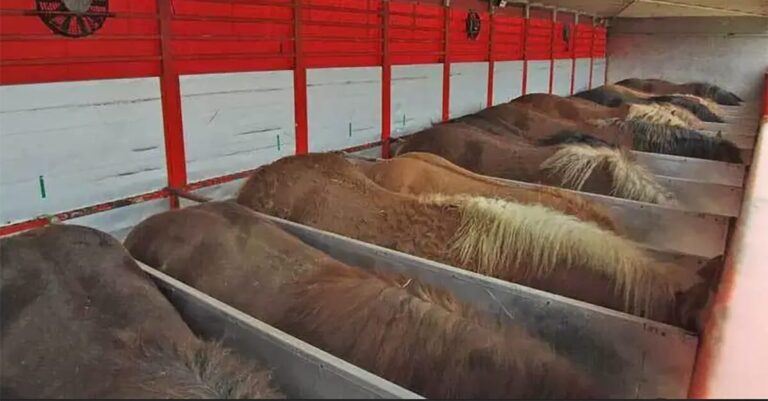
Horses loading into trucks headed for the slaughterhouse often rear, kick, paw, defecate, refuse to move, or charge abruptly the opposite direction, leading to injuries to themselves, to other horses, and to handlers, scientists say.

High stress levels also make these horses more susceptible to infectious diseases by reducing their immune system responses to germs they’re exposed to during the trip.

But is that because they know what fate awaits them at the other end of that truck ride? Not only will the horses be bled to death after a sometimes successful stunning, but chances are, they’ll be processed at a slaughterhouse designed for a variety of species—not just horses—with equipment that isn’t adapted to their size, shape, cognitive capacities, and emotions. They’ll be channeled through pens and chutes pushed up next to horses they don’t know—or horses they do know but don’t necessarily like—and their stress rates will climb, probably having a negative effect on their meat quality in the process, according to scientific reports.

Whilst it’s unlikely the horses know about that unpleasant future that awaits them, the fact is that horses generally find transport stressful—especially when they’re not habituated to it, says Barbara Padalino, PhD, researcher at the University Alma Mater Studiorum of Bologna Department of Agricultural and Food Sciences, Division of Animal Sciences, in Bologna, Italy.

That’s why training “meat horses” to load by themselves using learning theory and food rewards (positive reinforcement) can be one way to improve the welfare of horses taking that infamous last truck ride, she says.

“As an animal welfare scientist, I must make sure the needs of any animal are met until the last second of life, reducing any possible suffering,” Padalino tells Horses and People. “So the training of meat horses for transportation is of value, if we can make their last trip less stressful, and we can reduce their risk of getting injured or sick, even if they are going to be slaughtered.”

It’s a process that “can never be entirely stress-free,” according to Roly Owers, MRCVS, CEO of World Horse Welfare, in Norfolk, U.K. Still, for this leader of one of the world’s top equine charities, which works hand-in-hand with the Fédération Equestre Internationale (FEI)—slaughter should remain an accessible option for horse owners faced with end-of-life decisions for their animals.

“Horses deserve a good life, as well as a good death,” he told Horses and People. A well-designed slaughter program that addresses horse-specific welfare needs from start to finish, including transportation to the slaughterhouse, leads to a better life and death than what many first-world horses experience today.

The closing of U.S. slaughterhouses, for example, “has resulted in dire consequences for the welfare of unwanted horses,” Owers explained in a paper published recently in the BMJ VetRecord. “They are often transported long distances out of the country, are kept in poor conditions and can be slaughtered with little regard to their welfare. Whereas, a well-regulated slaughter industry, with competent practitioners and slaughter close to the source, could be a safe way to give these horses a humane end.”

A welfare-prioritized slaughter industry would take horses’ innate flight responses into consideration, keeping noises low and encouraging a calm environment that reduces the horses’ levels of fear, he said. Ideally, horses should benefit from “equine-specific abattoirs,” some of which already exist in Europe.

“For example, there are facilities that have gates, locks, and doors that have been coated in a special metal to dampen loud noises, that have flooring made of rubber matting with grip rather than smooth concrete, and that employ staff who have an understanding of horses and can handle them effectively but sympathetically,” Owers reported. “Still, such facilities continue to be rare across Europe”, he said.

For Padalino, even if owners can’t access equine-specific abattoirs, they can still address a major source of compromised welfare in slaughter-bound horses: the trip itself.

Regardless of the destination, science has shown that transport alone is a top source of stress for horses. As such, preparing equids for travel in a slaughterhouse-bound truck is critical for their welfare, she says.

In a recent study, she and her fellow researchers worked with 32 young horses raised in northeast Italy for meat production. Using operant conditioning with shaping and positive reinforcement – training techniques based on learning theory – they trained 18 of these horses to self-load in the transport truck.

Over a period of several weeks, the handlers first taught the horses to take food from their hands and then to touch a hand-held target. Using this target, they led them, gradually across training sessions, to enter the truck by themselves.

By the time the horses took their final trip in the truck, the experimentally trained horses loaded much faster—an average of only 44 seconds—and with more voluntary forward movement than the 14 untrained control horses.

If it seems odd or even unfair to teach horses to trust humans with food rewards only to send them to slaughter, Padalino insists that that’s not how we should be viewing the situation.

“The fact that they become more familiar with people, in my opinion, is better, because the handling during transport and at the slaughterhouse is done by people, so if the horse is less scared by people, he maybe be quieter and less stressed during the last moment of his life,” she said. “So, I think it may be useful to reduce possible suffering.

“Clearly, I hope that the personnel is also trained, so that the welfare of the animal is respected as much as possible during transport and slaughterhouse procedures!” she adds.

Betrayal? Not really, according to these experts. While it’s true that the horse is being sent to his death—which is what the horse’s flight instinct is protecting him from—the greater reality is that the horse is being sent to a “better death” than he would have had otherwise.

“At a time in the UK when ponies can be bought for £5 or horses are ‘free to a good home’, these animals can often end up in the hands of the inexperienced and uncommitted, with inevitable consequences for their welfare,” Owers reports in his VetRecord publication.

“There is also a danger that if slaughter is not available for those owners who cannot afford euthanasia and carcass disposal then illegal slaughter might fill this gap—unregulated and out of sight, this could have profound implications for horse welfare and food safety.”

Still, slaughter should never be considered a “safety net” for irresponsible breeding or lack of proper care, he adds.

“The decision to end a horse’s life is a difficult one, and it should always be difficult,” he said. “And ultimately, it must be made with the horse’s welfare in priority.”

The study titled: Positive Reinforcement-Based Training for Self-Loading of Meat Horses Reduces Loading Time and Stress-Related Behavior by Francesca Dai,Alessandro Dalla Costa, Lebana Bonfanti, Claudia Caucci, Guido Di Martino, Roberta Lucarelli, Barbara Padalino and Michela Minero was published in Frontiers in Veterinary Science and can be found here.

The Hype About The Hyoid

Hyoid Apparatus: Who would have thought that a small and fragile bony structure located at the ‘floor’ of the horse’s mouth between the two halves of the horse’s mandible (lower jaw) would be so important to a horse’s athletic performance?

Much has been written about the hyoid apparatus’ affect on the horse’s airway during exercise, but not enough attention is being paid to its influence on biomechanics – especially by riders.

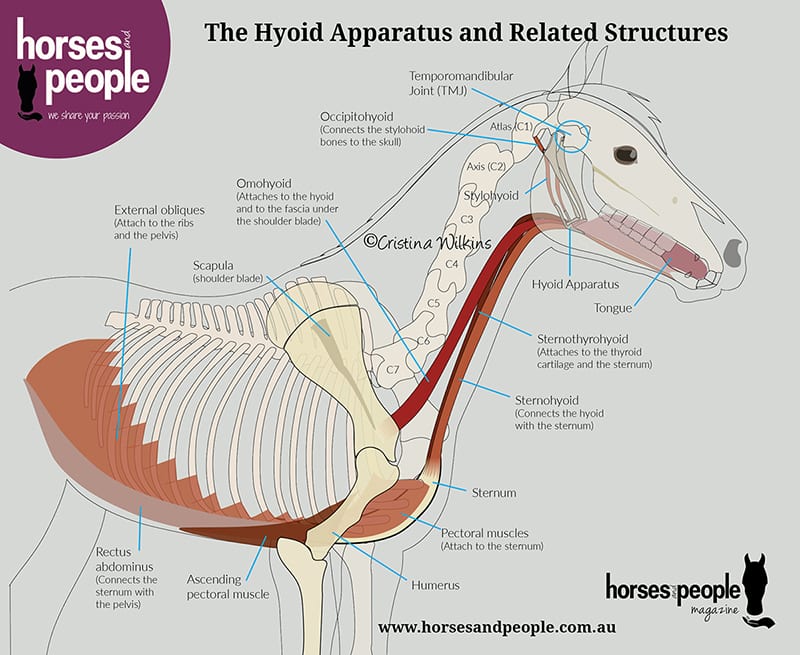
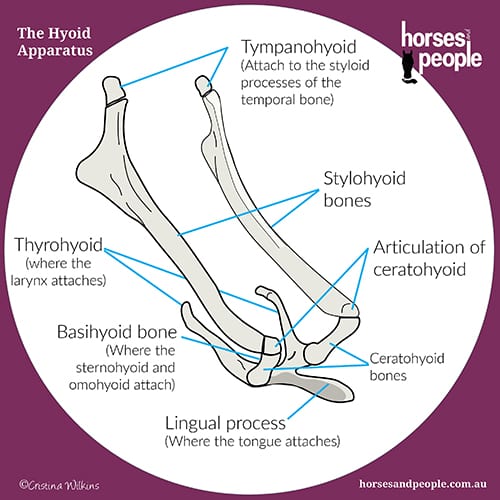
The hyoid apparatus is a Y-shaped group of bones that joins onto the skull and provides attachment for several muscles, including the tongue.

The muscles that control the tongue and airways, including those that attach to the hyoid apparatus are small and sit deep between the horse’s ‘jawbones’ (the mandibular rami). These muscles control the position and function of the tongue, and also contribute to the opening of the pharyngeal airway during breathing.

What perhaps isn’t known, is that some of the muscles that attach to the hyoid apparatus also extend upwards to the horse’s skull (occipitohyoid) and downward to the sternum (sternohyoid and sternothyroid), and the scapula or shoulder blade (omohyoid).

These muscles can be seen and felt in the ventral area of the horse’s neck.

Making connections

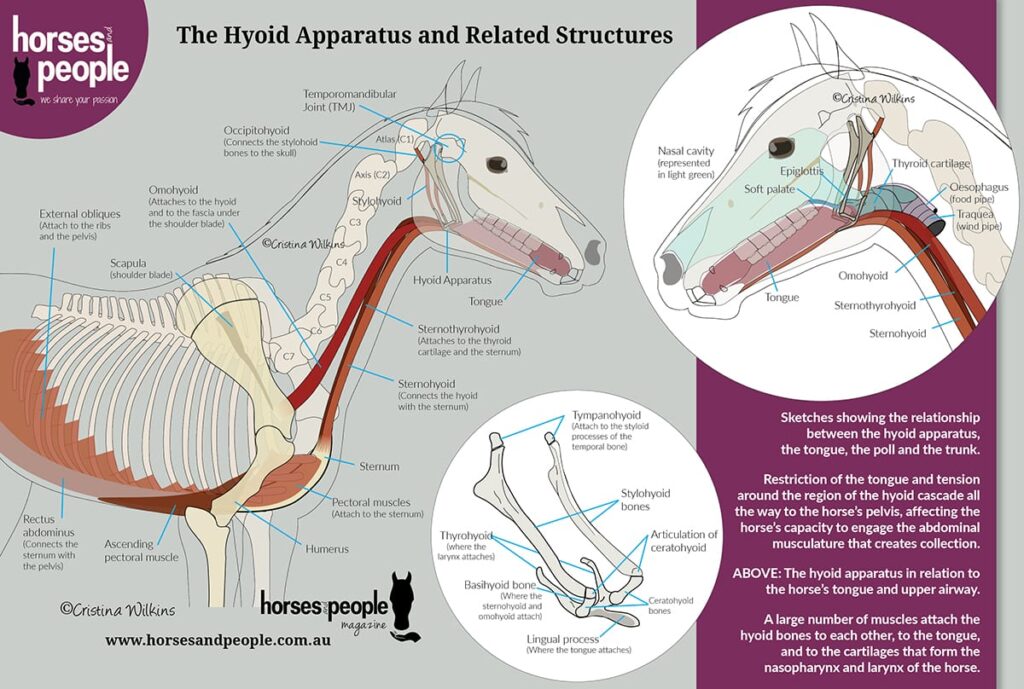
Looking at the image on the left as well as the anatomical illustrations in the following pages, you can see there is a direct muscular connection between the hyoid apparatus that sits between the bones of the lower jaw (the mandibular rami), upwards to the skull (the poll) and downwards to the trunk and the forelimbs.

Although the hyoid is attached to muscles that contribute to opening the airway as well as those involved in chewing and swallowing, there is an important relationship between the hyoid apparatus and the horse’s locomotion, that is, the horse’s performance.

Let’s look at the anatomy in more detail.

Equine hyoid apparatus and related structures
The hyoid apparatus is a junction between the tongue, the poll and a series of muscles and fasciae that enable the hindlimbs to come forward and become engaged.

Consider, for example, the sternohyoid and the sternothyroid muscles. They connect the horse’s tongue directly with the trunk via the sternum.

Arising from the sternum we also find the pectoral and abdominal muscles, and their fascia – this whole muscle/fascia chain continues ventrally connecting the pectoral muscle region with the abdominal muscles and the pelvis.

These pectoral and abdominal muscles are the ones that contribute to ‘lifting and rounding’ of the horse’s trunk enabling the hindlimbs to come underneath and become ‘engaged’.

Now consider the omohyoid muscle that runs from the fascia around the shoulder and shoulder blade (the scapula) to the hyoid apparatus.

The scapula is attached to the trunk and neck of the horse by muscles, of which omohyoideus is one. This muscular attachment is called a synsarcosis and is unlike other joints in the body because there is no bony connection of the forelimb to the trunk of the horse.

This arrangement allows the forelimb to have a greater amount of movement in a forward and backward direction, one of the important factors for locomotion in the horse.

Any alteration of tension in the omohyoideus can potentially affect the shoulder blade’s motion, thus affecting the stride length and gait.

Alteration in function or tension in the sternohyoid and sternothyroid can ultimately influence some the muscles and fascia responsible for engagement of the hindlimb.

Omohyoideus, sternohyoid and sternothyroid although important in locomotion, are also considered accessory respiratory muscles, as they attach to the hyoid apparatus.

So, we’ve established that that hyoid is connected directly to the tongue, forelimb and poll region, and also via muscle and fascia chains to the hindlimb.

Any dysfunction, pain, or limitation of motion of the hyoid can potentially affect the mobility of the forelimb during locomotion, affecting the performance of the equine athlete.

What about the tongue muscles?

Mastication (chewing of food) is clearly important for the horse’s nutrition and behaviour. Two muscles that are responsible for tongue action in chewing are called the mylohyoid and geniohyoid muscles and, as their name suggests, they are attached to the hyoid apparatus.

Other muscles which run from the hyoid apparatus to the tongue are named the genioglossus, hyoglossus and styloglossus – these not only depress and retract the tongue but synchronise with respiration.

Depression of the tongue plays a critical role in dilating and stabilising the nasopharynx during breathing.

Detail of the equine hyoid, tongue and larynx
The horse’s tongue connects to the upper airway via the hyoid apparatus.

So, what can adversely affect activity of the tongue muscles? Pain.

Tongue pain can result from a dental issue and needs to be dealt with, as it directly affects the horses’ ability to chew and digest food. Another potential cause of pain and/or dysfunction of the tongue can be the bit and how it’s used, a restrictive or overtight noseband and, in racehorses, tongue ties.

The tongue is pain sensitive, so anything that compresses and affects the position of the tongue can potentially cause a dysfunction. Equipment that restricts the function of the tongue will limit the movement of the hyoid and associated muscles, causing pain and tension in these muscle groups. This, in turn will affect the whole myofascial chain and result in changes to the horse’s movement and biomechanics.

These are all important issues we should consider in terms of the horse’s welfare and performance.

In addition, there are other very small muscles attaching parts of the bony hyoid apparatus to each other, to the tongue, and to the cartilages that form the nasopharynx and larynx of the horse.

Styloglossus retracts the tongue (pulls it back in the mouth). Genioglossus moves the tongue forward and moves the basilohyoid bone.  Hyoglossus works with genioglossus to depress and retract the tongue, and they are synchronous with respiration, meaning that the activity of these muscles correlates well with airway aperture during breathing.

The bones that make up the equine hyoid apparatus

Of course, having good airway function during exercise and being able to chew appropriately for good nutrition are both important for performance.

Thus, if there is dysfunction of this seemingly small and insignificant bone suspended inside the jaw area of the horse, there can be wide ranging effects on gait and performance, including breathing, in the exercising horse.

Some of the specific dysfunctions in movement may involve a tendency for the horse to go behind the bit to relieve tongue pressure and to relieve tension in the ventral muscles of the neck.

The horse may be reluctant to go forward or engage the hindquarters, or move in a lateral direction, due to the connections of the hyoid indirectly by muscles and fascia to the pelvic end of the horse.

As a physiotherapist assessing horses with neck pain or tension, or horses that have problems going forward or accepting the bit I find it is always useful to assess the hyoid apparatus and its related muscles.

How can I tell if my horse has a hyoid dysfunction?

If your horse seems to have pain in the mouth, or is not accepting the bit, dysfunction of the hyoid bone could be a component of this. However, if you suspect mouth pain, a dental assessment is the first important step.

You, as an owner, can very gently feel the the area between the horse’s lower jaw bones (the rami of the mandible). Tenderness or tension there is not necessarily a diagnosis of a hyoid problem  as there could be dentition issues which require professional attention.

Asymmetry (unevenness) of the muscles of mastication that you can easily see  – the muscles of the cheek (masseter) and the area above the eye and below the ear (temporalis) – may indicate a temporo-mandibular joint (TMJ) problem.

Dysfunction or asymmetry of the temporo-mandibular joint can impact the hyoid and vice versa, and the signs may be closely associated with each other. Asymmetry of teeth can affect the function of the TMJ, which is another reason to have a dental assessment.

If your horse holds a lot of tension in the ventral area of the neck, where the long strap muscles run from the sternum and shoulder blade to the hyoid, there could be a hyoid dysfunction.

Ex-racehorses who have been subject to the practice of tongue-tying (as an attempt to improve airway function) could be prone to problems of the hyoid apparatus. Further, horses who have been windsuckers may have placed tension on the hyoid apparatus and the TMJ.

What do I do?

If you suspect that hyoid apparatus dysfunction may be the cause of pain or poor performance in your horse, the first step is to have the teeth checked by your dental veterinarian. Most equine dentists are considerate in moving the tongue around so that the hyoid bone is not put under undue stress.

Step two is to have a qualified equine practitioner such as a veterinary/animal physiotherapist to assess your horse. Of course, you should always check the qualifications of your equine practitioner.

As an animal physiotherapist, in my teaching or treatment, if I suspect hyoid apparatus is contributing to a horse’s performance, I will first make a comprehensive assessment including history, equipment used and evaluation of the gait and movement.

It is then important to examine the movement and function of the jaw, head and poll, including the muscles involved in mastication, the muscles of the neck, and the muscles and fascia that run on from the sternal attachment of the hyoid apparatus.

This examination is made through observation and detailed palpation, feeling the joints and muscles and their movement. Very gentle assessment of tongue motion, as well as feeling around the area of the cricoid cartilage from which small muscles run to the hyoid and tongue, can be useful.

Nevertheless, as the hyoid and associated structures are so delicate, I strongly advise all horse owners not to undertake any manipulation, however gentle it may seem, of the tongue or TMJ.

Examination of the movement and function of the TMJ and the most cranial neck joints is also important, as they are anatomically and functionally related to the hyoid apparatus.

In addition, questions about diet and previous dentistry, the bit and bridle that are used, and the horse’s previous occupation are important in formulating an assessment of the hyoid apparatus.

Take home message

So now you know, as the old song goes, that the neck bone is connected to the jawbone and the jawbone is connected to the chest bone… which is indirectly connected to other areas of the horse!

The take home message of this article should be a better understanding of the anatomy of the hyoid and acknowledgement that a dental, tongue or hyoid dysfunction will have a cascading effect along the entire body.

Tongue ties are best avoided. Bits and bridles should be chosen carefully and be adjusted in ways that allow the hyoid apparatus to function freely.

As well as choosing the right equipment, a crucial factor of your training will be the pursuit of ‘lightness’ and self-carriage – that state of flow when the horse maintains his gait, line and posture on the lightest of contacts.

And, of course, all horses benefit from a support team that is made up of qualified experts in different fields (coaches, nutritionists, physios, veterinarians, etc) all working together to protect their welfare as well as improve their training and performance.

The equine hyoid and related structures

References:

Holcombe & Ducharme, (2008) Hyoid Apparatus, in Chapter 3.1 Upper airway function of normal horses during exercise, in Equine Exercise Physiology, Hinchcliff, Geor and Kaneps (Eds), Saunders, Elsevier, pp 170-192

Kuryszko, J & Lyczewska-Mazurkiewicz, S (2004) Equine Masticatory Organ Part III, Acta of Bioengineering and Biomechanics, 6 (1), p 25-31

Manfred, J & Clayton, H (2005) Radiographic study of bit position within the horse’s oral cavity. Equine and Comparative Exercise Physiology. 2(3) p 195-201


This article, “The Hype About the Hyoid” by Dr Lesley Goff was printed in the July-August 2020 issue of Horses and People Magazine.

Tight Nosebands: A ‘Feel-good’ Shortcut to Nowhere

Tight Noseband? A poorly fitted bridle can give your horse as much discomfort as a poorly fitted bit. Even today, many riders are not fully aware that bridle fit can also influence the breathing and biomechanics of your horse, potentially changing the way they move and perform. 

The International College for Professional Bitfit Consultants (ICPBC) is educating horse owners and professionals about the causes of common contact issues from a whole-of-body perspective with the mission of improving horse welfare.

At the ICPBC, bridle fitting is discussed alongside bit fitting because horses are individuals and there are now many different bridle models to choose from.

In this article, ICPBC founder Natascha van Eijk provides some examples of how the bridle influences the horse’s biomechanics, focusing on the part of the bridle that is most commonly misunderstood – the noseband.

Too tight

As a Horses and People reader, you are probably well aware that noseband tightness continues to be an issue. Among riders and trainers, when it comes to how loose or tight the noseband should be, it seems impossible to find anything resembling a consensus.

Many scientific studies have shown that horses are really uncomfortable when they are made to perform with an overly tight noseband, but no amount of logical reasoning and evidence is enough to keep many horse owners from tightening the noseband straps really tight.

I always try to avoid judging others so, instead of criticising, I have spent a lot of time wondering what reasons might lie behind this practice.

I believe every owner loves their horse so, why would they choose to tighten the strap so much? Why do some people think a really tight noseband is ‘not that bad’ when the science says that it is?

I have found several answers that allow me to talk about this issue from a different perspective.

But it feels good!

We all tend to believe that when something ‘feels good’ it’s got to be good or, at least, it can’t be that bad.

If tight nosebands really hurt the horse, how is it possible that the feeling in your hands is better with a tight noseband? Why is it that your horse seems to improve with it on?

This feeling is very real to horse riders. When you tighten the noseband, the mouth opening stops and the horse’s responses to your rein aids are sharper. It is no wonder that riders put aside their doubts by telling themselves it is only for one hour a day, or that if their horse was really uncomfortable, they would not perform or they would know for sure. After all, they feel so much better with the noseband tight!

Let’s look at this subject in a different way, one that might explain why riders are becoming confused.

Nosebands are a relatively new invention. Originally, they were just part of a halter that was kept on so the bit could be removed during rest times and the horse could eat.

But in some dressage schools, the noseband started to be adapted and used to ‘help’ the rider’s rein aids by preventing the horse from opening the mouth too wide and evading the rein aids, and thus, it made schooling easier and a bit safer.

Still, it is difficult to find a traditional horse training text that recommends tightening the noseband strap in the same way we see today. Could this be because in times gone by, horse training was a slow process that was expected to take many years, whereas today we are in more of a hurry?

Schooling a horse for any discipline is what we call dressage. The aim of good dressage training is to develop the horse’s capacity to move freely while carrying the weight of a rider – something that requires balance, flexibility and strength.

When balance, flexibility and strength are developed, and the horse understands the rein aids, they will show no contact issues – the rider will only need to use very light aids and the horse’s mouth will be quiet and soft.

Performance should, therefore, be evaluated upon these criteria and, when the rider feels like they have to tighten the noseband, the problem should be seen as a failure of our training to meet one (or all) of these criteria.

Tight nosebands points of pressure
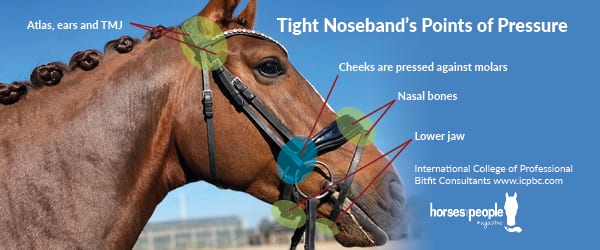
A noseband pressures on many sensitive tissues and the effect on the various structures has a direct influence on the horse’s biomechanics.

Balance

Let’s start with balance. A horse needs to be balanced to carry the rider and maintain coordination and a proper connection. Helping horses find their balance can be difficult for riders, especially when the horses are young.

It takes time for a horse to learn how to stay balanced under the weight of the rider. And it is not surprising that the first contact issues show up during the early periods of their training. In fact, very tight nosebands are common in FEI young horse competitions.

The young horse is not born knowing how to respond to the bit and bridle so, movement in the mouth (oral behaviours) is quite normal while the horse is learning the meaning of the rein aids.

The problem is that as soon as the horse has some idea of ‘steering’ and ‘brakes’, their riders forget they also need to develop the physical capacity to maintain their balance under the rider during turns and transitions.

People get impatient and fall for shortcuts and quick fixes as soon as their horse leans against the bit (gets heavy), moves the tongue, moves their head around or opens their mouth too wide as they struggle to respond to the rider and maintain their balance. This is the time when many riders and trainers tighten the noseband.

Unfortunately, with a tighter noseband, the horse starts to feel more ‘stable’ and ‘straight’. This is where the rider’s mind gets confused: If it feels this much better after tightening the noseband, it can’t be that bad, can it?

The good feelings help us forget about all the studies that have shown the very sensitive structures that are being directly affected by tight nosebands like the skin, muscles, blood vessels, nerves, fasciae, bones, etc., as well as the mental stress of all putting up with all the discomfort and pressure.

There should be space all around the noseband

To make matters worse, your instructor or someone you trust to know better than you, will validate your feelings and congratulate you on the ‘improvement’ in your horse’s way of going, all of which makes you think tightening was the correct thing to do.

A major personal frustration for me in the Netherlands is that even bit fitters (of course, not ICPBC accredited) are strapping nosebands really tight. This is why I am so passionate about proper education in bit and bridle fitting.

There are, of course, reasons why the rider feels the horse is more balanced and stable with a tighter noseband, but none of them are beneficial to the horse.

Tightening the noseband will restrict normal function and influence many biomechanial aspects.

Tightening the nose strap restricts the caudo-rostral movement (dropping down) of the mandible that is necessary (and natural) for the horse to lower the head correctly. Thus, with a tight noseband, the horse might stay in a higher posture, more resembling of a competition frame, something that is unfortunately seen as a benefit but is not correct or healthy for the horse’s stage of training.

In a high competition frame, the young horse looks  collected and in ‘self-carriage’ but, in fact, he is being propped or carried by the rider’s hand.

Without allowing for the gliding motion in the jaw joints (the temporomandibular joint or TMJ), the horse will compensate by overworking other areas. A tight jaw will result in a tight neck and a tighter body, and on a young, unbalanced horse, the picture you see is a false balance.

The horse does not become suddenly balanced, he is just shortening his frame by tightening his muscles and therefore, losing suppleness and flexibility.

Walking in his shoes

To help horse owners understand that this short cut is neither comfortable nor sustainable long-term, I sometimes compare tight nosebands to wearing shoes that are a size too small.

This metaphor has been used by others and I like it because, when you imagine wearing those tight shoes, you might empathise with the horse and you may agree that they would make you run slower and pay attention to where you put your feet.

The next step is asking yourself whether this stilted movement classifies as balance and contributes to the overall physical and mental development that is required to produce an elite athlete…

A dynamic, interconnected system

When used improperly, the noseband restricts the tongue’s movement which influences swallowing and restricts the function of the hyoid apparatus.

The hyoid apparatus has a huge influence on the horse’s breathing and biomechanics because it is a junction for a number of muscles that connect the horse’s entire body – such as the omohyoid that connects with the sub-scapular fasciae and the sternohyoid which connects the tongue with the sternum in the horse’s thorax.

You can learn more about the anatomy and function of the hyoid apparatus in the article by Dr Lesley Goff on pages 44-51 of this magazine.

This muscle chain has a huge influence on stride length and restricting its function will have deleterious effects on your horse’s development that, you may not notice immediately but are sure to arise.

When you skip or shortcut the criteria of balance, all you are doing is delaying the appearance of problems. This is a subject that is too large to discuss in this article, but I hope will make you think differently about the idea that, just because something ‘feels good’ doesn’t mean it is good in the long-term.

 Strength

Another criteria of good training is the development of weight-carrying strength. Horses need tremendous strength in order to transfer the weight from their front legs towards their hind legs – what we call ‘collection’. We should expect that developing enough strength will take several years of careful training.

Most horses will show contact issues because they lack the strength to perform in the way we require. With this in mind, when your horse leans against the bit and maybe opens the mouth, he is simply telling you he is not strong enough, not ready yet.

When the noseband is tightened, the skin under the strap and the fleshy inside of the cheeks is pressed against the teeth. Equine dentists can show you images of ulcerated wounds on the inside of the mouth caused by nosebands pushing the lining of the mouth against the sharp edges of the molars. And while dental care is very important, we should also not tighten the noseband.

When you look at the upper and lower jaws of the horse, you will see the upper jaw is wider than the lower jaw. This means that, even without sharp points on the molars, the inside of the cheeks will still be compressed against the upper jaw, creating discomfort to the horse.

A false frame

Some horses will try to move away from noseband pressure by moving the head  towards the rider, which creates a shorter frame and a false sense of security.

Because the horse is not ‘pulling’ or leaning against the bit anymore, the rider might think he is more comfortable when he isn’t. He is simply trying to avoid the oral pain by over bending.

This shorter frame is not generated from the back end of the horse, it is just a way to reduce the amount of contact (rein tension) which does give the rider a lighter feel in the hand but at the expense of dropping the sternum down (remember the connection between the tongue and the sternum), and creating more extension in the back as he loses the capacity to bring the hind legs under the body.

Even though it feels better and lighter, the horse’s body is not working better and this has consequences on the whole horse’s biomechanics.

We should not exclusively consider the opening of the mouth as something the horse does to avoid the rein aids. We should look at all contact issues like opening the mouth, pulling or leaning on the bit as feedback from the horse that means our schooling and training is either incorrect or our horse is just not balanced and strong enough yet to perform the exercises we are asking for.

Flexibility

Ultimately, it is up to the human to make the change. If we want to change the rider’s behaviour from choosing tight nosebands to a looser noseband, the best way is to show this in another criteria of good dressage; flexibility.

A part of flexibility is the ability for the horse to perform lateral flexion (bend). Many riders like to use lateral flexions as a means of suppling their horses. If you find you are struggling with this and your horse does not seem flexible, ask yourself if your noseband could be too tight. This is a very common problem.

Just as I explained above, restricting the movement of the tongue and jaw places the TMJ under a stress that will cascade down a tight neck. The horse will seem fine in a straight line, but will not be able to bend laterally.

I think it is particularly sad to see riders and their instructors struggling and using stronger aids to force the horse to bend through the neck, when the tight noseband is restricting the horse’s range of rotation and lateral motion. Loosening the noseband is a better solution.

To get this idea across to riders, I often show them an exercise they can do to help them feel what a blocked TMJ does to their own range of motion. Watch the video below and try it for yourself.

Longer is shorter

Unfortunately, riders who prefer to skip the balance, strength and flexibility criteria during their horse’s training will be masking over many basic training problems. Inevitably, these will show up sometime down the track and require going right back to basics.

Working on balance, strength and flexibility with a long-term view will be much more rewarding in the end – the reward being a much happier, healthier and free-moving horse that travels in self-carriage and responds to light aids, achieving higher scores in competition and becoming a pleasure to ride.

Let the contact issues that arise during your training become the signposts that inform you of the areas that need more work and/or time.

Loosen your noseband to give your horse the opportunity to speak and be heard – if you listen, you will know when you can progress your training further or your horse needs more time.

I can assure you that this is the right way to train, that avoiding shortcuts will actually save you time in the longer term and that both you and your horse will definitely feel better about your relationship.


This article, Tight Nosebands: A ‘Feel-good’ Shortcut to Nowhere, was published in the July-August 2020 issue of Horses and People Magazine.

Can Horse People Get Along? Tips from Six Blind Men and an Elephant

It is possible for horse people to get along?

Horse people! We have a reputation for being a bit, well, crazy. But not just in the eccentric way. I mean in the way that we don’t get along very well with one another. It’s quite ironic that if anyone was going to understand our level of crazy, it would be one of our own.

Sadly, however, we are often thought of as know-it-alls who can’t get along. Even amongst a group of horse people united by a discipline, guru or philosophy, there will be disagreement over something and, chances are that it will be met with conflict rather than curiosity.

This is, of course, hardly surprising. If your way of doing things has given you great results, it is only natural that you want to share your way with others…

The trouble is that they might be trying to do the same, with the same good intentions, but with a different way. And so instead of listening to them and reconsidering your own views and practices, you become defensive.

And the more you have invested time and money into an approach, the more likely it is that you will staunchly defend it, possibly even suppressing doubts that try to surface or ignoring inconsistencies.

The one thing you think would unite crazy horse people is the love of the horse. But no. There are too many different ways of ‘loving’ horses to reach consensus here either (think of rugging, feeding, housing). In fact, it is because we want what is best for horses that we find ourselves in all states ranging from externalised conflict to internalised frustration.

Think for a minute about rollkur (also known as hyperflexion). If we are not blaming riders and trainers, we blame judges for rewarding overbent horses with high marks. We blame stewards for not enforcing rules.

We want our horses to be happy and healthy and we want our sport to be respected. But do we really want a judge to suggest that they are not?

We complain that the same judge who rewarded another rider for unethical riding dared to suggest we are too unbalanced/uncoordinated/old/overweight etc., to ride our horse, that our horse is too old/skinny/unhappy/unsound etc., to be ridden or any other horrible comment you would be mortified to have directed at you.

So – for the sake of horses – how on earth are all the people supposed to get along? In this article, I take some pointers about consultation, collaboration and compassion from an ancient parable about six blind men and an elephant.

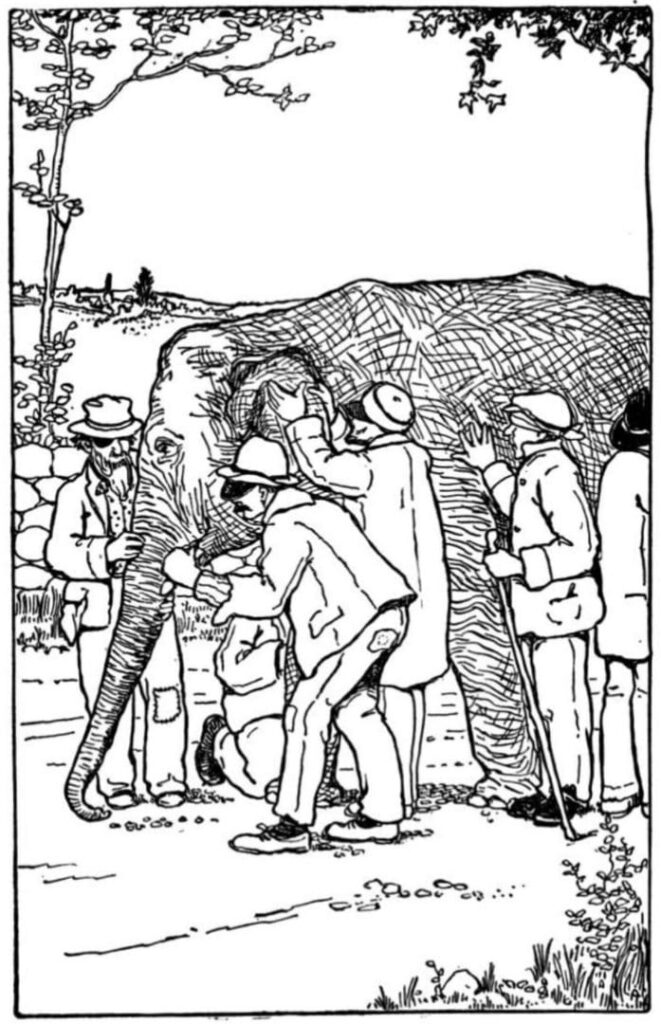
Various versions exist of The Blind Men and the Elephant but there is a well known version by John Godfrey Saxe’s (1816-1887)1:

The tale of Six Blind men and an Elephant

It was six men of Indostan,   

To learning much inclined,

Who went to see the Elephant

(Though all of them were blind),

That each by observation

Might satisfy his mind.

The First approach’d the Elephant,

And happening to fall

Against his broad and sturdy side,

At once began to bawl:

“God bless me! but the Elephant

Is very like a wall!”

The Second, feeling of the tusk,

Cried, -”Ho! what have we here

So very round and smooth and sharp?

To me ‘tis mighty clear,

This wonder of an Elephant

Is very like a spear!”

The poem goes on to describe how the remaining four men each feel various parts of the elephant, likening it in turn to a snake (the trunk), a tree (the leg), a fan (the ear), and a rope (the tail).  The men then have an argument about what the elephant is like. However, as Saxe states, each man was “partly in the right, And all were in the wrong”.  None of them had the final answer on what an elephant is.

The moral of the tale is revealed in the closing lines:

“so oft in theologic wars/ The disputants…Rail on in utter ignorance/ Of what each other mean; And prate about an elephant/ Not one of them has seen!”.

It is not so difficult to replace the elephant with a horse, the true nature of which riders, trainers, vets, ethologists, punters, jockeys, breeders and advocates can all argue over with equal conviction.

It is also easy to replace the elephant with a horse-related issue such as brumby management, horse slaughter for human consumption, laminitis interventions, training techniques, shoeing, jumps racing, etc.

But what exactly can we take from the parable of the blind men and an elephant to help us understand the bigger picture and improve our horse’s lives which requires getting along with one another?

The blind men give us some tips for consultation, compassion and collaboration. It might help to think of a horse-related issue about which you feel passionate and get frustrated when others disagree.

As you read, keep your issue in mind and relate it to the following points.

Consultation

Have you consulted everyone? The more views you can add, the better your picture will be. Farriers, veterinarians, nutritionists, trainers, ecologists, locals, activists, can all contribute to the same discussion and provide different perspectives. Try to delay coming to a conclusion, making a decision or acting on your own opinion until you have considered all the possible perspectives.

Have you involved the very group you expect will have a different view to you? They could hold the missing piece of the puzzle, or you might be surprised to find out they weren’t what you expected. It’s not so much about seeking an answer from them, but how their perspective or knowledge informs your understanding of the issue at hand.

Avoid polarising a debate into right versus wrong. Sometimes, our fear of being wrong is the very thing that stops us from learning, being better and doing better.

Collaboration

Right and wrong does not have to be an either/or binary. Just because your opinion differs from someone else’s does not mean they are wrong and you are right (or vice versa). You may both be wrong or both be right.

Be aware that the human urge to be right is fundamental to feeling safe and OK in the world. Feeling wrong can be deeply uncomfortable for us. No one wants to think that they have done or have been doing the wrong thing by their horse. However, trying to remove that discomfort by immediately defending or justifying our actions, can lead us to cling to unhelpful behaviours and beliefs. Give yourself and others permission to be wrong and to change. It is OK for you to be wrong because these are just pieces of a much larger puzzle.

Appreciate that most (if not all things) are dynamic. The situation over which we have opinions changes, as does our understanding, so we SHOULD change our opinions, practices and behaviours over time. We are – as reality TV never fails to remind us – on a journey.

Compassion

The blind men had much to learn from one another’s opinion of the elephant. When you find someone giving you advice that you resist, ask yourself if your resistance comes from how the advice makes you feel. It may make you feel uncomfortable, unheard, misunderstood, shameful and all of those horrible things. That doesn’t necessarily reflect what they think. Do yourself a favour and make it about your horse – not you.

Assuming the best of intentions is the best way to go. And it works even better both ways. Assume the best intentions of the person disagreeing with you. Assume the best intentions of the person sharing their opinion.

Opinions are always best received when they are solicited, but when it comes to serious issues like horse welfare, that is not always possible. Finding common ground is one way to reduce outright conflict. Make it about the horse, not the person.

Now, all of this elephant thinking has its limits. Those with a social science leaning are fairly comfortable with the idea of multiple truths. Those with a more natural science leaning are forever in search of the one single truth they believe can be found2.

Nonetheless, there are times when we need to get together and decide what is right and wrong. Cruelty and welfare are such instances, although we know from the brumby debate that even horse welfare is open to interpretation, which is why the blind men have so much to teach us.

Consultation, collaboration and compassion are often easier explained than practiced and whilst I am under no illusion that we can all get along, I’m sure we can all get along better.

This is where it can be useful to approach the horse as if it were an elephant, with the same curiosity and open-mindedness.

It is important to be curious about our fellow horse people too. Just be sure that in your efforts to get all the different views on horses or a better understanding of other humans, you provide opportunities for them to reveal their own opinions and contribute equally to the discussion.

Acknowledgement

The parable of the elephant and the blind man was first brought to my attention when I attended a three day Future Search Workshop in Philadelphia in 2017, run by Sandra Janoff and made possible with the generous support of friend and colleague Verna Blewett (who is more comfortable with camels than horses).

Future Search meetings are designed to encourage participants to explore ‘the whole elephant’ before they address just one part of the system.

For more information on this collaborative approach to organisational change, please see: https://futuresearch.net/resources/booksandvideos/

References:

  1. The full text of ‘The Blind Men and the Elephant’ by Saxe can be found on
  2. was published in the July-August 2019 issue of Horses and People magazine.

This article appeared in the July-August 2020 issue of Horses and People Magazine.

Research to Lift the Veil on Bridles

Research on horse owners’ use of bitted and unbitted bridles, believed to be first of its kind, could change the equine industry.

  • Charles Sturt master’s student to research horse owners’ use of bitted and unbitted bridles
  • Mrs Jude Matusiewicz wants to determine whether science plays a part in decisions of horse owners when they choose bridles for their horses
  • This nationwide survey is believed to be the first of its kind.

To participate in the survey follow this link.

A Charles Sturt University master’s student is determined to make a difference in the industry she is passionate about as she prepares to complete her final year of study.

Mrs Jude Matusiewicz (pictured, with her horse Sunny) is studying a Master of Animal Science online from South Australia.

She might be located a long way from a campus, but Mrs Matusiewicz is planning to reach all of Australia with her survey.

Titled ‘Lifting the Veil on Bridles: Tradition, Science or something in between?’, Mrs Matusiewicz is hoping her research will answer two major questions.

The first is to establish the reasons horse owners and riders choose the bridles they do – is it based on continuing a tradition, to obey competition rules, for safety reasons, for ethical considerations, or something else entirely?

The second is to ascertain whether any, or all, of these reasons have a sound basis in scientific evidence.

“I am hoping to answer both of these questions with one Australia-wide survey,” Mrs Matusiewicz said.

“I wondered why there were many studies on various types of horse tack in relation to horse welfare, but studies into bridles themselves – either bitted or unbitted – were lacking. Now is the time to look at which bridles people are riding their horses with and why.”

Mrs Matusiewicz received the University Medal when she graduated with an Associate Diploma of Agriculture (Horse Husbandry) with Charles Sturt in 1990. She is the founder of Evidence Based Worming, a business that provides information and education on sustainable worming practices, including many valuable resources to guide horse owners on conducting their own faecal egg counts.

Associate Professor in Equine Science Hayley Randle and Senior Lecturer in Equine Studies Dr Petra Buckley, both with the School of Animal and Veterinary Sciences in Wagga Wagga, are Mrs Matusiewicz’s supervisors.

Continuing her studies has allowed Mrs Matusiewicz to explore this unique topic.

“This year is the end of my studies and I am hoping to obtain some really good data across all horse-riding genres so that riders can be fully informed when they choose their next bridle,” she said.

“I want to get information that hasn’t been gathered in Australia so I hope people will share the link to my survey so I can get as many horse riders as possible to help me with this ground-breaking research.”

Mrs Matusiewicz believes her findings could also lead to opportunities for new studies and projects to fill in any gaps that might be identified.

Her findings are expected to be published in formats that are easily accessible to horse owners and riders.

To participate in the survey follow this link.

Read Jude Matusiewicz’s guide to worming your horse here.

Read Jude Matusiewicz’s seasonal guide for strongyle worm management here.

On-board Technology Helps Avoid Hyperflexion

When a horse is moving straight forward, it can be difficult for a rider to evaluate the horse’s head position. In particular, is his head vertical to the ground, or does his nose point too far in front of or behind that vertical?

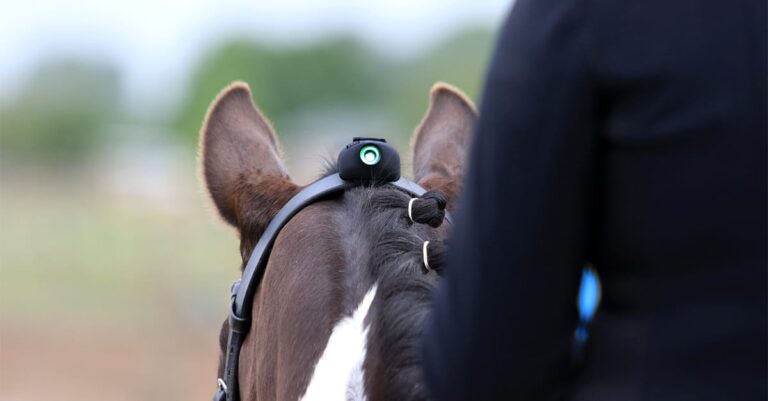
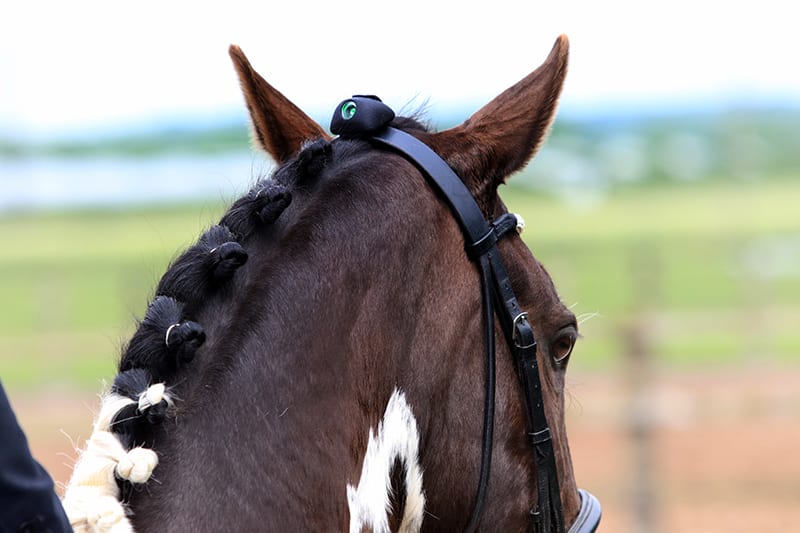
To help riders better evaluate head and neck angles from the saddle, American researchers have developed ‘on-board’ technology—a simple device that attaches to the horse’s bridle at the poll—using colour codes.

The team demonstrated their hi-tech device—called “Vert”—during the 15th annual conference of the International Society for Equitation Science (ISES), held last August in Guelph, Canada.

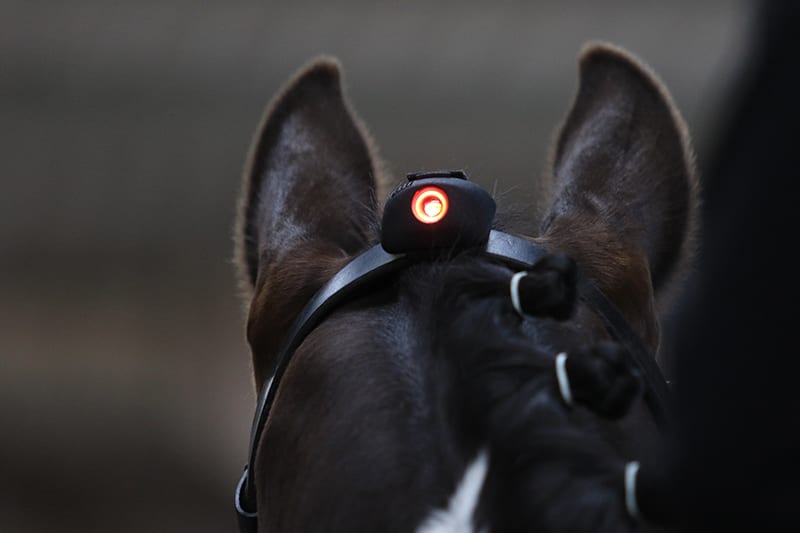
When the device’s light is green, it means the horse’s head is close to a vertical (ideal) position, according to co-developer Hilary Clayton, BVMS, PhD, FRCVS, Dipl. ACVSMR, McPhail Dressage Chair Emerita at Michigan State University (MSU) and president of Sport Horse Science, in Mason, Michigan.

If it’s yellow, the horse’s nose is too far in front of the vertical, suggesting the horse might be trying to avoid the bit (for a variety of reasons, including mouth, neck, or back pain), she said. And if it’s red, that means the horse’s head has dropped behind the vertical—a position which, if prolonged, can lead to serious health and welfare issues.

Hyperflexion of the neck—also known as rollkur or riding behind the vertical – could compromise breathing, interfere with vision, provoke pathological changes in the vertebrae, and induce stress, according to an official ISES statement.

“Riders want to know when they are going behind the vertical, and Vert provides a more convenient way to find that out,” said co-developer Dominic Lombardo.

While the Vert signals critical neck angles to riders, it isn’t meant to replace good riding, cautioned Clayton. On the contrary, it can help school riders to become better attuned to the “feel” of different head and neck positions, while alerting riders who might otherwise be missing the horse’s signals.

This can include riders of all levels of experience and training, she added; her recent study of top-level dressage horses revealed that most of them were ridden behind the vertical most of the time during Olympic performances.

“This device gives the rider immediate and continuous feedback about the horse’s head position,” she said. “This helps to educate the rider’s feel and also facilitates training the horse in the correct position, thus training the horse’s muscle memory correctly.”

While head and neck position is often considered a “dressage issue,” any ridden horse is at risk of performing below his potential due to poor head and neck angles, according to Clayton. “It’s useful for riders in many disciplines, and in fact Icelandic and Western riders love it!” she said.

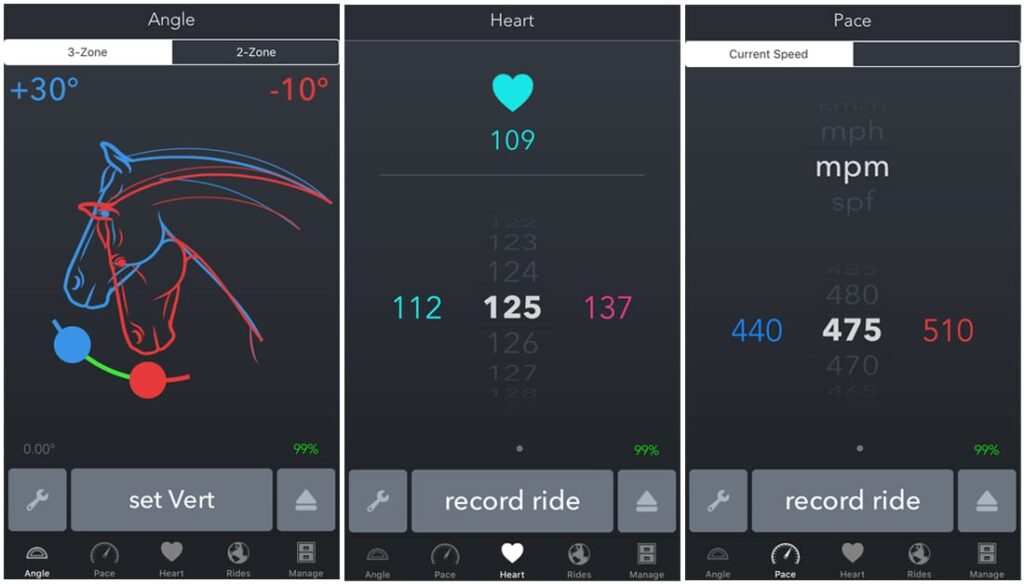
The Vert device also includes a speed gauge as well as a GPS tracking tool. Riders can monitor their horses’ speed in real-time by following the related application on a connected mobile phone. And they can record their rides to see a map of where they went and at what speeds—particularly useful for eventing and racing. An upcoming version will also include a real-time heart monitor reader, Lombardo added.

“We also have several other projects in development, some for riders and some for horses,” he said. “We can’t say much about them just yet, but the future is going to be amazing!”

This practical demonstration took place at the 15th International Equitation Science Conference, the proceedings can be found here.