fbpx
Home Blog

Body Condition Scoring: Sorting the Fat from the Type

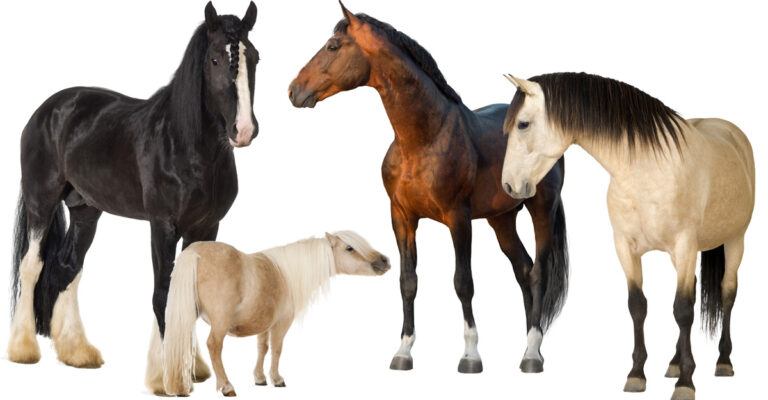
When body condition scoring, breed traits must be taken into account – especially when scoring sturdier types, like cobs, draughts, Iberian or native pony breeds.

In this article you will find helpful tips and breed-specific charts produced in consultation with equine researchers and nutritionists.

Heavy or fat?

As the owner of a small but heavy horse breed, I often receive well-meaning but unfounded advice about the body condition of my horses. I also bet that many of those who also own horses and ponies of these ‘sturdier’ breeds, will be nodding their heads in agreement right now!

Body condition scoring is one of the most important and useful skills an owner can have when it comes to monitoring the health and welfare of their horses. And while the way we ‘condition score’ horses is uniform no matter their breed, certain breed traits should always be considered when deciding on the score.

Here I am referring to the naturally crested necks of Iberian horses, to the apple bottoms of Gypsy Cobs, and the well-sprung ribs and short coupled bodies of native pony breeds.

Unless you take breed or type into account when you assess the body condition, these traits can deceive the eye and lead you to rate them higher than you should.

This article is the result of a decade-long passion for body condition scoring in the real world. From what it is and why it is important to horses and their welfare, to how to score different types correctly.

I have filtered the noise to bring you only the practical and relevant information you need to accurately create a body condition score for your horse – whatever the type.

Body Condition Scoring

Like humans, horses vary greatly in size and shape, and the concept that there is a single ideal or healthy body size or body weight is very outdated. Today, human health professionals use other methods to assess a person’s health; ones which focus on how the body is made up. In simple terms, they look at how much muscle and fat the body contains.

The same idea applies when assessing a horse’s overall health. Instead of simply measuring and weighing our horses, researchers came up with a system called ‘Body Condition Scoring’.

Body Condition Scoring (sometimes abbreviated to BCS) is slightly different from human body assessment methods because it looks at how much fat has built up in specific and key areas of the horse’s body.

“Just right”

Human bodies generally deposit fat in areas such our abdomen, buttocks and thighs, and different body types result in fat building up in different areas.

Horses are similar in that their bodies deposit fat in key areas. Unlike humans however, fat stores in certain areas of the horse’s body are not always harmful and as we will discuss later, they can play a protective role.

The horse’s body needs fat for everyday functions, but just like Goldilock’s porridge, it must be the right amount; too much or too little fat can cause a variety of health problems.

In the same way that humans have a genetic tendency to store more fat than others, some horse breeds appear to favour fat deposits more than others.

Body fat is stored when the amount of energy provided by the diet is more than required to replace the energy being used by the body throughout the day.

The stores of body fat can be used for energy at times when the diet does not provide enough energy to meet the horse’s daily needs. This is a survival strategy for when food is scarce (due to drought or heavy snow), or when the energy demand increases (due to extreme cold, breeding and/or lactating).

In a domestic setting, because we can manage our horses’ access to feed, roughage and pasture, we use Body Condition Scoring to figure out if:

  • we are feeding too much relative to the activity level (the horse is storing excess energy as fat in the key areas)
  • we are feeding too little relative to the activity level (the horse is losing fat covering in key areas)
  • we are feeding the horse just the right amount (the horse’s Body Condition is ‘moderate’ or ‘good’ and is being maintained).

We aim to keep our horses in ‘moderate’ or ‘good’ body condition because, on average, it shows that our horse’s body has just the right amount of fat to function correctly.

It’s about health

You should think about body condition as ‘fatness’, and condition scoring as the most reliable way to tell if a horse’s diet contains too much, too little or just the right amount of energy.

At this point I will highlight that providing the daily energy requirement of horses is only one part of a balanced diet. For good overall health, other components such as protein, fibre, vitamins, minerals and trace elements must also be well balanced.

The right amount of fatness is associated with healthy body function, whereas horses who are either too thin or too fat, are known to be at a higher risk of developing health problems.

Thin horses (without any underlying disease):

  • find it more difficult to protect themselves from extreme cold
  • are at greater risk from disease and infection
  • growth rates may be reduced in youngstock
  • may have reduced amount of energy to perform exercise
  • can have decreased fertility and decreased live birth rates

Overweight horses have:

  • an increased risk of skeletal injuries due to excessive weight
  • an increased risk of obesity related disease (insulin resistance, laminitis, equine metabolic syndrome, etc)
  • a decreased ability to cope with hot weather and exercise

Two scoring systems

Two body condition scoring systems have been developed and are used by horse owners, vets, researchers and horse nutritionists.

Both systems work in a similar way – they require us to look and feel when we assess the horse’s body condition. This helps us to gain a good picture of the horse’s overall body condition.

In Australia, the system developed by Carroll & Huntington (1988), which scores body condition on a 0 (very poor) to 5 (very fat) scale, is most commonly used. It evaluates fat build up in three key areas: the neck, the top line (withers, back and pelvis) the ribs, and the tail.

It is easy to learn, and in the following pages, you will see three charts that use this system, each showing six diagrams which range from ‘very poor’ (thin) horse to ‘very fat’ horse.

The second method, developed by Henneke (1983), divides and scores fat deposits over a larger number of body areas (neck, withers, shoulder, ribs, loin (pelvis) and tailhead) to rate body condition on a scale of 1 (poor) to 9 (extremely fat). Each body area is scored individually and then scores are averaged to obtain an overall BCS.

The Henneke system is good when you need a more in-depth picture of your horse’s condition.

To learn more about the Henneke scale for Body Condition Scoring, click here

What is ‘fatness’?

The term ‘fatness’ does not refer to a horse’s weight but rather the amount of fat that is deposited on the key areas of the horse’s body – where bony structures are not protected by muscle, such as the spine, the ribs, the pelvis and tail head.

‘Fatness’ (correctly termed ‘adipose tissue’), provides ‘padding’ between the skin and the skeleton and has a protective role. For example, it can protect the ribs from damage by cushioning them against bumps and knocks. It can also protect the lungs by acting as insulation.

It is also important not to confuse muscle build-up with fat build-up, and you will learn how to feel the difference with a little experience (see also the exercise on the right)

When the horse is receiving more energy from the diet than they need to meet their daily energy requirements, the body will store the excess energy as ‘fat’ (adipose) tissue.

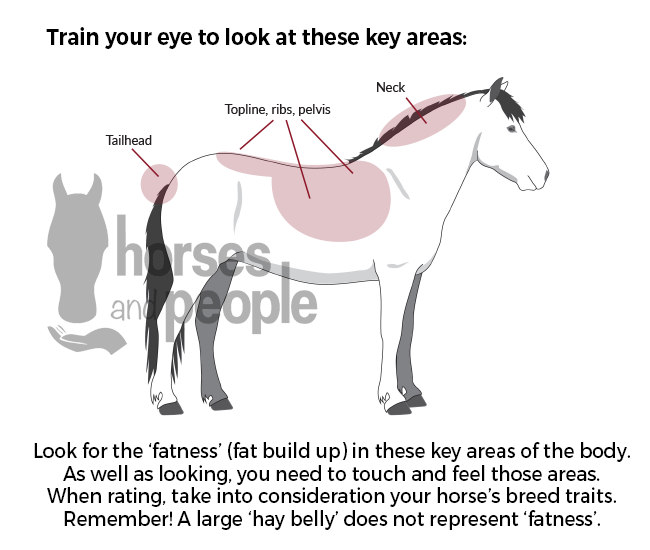
What are the key areas?

When assessing ‘fatness’ to give a Body Condition Score using the Carroll & Huntington system, the three key areas we look at are:

  • the neck
  • the ribs and top line (withers, back and pelvis)
  • the tail head
Illustration by Cristina Wilkins ©Horses and People

It’s not about the belly

Sometimes people see a horse with a big tummy and believe the horse is fat. However, we do not assess ‘fatness’ around the tummy of the horse like we do in humans!

This is because a large abdomen on a horse can mean several things:

  • heavy internal parasite infestation
  • a diet high in fibre which increases water intake causing a large amount of gut fill. This is often described as a ‘hay belly’ and is more common in horses not undergoing sufficient exercise
  • pregnancy
  • in some compact breeds such as miniature ponies, the internal organs are not as miniaturised as the rest of the pony’s body, giving them the appearance of a disproportionately large belly.

By focusing on the key areas of ‘fatness’ listed in the image above (neck, ribs and top line and tail head), we will be able to assess if the horse is really fat or just has a large abdomen due to one of the above.

How do we rate body condition?

Rating body condition is like those survey questions you see where they ask you “on a scale of 1-10 how likely are you to…”

“1” might be “not at all likely” while “10” might be “extremely likely”.

Body condition scoring works in the same way. The lower the number on the scale the less amount of ‘fatness’, or padding, is covering the bony structures, with 0 describing no fat coverage (you are literally seeing skin covering bone).

The higher the number on the scale, the higher the amount of ‘fatness’, or padding, is covering the bony structures, with 5 (Carroll & Huntington) describing deep, bulgy fat coverage over the skeleton.

The idea is the same for both the Australian (0-5) and the Hennecke (1-9) systems, however the degree of variation is different between the two systems. The Carroll & Huntington system has 6 degrees of ‘fatness’ while the Hennecke system has 9.

A useful exercise

Another way to think of body condition is that each degree of fatness is like adding a rug to the horse.

Imagine starting with a skeleton and putting on a rug. It would hang loosely, and you would be able to easily see and feel the skeleton underneath.

Start adding rugs one at a time. As you add each new rug the sharp edges of the skeleton’s shape begin to soften and become more rounded. If you touch the skeleton, you find it becomes more padded with each new rug that is added.

The change in body condition occurs in a similar way. As condition improves (more fat is stored by the body) more depth of fatness can be seen and felt.

How do we create a Body Condition Score?

Focus on the key areas (neck, topline, ribs and pelvis, and tailhead) and, if you want to keep things simple, compare your horse to the most appropriate of the breed charts presented in the following pages to decide which one is closest to your horse or pony.

There is one chart for heavy breeds, like Clydesdales, Shires and Percherons, one chart for lighter ‘hack’ breeds like stockhorses and riding ponies (kindly provided by Pony Club Australia), and a chart for native pony types which can be used for minis, Welsh ponies and sturdy cross breeds.

You might say that your horse is halfway between two points, for example, halfway between 2 and 3 would be 2.5. That’s perfectly acceptable also.

Once you have scored your horse, get your vet, farrier or experienced horse person do the same and compare.

But if your horse is a heavy or pony type, be sure to show them the appropriate chart as a reference, because this is the very first time that anyone has published breed-specific charts that are supported by equine researchers and nutritionists!

What do the numbers mean?

(Note that all the numbers refer to the Carroll & Huntington system illustrated in this article).

If your horse sits between 0 and 2, it is vital that their diet and overall health – including worming and teeth – are looked at and adjusted.

If they are 1.5 (Carroll & Huntington) or under it is important to seek the advice of your veterinarian.

Non-breeding horses who score between 2.5 and 3.5 are in the goldilocks zone (just right!) and the aim is to keep them here. Performance horses who are very active, like racehorses and endurance horses will be on the lower end (2 to 2.5) and dressage horses and stallions on the higher end (2.5 to 3).

Young horses should stay around 2.5, with 3 being the maximum so as not to put too much pressure on their growing joints but still give them enough body condition to grow properly.

If your horse (non-breeding) is 3.5 or over, it might be best to look at ways to increase exercise and lower feed intake.
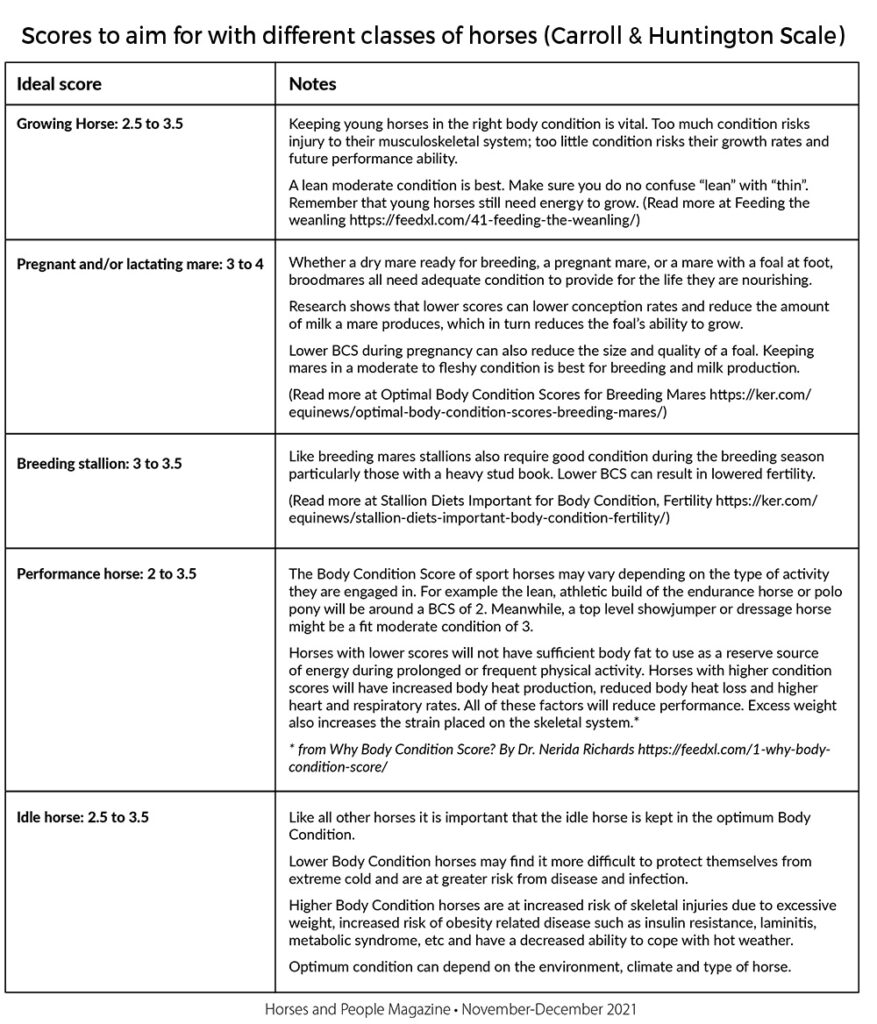
A table showing the ideal condition scores for different classes of horses

 Achieving moderate body condition

Keeping your horse in moderate body condition means they are ‘just right’ – not too fat or too thin – and will help their overall health. When horses are in optimum condition, they are less likely to suffer from weight related problems like those outlined above.

If you find your horse is not in the ideal range, what can you do to change it?

If your horse is too fat (BCS 4+):

  • Assess their diet and see if they are getting too much feed, or feed that is too high in energy. Ask for help from an equine nutritionist, vet or other professional.
  • Increase exercise (unless your horse is unwell or unsound). Track work every morning or arena work every afternoon would be ideal, but if you don’t ride, even a half hour walk together once a day can help, and it will strengthen the bond with your horse.

If your horse is too thin (BCS 2, or less):

  • Have your horse’s teeth checked by an experienced and qualified equine dentist (check the Equine Dental Association of Australia www.equinedental.com.au) or an Equine Dental Veterinarian.
  • Arrange a faecal egg count with your vet or local testing centre and worm your horse according to the results. Test again two weeks later to make sure it worked.
  • Get professional advice to ensure your horse’s diet is providing enough energy to meet your horse’s daily requirements.
  • Make sure your horse has constant access to good quality forage and preferably, source hay that is tested for nutrients and energy content. Consult an equine nutritionist.
  • Monitor the herd dynamics to check they can access the hay or pasture without being intimidated by others.
  • Have him or her checked by your veterinarian and/or body worker, to rule out chronic conditions or disease. Horses are very good at hiding signs of pain, and sometimes, failure to gain weight is a sign they are overworking their bodies in an effort to compensate. Check this article for more details. 
  • If you have done all the above first, rugging your thin horse in the cooler months may also help.

Acknowledgement:

Thank you toDr Peter Huntington, Rebecca Ham and Dr Sam Potter for their support, feedback and assistance in compiling this article.

Take home message

  • Body condition scoring is an invaluable skill for horse owners. It allows them to effectively monitor their horse’s health.
  • Horses should carry the ‘right’ amount of fat. Those who are too fat or too thin can suffer from health problems.
  • Body Condition Scoring helps you notice if your horse needs to gain, maintain or lose weight.
  • While the rules of Body Condition Scoring are uniform and can be applied to any breed, it can be challenging to score correctly horses of different breeds, sizes and shapes.
  • Breed traits should always be considered when deciding on the score. Make sure you familiarise yourself with the Body Condition Scoring chart that best represents your horse’s breed or type.

Bibliography

  • Catalano, D.N. et al. (2016). Estimation of Actual and Ideal Bodyweight Using Morphometric Measurements and Owner Guessed Bodyweight of Adult Draft and Warmblood Horses. Journal of Equine Veterinary Science, 38-43.
  • Morrison, P. K. et al. (2017). Perceptions of Obesity and Management Practices in a UK Population of Leisure-Horse Owners and Managers. Journal of Equine Veterinary Science, 19-29.
  • Morley S.A. & Murray J.A, (2014). Effects of Body Condition Score on the Reproductive Physiology of the Broodmare: A Review. Journal of Equine Veterinary Science, 842-853.
  • Potter, S.J. et al. (2016). Prevalence of Obesity and owners’ Perceptions of Body Condition in Pleasure Horses and Ponies in South-eastern Australia. Australian Veterinary Journal, 427-431.
  • Carroll, C.L.; Huntington, P.J. (1988). Body Condition Scoring and Weight Estimation of horses. Equine Veterinary Journal, 41-45.
  • Huntington, P.J. Myers, J. Owens E. Horse Sense: The Guide to Horse Care in Australia and New Zealand 2nd Edition. CSIRO Publishing.
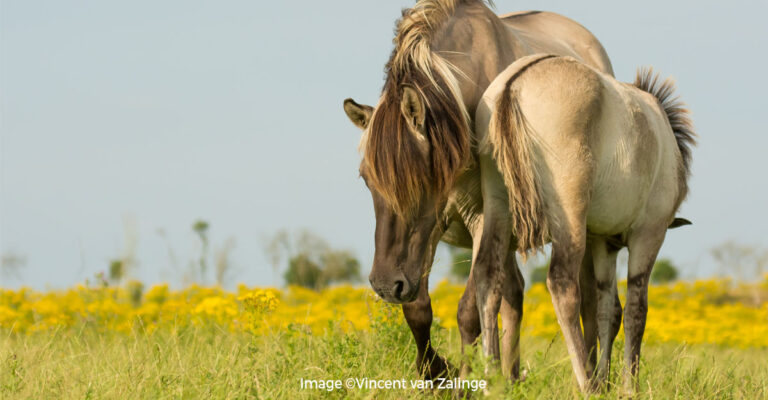
Rewilding Horses is no Easy Enterprise

What are our obligations in terms of managing the welfare of rewilded horses?

Conservationists are reintroducing horses (and cattle) to areas they once roamed wild in, in an effort to restore lost ecosystems, help shape and regulate landscapes, and promote biodiversity.

However, getting damaged ecosystems to a point where they become self-regulating whilst navigating animal welfare and ethical concerns, conflicts of interest and public expectations, is no easy enterprise.

What is rewilding?

Rewilding is a conservation approach that uses natural processes to restore damaged ecosystems and reintroduces animals and plants capable of adapting to those environments with the aim of achieving a natural, self-regulating state.

There have been many successful rewilding experiments where reintroduced species have improved ecosystems. These include the restoration of wetlands in Europe thanks to the reintroduction of beavers, and the remarkable cascade effect witnessed amongst animals and plants triggered by the return of wolves to Yellowstone National Park in the United States.

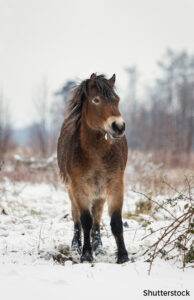
An exmoor pony in the snow
Exmoor ponies are considered suitable for rewilding projects. Image Shutterstock.

Rewilding of horses

Thousands of years ago, wild horses roamed most parts of the Earth. While it is impossible to know exactly how many species or subspecies existed back then, European cave art from the Paleolithic period depicts horses with similar primitive characteristics to the sole surviving wild horse species, the Przewalski’s horse, a native of Asia.

The last living subspecies of European wild horse was chased off a cliff at the end of the nineteenth century. And although true wild horses no longer exist in Europe, rewilding projects are relying on closely related and hardy domestic breeds with the attributes required to restore the wilderness environments.

The horse is a keystone species, which means they play an important role in environmental sustainability. While the research is limited, there is some evidence that rewilded horses help enhance grassland biodiversity. As selective browsers, they eat down grasses and young woody plants, restoring the wood-grass balance, while dispersing seeds and protecting the productivity of the soil and the nutrients in it.

When grazing horses trample down larger plants, smaller ones like wildflowers that attract bees and other pollinating insects, have a better chance of flourishing since they no longer need to compete for valuable nutrients and resources. Horses also assist with fire-prevention, by cleaning up long grass and undergrowth.

Restoring abandoned ecosystems

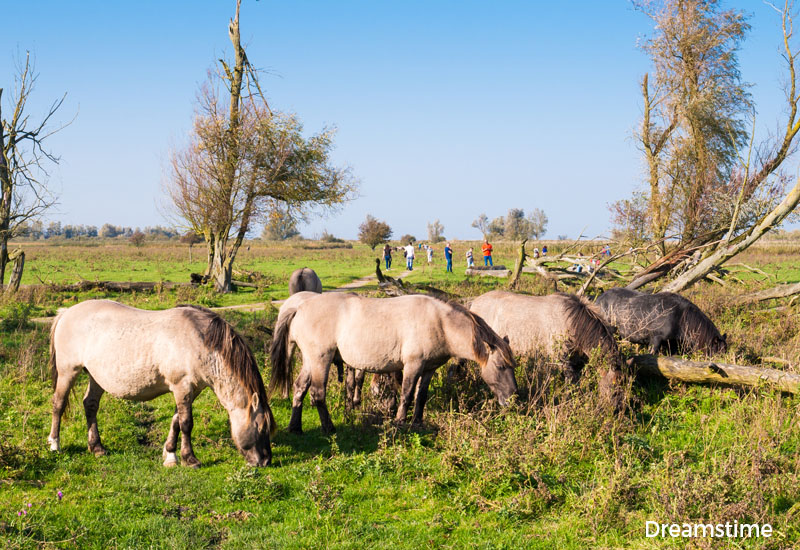
Tourists in the distance looking at a reworded Konik herd of horses
An important aspect of many rewilding initiatives is enabling ecotourism and improving public attitudes to conservation. Image by Sander Meertens, Dreamstime.

Around the world, complex ecosystems have been shaped because of agriculture and regular land management. And perhaps nowhere is this more evident than in Europe.

Over the last century, thousands of Europeans abandoned a rural way of life and moved to urban centres. This has taken its toll on farming communities and the landscape. As younger generations flee the land, farmers have no one with whom to share their skills with. When they pass away, they take with them vital farming traditions and agricultural practices learnt over many generations.

Farms which flourished only a few decades ago are now uninhabited, desolate ruins. Without managed grazing and cropping management, much of the land has literally dried up and precious topsoil has blown away. Weeds, brambles and trees grow at an uncontrolled rate, increasingly causing problems like wildfires or regular flooding. This creates a downward spiral of further degradation, which becomes increasingly difficult to combat.

Conservationists wager that introducing horses to these abandoned areas will help create conditions that can restore the ecosystem and help support a greater diversity of species.

Ethical dilemmas of rewilding

When domestic animals such as horses are re-released for rewilding, they are expected to play the same role in nature as their wild ancestors did. This means they need to forage and fend for themselves with minimal human interference, no man-made shelters, and no protection from predators.

Since the horses used in these programs are semi-feral domestic breeds rather than wild horses like the extinct Tarpan or the Przewalski’s horse, the first question to arise is whether it is acceptable for humans to relinquish responsibility for the welfare of individual animals as they adapt to their new life and environment.

The implications of operating on nature’s terms is a very controversial aspect of rewilding. Although human intervention is at odds with the idea of self-regulating conservation, allowing nature to take its course means that population numbers will fluctuate, and in hard winters or periods of drought, many horses may die.

What are our obligations in terms of protecting the welfare of rewilded animals like horses?

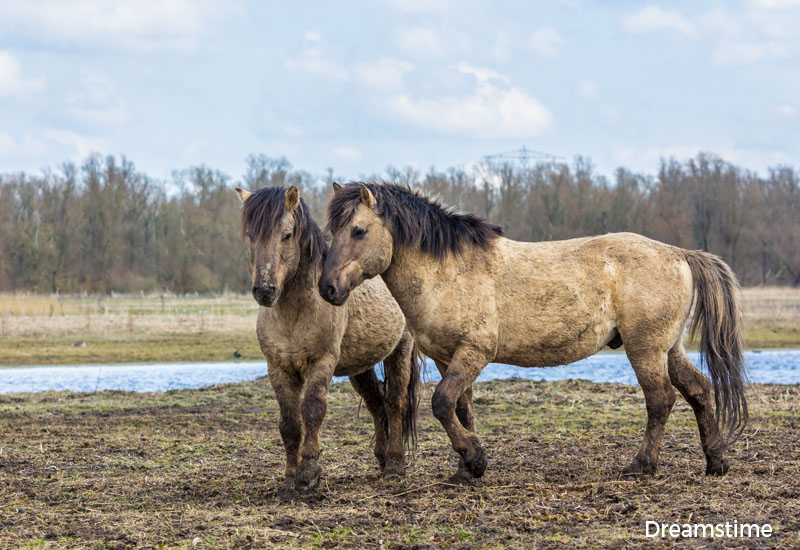
Two Konik free-ranging horses
The Dutch rewilding project using Konik horses caused huge public consternation when a large number of animals inside starved to death, and officials prosecuted those who attempted to bring hay into the park. Image by Andrew Balcombe Dreamstime.com.

Conservation in the face of public attitudes to animal welfare

Two rewilding cases have made waves in Europe recently due to welfare concerns. Of note is that both projects keep herds of rewilded horses in large enclosures (Koniks in Holland and Exmoor ponies in Denmark). Dubbed mini Jurassic parks, the managers originally settled on a non-interventionist strategy.

Since these nature reserves do not allow the horses to migrate and leave the area when food runs out, the animals are susceptible to starvation during extreme weather events. Further, the absence of predators inside the fenced areas means that during good times, herd numbers growunchecked unless humans control breeding and/or arrange managed culls.

In 2018, the Oostvaardersplassen (OVP) in the Netherlands came under the spotlight when a large number of the animals inside starved to death as officials refused to intervene.

The 5,000-hectare site, a reclaimed wetland area, was unsuitable and unable to support the number of animals. And despite the lack of predators, the land managers had not been implementing a population control plan.

Things came to a head when government officials began fining and went as far as arresting locals who were caught feeding hay to the starving animals. After continued public protests and lobbying with politicians, officials finally agreed to allocate extra feed to the emaciated animals and better control the numbers in the future.

More recently, a rewilding project at the Mols Laboratory Research Station, part of Denmark’s natural history museum, has come under fire. It was set up in 2016 to investigate scientifically the effects of rewilding on biodiversity.

But this year, photographs showing thin and injured Exmoor ponies began circulating on the web, and just like in the Netherlands, Danish project managers were refusing to intervene with supplemental feed.

The images caused an uproar in the local community and drove the Exmoor Pony Society of Britain to send one of their experts out, and to call on the UK’s World Horse Welfare to intervene. A Facebook Group of more than 11,000 followers is monitoring the events and is fuelling the ongoing welfare vs conservation debate.

The Danish Animal Ethics Council published their position statement on the need to achieve a balance between rewilding and human duty of care, particularly when animals are released into fenced areas. Their detailed report highlights the risks of prioritising conservation aims over the public’s concern for animal welfare outcomes.

The project managers however maintain that while they do not feed the animals when they are hungry, they don’t let them die of hunger either. They say that in times when there are too many animals for the available food they “will be the ‘wolf’ that reduces the population”, in effect removing individuals who are unwell or not coping. Nevertheless, the culling of wild horses is also a public relations and welfare minefield.

Wild but not wild

This year, animal rights groups in Italy created a media stir over herds of semi-feral Pentro horses living outside during the cold winter months.

These horses are not part of any organized rewilding project but live in a nature reserve, in semi-feral herds, and several studies have found their presence is beneficial to the ecosystem.

The Pentro Horse is one of five protected autochthonous breeds in Italy and takes its name from an ancient Samnite tribe. Unique because their genetic makeup has been characterized by climatic and geographic factors. Much like Camargue horses and Kerry Bog ponies, the Pentro horse is adapted to the Pantano della Zittola, its wetland environment.

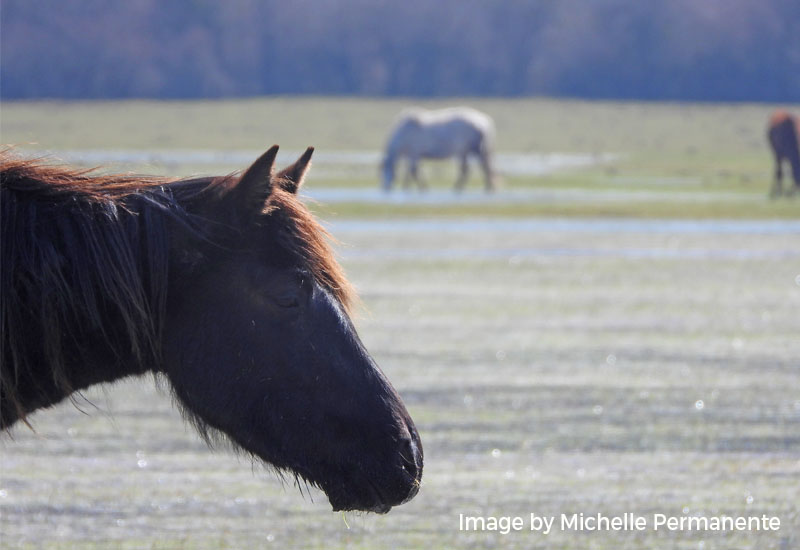
A Pentro horse grazes on a wetland
The Pentro Horse has roamed in this area since pre-Roman times. It is well adapted to the wetland environment and despite public concern, studies have show the horses’ grazing patterns have a significantly beneficial impact on the ecosystem. Images by Michele Permanente, a local environmentalist guide of Il Pantano della Zittola.

The Pantano della Zittola floods between October and May due to rainwater and the presence of underground springs. Surrounded by thick forest, it is one of the most important marshes and peat bogs in Italy.

The wetlands provide a resting place for migratory birds such as storks, eagles and herons. Horses (and cattle) have roamed this landscape since pre-Roman times and over generations, have adapted to face snowy winters, dry summers and the constant threat of wolves and bears.

Many of Italy’s working horses are historically and physically linked to their environment. The Murgese horse of Puglia has always been raised on karst topography (a landscape shaped by the dissolution of carbonate bedrock) because it promotes the growth of strong, hard hooves.

Tolfetano horses were left semi-feral for decades and evolved to handle the rocky, arid Tolfa mountains of Lazio, while the Monterufolino ponies, who were raised in the Tuscan mountains, are now sought-after all over Italy for their rusticity and adaptability to any sort of management system.

Likewise, Pentro Horses have been valued for centuries because of their hardiness and strength – a direct result of their environment. The fact they live outside most of their lives, does not mean they are not well-managed.

Public concerns over welfare

In early 2021, animal rights groups began circulating images of the protected Pentro horses in the snow. The horses, they said, should be brought inside over winter, and not outside facing the elements. There were claims that breeders had been misusing European Union funds intended for their protection for their own gains, with accusations that the horses had been ‘abandoned’ and left to fend for themselves.

It was even suggested that the horses were causing irreversible damage to the delicate wetland ecosystem. Politicians got involved, journalists and lawyers were called-in, and an internal investigation took place. Finally, a public meeting was held in Montenero Val Cocchiara with the support of the regional council.

Experts from Molise University provided scientific evidence to show that, contrary to what was circulating in the media, the wetlands were in excellent health. A total of 1,300 horses and cattle are registered and rotationally grazed over 2,300 hectares (public and private land).

Pentro Horses are one of Italy's autochthonous breeds
In Italy, several autochthonous breeds are kept in semi-feral conditions. Although they are owned by individual farmers, they share vast nature reserves with other livestock and have to deal with wolf and bear attacks. Image by Cécile Zahorka, The Pixel Nomad.

They showed the grazing patterns of the horses helps control shrubs and plant growth that would otherwise dominate the area and assist opening waterways and tracts of grass to create new opportunities for more plant species to thrive. Researchers even discovered previously unknown insect species, testifying to the unique and increasing biodiversity of the area.

Responding to those animal rights groups concerned about the welfare of the Pentro horse, who believe they should be brought down off the hills during winter, Professor Miraglia, who has been monitoring the Pentro horse population since 1998 said “No. The Pentro horse needs to be managed like this. These horses have rare genes which are testimony to their rusticity and ability to evolve and adapt to the environment they live in.”

Prof. Miraglia added “In the winter, the Pentro horses behave just like any other feral horses; they naturally move themselves to higher areas where they can seek out shrubs under the snow. This is completely normal and owners supply the horses with supplemental hay in the form of large round bales when required.”

Wolves, a cure-all for restoring balance or a dangerous problem?

Wolves and bears never went extinct in central Italy and unlike in other parts of the world, farmers have always accepted predator attacks on their stock as part of life. In recent years however, wolf numbers and attacks have increased, and livestock losses have been substantial.

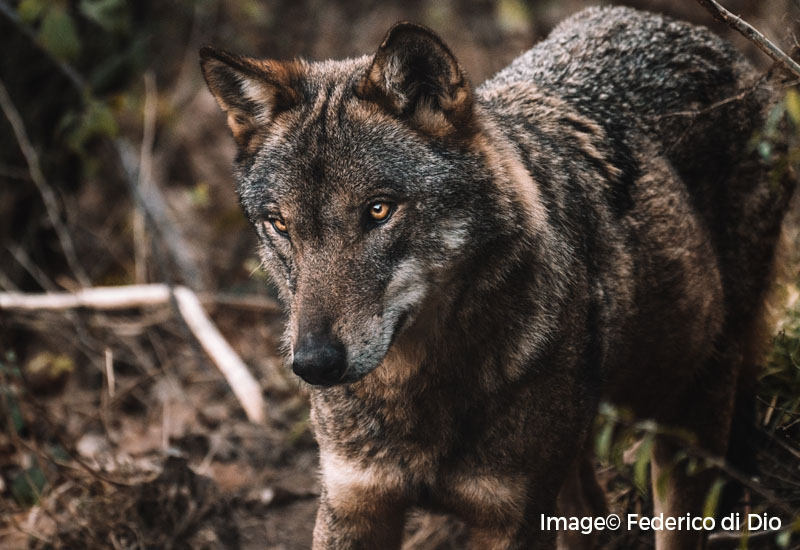
Wolves are the natural predators of feral horses in Europe
Wolves and bears never went extinct in central Italy, but in recent years, wolf attacks on livestock have increased. Just last year, there were reports of 150 Pentro foals being killed by wolves. Image by Federico di Dio.

Nicola Giarrocco, who helped promote the Pentro breed at the International Horse Fair in Verona says the wolves have become braver and bolder in the last couple of years. “Where once they went for just the foals, now they also bring down adult horses. That never happened in the past.” Nicola’s good friend, Carlo Scalzitti lost twenty foals last winter.

Local media has reported that during 2020, one hundred and fifty Pentro foals were killed by wolves. Is it possible to find a balance when wolves and livestock are kept in national parks under semi-feral conditions?

In 2020, a team of researchers led by Professor Konstanze Krüger of Nürtingen Geislingen University in Germany, travelled to central Italy to understand the situation between horse owners and land managers, and to understand the extent to which wolves should be preserved when they pose a direct threat to horses in the area.

One of the experts they interviewed was Professor Sandro Lovari, from the University of Siena, who believes farmers’ complacency is partially to blame for the rise in fatal wolf attacks.

During the 1970s there were only 150 wolves in the whole of Italy, so attacks were less frequent than any moment in history. “Farmers began to leave their animals up in the mountains unattended for up to ten days. Of course, then the wolf turns up and finds an open restaurant with no one to asking him to pay the bill” says Prof. Lovari.

He advocates the use of more than one prevention strategy, including the use of guard dogs like the enormous Maremmano or Abruzzese Shepherd, a primitive breed that has always been used in these parts to protect sheep. But while breeders have some success using dogs, they seem to be less efficient when protecting horses.

While hardy local cattle know how to circle around newborn calves and aggressively defend their young, horses are less likely to defend a lengthy attack. They tend to just give up. And unlike flocks of sheep, horses tend to split into small bands, which makes keeping a correct ratio of dogs to livestock much more challenging. Wolves are very adept at modifying their hunting strategies to distract or intimidate the dogs.

The other prevention strategy of bringing the mares back to the stables before foaling is also tricky in areas where year-round grazing occurs, like in the Pantano. Foaling can take place throughout the year, often in locations that are difficult to monitor.

To legitimise the conservation objectives, the government provides breeders with financial compensation for losses to wolves, but as Giarocco explains, these can be difficult to obtain; “It is frustrating. The government only reimburses breeders if they can demonstrate the carcass of the victim.

“Sometimes the carcass is not found. On other occasions the horse is badly injured but does not die straight away or is left so disabled it needs to be euthanased. Without a valid vet certificate, the loss of these animals is not reimbursed” says Giarrocco.

“We all like the idea of seeing a majestic wolf running in the wild, the image is beautiful – but horse breeders can’t deal with losses like this in the long run, and sometimes it feels like the forestry authorities don’t want to hear the farmers side – just the wolves.”

It seems clear that conservation initiatives will always present ongoing challenges, largely due to conflicts of interest between human stakeholders such as farmers, tourism operators and conservationists.

While generally regarded as positive to the earth’s sustainability, rewilding processes are also raising complex and sometimes unforeseen ethical and legal considerations.

Many of the species that rewilding seeks to restore or reintroduce, such as wild horses and wild cattle, became extinct as a result of human intervention. And while reintroduction may be the least we can do to make up for previous mistakes, we don’t want to cause harm to those species twice, first by causing their extinction and then by reintroducing them in a manner that causes individual members to suffer.

Animal welfare must be considered from the animal’s point of view and achieving the right level of human intervention will require understanding and a great deal of good will from all sides.

Further reading:

Hendra Vaccine Effective Against New Variant

Researchers have completed the analysis of the new Hendra virus variant which was detected by routine testing from a horse who died in 2015 but had tested negative to HeV infection.

They say that the current vaccine will be effective against the new strain, now named Hendra virus Genotype 2 (HeV-g2).

The results of the study led by the ‘Horses as Sentinels’ research team, are published in the journal Emerging Infectious Diseases.

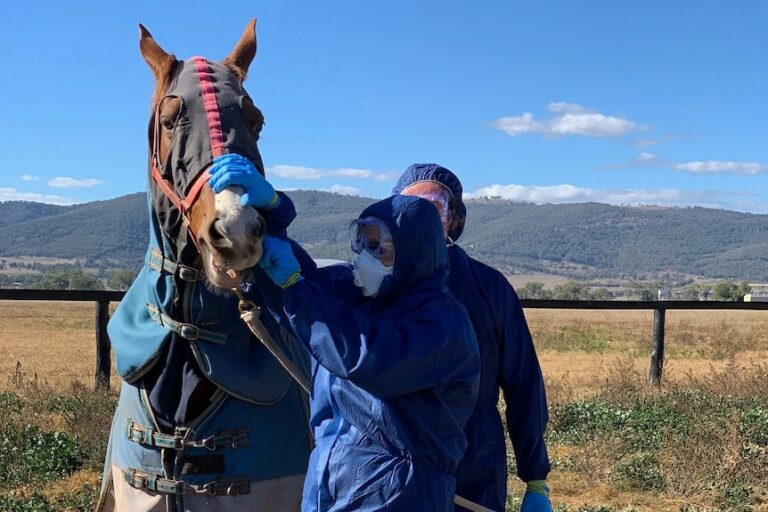
CSIRO and the ‘Horses as Sentinels’ project team have been working closely with vets and laboratories around Australia to implement improved tests for horses with signs of Hendra virus disease. The tests can detect and differentiate both types of Hendra virus with a high degree of accuracy.

Genome-sequencing and detailed analysis of the new strain’s features have found that its receptor-binding protein shares sufficient similarities with the previously known virus for the researchers to confidently state that the current human monoclonal antibody treatment and equine vaccine will be effective against this new variant.

These advanced genetic-testing technologies can avoid the need to conduct challenge trials on horses, something that scientists aim to avoid due to the significant welfare impact.

Keeping an eye on emerging diseases

‘Horses as Sentinels’ is an Australian veterinarian-led research project that aims to identify previously unknown viruses that cannot be detected by the current diagnostic tests. Once a new strain or virus is identified, new tests can be developed.

The project was founded by Dr Peter Reid, the veterinarian who helped identify the virus when he attended, in 1994, the 24 horses who died during the first outbreak in the suburb of Hendra, Brisbane. Since then, 4 people and over 100 horses have died after contracting the disease.

The research, which is funded by a Biosecurity Innovation Program grant from the Department of Agriculture, Water and the Environment, found HeV-g2 present in samples collected from one horse from Queensland, in 2015. The horse presented with severe disease signs consistent with Hendra virus infection but had tested negative to the known HeV strain.

In October 2021, the new genetic type was also detected in a horse near Newcastle in New South Wales, the most southern case of Hendra yet recorded.

All Australian horse owners and vets should remain vigilant

The findings show there is a greater diversity of HeV strains than was previously recognised circulating among flying fox species in Australia, meaning Hendra can be found across a broader region of Australia than previously thought.

HeV should be considered as a differential diagnosis in unvaccinated horses anywhere in Australia that flying foxes are present, and unwell, suspect horses which return an initial negative Hendra virus test should continue to be treated with the same caution as a Hendra virus positive case, until testing for the new variant is performed.

The newly recognised variant found in the Queensland horse who died in 2015 and the NSW horse who died in 2021, is 99 percent identical to the virus detected as present in grey-headed flying fox samples from Adelaide, South Australia, in 2013. The previously known strain is linked to the black flying fox that lives in northern Australia.

Biosecurity measures

These findings are a reminder of measures that horse owners and people who work closely with horses can put in place to reduce the risk of infection.

Biosecurity measures, such as vaccination of horses for Hendra virus and seeking veterinary attention for sick horses will help to minimise the risk of disease transmission.

To help prevent Hendra virus in horses, reduce the opportunity for flying-foxes and horses to interact. Do this by removing feed bins and water troughs from under or near trees. Remove horses or restrict their access to paddocks where flowering or fruiting trees attract flying-foxes.

Flying foxes are protected animals, with two species on our nationally vulnerable list. They are critical to our environment because they pollinate our native trees and plants and also spread their seeds.

Without flying foxes, we wouldn’t have our eucalypt forests, rainforests and melaleucas.

The study is open access and can be found here.

Further reading:

Hendra virus disease fact sheet

FEI Prohibits all Russian Athletes, Horses and Officials from Participation

0

Following the decision just days ago to remove all international equestrian events in Russia and Belarus from the FEI Calendar, the FEI Board today announced an Emergency Board Resolution to prohibit the participation of all Russian and Belarusian athletes, horses and officials in international events – in any country.

Russia is facing a major sporting fallout over its invasion of Ukraine, as more sports join the International Olympic Committee’s (IOC) ban of Russian athletes from the Winter Paralympics. Other sports to have followed suit include Football, Tennis, Formula One, Ice Hockey, Judo, Fencing, Rugby, Badminton, Taekwondo, Swimming and Curling.

The decision is made against Article 20.3 of the FEI Statutes which states that: “In an Emergency Situation the Board may, by a two-thirds (2/3) majority of votes cast, pass Resolutions which are normally the prerogatives of the General Assembly. In such cases, the National Federations shall be notified promptly of these measures. If a majority of the National Federations eligible to vote, responding within thirty (30) days of the date of the notice, signifies its disapproval, the measure shall be rescinded if possible.

Further to the recommendation of the IOC Executive Board on 28 February 2022, and in accordance with Article 20.3 of the FEI Statutes, the FEI Board agreed to:

  • prohibit Russian and Belarusian Athletes, Horses and Officials from participating in FEI Events until further notice;
  • exclude the possibility of Russian and Belarusian Athletes (equine and human) and Officials from participating in FEI Events under the FEI flag and/or in a neutral capacity.

The prohibition comes into effect as of midnight CET on Sunday, 6 March 2022 so that FEI Events already in progress, or about to start, are not unduly disrupted.

The resolution also prohibits, with immediate effect, the display of Russian and Belarusian flags, or their anthems played at, or in connection with, any FEI Events.

The FEI Board also condemned the invasion of Ukraine by Russian military forces and the support provided by the government of Belarus.

“It is regrettable that the FEI has needed to take such severe measures, but we need to ensure the safety, integrity and fairness of FEI Competitions during these difficult times,” FEI President Ingmar De Vos said.

“We sincerely hope that a peaceful solution can be found as soon as possible.”

FEI Removes all International Equestrian Events in Russia and Belarus

0

The Executive Board of the International Equestrian Federation (FEI) met on 28th February to unanimously condemn the invasion of Ukraine by Russian military forces and agree on the ramifications to equestrian sport in Russia and Belarus.

In line with the International Olympic Committee’s statement of 25 February 2022 urging International Sports Federations to relocate or cancel their sports events, the FEI Executive Board called on the FEI Secretary General to remove all international equestrian events in Russia and Belarus in the 2022 FEI Calendar in accordance with Articles 112.3 of the FEI General Regulations and 28.2 vi of the FEI Statutes.

In addition to removing all the Events from Russia and Belarus, the FEI Executive Board also unanimously agreed to freeze all FEI Solidarity and development activities and to cancel or relocate, where possible, FEI Courses for Officials scheduled to be held in Russia and Belarus in 2022.

The Executive Board requested that the FEI Board consider an Emergency Board Resolution addressing today’s recommendation by the International Olympic Committee Executive Board to prohibit the participation of all Russian and Belarusian Athletes and Officials. The FEI will continue to monitor the situation and decisions taken by the FEI Board will be communicated in the coming days.

During the meeting, the Executive Board also approved the allocation of a CHF 1 Million FEI Solidarity Relief Fund for the equestrian community in Ukraine. The FEI is liaising closely with the Ukrainian Federation and neighbouring countries to facilitate and coordinate logistical support as well as the financial aid.

FEI President and Chair of the FEI Solidarity Committee Ingmar De Vos (BEL) is currently in close contact with the National Federation of Ukraine and the equestrian community.

“We are deeply concerned for the welfare of all Ukrainians and the entire equestrian community in Ukraine,” the FEI President said. ”Their safety is very much our priority, and we are liaising closely with our key contacts in Ukraine and neighbouring countries to seek solutions to their most pressing needs.”

“Sport is a network which relies and thrives on team spirit and camaraderie and it is through these important friendships that we can offer support and make a difference to the people of Ukraine in these challenging times.”

Sales Records Broken at Australia’s 2022 Nutrien Classic

0

Sales at this year’s Nutrient Classic have outdone any previous results in the event’s 15 year history, generating more than $17.1 million, and surging past the 2021 gross of $10.71 million. With sales still under negotiation, the average sales price was $27,113.92, with a clearance rate of 92.31%.

Topping this year’s sale was the Willinga Park purchase of Bad in Black for $550,000 on account of Holly Clayden from Loomberah Lodge Performance Horses. Other notable sales include the $300,000 purchase of Terry and Christine Hall’s Hazelwood Country Blues by Matthew Moy from Kooyong Pastoral Company; Peter and Shari Knudsen’spurchase of Yaven Champagne Romance on account of John and Jenn Corbett for $260,000; and Petes Pet Squirrel, on account of Donell Park Stud, who sold for $190,000 to Koobah Performance Horses Pty Ltd.

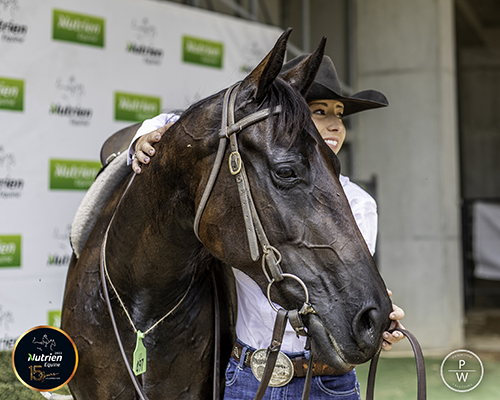
Bad in Black
Topping the 2022 sale was the Willinga Park purchase of Bad in Black for $550,000 on account of Holly Clayden from Loomberah Lodge Performance Horses. Image supplied by Nutrien Classic, photographed by Penwood Creations Photography.

Nutrien’s Mark Barton said the team is thrilled with the event’s success.

“The event was established to showcase the performance horse industry and provide a platform for a quality performance horse sale. Over the years, we’ve faced various challenges whether it be drought, bushfires, or a global pandemic. 2022 has been no different, our team were able to deliver another outstanding event with high quality competition. The Nutrien Classic has gone from strength to strength as we’ve seen this year and will only continue to grow.”

In addition to smashing sales records, six former harness racing horses (standardbreds) were auctioned at the Nutrien Classic for the first time, as part of a new partnership between Nutrien Equine and the NSW Harness Racing Industry Standardbred Re-Homing Company.

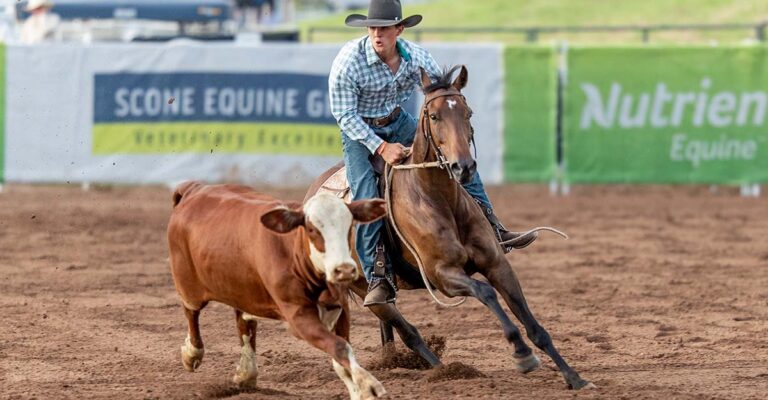
OTT Standardbred during campdraft
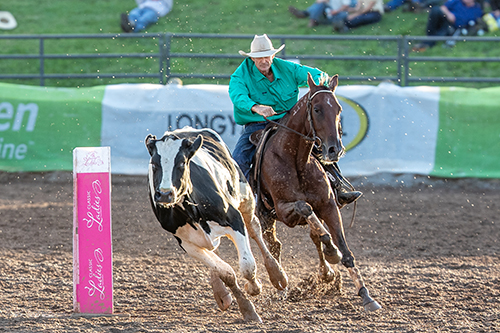
Monifieth, ridden by Michael Wilson was the winner of the 2022 Standardbred Campdraft. He was one of the six former Standardbred harness racing horses who was retrained to be auctioned at the Nutrien Classic for the first time, as part of a new partnership between Nutrien Equine and the NSW Harness Racing Industry Standardbred Re-Homing Company. Image supplied by Nutrien Classic.

The partnership paired 6 standardbreds with professional trainers in the lead up to the Classic as an introduction to life after racing.

The standardbreds were showcased in a freestyle event, utility work and campdraft before coming under the hammer. They are now headed to their new lives, some becoming working horses on a cattle station, and others joining riding schools in Southern NSW.

“Each of the trainers who have introduced these harness racing horses to their new life as a saddle horse have done a remarkable job,” said Peter Nugent, Chairman of the Standardbred Re-Homing Company. “To showcase the potential for not just these six horses but for any standardbred after racing through the Nutrien Classic was a wonderful opportunity.”

“It’s great to promote the breed for their life after racing” Mr Barton said. “It’s a great initiative and we will welcome it back in 2023.”

To top off the record-breaking event, the 2022 Nutrien Classic Store Cattle Sale also exceeded expectations. The Tamworth Regional Livestock Exchange penned 5,700 head of cattle and 350 calves; making a gross total of $13.8 million and the average price per head was $2,420.

Nutrien Agent, Scott Simshauser said, “In its 12 years, the store sale has built a solid reputation. We saw cattle from across New South Wales and South-West Queensland come up for sale. Attendees were overwhelmed by the quality of stock on offer, with many buyers securing premium lines of cattle.  Top prices varied from $2,920/head for Angus steers, $4,075 for Pregnancy-Tested-In-Calf cows and a pen of cow and calf units sold for $4,875.”

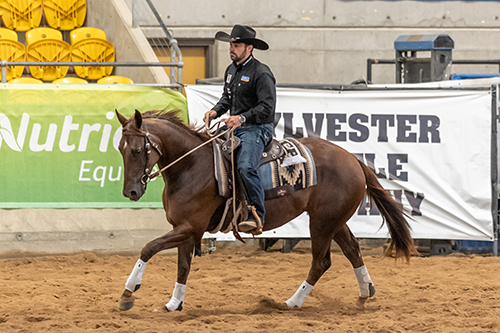
The Nutrien Classic was established to showcase the performance horse industry and provide a platform for a quality performance horse sale. Image supplied by Nutrien Classic, photographed by Kate Jones Photography.

Alongside the stock horse, Standardbred and cattle sales, the campdrafting competition attracted many riders who competed for a share in $400,000 worth of prizes – Australia’s largest campdraft prize pool. The winners were:

  • 2022 Nutrien Equine Classic Campdraft Winner: Ben Hall from Muttaburra QLD, riding HUNTER VIEW CONMAZE, owned by Ben and Cheri Stanger, 266 points
  • Prydes EasiFeed Australian Performance Horse Challenge Winner: Nathan Wilson, riding MITCHELLS CONTUCKY, owned by Darrin & Cathie Jones, 335 points
  • 2022 Martins Stock Haulage Open Campdraft Winner: Will Durkin, riding NONDA SOUTHERN CROSS, owned by Heather & David Pascoe, 269 points
  • 2022 4CYTE Masters Campdraft Winner: Ben Hall, riding MILLUNGERAS ALLEYCAT, owned by Lukas Roberts, 169 points
  • 2022 Dalgety Stallion Shootout Overall Winner: Ben Hall, riding SHEROS TRADITIONAL ACRES, owned by Andrew Sheridan, 205 points
  • 2022 Charlie Maher Memorial Young Guns Campdraft Winner: Will Edwards, riding PORTER, owned by Mac and Gayle Shann, 178 points
  • 2022 Coverdrive Dash For Cash Gelding Campdraft Winner: Dan Condon, riding ROYAL CROWN WHICKEY, owned by LE & CD Stewart, 89 points
  • 2022 Jimmy Matthews Memorial Ladies Dash For Cash Campdraft Winner: Kate Southern, riding EBS TOUCHMIASOMEMORE, owned by Kate Southern, 90 points
  • NCCA Champion Rider Title Campdraft Team/ Overall Individual Winner: Team ACA won the overall, with Ben Hall, riding CHISUMS CASH, 269 points to win the individual
  • 2022 Standardbred Campdraft Winner: Michael Wilson, riding MONIFIETH

As in previous years, the Classic Ladies Foundation has gone above and beyond with their fundraising efforts, raising more than $100,000. The funds were generated through the sale of the iconic Ladies Foundation caps, the Classic luncheon, charity auction and monster raffle.

The women behind the Classic Ladies Foundation are located across Australia and come together for the event to give back to charities that advocate for causes impacting their community. This years’ proceeds will be proudly donated to Bowel Cancer Australia and Ronald McDonald House Charities.

Ronald McDonald House Manager for Northern New South Wales, Rhiannon Curtis said “We’re incredibly grateful for the donation from the Classic Ladies Foundation. The money received is the equivalent to one years’ accommodation. It will be spread out nationally, providing relief for regional and rural families whose children are undergoing medical treatment.”

“This event would not be possible without the ongoing support from so many people, organisations and sponsors. To all who attended; competitors, vendors, buyers or spectators, thank you for supporting our event that will be remembered in the history books as a record-breaking year,” said Nutrien’s Mark Barton.

“Make sure you save the date for 2023 as we’re already looking forward to seeing you all for the 16th Nutrien Classic,” concluded Mark.

Willinga Park Bushfire: Planning and Preparation Paid Off

A decade of considered bushfire planning and horse property maintenance helped save an entire town. Willinga Park effectively blocked the advance of the massive Currowan Fire towards the coastal town of Bawley Point during Australia’s catastrophic 2019-2020 fire season.

As part of an exclusive series on resilience and planning for extreme weather events, I spoke with Terry Snow, founder of this award-winning equestrian facility to learn the strategies that prevented a disaster.

Terry Snow, owner of Willinga Park with yearlings
Terry Snow soon recognised the fire risk at Willinga Park, he says the key to their success has been working from the start with a fire management consultant and implementing fuel-reduction management over the last ten years.
Image by Ginette Snow,
courtesy of Willinga Park.

A man with a vision 

Terry Snow, a Canberra-born businessman with a noteworthy track record in property development and a passion for Australian Stock Horses and Performance horses, is the driving force behind Willinga Park, and is more than happy to share his experience in fire planning and preparedness. 

Terry tells me he purchased the property, which lies to the west of Bawley Point on the south coast of New South Wales, in 2002 and mainly to facilitate travel to and from their family holiday residence. However, his long-time love of horses and riding had already led him to embark on the Bicentennial Trail, and it sparked the idea of developing Willinga Park. 

“I rode most of [the Bicentennial Trail] and on return, I saw the opportunity to breed [Australian] Stock Horses on the property, and it all evolved from there” says Terry.

As yards and facilities were built, Terry realised the potential of adding performance horses to his herd, specifically Warmbloods, to cross-breed with his Stock Horses, the aim being to create an all-round horse with good temperament for those who are not specifically interested in riding large preformance-bred Warmbloods. 

His vision has grown the property into what it is today – a world-class equestrian centre and pastoral property covering over 2,000 acres. 

The indoor arena at Willinga Park
The award-winning facilities at Willinga Park cater to events in the Olympic disciplines, Campdrafting and Polocrosse, and have stabling, yards and pastures that are used throughout the year for hosting featured events, such as Dressage by the Sea, Eventing@Willinga, Jumping@Willinga and The Gold Buckle Campdraft Championships.
Photo by Ginette Snow

The renowned architecturally designed facilities include covered and outdoor arenas for the Olympic disciplines, Campdrafting and Polocrosse, plus stockyards, pastures and stables that are used throughout the year for hosting featured events, such as Dressage by the Sea, Eventing@Willinga, Jumping@Willinga and The Gold Buckle Campdraft Championships. 

Grand Prix Horse Stables at Willinga Park. Photo by Ginette Snow

“Willinga’s location still attracts many riders from across Australia who want to participate in our featured events and make use of its great facilities” says Terry.

The property can accommodate over 100 horses year-round as well as 600 cattle, and it has been designed with a park landscape in mind, it is adorned with native gardens and striking art sculptures. 

In addition, Willinga Park offers holiday accommodation and a brand new equine hospital, the latest project to capture Terry’s attention. 

With a clear enthusiasm, he explains that his aim is to establish a unique facility with a special focus on fertility and breeding. The veterinary staff are already working closely with the Royal Women’s Hospital on various human-based, advanced reproduction techniques that can be conveyed to horses for improved outcomes.  

Supporting all these public activities on a property that is reasonably remote has required the installation of a self-sufficienct energy supply. 

'Balance Beam' by Haruyuki UchidaOne of the many sculptures adorning the grounds of Willinga Park. Photo by Ginette Snow
‘Balance Beam’ by Haruyuki Uchida, one of the many sculptures adorning the grounds of Willinga Park. Photo by Ginette Snow

To this effect, Terry invested in a private micro-grid comprised of an 800-kW solar system, a 500 kW/2.2 MWh Tesla battery storage system, and MVA diesel generators which are spread across three locations so as to secure the power supply. As he later explains, this energy setup was to play a crucial role during the Currowan fires. 

For both, the energy micro grid and the architecturally designed buildings, Willinga Park has been acknowledged with various national awards.  

Willinga Park’s bushfire planning 

Willinga Park is situated in bushland west of the New South Wales coastal town of Bawley Point. It lies between the Meroo and Murramarang National Parks and is close to a major water inlet that is surrounded by swamplands. 

Terry comments that from the start, it was obvious that the property’s major threat would be bushfires. Indeed, the property was put to the test in December 2019, when record temperatures and strong dry westerly winds pushed the Currowan fire across the Clyde River and Princess highway east towards Willinga Park and Bawley Point. 

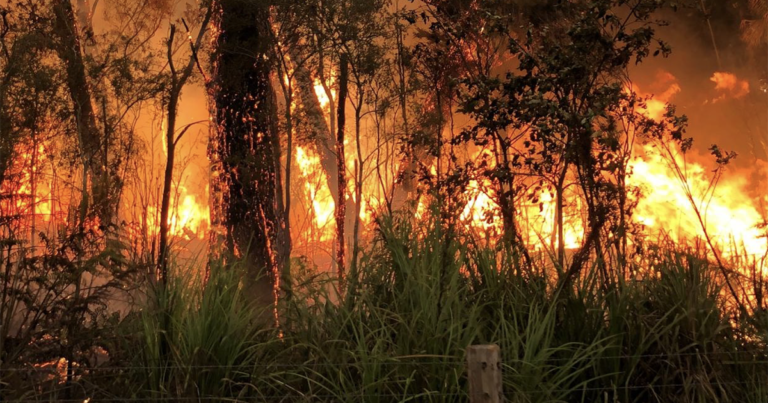
The fire, which started in on 26th November in remote bushland, spread towards the coast and would eventually claim three lives, 312 homes and almost 5,000,000 hectares of bush. But remarkably, Willinga Park withheld the wall of flames, which rised up to 100ft high, blocking its advance, intensity and effectively protecting the local town of Bawley Point. 

“This was largely prevented because of how we manage the property”, Terry says when I ask how this happened. 

Terry explains that Willinga Park has been developed in stages, with various bushland clearings being completed for building and pastoral zoning purposes while leaving many mature trees standing. It is also important to note that prior to the purchase, the forests had been intensively logged, removing most of the large dominant overstorey trees and given rise to a pulse of dense regeneration, choking all the grass.  

Such regrowth poses a major fire hazard, and Terry maintains that the key to their success has been working from the start with a fire consultant and implementing the recommended bush fire-ready strategies, such as fuel-reduction management over the last ten years.  

The strategy clearly paid off. When the fire front hit, the lack of fuel on the ground halted its journey eastwards across the property and also absorbed the spot fires that in turn prevented it from approaching the town. “Only a few trees on the place had burn spots, and we only had to replace some water pipes and repair some fencing”, he says.  

Willinga Park Fire front map
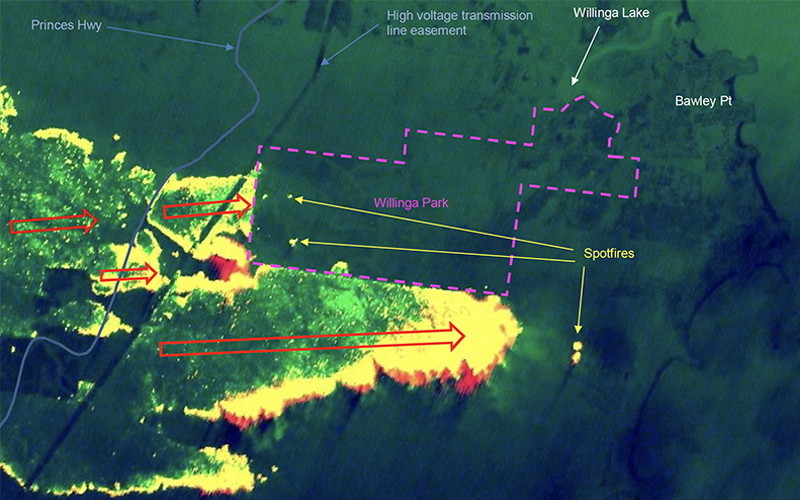
The fire spread stopped when it ran into the western and southern boundaries of Willinga Park. The extent of the actively maintained and grazed paddocks also absorbed spotting from the Currowan Fire impact, preventing the fire from spotting over Willinga Park into dense vegetation to the east, extending to Bawley Point. Image source: GHD report on Currowan Fire Impact at Willinga Park.

During the bushfire

Terry recounts how quickly the fires went through. Before and during the fire event he stayed in contact with his fire consultant, checking the fire front’s direction of travel and discussing their stay-and-defend approach, which Terry explains was a good option thanks to their land management and self-sufficient power supply. 

In addition, Willing Park harvests its own water and at the time of the fires, had good fire-fighting supplies stored in various dams and a lake, which they pumped into their private water trucks. Aided by the Rural Fire and Emergency Services, the spot fires around Willinga Park were contained and prevented a major fire disaster.  

In fact, confidence in Willinga Park’s management and fire planning meant that many locals could evacuate their horses from surrounding areas to Willinga Park for safety. The horses were kept in groups in 60 to 80-acre paddocks and supplemented with hay, which had been sourced and stored despite the long drought. 

“We purposely kept pastures well grazed to reduce fuel load” says Terry. He notes how the horses and cattle remained reasonably calm and stayed contained in the paddocks as the fires approached. 

Bushfire aftermath and reflection

When you consider the size and intensity of the fire front, and its impact on other communities, it is impressive to hear that no people or animals needed to be evacuated and overall, the property sustained such minimal damage. 

But while Terry is adamant that his long-term planning and fuel reduction approach were the most crucial aspects, in practice, there are various State, Territory and local government restrictions regarding clearing and the removal of any vegetation in private properties and around National Parks. 

Terry explains he went through numerous consultations leading up to the dreadful 2019-2020 fire season. Based on his experience, he firmly believes that landholders should be able to more easily obtain approvals for hazard-reduction work, and receive clearer information on what fuel-load reduction activities they can undertake around their properties.

This was raised in the 2020 Report of the Royal Commission into National Natural Disaster Arrangements, also known as the Bushfires Royal Commission, which included Willinga Park’s approach as an example for fuel management on private land, and has resulted in some new developments in relation to fuel management and clearing without approval. 

The following is an excerpt of the report submitted to the Bushfire Royal Commission. It was compiled by Paul de Mar, an expert consultant in bushfire risk management into the 2019 Currowan Fire impact at Willinga Park and Bawley Point:

“Fire spread stopped when it ran into the western and southern boundaries of Willinga Park. These areas were occupied by actively grazed paddocks, with an open cover of mature Eucalypts and Corymbias, from which dense regrowth vegetation (arising from previous intensive logging operations in the 1990s), had been cleared. The extent of the actively maintained and grazed paddocks also absorbed spotting from the Currowan Fire impact, preventing the fire from spotting over Willinga Park into dense vegetation to the east, extending to Bawley Point. 

“Due to Willinga Park’s blocking effect on the fire run, in conjunction with the substantial efforts from local rural fire services brigades, supported by other emergency services, the local community and Willinga Park’s staff, a major fire disaster in Bawley Point was averted.”

In addition to the Vegetation Clearing Code of Practice (i.e. 10/50 vegetation clearing rule for people living near bushland), this year, NSW has also taken in effect a Rural Boundary Clearing Code (Clearing Code) which allows landowners to clear 25 metres of certain vegetation within their boundary for hazard reduction without further approvals. 

Terry reiterates that without the regrowth clearing and stand thinning treatments over last 10 years, Willinga Park would have combusted. 

“It’s not that you can’t have trees or vegetation, but you need to look at the spacing and reducing interlocking of canopies”, he says.  

He also mentions that the species of trees and other vegetation around buildings should be considered, aiming for species that do not drop lot of bark and/or are highly flammable. While most jurisdictions would echo the use of natives, he comments that not many look at what particular native species are more appropriate, for example those that are less flammable. 

Terry’s story shows there are various aspects to consider when it comes to being bushfire ready, but reducing fuel load and creating pastoral fire breaks were pivotal in blocking a fire run which would otherwise have engulfed the Bawley Point town. Terry insists that in preparations and planning, engaging a local fire and council consultant is a must.  

As to what fire risk management advice he would give to any landowner; “It’s important that you clean up any fine fuel around your place”, he says. “If you have leaf litter and fine fuel like twigs and branches around, you will have a higher fire danger as it creates hotter fires. With each fire season approaching, it’s important that you manage your pastures and graze them well.”

“And stock up on hay – in a shed that is away from any direct danger of fire” he adds to emphasise the importance of being self-sufficient, which includes having plentiful fire-fighting water sources and an alternative power supply because often, the mains power will be cut during bushfires. 

The future 

Looking back on the event, Terry is proud of how well prepared they were for the 2019-2020 bushfires. The only further improvement undertaken since that time has been increasing the property’s water holding capacity. 

Overall, Terry will apply the same approach of preparedness and land management that he has used over last 10 years. 

The future for Willinga Park looks bright as it focuses on recommencing all the major equestrian events in 2022 and the opening of their specialist equine reproduction clinic. 

Click here to find out more about Willinga Park, and stay up-to-date in relation to upcoming events.

Further Reading:

GHD report to the Bushfire Royal Commission on the Currowan Fire impact at Willinga Park and Bawley Point can be found here.

Perceptions of Sport Horse Welfare Issues: New Study

There are growing concerns about the welfare of horses from within and outside sport and these concerns are threatening horse sports’ social license to operate.

In early 2021, the Animal Welfare Research Network (AWRN) and National Equine Welfare Council (NEWC) ran an online equine welfare workshop titled: “How Happy are Equine Athletes? Assessing Equine Quality of Life in Equestrian Sporting Disciplines”.

The workshop, which involved 38 participants from equestrian sports and 10 animal welfare research, aimed to:

  • Gain a better understanding of the current practices and guidance within equestrian sporting disciplines that protect or improve equine welfare;
  • Evaluate the potential usefulness of current approaches to assess animal welfare, and inform the development of measures relevant to the equestrian sports sector;
  • Plan future collaborative initiatives to promote the consideration of equine welfare in the sporting context and provide evidence of how to recognise a “happy equine athlete”.

Presentations were made by representatives from dressage, eventing, show jumping and endurance including riders, trainers, owners, vets, spectators and coaches.

All participants were invited to watch a series of presentations about different aspects of sport horse welfare, ranging from social licence to operate and the ethics of equine sport, through to considerations of behavioural signs of affective state, patterns of equine sleep and measures/tools used to assess welfare.

There were also presentations from representatives of each of the four main equestrian sports considered at the workshops (dressage, eventing, showjumping and endurance), all of whom used video footage to describe their horses’ competitive lives and to talk about their experiences and perceptions of equine welfare within their discipline.

Workshop participants were then selected into focus groups on a “first-come, first-served” basis and according to their involvement in equestrian sports or animal welfare research.

The total of six focus groups included four equestrian discipline-specific groups (endurance, showjumping, dressage and eventing), one mixed equestrian sports group (for other equestrian disciplines including racing, western riding and polo), and one group consisting of welfare/research staff.

Discussion topics included ethical dilemmas, what constitutes good welfare versus poor welfare, the equine athlete versus ‘life as a horse’, demands of the sport, horses’ level of enjoyment and animal welfare indicators.

The focus group sessions were recorded for later analysis, and immediately following each session, all facilitators shared notes about the main themes and ideas that had arisen in each group.

The data collected was analysed and the findings were published in November 2021, in the open access Animals under the title: ‘How Happy Are Equine Athletes? Stakeholder Perceptions of Equine Welfare Issues Associated with Equestrian Sport’.

While each group discussed some discipline-specific issues, the study showed that participants considered the underlying issues affecting sport horse welfare to be broadly similar across equestrian sports.

Stakeholders within equestrian sports described the need for improved welfare in all disciplines.

They felt the majority were doing their best to prioritise the welfare of their horses, but that compromises were often made because of various constraints. The conflict was often exacerbated by the varied opinions of what is required to produce an equine athletes. For example, when horses are considered a ‘financial investment’, they may be viewed as only athletes or commodities, and return on investment may be prioritised over welfare.

The greater the demands placed on elite equine athletes in racing, show jumping and dressage, could also lead to further welfare compromises.

They acknowledged the threat of adverse public opinion on the sustainability of sports, they spoke of their need to be the ‘voice for the horse’ and of taking responsibility for protecting the welfare of equine athletes.

Young horse classes were generally considered problematic because they could result in an overproduction of horses, cause horses to be pushed harder than they would otherwise be, and reduce the longevity of their careers.

Although participants agreed that safeguarding the welfare of equine athletes throughout their lives is an important consideration, it is unclear whose responsibility this is or how they should be protected. This suggests that sports’ governing bodies

The focus groups revealed conflicts between stakeholders responsible for equine welfare. At an elite level, horse welfare may be compromised if they are seen as only athletes or commodities. While there appeared to be a focus on the physical health of horses, their psychological needs were not always met.

Many participants recognised that while improving competition practices could improve welfare during competitive events and could potentially improve the public perception of equestrian sport, competition represents only a very small part of a horse’s life. Although this is undoubtedly important in terms of equine welfare, the impact on the horse may be minimal in comparison with its general management and training.

Overall, the study shows that how the horse feels (their affective state) is not typically at the forefront of most participant’s thoughts in relation to competitive performance, although it is considered in other contexts.

For example, they suggested initiatives to reduce or avoid negative affective states at events but spoke less frequently about providing horses with opportunities to experience positive affecting states as a way to enhance welfare during competitions. In the current understanding of welfare, avoiding negative experiences without providing opportunities to experience positive experiences can, at best achieve a state of neutral welfare.

In relation to welfare assessment tools, very few participants had used a training log or existing tool to monitor their horse’s welfare, and they showed little confidence in the ability of current welfare assessment tools to evaluate affective states in training and competition. Some said that signs of ‘happiness’ are currently unidentifiable.

The authors suggest that if it is true that sports stakeholders do not consider the existing welfare assessment tools feasible, researchers must involve the end users in the development from an early stage.

Other areas for improvement were identified such as training for judges and stewards to identify the behavioural signs of stress or pain, closer scrutiny during pre- endurance event physical examinations and greater emphasis on positive affective states (feelings).

The study is open access and can be found here. Furtado T, Preshaw L, Hockenhull J et al (2021) How happy are equine athletes? Stakeholder perceptions of equine welfare issues associated with equestrian sport. Animals 11, 3228.

Further evidence that weaning is stressful for foals

There is strong evidence to show that weaning (artificially removing foals from their mothers) causes foals considerable stress.  A variety of factors can affect just how stressful weaning is for foals, including their age and management factors (e.g., feeding, social grouping, handling, housing).

A recent study by Italian researchers aimed to investigate stress in foals exposed to two different weaning protocols. It was published in the Journal of Veterinary Behaviour under the title: ‘Behavioral and hormonal effects of two weaning situations in trotter foals.’

  • Foals in situation 1 (S1) (n=10) were weaned at five months old, two at a time and handled regularly.
  • Foals in situation 2 (S2) (n=12) were weaned at seven months old, all on the same day with little handling.

Stress was evaluated by watching video recordings of foal behaviour and measuring stress hormones (cortisol) in saliva and hair samples. Behaviours included interactions between foals, exploring, resting, eating, drinking, urinating and defaecating.

On the day of weaning, all the foals displayed behavioural changes consistent with stress, such as increased vocalisations and decreased time eating. The decrease in time spent eating was also present on day seven for S1 foals, but not for S2 foals.

One week after weaning, foals in S1 had higher cortisol in hair samples compared to foals in S2.

However, because the foals in each of the situation varied in treatment and age, the study could not determine what aspects of S1 may have been more stressful to foals compared to S2, with the authors recommending further research to investigate influencing factors.

The study by Normando S, Giaretta E, Schiavon I et al (2021) titled ‘Behavioral and hormonal effects of two weaning situations in trotter foals’ is published in the Journal of Veterinary Behavior. The abstract is available here. 

Read the findings of a study which compared natural and artificial weaning

Find out what happens when you let mares decide when to wean

Knowledge Certificate for all Horse Owners will be Required by Law in France

2

New legislation passed in France will require all horse owners to demonstrate sufficient knowledge of equine needs that promote wellbeing.

As part of their inter-species legislation, which aims to combat animal abuse and strengthen the bond between humans and companion animals, the French Parliament has introduced three laws that affect horse owners.

They were published in the Official Journal of the French Republic on December 1, 2021 and include a requirement for all horse owners to demonstrate sufficient knowledge of equine-specific needs; the registration of neurectomies in horse passports; and safeguards for agistment centre operators against unpaid fees.

Knowledge certificate for private horse owners: A welfare guarantee for equines

The newly adopted legislation aligns with the ownership requirements for other companion animals and requires all horse owners to demonstrate their knowledge of the specific needs and living conditions that align with equine wellbeing.

Unless already licenced by other governing bodies such as the French Equestrian Federation (FFE), horse owners will have to undertake education and obtain a certificate, and before selling or giving a horse to another person, the seller will have to ensure the buyer has this certificate.

The initiative to licence horse owners by requiring them to demonstrate their knowledge and capacity to protect the welfare of their horse has been a requirement for FFE members since 2019.

The FFE requirement is equivalent to the existing Galop® Level 4, which involves a theory module that is delivered online via the FFE Campus, and a practical module, which must be completed at one of the riding clubs affiliated with the FFE Education Department.

The Galops® are the certificates of skill required of all equestrians who are members of the FFE. They are divided into 7 levels. Levels 1 to 4 are designed for either young (pony) riders or adults, and the latter can progress through levels 5 to 7 to specialise within each discipline.

Since its establishment, FFE President Serge Lecomte has been lobbying the government for a legal framework to extend this knowledge requirement to non-members and non-professionals, a feat that has now been achieved because in 2020, the Prime Minister entrusted Loïc Dombreval, Deputy of the Alpes-Maritimes and President of the Animal Condition Study Group, with the mission of improving the welfare of companion animals, which includes equines.

It is particularly interesting to see that in France, equines have been added to companion animals in the legislation. In contrast, in 2018 in the US, President Donald Trump signed a bill which had the support of both chambers to classify ‘once and for all’ that horses are livestock, not pets.

In most other countries like Australia, horses remain in a grey area since they can be livestock, companion, service or working animals. The lack of clarity means they often fall through the legislation cracks.

While the decree that defines the content and methods of issuing the certificate of knowledge nationally still needs to be approved, it is expected that the obligation to obtain a horse owner’s licence will come into force next year.

Requirement to register a neurectomy in the horse’s ID documentation: A win for traceability

To promote transparency and help sport bodies, from now on, the registration of all neurectomies in the affected horse’s identification documents will be compulsory.

A neurectomy is a surgical procedure that involves cutting a nerve or rendering it insensitive as a means to relieve the pain of horses with otherwise untreatable/chronic or severe foot-related lameness.

As a veterinary treatment, neurectomies are not prohibited however, it is against the regulations of sporting bodies such as the FFE and horse racing as it allows unfit horses to compete, compromising their welfare and exacerbating existing injuries.

Unpaid Agistment Fees: A safeguard for Professionals

Until now, when a horse owner stops paying the agistment fees due, responsibility for the affected horse’s care had fallen on the professionals in charge of the facility.

With the new law just passed, failing to pay for your horse’s agistment will be considered ‘abandonment’, and will allow the facility’s owner to begin a remediation process whereby after a formal notice to the owner and a legal period of three months, the facility’s owners can appeal to the courts, who after studying the case, may authorise the auction of the equine.

The integration of these equine welfare laws is a progressive step forward that is welcomed by the FFE and acknowledges the shift in societal attitudes towards animals.

On behalf of the FFE, Serge Lecomte thanked the parliamentarians involved and in particular the two presidents of the Cheval Studies Groups as well as Loïc Dombreval, co-author of the legislation and Anne Chain-Larché, senator of Seine-et-Marne and Rapporteur to the Senate, for attending to the FFE’s concerns and understanding of the issues of equine well-being, and the resulting economic considerations for professionals.

Information for this article was sourced from the FFE.

Loi n° 2021-1539 du 30 novembre 2021 visant à lutter contre la maltraitance animale et conforter le lien entre les animaux et les hommes (voir notamment les articles 1, 21 à 24).