There is a lot still to learn about laminitis but, for the horse, extreme pain is the eventual result.
The changes to the hoof capsule that happen after full-on laminitic event are well-known and easier to recognise.
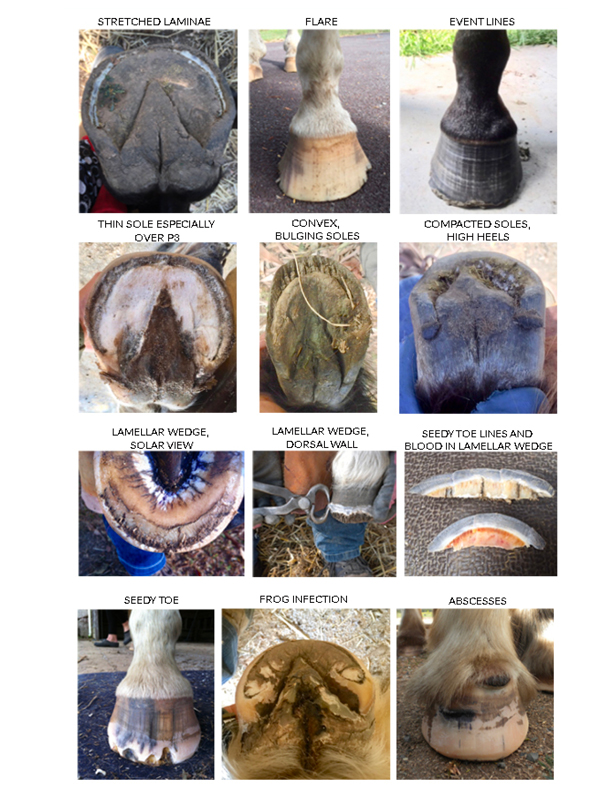
Lameness, in some cases severe and the angle changes to the pedal bone that you see in X-rays and depicted in the images on the left, are clear signs of laminitis.
But did you miss the very first signs?
It is becoming clear that in the vast majority of cases, the laminitis progression is lengthy, and luckily, more and more hoof care professionals are beginning to recognise that the hoof problems photographed above are all possible early signs of lamintis.
Event lines are better known signs, but the following signs also need to be considered and require professional attention and careful management:
a stretched lamina,
lamellar wedge,
flared and disconnected hoof walls,
thin sole over the tip of the pedal bone,
bulging convex soles,
compacted soles and high heels,
seedy toe,
frog infections and abscesses
All these hoof issues could indicate laminitis. Act now! Image courtesy of Maja Stocker.
Establishing whether the horse is insulin resistant, has Equine Metabolic Syndrome or Cushings (PPID) should be prioritised.
In the meantime, start by adjusting the diet to a low sugar and starch diet, and provide sufficient exercise – if your horse is still sound.
Many of these conditions are also perfect entrance points for fungi and bacteria, especially in warmer temperatures and standing in wet, dirty surfaces.
Remember that horses are very stoic and can mask low levels of pain. By the time they are lame, the laminitis can be extremely painful.
Everyone wants to see their horses with a sleek, glowing coat and not only for aesthetic reasons, but also because the quality of a horse’s hair coat is directly related to his overall health. Providing the horse with plenty of roughage and a balanced diet along with an effective parasite control regime, sufficient exercise and grooming is imperative when striving for a healthy coat.
Horse owners are frequently asking “what can I feed to darken my horses coat or make him shinier”? In order to answer this, we must first understand the basics of hair structure and the genetics of coat colour.
Hair structure
Hair is a filamentous biomaterial that grows from follicles found in the dermis layer of the skin. Hair is primarily composed of protein, notably keratin. Hair growth begins inside the hair follicle. The only “living” portion of the hair is found in the follicle.
The hair that is visible is the hair shaft, which exhibits no biochemical activity and is considered “dead”. The base of the root is called the bulb, which contains the cells that produce the hair shaft. Other structures of the hair follicle include the oil producing sebaceous gland which lubricates the hair and the arrector pili muscles, which are responsible for causing hairs to stand up.
Coat colour
There are many different coat colours possible, but all colours are produced by the action of only a few genes.
The simplest genetic default colour of all domesticated horses can be described as either “red” or “non-red”, depending on whether a gene known as the “Extension” gene is present.
When no other genes are active, a “red” horse is the colour popularly known as a chestnut. Black coat colour occurs when the Extension gene is present, but no other genes are acting on coat colour.
The Agouti gene can be recognized only in “non-red” horses; it determines whether black colour is uniform, creating a black horse, or limited to the extremities of the body, creating a bay horse.
Chestnut, black, and bay are considered the three “base” colours that all remaining coat colour genes act upon. There are a number of dilution genes that lighten these three colours in a variety of ways, sometimes affecting skin and eyes as well as hair coat, including cream, dun, pearl, champagne and silver dapple.
The Palomino colour for example, is created by a single allele of a dilution gene called the cream gene working on a “red” (chestnut) base coat.
Genes that affect the distribution of white and pigmented coat, skin and eye colour create patterns such as roan, pinto, leopard, and even white markings. Some of these patterns may be the result of a single gene; others may be influenced by multiple alleles.
Finally, the grey gene, which acts differently from other coat colour genes, slowly lightens any other hair coat colour to white over a period of years, without changing skin or eye colour.
Sun bleaching
Melanin is a pigment found in hair cells that gives each its colour. The sun bleaches and destroys the melanin in hair making it lighter. Since hair is dead, the hair will stay that colour until new hair comes in. The UV in sunlight oxidizes melanin into a colourless compound; this is why hair gets lighter. Keeping a light sheet on your horse during the sunniest periods of the day may help reduce bleaching of your horses’ hair coat.
Nutrition and coat health
Firstly, it should be noted that the coat colour of a horse cannot be changed, unless it is chemically dyed or bleached by the sun and for any nutrients to have an effect on the integrity of the hair, it has to be implemented prior to the new coat starting to grow in.
With that being said, there are several nutrients known to be involved in the synthesis of the protein found in hair.
Copper, Zinc, biotin, fatty acids and protein (specifically the amino acid methionine) are necessary for hair growth and structure.
Copper and zinc are required for the manufacture of the melanocytes that give bays, blacks and chestnuts their colour. Most people have heard about using biotin to improve hoof quality, but this also applies to the coat, insufficient biotin can lead to thin and brittle hair.
Hair is primarily composed of protein once the water is removed. Insufficient protein intake can result in coats that do not lie smoothly, as well as brittle, slow growing coats. Some specialist feeds supply these nutrients to your horse and help with general health and condition of horse coats, manes, tails and skin.
Adding oil to the diet will supply essential fatty acids that are required by the hair follicle to lubricate the hair which gives it a shiny appearance. Alternatively, look for a concentrated feed that contains high levels of biotin for hoof health and added oil for body conditioning and coat shine.
When hair is newly grown the hair shaft has a good coating of oil (sebum), which gives a high refractive index. This means light is captured and reflected inside the shaft giving the hairs a darker and shinier appearance. As the hair ages, the natural oils wear off, however, by feeding a higher fat diet there is more oil available to coat the hairs resulting in a shinier, darker coat for longer.
Management and coat health
Exercise improves the delivery of blood and therefore oxygen and nutrients to the skin. In time, the number of blood vessels and density of the capillaries supplying the skin actually increase so that nutrient flow is improved even when the horse isn’t exercising.
Exercise is also beneficial by stimulating the flow of sweat and sebum. Sebum is the oily material secreted from the hair follicles that helps give the hair its shine and forms a protective layer over the skin, preventing excess moisture loss and drying.
Deworming your horse is also important as parasites can rob the body of nutrients, and hair and skin are often the first areas to show it. Also groom your horse regularly as brushing will remove dirt, dead hair and dead skin. It will also stimulate blood flow to the hair follicles and feed new hair growth.
Additional supplements
The amino acid tyrosine is included in some coat products, primarily those designed for dark-coated horses. The rationale behind this is that tyrosine is the amino acid used to manufacture the pigment melanin. However, while the amounts used aren’t harmful, there’s no research to suggest that supplementing it is helpful either.
Paprika is the primary active ingredient added to most coat colour enhancing supplements. Paprika is a spice made from ground, dried fruits of Capsicum annuum. Paprika contains many health related compounds such as Vitamin A, Vitamin C and Vitamin E.
The lighter Hungarian variety of paprika also contains high concentrations of copper flavonoids. As copper is required for the manufacture of melanocytes that give bays, blacks and chestnuts their colour this is possibly why paprika maybe beneficial. HOWEVER, paprika has been shown to exacerbate gastric ulcers with overuse. Excess copper intake can also interfere with the absorption of selenium.
Paprika also contains capsaicin which is a banned substance and will result in positive drug tests. Capsaicin is thought to have pain relieving properties and may cause hypersensitivity to touch in horses.
Remember, the skin and coat are the windows to your horse’s overall nutrition and health. Making sure the horse has plenty of roughage and a balanced diet will ensure the horse is healthy on the inside and glowing on the outside.
New archeogenetic studies show clear evidence that horse domestication – and the drinking of horse milk – likely began in the Pontic-Caspian steppe, and it enabled the Bronze Age mass migrations that shaped European peoples.
The long-distance migrations of early Bronze Age pastoralists in the Eurasian steppe have captured widespread interest. But the factors behind their remarkable spread have been heavily debated by archaeologists.
Now a new study in Nature provides clues regarding a critical component of the herders’ lifestyle that was likely instrumental to their success: dairying.
From the Xiongnu to the Mongols, the pastoralist populations of the Eurasian steppe have long been a source of fascination. Amongst the earliest herding groups in this region were the Yamnaya, Bronze Age nomadic herders.
Archaeological evidence shows that the Yamnaya swept into Europe around 4,500 years ago, bringing with them horses, wheels, their famous “kurgan” burial mounds and quite possibly Proto-Indo-European, the ancestral tongue of most European, as well as many South Asian languages.
Their package of resources, technologies and behaviours gave them an advantage over the pre-existing Europeans and they seem to have left a substantial genetic legacy across Europe.
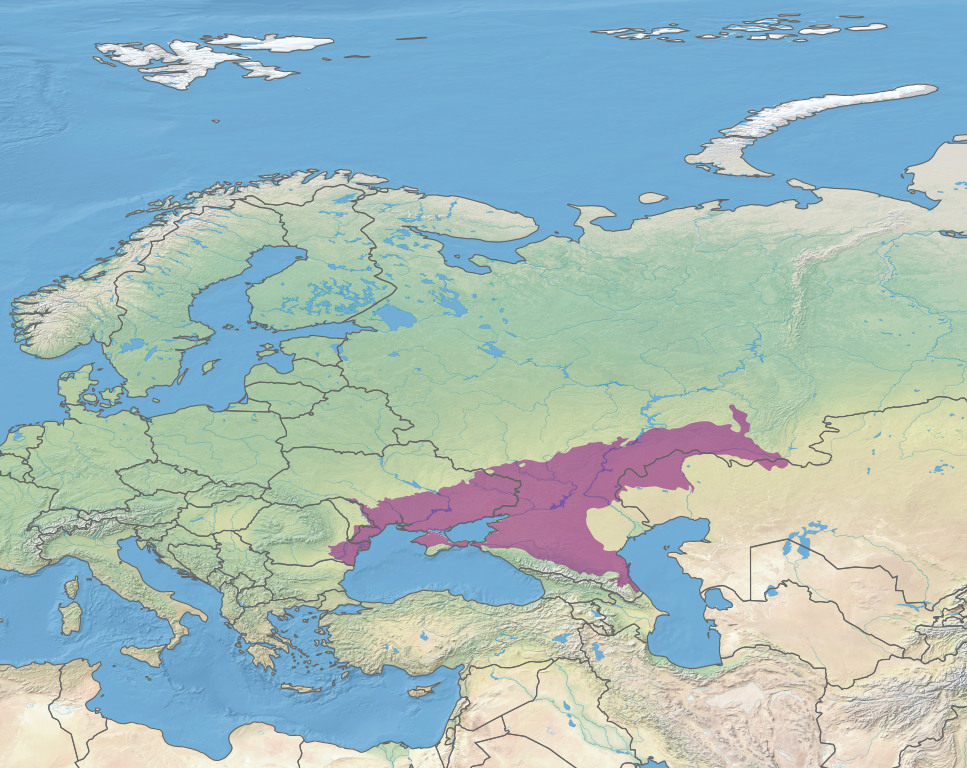
The Pontic-Caspian steppe, sourced from Wikimedia Commons
The Pontic-Caspian steppe (sometimes called the “Caspian steppe” or “Pontic steppe”) is an unforested grassland stretching from the northern shores of the Black Sea (the Pontus Euxinus of antiquity) to the northern area around the Caspian Sea.
Bronze Age migrations resulted in gene flow across vast areas, ultimately linking pastoralist populations in Scandinavia with groups that expanded into Siberia.
Just how and why these pastoralists travelled such extraordinary distances in the Bronze Age has remained a mystery. Now a new study led by researchers from the Max Planck Institute for the Science of Human History in Jena, Germany has revealed a critical clue and it might come as a surprise. It appears that the Bronze Age migrations coincided with a simple but important dietary shift — the adoption of milk drinking.
The researchers drew on a humble but extraordinary source of information from the archaeological record — they looked at ancient tartar (dental calculus) on the teeth of preserved skeletons. By carefully removing samples of the built-up calculus, and using advanced molecular methods to extract and then analyse the proteins still preserved within this resistant and protective material, the researchers were able to identify which ancient individuals likely drank milk, and which did not.
Their results surprised them. “The pattern was incredibly strong,” observes study leader and palaeoproteomics specialist Dr. Shevan Wilkin, “The majority of pre-Bronze Age Eneolithic individuals we tested — over 90% — showed absolutely no evidence of consuming dairy. In contrast, a remarkable 94% of the Early Bronze Age individuals had clearly been milk drinkers.”
The researchers realized they had uncovered a significant pattern. They then further analysed the data in order to examine what kind of milk the herders were consuming. “The differences between the milk peptides of different species are minor but critical,” explains Dr. Wilkin. “They can allow us to reconstruct what species the consumed milk comes from.”
While most of the milk peptides pointed to species like cow, sheep and goat, which was not surprising in light of the associated archaeological remains, calculus from a couple of individuals revealed an unexpected species: horse.
“Horse domestication is a heavily debated topic in Eurasian archaeology,” notes Dr. Wilkin. One site where early Central Asian milk drinking had been proposed was the 3500-year-old site of Botai in Kazakhstan. The researchers tested calculus from a couple of Botai individuals, but found no evidence of milk drinking.
This fits with the idea that Przewalskii horses — an early form of which were excavated from the site — were not the ancestors of today’s domestic horse, as shown by recent archaeogenetic study. Instead, horse domestication — and the drinking of horse milk — likely began about 1500 kilometers to the west in the Pontic Caspian steppe.
“Our results won’t make everyone happy, but they are very clear,” says Professor Nicole Boivin, senior author of the study and Director of the Department of Archaeology at the MPI Science of Human History. “We see a major transition to dairying right at the point that pastoralists began expanding eastwards.”
Domesticated horses likely had a role to play too. “Steppe populations were no longer just using animals for meat, but exploiting their additional properties -milking them and using them for transport, for example,” states Professor Boivin.
What precise critical advantage milk gave remains to be investigated. But it is likely that the additional nutrients, rich proteins, and source of fluids in a highly arid environment would have been critical to survival in the harsh and open steppe.
“What we see here is a form of cultural revolution,” says Dr. Wilkin, “Early Bronze Age herders clearly realized that dairy consumption offered some fundamental benefits and once they did, vast steppe expansions of these groups across the steppe became possible.”
The research by Shevan Wilkin, Alicia Ventresca Miller, Ricardo Fernandes, Robert Spengler, William T.-T. Taylor, Dorcas R. Brown, David Reich, Douglas J. Kennett, Brendan J. Culleton, Laura Kunz, Claudia Fortes, Aleksandra Kitova, Pavel Kuznetsov, Andrey Epimakhov, Victor F. Zaibert, Alan K. Outram, Egor Kitov, Aleksandr Khokhlov, David Anthony, Nicole Boivin is published in Nature: Dairying enabled Early Bronze Age Yamnaya steppe expansions. The abstract is available by clicking here.
If you are an equestrian coach that is always looking for learning resources, you won’t want to miss the opportunity to attend the very first Learning Circle facilitated by the Australian National Equestrian Coaches Association (ANECA).
The first ANECA Learning Circle will take place online on Wednesday 29th September 2021 at 6pm AEST (9am UTC).
But be quick, register before Friday 24th September as the Learning Circle is limited to TEN participants and is filling fast.
Why register?
Learning circles are an excellent and innovative form of collaboration between peers.
ANECA’s Learning Circles will bring together a small group of coaches (limited to TEN), who are interested in improving, modernising and optimising their equestrian coaching practices.
Although ANECA is based in Australia, the Learning Circle is open to coaches from all around the world who want to;
build a Coaching Community, get to know one another and what you each do in your coaching lives,
create a kind, safe, learning environment where new coaching protocols and practices can be shared to help you improve the quality of your coaching or solve issues you may be grappling with on your own
unpack any particular coaching interests you may have, and wish to share
share information and experiences in such a way that we identify key issues of interest or concern to you, which can form the basis of a series of future Learning Circles.
Learning circles encourage you to reflect on your work practice, test out ideas, work through issues and receive feedback with your peers in a structured time with a clear process.
Historically, learning circles have been used by many groups to bring together individuals interested in exploring ideas in a respectful learning environment.
Sue is a career coach educator, presently working as Coach Developer and Guest Lecturer with a Swedish University, on a major international project to develop a new equestrian pedagogy. Sue is also a keynote conference speaker, author of many coach education resources, and Founding President of Australian National Equestrian Coaches Association
The best coaches are always learning! Adding structure to learning activities improves your ability to use the knowledge immediately. This is a great way to spend a modest amount of time learning about coaching with a group of colleagues!
Anticipation builds as the programme for this year’s International Equitation Science Conference is finalised.
The event, which is themed ‘Advancing Equestrian Practice to improve Equine Quality of Life’ takes place on 20th and 22nd October 2021 and it’s easy to attend; not only will all the talks be online (live and recorded for later viewing) but, for this one special event, all ISES members can attend for free.
The 2021 International Equitation Science Conference will take place online on 20th to 22nd October online, and is free for all members of the International Society for Equitation Science (ISES).
This year’s ‘Clever Hans’ talk, which features a distinguished researcher from a field outside equitation science, is Mike Mendl, Professor of Animal Behaviour and Welfare at Bristol University in the UK.
In his talk, ‘Researching Cognitive Bias and Affective States’, Prof. Mendl will share his extensive knowledge and research findings in the areas of animal emotion, cognition and decision making, to provoke consideration of how this knowledge can be applied in an equitation context.
This is a not-to-be-missed learning opportunity that is sure to spark ideas for developing new ways of assessing horses’ mental state scientifically and in terms of their ability to thrive and have a life worth living.
An exciting line up of well-respected and emerging scientists who are researching in the field of human-horse interactions will be grouped into the following themed sessions:
Tools for Change – where scientists and practitioners will come together to explore the latest research about equine training cognition and performance,
Science with Impact – focussing on methods for measuring and monitoring the effects of different training approaches, use of equipment and rider psychology,
Communication for Change – covering approaches to advancing equitation and performance through effective dissemination of evidence-based information, and,
Education for Change – opportunities to empower existing and future generations through challenging thinking and practices and developing knowledge about equine welfare needs.
The sessions contain 4 plenary and 4 keynote presentations by distinguished equitation scientists, as well as short summaries of 20 brand new, unpublished research projects from all around the world.
ISES membership will grant you access to the full conference, including the recordings, and starts from as little as £20 for the year.
This could be the last time the International Equitation Science Conference is held online, so get in quick!
It is hoped that with the easing of lockdown restrictions, the 2022 ISES Conference will be face-to-face, and take place at Hartpury in the UK during the summer months.
If there’s one thing we learned in the first half of 2021 it is that things won’t go back to normal as quickly as we hoped.
In fact, I think we all gradually realised that the old normal does not exist anymore and will never come back.
So, how do we deal with such uncertainty? How do we plan for something, anything, when we don’t know if it will actually happen?
The problem with goals
When I first started working as a mindset coach, I used to conduct goal-setting sessions and help riders plan for specific events by visualizing the desired outcomes.
I believed in the S.M.A.R.T. goals principle which is setting Specific goals that were Measurable, Attainable and Relevant with a clear Time bound deadline.
Despite working quite well, as time went on, I started to realise how limiting this strategy is. By setting specific goals and zoning-in on them, I was leaving no room for the unexpected. When I was too specific, I didn’t allow for the possibility that ‘miracles’ might happen.
Let me explain this concept a bit more.
When a rider plans for a specific event, focusing on the result they want to achieve on that particular day, they can become blind to other things that are happening around them. An example is that the horse might not be ready on the day, and being so focused on one competition could set back his training and development long-term.
When riders are looking to buy a new horse, being too specific with the requirements can be limiting; they might easily dismiss finding their perfect horse because it does not fit their rigid set of criteria.
What I am saying is that we have to leave room for the unknown, unplanned opportunities to arise.
Embracing change
One thing that this pandemic is clearly teaching us is that we have to become and remain flexible. The people who can let go of what they wanted to do and can change tack at the drop of a hat, will navigate this time better and become more successful than the ones desperately trying to cling on to achieving their goals.
To more easily accept change, you first have to overcome fear of the unknown.
It is the unknown, the unpredictable and the lack of control that scares us more than anything else.
If, throughout my life, I’ve had a goal (let’s say to ride for Australia), I might fear that I am losing a part of myself that was connected to that goal – the validation and the recognition (from myself and/or others) that is attached to my goal. I fear losing a sense of achievement and the opportunity to belong to that elite group of athletes.
But when I speak to riders who have represented their country, they all tell me that achieving their goal did not change their life and their confidence in the way they thought it would.
When we stake our confidence, our happiness and our sense of identity to the achievement of goals, we will find out that nothing significant really changes when we achieve them.
In fact, sometimes things get worse because we become stuck in a cycle of adding more expectations and pressure to our next goal, and so on.
This brings me to the second thought I wanted to share with you – external validation.
Most of our goals are driven by the external validation we crave:
The pat on the back from someone else
The proof we are worthy or ‘good enough’.
If we measure our own worth by the validation we get from others, we will always remain a victim of our environment and will do whatever we can to please others (rather than ourselves).
In reality we are not seeking praise from others but a break from the relentless self-inflicted pain that is caused by our own mind screaming at us and always putting ourselves down.
We can never find peaceful satisfaction on the outside, peace will come from within when our mind becomes quiet and the thoughts towards ourselves become loving and kind.
This is where confidence is born.
So, instead of waiting for things to get fixed or for the situation to change, instead of hoping that everything will go back to the old normal (which, by the way, is the one we used to complain about!), think about embracing the new, the unknown.
Take a breath, find the calm within you, be ready to give up your goals and make space for other miracles to happen.
The 2021 foaling season will see changes to the current practice of freeze branding Standardbred horses.
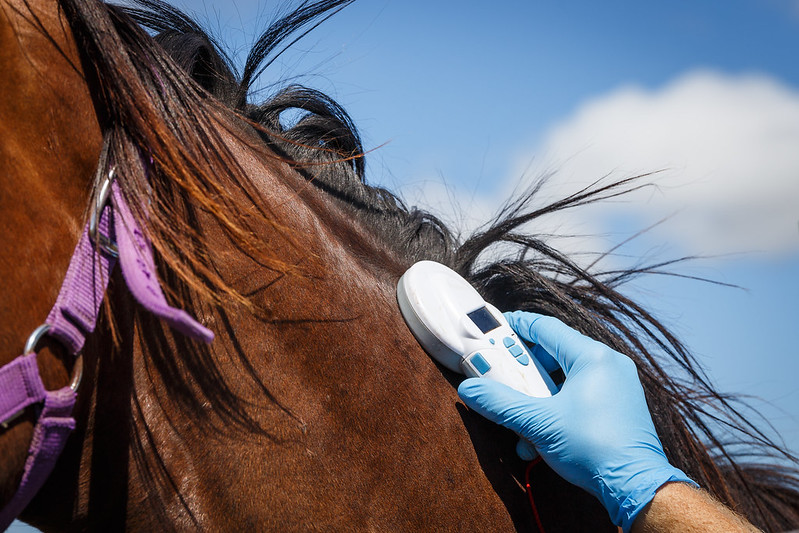
Microchips, which have been mandated for the past three years, will now become the main form of identification for all standardbred horses, replacing freeze branding.
From 1st September 2021, microhips will replace freeze branding of Standardbreds in Australia. Photo by Linda Zupanc.
Acting Harness Racing Australia (HRA) chairman Ken Brown said in his 2020 annual report that HRA was satisfied that the practice of freeze branding alpha-angle neck brands should be discontinued as the primary means of identifying Standardbred horses in Australia from 1 September 2020.
As a result of these changes, the Queensland Racing and Integrity Commisson (QRIC) has announced it will no longer carry out freeze branding on new foals.
From this season on, QRIC will continue to microchip foals as the primary form of identification for Standardbreds.
Until now, registered Standardbreds have historically been identified via a unique ‘alpha angled’ freeze brand on their neck where each symbol corresponds with a number as shown in the table below;
Until 2021, all Australian born and registered Standardbreds were freeze branded using the “alpha angle” symbol system.
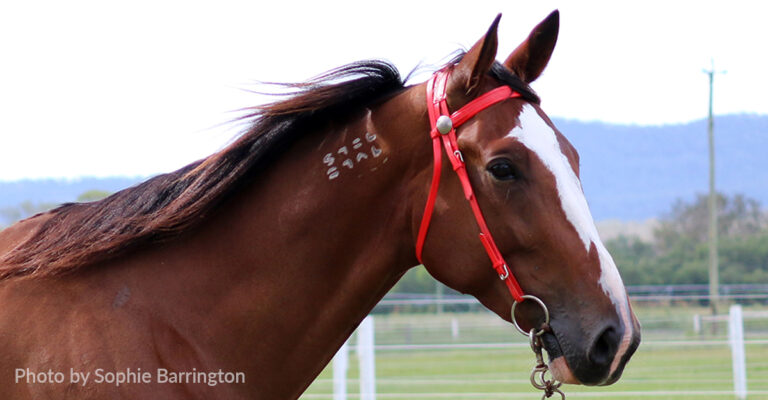
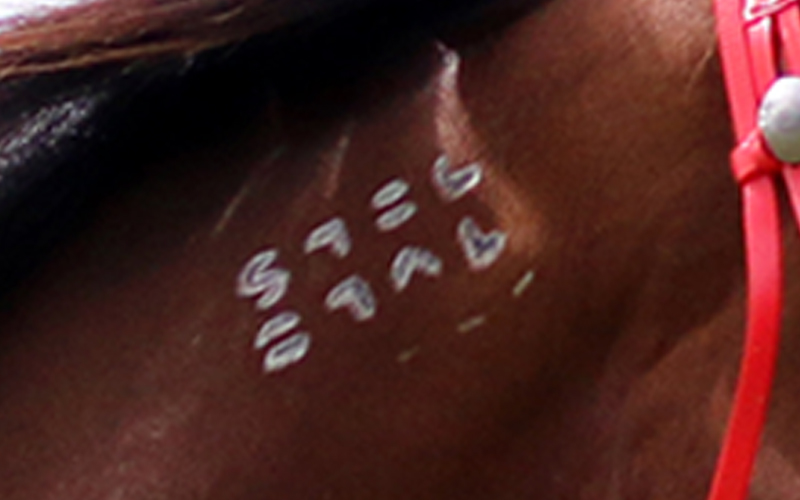
Australian Standardbreds were branded with two rows consisting of four symbols in each row. The first line includes the S denoting the horse as a Standardbred, followed by the code for the state in which the horse was born and then the last two digits of its year of birth. The second line denotes its 4 digit registration number.
As from 1/8/87 all freeze brands had an extra symbol added to denote the foal is a Standardbred and the last two digits of the year of foaling were also included, horses that were born prior to this date will have a single line brand with an underscore instead of two lines.
Example of an Australian Standardbred freeze brand
The current Australian freeze brand symbols would read as follows:
New Zealand Standardbred brands follow a slightly different system as per the below table
The brands are usually found on the off (right) side of the horse’s neck and following a three year phase-in which started in 2017, are being replaced with microchips.
Microchips offer a unique and unalterable means of identification for horses. These passive transponders are implanted in the nuchal ligament on the near side (left side) of the neck and remain inactive except when scanned. The transponder’s circuitry is then energised by a low-power radio signal sent by a compatible scanner. The transponder then sends a unique 15-digit code back to the scanner where it is displayed.
No two microchips are the same, having been pre-assigned and coded during the manufacturing process in accord with ISO and ICAR protocols.
Microchips are the size of a grain of rice and have their electronics assembly hermetically sealed in biocompatible glass with a biostable coating. The coating acts as a tissue interface – so once implanted the horse’s cells readily proliferate on the coated microchip.
If you find a lost horse that you can identify as a Standardbred from either a freezebrand or microchip, please contact the relevant State Controlling Body.
Whilst both microchips and freezebranding are unique identifiers, all registered Standardbreds are also identified via DNA genotyping utilising hair samples to provide parental verification. These hair samples are collected at the sametime as the microchipping implanting and freezebranding before being forwarded to Maxxam Analytics Inc (Canada) for testing.
These identifiers play an important role underpinning the integrity and rigour of the registration processes, Studbook and racing performance.
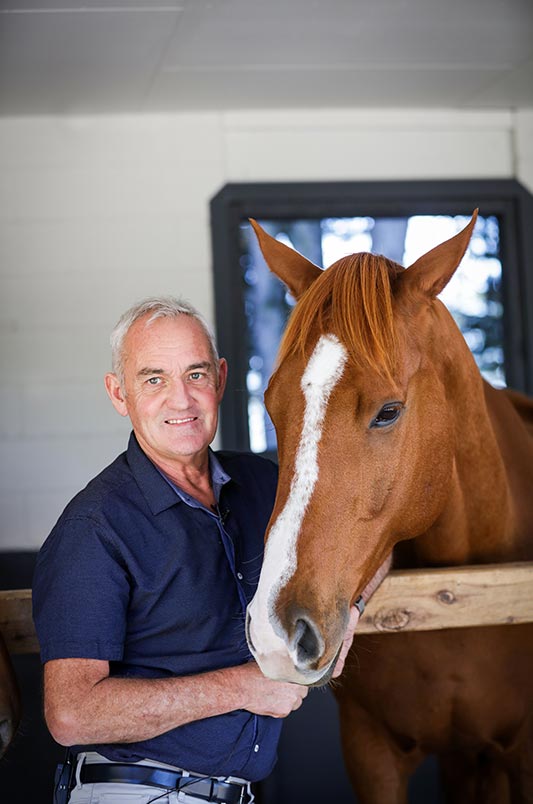
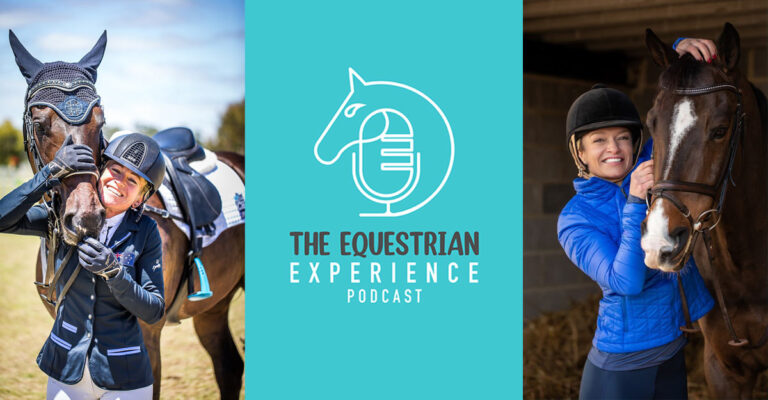
Co-hosts Amanda Ross (Australian Eventer, Olympian) and Rebecca “Bex” Mason (British International Grand Prix Showjumper) today announced the launch of their new podcast series, THE EQUESTRIAN EXPERIENCE PODCAST.
In a world where knowledge is the key to success, THE EQUESTRIAN EXPERIENCE PODCAST series is designed to provide access to the combined experience of successful equestrians, experts and brands.
Through insightful interviews with their peers, equine professionals and the equestrian trade, Amanda and Bex bring to life their own candid experiences about what they’ve tried, so that you don’t have to.
Appealing to a global audience, this all-access series kicks off the first episode with the two co-hosts discussing how they got into the sport, their enduring equestrian passion, the highs and lows of their careers and the differences between Northern and Southern Hemisphere competitions.
Bex explained the podcast was created after connecting with Amanda and realising the riders shared similar experiences despite training and competing on opposite sides of the globe.
“I’ve been there – and I’m still there! As riders, we know that it’s a never ending journey to fit all of the puzzle pieces into our position, training, competition, education and even daily horse care and stable management,” Bex said.
“Thankfully I have access to amazing coaches, brands and professionals on hand to get real answers from when I need them the most. It’s the power of this access that we want to share with you, as well as what we’ve learned from many years of trial and error to ensure you and your horse can have a fantastic Equestrian Experience – whatever your goals may be!”
Early listeners have described the first episode as “eavesdropping into a private, no off-limits chat between two professional equestrians”. The frank conversation will become a hallmark of the series
as Amanda and Bex explore different equestrian disciplines, share techniques they and their peers use and openly discuss what they think of products, events, training styles and more.
Amanda Ross said launching a podcast during a world pandemic seemed like an inspirational way to bring the equestrian community together at a time where their normal training and competition schedules may be interrupted. She said she was excited by the possibilities of reaching more riders than she could by coaching alone.
“Throughout my career, I’ve had a keen interest in rider fitness and well-being as a key tool to performance,” she said.
“I can personally attest that at the top of the sport, from time to time we all deal with self-doubt, despite our achievements. I hope that by talking openly with our peers and key professionals at the top of their industries and sharing our personal experiences, hints, tips and pitfalls we can help riders world-wide to have the confidence to tackle their next goal with conviction and unlock the power to an even more amazing Equestrian Experience.”
Upcoming guests include their elite riding peers, vets and local equine professionals, experts from their preferred brands and even event photographers with their tips on how to take great photos at home.
Subscribe now to unlock and bring to life your own Equestrian Experience.
BONUS: The podcast offers regular giveaways! To enter, simply visit the podcast website www.theequestrianexperiencepodcast.com.
THE EQUESTRIAN EXPERIENCE PODCAST is proudly presented by major sponsor Bates Saddles.
Watch, listen and subscribe to THE EQUESTRIAN EXPERIENCE podcast, on YouTube, Apple Podcasts, Spotify or wherever you listen to podcasts.
When we picture scenes of animal cruelty, we generally imagine thin, malnourished horses in haphazard paddocks filled with abandoned cars, barbed wire fencing and empty gas cans. Less commonly associated with mistreatment are luxurious stabling facilities housing expensive and pampered performance horses.
Yet the dark side of equestrian sports is that many of today’s top level horses are kept in completely controlled and unnatural environments.
Confined to boxes and isolated, sometimes for 23 hours a day, many will resort to behavioural anomalies such as box-walking, weaving, aggression or learned helplessness to deal with their boredom, frustration and loss of agency.
Unfortunately, when faced with escalating behavioural issues, some owners resort to even more restrictive measures instead of uncovering the root of such unwelcome behaviours. They may even place the blame on the horses themselves, as if they were misbehaving on purpose.
Horses, like people, are social animals who, in nature, associate with other members of their kind. They rest and graze near each other, they groom and play, and in the wild, they travel up to 16 miles a day. They build strong bonds with certain horses in the herd, and it is a remarkable testament to their adaptability, that so many seem to cope (at least to a certain extent) with the loss of freedom and the isolation we so commonly inflict upon them.
Confining horses suits our needs, not theirs
Historically, the practice of confining a horse to a stall was an attempt to provide protection and shelter, as well as to keep them at close hand.
Bedouins, for example, shared tents with their prized Arabian horses during sandstorms, and London coach drivers kept their cab horses tied up in lean-to stables in the city. People lived alongside their horses out of necessity – their livelihoods depended on having ready access to them.
During wartime, some cavalry generals believed that a disciplined and controlled living arrangement created a stronger horse that was psychologically more capable of handling the rigours of war.
Modern horses, in contrast, are kept largely for recreation or sport. Is it still humane to keep them in isolated confinement for convenience?
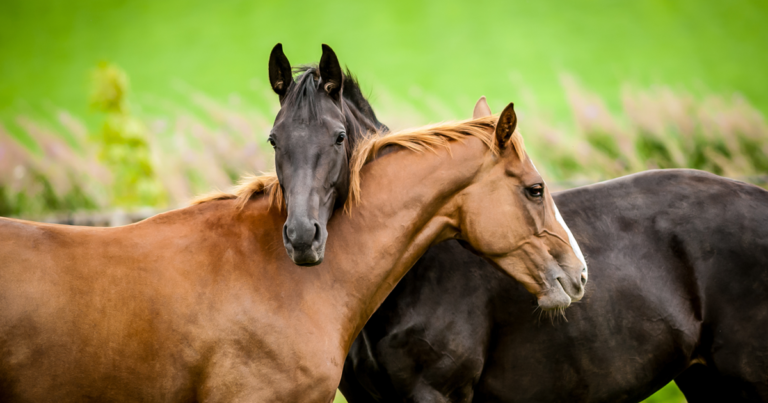
Despite our fears, when a group of horses is turned out in a domestic setting, the chances of injury are actually low. This is especially the case where horses have enough food to forage on, shelter, space and water to negate the need to compete with their companions over resources. In fact, decades observing free-ranging horses tells us that in nature, they have very few fights. Photo sourced from www.shutterstock.com.
Todays’ average sport horse lives a micro-managed lifestyle confined chiefly to a stall (often under video surveillance). A few times a day, he is dished out portions of carefully balanced feed and he is allowed outside only for carefully controlled riding and exercising. This artificial living arrangement and loss of agency can have acute effects on their wellbeing, behaviour, and even athletic development under saddle.
There are horse owners who genuinely believe that turnout is unnecessary when horses can get enough exercise being ridden or lunged. Research, however, is increasingly showing that meeting the physiological need for movement is different from meeting their psychological need for free movement and social agency.
A study at the University of Tours in Nouzilly, France, showed correlations between horses who were suffering negative emotions in their stables and poor performance under-saddle.
Horses who were withdrawn in the stall, expressed their negative emotional state when working under-saddle as a reluctance to move forward and tail swishing. Horses who were hypervigilant or aggressive in the stall were more likely to exhibit a ‘jerky gait’ show unexpected ‘surges’ of speed at the canter and act up. These findings suggest that compromised welfare and depression caused by isolation creates negative associations with being trained and ridden1.
A study at the University of Tours in Nouzilly, France, showed correlations between horses who were suffering negative emotions in their stables and poor performance under-saddle. Photo sourced from www.shutterstock.com.
Stabling and isolation from friends may be favoured by owners of horses who are difficult to catch or particularly attached to their herd mates. Some owners object to the extra time and effort it takes to collect horses from the pastures, then brush-off dirt and mud prior to exercise – or they don’t want to risk their horse losing a shoe, especially before a competition.
Competitive sport horses are often expensive, much more so than the average recreational mount. Fear of injury justifies an owner’s decision not to turn them out with other horses. Trainers often turn a blind eye to the horse’s need for socialisation, preferring to keep their clients’ expensive horses inside rather than risk a costly litigation case, in the case of injury.
Exercised daily, walked or grazed in-hand, brushed and bathed frequently, these physically pampered but often psychologically misunderstood horses are visited by a constant stream of healthcare professionals (nutritionists, farriers, veterinarians, chiropractors, massage therapists and dentists). This management regime may seem privileged to us but, for the horse, it is far removed from a natural and healthy lifestyle.
The benefits of turn out far outweigh the risks
When a group of horses is turned out in a domestic setting, the chances of injury are actually low. This is especially the case where horses have enough food to forage on, shelter, space and water to negate the need to compete with their companions over resources.
In fact, decades observing free-ranging horses tells us that in nature, they have very few fights.
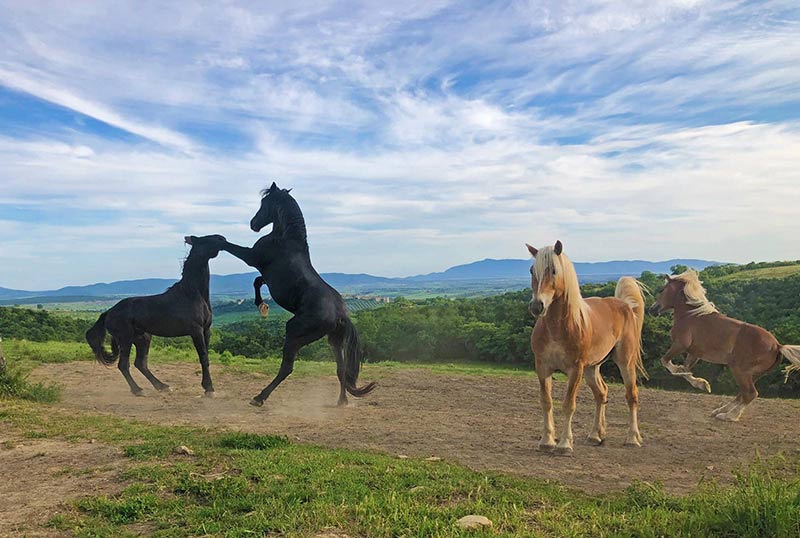
For breeders Constanze Von Rautenfeld and her husband Guido Gasparro, seeing life from their horses’ perspective has always been a main priority at their stud ‘Le Puledraie di Sterpeti’. Image courtesy of Le Puledrai di Sterpeti.
We know horses are not meant to live alone. Isolation suppresses their natural instincts and takes away their personal freedoms and mental stimulation. This can lead to chronic stress, stereotypies and learned helplessness. When a horse’s social agency is restricted, we often see unnatural behaviours appearing instead.
Solitary confinement can encourage pawing, box-walking, weaving, biting and windsucking; stress responses that have been identified as risk factors for equine colic. An international study shows colic frequently occurs in cribbers2 and statistics from the 2015 World Equine Veterinary Association Congress confirm cribbing is a major risk factor in horses with repeated colic bouts3.
A horse may become aggressive and territorial of his box. He may stand with his hindquarters facing the doorway, threatening to kick or bite anyone who dares enter. Stereotypies (those repetitive behaviours with no obvious purpose we used to mistake as ‘vices’), help horses cope with frustration. Research has confirmed they can reduce stress and relieve physical discomfort in a horse – similar to biting your nails compulsively just before sitting an exam.
Stereotypies are considered a behavioural indicator of poor welfare in animals and have never been observed in feral horses living in their natural state.
Researchers studied a group of horses prone to repetitive behaviour (such as cribbing and aggression towards their handlers) who were given a ‘holiday’ on pasture. The experience positively influenced their welfare and enhanced their expression of natural behaviours. After twenty days, the horses showed no further aggression towards their human handlers. Sadly, all negative behaviour returned as soon as the horses were brought back into the stables4.
Often, the longer horses were kept from enjoying natural behaviour, the worse their social skills became. The researchers noticed it took 20 days for the horses to express natural behaviour again. Sadly, it may actually be the initial expression of frustrated behaviour because of confinement that convinces the horse’s owner to limit the time they spend outside in the first place.
Keeping horses indoors is inherently unnatural
The results of a study by Nottingham Trent University showed that as horses became more isolated, they exhibited higher levels of faecal cortisol, a chief indicator of stress. The researchers observed horses’ behaviour in four types of housing designs; stabled alone, kept individually but with a small amount of contact with neighbouring horses, kept in pairs in a barn, and finally, kept out together as a herd in a paddock5.
Thermal imaging of the eye, another non-invasive measure of a stress response, showed the eye temperature to be significantly lower for horses living out in a herd, indicating lower levels of stress when compared to the other cohorts6.
If Dr Andrew McLean could make only one wish as an equine welfare scientist, it would be that all horses in confinement were at least granted audio, visual and tactile access to other horses.
“Social connection is crucial for mental and physical health in herd animals” said Dr McLean. “Horses are intelligent and they need company. The psychological effects of isolation are as dramatic on horses as they are on humans.
“We know behavioural anomalies last long after inmates are removed from isolation. Why would we think horses handle confinement and isolation any better?”
Dr McLean compares the practice of confining horses inside closed boxes to the inhumane treatment of convicts in Tasmania during the 1800s. Inmates of the Separate Prison at Port Arthur were relegated to forced isolation as the authorities claimed psychological punishment was an effective method to reform them. Convicts were locked in single cells for 23 hours each day, referred to by a number rather than a name, and allocated only one hour of exercise on a high-walled yard. Whenever they left their cells, they had a hood put over their heads to prevent anyone from recognizing them.
We know horses are not meant to live alone. Isolation suppresses their natural instincts and takes away their personal freedoms and mental stimulation. This can lead to chronic stress, stereotypies and learned helplessness. When a horse’s social agency is restricted, we often see unnatural behaviours appearing instead. Image sourced from www.shutterstock.com.
The dark consequences of this treatment resulted in many inmates developing mental illnesses from the seclusion, while others, in desperation, were driven to commit a capital offense such as murder – they preferred the death penalty to the ongoing incarceration conditions.
Even today and years after their release, modern-day inmates who have experienced periods of solitary confinement report difficulties integrating into society, feelings of anxiety and depression, and a desire to remain in confined spaces.
The psychological effects of solitary confinement linger with horses too. Many have not experienced life on pasture since they were yearlings, and will find the initial change to living naturally a difficult one.
Some of these horses may exhibit signs of depression, weight and muscle loss while they adjust to their new lives. Others may panic and crash into fences or wait alone at the gate for hours hoping to be let back into the more familiar stable.
Alternatively, a horse who remembers the trauma of being separated from his herd or had a frightening experience may become extremely fearful of leaving his new herd in the future.
Prevention is better than cure
Studies in other social species have demonstrated that a lack of social experience early in life can affect adult social behaviour7.
Young horses often pick up unwanted behaviours because of early isolation. Foals confined to a stable rather than a paddock after weaning were more likely to start windsucking or crib-biting, maybe as redirecting their suckling reflex on to other surfaces8.
Research has found cribbing has a similar effect on the horse’s brain to the human brain after cocaine was taken, and as a result, a horse who has developed certain behaviours over a long period as a coping mechanism to handle confinement may perform them habitually9. For example, a horse who has cribbed for many years when contained in his box may also continue to perform the behaviour when turned out in a herd despite being in a ‘healthier’ environment.
Foals require socialization from a young age much like puppies do. Herd interaction helps develop their social behaviour with other horses. Without it (much like a fear-aggressive dog who was never taken to the park) they may become more aroused and threaten to bite or kick when they encounter a new horse, to clear their personal space or ward off an imagined attack.
For breeders Constanze Von Rautenfeld and her husband Guido Gasparro, seeing life from their horses’ perspective has always been a main priority at their stud ‘Le Puledraie di Sterpeti’.
“Experience, education and our own studies have shown us that this [more natural] way of keeping horses is best for them” says Constanze. “When we were still living in Germany, we did not have the opportunity to keep our horses outside all the time, but they were at least housed together in an open stable with 24-hour access to large paddocks.”
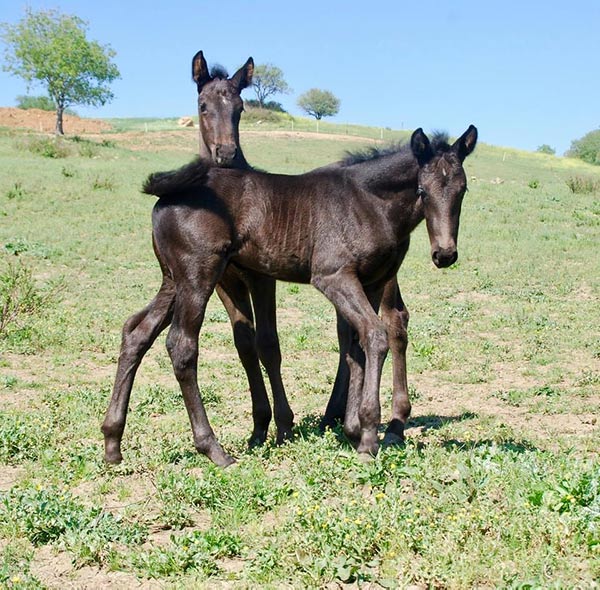
A lack of social experience early in life can affect adult social behaviour, this is why at Le Puledrai di Sterpeti, young sport horses are born outside and grow up in the herd. Image courtesy of Le Puledrai di Sterpeti.
“Here in Italy, we found more favourable climatic conditions which allowed us to implement our ideal management concept. In addition to an optimally balanced diet, free physical exercise plays such an important role in a horse’s life – especially when they are young!
“In addition to sufficient space in the fresh air, horses need to be able to move around on different surfaces such as earth, sand, stones, grass, and water. These conditions are practically impossible to recreate inside a stall.”
Many valuable competition horses are confined to a stall after weaning, only turned out alone in a small pen for a few hours a day. Without contact with other horses, they cannot take part in important social behaviours collectively known as ‘loafing’. Actions such as mutual grooming and playing together, or simply standing together with a friend in the shade, nose to tail during hot weather, so their tails can flick the flies away from their faces, or when in cold, wet weather they stand close and use their bodies to keep each other warm.
“Our foals are born outside, and they grow up in the herd” says Constanze. “This upbringing helps them develop into strong and resilient horses with a balanced, amiable character. This is especially beneficial for those horses destined for physically demanding sports like eventing.”
Herd living and aggressive behaviour
Researchers have found that depriving young horses of social contact resulted in increased aggression and less submissive behaviour when reintroduced to living with other horses10.
The biggest behaviour issue with orphaned foals is their tendency to lack normal human-horse and horse-horse boundaries. This can be extremely dangerous – as Constanze discovered when she reintroduced a hand-reared colt to the herd after seven months.
The foal initially showed no abnormal behaviour – even though he was notably more attached to humans than his fellow species. The problems showed up when he matured into a four-year-old stallion and demonstrated a dangerous lack of respect for humans on the ground and under saddle. Expert trainers and veterinarians advised immediate castration because of the stallions’ unsafe aggression- but this was unfeasible as he was the last representative of a rare bloodline. In desperation, Constanze and Guido let the young stallion cover two mares and then integrated him into his ‘own’ herd to see if things would improve.
The mares played an important role in teaching the young stallion social rules. He remained with them until his foals were all born. Then, they tried working with him again. When the stallion returned to training, he was a different horse. The mares had taught him how to behave, and today he is both, a successful breeding stallion and an excellent cross-country horse.
Scientific stabling solutions
Despite all the welfare and behaviour disadvantages, in many cases, stabling horses is unavoidable. But when turnout isn’t an option, a few simple changes and enlightened approaches to stabling design can facilitate opportunities for equine interaction.
Breeding stallions are a good case in point. Traditionally considered difficult and even dangerous, they are usually kept in strict isolation with barriers that prevent them making physical contact with other horses. This, however, is likely to create a cycle of conflict behaviour.
In response to the increasing call for finding better housing solutions for stud stallions, the Swiss National Stud in Avanche, began experimenting with the idea of ‘social boxes’ designed to allow individually housed horses opportunities for social (and safe) interaction with their neighbours.
Especially built ‘social grids’ permit stallions to extend their head and neck into the box next door, to socialize with their neighbour. The grids are installed on just one side of the box, so the stallions have space to withdraw and don’t get harassed on two sides. The boxes are larger than normal (5 x 5m) so the stallions can lie down undisturbed.
Their research project was such a tried and tested success that it inspired the German Warmblood stallion station Gut Schönweide to adopt these innovative design features.
“We attach great importance to the well-being of our horses” said Sonja Kruck, a spokesperson for Gut Schönweide.
“Our specially built ‘social grids’ permit stallions to extend their head and neck into the box next door, to socialize with their neighbour. The grids are installed on just one side of the box, so the stallions have space to withdraw and don’t get harassed on two sides. The boxes are larger than normal (5 x 5m) so the stallions can lie down undisturbed.”
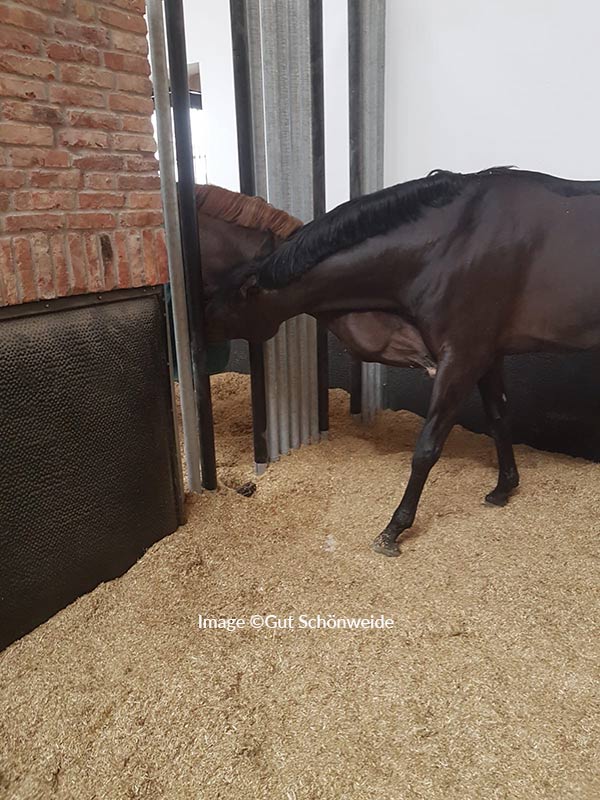
Despite initial apprehension of the stud’s management, there was no real aggression displayed by the stallions, even during breeding season, and no serious injuries have been recorded apart from the occasional small bite wound or ripped horse rug. Photo courtesy of Gut Schönweide.
This progressive stabling concept includes feeding bars into the stable corridors (see image above), a simple design idea packed with benefits. Not only does it make feeding out less time consuming for staff who don’t have to enter each individual box, it also keeps the hay separate from the bedding; it gives the stallions ad-lib access at ground level and allows them to relax and enjoy their foraging in visual contact with the other horses in the barn.
The safety of the ‘social grids’ between stables that allow neighbouring stallions to have physical contact is more challenging for many of us to accept (see image A). However, according to Kruck, no serious injuries have been recorded apart from the occasional small bite wound or ripped horse rug.
“Initially, the stallions reared a bit and there was some threatening behaviour, such as squealing and knocking against the bars with the front legs. For that reason, the stallions’ legs were bandaged the first day – as a precaution – but there never was any real aggression, even during the breeding season” said Kruck.
This progressive stabling concept includes feeding bars into the stable corridors (see image above), a simple design idea packed with benefits. Not only does it make feeding out less time consuming for staff who don’t have to enter each individual box, it also keeps the hay separate from the bedding; it gives the stallions ad-lib access at ground level and allows them to relax and enjoy their foraging in visual contact with the other horses in the barn. Photo courtesy of Gut Schönweide.
Stallion turnout
The Gut Schönweide horses all get a good workout in the paddock before riding, which makes them more relaxed and balanced under saddle too. “We honestly believe that it’s possible for every horse to be outside – no matter the breed” continues Kruck.
“Since our stud is still under construction, there is always a lot of noise about and the horses are not phased because it happens around them every day.”
Gut Schönweide wants to lead by example, encouraging all stallion owners to allow their horses opportunities for free exercise and social contact.
“Stallions have the same herd instincts as any horse, and yes, we recommend you bandage your stallion for his first experience outside – but you should also have confidence in him too. If he gets a lot of exercise every day, he will be more relaxed and that will lower the risk of injury and allow space for an even better relationship to develop.”
The Gut Schönweide stallions all get a free workout in the paddock before riding, which makes them more relaxed and balanced under saddle too. Photo courtesy of Gut Schönweide.
Over in Italy, Constanze and Guido keep all their stallions and mares outside. Foals are weaned from their mothers at 8-9 months before being returned to the herd. At 20 months they separate the male colts from the mares and integrate them into a separate (bachelor) band. All their young horses live outside, even whilst they are in training.
“No horse should have to stay in a stable for 20 hours or more. I find it is sometimes a challenge to convey this [natural management] concept to others and demonstrate that it is possible to keep horses, (even competitive stallions) in this way” said Constanze. “The cost may be higher than conventional horse keeping (we provide a minimum two hectares per horse in the herd). But let’s be honest, just as we are willing to pay a reasonable price for healthier organic meat or vegetables, the wellbeing of our four-legged friends is worth the investment.
“Our horses give us so much joy and will remain by our sides for many years if we keep them healthy, happy and active.”
Time to break free
Land suitable for horses is expensive and hard to come-by, so it is unlikely we can ever expect to make do without confining horses, particularly near urban areas.
If you are planning on stabling your horse for long periods, consider the long-term effects this might have on his or her health and happiness. Horses are sentient beings with needs, wants and interests that are entirely independent from what we ask and expect from them.
Their incredible capacity to adapt allows them to tolerate confinement more than other species but unfortunately, it is also the reason they often submit to physical and phycological abuse by their handlers.
If we truly want to develop ethical and respectful relationships with our horses, we can and must challenge our old patterns of thinking.
Horses deserve to live their lives as nature intended, and it is possible to have a mutually beneficial relationship with these sensitive and intelligent animals without denying them companionship and freedom of movement.
Surely, it is worth making every effort and find ways to open the gates to better welfare.
Going down in history as one of the best Melbourne Cup wins, a horse named Kiwi, originally purchased to round up sheep, dashed to victory in the 123rd Melbourne Cup of 1983.
With only 100 metres to go, and at 10-to-one odds, the chestnut gelding upstaged the best long-distance thoroughbreds in Australia and charged past 22 rivals to win by just over a length.
What is even more remarkable about this win, was that the New Zealand-bred horse was purchased as a yearling for only $1000, kept out on pasture and trained at home, on the farm.
Kiwi is the legendary racehorse who won the Wellington and Melbourne Cups in 1983. The New Zealand-bred horse was purchased as a yearling for only $1000, kept out on pasture and trained at home, on the farm.
After winning both the Wellington and Egmont Cup, he was flown to Victoria one week before Melbourne’s prestigious event without a single lead-up race in Australia. The historic last-to-first win stunned the crowd and his run has become one of the most memorable performances in the history of the Melbourne Cup.
Growing up on green Taranaki pastures offered Kiwi many important benefits for his future life as a distance runner. He did not know it, but this relaxed upbringing was unconventional for a racehorse.
As a youngster, he had the room and stimulus to grow properly and develop bone density. His training over farmland mixing with sheep taught him balance and developed his famously easy-going character. His lungs were healthy thanks to the fresh air and he was less at risk of digestive problems due to his active outdoor lifestyle.
All of this helped him become not only an incredible athlete, but also the horse that jockey Jim Cassidy remembers as ‘the only one in the starting yard that hadn’t broken a sweat’.
Why don’t all performance horses live out?
It is now fairly widespread knowledge that horses are healthier (physically and mentally) when kept outdoors, so why are most still living in stables?
Stabling horses is a human thing more than a horse thing; horses are obliging souls and will usually accept and adapt to less-than-ideal living situations, even if it negatively affects their health and their capacity to express normal behaviours.
There are many trainers and owners who still prefer to keep their equine athletes confined in stalls, with zero or limited turnout, despite the positive implications of keeping them, at least partially, on pasture. This practice is often shaped by personal motives, space or climatic restrictions, fear of injury or simply, resistance to change.
In Switzerland, horse owners have no choice. It has been a legal requirement since 2008 that all stalled horses must be able to see, hear and smell each other. Horses under two-and-a-half years old must be kept outside in groups to promote bone density and learn correct social behaviour.
All working horses must be allowed free time in a field at least two days per week and non-working horses (such as broodmares) must have a minimum of 2 hours a day outside in the paddock. Stable managers are required to maintain a log to document turnout times.
A question of welfare
The term welfare is not so much about how well the animal looks but about how they feel about the world they live in. It is about how well they are faring physically and mentally. And the most recent thinking includes an evaluation of the impact humans have on their lives.
Handling, training, riding, medical interventions and transporting horses are situations where the interaction between humans and animals can lead to either negative or positive mental experiences.
The Five Domains model for welfare assessment (see the article on end-of-life decisions in this magazine issue), allows evaluation during training, competitive events, and when horses are retired.
The model centres on the following five categories:
Nutrition: Access to fresh water and a balanced and appropriate diet to maintain full health and vigor.
Environment: A living environment that protects them from environmental extremes and allows them to move and socialise.
Health: Prevention or rapid diagnosis and treatment of injury and disease.
Behavioural interactions: The choice to move freely, form social bonds and enjoy contact with other horses and.
Mental experiences: Minimising negative experiences and maximising opportunities to engage in rewarding behaviours and activities.
Good welfare is more than just keeping horses round, shiny and wrapped up in cotton wool to prevent injury – it involves understanding that horses are designed to spend 16-20 hours a day grazing and consuming roughage while moving around, in the company of other equids.
We now know that living outside is a natural way of being for horses and that the benefits are not only physical, but physiological and psychological.
The guts of the problem
One of the deadliest dangers of stall-bound isolation is the heightened risk of digestive problems, when compared to pasture kept horses.
Studies at the University of Nottingham have found that horses kept isolated in stalls for prolonged periods of time, are more susceptible to all kinds of gastro-intestinal disorders such as colic, gastric ulcers and intestinal inflammation.
Key risk factors listed include intense exercise, eating large amounts of grain, eating on an irregular schedule, stall confinement, administration of drugs such as non-steroidal, anti-inflammatory drugs (NSAIDs), exposure to pathogenic bacteria and viruses, and increased emotional and physical stress.
Veterinarians like the study’s lead researcher Sarah Freeman, a Professor of Veterinary Surgery, have long recognized that horses kept outside colic less than those living in stables.
“Impactions often occur in horses who have a management change from pasture to stabling or enforced box rest due to weather conditions, injuries, etc.
“We think that the results of this study are a significant step towards understanding why horses develop impaction colic when stabled. The changes in function were rapid and marked and were most significant during the first five days after change in management. We think this represents the high-risk period for colic.”1
A horse’s digestive system functions best when he is happy, has constant access to forage that encourages chewing, and can move about freely as he eats. In addition to being designed to be constant grazers, intense exercise, or lack of adequate exercise while kept in a stall interferes with normal digestive function.
Jane Hancock runs Corrie Stables in Ireland. Her daughter Lucy Hancock is an international event rider, and they have thirteen horses living on pasture. Jane has seen how some horses react adversely to isolation. When one of her horses suffered an injury and was put on box rest, he developed gastric ulcers, colicked and began cribbing. Once that horse was turned out again, his ailments cleared up immediately.
Turnout is an excellent way to lower stress levels and improve trainability and performance. It greatly reduces the risk of colic and gastric ulcers and reduces behaviours associated with compromised psychological well-being.
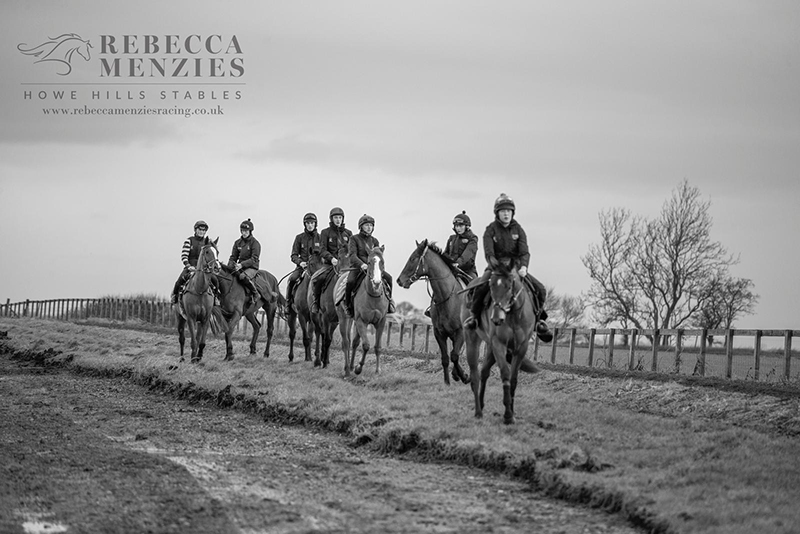
Rebecca Menzies of Howe Hills Racing in the United Kingdom, has 65 horses in training. They range from two-year-old colts and fillies to 13-year-old national hunt horses.
Racehorse trainer Rebecca Menzies says she has found all of her horses are easier to handle with a daily schedule of turnout and socialization. Image courtesy of Howe Hills Stables.
Menzies buys many of the horses from other yards; often these horses have been sold on cheaply due to behavioural problems. Almost all of Menzies’ horses are turned out daily and, during the summer, many of them live outside on fields with shelters.
Menzies says she has found all of her horses are easier to handle with a daily schedule of turnout and socialization.
Ulcers are a condition often associated with racehorses that are confined to stalls and exercised intensely. Yet none of the horses preventively scoped for gastric ulcers at Menzies’ yard has returned a positive diagnosis.
Almost all of Menzies’ horses are turned out daily throughout the year and, during the summer, many of them live 24/7 outside in fields with shelters. Image courtesy of Howe Hills Stables.
Pasture-kept horses breathe easy
Horses are nasal breathers; their nasal passages are large and can expand during strenuous exercise in order to increase the intake of air.
They are gifted with large airways and lungs, which is how they can achieve such impressive speeds over distance. Their airways bring oxygen down into the lungs where it passes into the blood to be pumped around the body.
The latter two are now labelled equine asthma, because both are characterized by airway inflammation and mucus accumulation. Asthmatic horses are particularly sensitive to dust particles in their environment (often found in hay or dusty bedding).
When an affected horse breathes in these triggers, his airways become inflamed, the muscles constrict, and air flow is restricted to the lungs. As a result, a horse might operate as a top competitor one day and experience poor results only a few hours later.
Prevention or management of this condition is best accomplished by minimizing dust in the horse’s environment. It is also well known that grazing with a lowered head, helps drain their airways.
A group of equine medicine specialists led by Laurent Couëtil, DVM, PhD, professor of large animal medicine at Purdue University, USA, found that 80 percent of thoroughbred racehorses suffer from mild or moderate asthma. The results, which were published in the Journal of Veterinary Internal Medicine, show that the worse a horse’s asthma is, the worse their performance.
Joana Simões and a team of researchers from the University of Lisbon in Portugal found that “environmental management should be the primary goal of facility managers, because clinical signs and lung function quickly improve in a low-dust environment, even without medication.” However, when airway inflammation goes on for prolonged periods, horses can experience “irreversible airway remodelling” that affects respiratory function for life.
Ventilation is important not only for horses, but also the staff working with them. Horses with respiratory problems are best managed living outside and care must be taken not to allow them access to round bales, which could exacerbate a respiratory condition. Round bales (even those of a high quality) have more dust and mould than small square bales. Piggy eaters will spend all day with their nose inside the round bale breathing in endotoxins and dust particles, exacerbating the problem.
Exercise induced pulmonary haemorrhage
Exercise induced pulmonary haemorrhage (EIPH) is another disorder commonly observed in performance horses working at speed, such as three-day eventers, racehorses, and polo ponies. It can also occur in racing camels, greyhounds, and even human athletes.
EIPH presents a huge cost to the racing industry and is a potential problem for any discipline. With oxygen-carrying capacity limited, what follows is usually disappointing athletic performance and constant interruptions in training. Horses who have suffered from EIPH benefit from as much turnout and fresh air as possible; this prevents further lung damage from dust particles in the air and allows their lungs to heal.
When Menzies took on an unlucky EIPH mare from a competitor’s racing stable, one of the first things she did was turn her out with company on pasture and let her heal. Once she had rested mentally and physically, the mare bounced back and went on to win six races. Menzies is now building runouts from her stalls so horses in training can always access the outdoors – and each other.
Injury risk
Owners of expensive sport horses often make the decision to not turn out their horses based on the possibility of injury – without considering how confinement affects the physical and emotional well-being of their horses.
Australian equitation scientist Dr Andrew McLean keeps all of his horses out with company and recommends all horse owners should do the same. Photo courtesy of Equitation Science International
Australian equitation scientist Dr Andrew McLean keeps all of his horses out with company and recommends all horse owners should do the same. “Understanding our horses’ social interactions helps us understand them more effectively” he says.
Dr McLean studied feral horses in both the United States and United Kingdom and says that true aggression (kicking or biting) between horses is rare. In feral horses it usually only occurs when stallions fight for mares or when mares are protecting their newborn foals.
“Domestic horses living together communicate with threats of aggression or submissive behaviour.If two horses challenge each other (usually over a shared resource such as food or water) the stronger horse usually succeeds in accessing the resource without resorting to an actual fight.
“Horses ‘speak’ using subtle threats and submission rather than outright violence. Typical threats include squeals, facial expressions (ears pinned back/teeth exposed), tail swishing or a deliberately lifted back leg.When this occurs, the other horse will generally back off, and move away. After every experience, horses learn. This affects future conflicts between them and determines priority access to resources such as food, water, and shelter.”
Dr McLean points out that unlike what was formerly believed, herd hierarchies are not solid and unvarying. Horses tend to form bilateral relationships, where a new deal is concluded separately for each herd member, as well as each new situation or conflict.
Herd anomalies do exist, but these are the exception not the rule. “Lunatic horses are generally made by humans.” Dr McLean mentions rare examples of horses who struggle to accept living in a group, such as orphaned foals that were hand reared and stallions kept for years in strict isolation.
In a 2008 study of more than 2000 Swiss horses, ponies and donkeys published in the Equine Veterinary Journal2, 18% of injuries occurred due to a change in the horses’ environmental management – regardless of whether the horse was kept alone or in a group. The researchers recommend horse owners approach any changes to management slowly and carefully to maximise safety.
Switzerland has strict equine laws for the minimum size requirement of shelters, boxes, and paddocks. Barbed wire fencing is banned and every horse on turnout must have visual contact with another horse.
Jane Hancock turns out her daughters’ eventing horses as much as possible and injuries are virtually non-existent. “I find horses who live outside in fields understand how to take care of themselves. We had a new livery mare arrive recently who had not seen any turnout in 6 months; we approached the process slowly and the mare adjusted to her new environment easily without any wild explosions.”
Sounder, longer
It is not easy keeping a horse happily competing into their senior years. Eventing is a tough sport and years at the top levels can take their toll. But with careful management, some horses can withstand the test of time and carry on competing into their late teens. Two of Jane’s daughters’ event horses are successfully competing internationally at 18 years of age; a testimony to what a happy life on pasture offers equine athletes.
Angelika Schnieder, the owner of Alterreno in Tuscany, is a firm believer in letting horses just be horses. All of the horses boarded at her facility go out daily or live outside permanently in groups.
Horses are turned out for the first time on dry, even ground with a double fence between them and the next paddock. “I always remove halters, and if a horse is shod, they will have leg protection applied for security. Only horses with the hind shoes removed go out in a group”.
She also suggests spending time hand walking a new horse around the fence line, visiting the water source and doing some groundwork exercises in the area before they are turned loose.
Turnout has had a positive effect on each of the 50 horses living in her facility. But it is especially notable in the competition horses. Alterreno was designed to provide horses with a natural livery alternative, and many horses are brought there because they have developed serious behavioural problems under saddle at other yards.
Three notable examples who have turned around their athletic performance due to extended turnout are an anxious PRE dressage stallion, a warmblood mare who napped and reared when asked to move forward, and an uncontrollable jumping horse with a tense, blocked back. All three have improved so much under saddle that they are virtually unrecognizable.
“Improved athletic performance and pasture turnout go hand-in-hand” says Schneider.
Then came the pandemic
2020 was a game changer. Horse owners have not been immune to the economic hardships brought on by forced closures and lockdowns, and many competitive riders are searching for alternative housing and management systems.
In the past, owners of expensive sport horses often decided whether to turn out their horses or not, based on the possibility of injury – without considering how confinement affects the physical and emotional well-being of their horses. But during the first wave of COVID-19 related lockdowns, owners could not visit, ride or exercise their horses, and livery staff were so overwhelmed with the workload that they couldn’t do anything more than quickly lunge each horse before returning them to their box.
Without the room to turn horses out either, some facilities had to confine their horses to their stalls for up to 23 hours a day. Those that were unlucky and found themselves closed up for weeks and months at a time suffered from a plethora of ailments, including swollen legs, loss of muscle mass, stiffness, lameness, and repetitive habits caused by boredom such as cribbing, weaving and aggression towards humans and other horses.
What’s best for the horses in a domestic environment?
Research conducted in four Nordic countries indicates that horses are unlikely to get severely injured from being turned out in groups, but their welfare is more likely to be compromised if they are not allowed to socialise with other equines and are kept isolated in a stall for long periods of time. (Keeling, 2016).
Research, technology, and the internet allow us to learn and share information about equine welfare and management like never before. We all want our horses to be happy and relaxed. Happy performance horses are nice to handle, easy to ride and enjoyable to spend time with. They enjoy work more and will stay sound longer.
Together we can change the narrative. Finding ways that allow us to turn them out safely and for longer periods, we can offer a brighter, happier future to equestrian sports’ most important players – the horses.
This article appeared in the May-June 2021 issue of Horses and People magazine.




 Appealing to a global audience, this all-access series kicks off the first episode with the two co-hosts discussing how they got into the sport, their enduring equestrian passion, the highs and lows of their careers and the differences between Northern and Southern Hemisphere competitions.