fbpx
Home Blog Page 4

The Coaching Sweet Spot Part 1: Balancing Tradition and Science

0

A series for any rider who has ever had a coach – and for coaches who coach well, and want to coach better.

It’s usually only coaches who talk about coaching, but that’s an old-fashioned approach, because coaching is just as important to riders, so let’s discuss it together! Then we can make changes – big and small – that are meaningful to all of us and which make our equestrian lives easier, better, and heaps more fun.

Some changes happen in the blink of an eye. Others take a little longer. Often, different ways of doing things may even make us feel a bit uncomfortable. 

Remember, when you found how that nice new saddle felt ‘different’, and, for a while, the hole in your bank account felt quite ‘uncomfortable’? Nonetheless you didn’t send the saddle back to the shop! Different is ok. Uncomfortable is temporary. 

A new way of coaching is different – and ok. It’s only uncomfortable until the exciting moment that you get much better results. Now, let’s begin with what we know. 

Learn about the coaching support initiatives of the Australian National Equestrian Coaches Association (ANECA)

The big picture 

Our sport is a $1.1 billion part of the $83 billion sport and physical recreation industry (Sport 2030, Sport AUS). However, participation in equestrian sports is dropping, worldwide (Changing Times, Goldsmith, 2021). In Australia, it has been almost stagnant for some time (Sports Business Partners Study, 2017), and this is the most important reason why our sport needs to change. But what does this have to do with coaching? 

No-one needs to tell us that it is expensive and time-hungry to ride. Not many of us are brave enough to add up the individual cost of buying, maintaining, training, transporting and enjoying our horses. Then, of course, there’s all the gear, the training facilities, and the competition expenses….  Collectively, this adds up to $314 million each year! (Sports Business Partners Study, 2017).  

In return for all this, we want fun! But when it comes to keeping riders happy, equestrian is in direct competition with many other sports that are cheaper, easier-to-learn and generally fit more conveniently into today’s busy lifestyles. This is quite a challenge! 

In the meantime, we expect to stay safe, learn a big bunch of new skills and have a good time. Aside from having a good horse, and somewhere appropriate to learning to ride him, all this relies on being able to access well-trained teaching and communication skills, equestrian expertise and a great deal of experience. In short, the quality of our riding experiences comes down to our coach. 

Our coaching history

Traditional riding instruction was designed to meet the needs of war. Its goal was to give cavalry conscripts basic control of uncomplicated horses – in approximately six weeks. 

The riders were fit, strong, young men, equipped with spurs (to ensure action) and double bridles (to supply brakes). Recruits were not required to have any previous equestrian experience. Lessons were delivered daily, and in groups, to maximise control. This is the origin of our riding school lessons, today. 
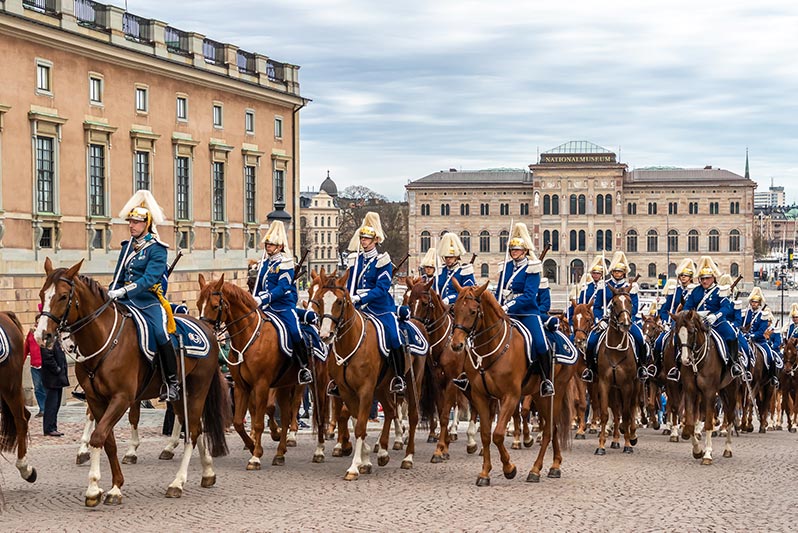
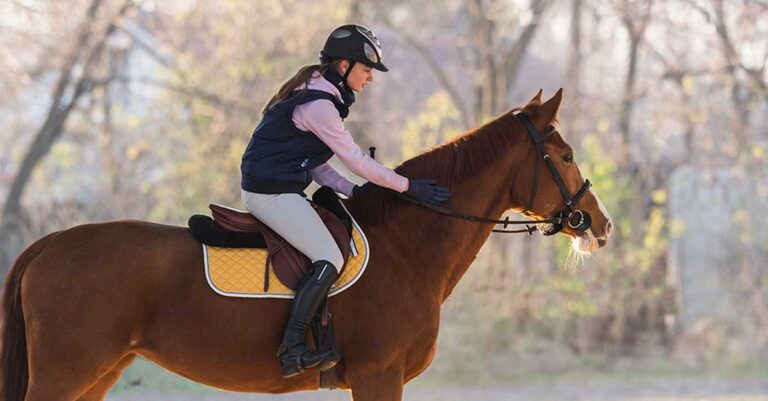
Traditional riding instruction was designed to meet the needs of war. Its goal was to give cavalry conscripts basic control of uncomplicated horses – in approximately six weeks. It is astonishing that we are still teaching the same way despite the fact that horses and riders today need very different skills, for very different purposes. Photo sourced from www.shutterstock.com.

Historically, individual instruction was only given to the gentleman sons of the nobility as part of their social and leadership training. They rode highly-trained schoolmasters and were taught by highly-sophisticated horsemen. They also learned the equestrian skills of war, which are believed to be the foundation movements of dressage. The forward seat had not yet been discovered and show jumping had not been invented. 

Learn about the coaching support initiatives of the Australian National Equestrian Coaches Association (ANECA)

From the coaches’ point of view…

It is somewhat astonishing that we are still using the same content, and are teaching it the same way as has been done for hundreds of years, despite the fact that horses and riders now need very different skills, for very different purposes.

Our role as coaches has changed, too. (Callary & Gearity, 2021). It is no longer appropriate for coaches to give ‘orders’, or to ignore the rider’s need to ask questions or the horse’s need for a rest. While there is much we should save from traditional instruction, it’s time for us to change not only some of what we teach, but also how we teach it (Australian Coaching Council, 2020). But before we explore how to do this…

From the rider’s point of view…

Most of us know that riding offers benefits which no other sport can do. The pleasures of the horse-human relationship are legendary. Riding lets us develop a unique combination of physical, emotional and intellectual skills for communication with our horses. 

Riding helps many of us to develop self-confidence far beyond our first expectations, while our horses can also teach us patience, tolerance, and management of our emotions. And, of course, there’s all the fun of competitions. But before all this, comes the lengthy process of learning the skills we will need to enjoy our chosen activity. 

About 90% of riders, ride for recreation. We want to have fun with our horses, improve our fitness, and find friends with whom to ride and socialise. The remaining 10% of us are closely involved with more serious competition and just a few have a professional equestrian career.

All of us need coaching to reach our goals, but if it’s to be fun, our coaching must be relevant to our riding interests. We come to enjoy riding on our terms, not those our coach and far less those of another era. We also want to enjoy the learning process – and we do pay quite handsomely for it!  

Today, anyone can ride, from the five year-old child on a 12.2hh pony at Pony Club, to their grandmother on a 16hh ex-racehorse trail riding through the High Country. We’ve invented games and competitions at every level. But repetitive, cavalry-style drills are not relevant to why we ride today – and they really are not anybody’s idea of fun!

Learn about the coaching support initiatives of the Australian National Equestrian Coaches Association (ANECA)

Ethics in the spotlight

Far from being cross-bred, cavalry remounts, our horses have also changed over the centuries. They are now bigger, smaller, more (or sometimes less) educated for what we want them to do, and while some are performance-bred, others may have been re-purposed many times. Their temperaments range from feisty Thoroughbreds to naughty ponies with all the challenges this presents for both rider and coach. All need our care, education, and sometimes re-education. 

Most equestrians today are undoubtedly well aware of, and concerned for, the wellbeing of their horses. Yet our competition culture, which we have inherited from centuries of commandeering the horse for our own, often grim, purposes, raises some uncomfortable, ethical questions. 
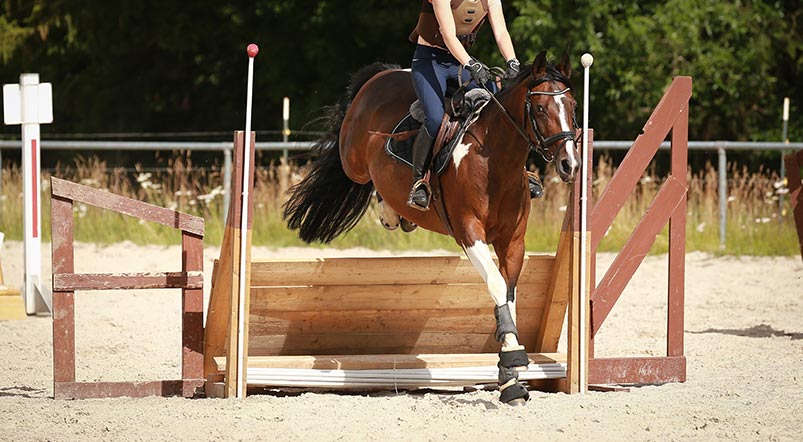
Far from being cross-bred, cavalry remounts, our horses have also changed over the centuries. They are now bigger, smaller, more (or sometimes less) educated for what we want them to do, and while some are performance-bred, others may have been re-purposed many times. Photo sourced from www.shutterstock.com.

Are we yet meeting our ethical responsibilities? How well-fitted is traditional instruction to meeting the welfare expectations of 21st century equestrians while maintaining high levels of competitive achievements? And how well are we preparing our horses for competition? These are all questions for coaches and riders to share, but first let’s look a little more closely at how coaching actually works.

Learn about the coaching support initiatives of the Australian National Equestrian Coaches Association (ANECA)

Photo sourced from www.shutterstock.com.

Our coaching pedagogy

Yes, pedagogy. It’s the way we teach. (Strictly speaking, pedagogy is how we teach children, but it’s generally used for teaching all ages.) (Armour, 2011). We have inherited our present-day pedagogy from the military model of instruction but there is much more we can add from new educational advances and teaching techniques, which promote better skill development and deliver much more fun. 

These methods are now being widely used in many other sports, such as athletics, the football codes, and (very notably), cricket. This has also been done with great success in the performing arts, particularly ballet, theatre and music, where we have seen these disciplines morph from the purely classical to the popular genres we know today, with no loss of their integrity.

Our traditional pedagogy was successful for what it was designed to do, but now we need to add some present-day science to our age-old art.  

Our new pedagogy

Without doubt, a new pedagogy is the key to the future of our sport! In the last few years, many new techniques have been developed in sports coaching, and we can easily add them to our coach education programs.

In future articles we’ll explore how we can improve coach education. Equestrian coaches don’t just need to update  – we need to upskill. 

We’ll investigate ways we can do this, starting with sorting out the difference between teaching and coaching, and unpacking some new learning regimes to benefit both horse and rider. 

We’ll look at how the sports sciences can help us get better training results. We’ll find out how sports psychology techniques can be useful, and why a knowledge of biomechanics is important. We’ll also see how we might use a little knowledge of exercise and physiology to improve a rider’s progress, and we’ll find ways to make equitation science more central to our coaching, to help the horse improve, too5. 

Coach education ‘mysteries’

Each article will highlight a mystery word or phrase from the world of coach education! We’ll “translate” it into equi-friendly language and I’ll explain how coaches can use each new technique to get better results, and increase their riders’ enjoyment of their lessons. 

These ‘mysteries’ will include: learning detriment, inter-lesson learning, flipped lessons, blended learning, simulation, mental rehearsal, learner-centred/topic-centred, positive and negative reinforcement, and social licence to operate. 

At the end of the day, research tells us that sports people actually only want three things; 

  • Fun; for riders this means that our participation lives up to our hopes, dreams and goals and that we feel safe and secure in the company of our horses
  • Fitness; riding gives us all an opportunity to enjoy fresh air and exercise, both in the saddle and more generally around our horses 
  • Friendships; we all like interacting and learning with other people of similar interests, so it’s no surprise that most of us want some social connection as part of our equestrian experience. 

Coaches are at the interface of our sport, and its participants. Many coaches are highly trained communicators, presenters and facilitators, but traditional instruction has been about ‘how coaches coach equestrian technique’. Today’s coaching can be so much more – it’s about how horses and riders learn, progress, and perform. For that to happen, coaches need to change their ways, because coaching is taking on a very different hue. 

Long gone is the outdated focus on technique, technique, technique… Now we have the ‘flipped classroom’ elements which prepare riders ahead of their next session. We have a galaxy of online resources and guided home-practice regimes to reduce learning detriment(4).

We have structured courses and blended learning models and fantastic IT resources, we have video on every iphone, and realtime coaching from anywhere on the planet. Add these to the sports sciences and you will have the bread and butter of everyday coaching beyond 2021.

By improving our own knowledge of how to coach and be coached, we’ll take the first, and biggest step, towards putting the fun back into the whole process of learning to ride! This will ensure that our ancient sport survives far into the future. 

In the next article, I will discuss the difference between teaching and coaching.

This article was published in the July-August 2021 issue of Horses and People magazine. 

References

  1. Changing Times – Shaping the future of sport through creativity, innovation and inspired leadership, Wayne Goldsmith, 2021.  www.wgcoaching.com/courses
  2. Coach Education and Development in Sport, Callary & Gearity, Routledge, 2020
  3. Coaching in the 2020s, Australian Coaching Council, 2020
  4. E-Coaching, Ribbers & Waringa, Routledge, 2015
  5. Equitation Science, McGreevy & McLean, Wiley-Blackwell, 2010
  6. Sport Pedagogy, Kathleen Armour, Routledge, 2011
  7. Sport 2030, National Sports Plan, (2018), Department of Health,  Australian Government Publications Number 12186   https://www.sportsaus.gov.au
Learn about the coaching support initiatives of the Australian National Equestrian Coaches Association (ANECA)


Stifle Lameness

The stifle is the largest and most complex joint in the horse and, as such, it is an important cause of hindlimb lameness. Equivalent to the human knee, the stifle is controlled by some of the most powerful muscles in the horse’s hindquarters and is subject to tremendous stress forces.

In this comprehensive article, registered specialist equine surgeon Dr Marta Wereszka from the University of Sydney Equine Hospital explains the complex anatomy of the stifle, the injury diagnostic tools available and some of the treatment options your veterinarian may recommend.

Stifle anatomy

The stifle is actually comprised of two joints: the joint of the femur and tibia, which is called femorotibial, and the joint of the femur and patella, which is called femoropatella. 

There are three synovial joint sacs or ‘joint pouches’; the femoropatella, the medial (inside) and the lateral (outside) femorotibial pouches. 

Each of the medial and lateral femorotibial joint pouches are further divided into cranial (front) and caudal (rear) pouches by the femoral condyles (the rounded protuberance at the end of the bone that forms the articulation with the other bone).

The cruciate ligaments, a pair of ligaments which cross each other and connect the femur to the tibia, are situated between the two joint pouches of the femorotibial joints. 

Direct joint communication between the medial femorotibal and femoropatella joints is present in most horses. However, communication between the two femorotibial joints is only present in approximately 25% of horses (1).

The Menisci, which are cartilaginous C-shaped discs positioned between the femur and tibia, assist in providing shock absorption and prevent bone-on-bone contact. 

There are also a number of important supporting ligamentous structures, including the medial and lateral collateral ligaments, as well as the lateral, middle and medial patella ligaments.

The anatomy of the equine stifle.

Stifle injuries

Stifle injuries can affect soft tissue, bone or cartilage, and are usually either traumatic, developmental or degenerative in nature. Regardless of the cause, insult to the stifle will usually also cause instability elsewhere in the joint, which makes diagnosis and treatment challenging in horses (2). 

Assessment and diagnosis

Initial assessment of a horse should include a thorough lameness exam, including history, palpation and flexion tests of their joints. 

An adequate history should include the horse’s age, use, duration of lameness and whether a specific incident or injury caused the lameness. 

Palpation should focus on establishing whether there is effusion (‘joint swelling’) centred over the femoropatella and medial femorotibial joints. There may be swelling associated with the supporting ligaments and chronic lameness results in atrophy (‘wasting’) of the hindquarter gluteal muscles, which should also be inspected. Clinical signs can vary greatly depending on the severity and chronicity of the condition.

Flexion tests

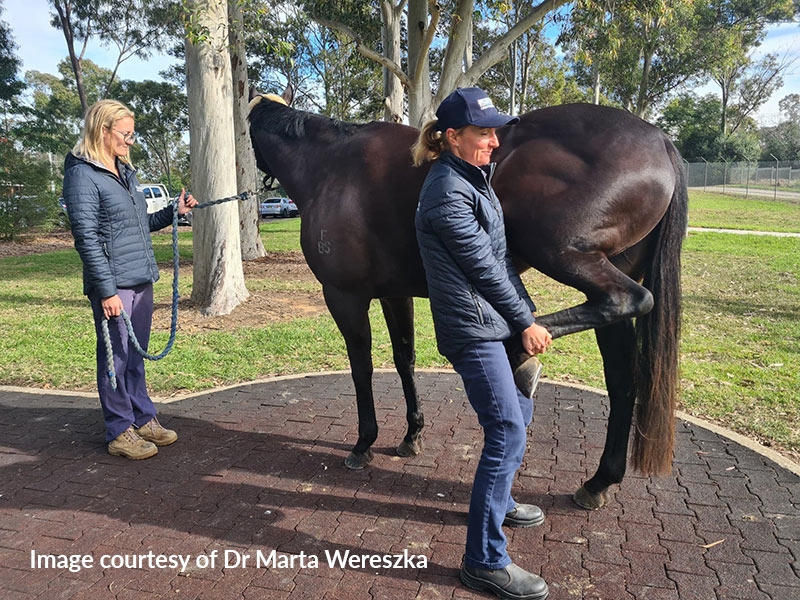
Flexion tests are a routine part of a lameness examination and assist in localising a lameness to the lower limb (that part of the limb below the knee or hock) or the upper limb (that part of the limb including and above the knee or hock). 

A lame horse, in which the stifle is the cause, is likely to appear worse after an upper limb flexion, i.e. the horse will appear more lame when trotted in a straight line. With the upper limb flexion test, however, the hock and hip joints are also flexed. Therefore, these will need to be ruled out as a possible cause of lameness. This is most commonly done through the use of ‘joint blocks’.

Flexion test by Dr Marta Wereszka
Flexion tests are a routine part of a lameness examination and assist in localising a lameness to the lower limb (that part of the limb below the knee or hock) or the upper limb (that part of the limb including and above the knee or hock). Image courtesy of Dr Wereszka.

Joint blocks

Joint blocks, or more accurately ‘intraarticular anesthesia’, can be useful in confirming a suspicion that the stifle joint is the cause of your horse’s lameness. This is where local anesthetic is directly injected into a joint to numb the area causing pain. Ideally, local anesthetic should be injected into all three joint compartments to ensure all are de-sensitised effectively.

Due to the complexity and size of the stifle joint, if the lameness improves by 50% or more, this is thought to be confirmatory. It is typical for your veterinarian to wait up to an hour before making the final call whether the joint block has lessened the severity of your horse’s lameness. Once again, this is related to the time it takes for the local anaesthetic to work inside such a large and complex joint.

Other diagnostic tools

Findings from a lameness examination or through the use of joint blocks can, at times, be confusing and more sophisticated techniques may need to be used to screen for stifle injuries, which are typically only in large equine hospitals.

Nuclear scintigraphy involves the injection of a radioactive isotope (Technetium 99m) into the bloodstream of the horse. This isotope circulates around the body and is absorbed by bone which is undergoing active remodelling or inflammation. A gamma camera is used to collect and record images from different parts of the body, which allows veterinarians to pinpoint exactly where the source of lameness may be. (You can read a more detailed article about scintigraphy at: www.horsesandpeople.com.au/article/equinescintigraphy).

Once the site of lameness has been confirmed to be the stifle joint, then radiographs and/or ultrasound are performed to determine a direct cause. 

Radiographs are useful to evaluate bone abnormalities, whilst ultrasound is useful for evaluating soft tissue structures. These two diagnostic modalities will, therefore, provide very useful information when utilised together to determine treatment. 

Stifle x-ray
X-rays and ultrasound combined will prove very useful in determining the treatment for stifle lameness. 

Once the site of lameness has been confirmed to the stifle joint and the exact cause of lameness has been determined with diagnostics, such as radiographs and ultrasound, the veterinarian should be able to provide the owner with a prognosis and a treatment plan specific to their individual horse.

Stifle injuries, treatment options

As with all joint disease or injury, there are many treatment options available and which of these your veterinarian chooses will depend on a range of factors, including the exact nature and severity of the injury, intended future use of the horse and financial constraints. 

Common treatments:

  • Common treatments include, but are not limited to:
  • Rest, followed by a controlled exercise program.
  • Direct intraarticular joint treatment: IRAP, corticosteroids, hyaluronic acid.
  • Systemic treatment with drugs, such as phenylbutazone, oral joint supplements, pentosan.
  • Surgery: arthroscopy, blistering of the patella ligaments.
  • Complementary therapies: massage, chiropractic, acupuncture.
  • Systematic treatments
  • Nonsteroidal anti-inflammatory medications (NSAIDs) include:

Phenylbutazone (‘Bute’), which has been the mainstay of treatment for joint disease for many decades, and works well to decrease lameness, due to its rapid onset of action and strong anti-inflammatory action. Bute, however, is not a long-term treatment for horses involved in competition, due to its long swabbing time, and both kidney and intestinal side effects.

Meloxican is a newer anti-inflammatory medication, which is reported to have fewer side effects than Phenylbutazone and a shorter withdrawal time. 

Pentosan and Pentosan Halo: Pentosan polysulphate is derived from a plant (beechwood extract) and is registered for intramuscular administration in the horse. Pentosan Halo contains an additional ingredient, HA, which is administered in a separate syringe and given intravenously to the horse. 

These products aid in healing mild cartilage disease. Experimental studies performed in horses have revealed improvement in lameness and joint flexion, as well as reduced inflammation inside an arthritic joint.

Oral joint supplements: There is a vast number of oral joint supplements available for horses. The specific formulation, concentration and source of products differs considerably. However, most contain one or more of the following: chondroitin sulfate, glucosamine, hyaluronan and MSM. 

Many of these products work by providing molecules which are naturally found and have important properties in cartilage or joint fluid, and which undergo depletion when there is inflammation within a joint.

Scientific studies have indicated these products are effective in the treatment of joint disease in humans. In horses, however, treatment efficacy is based more on individual opinion, rather than substantiated by quality scientific studies. 

An interesting report in human literature compared the label ingredient of oral joint supplements with the independent testing of the products, and found little correlation to the label claim and content, or price and content. This potentially emphasises the use of trusted brands that have at least undergone some testing.

Direct intraarticular joint treatment

Corticosteroids are the most potent anti-inflammatories available and are injected directly into a joint (termed ‘intraarticular’) to provide rapid pain relief. Furthermore, controlled scientific studies have shown that using ‘low doses’ of corticosteroids can improve the integrity of the cartilage. 

Controversy exists surrounding the use of intraarticular corticosteroids, due to the reported potential side effects. Much of this controversy is based on unsubstantiated statements in the lay press. Furthermore, studies which revealed potentially harmful effects of IA steroids were conducted using normal joints and cartilage. 

Current research suggests that inflamed and arthritic joints do not exhibit the same harmful effects seen in normal joints when IA steroids are administered unnecessarily.

Some consideration should be given to the reported incidence of corticosteroid-induced laminitis. However, no direct association has ever been proved. Caution should be undertaken in horses which have had laminitis and which are prone to developing laminitis. 

Hyaluronic Acid (HA) is an essential and normal component of joint fluid and cartilage. It provides joint fluid with the properties of lubrication and elasticity, which is necessary for a smooth and even gliding joint surface. HA is commonly injected in conjunction with a corticosteroid inside a joint, and also acts as a natural anti-inflammatory and enhances the action of the steroid. HA can also be injected intravenously in conjunction with Pentosan.

IRAP (Interleukin 1 receptor antagonist protein)

Blood is taken from the horse and incubated with special glass beads that promote the production of regenerative and anti-inflammatory proteins by the white cells in the blood. The sample is centrifuged and the serum containing these proteins is harvested. This serum is injected into the affected joint. 

Usually, a series of three to four injections is performed every 1-2 weeks. This treatment can work well for horses with mild arthritis and no significant radiographic changes. IRAP is not swabbable as it is made from the body’s own proteins.

Complementary therapies

In horses with initiating mild arthritis, all that may be required to keep the animal sound is increasing the warm-up period prior to intense work. In other cases, it is necessary to reduce the work intensity and duration, whilst treatments are initiated to allow medication time to take effect.

Complementary therapies, such as massage, acupuncture and chiropractic, can also be incorporated into the training regime. The response to these adjunctive treatments is quite variable from horse to horse and, therefore, some experimentation to find out what works may be necessary.

Surgery

Surgical treatment to remove either the offending or major contributing cause of arthritis is required in the following cases:

Bone chips: these can occur as a consequence of arthritis or intensive training over a long period of time.

OCD (osteochondrosis): is a congenital problem where, due to a variety of reasons, such as nutritional and genetic disposition, bone chips form in specific locations in the horse.

Bone cysts: these are areas where there is a lack of bone below an area of (usually abnormal) cartilage

Medicating a joint and making it pain-free in the cases listed above will only aggravate the arthritis and further its progression. For this reason, x-rays are commonly performed to assess the affected joint, in order to screen for potential surgical problems.

Arthroscopy

Arthroscopy is the most common method by which joints are assessed and surgically treated. It involves making keyhole incisions directly into the joint and placing a special instrument called an arthroscope into the joint, so the interior can be viewed on a monitor. This technique has been adapted from humans and reduces post-operative complications, such as infection and scar tissue restriction, as used to be common after open joint surgeries in horses.

Joint re-surfacing techniques

Due to the inherent poor healing of cartilage defects, a considerable amount of research has been performed in the last decade evaluating different surgical treatments for focal cartilage defects. Despite this, problems still exist with each technique currently developed. For example, there can be great difficulty in gaining surgical access to certain areas of the joint where joint disease occurs (for example, the weight-bearing surfaces of the stifle joint). 

Often, specialised equipment is required, as well as specialised surgical expertise, and this comes with a substantial cost. This is why many of the techniques scientifically evaluated have not been found to be easily applicable in the clinical setting. Furthermore, true, evidence-based follow-up of horses with naturally-occurring clinical joint disease and the outcome following treatment is lacking, making the justification of using any of these techniques very difficult.

Stem cells

An exciting, emerging application for stem cell therapy in horses is in the management of lameness associated with osteoarthritis. Stem cells are harvested from the bone marrow or fat, and are injected directly into the affected joint. Stem cell treatment has been used in conjunction with arthroscopic surgery when, typically, the results from surgery alone would be poor. 

The potential benefits for the use of stem cells in osteoarthritic joints relates to the anti-inflammatory properties of stem cells and also their ability to embed within the joint, as well as their capacity for self renewal resulting in a prolonged duration of effect. Candidates for stem cell treatment for osteoarthritis are those horses that fail to respond or become refractory to conventional treatments, or those horses that suffer side effects from non-steroidal anti-inflammatory or corticosteroid medication. 

Conclusion

The most important aspect of lameness diagnosis is to apply a complete step-by-step approach to confirm the exact location of the pain. 

Whether or not your horse has a stifle problem directly causing lameness can only be established through the use of a logical, systematic approach, and this is vital in order to direct targeted therapy and increase the prognosis of a horse returning to an athletic career.

References: 

  1. deLuhunta A, Habel RH: Applied Veterinary Anatomy, Philadelphia,1986, WB Saunders.
  2. Latimer FG, Tarsus and Stifle in Equine Sports Medicine and Surgery, 2004, WB Saunders.

First-ever Equine Speedometer and Tracking System for Horses

Ever wished your horse had a speedometer? Good news! That technology may be just around the corner.

By training a software program to adjust data from inertial measurement units (IMUs) to horse-specific movements, Dutch and Swiss researchers have just created the first-ever equine speed and stride tracking system for all gaits.

The work promises an exciting new way to monitor horses for better performance, health, and welfare, scientists say.

You’ve got your running app that tells you how fast (or how slowly!) you ran that 5K last weekend. But try running around in an arena and see if you get the same results…

Now try riding your horse with it, and you’ll see that those global positioning system (GPS)-based tracking programs aren’t really designed for horses—and even less so if they’re working under a roof or around landscaping that blocks satellite signals.

Yet, knowing your horse’s speed has important advantages: you can monitor his conditioning; you can follow trends and see when something’s off; you can pace him more accurately for improved performance….

Because of all those reasons and more, equine scientists and engineers in The Netherlands and Switzerland teamed up to develop a reliable way to track horses’ speed—and their stride lengths—regardless of how fast the horse is going, what patterns he’s following, or whether he’s indoors or outdoors.

“In the current era of digitalization, we need more objective measurements than our subjective opinions, be it in competition, breeding, or veterinary lameness evaluations,” said Annik Gmel, PhD, of the Equine Department in the Vetsuisse Faculty of the University of Zurich and of Agroscope—Swiss National Stud Farm in Avenches, both in Switzerland.

“We (equine researchers) knew we needed a speed measurement linked to our other parameters of interest, but not being engineers, we couldn’t implement it alone,” said Gmel, who’s been collaborating for the past several years with Filipe Serra Bragança, DVM, a PhD candidate in equine musculoskeletal biology at Utrecht University’s Faculty of Veterinary Medicine Department of Equine Sciences, in The Netherlands.

“Being able to come together from different fields to adapt systems for practical applications has been deeply rewarding.”

Hamed Darbandi, PhD, of the Pervasive Systems Group in the Department of Computer Science at the University of Twente, in Enschede, The Netherlands, comes from one of those “different fields.” And he was eager to get on board the project.

“Why do many people wear smartwatches?” Darbandi said. “It’s because they want to track their activity, right? I think that is also the case for horses. Not all horses are athletic horses, but tracking their activity can be beneficial for their health.”

So Darbandi, Serra Bragança, Gmel, and their fellow researchers took advantage of data from other ongoing gait analysis studies in which researchers had equipped 15 Icelandic horses and 25 Franches-Montagnes with a double gait-tracking system using both GPS (Global Positioning System) and IMU (Inertial Measurement Unit) technology.

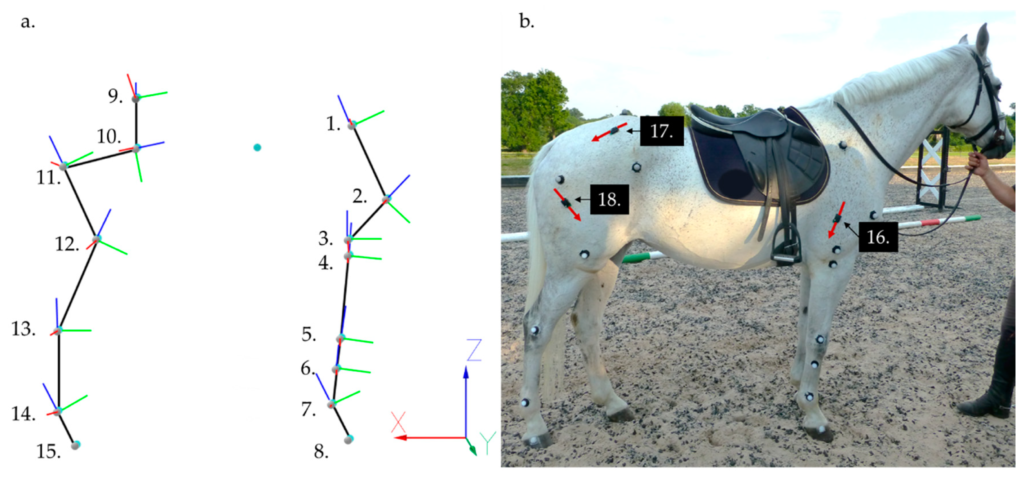
The horses wore seven IMUs placed one each at each leg, the poll, the withers, and the sacrum, as well as one GPS module at either the withers or the sacrum.

Locations and orientation of inertial measurement units (IMUs) on the horse's body. RF: right front limb, LF: left front limb, RH: right hindlimb, LH: left hindlimb. Photographed by Christelle Althaus.
Locations and orientation of inertial measurement units (IMUs) on the horse’s body. RF: right front limb, LF: left front limb, RH: right hindlimb, LH: left hindlimb. Photographed by Christelle Althaus.

The horses were worked at walk, trot, tölt, pace, and/or canter, in hand or under saddle, outdoors, with good satellite signal.

The computer engineers then developed a software model that could convert the IMU data into accurate speed determination—as determined by the GPS data which, having been collected outdoors, was considered a reliable standard.

It took some time, requiring the engineers to correct the software and teach it to adapt the data to the particular way horses move in each gait.

Through all this machine learning, though, the scientists finally achieved an accurate, working model that consistently calculated the horses’ actual speeds, using the IMU data alone. In fact, they were even able to get the model to estimate speed correctly using a single IMU on the body or a leg, meaning the horse would only need to wear one IMU instead of the seven used in the study.

“The results of our study show that speed can accurately be estimated independent of the environment,” Darbandi said.

This technological development could soon allow horse people to be equipped with more objective information as they make decisions regarding performance, training, and even breeding, according to Gmel.

“For our research project—Shape and Gaits 2.0—we use the system to measure the movement of horses to quantify what a good walk, trot, or canter is, objectively speaking, so that we can improve the selection of horses for breeding,” she told Horses and People.

“As we know from previous experiments, speed has an effect on many measures of interest, and horses adapt to speed changes in different ways. For example, we are interested in whether the horse increases stride length or stride frequency with higher speeds, as this will make the difference between a real extended trot and a hurried trot without scope in dressage.

“For performance, we want to select the horses with longer strides and lower frequency,” she continued. “But for a fair comparison between horses, we need to match the stride length and frequency with individual speeds, which we can now measure thanks to [Darbandi’s] method.”

According to Darbandi, currently, the speed estimator only works through the software program and can’t work in real-time like a speedometer. But such a device might be just around the corner.

“It can be simply modified to a live version, which can report the speed value to the rider live and in a second!” he said. A future version could easily also include a heart rate monitor for real-time cardiac monitoring, he added.

“As time goes by, we can see that more and more riders, veterinarians, and coaches are becoming more sophisticated about the impact of technology on horse health and performance,” said Darbandi.

“We hope that other scientists will contribute to spreading the benefits of using technology for equine health and performance, and that more riders will accept it as a tool to help their horses more than before.”

Journal Reference:

Darbandi, Hamed; Serra Bragança, Filipe; van der Zwaag, Berend J.; Voskamp, John; Gmel, Annik I.; Haraldsdóttir, Eyrún H.; Havinga, Paul. 2021. “Using Different Combinations of Body-Mounted IMU Sensors to Estimate Speed of Horses—A Machine Learning Approach” Sensors 21, no. 3: 798.

Tokyo 2020, The Good, The Bad and The Ugly

4

With all sports available in their entirety through the Channel 7 app, 7+, Australians enjoyed more of the equestrian Olympic events in Tokyo than ever before.

Unfortunately, they might be wishing their sport had received rather less coverage than it did… 

Denzil O’Brien, a former CEO of Equestrian Australia, picks the good, the bad and the ugly of these memorable Games, and slams the format changes and the effect they will have on equestrian events’ social licence to operate in future Olympiads.  

Fans of equestrian sport often complain that their sport receives almost zero mainstream news reporting or broadcast coverage, and in general this is true. While in Europe showjumping and dressage are almost mainstream and receive quite significant airtime (usually courtesy of streaming channels such as Eurosport), here in Australia, equestrian sport might just as well not exist if one measures its coverage by the media.

Even in the congratulatory round up of Australia’s medal tally after the Tokyo Olympics, Andrew Hoy’s achievements – being Australia’s oldest Olympian, competing at his eighth Olympics and winning a silver and a bronze medal – were by and large absent from the count. Yet despite excellent coverage courtesy of Channel 7’s app, there were times when equestrian fans around the world were wishing their sport had received rather less coverage…

First, we had the rather unedifying spectacle of a nominated member of our Australian showjumping team virtually being stopped at the airport from heading off to Tokyo, having tested positive for metabolites of cocaine. His suspension from the team meant that Australia could no longer field a team (the rules governing all equestrian sport at this Olympics have changed, and more on this later).

This left only two riders, with neither of them technically able to compete as individuals because they had been nominated as team members. The situation was further complicated by a social media uproar over the nominated travelling reserve refusing to send his horse over to Europe to endure quarantine, on the grounds that he wasn’t going to get a ride anyway.

So, no team, no reserve.

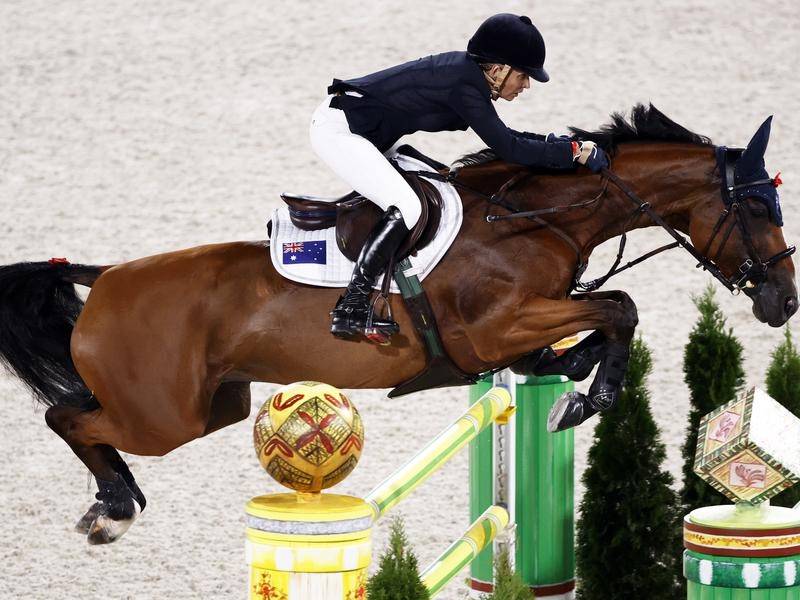
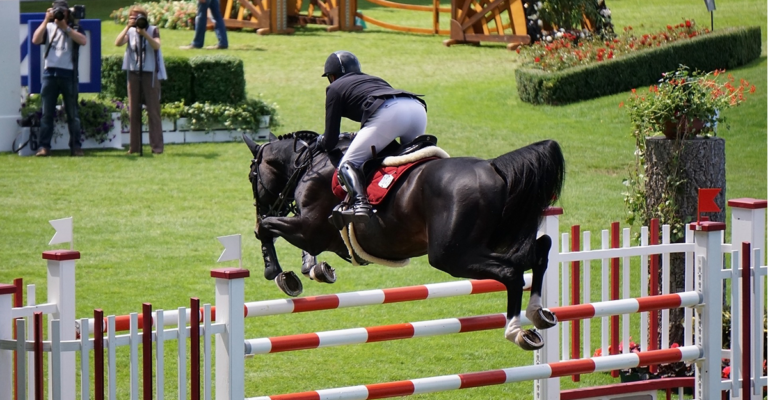
Edwina Tops-Alexander riding the 13-year-old bay mare Identity Vitseroel, with whom she has been partnered with since 2019

Conspiracy theories about rigged selection and conflicts of interest flooded the social media platforms, all of them allegations that equestrian fans are familiar with over many past decades. All this kerfuffle was taking place very much in the public eye as equestrian’s ruling body, Equestrian Australia (EA), has been in trouble for some years now, with a revolving door of Board members and CEOs culminating in Sport Australia withdrawing its funding until it could recast itself as a modern organisation with appropriate governance.

This particular episode in EA’s history is well-documented on the internet, and it is not my intention to go over this here, except to observe that the disdain and even contempt for the national organisation expressed by those keyboard warriors has been quite shocking.

There was a missed opportunity for the CEO or the Chair of the Board of EA to make a statement clarifying the timeline of Tokyo’s selection process, the reporting of the positive drug test and precisely when the reserve had decided not to travel.

In any case, the dilemma was resolved through long intense negotiations between EA, the Fédération Equestre Internationale (FEI, the equestrian sports’ governing body), the Australian Olympic Committee (AOC) and the International Olympic Committee (IOC), which saw the two remaining team members permitted to compete as individuals.

Such is the nature of jumping at this level that neither qualified for the finals, and as team member Edwina Alexander commented, “It’s a long way to go for an 89 second appearance”. Both acquitted themselves superbly, Edwina having only one rail down, and Kate Laurie wisely choosing to withdraw after four rails down with absolutely no chance of qualifying for the finals.

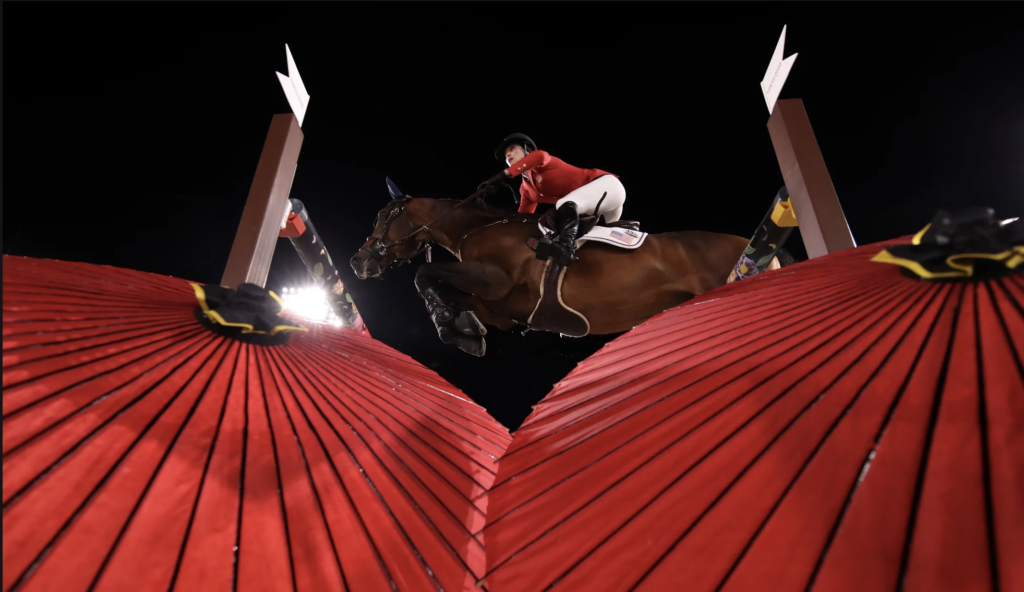
Jessica Springsteen, Bruce’s daughter, earned an Olympic silver medal for the US. They lost in a thrilling jump-off with Sweden in the team showjumping.

Lucky for us, we were able to witness their performances in their entirety through the Channel 7 app, 7+. As a long-time fanatic, I cannot describe the joy I experienced being able to watch every second of the dressage, the showjumping and the eventing competitions.

The closest I have ever experienced this before was at the Rio Games in 2016, when commentator Vicki Roycroft, herself a three-time Olympian in two equestrian sports, eventing and showjumping, gained so many fans during the middle-of-the-night coverage of the dressage competition that Channel 7 broadcast the cross-country competition in full, on mainstream TV.

Sadly though, this second-by-second coverage has also allowed us to see some pretty dreadful moments in horse sport.

The dressage competition will always excite heated discussion about horses being used and abused, as they perform beautiful elegant movements which some allege are simply formalised versions of natural movements, while others point to the unnatural position of the horse’s head, the stilted action of their legs, and often the overall impression of constraint and control rather than of freedom and expression. That debate is ongoing and unresolvable, and not one to have now.

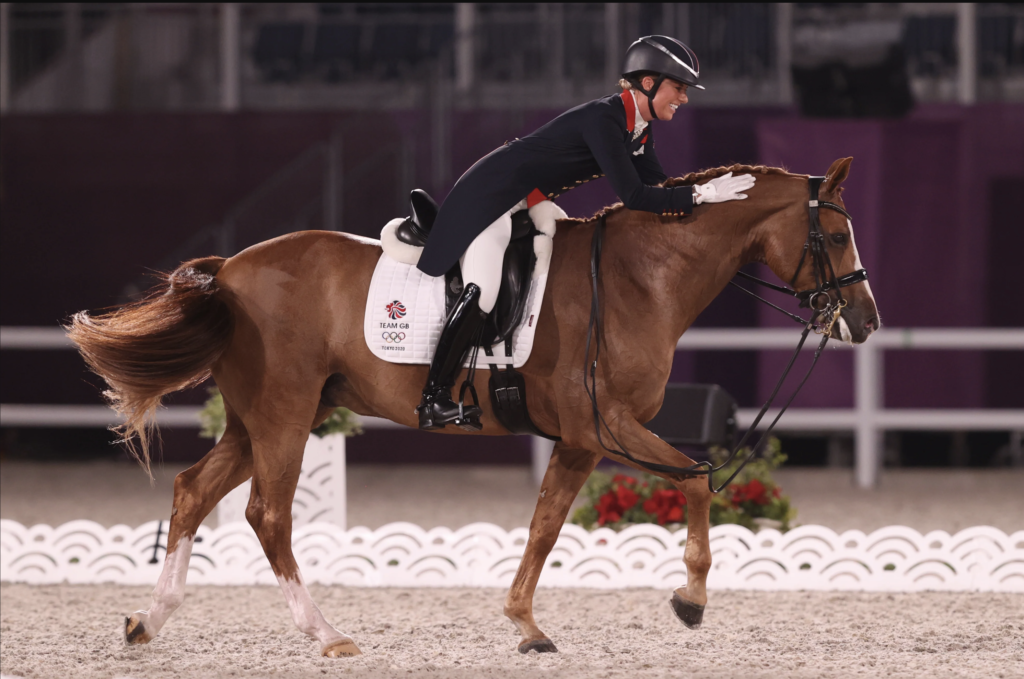
With very few Grands Prix starts under his belt, 10-year-old Gio was something of a gamble for Charlotte Dujardin heading to Japan. But her faith was justly rewarded with the pair came home with a Team Bronze medal.

The cross-country was unfortunately marred by the euthanasia of one horse with a catastrophic ligament injury. A horse death in the cross-country at an Olympic Games is fairly unusual, records showing that the last such occasion was at the Sydney Games in 2000.

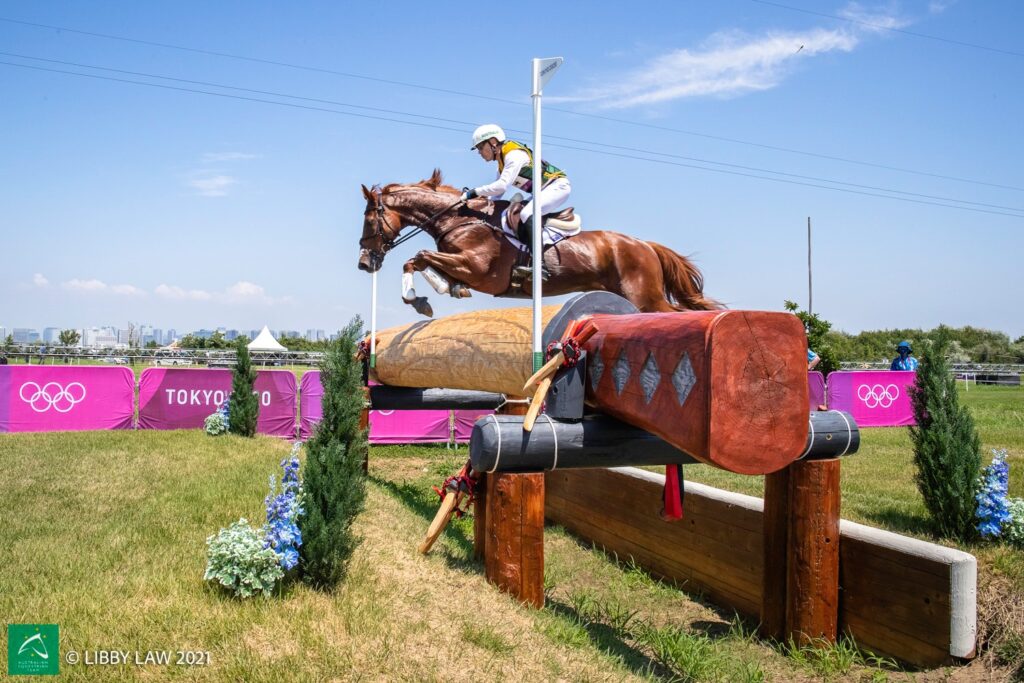
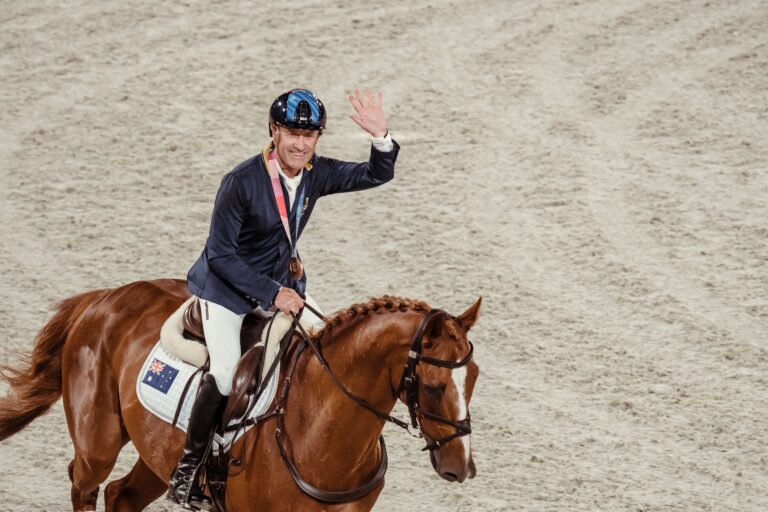
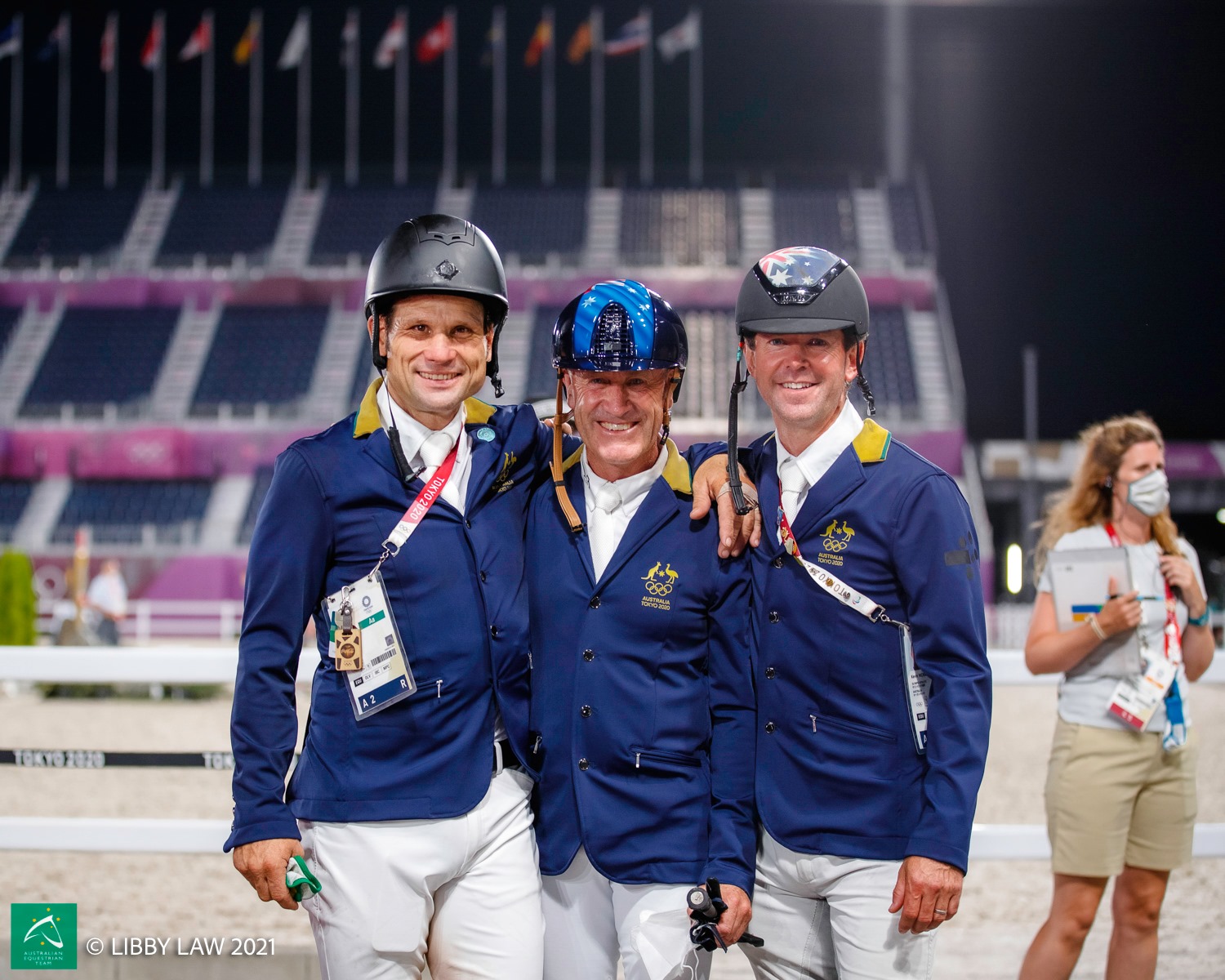
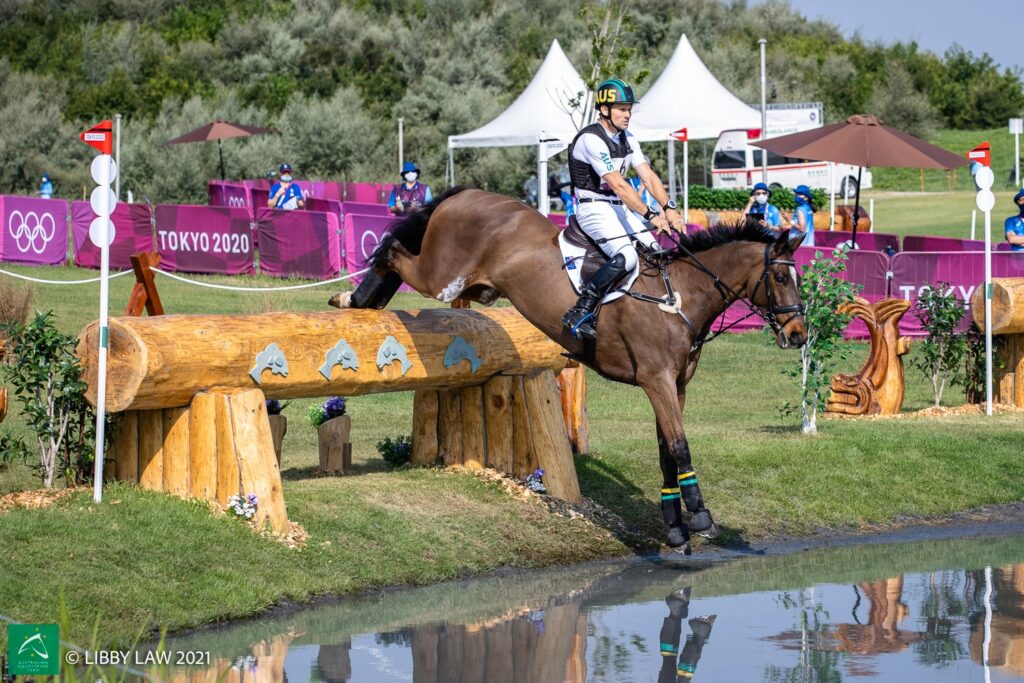
On the other hand, the cross-country excelled in superb performances by horses and riders, with Australia’s team of Andrew Hoy, Shane Rose and Kevin McNab riding superbly, coming home with only time penalties over a testing course. They netted us a team silver medal and an individual bronze medal for Andrew Hoy, maintaining Australia’s record as one of the preeminent eventing nations.

Team Silver and Individual Bronze at Tokyo, Andrew Hoy riding Vassilly de Lassos

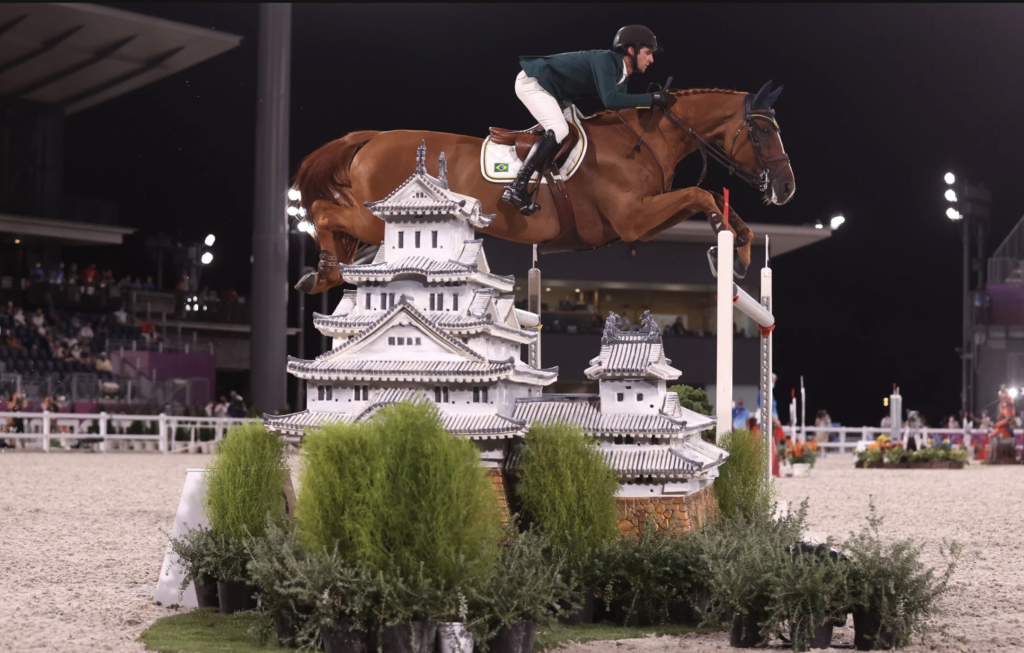
In showjumping, the focus of debate continued to swirl about in the ether of social media. Showjumping is incredibly demanding of the horse, and the competition at Olympic level demonstrated that demand in spades.

Perhaps I should now touch on the format change for these Games, which has resulted in some fairly ugly visuals and much debate.

The Olympic vision is one of universality and inclusivity. It is in the Olympic Charter that the Games should demonstrate that any nation, anywhere, can qualify for, and hope to achieve glory.

Yet the Olympic ‘business’ is under constant scrutiny, given its history of corruption, vote-rigging and dubious choices of host cities (among other scandals). It has been rare in the past for purpose-built Olympic venues to provide on-going legacy value for the host nation, and this is especially true of equestrian venues. Staging equestrian events at Olympic Games level is ridiculously costly for the host nation, and this is often used to pressure the IOC into dropping equestrian events from the Games, particularly eventing.

The IOC’s goals of universality and inclusivity present difficulties for many nations because of the costs involved in gaining appropriate qualifications. These difficulties are significant enough when only one athlete is involved, but equestrian sport involves two athletes – the rider and the horse – and they both have to qualify as a combination and at the same time.

In an inclusivity attempt, this year, the IOC took an each way bet, but the disparity in the results between more experienced and less experienced nations was stark.

For those nations without a strong equestrian tradition (most African nations, for example) gaining such qualifications will invariably mean that their riders must train and live in Europe or the USA and source their horses there as well. This is very costly for the national federations and for the athletes themselves. Horses are not canoes or tennis racquets. When a horse ‘breaks’, you can’t simply go out and get another one from the horse shop.

So, for the Tokyo Games the IOC agreed to a format change for all three equestrian sports – dressage, eventing and showjumping – which saw the number of team members reduced from four to three.

This meant that if there was a set number of competitors for each competition, more nations could theoretically qualify, and ‘universality’ would be there for all to see.

Except that the IOC seemed to be having a bet each way. Fewer members per team, sure, but a peculiar set of new and untested rules in each of the sports which allowed a horse and rider substitution at varying stages of the competition (so-called ‘alternates’).

Previously, a team would drop the worst score of the four, and use the best three to make a team score. But at Tokyo we saw showjumping teams qualify from nations which had never before gained a qualification for the team event at an Olympic Games (Israel and Morocco), one nation which last qualified in 2008 because it was the host nation (China), one which last qualified at the Rome Olympics in 1960 (Egypt), and one which last qualified on 1932 (the Czech Republic).

Not one of these teams progressed from the qualifying event into the team final event. Between them, the 15 riders in these 5 teams accrued 166 penalty points (rails down, and time), 3 were withdrawn and one was eliminated.

By comparison, the 30 riders in the top 10 teams which qualified for the final accrued a total of only 147 penalties.

Mexico, Japan and Israel were unable to get all 3 riders to complete the course.

Ireland’s first team member (actually an ‘alternate’ under the strange new rules, a last-minute substitution) had several rails down and then the horse actually fell at a jump, resulting in elimination for this combination. As a result, Ireland withdrew from the competition as there was no possibility of their team qualifying.

This was not the case with several other teams, however, where riders who normally would have withdrawn after having rails down continued and accrued substantial penalty scores, presumably ‘for the team’. One team had 10 rails down between them, plus time penalties.

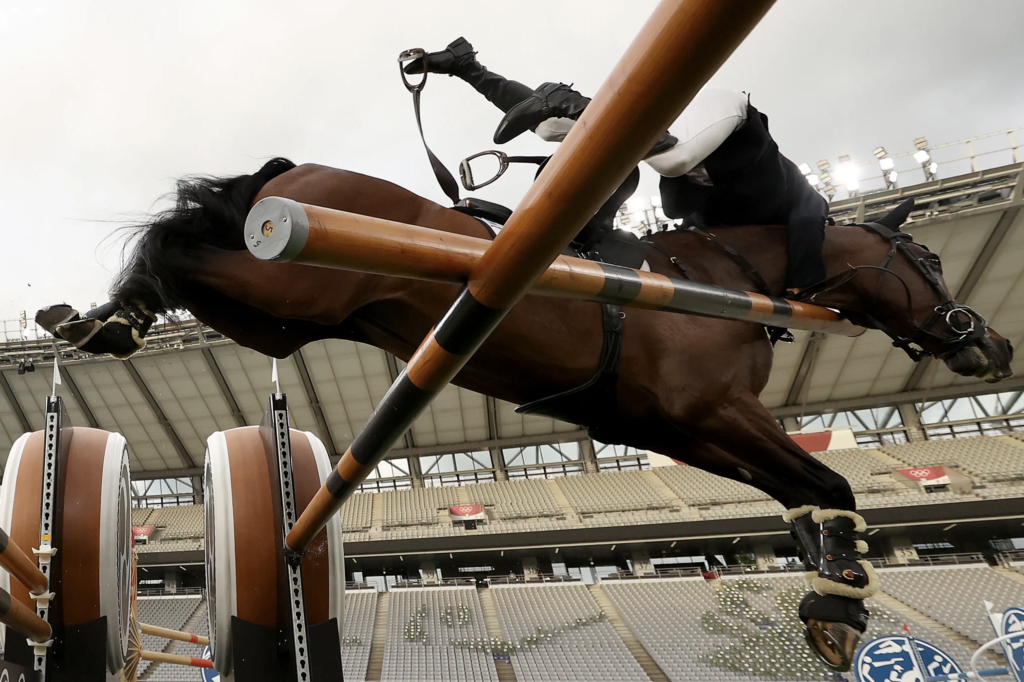
A great deal of the spectacle created by the new format was ugly, with horses crashing through the fences, multiple refusals, several riders falling off, and yet another horse falling.

Despite all this, the final team jumping event also managed to thrill us with Olympic showjumping at its finest.

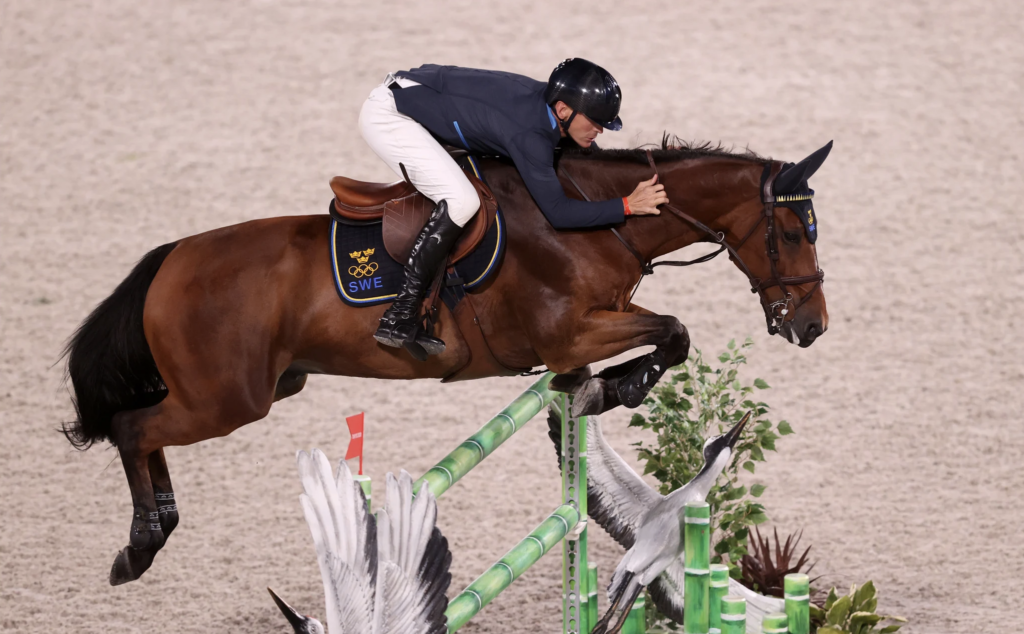
Sweden went through the qualifying event without a single penalty, and took gold in a riveting jump-off, after they and the USA finished equal on zero additional penalties after the final round. In the end it came down to time, and Sweden carried the day.

The Swedish show jumpers excelled. Sweden went through the qualifying event without a single penalty, and took gold in a riveting jump-off against the USA.

It is difficult to imagine a more fitting end to this great competition.

Rodrigo Pessoa was one of many professionals who fought hard against the format changes before they were introduced. In a scathing interview with World of Showjumping, he gives even more reasons why it cannot work out and hopes the FEI starts listening and goes back to the drawing board.

As an aside, there were also a few anomalies apparent during the jumping competitions, both individual and teams.

One combination was eliminated because there was a slight sign of blood on the horse’s flank, apparently from a spur. Blood in the horse’s mouth or on its flanks is automatic elimination, regardless of the degree of the injury.

But another horse had blood streaming from a nostril but was allowed to continue because it was deemed to be a spontaneous nosebleed (epistaxis) rather than the result of a pulmonary haemorrhage, which can be fatal. How a showjumping judge can tell the difference is worth a question. In racing, any blood from a nostril is deemed to be the result of a pulmonary haemorrhage until a veterinary examination, and the horse is automatically banned for a set period.

The visuals of a horse with blood coming out of a nostril being allowed to continue were challenging.

Sadly then, we come to the jumping section of modern pentathlon. This is a competition in which the athletes ride horses provided by the host nation, judged to be appropriate for the task.

The Modern Pentathlon is completely out of step with modern views on horse welfare, horse management, and horsemanship.

The riders have but 20 minutes to get to know their horse, and they can jump 5 fences before the competition starts. The course can be up to 1.20m and the rules are vastly different from those of ‘real’ showjumping.

Competitors can remount if they fall off, for example, and even if the horse falls, they can continue until a second fall of horse or rider.

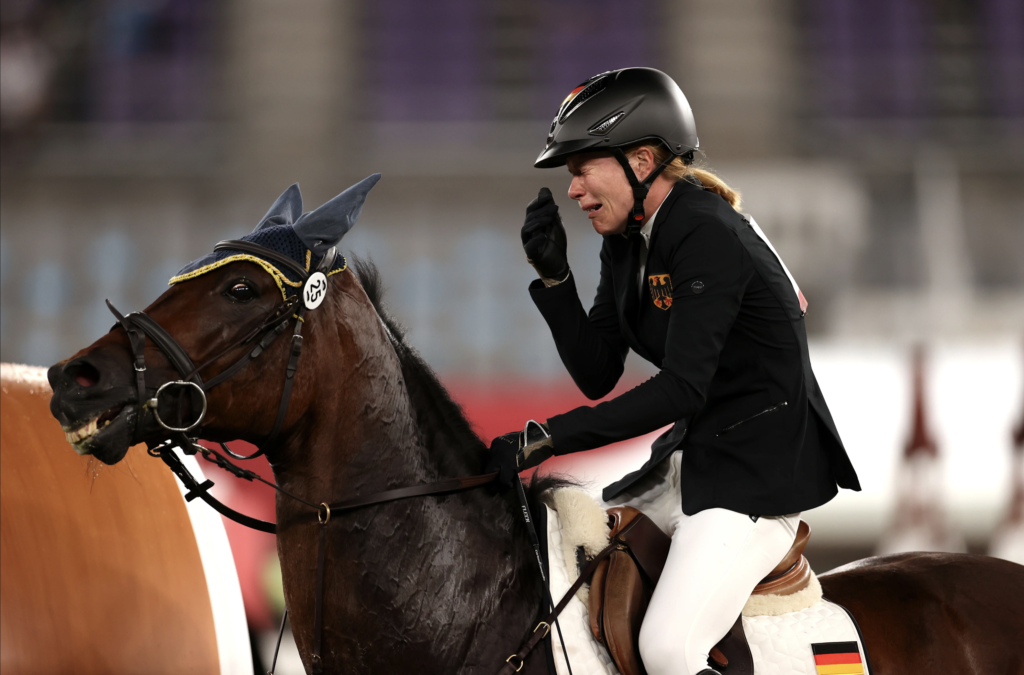
The images of the German athlete in tears because her horse wouldn’t jump, and of her coach punching the horse on the rump to make it go, have been widely circulated, the outrage has been far-fetching and volcanic.

Many viewers had no idea that this particular horse sport is not governed by the FEI, but by the Union International de Pentathlon Moderne (UIPM).

The showjumping component at this Games demonstrated quite clearly how quaint and out of touch the UIMP is, if they believe that using and abusing live animals in this way is acceptable. The behaviour of a number of these athletes, male and female, showed that for them the horse is simply a piece of equipment no different from an épée or a pistol.

It is difficult to imagine a single circumstance in which a sport’s social licence to operate has come under greater threat.

Indeed, the furore has resulted in the UIPM announcing that they will work with the FEI to review the role of the jumping component, and with luck it will be removed or radically altered, so that we will never again witness such a tragic spectacle and such dreadful display of poor horsemanship. All credit to the eventual medallists, all of whom clearly were experienced and capable riders.

So on balance, much can be learned from the Tokyo Olympics:

  • The 3-to-a-team concept may need revisiting by the FEI and the IOC. Some unforeseen consequences of this change may need examining, including the potential perils of not having one or more reserves should one of your athletes – rider or horse – be unavailable on the day.
  • The team showjumping really only worked because the best teams got to fight it out in a thriller on the day. Watching the lower ranked teams trying to qualify through to the final was sometimes painful.
  • Universality and inclusion are all very well. But these goals might result in teams which simply should not be there demonstrating their lack of competence and its impact on their horses’ welfare on the most public stage, and this will seriously threaten equestrian’s already challenged social licence to operate.
  • The showjumping component of modern pentathlon is the antithesis of modern. It is completely out of step with modern views on horse welfare, horse management, and horsemanship (does a non-gendered word for this exist?).

Are we happy that we could watch every second of the various equestrian competitions live this time? An emphatic ‘Yes’! Are we happy with everything we saw? Not so much.

All images sourced from: https://olympics.com/tokyo-2020/en/news/photos/

The Shoulder-in: More Than Dressage Gymnastics

Recent scientific findings support what many students of Classical dressage principles have known all along: The shoulder-in exercise is not only good for the horse’s physical development but it also influences their mental state – and the benefits of practicing it apply whether the rider is very skilled or less experienced.

The history of shoulder-in

Since its ‘invention’ over 300 years ago, the shoulder-in has received much praise from the who’s who of the classical and modern dressage scene. Particularly in the classical dressage world, the shoulder-in is regarded as the foundation exercise when it comes to improving straightness and balance, preparing horses for higher degrees of collection and the other lateral movements such as travers.

The Duke of Newcastle, a 17th-century Englishmen and classical dressage master, performed the ‘predecessor’ of our contemporary shoulder-in on a circle on multiple tracks. However, he reported that riding this movement on a bent line is very difficult.

A few decades later, the Baroque Frenchman and riding master de la Guérinière further refined Newcastle’s embryonic shoulder-in by riding it on a straight line (on four tracks) instead. This marks the birth of the shoulder-in movement as it is known today with one ‘minor’ amendment: The track numbers it’s supposed to be ridden on in dressage competitions has shifted from de la Gueriniere’s original four to the FEI’s three tracks.

Shoulder-in is held in ‘high regard’ in the equestrian literature

De la Guérinière describes the shoulder-in as “(…) the most difficult and the most useful [exercise] (…) which must be used to supple the horse” [1; p.62]. It “(…) produces so many good results at once that I regard it as the first and the last of all those [exercises] which are given to the horse.” [1; p.66].

Steinbrecht, a 19th century German dressage master, often referred to as the father of ‘modern’ dressage, highlights the important role shoulder-in plays in suppling the shoulders, achieving the best longitudinal bend, and teaching the horse to bend his hind legs when stepping under the center of gravity [2].

Decarpentry, an early 20th-century French cavalry officer and international equestrian judge, emphasises the positive impact of shoulder-in on the horse’s balance, muscular system, and the quality of the gaits [3].

With all these great benefits linked to one single movement, the FEI defines the shoulder-in as an essential schooling movement as it “(…) helps to straighten and supple your horse as well as develop the ability to collect and carry more weight on the hocks and hind end.” [4]

Shoulder-in in competitive and contemporary dressage

Today’s shoulder-in, as defined by the FEI and national riding manuals, is ridden on three tracks.

The German National Equestrian Federation (FN), for instance, describes the shoulder-in as a movement where the horse’s forehand (shoulder) is brought to the inside whilst the hindquarters stay on the wall. It is performed on three tracks with the outside hind leg traveling on track one, the inside hind leg and outside front leg traveling on track two, and the inside front leg traveling on track three [5]. The imaginary angle between the wall and the horse’s shoulder should be approximately 30 degrees.

Shoulder-in on three tracks, however, is a recent ‘innovation’, and dressage and horse training manuals of the first half of the 20th century still describe shoulder-in as an exercise ridden on four tracks, such as the German Heeresdiensvorschrift – a main work of its time on horse and rider training in the German cavalry [6].

New research backs the Classical masters

The claim that shoulder-in is beneficial for the physical and mental states of horses is supported by the findings of an interesting recent study.

Mendonca and colleagues [7] studied on a sample of 40 horses how being ridden in shoulder-in influences their behaviour and physiological responses. The horses were aged between 4 and 11 years and familiar with the shoulder-in movement.

Two FEI riders of different experience levels, one professional and one amateur, were asked to ride the horses during the experiment.

It was hypothesised that the lacking balance and precision of the amateur rider could impact the correct execution of the movement shoulder-in and therefore potentially affect the results.

In a first session, the horses were ridden on straight lines in walk, trot, and canter. In a second session, the riders were asked to ride the horses in shoulder-in (lateral exercise) in walk, trot, and canter.

Heart rate variability (HRV), used to measure stress, and horse behaviours indicative of lacking attention (“looking around frequency”) and relaxation (“playing with/chewing the bit”) were recorded in both sessions.

During the first session, horses were significantly less attentive and showed more ‘looking-around’ behaviours compared to session two where the horses displayed behaviours indicating relaxation/focus more frequently.

These behavioural observations are in line with the researchers’ measurements that showed increased activity of the sympathetic nervous system during session one (straight lines session) compared with a mainly parasympathetic nervous system activation during session two (shoulder-in session).

Authors’ conclusions

Based on their findings, it seems evident that riders, in general, have “(…) little if any influence on the horses’ behavioural parameters.” (e.g., looking around) (p.18) [7] [note: The riders were instructed to allow head movements in case the horses were looking around].

“The results concerning LAF [“looking around frequency”] and PCB [“playing with/chewing the bit”] between the two sessions suggest that lateral exercises, as performed in session two, may be useful to increase attention and decrease tension, independent of the rider.” (p.18) [7]

The researchers conclude that “(…) lateral exercises are an important tool that unexperienced riders could use to reduce stress-related events during training (…)” (p.20) [7]

Take-home message

It seems evident that lateral movements in general may reduce stress-related responses in horses. Therefore, besides their ‘gymnastisising’ effects, they may also be used to help lower a horse’s emotional level and re-focus their attention on your aids.

References:

  1. De la Gueriniere, F. R. (1992). Ecole de Cavalerie, Part II. Cleveland Heights: Xenophon Press.
  2. Steinbrecht, G. (2004). Das Gymnasium des Pferdes. 3. Auflage. Brunsbek: Cadmos Verlag.
  3. Decarpentry, A. (2012). Academic Equitation. North Pomfret: Trafalgar Square.
  4. Federation Equestre Internationale (Fei) (2020). Dressage Movements 101 – Intermediate. [internet]. Available from: https://www.fei.org/stories/lifestyle/teach-me/dressage-movements-101-intermediate Accessed 22nd June, 2021.
  5. Deutsche Reiterliche Vereinigung (FN) (2008). Richtlinien Reiten und Fahren Band 2, Ausbildung für Fortgeschrittene. Warendorf: FN Verlag.
  6. Heeresdienstvorschrift H.Dv.12 (2007). Stuttgart: Frankh-Kosmos Verlag.
  7. Mendonça, T., Bienboire-Frosini, C., Sanchez, N., Kowalczyk, I., Teruel, E., Descout, E., & Pageat, P. (2020). de la Guérinière was right: shoulder-in is beneficial for the physical and mental states of horses. Journal of Veterinary Behavior 38, pp.14-20

The original study is published in the Journal of Veterinary Behavior and the abstract is available here.

The Role of Veterinary Specialists and Referral Equine Hospitals

Like specialists in human medicine, veterinary specialists have extensive experience and expertise in a relatively narrow aspect of veterinary medicine. As such, specialists in equine surgery or medicine are often able to provide services that might be beyond what is possible in general ambulatory practice. 

Although not all specialists work from referral hospitals, many do and these facilities enable them to provide an exceptional level of care to your horse. 

Understanding what a hospital-based specialist can offer you and your horse is important when trying to decide whether your horse should be referred for specialist evaluation.  

What is a veterinary specialist?

Veterinary specialists tend to remain more broadly focused than their human medicine counterparts but, as a whole, veterinary practitioners are becoming increasingly specialised. 

Part of this drive toward specialisation is the ever-increasing body of veterinary knowledge. Remember that, unlike human doctors, veterinarians must deal with a wide range of animal species that often differ considerably in their normal physiology and which might be affected by vastly different disease processes. 

As a consequence, it has become increasingly difficult to have a comprehensive understanding of the diseases that could affect all of the species that a veterinarian might be expected to deal with! 

Although there is still a role for the James Herriot-style mixed animal practitioner, most graduating veterinarians plan to practice on either small animals (cats and dogs) or large animals (horses, cows and other farm animals).

Many specialists might just work with a single species and this is particularly true of large animal specialist practitioners, many of whom just work with horses. 

Veterinary specialists narrow their focus further than just small or large animals; the most common specialities in large and small animal practice are Surgery, Internal Medicine, and Emergency and Critical Care – and this is not the end of it! For example, some specialist surgeons will concentrate on orthopaedics, while others work primarily on soft tissue injuries or diseases. 

Equine orthopaedic surgeons primarily treat injuries to the bony elements of the limbs, whereas soft tissue surgeons often have a particular interest in abdominal surgery, such as treating horses with colic that require surgical intervention. 

Rather than just focusing on one or two animal species, some veterinary specialities focus on diseases that affect just one part of the animal, such as the specialties of cardiology or ophthalmology, or on a single disease process, like oncologists who treat veterinary cancers. 

Veterinary cardiologists, ophthalmologists and oncologists are usually able to diagnose and treat conditions across a wide range of veterinary species, although many spend more time working with small animal patients. 

Finally, there are several groups of specialists that animal owners might never meet, including veterinary anaesthetists, radiologists and pathologists. These specialist veterinarians can all provide invaluable insight into animal diseases.

As a point of clarification, in Australia, veterinary specialists are veterinarians with speciality level training who have registered as a specialist with the appropriate veterinary regulatory board. There may be veterinarians with extensive specialist level training, skills and training that are not registered with the regulatory board. 

While those veterinarians are not allowed to call themselves specialists in Australia, they are perfectly capable of providing a very high level of care to your horse. This is obviously slightly confusing, so it is important to understand the sort of training that qualifies a veterinarian as a specialist in Australia specifically.    

How do specialists become specialists?

Veterinary school graduates receive extensive training and are well equipped to tackle most of the challenges they will encounter in general practice. However, some veterinarians decide they would like to become a specialist and learn more about a particular area of veterinary medicine, so they are able to provide more tailored services for their patients. 

The first step in becoming a veterinary specialist is usually to undertake an internship (i.e. become an intern) in either small animal or large animal practice. Internships are usually one year long and most are rotating – that is, the intern spends time with surgery specialists, medicine specialists, anaesthetists, and so on. 

The aim of these internship programs is to expose recent veterinary graduates to high level veterinary practice under the supervision of specialists in a range of fields. 

Following successful completion of an internship, veterinarians who want to gain specialist qualifications will apply for a residency training program. Veterinarians undertaking residency training programs are called residents – most work very long hours, and so reside or are resident at their hospital!  

Residency training programs are usually three years in length and have a narrower focus – for example, large animal medicine or large animal surgery – than internships. As a part of their training program, residents are required to study the scientific literature around their chosen speciality and many will complete a research project investigating a particular aspect of veterinary medicine. 

There are a number of governing bodies that oversee and regulate veterinary resident training programs. The most well-known are the American College of Veterinary Internal Medicine (ACVIM) and the American College of Veterinary Surgeons (ACVS), and their European counterparts – the European College of Equine Internal Medicine (ECEIM) and the European College of Veterinary Surgeons (ECVS). 

Each college has a set of very rigorous requirements that residents must meet, and a certifying examination or examinations that must be passed. Residents that fulfil the college’s requirements become Diplomats in that particular specialty. 

In the Southern Hemisphere, the Australian and New Zealand College of Veterinary Surgeons (ANZCVS) oversees many of the residency programs and this college has particularly stringent standards. Veterinarians who complete ANZCVS sanctioned residencies become Fellows of the ANZCVS. 

Regardless of the governing body, veterinarians who have gone through a residency program and have fulfilled their college requirements (i.e. Diplomats or Fellows) have extensive knowledge and clinical experience.

What is a medicine specialist?

Understanding what a surgery specialist does is fairly straightforward, although many of the procedures performed by veterinary specialist surgeons are very complex and require an incredible level of skill. It is a bit harder to understand what it is that a medicine specialist, or internist – as they are often called, does. 

In the equine field, a large portion of many medicine specialists’ jobs involve treating very sick horses on an emergency basis. Many internists have a deep interest in neonatal medicine and will have extensive experience treating critically-ill foals. 

Other emergent cases commonly managed by internists include horses with diarrhoea and pleuropneumonia. In many hospitals, it is the internist who will first evaluate horses with colic and help make the decision about whether that horse requires surgical evaluation of the abdomen. It is also often the job of the internist to manage those horses with colic that don’t immediately require surgery. Although internists usually don’t perform surgery themselves, they are often responsible for the post-operative management of these horses. 

Liver, kidney and heart disease are, fortunately, fairly uncommon in horses. However, when diseases of those organs do occur, an internist is well-equipped with the knowledge and skills to make an accurate diagnosis and devise an appropriate treatment plan. 

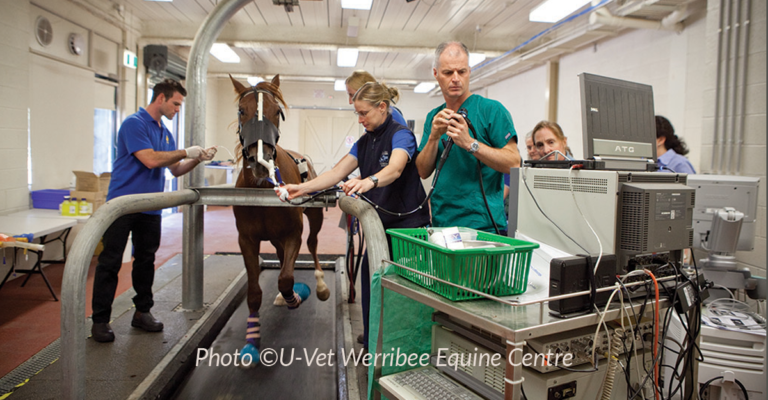
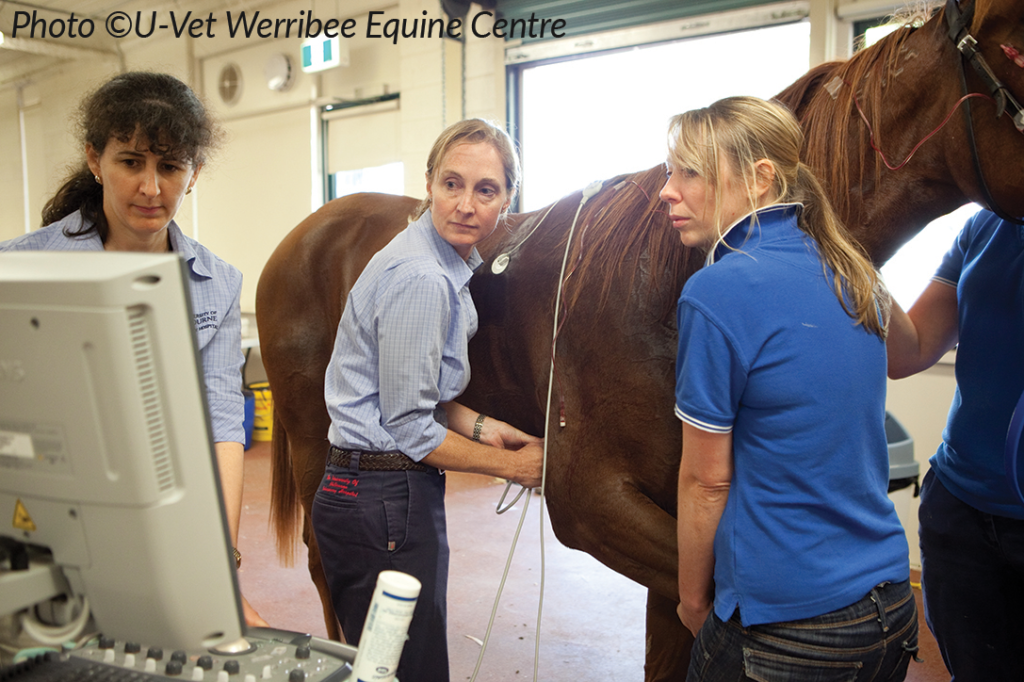
Many equine internists have extensive imaging skills and are particularly adept at ultrasonography. This is a vital tool when evaluating horses with problems, such as weight loss, persistent colic or diarrhoea, and infections of the respiratory tract. 

Evaluation of blood work is often is an important aspect of managing medical cases, and equine internists have a deep understanding of the subtleties and intricacies of laboratory results. Internists can also recommend and interpret testing that might not be routinely offered by general practitioners.     

When should my horse be referred for specialist evaluation?

This is a difficult question to answer because there are so many factors to consider when deciding whether a horse should be referred for specialist evaluation. In most cases, horses are referred to a specialist by the attending veterinarian, but it is also reasonable for owners to suggest or seek referral.

There are a number of things that are easier to do at a hospital or can only be done at a hospital. These include complex surgeries (particularly those requiring a prolonged general anaesthetic), continuous administration of intravenous fluids and other medications, and continuous and complex monitoring of patients. Many referral hospitals have laboratory equipment on-site or nearby, allowing frequent and rapid laboratory evaluation (blood work) that is absolutely critical in managing very sick horses. 

Most hospitals will have veterinarians who have expertise in a range of areas who can be consulted in the management of your horse. In our hospital, for example, both medicine and surgery specialists often evaluate the same horse. 

Our hospital also has a group of highly trained nurses who work around the clock, and veterinarians who are continuously available to monitor and treat hospitalised horses, and this is a feature of many referral hospitals. 

In addition to knowledge, skills and equipment, one of the most important commodities that specialists working in a hospital have is time. In our hospital, we will invariably spend hours systematically evaluating a case. This is simply often not possible in ambulatory general practice.

It is not always possible to get your horse to a referral hospital, but that doesn’t necessarily mean it can’t benefit from the expertise of a specialist. There are often specialist veterinarians who are able to travel to examine your horse with your regular veterinarian. Furthermore, most specialists are more than happy to discuss difficult cases with the attending veterinarian or horse owner. 

Is referral medicine expensive?

The short answer to this question is, unfortunately, yes – referral medicine and surgery can be very expensive. There are a number of important reasons why this is so, but it is important to recognise that referral hospitals can also provide tremendous value for money. 

At our hospital, we have state-of-the art equipment that is tremendously expensive to purchase and maintain. We also have a large facility that allows us to provide exceptional care for your horse and this too is very expensive. However, our greatest expense is the cost of providing, 24-hour, 7-days a week high-quality nursing and veterinary staff. This level of staffing is essential for the critically-ill cases that we see at our hospital, but can also be important in more routine cases. 

Having said this, we recognise that referral might not be an option for some horse owners and most specialists are happy to discuss options to fit within a particular budget.

Conclusions

Specialist veterinarians have undergone years of rigorous training to develop expertise in their particular area of interest. They are often able to provide guidance in the diagnosis and management of cases that is beyond the capabilities of general practitioners. 

Many veterinary specialists are based at referral hospitals that are able to offer horse owners a wide range of high-quality services. Referral medicine can be expensive and this is important to consider when thinking about taking your animal to a specialist. 

However, most specialists are more than happy to work with owners and their veterinarians to provide the best possible care for your horse.

This article appeared in the May-June 2021 Horses and People Magazine

From Pony Club to Olympic Glory

From their regional Pony Club to the world stage: Australia’s oldest and largest equine organisation helped shape the lives of our Olympic Equestrian Team.

Australia’s most elite athletes are in Tokyo, Japan, not just bringing home medals but testing their skills against the best of the best. Amongst these is the Australian Equestrian Team, which consists of riders who all began their careers at Pony Clubs around Australia.

The Tokyo Olympics lineup of riders cements the notion that Pony Club gives its participants the foundations they need to succeed. Why? Because the peak of success comes when an individual represents their country at the Olympic Games.

Australia’s Eventing Team riders bring home Team Gold and Individual Bronze: Shane Rose riding Virgil, Andrew Hoy riding Vassilsy de Lassos (Individual Bronze) and Kevin Mcnab riding Don Quidam. Image courtesy Equestrian Australia.

Standing on the Olympic podium with a medal (or two!) in hand is a dream that every young rider aspires to recreate. When the children across Australia who are watching the likes of Andrew Hoy, Mary Hanna, and Edwina Tops-Alexander compete realise their career began at their local Pony Club, the dream becomes possible.

“For over 80 years, Pony Club has been the starting point for Australian Olympians. It provides an environment to develop riding and horse care skills for future careers, including elite competition,” says Dr Catherine Ainsworth, Pony Club Australia CEO.

Team Silver and Individual Bronze at his 8th Olympic Games, Andrew Hoy riding Vassilsy de Lassos. Image courtesy Equestrian Australia. 

Andrew Hoy who began his days at Holbrook Pony Club, has made history becoming the first Australian athlete to compete at 8 Olympic Games. Here he with Davey, the horse he rode at his first Games, Los Angeles 1984.

Right across Australia, attending your local Pony Club has become somewhat a rite of passage for any horse-mad young rider. It is a place where budding equestrians can fine-tune their abilities, make connections and be taught the highest ideals of sportsmanship, citizenship and loyalty, thereby cultivating strength of character and self-discipline.

Australia-wide, there are over 800 active clubs and more than 40,000 members, which makes Pony Club the largest equestrian organisation in Australia, a testament to its educational and instructional programs.

“What a great institution – so many happy children and wonderful memories for over eight decades! I fondly remember my Pony Club days in Holbrook, and I am very much looking forward to the next generation of Hoys joining Pony Club too,” says three-time gold medalists and current Australian Olympian Andrew Hoy.

Australian Equestrian Olympian Shane Rose
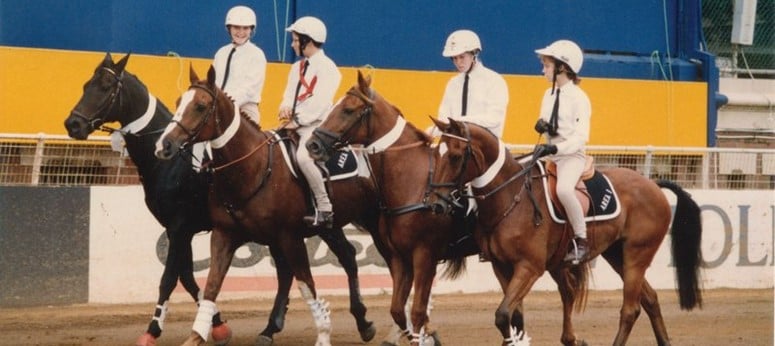
Team Silver medallist in Tokyo riding Virgil (top), Shane Rose is seen here during a Pony Club summer camp.

Within the Olympics, there are three equestrian competitions: dressage, show-jumping and eventing. To become an Olympic equestrian involves a long road of dedication, a willingness to seek out sponsors, and a commitment to the sport that often feels more like a way of life. It takes an entire team to get one individual to these top competitions, including coaches, grooms and veterinarians. It also requires an enormous amount of money to get from your back paddock to the Olympic podium.

Knowing each rider began their long journey to success on the back of a horse at an Australian Pony Club will inspire a generation of future equestrians to follow in their footsteps. “The Pony Club community are cheering on the Aussie teams, who are an inspiration to our current members,” Dr Catherine Ainsworth added.

Here is where our Olympians started:

EVENTING
Andrew Hoy – Holbrook Pony Club
Shane Rose – Forest Hills Pony Club, Avondale Pony Club and others.
Kevin Mcnab – Malanda Pony Club
Stuart Tinney (reserve) – Calliope Hack and Pony Club

An image that includes Olympians Shane Rose (Eventing) and Edwina Tops Alexander (Show Jumping) who were members of the Avondale Pony Club. Image courtesy Pony Club Australia.
An image that includes Olympians Shane Rose (Eventing) and Edwina Tops Alexander (Show Jumping) members of the Avondale Pony Club. Image courtesy Pony Club Australia.

DRESSAGE
Mary Hanna – Nambour Pony Club
Simone Pearce – Bamawn Extension Pony Club
Kelly Lane – Tallebudgera Pony Club

Dreams come true! Australian Olympian Simone Pearce began her days at Bamawn Extension Pony Club and just represented Australia in Dressage with her horse Destano at the Tokyo Olympic Games. Image courtesy Pony Club Australia. 

SHOWJUMPING
Edwina Tops Alexander – Avondale Pony Club

PARALYMPIC EQUESTRIANS
Sharon Jarvis – Capel Horse and Pony Club
Emma Booth – Upper Pakenham Pony Club
Amelia White – Orange pony Club
Victoria Davies – Shoalhaven Pony Club

The Science on Choosing and Training a Show Jumper

If you want your jumping horse to be a successful and “happy athlete,” choose – and train – that horse wisely.

But what is the wisest way to choose and train a show jumping horse?

According to equine biomechanics specialists, traditional equestrian wisdom can certainly point riders on the right path. Meanwhile, science is making great leaps and bounds in using objective measures to verify whether the traits that equestrians perceive to be important, are actually able to identify horses with superior jumping performance, with the animal’s health, welfare, performance, and sustainability in mind.

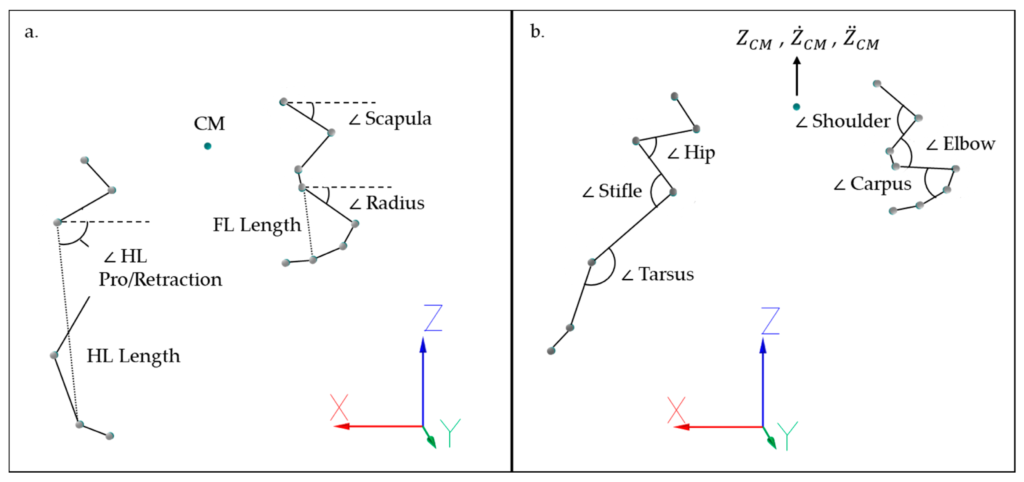
A new hi-tech study combining surface electromyography, to measure muscle activity, and biomechanical analyses has just revealed that better performing jumping horses show strong hindlimb impulsion and muscle power—exactly as many equestrians already suspected.

However, aesthetic forelimb traits, for example the ability to “tuck up”/flex the forelimbs, did not differ significantly between better or worse performing jumpers, contrary to what riders may have suspected, said Lindsay St. George, PhD, of the School of Sport and Health Sciences at the University of Central Lancashire in Preston, U.K.

The results from this study could help people fine-tune their selection and training processes for jumpers, not only to improve performance but also—and perhaps more importantly—to develop training plans that ensure horses are fit for their job..

“Our study conveys a strong message about the importance of developing appropriate muscular strength for force production during jumping,” she said.

“Based on the significant differences that we observed in hindlimb muscle function in the better performing horses, specifically in the middle gluteal muscle, we emphasise the importance of prioritizing and including strength training in a jumping horse’s training/conditioning programme, with a particular focus on strengthening the hindlimb muscles.”

Such prioritization would have clear implications for both performance and the horse’s physical well-being, according to St. George.

“Although we relate our findings to athletic performance, they can also be extrapolated to the development of appropriate conditioning programmes for jumping horses, which could reduce the risk of injury and improve career longevity and welfare for these horses,” she said.

St. George and her fellow researchers first set out to know which criteria equestrians with varying experience used to identify a good show jumping horse, as well as what training methods they commonly employed for these horses.

So, using an online questionnaire, they asked equestrian coaches and riders of all levels with show jumping experience about their selection preferences —what they’re looking at when they’re assessing new sport horse prospects. The questionnaire was shared widely and the research team obtained an international sample.

From the 225 completed questionnaires, they found obvious preferences for specific movement traits when evaluating potential show jumpers, which included hindlimb impulsion, position at take-off, and aesthetic forelimb traits.

Next, the research team – including St. George’s colleagues from UCLan, Dr Sarah Jane Hobbs, PhD, Prof. Jim Richards, PhD and Dr. Jonnie Sinclair, PhD, Hilary Clayton, PhD, of Sport Horse Science in Mason, Michigan (USA), and Dr Serge Roy, Sc.D., of Altec/Delsys Inc. — ran tests to see how accurate those criteria were.

They equipped 17 horses with 3D motion capture reflective markers and wireless Delsys Trigno surface electromyography (sEMG) sensors.

Image of the placement of anatomical markers and sensors placement for the analysis of jumping biomechanics
Image showing the anatomical locations of markers (white and turquoise spheres), segments (black lines) axes (red, green and blue lines) and sEMG sensors (red arrows). More detail can be found by reading the full paper at https://doi.org/10.3390/ani11020414

Horses were then ridden by their normal rider and sEMG and 3D motion capture data were collected from horses executing a  one-meter-high jump at a canter.

The study included three groups of horses: elite jumpers (competed up to 1.60 meters), lower-level jumpers (competed up to 1.0-meter fences at the time of the study), and lesson horses from riding schools sometimes competing in unaffiliated shows (also up to 1.0-meter fences).

The researchers found that the better performing jumpers, as defined by their ability to raise the CM during jump suspension, approached the jump faster, lifted their hindlimbs off the ground earlier, and gathered the hindlimbs up more quickly after take-off.

Their muscles—in particular the middle gluteal muscle—had shorter contractions during take-off. This apparently led them to generate muscle power and vertical impulse more rapidly as they prepared for take-off.

In other words, many of the opinions of equestrians, gathered from the questionnaire study, were verified by objective measures of movement and muscle function, as data showed that  engagement, impulsion and hindlimb muscle power really do represent  important performance criteria in a jumping horse, St. George said.

However, the role of the forelimb during the approach stride, as well as the forelimb and hindlimb joint movements while the horse is in the air, seem to be less important for distinguishing better performers over sub-maximal fences—contrary to what the riders had suggested in their questionnaires, she added.

Image of the placement of anatomical markers and sensors placement for the analysis of jumping biomechanics
Illustration of joint angles, segment angles, segment lengths and the center of mass (CM) target used in the kinematics analysis. More detail can be found by reading the full paper at https://doi.org/10.3390/ani11020414

“We observed very few significant differences in measured peak joint flexion/extension angles and no significant differences for overall limb shortening/compression across the groups, in both the forelimb and hindlimb,” St. George said.

“I found this particularly interesting as we know from the previous questionnaire study, and anecdotally, that equestrians do tend to place emphasis on traits that require greater joint flexion/extension, for example: the horse’s ability to “tuck” or “elevate” the forelimb at take-off and during jump suspension.

“Of course these traits are aesthetically pleasing and functionally important for minimising jumping faults,” she continued. “However, we found that the time taken to reach certain peak joint angles and maximum hindlimb shortening differed significantly between groups, suggesting that the horses with the capacity to jump higher were able to flex/extend their joints more rapidly at take-off or during jump suspension (depending on the variable). So although the joint angles themselves didn’t differ between groups, the amount of time that it took to reach these peak angles was different. In combination with other sEMG and kinematic variables, this finding illustrated the enhanced neuromuscular control of the better performing horses.”

“It is, however, important to note that we studied a submaximal fence that was 1 metre high and we only looked at peak joint angles, which are a snapshot in time. In future studies, analysing these joint angles continuously across the entire jumping effort and also measuring them over larger fences could reveal differences between the groups that weren’t observed in our study.”

The results highlight the need for good muscular training to improve jumping horses’ health and welfare, according to St. George. “Our study has shown that the capacity for producing hindlimb muscle power during jump take-off is important for performance, but studies have also shown that muscular weakness and/or fatigue in human and equine athletes can increase the risk of musculoskeletal injury and that appropriate muscular strength in human athletes can reduce the risk of soft tissue overuse injuries,” she said.

“Muscles initiate movement but also support the joints during loading by damping the high mechanical forces that are present such as during jumping and landing,” St. George added. “When this function is hampered by muscular weakness, injury, or fatigue, undamped loading forces can unduly stress the joint and its support structures or be redistributed and lead to overloading of other muscles or associated soft tissue structures, like tendons and ligaments. This is part of a known injury mechanism, which we see commonly in the distal (below the carpus/hock) limbs of jumping horses.”

While the sEMG and 3D motion capture technologies that the team used provided strong, objective data on each horse, their use in everyday practice by riders or breeders for selection or training purposes is probably not feasible…at least not yet, according to St. George. However, developing tools for use in practice was not the purpose of the study, which was instead to confirm—or not—the criteria that riders believed to be helpful in identifying a good jumping horse. This information can then be applied practically without riders actually having to replicate the methods employed in the research.

“Realistically speaking, the equipment costs, set-up, specialty training, and time requirements for collecting, analysing and interpreting these data means that replicating our study in real world situations may not be practical—at least not for obtaining instant results,” she explained.

“That being said, there are an increasing number of commercial products available, which use inertial measurement (IMU) technologies to evaluate equine movement from both clinical and performance perspectives. These IMU sensors are portable and have associated software that can analyse results quickly for the user to interpret. Advances in technology are critical to enabling us to acquire high quality EMG data under challenging conditions which would have deteriorated the signal if we were using older technologies. We rely on wearable sensors from Delsys Inc., which has made a number of inroads to more usable recording equipment for human and animal athletes. Further research in this area may lead to more specific biomarkers that could be captured with only a few EMG and inertial (IMU)  sensors.  This could be of practical use by members of the equestrian industry because it is otherwise difficult to visualize changes in muscle dynamics without such recording devices.

The study by St. George, L.; Clayton, H.M.; Sinclair, J.; Richards, J.; Roy, S.H.; Hobbs, S.J. titled ‘Muscle Function and Kinematics during Submaximal Equine Jumping: What Can Objective Outcomes Tell Us about Athletic Performance Indicators?’ is published in Animals 2021, 11, 414. It is open access and can be read in full here.


We are meant to change, so why is it so difficult?

“It should be borne in mind that there is nothing more difficult to arrange, more doubtful of success, and more dangerous to carry through than initiating changes.” (Machiavelli)

Change is inevitable and it’s part of our human history and evolution. Adapting to new situations and environments helped and still helps us survive – as a species and as individuals within society. Sometimes, we have no choice but are forced to quickly adapt to change, and the recent Covid-19 pandemic, for instance, has taught us this important lesson.

We may not always like when change happens, nevertheless, we constantly encounter change in our environment and some of us embrace it – looking at the positive aspects it can bring to our lives. However, for others, changing their lifestyles, habits, or mindsets is much more difficult, and changing equestrian culture, in general, is a slow process.

But why are some of us so much better at adapting to or initiating change?

The power of motivation and emotions

Not all behaviours can be changed easily, and our motivation and emotions play a major role in this process.

For example, you may have gained weight during lockdown due to stress-related eating and, consequently, your fitness level has decreased. Therefore, you may feel that you are out of shape and not ready to resume riding your horse. Your weight – according to your subjective perception – may stop you from enjoying your horse to the fullest, perhaps causing a subtle feeling of negative stress. This may prevent you from experiencing positive emotions, i.e., happiness when riding your horse, and hence you are willing and intrinsically motivated to change your current situation. Should be a walk in the park, right? Unfortunately, it’s not as easy as it may sound.

“Behaviour change is a multifaceted process”

Change is not always a straightforward but rather multifaceted process. Being humans, we can be strongly influenced by our emotions or moods and base our behaviour solely on our subjective gut feelings, and not on rational processes or facts [1].

Not all humans have access to the same information and possess the ability to process this information linearly and equally. We all differ in our values, cultural backgrounds, personalities, and mental as well as physical capacities and abilities, and this impacts the way we view our surroundings and make decisions. Naturally, this applies to the equestrian world as well.

“Behaviour (and mindset) change can be complex”

Like me, you may have thought that willpower would be your strongest weapon when fighting your alter ego’s resistance to change – but there is more required to successfully change one’s mindset.

In social sciences, the Theory of Planned Behaviour (TPB) [2] is frequently applied to predict behaviour. It implies that our intentions to perform certain behaviours are influenced by our attitude, subjective perception, and our perceived self-control.

However, the TPB model fails to consider the impact of emotions on human judgements and behaviour [3]. Moods can influence our behaviour and beliefs, and we tend to perceive certain situations more positively when we are in a good mood [4]. We may see our environment through rose-coloured glasses.

This also applies to some horse owners as research has shown that humans tend to project their own positive emotions of happiness onto their companion animals [5]. Therefore, some equestrians may wrongly perceive and interpret their horses’ emotional states, which could impact horse welfare [6]. Is it, because we are usually happy when spending time with our horses, that some of us, perhaps unconsciously, ignore not-so-perfect scenarios in which the welfare of our horses may be compromised?

The phenomenon of cognitive rigidity: Change’s enemy

The Cognitive Dissonance Theory suggests that actual human behaviour often does not match their stated beliefs [7].

When this happens, humans can enter a state of cognitive rigidity, where pre-existing beliefs and attitudes are maintained despite scientific evidence indicating otherwise, ultimately preventing attitude and behaviour change. However, studies have shown that cultural ideologies and attitudes frequently shift over time and result in rejection of formerly accepted behaviours and concepts [e.g., 8].

In the equestrian world, for example, we observed a shift in attitudes towards riding horses in hyperflexed or Rollkur-like head and neck positions, which is now officially banned at FEI-sanctioned competitions. It’s banned because small segments of the equestrian community formed a strong network that was powerful enough to initiate change. A proportion of the equestrian community began to reject and condemn the use of hyperflexion, and the findings of a growing number of scientific studies linking the hyperflexion training method to compromised horse welfare may have further contributed to that.

The behaviour change ‘toolkit

It has been proposed that three main factors impact human behaviour or mindset change:

  • Self-regulation (which includes control over our emotions and conscientiousness),
  • resilience and,
  • reactivity to stress, and interpersonal/social interactions and their consequences [9].

Self-regulation or control forms an integral part of managing change. For instance, for the last two decades or so, a large proportion of equestrians has been told that training their horses in a behind-the-vertical head and neck position is a ‘useful’ training method – not harming horse well-being. For some of us, it became a habit to ride our horses with their noseline behind-the-vertical. We simply got used to it, not questioning this training practice. However, based on scientific evidence we now know that riding horses with their noseline behind-the-vertical is potentially harmful. Consequently, some of us would like to change our training method, but this can be difficult.

We need to control ourselves (self-regulate) to not use too much rein pressure, for instance, but we also need to be patient with ourselves and our horses during the re-training process. We are aware (conscious) of how a correct head and neck position should look like and how to achieve it, but our body’s motoric memory requires reprogramming as well.

It’s doable, it just takes time, and it can be stressful at times. Stressful, because we need to learn something new, and stressful because our trainer and/or barn mates may start to criticise us because we suddenly don’t ‘fit in’ anymore – going against the mainstream view in our boarding barn.

Stress occurs when there is an objective or subjective imbalance between internal or external demands and our ability and willingness to meet those demands. Stress can inhibit change and challenge our motivation or attitude towards change. Therefore, we need to know how to manage our stress resilience or reactivity.

“Supportive social networks, stress resilience, and self-control can help initiate behaviour change”

Interpersonal and social processes shape the way we behave. They can reinforce or block behaviour change processes and hence, can become a strong force for behaviour change. Our friends, coaches, and barn mates can help us reduce our perceived stress levels.

If we want to change our behaviour or mindset, initiating change within our social networks may help as well. Most of us don’t like being rejected and social networks can take on supportive roles during behaviour change processes.

If our social network doesn’t like our sudden ‘change’, it will not reinforce our behaviour, making it harder for us to swim against the tide.

Why not connect with other horse people who experience the same feelings as you whilst going through behaviour change?

In our example above, this could even involve changing our boarding barn. It’s easier to embrace change when a strong and, most importantly, supportive social network exists that, ideally, works towards a common goal.

It’s about time to ‘be nice’

At times, equestrians cannot only be very hard on themselves, but also judgemental of other equestrians. For instance, bashing other horse(wo)men on social media platforms, independent of their discipline or experience, is a well-known phenomenon. Don’t we all want the best for our horses in our chosen discipline? Aren’t we all striving to improve our equine-related knowledge, so we can grow together with our horses, offering them adequate training and management?

If equestrians themselves can’t come together and form a strong and supportive social network, how can we expect that things will ever change to the better in our beautiful sport?

Change starts with us, and it can start today. It’s our choice, or as Ghandi puts it: “We need not wait to see what others do.

References:

  1. Bargh, J.A. and Chartrand, T.L. (1999). The unbearable automaticity of being. American Psychologist, 54, 462-479.
  2. Ajzen, I. (1991). The theory of planned behavior. Organizational Behavior and Human Decision Processes, 50, 179–211.
  3. Ajzen, I. (2011). The theory of planned behaviour: Reactions and reflections Psychology and Health, 26(9), 1113–1127.
  4. Forgas, J.P., Bower, G.H. and Krantz, S.E. (1984). The influence of mood on perceptions of social interactions. Journal of Experimental Social Psychology, 20, 497–513.
  5. Bateson, P. (1991). Assessment of pain in animals. Animal Behaviour, 42(5), 827–839.
  6. Bornmann, T. and Williams, J. (2021). Investigating equestrians’ perceptions of horse ‘happiness’: An exploratory study’. Poster presented at the 77th annual conference of the British Society for Animal Science (BSAS), UK, 12-15 April 2021.
  7. Festinger, L. (1957). A theory of cognitive dissonance. Evanston, IL: Row, Peterson.
  8. Sødring, M., Nafstad, O. and Håseth, T. T. (2020). Change in Norwegian consumer attitudes towards piglet castration: Increased emphasis on animal welfare. Acta Veterinaria Scandinavica, 62, 1-9.
  9. Duckworth, A. and Steinberg, L. (2015). Unpacking self-control. Child Development Perspectives, 9(1), 32–37.


Equitation Science Conference: Free Registration Announced

Thanks to the generosity of sponsors, the 2021 Equitation Science Conference is now offering free (yes FREE!) conference registration for all.

This means that you will be able to attend the entire conference – the plenary presentations (scroll down to learn what’s in store), the ‘Clever Hans’ opening talk, and access the recorded research presentations, virtual poster sessions and panel Q&A’s.

The Equitation Science Conference aims to bring together and engage with horse riders, pony clubs and riding clubs, coaches and trainers, and equine students as well as academics, researchers and scientists to showcase how using evidence-informed approaches.

This year’s, which is themed ‘Advancing Equestrian Practice to improve Equine Quality of Life’ takes place on 20th and 22nd October 2021 and it’s easy to attend; not only will all the talks be online (live and recorded for later viewing).

The conference is open to all with an interest in improving the welfare of the horse in its interactions with us. An amazing opportunity to hear from some well respected international equitation science researchers and practitioners, and all for free! We hope that if you haven’t yet become an ISES member/supporter, this experience will inspire you to join!

Register now using EventBrite! 

There will be three days of talks over four themed sessions namely:

1. Tools for Change – where scientists and practitioners will come together to explore the latest research about equine training cognition and performance,

2. Science with Impact – focussing on methods for measuring and monitoring the effects of different training approaches, use of equipment and rider psychology,

3. Communication for Change – covering approaches to advancing equitation and performance through effective dissemination of evidence-based information, and,

4. Education for Change – opportunities to empower existing and future generations through challenging thinking and practices and developing knowledge about equine welfare needs.

Learn what the keynote speakers have in store below!

This year’s ‘Clever Hans’ talk, which features a distinguished researcher from a field outside equitation science, is Mike Mendl, Professor of Animal Behaviour and Welfare at Bristol University in the UK.

In his talk, ‘Researching Cognitive Bias and Affective States’, Prof. Mendl will share his extensive knowledge and research findings in the areas of animal emotion, cognition and decision making, to provoke consideration of how this knowledge can be applied in an equitation context.

Plenary speaker Dr Camie Heleski

Plenary speaker Dr Andrew McLean:

Plenary speaker Dr Celeste Wilkins:

Plenary speaker Dr David Marlin: