fbpx
Home Blog Page 5

Will You Know When It’s Time? Horse Euthanasia, the Hardest Decision by Far

This article will help all horse owners who are either grappling with an end-of-life decision or aiming to plan ahead. It covers when and how to take the decision and who to involve. It explains the difference between welfare state and quality-of-life, and how to assess them. It discusses practical considerations of caring for chronically ill or senior horses, and will touch on some of the ethical and moral dimensions that affect our decision-making.  

It complements this Horses and People article by Dr Andrea Harvey that discusses, in great detail, the end-of-life options for horses, exploring the advantages and disadvantages of these options as well as the problems with horse slaughter.

The hardest decision by far

We love our horses. They enrich our lives in countless ways. The amount of time, emotional energy and financial resources we spend on them all reflect the appreciative regard in which we hold each and every one of them.

However, the privilege of owning and caring for such magnificent creatures comes with a responsibility for making hard decisions on their behalf. And of these, the hardest we will ever make is when to end their life.

It’s a distressing choice we make to avoid putting our horse through more suffering than is necessary. It’s our duty to do the right thing at the right time for our horse.

But how do we know the time has come? 

We don’t want to euthanase horses too early, and we don’t want to euthanase too late. Deciding when to end a horse’s life is tough because it is complex and emotionally charged. Horse owners deserve to be understood and never judged as they grapple with multiple decisions; knowing when it’s time, how to plan and who to involve.

A helpful first step, before we unpack the horse welfare and quality-of-life aspects of the decision-making process, is to reflect on your values:

  • Do you believe in euthanasia?
  • Do you value quality-of-life over quantity-of-life?
  • Which is more important to you, extending the horse’s life, or providing him or her with a controlled death?
  • Would you keep your horse alive despite declining quality of life because you’d rather not confront the decision to euthanase?
  • Do you accept that, perhaps in the light of discussions with others, you might change your mind when the time comes?

It is worth taking time to ponder these questions because even when, in principle, you agree with euthanasia and you want to do the right thing for your horse, recognising the time has come and being able to act can still present challenges, and delay the decision.

Indeed, the statistics tell us that in most cases, the decision to euthanase a horse is more vulnerable to an excessive delay than an unseemly rush. And yet, the last thing a caring horse owner wants to deal with is the prospect, real or imagined, that they left the decision too late.

How and why do we put off these decisions?

The notion that “where there is life there is hope” is often bandied around by those struggling to take a decision of this sort. Veterinarians encounter many stalling points such as “now is not a good time just ahead of Christmas” or “our daughter’s wedding is next month”.

Even the time of year might affect decision-making. Because weight can fluctuate with the quality of grass and the environmental challenges of keeping warm, it is easy to imagine that current weight loss is only seasonal and will resolve when the seasons change.

For example, if a horse is struggling to maintain weight during Winter, one may be tempted to imagine that the warmer weather and the Spring grass may be all that is needed to help the horse turn the corner once more.

Some owners may talk themselves into keeping a mare for breeding purposes even though this is not in the horse’s best interests. Indeed, there are accounts of aged (and even laminitic) mares that have been kept alive, in slings, so that they can deliver their last foal.

Euthanasia may even be delayed because the ground is too tough or too boggy for an earthmover to be draughted-in at short notice for burial.

Other times, people put-off making a decision because it is difficult to reach consensus among many stakeholders and nobody wants to be the first person to raise or pursue the issue.

Who makes the call?

Taking the decision to euthanase a horse whose quality-of-life is declining is one of the kindest things we can do as veterinarians. That said, very few of us are taking the decisions regularly enough to consider ourselves experts.

In the light of recent announcements from veterinary associations in the UK and Australia about the expectation that vets will advocate for animals, vets must provide information that advances the welfare of animals in their care.

Although often consulted, veterinarians are trained to place responsibility for requesting euthanasia of their animals entirely with their clients. This means that the decision to euthanase will ultimately fall on those responsible for the horse’s care – owners who could be completely uninitiated in taking these decisions or be facing a complete moral conundrum.

We tend to assume that horses belong to one owner but, in reality, there are usually other key stakeholders who need to be identified and involved in end-of-life decisions and planning. Who they are, will depend on whether the horse in question is primarily perceived as a member of the family, a performance or production horse.

And there are many horses that do not fit neatly into just one of these three categories and bridge more than one. This will affect the way decisions are made and who is involved in reaching them. For example, a performance horse may very easily have won the hearts of all its carers and gained the status of a companion.

Here the role of attachment comes into play. The bond we develop with our horses can influence the time we take to reach end-of-life decisions and the extent to which we feel the need to consult others.

For example, a family pony, who is no longer ridden because the children who rode him have grown up and moved out, might be under the parents’ responsibility but still retains a place in the hearts of all the family members. In this situation, the need to consult the children should not be overlooked in the planning process.
A girl and her beloved horse
The bond we develop with our horses can influence the time we take to reach end-of-life decisions and the extent to which we feel the need to consult others. With a family horse, the children should not be overlooked in the process.

Support and counselling

If you’re uncomfortable with your decision-making, identify two or three different people who share your values and know your horse, and then runyour thinking past them. It is critical that you avoid inadvertently selecting these informal advisors primarily on the basis that they will be likely to agree with you.

Indeed, your general horse care plan should include nominating at least one person who can make decisions on behalf of your horse should you be incapacitated through illness or an accident.

Who will you involve?

Your end-of-life plan should also include a consideration of who will be present when euthanasia takes place.

Consider the visual memories you want to keep of your beloved horse and be kind to yourself when deciding whether you want to be present at the time of death and/or burial.

What about the other horses?

There is also merit in planning what to do with the other horses at the time of death and burial. These aspects can create additional stalling points especially because there is so little peer-reviewed research in this domain.

Towing the body (for example, to a grave or truck) or dropping the horse in front of others is not recommended because such a visual stimulus is unlikely to be familiar and could cause fear in the other horses. But allowing horses to visit the remains of a companion may potentially help them to deal with the absence of familiar herd-mates.

Everyone who has been around horses long enough has an anecdote about how horses respond to the death of others in their social group.

For example, there are reports of mares whose foal died, standing with the corpse for a time and then losing interest. These accounts are used to guide decisions about whether horses should be allowed to inspect the remains of their companions.

Of course, the plural of anecdote is data. We urgently need research that collates these anecdotes and makes sense of them. In the absence of research, it seems to make sense that horses can benefit from investigating a horse on the ground.

Other considerations

It is worth considering the value of collecting a memento, such as tail hair that can be made into a special keepsake or, well ahead of the day of euthanasia, organising a professional photo shoot to capture a beautiful lasting memory.

At times of significant grief, such measures can be overlooked unless one builds an informal checklist of actions that need to be undertaken either before, at the time of death or shortly after. Veterinarians and their staff should encourage owners to think about the memories they want to keep in advance.

It is also possible that, with the anticipated introduction of a national horse traceability register, owners will be required to report the death of any horse registered with them within a set period.

A detailed discussion of the methods of euthanasia can be found in this article by Dr Andrea Harvey
A veterinarian checking the gut sounds of a horse with colic
Although often consulted, veterinarians are trained to place responsibility for requesting euthanasia of their animals entirely with their clients. This means that the decision to euthanase will ultimately fall on those responsible for the horse’s care

Confronting chronic illness

The medical and practical considerations that influence your approach to horse care, particularly in the context of chronic and/or age-related illness, should be openly discussed with all stakeholders.

  1. Medical considerations

A chronic disease in senior horses can compromise their quality-of-life, but for the owners who spend time with their horses every day, it is sometimes easy to mistake clinical signs of disease as normal signs of ageing. This is why it is well worth asking your vet for help.

  • Ask your veterinarian to assess your horse’s condition, to establish if he or she is suffering, and if that can be alleviated with pain relief, medicine, surgery or other treatment.
  • Consider the likely outcome of treatment (prognosis).
  • Ask your veterinarian to explain clearly which behaviours they see as critical to identify any decline, and when the thresholds of acceptability have been crossed – then be prepared to monitor these metrics closely in your horse. After all, you are the person who knows your horse best.
  • Communicate faithfully to your family (or other stakeholders) what your veterinarian has advised.
  1. Practical considerations

Think about the practicalities of caring for your horse as he or she approaches terminal illness or infirmity.

  • Establish whether your horse is going to suffer without treatment and how you would know.
  • Consider whether there will always be someone to provide adequate monitoring.
  • Ask yourself if you can attend and support vet visits and administer regular medication.
  • Assess the anticipated burden of increased responsibility and associated stress, and evaluate whether you and your family can manage it.

Appreciating these realities and confronting them as a preliminary part of the decision to euthanase, can help us put our grief to one side for a moment and ensure that we act only in the interests of the animal, not ourselves.

A detailed discussion of the methods of euthanasia can be found in this article by Dr Andrea Harvey

Welfare state and quality-of-life

The animal’s welfare is often captured in the term quality-of-life, the key distinction between the terms is that quality-of-life is evaluated over time.

At any single moment, a horse can have good or bad welfare but their quality-of-life is a function of their welfare across an extended period. In this way, one can think of quality-of-life as being synonymous with the ‘animal’s welfare over time’.

An arthritic horse, for example, could indulge in play in the morning and then pay the price; showing marked pain-related behaviour in the afternoon. This means he may have good welfare at 11am and poor welfare at 4pm, but his quality-of-life depends on the overall combination of experiences during the whole day.

With this in mind, the most sensible approach to determining quality-of-life is to take regular welfare assessments over a period of days or weeks.

Quality-of-life assessments

For dogs, there are several quality-of-life assessment tools that can help owners make end-of-life decisions. Some of these require owners and carers to rate behaviours, such as mobility, on a scale from 1 to 10. Other quality-of-life assessment tools prompt owners to weigh-up the pleasant and unpleasant experiences the animal is exposed to.

Once they have been developed and validated, quality-of-life assessments for horses will be helpful for guiding discussions with family and vets. Bear in mind that validating any assessment tools for companion animals is complex, because of differences between individuals and their circumstances, and because we can never truly know what another animal (or human) experiences.

Even if validated quality-of-life assessment tools for horses do become available, they will never be absolute and must still be used over time to reveal trends that elevate decision-making above a mere snapshot. Observing a gradual decline is more informative than noting that the horse has been having a bad day.

As an exercise in distancing oneself from the direct personal effects that tough decisions can have, it may pay to consider the horse’s welfare from the perspective of a concerned, experienced neighbour.

This may mean imagining what a notional horse vet next door might think every time she drives past the paddock and makes a cursory assessment of the horse’s demeanour and behaviour.

How many assessments are needed?

Like all of us, horses have good days and bad days, and this oscillation in apparent wellbeing means that we very rarely make well-informed decisions in relative isolation or on the spot.

And like all animals, horses can have an overwhelming instinct for survival. So, at times, it can be difficult to differentiate between them going through a bad patch or entering a terminal decline.

As carers, it is our responsibility to ensure that we recognise when the bad days are becoming more frequent and the good days are becoming more scarce. And to resist becoming habituated to the appearance of a horse whose health and wellbeing are slowly declining.

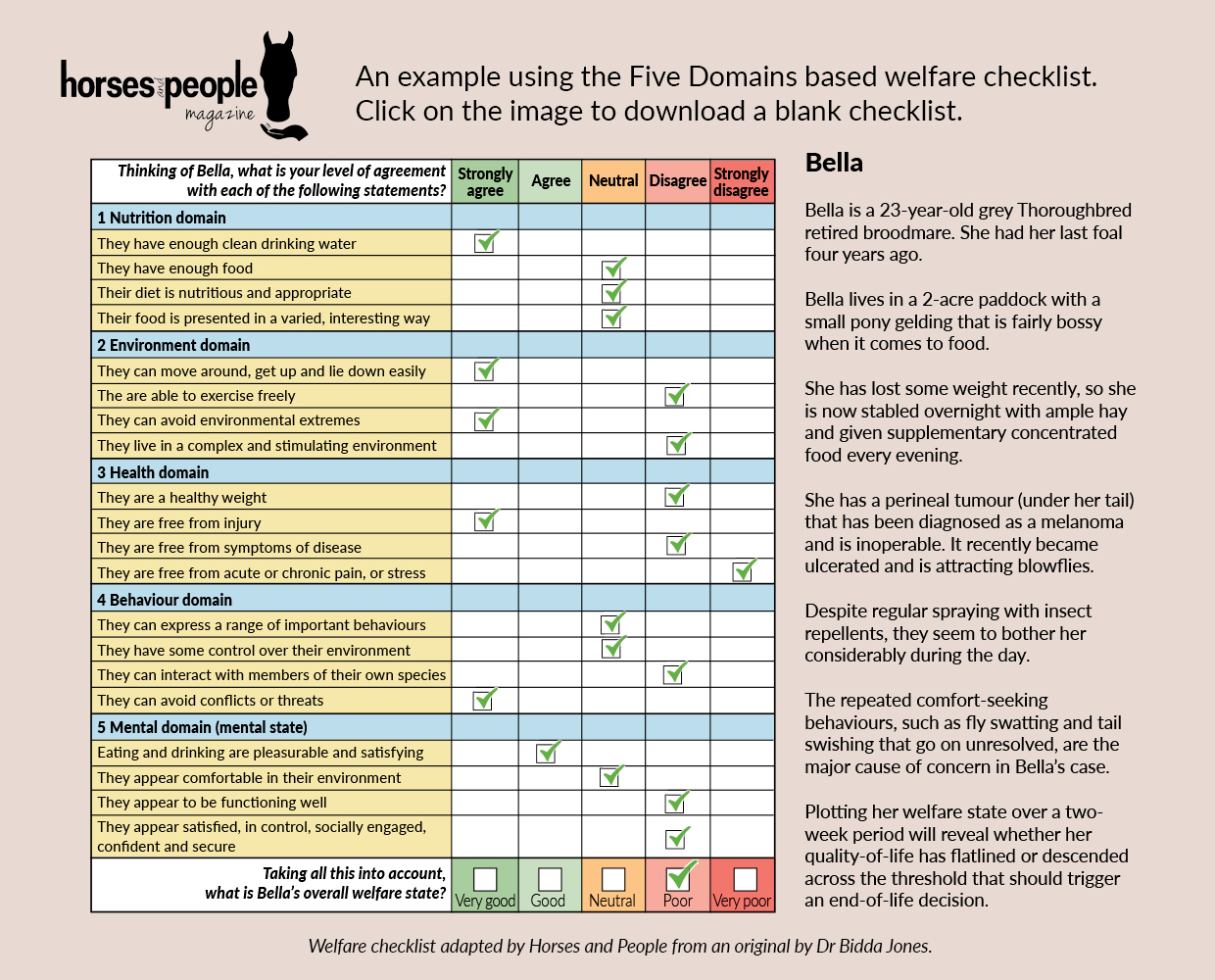
Recording objective data that can be used to work out when the balance of the good and bad is shifting, is strongly recommended. This can be as simple as keeping notes on your smartphone, or a more detailed checklist as shown here.

Maintaining such records is one thing but knowing what to do with information before the heat is on is absolutely critical.

The sort of data one keeps will depend on the framework you use to judge your horse’s welfare.

Choosing a Quality-of-Life framework

The decision will ultimately fall on you – the carer – and this can be a good thing because after all, you have more day-to-day information about the animals’ interactions with his/her environment, including other horses and animals.

The key is to ensure that we use this information to act in the animals’ best interests. We must do all that we can to avoid making decisions to suit our needs rather than those of the animals. This usually means having to collect cold, hard data that can inform our decisions.

For example, you could note how often a senior horse stumbles while trying to keep up with others in the paddock. This may require observing them directly for 10 minutes or so on a regular basis to record any meaningful decline in their ability to move around.

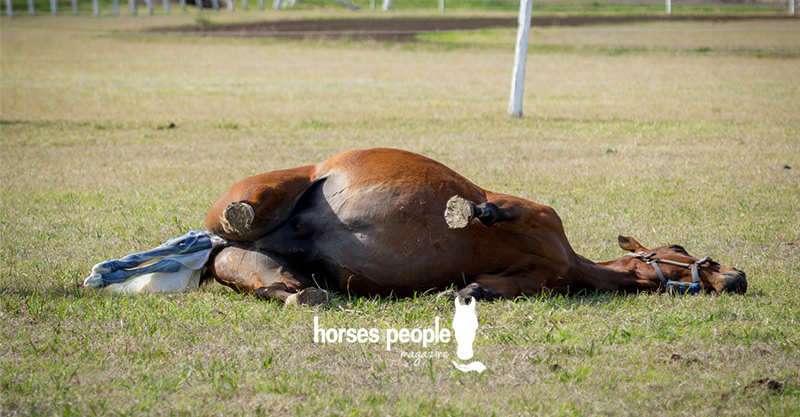
Musculoskeletal injuries can affect a horse’s ability to lie down and, afterwards, get to their feet again. This means that affected horses are less likely to sleep on the ground.

This may, at first glance, appear to be inconsequential because horses can sleep standing up. However, not all types of sleep are as valuable as each other. Lack of rapid eye movement (REM) sleep, that horses are thought to undertake only when lying on the ground, is likely to compromise welfare.

So, monitoring what your horse is doing during the 24-hour day can be an invaluable tool in welfare assessment. Wearable devices to track and monitor your horse’s activity and temperature are likely to become more readily available and become tools that will contribute to welfare assessment.

The Five Domains framework

An everyday framework for planning end-of-life decisions uses the Five Domains model that was developed by Emeritus Professor David Mellor and his team at Massey University, and has been updated over time according to emerging behavioural, physiological and neuroscientific evidence.
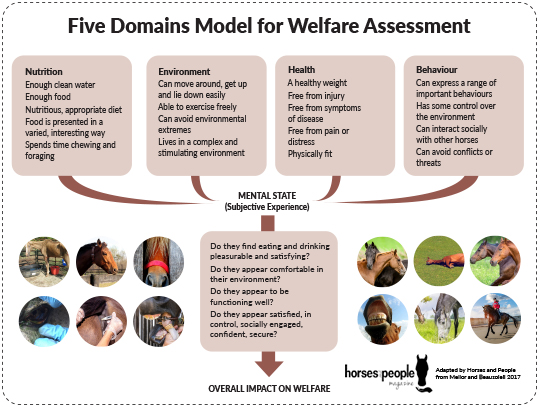
The 2015 Five Domain Model for welfare assessment

The Five Domains model has been considered by veterinary practitioners and welfare scientists for several years now and has been used in workshops to test its flexibility and utility for assessing horse welfare in the field.

It has been adapted to provide a practical means of assessing negative or adverse welfare impacts on animals in several different areas, initially to assess the impact of vertebrate pest control methods.

The model was first proposed as a means of evaluating the welfare impact of interventions on horses by Jones and McGreevy in 2010, and details of its use in everyday horse-keeping activities have been published online.

The welfare checklist we propose here (see below) is based on this model and explores welfare assessment under four topic headings (called domains) that reflect the horse’s nutrition, environment, behaviour and health.

There are outward signs that reflect these domains, for example, evidence of reduced appetite and pain. These signs are critical points from which to draw data but should be factored into end-of-life decisions.

You can see that one of the domains is health, an area that your vet is expert in. In contrast, the other physical domains – behaviour, nutrition and environment – that, along with health, feed into the fifth (mental) domain, rely on input from your own observations.

Below you will also find two made-up scenarios that show how a checklist, based on the Five Domains model, can be used to reveal quality-of-life trends.

While the Five Domains model was initially used to raise alarm bells about poor welfare, the current versions of the model have the benefit of including positive and negative welfare states. In the context of end-of-life decisions, it is critical that we assemble evidence of both types of welfare outcome.

Of course, we cannot apply scores very easily to each of the four physical domains and we must, therefore, be careful not to assume that each domain is as impactful on quality-of-life as the next.

The importance of each element is not equally weighted. However, many welfare scientists agree that behaviour is the key domain of interest to owners.

Graphing the data over time allows you to appreciate trends and assess them against the threshold of acceptable quality-of-life that you and other carers have agreed upon in your planning.

There is a clear need for more science to clarify the relative importance of each domain and each element within it. Nevertheless, the beauty of this framework is that it allows structured discussion between stakeholders.
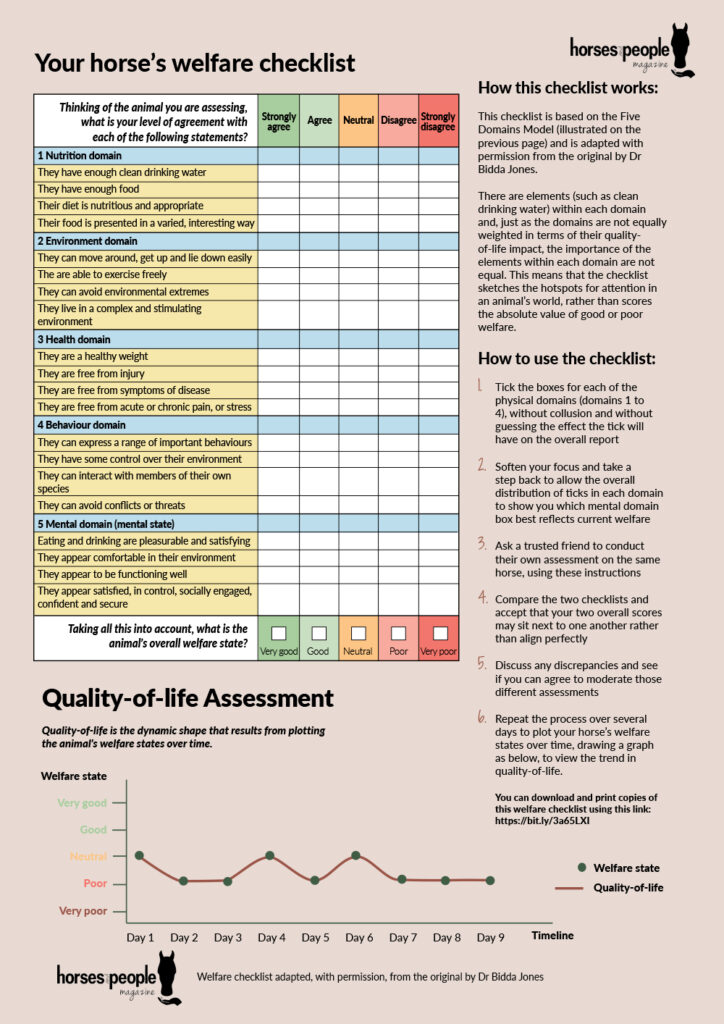
A welfare checklist you can use with horses.
Quality-of-life is the result of plotting the horse’s welfare state over time. This welfare checklist has been adapted by Horses and People from an original by Dr Bidda Jones. Click on the image to download a blank checklist. 

Last thoughts

The unquestionable value of planning end-of-life decisions for your animals lies chiefly in its ability to avoid extended suffering.

Time and time again, the tough decisions are delayed because nobody wants to be perceived as too keen to see the departure of a valued individual animal lest they attract the label of the ‘hanging judge’. It is, therefore, very important that no single person should be asked to make a decision on behalf of others.

Even when only one owner or carer is involved, applying a framework such as the Five Domains model presented here has merit. If anything, it can lead a structured exploration of the key issues for each horse and the metrics that can be adopted to monitor quality-of-life progress or decline.

Ultimately, if and when you euthanase your horse is a deeply personal choice. That said, a comfortable death — either natural or assisted — is the last kindness you can offer them. By the same token, forward planning your horses’ end-of-life is a kindness to yourself.

A detailed discussion of the methods of euthanasia can be found in this article by Dr Andrea Harvey

Some examples showing the use of the welfare checklist:
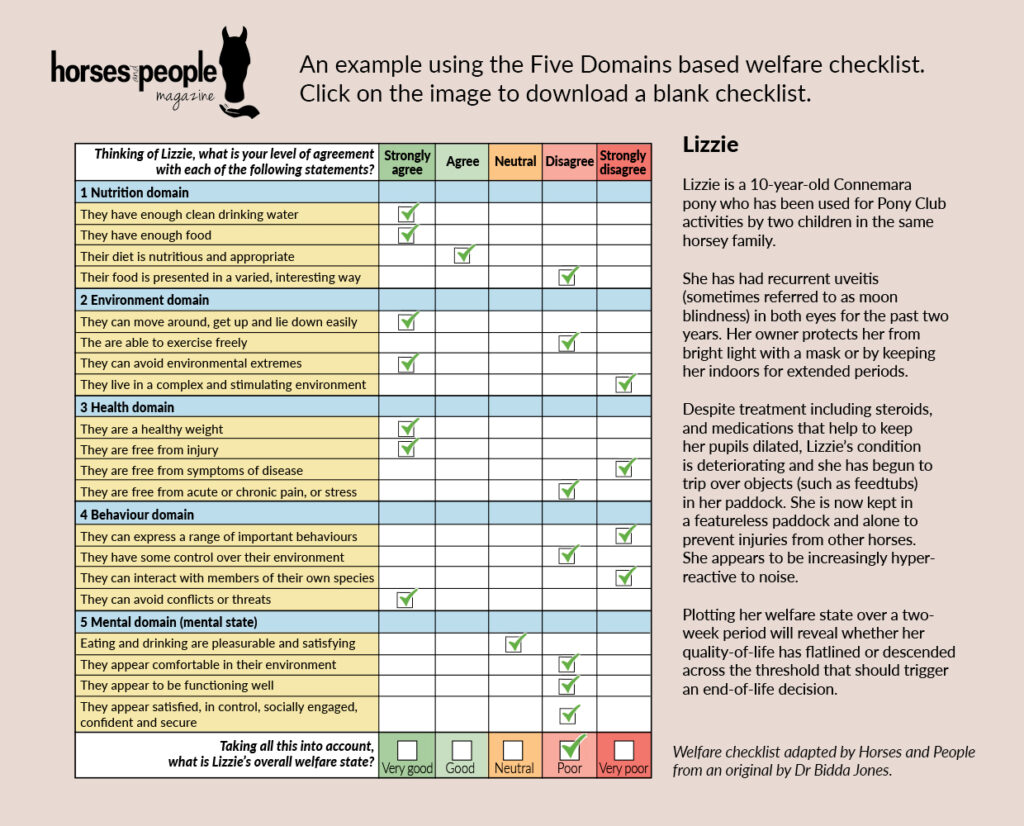
The trend in Lizzie’s quality-of-life can be plotted by completing the welfare checklist repeatedly (daily or twice daily) over a period of time.
Welfare checklist for Bella
To evaluate the trend of Bella’s quality-of-life, the checklist would be completed several times over a period of time.

Welfare Education Displays Work Say Researchers

Sharing science-based knowledge about animal behaviour and animal welfare with the general public isn’t always easy—especially since social media often spreads misleading information. But U.S. researchers have recently found that popular family events like fairs could be a good place for people to learn more about horses and other animals, even when no animals are present.

Attractive and well-structured exhibits—whether at fairs, racetracks, or major competition venues—could provide the much-needed education platform for reaching the broader public, researchers say.

Major public events like state fairs are ripe opportunities to share sound scientific knowledge about animals with people who might or might not be familiar with them, according to a new study.

While those people may never interact with horses or other animals directly, they’re still consumers, voters, neighbours, influencers, and even potential animal owners, making them important animal welfare stakeholders who need access to reliable information.

In the new U.S. study, about 70% of people visiting an animal welfare exhibit at a fair said they’d learned something about animal welfare, had a better understanding about it, and would consider this new knowledge when making future decisions, said Marisa Erasmus, PhD, associate professor and extension specialist at Purdue University in West Lafayette, Indiana, and head of the university’s welfare-focused Erasmus Lab.

“People have influences on different types of standards and policies when it comes to animals, even if they don’t directly work with or own animals, so they can have an indirect impact on some of the changes that are happening,” Erasmus said. “But as (animal behaviour and welfare) scientists, if we all just work in our silos, then we’re not going to have as much of an impact as we could. So these exhibits offer a way to try to extend that scientific knowledge beyond that.”

Erasmus teamed up with the university’s exhibit design centre to develop an eye-catching animal welfare stand with hands-on activities that offered a fun way to learn more about animal welfare science.

They set up the exhibits at two major fairs—the Purdue University Spring Fest and the Indiana State Fair—and surveyed adults visiting the stands.

The exhibit focused on horses as well as other species, including cattle, sheep, pigs, goats, poultry, cats, and dogs and offered interactive quizzes on digital tablets as well as touch-and-feel “active learning” units, like with different kinds of bedding (straw, wood shavings, peat moss, etc.).

Although she’s not opposed to having live animals at such exhibits, Erasmus said she wanted to create an animal-free exhibit because it would reduce the workload required for meeting those animals’ needs, meaning the exhibit could run continuously throughout the fair without the constant presence of employees.

Their survey results from the two events revealed that between 60 and 75 percent of the people (depending on the fair) agreed or even strongly agreed that they had learned something new, and 70 to 76 percent said they would keep that knowledge in mind for future decision-making, Erasmus said.

Overall, around 70 percent said the exhibit had provided them with a better understanding of animal welfare.

The findings give hope that such exhibits could help shape the way society as a whole considers and manages animal welfare, according to Erasmus.

“Animal welfare is viewed very differently by different people, which is part of the reason it can be such a contentious issue,” she said. “But once we all understand what it is, and what it means for the animal, then we can really start looking at how we can improve animal welfare. Because if everybody’s coming at it from a different angle, it is challenging to reach that agreement as to how we continue moving animal welfare science and animal welfare forward.”

While their exhibit included welfare issues for a variety of animals, welfare scientists could also take advantage of species-specific events—like horse races—to host exhibits that focus on one kind of animal, she said.

“The benefit of setting up an exhibit at these large events is that you have people who are already interested in that animal—horses for example—going to this event, and they’re seeing something there that they’re already interested in and have a passion about,” Erasmus told Horses and People. “Then you can educate people that way. And hopefully, they can go on and disseminate the information further.”

Such knowledge is important because what the general public thinks about horse welfare can really affect horses themselves, according to Erasmus. “A lot of people have more of an emotional connection with horses, even though they don’t own any themselves,” she explained. “Some people will do trail riding and do different types of recreational activities with horses, or watch events like the Kentucky Derby.

“People have different opinions about what they see, when it comes to horses—and horse racing in particular,” Erasmus continued. “So it’s also important for the horse industry, as a whole, that people understand what welfare is. There are often stories that come up in the media, and if people don’t really have an understanding of what animal welfare is, or what some of the common practices are, or why they’re done, there may be more contentiousness surrounding that particular issue. And part of the reason is because people don’t have a good understanding of what the actual issue is or how it’s actually impacting that horse.”

Future studies should focus on whether the exhibits actually lead to changes in people’s behaviour with regard to animal welfare, and in what ways, Erasmus said.

The study titled: ‘Visitors’ Self-Reported Knowledge and Attitudes about an Animal-Free Exhibit on Animal Welfare’ by Marisa Erasmus & Jeffrey Rollins is published in the Journal of Applied Animal Welfare Science. The abstract is available here.

A Fly Went By… The Cutaneus Muscle Reflex in Horses

0

‘A fly went by’ is the title of a children’s book by Mike McClintock that I love to read. If you haven’t, Google it! It is funny and it inspired me to write about this fascinating but often overlooked muscle group.

We have all seen horses twitch their skin to get rid of an annoying fly or other insect. They do this with small, quick contractions of the skin, which seem to happen without the horse paying much attention.

But have you noticed the horse can only twitch the skin in some parts of the body and not others?

This is because the twitch is elicited by the panniculus reflex activating a thin layer of muscles that lie just under certain areas of the horse’s skin.

This action, which is triggered without conscious thought by the sensation of the fly landing, is well known and has been described in the literature as the Cutaneus Trunci Muscle (CTM) reflex.

In veterinary medicine, the CTM reflex is used for diagnosing spinal cord and/or neurologic lesions. The reflex can easily be elicited by moving the fingers lateral from the back spine from the iliac crests cranially (towards the head), until a contraction occurs.

But let’s go back to the group of muscles that help your horse get rid of pesky insects.

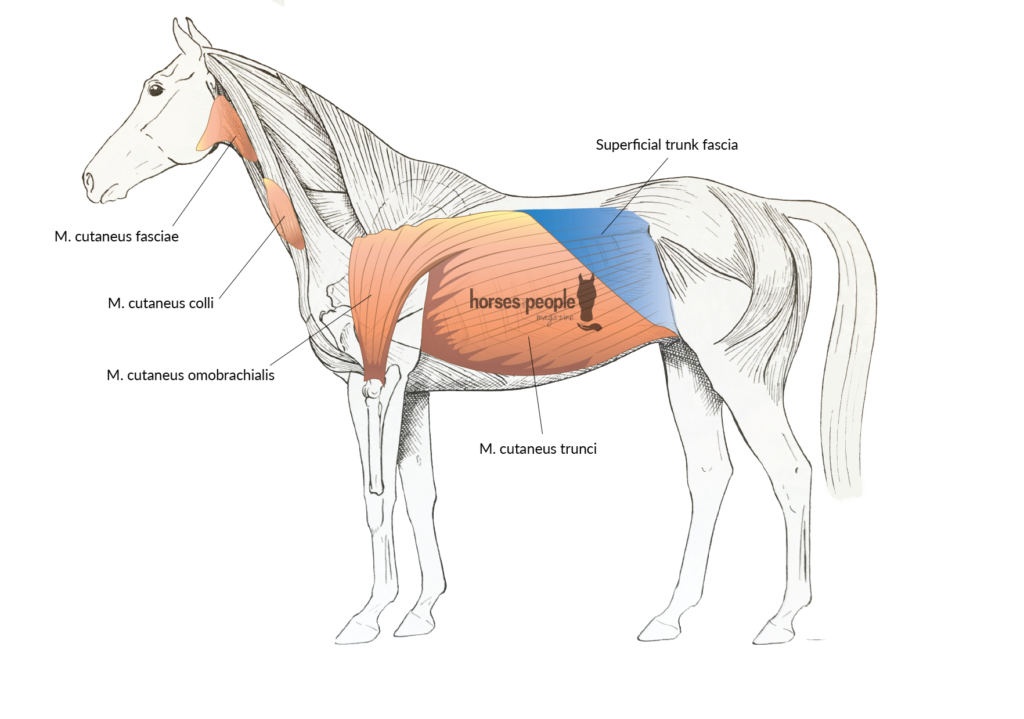
Budras and his colleagues, as well as Sisson and Grossman have described several muscles of the horse’s skin, including the m. cutaneus omobrachialis, m. cutaneus trunci, m. cutaneus fasciae, and m. cutaneus colli. (Note that m. stands for “musculus” or muscle).

Illustration adapted by Horses and People from an original illustration by Denoix & Pailloux.


Of these cutaneus muscles, colli and fasciae are the smallest. M. cutaneus colli covers the caudoventral part of the neck, starting from the manubrium sterni (the top end of the sternum) and the cervical fascia and ascends in a V-shape on either side (see Figure below). It attaches partly on the m. cleidomastoideus.

The two largest of these muscles are 1, m. cutaneus omobrachialis which covers the shoulder and arms and merges caudally with 2. the m. cutaneus trunci, which covers the abdominal muscles and extends from the area of the olecranon to the withers and caudally to the level of the thigh. The muscle then continues in a large fascia ventral-caudal (see illustration above, adapted by Horses and People from an original illustration by Denoix & Pailloux). The superficial trunk fascia encloses m. cutaneous trunci.

Edge of the m. cutaenous omobrachialis
On some horses you can see the edge of the m. cutaenous omobrachialis and m. cutaneous trunk. Image courtesy of Parnilla Andreazon.

Sometimes the edges of these muscles are visible as a line underneath the skin.

These lines differ from horse to horse, just as our fingerprints are unique to us, and they are not always visible. In any case, you don’t have to worry if you detect them, this is not an indication of inflammation or other problems.

Pärnilla Andreazon kindly shared an image that shows beautifully the m. cutaneous omobrachialis and part of the m. cutaneous trunci.

So there you have it, a fly landing on any of the cutaneus muscles triggers the rapid skin contractions that cause the insect to fly away.

The next question is… how does the horse get rid of flies when they are out of range for these muscles?

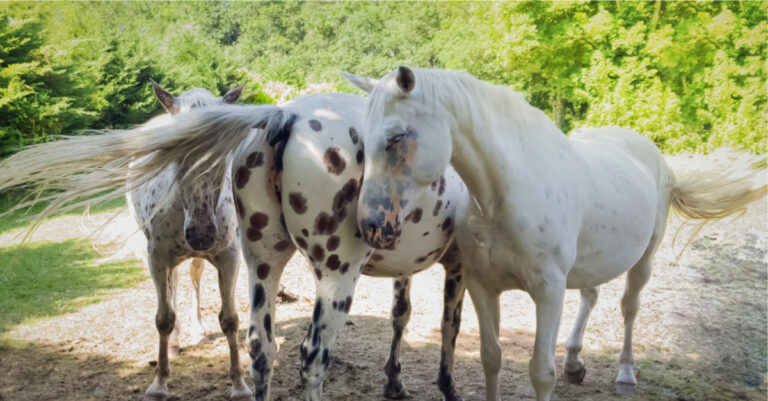
In this case, the horse will use his tail, bite or kick at them, or, if the horse has one or two good friends, they will arrange themselves head to tail, so that one’s tail flicks the flies of the other one’s face.

And that is just another of the many reasons why horses need to have friends!

This article is ©Copyright by Hands for Horses Sweden, Dr. Karen Wild and is reproduced here with permission. Sharing excerpts that link to the full article on this platform is welcome but please respect the author’s copyright.

Researchers Recommend Helmets On and Off the Saddle

Head injuries and broken ribs are common injuries in equestrian sports, but they don’t have to be par for the course.

According to a new study looking at horse-related accidents in a primary (non-trauma) care centre, falls cause the most injuries, but ground-level mishaps lead to significant and often severe injuries as well.

Fortunately, helmets and other protective equipment likely keep injuries from being worse, medical researchers say.

If you’re headed from the saddle to the hospital after a fall, chances are you’ve got a concussion. In a recent five-year study in rural Scotland, researchers found that 86 percent of all equestrian-related admissions to a regional general hospital resulted from a fall, and 18 percent involved a head injury.

On the ground, though, people still incurred injuries, sometimes severe, and often from kicks, said Lachlan Dick, MBChB, MRCS(Ed), Clinical Development Fellow in the Department of General Surgery at Borders General Hospital in Melrose, Scotland.

“Unmounted injuries were less common; however, we found that being crushed or kicked resulted in far more significant injuries and need for intensive care admission,” Dick said. “I think there could be an argument for the use of helmets and other protective equipment  even when not riding a horse.”

In their study, Dick and his fellow researchers reviewed all case records of equestrians admitted to the general hospital following an accident involving a horse between 2014 and 2019.

They found that 75 percent were girls and women, making up two primary age brackets of either between ages 11 and 20 or between ages 51 and 60. Accidents ranged from falls to crushing with or without a fall, to kicks (with or without a fall), as well as getting a foot caught in a stirrup and/or getting dragged.

Nearly 18 percent had a head injury, but running a close second were rib fractures, representing 15 percent. Clavicle (collar bone) fractures accounted for 8 percent of the injuries.

Patients also fractured their arms and backs (upper and lower), and 8 percent had intestinal injuries.

More than a fourth had multiple injuries, and more than a third underwent surgery, the researchers reported recently in the Scottish Medical Journal.

Nearly 60 percent of the surgeries involved open reduction and internal fixation of a fracture. The average hospital stay was two days.

The death rate stood at 0.6 percent, Dick said. However, there may also have been long-term and potentially life-changing complications for some patients, although those details weren’t available in their data. And that’s unfortunate, he added, as it could be very useful to know to what extent equestrians have injuries that alter their lifestyles.

“Fixing a broken bone is only the first part of the patient’s recovery,” Dick said. “Do they have longer term problems? Are they restricted in any of their activities because of their previous injury? These are the sorts of questions that are often missed as they are harder to assess and require a long follow up.”

The results, coming from a general hospital compared to a critical care or referral center, provide a unique look at the kinds of everyday accidents that land riders in the hospital to start with, as opposed to the more frequently reported data focusing on specialized trauma centres, the researchers reported.

While riding accidents can be detrimental for humans, they could also spell health and welfare issues for their mounts, according to equine scientists. Injured riders can’t continue to care for their horses as they usually would, often resulting in dramatic life changes for the horse leading to loss of physical condition and sometimes neglect.

Worse, in certain cases horses might “pay the price” for their riders’ injuries, according to Rebecca Husted, PhD, owner of Technical Large Animal Emergency Rescue in Gray, Georgia.

“So many horses get sold or even shot when people get severely injured or killed after these incidents,” she said, adding that she’s known of threats towards horses by family members in the event of an accident in both the U.S. and Australia. “People don’t often talk about it, but it’s a problem that needs to be addressed.”

The good news is that, at least in this Scottish study, there’s been a major drop in equestrian-related accidents in recent years. By 2019, their hospital admitted 58 percent fewer patients annually compared to five years earlier, Dick reported. Whether that’s due to better riding, better-trained horses, or better use of protective equipment remains to be determined.

The study by Dick L, Yule M, Green J, Young J. titled ‘Patterns of injury following equine trauma: a non-trauma centre experience’ is published in the Scottish Medical Journal. 2021;66(2):73-76. The article summary is available here


Confidence Boost

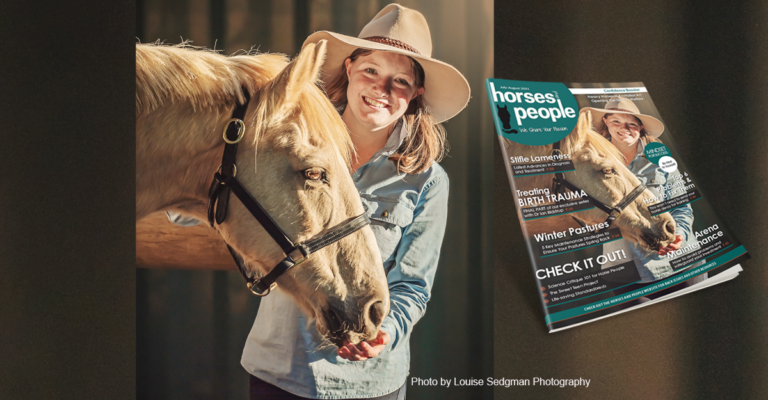
On the cover of the July-August 2021 Horses and People Magazine, we feature Chloe Durkin and Halo, who were photographed by Louise Sedgman for The Sweet Teen Project, an initiative that is raising funds for Headspace Australia, the organisation that is supporting the mental health of our youth. 

Based in Gippsland, Victoria, Chloe is a passionate young horsewoman. Determined to pursue a career with horses, she is combining Year 12 studies with a Certificate III in Racing (stable hand). She is already working part time at a racing stable and is loving every minute of it. 

Chloe is 18 and in the six years since she first met Halo she has come a long way. The enthusiasm and confidence with which she speaks to me over the phone did not come easy, and Chloe insists that it’s mostly thanks to her wonderful equine friend. 

“I needed a pony to challenge but give me confidence, but the confidence he gave me was just ridiculous!” says Chloe. “I went from doing small jumps and lacking confidence in my ability to riding confidently and jumping all kinds of obstacles. And it was not only the riding, I think he gave me this new-found confidence in myself – to talk to people and make new friends.”

Chloe explains that she was born with a learning disorder that makes it more challenging for her to remember things, and her life-long interest in everything horse really helped her discover new ways of learning. 

“I was born with it and I guess it will always be there, and especially when I was younger, it was a huge challenge” she continues. “From learning horse’s names on properties to learning a dressage test, or a showjumping course, it was always a struggle for me. I’d be the kid walking the course 20 times, before getting on. I will take pictures of the cross country jumps and flick through them when I am in the warmup, so I remember where I am going. It’s the cognitive function of remembering the steps. 

“So, for me, as a 13 and 14 year-old, remembering the course was a big deal. At school I could not do normal Year 7 maths and English level. But riding really helped me figure out how my brain works, because from riding and learning dressage tests and jump courses, I can use the knowledge of how I learn and transfer that to an English essay or maths problem. 

“So, yes, I think you could say that having Halo and learning those things have helped me in other areas in life. It sounds corny, but I really believe that without Halo and the support of my family, my coach Catherine Martindale, and my Pony Club Lillico and District, I don’t think I would have grown as I have or gained as much confidence. 

“On my horse I had confidence in myself and Halo. I had so much trust in this little palomino. At school I found maths in particular quite hard but I could remember these long cross country courses or anything to do with horses! So to my teachers credit, they started relating my schoolwork to horses or my pets and I became more confident in myself because I could connect schoolwork with real life questions or scenarios. 

“Relating everything to horses has really helped me understand. Having a horse that you trust and especially having something that is consistent throughout your teenage years, whether it’s your footy team or something else, really helps a young person develop and grow.”

Chloe is another wonderful ambassador for Louise Sedgman’s Sweet Teen Project and for the organisation it is supporting. “I haven’t used Headspace personally, but I am a huge advocate” she tells me. “My school has a Headspace representative who works within the school community helping all Senior students with whatever we are going through. 

“Just knowing they are there makes a difference. I think the more programs like Headspace the better, there’s no denying mental health is an issue for young people and older people too, so the more help and support the better.”

She’s also a great promoter of the Certificate II in Racing and particularly grateful to Jenny Lewis and Community College Gippsland who run the course. 

“We get to work with harness horses, which is the coolest thing! For me, [the course] has been huge. Without it I wouldn’t have my stable hand licence from Racing Victoria. For that to arrive in the mail, putting it in my wallet and showing it to the Stewards… it felt like such a great achievement! Racing is another big part of my life now, of my future. 

Racing Victoria’s ‘Medicare for Thoroughbreds’ Aims to Minimise Injury Risk

Racing Victoria (RV) has announced a new subsidy scheme for owners and trainers to offset the cost of advanced diagnostic imaging on Victorian thoroughbreds.

The Diagnostic Imaging Subsidy Program is a proactive approach to injury prevention for thoroughbred racehorses by using advanced veterinary technology for early detection and intervention.

The program, which will be trialled throughout the remainder of 2021, is open to thoroughbreds who are listed as active or spelling on their stable return, and have been in Victoria for a minimum of three months prior to nominating for the program.

“It importantly helps reduce the risk of more serious injury through early intervention, while also allowing us to develop a deeper understanding of lameness in our racehorses” says Dr Grace Forbes, Racing Victoria’s General Manager Veterinary Services.

“With the addition of the specialist assessment and hospitalisation subsidies, it becomes a much more affordable option for owners and trainers when managing lameness in their horse.”

“Lameness is the most common cause of poor performance, lost racing and training days, and early retirement. This program is designed to encourage a proactive approach to injury prevention using the technology available to help early detection and intervention.

“While it is natural to focus on the benefits to horses while they are racing, injury minimisation also positively impacts the second career prospects of thoroughbreds once retired so we also see long term benefits in using advanced diagnostic imaging.”

The scheme is separate to the Diagnostic Imaging Subsidy Program announced in April to cover 100 percent of the mandatory scans for some horses participating in the 2021 Spring Racing Carnival. This includes all international horses stabled at the Werribee International Horse Centre during the Carnival and each horse – local or international – seeking to start in the Melbourne Cup.

Three veterinary practices participating in the six month trial which commences officially this Thursday, 1 July, are U-Vet Werribee Equine Centre, Ballarat Veterinary Practice Equine Clinic and Goulburn Valley Equine Hospital.

To be eligible for the program, an owner or trainer must have their horse undergo a lameness examination by a veterinarian.

If the horse presents with lameness then it can be considered for the program, with an analysis of the examination results and the horse’s history conducted by the veterinarian to determine if and what advanced diagnostic imaging is required.

The owner or trainer of an eligible horse will ultimately be able to recoup 50 per cent of their costs (a potential saving of up to $1600) when accessing advanced diagnostic imaging for the nominated horse through a participating practice.

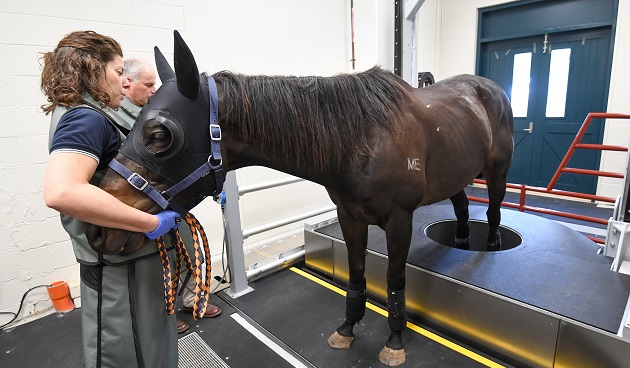
This includes scintigraphy (bone scanning), magnetic resonance imaging (MRI) (high field/standing) and computed tomography (CT). Scroll down to read about the costs of these advanced imaging techniques.

To help the owner or trainer cover the cost of their initial assessment they will also be eligible for a specialist assessment subsidy of up to $300 upon referral by the veterinarian to one of the three participating practices.

Furthermore, an additional subsidy of up to $200 for a horse requiring hospitalisation for a minimum of one overnight stay at one of the program’s participating practices will also be available to the owner or trainer.

For those horses approved to enter the program, these subsidies will be rebated by the participating practice delivering the service, with the balance of costs to be met by the owner or trainer as traditionally occurs.

The Diagnostic Imaging Subsidy Program is made possible by the Victorian racing industry’s $25 million equine welfare fund, courtesy of a two per cent prizemoney contribution by racing participants and the industry’s sustainability fund.

The service offerings from the three participating practices are as follows;

  • U-Vet Werribee Equine Centre – Scintigraphy, MRI (high field – general anaethesia required), CT (standing)
  • Ballarat Veterinary Practice Equine Clinic – Scintigraphy, MRI (standing)
  • Goulburn Valley Equine Hospital – Scintigraphy

“We’re excited to announce this trial of a Diagnostic Imaging Subsidy Program which we see as an important step to help address the financial hurdle that owners and trainers may face when wanting to access advanced diagnostic imaging for their horse” said Dr Forbes.

“In simple terms, it’s very similar to Medicare. If the diagnostic imaging costs $1,500, then we will fund a 50 per cent subsidy to reduce the cost to $750.

“We hope this financial support for owners and trainers will lead to more horses undergoing advanced diagnostic imaging, which has multiple benefits.”

The below information provides an indicative cost breakdown of the diagnostic imaging options (before the 50 per cent subsidy is applied) available as part of the subsidy program offered by RV:

Magnetic Resonance Imaging (MRI):

What: MRI uses magnetic fields and resistance to create high-quality three-dimensional images of bone, fluid and soft tissue. MRI shows an image of the physical change occurring during injury or disease. Multiple images are collected of the area of concern. All standing MRI units are low-field, so those images have less detail than high-field MRI and CT.

MRI is available at Ballarat Veterinary Practice Equine Clinic (Standing Procedure) or U-Vet Werribee (High-field MRI with General Anaesthesia). Costs are approx up to $3,200 for High-field MRI and $2,995 for Standing MRI.

Scintigraphy (bone scan):

The patient is injected with a radioactive substance and a few hours later a gamma camera records which areas of the body have increased uptake of the radioactive substance. These areas are commonly known as hot spots—areas of increased bone activity (or soft tissue inflammation or cell turnover).

Scintigraphy is available at Ballarat Veterinary Practice Equine Clinic, Goulburn Valley Equine Hospital or U-Vet Werribee and can cost up to $3,000.

Computed Tomography (CT):

The standing CT scanner for horses allows efficient three-dimensional imaging of the lower limb and identification of otherwise undetected bone damage. It is essentially cross-sectional radiographs and very useful, providing excellent, high-detailed images for bone and fair to good images for soft tissues.

Images can be viewed in multiple planes and at multiple angles. The quality and contrast of images created by CT is far superior to standard x-ray.

CT scans are available at U-Vet Werribee and cost between $1,200 – $2,000.

Racing Victoria has published a page with full details, which you can access here. 

Technology Solutions for Assessing Lameness Under Study

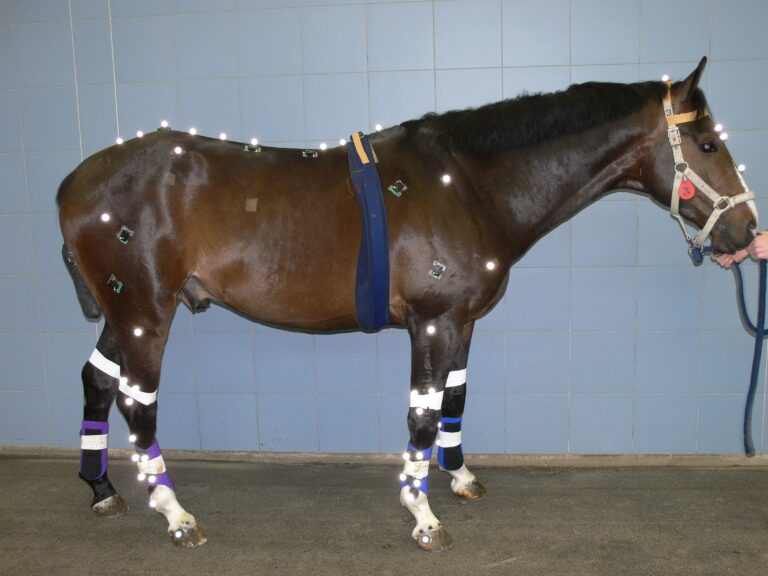
To better assess lameness in horses, researchers are using 3D motion capture technology. They want to quantify how a horse’s muscles and limb movements adjust to accommodate the lameness.

The findings of their studies could provide a greater understanding of the clinical signs of lameness, which could guide future diagnostics and treatment.

The research will be led by the University of Central Lancashire, alongside colleagues at Utrecht University and Delsys Inc. and is being funded by Morris Animal Foundation.

Lameness involves a change in gait biomechanics, often to relieve pain in a limb or the back, and is the most common reason for veterinary examination. Current diagnostic methods for lameness, including the Ridden Horse Pain Ethogram (RHpE) rely heavily on subjective assessment, such as observing how the horse is weight shifting and/or its behaviour.

The mechanism of shifting weight from one limb to another is assumed to require muscle contraction and coordination adaptations. Still, these neuromuscular changes have yet to be measured or described.

“We know that horses alter their movement pattern when they’re lame, but we don’t know much about the functional changes in muscles that facilitate these changes in movement,” said Dr. Lindsay St. George, Research Fellow at UCLan, and the study’s primary investigator.

“We want to define muscle activity in clinically sound, non-lame horses, and then use this knowledge to quantify adaptive changes in muscle activity that occur when a horse is lame.”

St. George’s team uses surface electromyography (sEMG) to quantify muscle function and 3D motion capture technology to quantify movement in horses. sEMG is a non-invasive technology that measures muscle activation by recording the electrical activity produced by skeletal muscles when they contract.

This study employed Delsys Trigno sEMG sensors, which are small, wireless sensors attached to the horse’s skin over-lying superficial muscles of interest.

St. George and her Utrecht colleagues previously evaluated eight horses at that university. They placed sEMG electrodes over selected muscles and reflective kinematic markers on each horse’s forelimbs, hindlimbs and back.

Each horse was then trotted down a hard surface runway. The data collected from these trials were used to establish a baseline for each horse’s movement and muscle activity patterns when they were clinically sound.

Then, veterinarians induced mild, temporary lameness by applying pressure to the sole, using a modified horseshoe technique. This commonly is employed in research to standardize lameness. Left or right forelimb lameness was randomly induced, and horses were trotted to collect data. After a minimum of 24 hours and ensuring the horses did not show residual lameness, sEMG and kinematic data were collected again from baseline and hindlimb lameness conditions.

Now the team is analyzing the data, looking for differences in the activation timings and amplitude of the sEMG and kinematic signals between the conditions. Analyzing both sEMG and 3D kinematic data will allow the researchers to accurately measure the relationships between changes in muscle function and movement during lameness.

“Lameness is one of the most common problems we see in horses, but we still have a lot to learn about diagnosis and treatment,” said Dr. Janet Patterson-Kane, Morris Animal Foundation Chief Scientific Officer. “If this technique will help us objectively measure the true condition of all of an animal’s musculoskeletal tissues, it will assist in optimizing treatment on an individual basis.”

If her study is successful, St. George would like to conduct a similar survey, but collect data from a larger group of horses on different muscle groups and clinical lameness cases.

Click here to find out more about Morris Animal Foundation, one of the largest nonprofit animal health research organizations in the world, funding more than $136 million in critical studies across a broad range of species.

Can a FitBit Track a Horse’s Activity?

If you’re wondering how much activity your horse is getting when you’re not with him, why not strap on a simple FitBit? According to U.S. researchers, the human-oriented device could offer a useful alternative to more expensive options designed specifically for horses, and still provide satisfactory results.

Attached to boots on a front and back leg, a FitBit Zip gives good, relative estimates of horses’ movement in a stall or in-hand, and would probably work well in a paddock as well.

It also appears to be safe for both the horse and the device, said Valerie Moorman, DVM, PhD, DACVS-LA, Clinical Associate Professor of Large Animal Surgery and Lameness at the University of Georgia’s College of Veterinary Medicine in Athens.

“We chose to look at the Fitbit device because it is widely available and inexpensive,” Moorman said. “It is also very easy to use, and the data can be accessed easily using its smart phone app.

The specific Fitbit device that we used (FitBit Zip) also had an easy attachment method and could be securely attached to a boot on the horse.”

Moorman and her fellow researchers ran several tests on a small group of Quarter Horses, trying out the FitBit in different locations on each horse in a stall for 24 hours.

At first they used five FitBits per horse: one each at a hindlimb, forelimb, the withers, the poll, and chest—attached using safe, soft elastic bands or leg boots. But the device slipped around on the withers and chest, Moorman said, and the one at the poll recorded head movements as steps.

They then tried with just two—one at each left leg—and found the results much more consistent with what they were seeing on the recorded videos of the horses during those 24 hours.

Afterwards, they equipped the horses with two FitBit Zips (one on each leg) and recorded them as they were walked and trotted in hand. Although they had set the stride length for the average length of a Quarter Horse stride (about 60 cm), the FitBit grossly overcounted the horses’ steps.

That might be because horses don’t move their legs the same way humans do—and also, the FitBit is designed to be worn on people’s hips, not their legs. Adjusting stride length helped, Moorman said. But it still ended up counting steps at about double what they really were.

Even so, while it doesn’t provide as exact a representation of the horse’s activity as equine-specific equipment might, the FitBit does allow people to have a general idea of how much their horses are moving, she said.

Meanwhile, the device caused no safety issues for the horses in their study in the way they attached it, as described in their study. And, the FitBits themselves incurred no damage—even those that were slipping on the withers and chest.

“Based on what we learned from stalled horses, we know the devices are robust and not likely to be damaged,” Moorman said.

While the ultimate goal would be to monitor free-roaming horses in a paddock, stall monitoring with a FitBit would also be useful for situations like colic and foaling, she said.

However, because the FitBit requires a direct Bluetooth connection, it means people would only get information about a horse’s activity once they can get close enough to the horse for the device to upload information to the mobile app.

In order to get real-time data, people would have to stay close-by or have a second mobile device that they leave near the stall.

The researchers don’t plan to stop there, however, according to Moorman. “The next step would be to examine activity of horses in paddock or pasture turn-out,” she said.

“Using the devices during training could also be very useful, especially when we want to be able to quantitate how much of a particular activity a horse is performing. This could be very helpful for rehabilitation or conditioning.”

The article titled: ‘Evaluation of a Commercial Activity Monitor for Determining Step Counts in Horses’ by Kyle E. Kline, and Valerie J. Moorman, is published in the Journal of Equine Veterinary Science. The abstract can be read here.

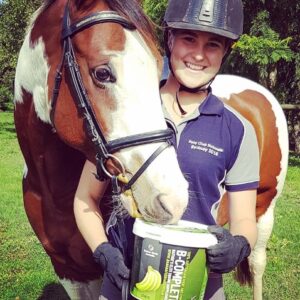
B-COMPLETE™ by Banana Feeds Australia – The Revolution in Equine Gut Health

There’s a new supplement on the market, and we think you should know about it.

Green bananas are a powerhouse of nutritional and gut health value. They’ve been a staple diet in many human cultures and due to their very high content in dietary fibre, they have been successfully fed to horses across the world, for centuries.

Finally, all those wonderful health benefits have been made readily available to all horses by an innovative business in Queensland.

Banana Feeds Australia has developed ‘B-Complete™, Nature’s Green Banana Supplement’.

100% Australian owned, 100% Australian made, and a family business, Banana Feeds Australia has made waves within the equine supplement market in a truly short time.

They undertook countless rounds of analysis, pathology, and laboratory testing, to investigate amino acid profiles, sugar profiles and overall antioxidant capacity. They have worked with some of Australia’s leading Universities and their Equine Schools and were selected as participants into the Fight Food Waste CRC to continue to further research into equine health.

Banana Feeds Australia not only developed a fabulous and innovative new supplement for all equines, but since their inception (back in 2020, just prior to Covid restrictions coming into place), they have also sponsored many grass-roots clubs all over Australia, in what has been a very tough time for all.

A 100% natural supplement focused on equine gut health and overall well-being, B-COMPLETE™ has already done wonders for horse owners, and it is really no surprise.

Green bananas are high in antioxidants, vitamins and minerals, they are low in sugar and a major source of dietary fibre, also known as resistant starch.

Resistant starch is a prebiotic soluble starch. Unlike grain starch, resistant starch is not digested and turned into sugars in the small intestine, but instead, passes unchanged through to the hindgut, where it feeds the good bacteria.

B-COMPLETETM customers have been excited to share their results from a range of different disciplines including thoroughbred and harness racing, dressage, show, endurance, jumping, barrel racing, and hardworking stock horses.

Improved gut health is the primary benefit reported, leading to an improved overall temperament and wellbeing.

Emphasis on digestibility improvements, better feed utilisation, as well as improved stools during travel and stressful events are the common outcomes from the feedback we receive.

B-COMPLETETM customers have reported that horses who used to be very tough to tack-up, are now calm and at ease, suggesting a less sensitive or irritable gut.

Coat health is the obvious external indication of improved internal well-being, and customers have reported that the shine and dapples from feeding B-COMPLETE™ is like nothing they have seen before.

The natural prevalence of potassium, an electrolyte that supports cells in nerves, the heart, and other muscles, together with a high content of Vitamin B6, and the antioxidants dopamine and serotonin in green bananas, may also explain why customers are reporting their animals are calmer and more settled in all environments.

Banana Feeds Australia’s B-COMPLETETM is a patent protected product, consisting of whole dried green bananas, including the skin, the pulp, the stem and the flower ends, and nothing else! There are no fillers, no binders, just good, wholesome, natural green bananas!

Horse owners can be sure about what they are feeding their furry friends, as there is no complicated, confusing ingredients list for them to try and decipher.

Most importantly, thousands of customers have been overwhelmed by the range of improvements they are seeing.

Available from any fodder or produce store, who can order it in from our national distribution partners Australia Independent Rural Retailers (AIRR), Eastern Distributors and Natures Harvest (SA).


For remote or time poor customers, it is also available through our online store

You can visit our Facebook Page ‘B-Complete by Banana Feeds Australia’


B-COMPLETE BY BANANA FEEDS AUSTRALIA- Product Overview

  • EQUINE GUT HEALTH: The health benefits that derive from supplementary feeding of dried green bananas are broad and include:
    • Green bananas have been shown to have antiulcerogenic properties.
    • The insoluble fibre act as pre-biotics to favour the nourishment of microflora in the gut (particularly the hindgut) to stabilise the microbiome.
    • This stability in the gut promotes immune competence allowing horses to counter bacterial, fungal, viral, or parasitic challenges whilst also improving digestion, feed utilisation and temperament.
  • GENERAL WELL-BEING: The active compounds like dopamine, norepinephrine, and serotonin, that are naturally present in green bananas, all act to calm the animal and promote a sense of well-being, helping to make the animal more relaxed and easier to manage.
  • ANTIOXIDANT CAPACITY: Green banana is recognised as antioxidant rich, with a wide spectrum of antioxidant compounds (phenolics, carotenoids, ascorbic acid or Vitamin C, tocopherols or Vitamin E, dopamine, flavonoids, norepinephrine) which are primarily located in the peel. All improve gut health.
  • All natural – 100% Australian made and owned.

Many customers have also started to add B-COMPLETETM into the diet of their favourite dogs, cats, and believe it or not Banana Feeds Australia have just released a new powdered product for our precious bees.

Their new bee powder called BEE-COMPLETE™ has exceeded all expectations of seasoned Australian apiarists and has improved the output and health of their bee colonies!!


There is comfort in knowing that if our beautiful, yet sensitive native and honeybees thrive on it, then this natural product will continue to improve the health of Horses and Bees of Australia for decades to come.


The Impact of Birth Trauma on Horse Welfare and Performance

Help! My horse is girthy, crooked and has uneven front hooves… What can I do? 

This problematic trio is one of the most common reasons owners decide to seek some form of body therapy for their horse. 

After treating more than 10,000 horses and analysing related research over the past 20 years, Dr Ian Bidstrup, a Veterinarian, Veterinary Chiropractic and Acupuncture Practitioner from central Victoria, has realised that his original theory on the causes of girthiness and ‘one-sidedness’ has turned out to be only the tip of a very large iceberg. 

In this exclusive, four-part series, Dr Bidstrup will explore the cascading and longlasting effects of birth trauma and the concept of a ‘neurological scar’. 

He will also discuss ways for reducing the severity of its effect to being hardly noticeable, and the need to routinely check and treat foals between one and three months of age, as well as ways to promote and maintain a more functional symmetry as horses develop. 

This is the first part of a 4-part series of articles written exclusively for Horses and People magazine. You can download the full series as an eBook here. 

A walk in the park?

Newborn foals act like birth was like a walk in the park and not major trauma. They are up walking and looking for milk from their mothers within an hour or two after birth.  

Except in a minority of very severe cases, it is difficult for us to imagine that the newborn foal could well be suffering from painful rib and spinal injuries, could be very tight and very tender through the ribcage area, and perhaps have one or more broken ribs. 

Imagining they may be suffering is even harder when we see the foal zooming around the day after birth despite showing signs of being very tender when the ribs and wither are tested. Clinical experience and thoracic birth trauma research, however, tell us otherwise.  

Rigorous and peer reviewed research into damage to the ribs and ribcage of foals after birth recorded in the esteemed Equine Veterinary Journal (1999, 2003 and 2007) has shown a very significant incidence of rib fractures and crumpling damage to the junction of the ribs and breastbone of the foal. 

One absolutely amazing finding of the research, is that the more severely damaged foals, the ones who commonly end up in veterinary neonatal intensive care facilities with multiple, life threatening rib fractures, are often up and playing within a day or two of admission despite the extensive damage.

Every foal I have examined in the days and weeks after birth has revealed considerable muscle spasm and tenderness to touch in the ribcage region and, very often, spasm of the triceps and serratus muscles at the rear of the upper foreleg of one or both forelegs.

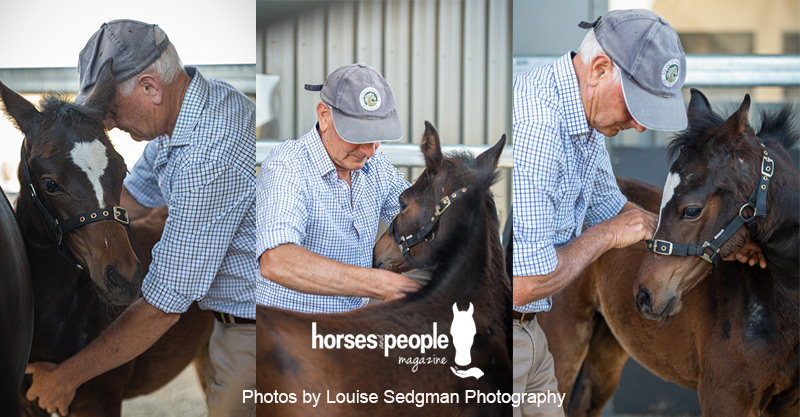
Foal being treated to ease the neurologic effect birth trauma
After birth, the foal’s most tight and tender body parts are the front third of the ribcage and the muscles of the shoulder and girth. Photos by Louise Sedgman Photography.

In some foals, the tension extends right down the back of the foreleg, tightening the passive stay apparatus of the foreleg, and results in one or both forelegs becoming quite upright and, at times, bent forward at the knees.

This is the first part of a 4-part series of articles written exclusively for Horses and People magazine. You can download the full series as an eBook here. 

How does birth cause trauma?  

In human babies, the biggest part to leave the womb is the baby’s head. Baby skulls are quite flexible; the many plates of the skull are able to flex and contort as the head is delivered through the birth canal. Any woman who has had a child can tell you about the forces involved in the baby’s transit to the big wide world. They are huge! And mainly focused on the child’s head and, to a much lesser extent, the shoulders and upper chest combination and the hip area. 

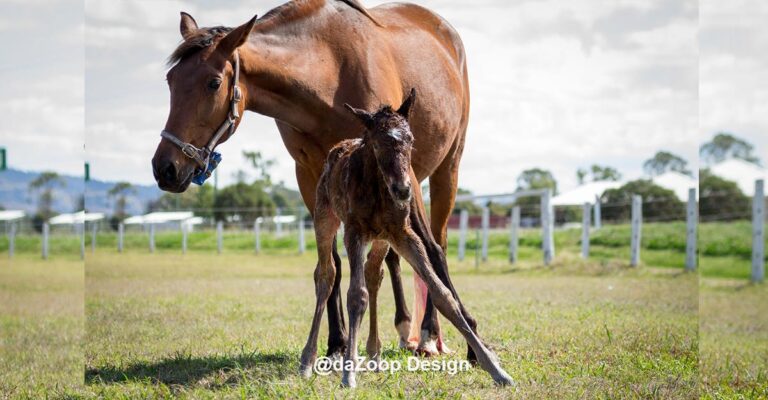
A mare foaling
Any vet who has had to correct the alignment of a foal’s limbs within the birth canal can testify to the huge forces being exerted on the foal’s body with each of the mare’s uterine and abdominal contractions.

In foals, the largest part of their bodies to force open the birth canal and leave the womb is the combination of the shoulder blades and chest at the level of the wither.

The head cops its load of force because it acts as a wedge, dilating the birth canal but is substantially smaller than the front of the foal’s chest. 

When you look at any foal’s chest area and compare it to the space it exited the womb from, it becomes clear that they have to be quite compressed as they travel through the birth canal – much like a human baby’s head.

Any vet who has had to correct the alignment of a foal’s limbs within the birth canal and womb during parturition can testify to the huge forces being exerted with each of the mare’s combined uterine and abdominal contractions. At times, you literally feel like your arm is being squeezed to the point of breaking.

Fractured foal ribs and damaged rib-breastbone junctions occurring as the foal passes through the relatively small pelvic canal should not surprise any veterinary obstetrician. 

The other part of the foal which cops a great deal of pressure during birth is the pelvic region. The pelvis undergoes diagonal compression that is likely to stress the sacroiliac coupling and the attachment of the abdominal muscles to the pelvis, also appear to be badly strained in some foals.

What does the research say? 

Research published in the Equine Veterinary Journal since 1999 provides a great amount of detail on where the most detectable birth damage is found. 

One of the earliest studies revealed 20% of foals had major ribcage injuries including ribcage fractures in at least 5% of these cases. 

On average, the majority of the rib fractures and ribcage injuries were affecting the lower part of the ribcage on the left side of the chest. These are very revealing findings. 

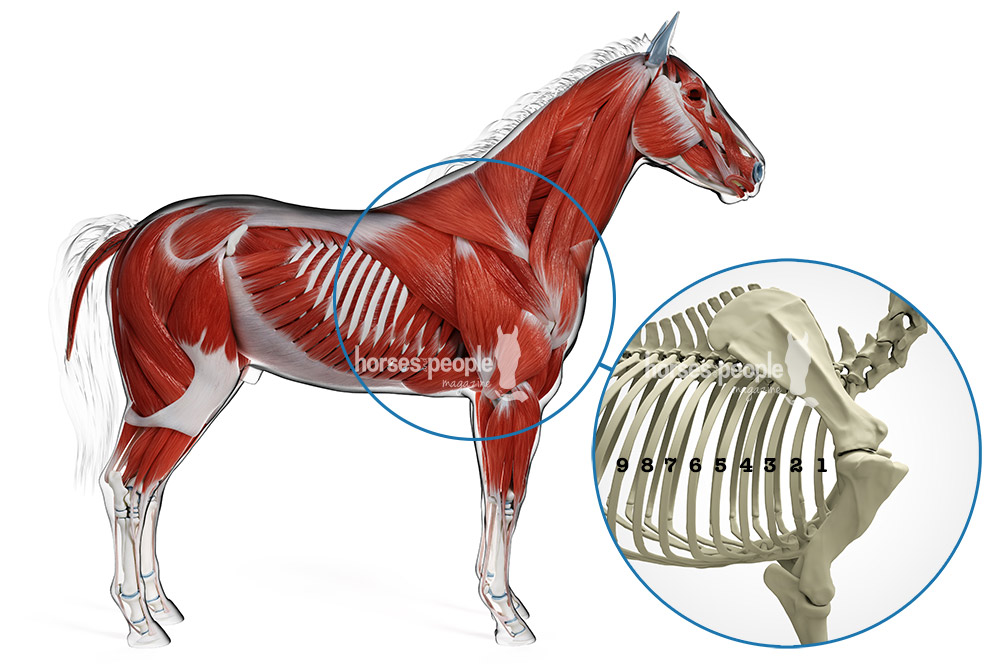
The rib fractures were particularly of the third to seventh ribs, on the left side of the ribcage. The third to seventh ribs correspond with the highest part of the wither of an adult horse, and represent the most rigid and most substantial part of shoulder-chest combination. 

As mentioned earlier, after birth, the foal’s most tight and tender body parts are the front third of the ribcage and the muscles of the shoulder and girth. 

In clinical practice and on average, in foals that are one month old, yearlings and adult horses, the tightest and most tender parts of the front end are the right side of the wither, girth and shoulder rather than the lower left of the ribcage as would be expected from the rib fracture research findings. 

This may sound counter-intuitive, but it is reasonably easy to work out why.

The ribs and rib-breastbone junction heal quite quickly in a newborn foal growing at a tremendous rate. However, diagonally opposite to the lower left rib fractures there will be damage to the spine (under the top right shoulder blade), which is not as apparent at birth but can deteriorate over time. 

Like so many traumas occurring during the life of a horse, spinal damage can leave a neurological ‘scar’, causing altered neurological function that never resolves without specific rehabilitation. 

Muscle and skeletal anatomy of the horse
Rib fractures reported in the literature particularly affect the third to seventh ribs, on the left side of the ribcage. This corresponds with the highest part of the wither of an adult horse, and represent the most rigid and most substantial part of shoulder-chest combination.
Muscle anatomy illustration by SciePro. Skeleton illustration by Motionblur Studios. Adapted by Horses and People.

Altered neurological function… It’s really a brain issue!

In order to understand birth trauma and its lasting impact, we need some background knowledge.  

When subjected to injury by tripping, falls, etc., most parts of the spine become neurologically dysfunctional during the time they are held braced by swelling and inflammation – the natural processes that help the body to heal. 

The neurological dysfunction includes the brain getting a distorted perception/reading of the tissues serviced by the injured part of the spine.

If the injured part of the spine contains nerves that feed the limbs, the neurologic dysfunction can lead to diminished coordination of the movement of that limb and result in tightness and tenderness of that limb’s muscles. 

This tightness and tenderness is largely a result of changed brain perception of the limb and its muscles leading to a mismanagement of the control exerted on the limb. 

A common human example is a lower back/lumbar injury leading to tight and touchy hamstring muscles. 

Until the lower back spinal function returns to normal, the hamstrings will continue to become tight and tender, even after an effective leg massage which relieves any tension and tenderness of the hamstrings. 

Return to normal spinal function

In many parts of the spine, the natural resolution of trauma-induced inflammation will allow the return of normal spinal movement and function and with it, the neurological function also returns to normal. 

Coordination and leg muscle tenderness and comfort returns to normal when unimpeded spinal flexibility resumes.  

Common activities including playful weaving, bending and jumping are enough to free up recovered sections of the spine. 

Not all of the spine is the same when it comes to self-correcting after injury

For much of the spine, acute spinal injury can resolve through common horse activities. Activity that just bends and stretches the spine beyond its post-injury stiffness, will often be enough to prompt the brain into correcting spinal movement back to a normal balance. 

However, the spine of the upper chest of the horse, the part heavily impacted on during birth, is quite different. 

The upper chest spine is heavily splinted and restricted in movement in horses by the bracing effect of the rigid shoulder blades and shoulder girdle muscles. 

Add the breastbone-attached ribs (ribs 1-8) and the interspinal ligaments, and you have one hell of a movement-resistant unit. 

Without movement, which takes the flexion and extension of the spine from stiff to normal movement, self-correction has little chance to occur. 

Without the prompt that activates a self-correction, the section of spine which lies under the shoulder blades usually fails to return to normal movement through normal activity. 

The ‘neurological scar’ occurring as a result of spinal damage during birth, very often does not resolve naturally, leaving the progressive development of a one-sided horse that is so common that most consider this to be normal and even unavoidable. 

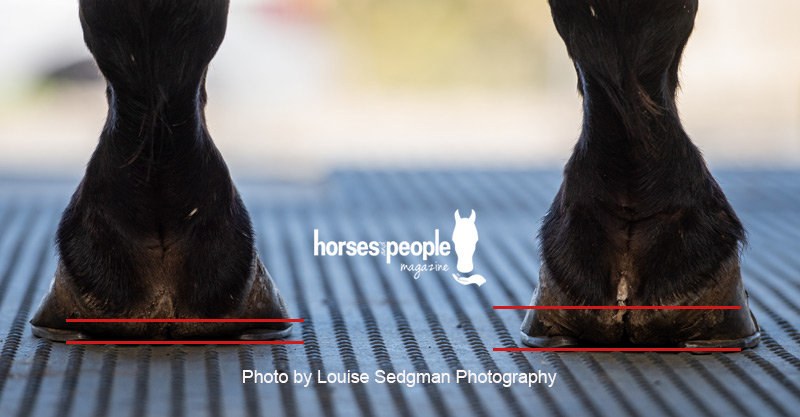
A rear view of high-heel, low-heel syndrome
High-heel, low-heel syndrome My horse is girthy, crooked and has uneven front hooves… A desire to solve this problematic trio is one of the most common reasons owners decide to seek some form of body therapy for their horse. Photos by Louise Sedgman Photography.

Thus, trauma, which occurs in particular to the thoracic spine of foals as the foal passes through the very cramped birth canal, can leave changes in foreleg comfort, flexibility and coordination which can change a horse for its lifetime. 

These changes include the tendency to place more weight or lean more on one foreleg with a reciprocal effect on the hind end of the horse, as well as the tendency to be sensitive in the wither and girth areas. All of which cascade and change movement and posture, the latter causing disengagement of the horse’s sacroiliac coupling. 

The second part of this series on birth trauma, goes deeper into the closely related problems of girthy horses, anxiety, stomach ulcers and posture, and how wither and girth pain associated with birth trauma effects saddle fit in a common and very serious way.

This is the first part of a 4-part series of articles written exclusively for Horses and People magazine. You can download the full series as an eBook, it includes: 

  • Part 1 – Introduction to thoracic birth trauma: An detailed account of what it is, what the research shows, which systems are affected and an overview of the consequences.
  • Part 2 – The ‘girthy’ horse: A deeper look into the closely related problems of girth sensitivity, anxiety, stomach ulcers and posture/conformation issues, as well as how wither and girth pain associated with birth trauma affect saddle fit in a very serious way.
  • Part 3 – The ‘crooked’ horse: The effect that birth canal trauma has on the development of asymmetries commonly referred to as ‘crookedness’, ‘laterality’, ‘one-sidedness’, and high-heel low-heel syndrome.
  • Part 4 – Treatment and Rehabilitation: Treatments to reduce the impact of birth trauma following birth and rehabilitation strategies for adult horses affected.

The eBook downloads instantly for just $25.00. Order here.