fbpx
Home Blog Page 6

Roadmap for the Ethical Use of Horses in Sport

A British researcher has mapped out an ethical framework to help horse sports assess issues affecting their social licence to operate.

It is hoped that different organisations will use it as a starting point, to critically assess existing and proposed practices, as well as develop their own sport-specific and sustainable codes of ethics.

The Ethical Framework for the Use of Horses in Competitive Sport: Theory and Function is the first to prioritise the ethical issues surrounding the participation of non-human, non-consenting athletes in sport.

As such, it covers a significant gap, bridging existing animal welfare regulations and sports ethics frameworks to help stakeholders consider the ethical implications of interventions and/or actions. Its use would allow transparent and defensible decision and policy making.

Dr Madeleine Campbell is the Royal Veterinary College of London’s Senior Lecturer in Human:Animal Interactions and Ethics. She was previously the Wellcome Trust Clinical Research Fellow in Veterinary Ethics. Madeleine is a European Diplomate in Animal Welfare Science, Ethics and Law (Dip ECAWBM (AWSEL)), and a European and a RCVS Recognised Specialist in Equine Reproduction (DipECAR). She is also the sole Partner at Hobgoblins Equine Reproduction Centre. The research, which is open access and published in Animals, was funded by World Horse Welfare.

Diagrammatic step by step explanation of how to use the ethical framework for the use of horses in competitive sport. https://doi.org/10.3390/ani11061725

Once an ethical issue is recognised and stakeholders have been identified, Dr Campbell’s framework applies a harm-benefit (utilitarian) analysis, which should be based on the best and relevant available evidence.

Such evidence could be from peer reviewed journal papers, non-peer-reviewed books and reports (both from the issue under consideration and other related issues, such as other species, sports etc), expert opinion and stakeholder opinions. In addition, it should consider what evidence is lacking and could be obtained.

The preliminary conclusions from the harm-benefit analysis is then tested against the ‘central tenets’ which are:

  • Minimisation of negative welfare effects and maximisation of positive welfare effects for horses.
  • Identification of and mitigation agains avoidable, unnecessary risk to horses
  • Compliance with governing body regulations and the law.

By doing this, the mainly utilitarian approach of this framework is broadened to integrate alternative ethical theories such as virtue ethics and deontology.

Deontology is an ethical theory that uses rules (e.g. universal moral laws such as ‘don’t lie’) to distinguish right from wrong. Virtue ethics emphasise traits of character such as empathy, compassion, kindness, loyalty, etc… Whereas utilitarianism advocates actions that promote the greatest good to the greatest number.

The reliance on testing against the ‘central tenets’ assists in resolving conflicts and competing interests, such as when the harm-benefit analysis provides overall benefit to one stakeholder and harms another.

For example, a particular conclusion from the harm-benefit analysis might provide a substantial economic benefit to many humans but involve the acceptance of an identifiable risk to equine welfare which could be mitigated against.

In this case, implementing the preliminary conclusion would contravene one of the central tenets which highlight that priority should be given to the equine (not human) interests.

In contrast, the framework does not say anything about the relative weighing of different and sometimes conflicting interests among humans, allowing the users of the framework to resolve these.

“The aim of developing a novel ethical framework for the use of horses in competitive sport is to provide stakeholders—whether they be regulators, owners, trainers, riders/drivers, vets, legislators, members of the public or others—with a tool which they might apply to the consideration of the ethical questions which inevitably arise in relation to equestrian sport” writes Dr Campbell.

“The purpose of the framework proposed is absolutely not to tell any stakeholder what conclusion they ought to be reaching on any particular issue. Rather, the framework is a tool: a logical method which may be used by stakeholders to reach a defensible consensus decision when faced with an ethically challenging scenario.

“Such use, it is hoped, will serve both to underwrite the continuation of the social license to use horses in sport and also to enable those within equestrian sport to critically assess existing and proposed practices and to make welfare-improving adjustments to practice if/where necessary”

Follow this link to download and read the full paper, which includes an excellent and very accessible review of ethical frameworks, their purpose, structure and limitations.

The article includes a worked example of using the ethical framework to analyse the question of whether all horses being kept in a stable require daily turnout.

Dr Campbell’s framework is currently being tested and refined in consultation with industry stakeholders, and the results of this work will be published in future.


Can Bedding Improve your Horse’s Performance?

If you were asked how to optimise your horse’s performance, it is likely you will think about meeting his nutritional needs, following a strict conditioning regimen, or ensuring that he is in ‘good’ health… Would bedding even come into your mind?

‘Good’ sleep is extremely important for our horses and bedding type, quality, cleanliness and depth can influence sleep characteristics, and therefore, affects performance and welfare. So, let’s look at what we know…

What is sleep?

Sleep occurs in all mammals and consists of four stages [1]: Non-rapid eye movement sleep (NREM), including slow wave sleep (SWS), makes up the first three phases and is usually followed by a fourth phase – the rapid eye movement (REM) sleep phase. REM sleep is characterised by atonia – a state in which most muscles of the body completely relax [2].

Sleep is extremely important because of its restorative properties. It reduces our heart rate and blood pressure, for instance. A chronic lack of REM sleep can impair cognitive performance, and trigger or worsen cardio-vascular and other metabolic diseases to the extent that it can significantly shorten our life span and, in the worst-case scenario, lead to death [3]. Like in humans, a lack of REM sleep can also be detrimental to horse health and well-being.

How do horses sleep?

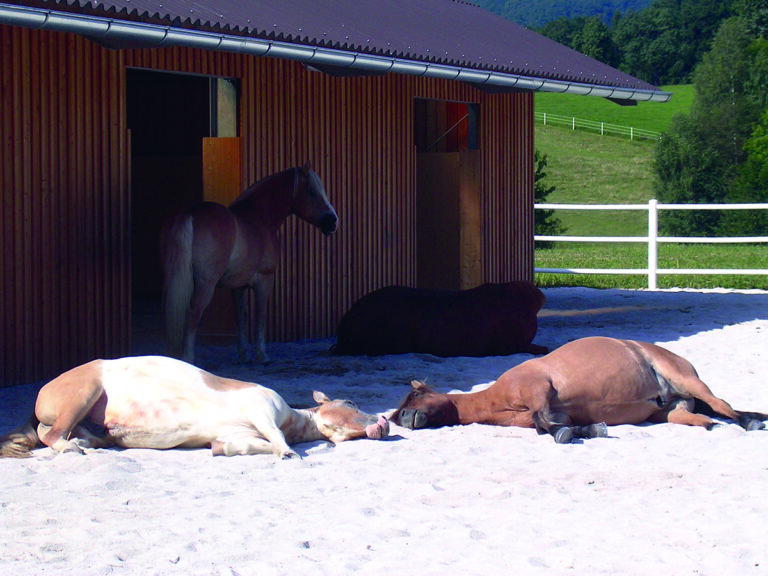
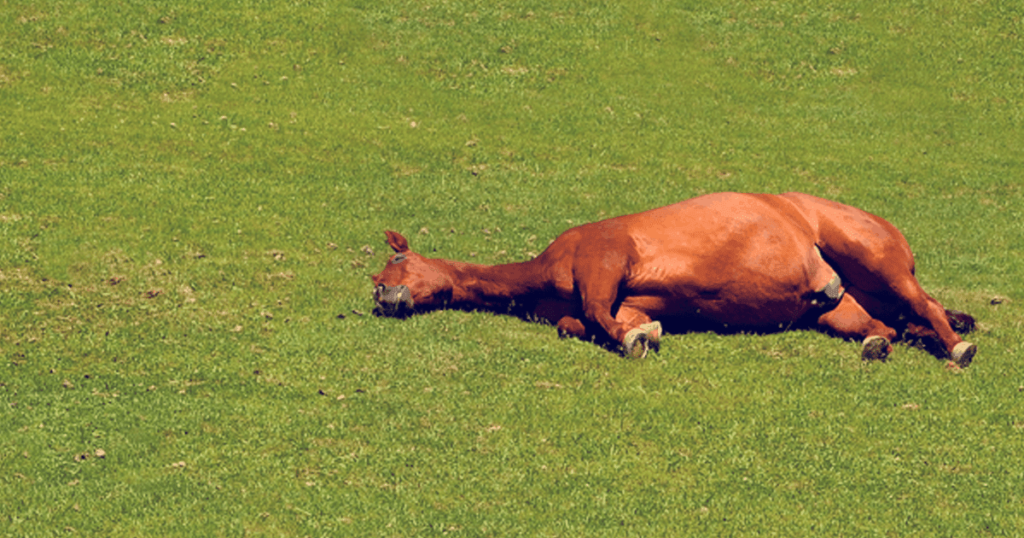
Healthy horses sleep between three to five hours daily [4,5]. Whilst horses can remain standing during the NREM phases, they must lie down to complete the REM phase, either on their chest and abdomen with their muzzle resting on the floor (sternal recumbency) or on the left or right side of their body with their head and neck resting on the ground (lateral recumbency).

A bay horse lying down in a field, in lateral recumbency. How do horses sleep?
A horse resting in lateral recumbency. Photo source: www.shutterstock.com.


Whilst no standing REM phases have been recorded in relaxed horses [6], a small number of horses, although the exception, may not lie down when entering the REM sleep phase. This can usually be attributed to stress (e.g., new environment) [7] or discomfort (pain, improper ground surface or stall size). However, when horses enter the REM sleep phase while standing, their head and neck drop due to atonia, consequently, their muzzle may hit the floor. This is usually the point when most horses wake up again, but some may partially collapse, and therefore, could seriously injure themselves when entering REM sleep whilst standing [8].

Learn more about sleep deprivation in horses

What role does bedding play?

Bedding type, quality, cleanliness, and depth can positively impact sleep quality and, consequently, well-being. Stable or resting area size, light exposure, environmental stressors, rank of individual horses within a group (if group-housed), and pre-existing diseases, pain, or discomfort can also impact sleep behaviour in horses.

Increasing bedding depth can positively affect horse welfare and performance [9,10]. When kept on deeper bedding (e.g., 6 inches), irrespective of bedding type, horses spent more time lying down [10], particularly in lateral recumbency [5], which is one of the two sleeping positions required to enter and complete REM sleep phases.

Research has shown that horses who are relaxed and physically comfortable spent more time in lateral recumbency [9]. Therefore, a calm environment and bedding cleanliness are of utmost importance [11] since horses spent significantly less time resting on wet bedding [12], which may reduce the amount of REM sleep. It seems that horses preferred straw bedding over shavings or pellets [13,14], and the use of wood shavings significantly reduced the time horses spent in lateral recumbency in one study [9].

The downsides of rubber mats

The combined use of rubber mats and shavings is very popular in some parts of the world, particularly in countries where horses are kept indoors for a significant amount of time throughout the day and night.

In a proportion of horse barns, however, rubber mats are barely covered with bedding, which not only makes it uncomfortable for horses to lie down, but also negatively impacts air quality (ammonia concentrations) and, therefore, respiratory health and welfare.

Using rubber mats alone or with only a thin layer of shavings has shown to significantly reduce, both, lateral and sternal recumbency sessions and time [15]. Rubber mats, irrespective of their thickness, did not compensate for insufficient bedding depth [11]. Therefore, rubber mats should be covered with an adequate amount of bedding (between 4-6 inches were used in the studies).

Stall with a lack of shavings
Stall with rubber mats and wood shavings. Note the urine accumulation due to lack of bedding. Photo courtesy Tanja Bornmann.


Tie or standing stalls

Tie stalls are banned in some countries due to their welfare compromising nature. However, some barn owners still house horses in standing stalls, for instance in Canada, although it is not recommended by the national code of practice.

Studies have shown that horses housed in tie stalls were reluctant to lie down, probably due to the spatial restrictions [16]. This outdated practice may result in reduced or lacking REM sleep and, thus, compromises horse health and safety.

Take-home message

Horses unable to experience REM sleep can develop serious health problems, which negatively affects their welfare. Bedding type and depth can significantly impact horse sleep and, therefore, performance.

While not all bedding types provide the same benefits, you certainly can’t go wrong adding a little more bedding depth to your horse’s resting areas. There is certainly some truth to the saying “What is better than a good night’s sleep?”

Learn about sleep deprivation in horses

Find out more about how horses sleep

References:

[1] Velicu, O.R., Madrid, N.M., Seepold, R. (2016). Experimental sleep phases monitoring. IEEE-EMBS International Conference on Biomedical and Health Informatics (BHI). 24-27 February 2016, Las Vegas, USA.

[2] Miyazaki, S., Liu, C.Y., Hayashi, Y. (2017). Sleep in vertebrate and invertebrate animals, and insights into the function and evolution of sleep. Neuroscience Research, 118, 3-12.

[3] Luyster, F.S., Strollo, P.J., Zee, P.C., Walsh, J.K. (2012). Sleep: A Health Imperative. Sleep, 35(6), 727–734.

[4] Zeppelin, H. (2000). Mammalian sleep. In: Kryger M, Roth T, Dement W, 2000. Principles And Practice Of Sleep Medicine. 3rd edition. Philadelphia: Saunders, 82–92.

[5] Greening, L., Downing, J., Amiouny, D., Lekang, L., McBride, S. (2021). The effect of altering routine husbandry factors on sleep duration and memory consolidation in the horse. Applied Animal Behaviour Science, 236, 105229.

[6] Hartman, N., Greening, L. (2019). A Preliminary Study Investigating the Influence of Auditory Stimulation on the Occurrence of Nocturnal Equine Sleep-Related Behavior in Stabled Horses. Journal of Equine Veterinary Science, 82, 102782.

[7] Williams, D., Aleman, M., Holliday, T., Fletcher, D., Tharp, B., Kass, P., Steffey, E., LeCouteur, R. (2008). Qualitative and Quantitative Characteristics of the Electroencephalogram in Normal Horses during Spontaneous Drowsiness and Sleep. Journal of Veterinary Internal Medicine, 22(3), 630-638.

[8] Fuchs, C., Kiefner, C., Reese, S., Erhard, M., Wöhr, A. (2016). Narcolepsy: Do Adult Horses Really Suffer from a Neurological Disorder or Rather from a Recumbent Sleep Deprivation/Rapid Eye Movement (REM)-Sleep Deficiency? Equine Veterinary Journal, 48(50), 9.

[9] Pederson, G., Søndergaard, E., Ladewig, J. (2004). The influence of bedding on the time horses spend recumbent. Journal of Equine Veterinary Science, 24(4), 153-158.

[10] Greening, L., Modena, F. (2019). The influence of shavings bed thickness on nocturnal recumbent behaviour in horses. 9th Alltech-Hartpury Student Conference, 8th May 2019, Hartpury, UK.

[11] Chung, E., Khairuddin, N., Azizan, T., Adamu, L. (2018). Sleeping patterns of horses in selected local horse stables in Malaysia. Journal of Veterinary Behavior, 26, 1-4.

[12] Ninomiya, S., Aoyama, M., Ujiie, Y., Kusunose, R., Kuwano, A. (2008). Effects of Bedding Material on the Lying Behavior in Stabled Horses. Journal of Equine Science, 19(3), 53-56.

[13] Mills, D., Eckley, S., Cooper, J. (2000). Thoroughbred bedding preferences, associated behaviour differences and their implications for equine welfare. Animal Science, 70, 95-105.

[14] Werhahn, H., Engel, F., Hessel, F., Bachhausen, I., Herman, F.A., Van den Weghe, H.F. (2010). Effects of Different Bedding Materials on the Behavior of Horses Housed in Single Stalls. Journal of Equine Veterinary Science, 30(8), 425-431.

[15] Baumgartner, M., Zeitler-Feicht, M.H., Wöhr, A.C., Wöhling, H., Erhard, M.H. (2015). Lying behaviour of group-housed horses in different designed areas with rubber mats, shavings and sand bedding. Pferdeheilkunde, 31, 211-220.

[16] Houpt, K., Johnson, J. (2001). The effect of exercise deprivation on the behaviour and physiology of straight stall confined pregnant mares. Animal Welfare, 10, 257-267.


The Year That Changed us all

Towards the end of 2019 a lot of people seemed glad to see the end of what they described a tough year… Little did they know what ley ahead. First the devastating bushfires and then, well… COVID-19. But was 2020 really a terrible year? 

I like to think it wasn’t. It was a year that taught us a lot and a year that forced us to change. We all agree that change is not always something we readily and willingly embrace and, therefore, a little force can be a good thing.

We had to learn to adapt, to abandon plans and to make new ones. There were many things we were taking for granted, like visiting friends, going on holidays, going to competitions and taking our horses to the beach. All these things suddenly became things of the past.

Who would have thought that aeroplanes would be grounded, factories shut and travel coming to a grinding halt, not just in Australia but all over the world?

Personally, I felt a deep sense of gratitude for all the things I have and which I never really appreciated. I also found myself a little out of my comfort zone as I was having to adapt, a lot.

As most of you know, my previous years had been taken up with traveling constantly for clinics and suddenly, I found myself at home. A nice change for sure, but like everyone else, we still have to make a living, particularly as I had just separated from my husband and taken over our farm.

Talk about timing!

As always, we can focus on the downsides, become victims of stress and start cursing the world and everyone in it, or we can step up, count our blessings (and blessed we are compared to others) and adapt. 

Knowing that the universe will always have my back as long as I am clear in communicating what I need and what I want, I was confident that things would fall into place, and they did. 

What I have learned, is that I have to get out of the way. Like many, I fall into the trap of putting blinkers on when setting goals. I get so driven in achieving what I have set out to do, that I don’t see the other opportunities around me. 

COVID-19 has taught me to take the blinkers off, mainly because it caught me by surprise, and I was not ready to set a business goal that would give me the income I needed without the usual travelling.

So, I had to learn to trust. I knew the outcome I wanted but I had no idea on how to achieve it.

Like always in these moments, it is meditation that gets me through. Whenever my head jumped into overtime, trying to figure things out and pushing stuff though, I stopped, sat

down and meditated. Whenever stress overtook my mind and I started to worry, I stopped and meditated.

You might think I am crazy, but the proof it worked is that I am still here, with a farm that is mine, a financial settlement achieved and all payments up to date. I tell you, meditating works.

The key is to get out of the survival emotions and into the creative emotions. 

In other words, the more you stress the more you create stressful situation because all you see and all you react to are the stressful situations.

When you focus on the desired outcome, you set free the emotions that are attached to the desired outcomes and you start to create.

There were times when I had bills to pay and I did not know how to pay them, but I refused to let the worry and stress turn on the panic button; instead, I focused on gratitude, on the amazing opportunity to own such a beautiful place, on knowing that I was going to be ok, on how grateful I am for the love to my beautiful horses. Each-and-every-time I focused on this, something amazing happened.

Money always ended up in my account – not a lot, but enough to do what I needed to do. And step by step it led me through the messy, sticky time.

When you think about it, my experience is not that dissimilar from riding. We all know how a ride ends up when we focus on all the things that can go wrong!

I want to leave you with this; if you can’t wait to give 2020 the flick and to move on to 2021 then just stop for a moment. Instead of pushing it away, take stock. 

What have you learned? Where have you grown and where have you surprised yourself?

Take the opportunities that 2020 gave you and embrace them. You don’t know what lies ahead, so don’t be that hasty to push something away.

2021 will be what you make of it. It can be your best year or it can be your worst – you can make the choice. 

I say let’s make it the best year yet. Become really clear on what it is you want, make changes, be brave and stretch yourself.

When you set goals, take the blinkers off because there might be something out there that is so much better than what you set out to achieve. Remain flexible but never compromise on your choice to be happy, your willingness to love and your knowing that you will be ok, no matter what.

Did you know that Tanja offers Mindset Phone Coaching Sessions?

These are one-on-one sessions helping riders to find practical and effective solutions to the problems they are facing, such as:

  • Let go of limiting beliefs
  • Overcome fear and confidence issues
  • Develop yourself personally and professionally – on and off the horse
  • Learn how to set goals and fully prepare yourself to go out and achieve them.

Often, all it takes to find the answers is a different perspective!

To find out more, contact Tanja by email: tanja@tanjamitton.com

Novel Rotavirus Linked with Increased Foal Diarrhoea Cases in the USA

Researchers at the University of Kentucky’s Maxwell H. Gluck Equine Research Center and the Veterinary Diagnostic Laboratory have made a preliminary identification of a novel Rotavirus associated with diarrhoea in very young foals.

The discovery followed a significant increase in diarrhoea cases in young foals 2 to 7 days old seen by breeders and veterinarians in Central Kentucky and which indicated that the existing vaccine for Rotavirus A was not being effective. Despite the increase in cases, there have been no reports of increased mortality.

Efforts are now underway to better characterise the virus and determine its role in the recent outbreak, as well as identify other possible causes.

Because this is a novel Rotavirus, not a mutation, new testing protocols had to be developed and an entirely new vaccine will need to be formulated. This will take some time, so for now, the recommendation is for strict biosecurity protocols to be put in place.

The University of Kentucky Gluck Equine Research Center (UK) is using a portion of its existing Koller Emergency Funds, and the Kentucky Thoroughbred Owners and Breeders Foundation, Grayson-Jockey Club Research Foundation and Coolmore America are leading an effort to help provide additional funding, allowing research to begin immediately.

“Anytime we recognize an increased incidence in equine health cases, such as foal diarrhoea, we prepare and mobilize to further our understanding of the health issue,” said David Horohov, chair of the Department of Veterinary Science and director of the Gluck Equine Research Center.  “Early detection and rapid diagnostics are at the cornerstone of what drives our research approach.”

Foals commonly develop diarrhoea a week to 10 days after foaling, and veterinarians and farm owners typically have the experience and tools to respond. According to the American Association of Equine Practitioners, it is important for a veterinarian to evaluate foals under a month old when they experience diarrhea because they can develop life-threatening dehydration in as few as six to eight hours.

Neonatal or young foals have a digestive tract, similar to humans, where small intestines are responsible for much of their nutrition absorption. Dealing with this type of attack on the small digestive system heavily impacts foals, which is a big reason why the Gluck center will focus its research efforts on this issue.

A significant increase in the illness has affected some farms, while other farms have had few to no cases. In spite of these incidences, the University of Kentucky has not seen a rise in reported mortality associated with these cases and continue to monitor the situation.

Kentucky’s College of Agriculture, Food and Environment researchers have developed a multi-pronged research plan to help further the understanding of the problem.

One focus of this research plan is to expand scientists’ knowledge of the foal gut environment. This will add to their understanding of neonatal gut bacteria and the effect of antibiotic treatment.

A second part of the research plan is to study the differences in mares and their foals on farms both with and without early neonatal diarrhea cases and the effect of antimicrobial drug treatment. Researchers will conduct this analysis through gene sequencing to determine an overview of type and diversity of gut microflora.

They will also use the data in this part of the study to gain insight into the effect of antimicrobial use in foals on the development of their gut microflora.

The third prong of the research will investigate a biotherapeutic approach on one farm. That farm is supplementing foals with home-fermented live yogurt instead of a commercial pre/probiotic. Research has shown that Lactobacillus spp. bacteria are among the first colonizers in the neonatal gut. Data from other species supports Lactobacillus spp. as promoting gut health and outcompeting pathogens in gut colonization.

In addition to the three studies, the UK Gluck Center and Veterinary Diagnostic Laboratory team has identified further potentially useful tests , including gene sequencing targeting identification of novel viruses and bacteria that may be present.

With limited Koller Emergency Funds available, the UK Gluck Equine Research Center  is thankful for the additional dollars provided by the Kentucky Thoroughbred Owners and Breeders Foundation, The Grayson-Jockey Club Research Foundation and Coolmore America.

“The foundation members met March 15 and felt this research and timing was consistent with the sole mission of immediately responding to threats to the breeding industry in Central Kentucky. We are grateful to Gluck for accessing their emergency funds and everyone for responding so quickly.” said Jimmy Bell, chairman of the KTOB Foundation.

“Situations such as these highlight the relevance for a coordinated effort that can be led by our scientists at the Gluck Equine Research Center,” said Stuart Brown, veterinarian, Keeneland equine safety director and chair of the Gluck Research Foundation. “Our team mobilizes to work with equine practitioners and farms throughout the area, allowing us to further our understanding and develop our approach to work on these types of issues. We appreciate the opportunity to collaborate with other partners to enhance our abilities when issues like this arise.”

“We at Grayson-Jockey Club Research Foundation believe in supporting timely equine health for all horses at every stage of their lives, and foal diarrhea is proving to be a concern this year on Central Kentucky farms,” said Dell Hancock, chair of the foundation. “We are happy to help facilitate research to address this condition and thank the University of Kentucky’s Gluck Equine Research Center for their commitment to the well-being of horses.”

Braving Trust as Equestrians

Disinformation, suspicion and scepticism… Distrust. It spans centuries and cultures.

Our timeless obsession for murder mysteries, outsmarting imposters and calling out sabotage has made the Sherlock Holmes series, the boardgame Cluedo and the latest online game Among Us, best-selling household names. Our craving to find the pieces that solve a puzzle hooks us and can hold our attention for hours.

The newest and very popular social deduction game Among Us is a jigsaw puzzle where ‘crewmembers’ of a spaceship have to identify the randomly assigned ‘impostor’ among them.

Among Us is about distrusting everyone until they are proven innocent and uses terms like ‘most not sus’ and ‘scanning for innocence’. Players can interact with anyone in the world, at any time of day. Young people are practicing both, how to smell a fraud and how to lie, and get away with it. It’s young people navigating distrust for hours, every day.

Maintaining the legitimacy of horse sports relies on all of us doing the right thing, at the right time, in the right way; and it also requires us to demonstrate we are not impostors and we can be trusted to safeguard horse welfare.

Just like some equestrians expect our horses to have to earn their carrots, we all must prove our trustworthiness. So, what is trust?

Trust Carrots

Let’s start with what trust is not. Managing horses in a way that is ‘fit for a king’ rather than horse-centred, or regurgitating politically correct terms in the hope that (by repetition alone), they will be absorbed by equestrians and the public alike, dismantles trust, and even raises suspicion. Trust is not even a cute #twohearts.

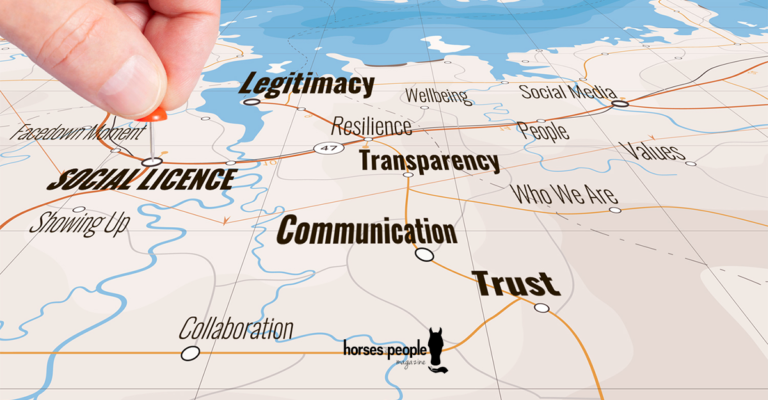
Maintaining legitimacy (proof) with transparency (as everyone ‘scans for innocence’) and communication (fostering connection over disconnection), explains why the sport’s social licence to operate is on trial in the court of public justice. So far, to a public that is scanning for impostors, we look ‘sus’!

Research shows that words really matter. The link between dehumanising language and violent behaviour is well-studied. Just as dehumanising terms are not OK to use on humans, ‘dehorseanising’ terms are eroding our social licence. Choosing to label our four-legged partners as ‘less than horses’ communicates to the animal-loving public that we are not trustworthy.

By the end of 2020, over 250,000 equestrians had joined the Facebook group Shiteventersunite. The attempt to provide a space for equestrians to show their mistakes is now overrun with videos and images of distressed horses who are coupled to labels like #twatface, #patchytwat or “pompous pussy.” A group that was set up to entertain equestrians has now become a hub for growing the public’s distrust.

Just because we can doesn’t mean we should

The public expect us to prove we can be trusted to provide good welfare. How? By showing evidence that our horses are living a good life, by demonstrating we provide quality of life for each individual horse in our care.

In a proactive move, horseracing has shifted its focus to The Five Domains Model as a tool to prove the sport can be trusted to give a racehorse a good life. They prioritise welfare over care and are embracing positive welfare measures.

Positive welfare research is advancing as researchers dig into measuring the feel-good hormones oxytocin and dopamine. French scientists, for example, identified the forms of touch that causes horses to release oxytocin. These findings have overturned traditional grooming practices such as strapping and show that just because the book says so, does not mean we should do it. Demonstrating we can change our practices – one at a time – when this matters to the horse, is how we earn the trust of the public.

Embrace the genius of the ‘and’

Both human-horse relationships and human-human relationships matter. When I explain that the public needs horse lovers to care for horses andeach other, there is always push-back; “I love my horse more than people!” I know this is true and everyone is doing their best with the ‘tools’ they have at that time, but it is also true that we can love horses and love people, and it is just as important to cultivate psychological safety with people as it is with horses. We can also recognise that we make mistakes with horses and with people.

My invitation to you is to practice holding two opposing ideas at the same time, such as recognising that you value self-carriage and (despite your best intentions) deliver clashing aids. That horses experience harmful pressures from nosebands and from bridles. That you are capable of being brave and of being vulnerable. That you can love horses and still harm them. This is acknowledging your vulnerability.

Building circles of safety

Can you admit your mistakes to your equestrian communities? Is it safe to express your vulnerability? If you were honest about your flaws and shortfalls when either managing, competing, training or hacking, would you feel safe exposing your vulnerability to your fellow equestrians? Trust is a safe feeling. To build trust we have to feel safe-enough to expose our true selves rather than the version you think others want to see.

When we are not among trusting communities, we cannot express any kind of vulnerability. We are forced to lie, hide and fake. We hide our mistakes, act as if we know what we are doing even when we don’t, and delay asking others to help for fear of feeling humiliated and shamed.

A culture renovation

Without trust within equestrian communities, the cracks in our horse relationships remain hidden or ignored. When there is distrust from the top-down in horse sports these cracks compound and spread, until relationships start to break and the public notices we are ‘sus’.

Building a culture of trust takes work. I invite us to start by creating safe spaces where you and your fellow horse lovers feel comfortable enough to be yourselves.

Connections that are forged by judging and mocking others are not real, but the pain this causes is real pain. Learning that the gossip at the yard is about you will trigger a feeling of shame and distrust.

We need to change how we choose to show up for our fellow equestrians if we are aiming to advocate for horse justice. We must reject the role of ‘Supreme Justice’. Judging and shaming others never leads to a behaviour change that improves horse welfare. Shaming disconnects us from each other, from education and the opportunities to solve problems for horses.

Our lens should focus on solving the problem, rather than exposing the problem, and the impact of our solutions should focus on our value – to advance all lives to live a good life.

Instead of naming and shaming, let’s recognise and reward organisations and individuals whose vulnerability and courage empowers others to advance horse justice. Equestrians need the safety to be vulnerable around and with each other, and our leaders need to reward trust among equestrians that are giving horses, one-by-one, a good life.

We can advance all lives to live a good life; one day at a time, one horse at a time, and one horse lover at a time. One-by-one is our behaviour. When our values are added to our behaviour, we renovate the culture.

Take a seat at the trust table

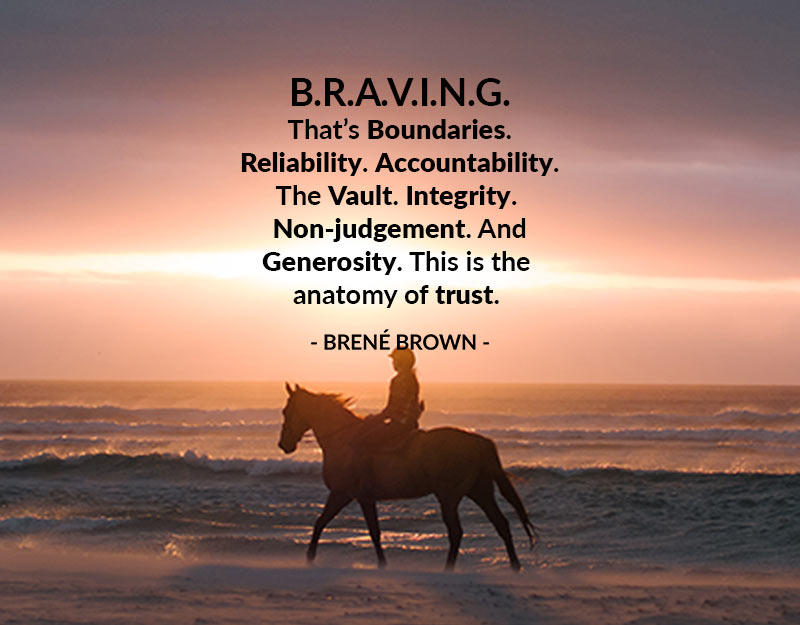
According to Dr Brené Brown, trust is the tool that allows us to stand together in the midst of difference. To learn how to trust ourselves and trust others enough to make real change for horses, we are all going to have to take a seat at the trust table and practice B.R.A.V.I.N.G. skills.

Self-trusting skills:

Dr Brown’s research identified seven elements to trust and to the practice of self-trust. The data led her to create the acronym –  B.R.A.V.I.N.G. – a real fit for equestrians as discussed in the paper ‘An Ethnographic Account of the British Equestrian Virtue of Bravery, and Its Implications for Equine Welfare’.

  • Boundaries: Did I respect my own boundaries? Was I clear about what’s okay and what’s not ok?
  • Reliability: Was I reliable? Did I do what I said I was going to do?
  • Accountability: Did I hold myself accountable?
  • Vault: I don’t share information or experiences that are not mine to share. I need to know you are not sharing with me any information about other people that should be confidential. Do I respect the vault?
  • Integrity: I choose courage over comfort. I choose what is right over what is easy or a quick-fix. Being in our own emotional moment and saying “you know what, I’m not sure this conversation is productive” or “I need to learn more about this issue? Say more”
  • Non-judgement: I can make decisions without judging myself or others. Choosing to be non-judgemental is choosing horse justice. How do we stay out of judgement toward ourselves when the right thing to do say “I actually don’t know much about this. Tell me what you know and why it’s important to you?”  How do we not go into winner/loser mode and instead see an opportunity for connection when someone says to us “I don’t know anything about that issue.”
  • Generosity: Was I generous towards myself? I extend the most generous interpretation possible to the words and actions of others. What’s the most generous assumption we can make about people around us? What boundaries need to be in place for us to be kinder and more tolerant?

Earning trust

The journey of earning public trust and self-trust is the practice of true belonging. Dr Brown defines true belonging as ‘believing in and belonging to yourself so deeply that you share your most authentic self with the world. True belonging doesn’t require you to change who you are; it requires you to be who you are.’

We can do hard things

There will be many times during our quest for horse justice when our practice of B.R.A.V.I.N.G. skills won’t just be necessary to live a good life, but essential for safeguarding horse welfare.

Let’s all embark on this Self-Trust Challenge for Equestrians:

  1. Share your boundaries with others at your yard – what is and is not ok. Notice what happens.
  2. Show up for yourself. Action your words. Walk your own talk. Notice what happens.
  3. Listen out for your own BS. Hold yourself accountable, just as you hold others, like your vet.
  4. Respect the vault. Live into a zero gossip policy, especially at the yard, stables or barn.

Vulnerability is being brave and afraid at the same time. Doing the right thing, at the right time, in the right way is advancing all lives towards living a good life. Being alone and being with others is the practice of self-trust and how, together and alone, we can all advance horses and horse people towards living a good life.

We can do hard things.

This article appeared in the March-April 2021 issue of Horses and People magazine.

Read Lisa Ashton’s eBook: INISDE OUT: The 21st century roadmap for equestrian coaches.

Vote for Lisa! UK Coaching Hero Finalist

1

Equicoach Lisa Ashton, a contributor, friend and long-time supporter of Horses and People, is one of a handful of shortlisted finalists in the UK Coaching Hero 2021 awards.

The UK Coaching awards celebrates and rewards the coaches who have continued to keep people active, and delivered sport and physical activity sessions throughout the Covid-19 pandemic.

Through its ‘UK Coaching Hero 2021’ awards, the public was encouraged to nominate coaches who implemented great coaching ideas and have made positive contributions to people’s mental and physical wellbeing over the last 12 months.

Lisa was nominated and has made the shortlist of finalists!

Throughout this UK Coaching Week from June 7th to 13th, the public – from anywhere in the world – can cast their votes in support.

Click here to vote for Lisa!  

Emma Atkins, Director of Coaching for UK Coaching, said: “There has been an immense strain on the physical and mental health of the nation, with winter months and financial constraints playing a huge part. Yet, throughout the pandemic, coaches have found innovative, safe and legal ways to deliver sport and physical activity sessions and it is not an exaggeration to state that they have been a constant source of hope for many people during these isolating times.

“Coaching Hero is our opportunity to give back to the coaches that have enriched our lives in lockdown – when we needed them most.”

During the first lockdown of 2020, Lisa launched a four week programme (The Equestrian Coach Challenge) aimed at equestrian coaches to explore the concept of a social license within equestrianism.

“We met online each weekday and discussed the issues we face as coaches, both during the normal world but also how we could adapt during the pandemic. We discussed confidence, mental health, how to promote positive, supportive environments – both online and in the real world and were also pushed out of our comfort zones to trial different coaching formats. We also took a hard look at our moral responsibilities to our horses and clients alike”, says Lisa.

As a group, when it felt like the world was collapsing around us, many coaches benefited from a safe, supportive environment which gave all a collective courage to evaluate their contributions to clients and their horses, to reflect on triumphs and failures.

“We were pushed out of our comfort zones and encouraged to take an honest and open reflection of our coaching styles, communication and empathy” said one of the participants. “This changed us all to the benefit of both clients and their horses and firmly put our responsibility to the horse foremost in our approach.”

Lisa is the only equestrian coach that made the shortlist of finalists. Anyone, anywhere in the world can vote – Click here to cast yours!

Securing Your Horse’s Future Starts with Training

In-hand training (aka groundwork) is not just valuable for enabling safe and calm handling, it also establishes and improves many of the responses we use under-saddle. 

Whether we are working with a young naïve horse during foundation training or we are re-training a horse with behavioural problems, setting good ground rules is all about teaching the horse how to respond to different signals to enable us to manage them safely from the ground. The series has covered, ‘Stop’, ‘Step-back’, ‘Park’, ‘Go’, ‘Yielding the shoulders’, ‘Yielding the hindquarters’ and ‘Head control’. 

In this part, we discuss one of the day-to-day applications of in-hand training that will greatly improve welfare and safety – catching and releasing your horse in group housed situations. 

This is because a horse that is easy to catch and release, and one that can be manoeuvered through gateways safely, will have a better chance of living with other horses. 

This article is the last part of the series of articles explaining the training of the horse in-hand, to read the whole series, download the eBook here.

Why should my horse live with other horses?


We hear it more than ever nowadays – horses must have socialisation. They don’t just like it, they are hardwired to need it. To truly provide the best welfare practices for our horses, in addition to feed, water, shelter, exercise and health care; socialisation is an imperative. 

At the very least, horses should be able to touch each other. At best, they are housed with another horse (or more, if space allows) to be able to play, interact and form bonds. 

Horses, unlike us, don’t have a language to communicate from one paddock away to help each other feel secure. They need the touch and interaction of each other for their mental wellbeing. What’s more, there are behavioural benefits of socialisation! 

There is growing evidence to suggest that horses whose socialisation needs are met are less anxious, more ‘brave’, and generally calmer in their demeanour. 

One of the biggest concerns we hear at ESI is the challenge of dealing with separation anxiety, and to this we advise that, as the horse’s training becomes clear and consistent, the horse’s desperate need for security from other horses whilst not in their company diminishes. 

In time and with good training, security is drawn instead from the consistency and clarity of their interactions with their handlers and riders. All of our horses at ESI are grouped in paddocks of 2 or 3 (paddock size depending), and none experience separation anxiety. 

The second concern we hear, is the risk of injury, and while there’s always a level of risk, we should also remember that fence-related injuries which happen when horses try to get to one another over a fence, are even more common. 

Choosing the right paddock mate

The risk of injury is very low if you chose the right paddock mate. In order to do so, we recommend:

Allowing the horses to meet across a safe fence – it’s normal for them to squeal, and perhaps even a mild strike. It’s what happens next that’s important. Ideal paddock mates will investigate each other with sniffing, and any hostility will diminish quickly.

If possible, group them together for the first time in a new paddock that neither were in before, so they begin on ‘common ground’ discovering the resources at the same time.

If you’re very concerned, remove hind shoes to mitigate risk of an injury from a kick, but rarely do we see horses connect in a serious kick, providing the horse has room to move.

Ensure the paddock you put them in for the first time has plenty of space to escape threats. Many horses will display threatening behaviour – this is their way of developing boundaries and understanding each other. Generally, horses are very good at reading body language and knowing when to retreat from a threatening situation. 

Space feed bins out – many horses display food dominance, so ensure each horse has the space to eat in peace.

Signs horses enjoy each other’s company:

  • They stand close to each other
  • They groom each other

Signs you might need to consider a different paddock mate:

If the horses have not bonded after a few days, or one appears to be relentlessly bullying the other, it is worth considering that these horses are not a suitable match. 

If you have a horse that is notoriously aggressive, don’t give up and isolate them. Dominance is a fluid concept based on resources. Your horse might seem like he/she is permanently dominant, but you can find a match for them if you try, and it’s well worth trying. 

If you are still unsure, I strongly advise you to do a YouTube search for a study by the Swiss National Stud Farm on the integration of stallions in a group (German translation: Integration von Hengsten in eine Gruppe). 

A large group of stallions were released into a paddock together and observed for their behaviour. It’s a very entertaining video! Whilst there were many squeals and threats, there were no serious attacks. After 30 minutes they were grazing together, and after 1 day they had found their ‘friends’ and were happily living, all together. 

Let’s not forget these are stallions – the most commonly isolated sex in the equine world due to their perceived ‘aggressive’ nature. So, for the good of your horse’s mental wellbeing, let them have friends!

Catching and releasing group housed horses safely

There are a few things to consider to ensure handler safety when catching and releasing a horse into a group situation. This is a topic that understandably, many people have concerns over. 

Safe practice

Before I begin on the training components of catching and releasing, there are a couple of precautions you can take to stay safe:

Wear your helmet and horse safe footwear when catching/releasing your horse. Whilst we can mitigate risk as much as possible, this is a small, simple step you can take to ensure that in the event of an incident, your head and feet will be protected as best possible. We also advise taking a long whip or sticklike tool to be able to manoeuvre other horses from a distance. 

Ensure your gate is balanced and easy to move with one hand. Gates that drag on the ground or catch can take your attention from the task at hand.

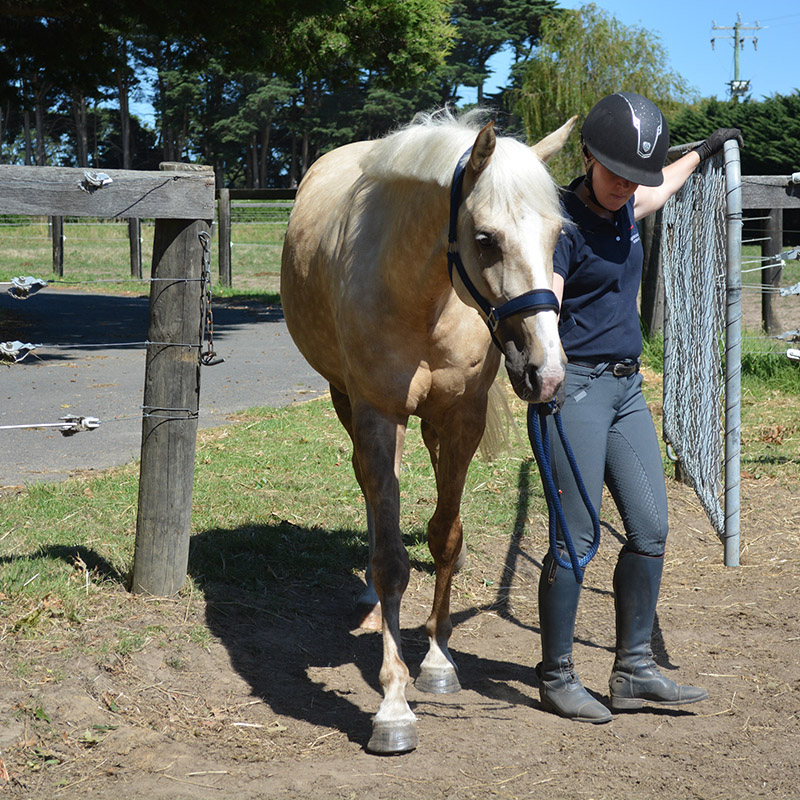
Follow safety protocols. According to Meredith Chapman, an expert on safety and horse-human related risks, the safest ‘release position’ for you and the horse is as follows:

  • in a clear area of the paddock, at least 10m from the fence and/or gateway. 
  • facing the other horses.

Note: Most of us have been taught to turn and face the horse towards the gate before releasing, but new guidance suggests the horses are happier facing and seeing the other horses, and there is less risk of the horse panicking and attempting to jump the gate, or causing injury if they swing around to escape. It is safer to have plenty of room away from any obstacles. 

The training foundations 

Horses are often excited to be heading back to their friends, so it’s important we still have complete control to ensure the horse stops, moves when asked, and remains still until we’re ready to release them, all from light cues. 

In the earlier parts of this series, I went into detail on how to train the basic responses in-hand required for safe handling of horses. 

The basic responses are useful in many handling situations, and are very relevant to safe releasing of horses to group paddocks. 

The importance of the ‘Go’ and ‘Stop’ response

Our horse must have clearly trained responses to our in-hand aids for ‘Go’ and ‘Stop’. They must be able to walk up close to the gate, stop (and ‘park’ or stand immobile) while you attend to the latch. 

For more detail on training ‘Go’ and ‘Stop’, download the entire Setting Good Ground Rules series eBook. 

They must obediently walk through the narrow opening of the gateway, and be able to stop at any moment should you need them to. 

Horses that rush through gateways have possibly experienced a gateway hitting them causing fear associations, so thorough retraining (when the paddock is free of other horses) is required:

Start with a larger opening, and test and train quietly walking through, stopping at the smallest sign of fear, and applying desensitisation techniques such as counter conditioning (scratches/food associations) or overshadowing (stepping back and forward until the horse is responding to light aids) to reduce fear. 

Practice until the horse can walk, stop and step-back from light aids, as well as ‘park’ at all stages of walking through the gateway. Gradually make the gate opening smaller and repeat until the horse is comfortable walking through the smaller gap without any tension. 

Never under-estimate the value of scratching at the wither – this is not only pleasant for the horse, it is relaxing too. 

training the horse to park

The importance of ‘Park’

When being released into the paddock, we need our horses to stand still until we have taken the halter off and moved away a few steps. (This is discussed in Part 3 of the series which you can download as an eBook here). 

Allowing the horse to walk towards their friends whilst wrestling the halter off will only get worse, as the horse values escaping from the halter and getting closer to his friends will act as a reward. 

Horses seek reinforcement, so ensure you reinforce the behaviour of waiting with you until you’re ready to walk away, as this is a really important step for your safety. Enjoy a nice scratch and a cuddle with your horse before letting him go. 

The importance of ‘Head Control’

While parked, we need to be able to manoeuvre the horse’s head to ensure we can easily put the halter on and off, so training the horse to lower the head is useful here. (This is discussed in Part 6 of the series which you can download as an eBook here). 

Managing with other horses

The last little challenge is the risk of other horses ‘crowding’ – that is, coming to crowd around you while you close or open the gate and release their friend. 

If the other horses are your own, you can train these horses to step-back from a whip-tap on the chest (or other stick-like device). Ensure your training involves pairing the response with a word such as “baaaack”, so that you can enter the paddock, cue the other horse to move “baaaack” and apply a whip-tap on the chest if need be. 

Of course, the other horses need to be trained gradually to back from the word cue and whip-tap on the chest – first with a halter until the response is really well consolidated and will also work without the halter on. You don’t want to surprise untrained horses with a command to back up, as they may take fright, turn around and kick. But with one-on-one training, all your horses will soon learn to stand back and wait until you release the other, or leave the paddock. 

If the other horses are not your own (you’re in a group agistment situation, for example), consult with the other owners about your intentions of wanting their horses to allow safe space for you to release your horse. You will find that many horses naturally do step back from pressure on the chest, but always check with the other owners to ensure they don’t mind you interacting with their horse (or better yet, help them train their horses themselves!).

If these options are not possible for you, throw some hay or treats (again, consult with owners) to draw the other horses away while you release your horse. Ensure you keep a treat in your pocket for your horse to reinforce the behaviour of staying with you. 

Group housing can have its risk factors, but the benefits to your horse are invaluable. As with all of our interactions with horses, we can improve safety and lower risk factors by ensuring we have clearly trained responses that are reliable in all situations. 

There may still be times your horse is more eager to get to the paddock (perhaps after a day away at a competition, or feeling fresh after a bath), this is normal, but it’s their reactions to your signals that are important. 

Feeling energised some days is normal, but good, clear in-hand training means that even in these situations, we have control and can remain safe.

In summary…

After completing the training of the basic responses in-hand, use the day-to-day handling situations as a ‘litmus test’ of your horse’s basic in-hand responses. 

It is normal for these responses to wear off over time but whenever you notice a problem arise or you find yourself in a situation where your horse becomes heavy or delayed in one of the learned responses, take note and schedule a refresher course! 

As legendary Australian trainer Tom Roberts said: 

“If you are fond of a horse and wish to do him a real favour – train him well. Teach him good manners, good habits, both in the stable and under the saddle. 

“You need never worry about the future of such a horse if for any reason you may have to part with him. You assure him of friends wherever he goes.

“Perhaps the greatest kindness you can do any horse is to educate him well.”

Learn how to teach your horse all the basic responses – Download the entire Setting Good Ground Rules series eBook – click here.

FEI Centenary Celebrations Kick Off #FEI100Years

0

The Fédération Equestre Internationale (FEI) has kicked off year-long centenary celebrations today, calling for the equestrian community to show its commitment to “Shaping the future of equestrian sports together.”

video highlighting the achievements, successes and milestones of the organisation and the sport has been produced to mark this special occasion. Iconic moving and stills images capture a historic century in the equestrian world and pays tribute to the incredible diversity that exists within the community. Olympic individual and team silver medallist and former European Jumping Champion Peder Fredericson (SWE) narrates a story that brings together members of the community in a truly authentic equestrian celebration.

The Covid-19 pandemic has meant the FEI has had to adapt its centenary plans which will now extend through to the end of May 2022. A dedicated 100 Years Hubhas been created on FEI.org, featuring stories, interviews, online competitions and other fan engagement activities which will allow people to share their memories and experiences over the next 12 months. Fans around the world are encouraged to take part in the #FEI100Years digital celebrations.

“The FEI’s 100 year celebration is about bringing together each and every individual who connects with the horse at any level,” FEI President Ingmar De Vos said.

“We want this to be an inclusive celebration commemorating our collective journey over the past 100 years and looking ahead to shaping the future of equestrian sports together as a united community.

“Equestrian sport is rich in diversity and the one key factor that binds everyone together is our shared connection with and passion for the horse. For equestrian sport to continue to grow and flourish we need to make sure that together we cherish all members of our community and that everyone contributes to the key values at the heart of the sport.”

A key initiative in the drive for greater inclusivity in the community is a plan to formalise the international status of Grooms and formally acknowledge the vital role they play with structures that ensure their wellbeing while they safeguard the wellbeing of the horses in their care.

Together with representatives from national associations and the global community, the FEI will address the global status of Grooms on 2 June during the online FEI Sports Forum. A dedicated session will explore concrete measures to raise the profile of Grooms internationally and discuss a more structured framework of cooperation between the FEI and the Grooms community.

The FEI was created in 1921 to oversee the Olympic disciplines of Jumping, Dressage and Eventing with just eight member signatories: Belgium, Denmark, France, Italy, Japan, Norway, Sweden and the United States of America. Today, alongside the Olympic disciplines, the FEI also governs the non-Olympic disciplines of Driving, Endurance, Vaulting and Reining as well as the Para Equestrian disciplines of Dressage and Driving and has grown in membership to 136 affiliated National Federations.

The sport has experienced exponential growth globally over the last decade with more than 4,600 international events now run under FEI rules annually, across all disciplines. In 2009, there were 27,000 athletes registered to compete internationally and this number grew to 43,000 in 2019.

The FEI has been governed by 13 Presidents over its 100 year history, including three successive female Presidents. During the 27 years that The Princess Royal GCVO (GBR), HRH The Infanta Doña Pilar de Borbòn (ESP) and HRH Princess Haya Al Hussein (JOR) were at the helm, the FEI earned a reputation for being an International Federation that championed gender equality on the field of play as well as in the administration of the sport. The FEI’s longest serving President, the late Prince Phillip, Duke of Edinburgh was due to celebrate his 100th birthday in the same year as the FEI.

In June 2020, the FEI welcomed its top tier classification in the Association for Summer Olympic International Federations (ASOIF) governance review. The FEI was one of six International Federations that ASOIF said “stood out from the rest”, a testimony to the robust governance structures and best practices that the organisation has put in place over the years.

Setting Good Ground Rules: The First Principles of Horse Training

In-hand training is an essential part of any horse’s education. We lead our horse to and from the pasture or stable every day, and we want to make sure he leads obediently, stays by our side, stands still while we brush him, rug or un-rug him, handle his feet, etc.

We also need to our horse to go forwards, backwards and sideways so we can move him around while we work around him.

This article is the first of the 7-Part Series ‘Setting Good Ground Rules: The Safe and Simple Guide to Training Your Horse in-hand’ where we explain how to teach the basic responses in-hand for safe handling in any situation.  

The complete series, in its fully illustrated form, is published as en eBook that you can order here.

If you have a young horse preparing to start his foundation training, pre-training him in-hand makes the process less intense because he already understands the signals (aids) you’ll be using under-saddle.

In particular, teaching a young horse to stop from a light aid and to stand still (what we call ‘park’), actually diminishes his flight response and makes it easier to habituate him (get him used to) all the different things he will have to deal with, from equipment and rugs to having a rider on his back.

Additionally, in-hand training is a safe and simple way to establish the aids we need under-saddle.

And, even if your horse is older and experienced, it’s amazing to see just how much in-hand training can improve his under-saddle responses, or day-to-day human interactions.

When to start

Because in-hand training lays the foundations for under-saddle training, it’s a good idea to start as early as you can.

If you have your horse from birth, early while the foal is still with his mother you can teach some basic responses to pressure (asking the foal to take a step backwards by pressing his chest for example) and then some simple stop and go for leading as a weanling.

However it’s best to begin the more thorough in-hand training outlined in the next five articles when your horse is at least one year old.

The setting

It is always a good idea to start in a stable, a small yard or round yard with safe footing and fencing, and then progress on to an arena before going on to more open spaces. If possible, you should choose a quiet location where there aren’t too many distractions.

The equipment

When starting with yearlings and young naive horses, start with a normal webbing or leather halter. When young ones are learning everything from scratch there is no need to use a rope halter or anything more severe because they will learn quickly from light pressures to respond.

You should, however, train using something stronger like a rope halter or a bit if it is part of the equipment you will use for competing or riding, for example, or if you are re-training a horse (fixing a problem behaviour).

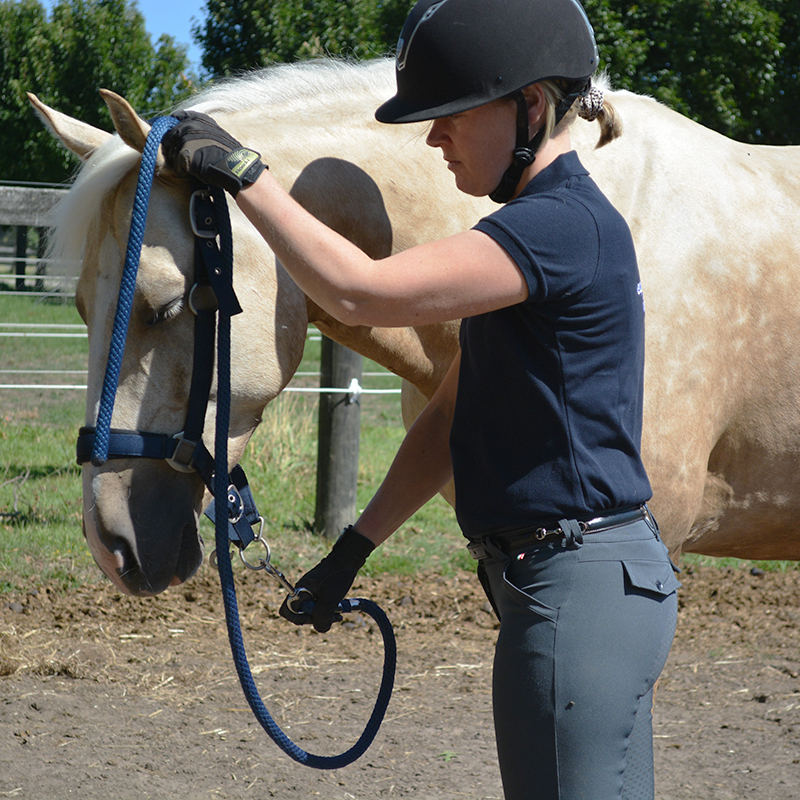
The ideal lead rope is strong, light weight and doesn’t stretch, such as the nylon braided ropes (pictured). Cotton lead ropes can be too stretchy which makes the pressure/release less clear, and the yachting type ropes are too heavy and make it harder for the horse to feel a release clearly.

You will also need a mid-length stiff (dressage) whip or bamboo stick (or similar). Try to avoid whips that are too long and floppy as this can affect the timing of your tapping. The stiff whips/sticks also have a more obvious contact when you place it against the horse’s body during the habituation process.

You should always wear gloves, a riding helmet and riding boots or safety footwear for training in hand.

The basic training goals…

Our training in-hand mimics the responses we require under-saddle:

  • Go / up gait
  • Stop / down gait
  • Step back
  • Turn forelegs
  • Yield hindlegs

In addition to these responses, we also recommend you train:

  • Park (stand still)
  • Head control (head lowering)

Each of these responses has its benefits for handling the horse, as well as establishing or improving the responses under-saddle. For example:

Go: We need to be able to lead the horse forward, not only bringing him in from the paddock, but to load onto a horse float. A horse that is trained to ‘go’ in all situations well, will lead anywhere!

Stop: It’s important we have the ability to stop the horse, particularly in situations where he may want to flee in fright of something. Training stop in-hand also helps with horses who are heavy mouthed under-saddle.

Step back: Many people do not recognise the significance of this response. Not only does it sharpen the horse’s ‘stop’ response, but it’s a fundamental response we need if we handle horses – i.e. we need them to back off the float, or back into the cross ties etc.

Turn forelegs: It’s important we can manoeuvre the horse’s front legs to help with lunging (moving the shoulders out) and also in float training where the horse may lose straightness.

Yield hindlegs: We need to be able to manoeuvre the hindlegs when we’re grooming the horse or saddling, and this one is also handy for mounting the horse when we need him to move closer to the mounting block.

Park: Training the horse to stand still unless asked to move is vital for grooming, saddling, farrier/veterinary/body-work visits, as well as standing still in the float or the racing barriers. It also promotes relaxation as he understands there is nothing asked of him until we give a signal.

Head control: the ability to lower the horse’s head is helpful for grooming and bridling, particularly if you have a tall horse or you are small yourself!

The complete Setting Good Ground Rules series, fully illustrated, is now available as a downloadable eBook – order your copy here.

A quick theory refresher before we begin…

The complete series explains how we train the horse in-hand using a particular method developed by Dr Andrew McLean.

There are, however, many ways to train a horse. The important thing is to ensure the horse’s welfare is protected and the training is effective, and to ensure the methods you use align with the First Principles of Horse Training, which are:

  1. Regard for human and horse safety

  • Acknowledge that horses’ size, power and potential flightiness present a significant risk
  • Avoid provoking aggressive/defensive behaviours (kicking/biting)
  • Ensure recognition of the horse’s dangerous zones (e.g. hindquarters)
  • Safe use of tools, equipment and environment
  • Recognise the dangers of being inconsistent or confusing
  • Ensure horses and humans are appropriately matched
  • Avoid using methods or equipment that cause pain, distress or injury to the horse

“Disregarding safety greatly increases the danger of human-horse interactions”

  1. Regard for the nature of horses

  • Ensure welfare needs: Lengthy daily foraging, equine company, freedom to move around
  • Avoid aversive management practices (e.g. whisker-trimming, ear-twitching)
  • Avoid assuming a role for dominance in human/horse interactions
  • Recognise signs of pain
  • Respect the social nature of horses (e.g. importance of touch, effects of separation)
  • Avoid movements horses may perceive as threatening (e.g. jerky, rushing movements)

“Isolation, restricted locomotion and limited foraging compromise welfare”

  1. Regard for horses’ mental and sensory abilities

  • Avoid overestimating the horse’s mental abilities (e.g. “he knows what he did wrong”)
  • Avoid underestimating the horse’s mental abilities (e.g. “It’s only a horse…”)
  • Acknowledge that horses see and hear differently from humans
  • Avoid long training sessions (keep repetitions to a minimum to avoid overloading)
  • Avoid assuming that the horse thinks as humans do
  • Avoid implying mental states when describing and interpreting horse behaviour
  • “Over- or underestimating the horse’s mental capabilities can have significant welfare consequences”
  1. Regard for current emotional states

  • Ensure trained responses and reinforcements are consistent
  • Avoid the use of pain/constant discomfort in training
  • Avoid triggering flight/fight/freeze reactions
  • Maintain minimum arousal for the task during training
  • Help the horse to relax with stroking and voice
  • Encourage the horse to adopt relaxed postures as part of training (e.g. head lowering, free rein)
  • Avoid high arousal when using tactile or food motivators
  • Never underestimate horse’s capacity to suffer
  • Encourage positive emotional states in training

“High arousal and lack of reinforcement may lead to stress and negative emotional states”

  1. Correct use of habituation, desensitization and calming methods

  • Gradually approach objects that the horse is afraid of, or, if possible, gradually bring such aversive objects closer to the horse (systematic desensitization)
  • Gain control of the horse’s limb movements (e.g. step the horse back) while aversive objects are maintained at a safe distance and gradually brought closer (over-shadowing)
  • Associate aversive stimuli with pleasant outcomes by giving food treats when the horse perceives the scary object (counter-conditioning)
  • Ignore undesirable behaviours and reinforce desirable alternative responses (differential reinforcement)
  • Avoid flooding techniques (forcing the horse to endure aversive stimuli)

“Desensitization techniques that involve flooding may lead to stress and produce phobias”

  1. Correct use of Operant Conditioning

  • Understand operant conditioning, a type of learning that occurs due to the cause-and-effect relationship between a behaviour and its consequences. (The performance of a behaviour becomes more or less likely as a result of their consequences.)
  • Tactile pressures (e.g. from the bridle, halter, bit, leg or whip) must be removed at the onset of the correct response
  • Minimise delays in reinforcement because they are ineffective and unethical
  • Use combined reinforcement (amplify pressure-release rewards with tactile or food rewards where appropriate)
  • Avoid active punishment

“The incorrect use of operant conditioning can lead to serious behaviour problems that manifest as aggression, escape, apathy and compromised welfare”

  1. Correct use of Classical Conditioning

  • Train the uptake of light signals by placing them BEFORE a pressure-release sequence
  • Precede all desirable responses with light signals
  • Avoid unwanted stimuli overshadowing desired responses (e.g. the horse may associate an undesirable response with an unintended signal from the environment)

“The absence of benign (light) signals can lead to stress and compromised welfare”

  1. Correct use of Shaping

  • Break down training tasks into the smallest achievable steps and progressively reinforce each step toward the desired behaviour
  • Plan training to make the correct response as obvious and easy as possible
  • Maintain a consistent environment to train a new task and give the horse the time to learn safely and calmly
  • Only change one contextual aspect at a time (e.g. trainer, place, signal)

“Poor shaping leads to confusion”

  1. Correct use of Signals/Cues

Ensure signals are easy for the horse to discriminate from one another

Ensure each signals has only one meaning

Ensure signals for different responses are never applied concurrently

Ensure locomotory signals are applied in timing with limb biomechanics

“Unclear, ambiguous or simultaneous signals lead to confusion”

  1. Regard for Self-carriage

  • Aim for self-carriage in all methods and at all levels of training
  • Train the horse to maintain:
    • gait
    • tempo
    • stride length
    • direction
    • head and neck carriage
    • body posture
  •  Avoid forcing any posture
  • Avoid nagging with legs, spurs or reins i.e., avoid trying to maintain responses with relentless signaling.

”Lack of self-carriage can promote hyper-reactive responses and compromises welfare”

Where do we start?

At the most basic level, during the first training sessions we teach the horse to ‘go’, ‘stop’, ‘step back’, and ‘park’.

For a young horse with little or no prior training, we can start with the basics of ‘step back’ as this ensures our safety, and means we can stop him easily when we start to train ‘go’.

In the case of re-training we may not be able to train just ‘go’ or just ‘stop’ – we may need to work on both, or if the horse has a particular problem such as he is ‘pushy’, we would start with ‘stop’ or if he is ‘lazy’ we would start with ‘go’.

The terms ‘pushy’ and ‘lazy’ are labels commonly heard in the horse world, so I have quoted them here, but it’s important to recognise that the horse simply hasn’t learned thoroughly enough the response to the rein/leading aids – he is not choosing to be lazy or pushy, he’s simply doing what he has learned (usually by mistake). We just need to retrain his responses to the correct ones!

Training ‘stop’ is most important because it deletes any quickening and flight responses. Biomechanically, the muscles a horse uses to stop, slow down and step back are the same. The step back in fact is a deeper response to the stop, so training horses to step backwards to a light pressure from the halter or the bit, actually improves their stop.

The step back is in itself, very useful to correct any unwanted movements, and this also ties in with the ‘park’ response where we teach the horse to stand still until we ask him to move.

You may notice that at the start of the training your horse is distracted and tense but you should notice that as he begins to understand the lesson and respond to lighter aids, he also starts to show signs of relaxation, he may chew, lick his lips, yawn, snort, shake or lower his head.

These are all signs that you are making good progress.

Shaping responses so we avoid frustration and confusion

With every new response we need to train gradually: this is called ‘shaping’.

The horse will not likely give you the perfect response straight away and we cannot expect him to. Instead, we aim for a basic attempt at the response and gradually build on that until it is perfect.

On the left, Image C, shows the equitation science shaping scale which shows us the progress of training. If we follow this scale when training each response, the horse will understand clearly and learn without frustration.

Training in sets for efficient learning

It is important to keep the training sessions short, around 20 minutes, especially with young horses. Young foals, however, should be trained for very short periods, around 5 to 10 minutes.

The most effective way to encourage learning is to work in sets of between 3 and 5 repetitions with a break between each set, aiming to finish each task with 3 consecutive, correct or improved responses. So, after 3 to 5 improved responses to the signal/aid, have a rest, then repeat.

Order and download the eBook which contains:

  1. PART 1 Introduction to the First Principles of Horse Training and the Equitation Science Training Scale
  2. PART 2 Training ‘Go forward’ and ‘stop’
  3. PART 3 Training ‘Park’ (immobility)
  4. PART 4 Training ‘Yield the shoulders’
  5. PART 5 Training ‘Yield the hindquarters’
  6. PART 6 Training ‘Head control’
  7. PART 7 Securing your horse’s future

The complete Setting Good Ground Rules series, fully illustrated, is now available as a downloadable eBook – order your copy here.

Strengths and Weaknesses of a National Equine Database

French researchers investigate the strengths and weaknesses of a 45-year-old National Equine Database. Their findings can help all countries optimise the efficiency and management of horse traceability systems.

A national equine database can help keep track of where horses are—and what happens to them when they change hands—while leading to better infectious disease control. But, as French researchers have recently revealed, the quality of that database is only as good as the involvement of the owners and stable managers.

“Our study confirms that [the French national database] is a useful and high-quality system, but, unfortunately, many people don’t know they’re supposed keep their information up to date, nor how to update it,” said Halifa Farchati, PhD candidate, of the Laboratory for Animal Health in Normandy, in the Physiopathology and Epidemiology of Equine Diseases Unit of the French Agency for Food, Environmental, and Occupational Health and Safety (ANSES), in Goustranville, France.

As one of the world’s oldest national equine databases, the SIRE—a French acronym for “information systems relative to equids” (and an English breeding term reference)—has been stocking details about French horses since 1976. Categories include the horse’s name, breed (even if there’s no official breed), pedigree, sex, date of birth, date of death, microchip number, and SIRE identification number, as well as the owner’s current home address. The horse’s “keeper” (such as a boarding stable manager) should keep his addresses up-to-date.  Owners and Keepers are expected to keep SIRE records up to date as situations evolve, such as when people change homes or names, or when horses are sold or castrated, or when horses die.

In theory, the system works well, with 95% of French horses registered in the SIRE database, Farchati said. And most of the industry’s professionals keep their information updated—probably because otherwise, they wouldn’t be allowed to compete or enter their horses in races, she explained.

However, in practice, much of the rest of the information is outdated—especially with regard to owners’ and keepers’ addresses and the lack of registration of the physical locations of horses. And this could make the database much less effective, most of all during an infectious disease outbreak.

. “[This] revealed a significant problem, namely that it is not possible to contact quickly all owners and keepers individually in the event of an outbreak,” the team stated in their paper, which was published recently in Research in Veterinary Science.

In their exchanges with the various owners and stable managers—with a relatively high response rate of 20%—they discovered that about a third of castrated horses were still listed as stallions, Farchati said. However, more than 90% respondent owners whose animal had died had reported the death, a much higher rate than the 60% feared by French authorities in previous estimates. (The difference might be due to the fact that in the study there were relatively few horses that had died, she added.) Meanwhile, about 11% of respondents didn’t actually own the animal anymore, although the SIRE’s records indicated the contrary.

More concerning was the fact that 33% of the owners had out-of-date contact information for themselves, Farchati said. And half the owners who kept their horses at home had not declared themselves as the horses’ keepers. Overall, about 40% of the data about equids’ keeper was inaccurate, making it very difficult to trace or manage outbreaks on a national scale, she said.

“French owners have an obligation to identify their horses, declare if they keep horses, and inform authorities when a horse changes hands,” said Farchati. So why don’t they?

For one thing, the “obligation” isn’t enforced. Keepers are currently rarely sanctioned, although the French Institute of the Horse and Equitation (IFCE) now makes efforts to inform them when they’ve skipped out on their obligations. “For the moment, the focus is more on awareness, on trying to get people to understand their obligations,” said co-author Jackie Tapprest, DVM, PhD, who’s in charge of Epidemiology at Laboratory for Animal Health in Normandy (ANSES). “Sanctions may come at a later stage.”

Additionally, they might simply not understand why they should keep the SIRE informed, she said.

Meanwhile, owners are often unaware of their obligation to keep their address up-to-date or provide an email address, according to Farchati. But doing so would just be “good sense,” she said. “It’s a great way to be rapidly informed about infectious diseases or anything that might concern their horse.”

“It’s complicated to contact people if we don’t know where their horses are, or if we don’t have their current contact information, but few people realize that,” said Carole Sala, DVM, PhD at Epidemiology and Support to Surveillance Unit (ANSES), who collaborated on the study. “It’s like with cats and dogs: when people move house, they remember to change their address with the post office and bank, but they often forget about pet registries—although that’s very helpful when their cat or dog goes missing. It’s the same with their horses: there seems to be a lack of awareness about how important this is.”

As for declaring a horse’s death, many people don’t do it because it requires physically mailing in the horse’s registration booklet (provided by the SIRE when the horse is registered after birth) to get it marked as a deceased horse. The objective is to prevent fraud by preventing reuse of the booklets—especially for slaughterhouse sales. But in reality, many owners may have an emotional attachment to the registration booklets and don’t want to let them go, according to Sala. “They can get them back after they’ve been stamped, but I think many people don’t realize this,” she said.

As the European Union continues to enforce its 2016 requirement that all member nations have national equid databases, and as many other countries aim for better traceability of their equids, the 45-year-old French SIRE can serve as an example—for better or for worse, the researchers said.

“We hope this study will allow other countries to gain inspiration from the SIRE’s strengths and weaknesses as they establish their own databases,” Tapprest said.

The study by Halifa Farchati, Aurelie Merlin, Mathilde Saussac, Xavier Dornier, Mathilde Dhollande, David Garon, Jackie Tapprest, Carole Sala, titled: ‘Is the French SIRE equine information system a good basis for surveillance and epidemiological research? Quality assessment using two surveys’ is published in Research in Veterinary Science, Volume 134, 2021, Pages 96-101, ISSN 0034-5288,

It is open access, and can be read in full here.