fbpx
Home Blog Page 7

Journal Opens Access to Heat and Humidity Research Ahead of the Tokyo Olympics

To help vets protect elite horses from the extreme conditions expected at the Tokyo Olympics, the Equine Veterinary Journal is providing free access to a Special Collection of eleven landmark papers covering the health and welfare of horses competing in hot and humid conditions.

The COVID-19-delayed Tokyo Olympics will take place during the Japanese Summer, in temperatures likely to reach more than 41°C (105°F). The factor of concern, however, is that Tokyo’s heat is usually accompanied by very high humidity. While horses are cope well with extreme heat in dry conditions, the reliance on sweating to cool the body down through evaporation is not effective when the hot air is saturated with moisture.

And with extreme heatwaves becoming more frequent around the world, all veterinarians, sports leaders and event officials, horse trainers and owners, have the opportunity to understand the major advances made in the last two decades on the prevention of dehydration, heat stress and heat exhaustion.

This upgrade is crucial because the new recommendations on cooling horses effectively and exercising safely in hot conditions are proven to protect horses but unfortunately, there is still plenty of misinformation circulating around that is still recommending outdated and dangerous practices, putting horses at risk of fatal heat stroke and compromising horse sports’ social licence to operate.

Everyone in the horse can use this opportunity to update their knowledge on working and competing horses in the heat, understand the importance of acclimatisation, protect horses who are travelling on hot days, maintaining hydration, confirm the best strategies for warming-up and cooling down, and learn to use of electrolytes correctly.

Event organisers and sports governing bodies in all disciplines, at any level, will find the research that explains  why the event conditions should be evaluated using the Wet Bulb Globe Thermometer (WBGT) in the sun index rather than on heat and/or humidity measures alone.

In addition, horse owners are encouraged to learn to recognise signs of heat stress and recognise that the most effective way to cool a hot horse is by pouring cold water (15 degrees C or less and ideally 5 degrees C) all over the body’s surface continuously (without stopping to scrape or walk) until the horse’s temperature restores to safe levels.

The EVJ’s Special Collection Preparing for Tokyo Olympics contains 11 highly relevant papers and provides the evidence-base to the latest recommended best practices. It is accompanied by a comprehensive editorial forward from Dr Christopher Elliott.

“This is not the first time that extreme heat and humidity has challenged the viability of Equestrian events at the Olympic Games,” said Christopher Elliott. “It is vital that we learn from the past to ensure the welfare of equine athletes in the future.”

The Special Collection highlights the ground-breaking research which followed the 1992 Barcelona Olympics.

“This work revolutionised our understanding of managing equine athletes in hot and humid conditions,” said Christopher. “It optimised identification and management of heat stress and allowed practical solutions to cooling methods to be established, enabling the successful running of the 1996 Atlanta Olympics.”

In the lead up to the 2008 Beijing Olympics another concerted effort by veterinary researchers further advanced understanding and it is on the back of this work that recent literature of equine heat stress and optimisation of cooling methods has been established.

The special collection explores:

  1. Physiological, metabolic and biochemical responses of horses competing in the speed and endurance phase of a CCI**** 3‐day‐event
  2. Physiological responses to the endurance test of a 3‐day‐event during hot and cool weather
  3. Physiological responses of horses competing at a modified 1 Star 3‐day‐event
  4. Adaptations to daily exercise in hot and humid ambient conditions in trained Thoroughbred horses
  5. Sweating rate and sweat composition during exercise and recovery in ambient heat and humidity
  6. Physiological responses of horses to a treadmill simulated speed and endurance test in high heat and humidity before and after humid heat acclimation
  7. Comparison between two post exercise cooling methods
  8. Contributions of equine exercise physiology research to the success of the 1996 Equestrian Olympic Games: a review
  9. An index of the environmental thermal load imposed on exercising horses and riders by hot weather conditions
  10. Use of the Wet Bulb Globe Temperature (WBGT) Index to quantify environmental heat loads during Three‐day‐event competitions
  11. Risk factors for exertional heat illness in Thoroughbred racehorses in flat races in Japan (2005–2016)

Professor Celia Marr, Editor of the EVJ said: “Prevention is always better than cure: this special collection provides much excellent research and knowledge gained from previous events. We must ensure that we use it to best effect to keep the equine athletes competing in extreme climates in Tokyo this summer safe, cool, healthy and performing at their best.”

The Special Collection is ‘Free to Read’ which will enable readers without institutional access to read the article but downloading will still be behind a paywall.

It can be viewed and downloaded here .

It’s the Thoughts That Matter

How much of your life and riding is influenced by your thoughts? The answer is, much more than you think!

I have recently undergone some major changes in my personal life and, naturally, when big things happen to us, our mind goes into overdrive. As the changes unfolded, I found myself thinking about certain things over and over again. It was like my mind had a life of its own and it was controlling me. And it wasn’t only the thoughts that had taken a hold on me, they also controlled the way I felt – my emotions. 

I had moments of panic and anxiousness, there was a lot of fear because there was so much uncertainty. 

At the same time, I discovered that I could go from being in a state of total stress and worry to complete happiness in the blink of an eye. And I noticed this generally happened when someone else pulled me out of my thoughts.

I realised that all the fears, all the anxiousness and all the panic, was not actually real, otherwise I wouldn’t have been able to escape them so easily. I started to recognise that I was in control of the way I made myself feel. Well… in theory anyway!

Since I am a mindset coach and I have been telling everyone else the exact same thing for many years, you are probably wondering why it took me this long!  

I have to be honest here and admit that, telling others what to do when you are not emotionally involved is always easier. Nevertheless, mastery only happens when we concur ourselves.

My journey, which I will share with you in more detail some other time in another book, has made me realise just how much of a slave we are to our thoughts, while at the same time, it has also taught me how we can overcome our mind. 

Let’s talk about you and your riding. What is your mind telling you? What is the story that is playing in your own ‘head movie’? 

Most likely, it is not just the story of your horse, the story of the rider that you think you are (or that you think you are not). It is also the stories of your past. The things that happened a long time ago, the things that were said to you by others.

As you tell yourself your story, you will probably find it repeats itself again and again. Now that you know this, you can start looking for clues of what will happen before it actually happens. I know this all sounds a bit crazy but let’s face it, our mind is a bit crazy. 

So, how do we escape? 

The answer might surprise you… You have to want to escape!

Too many times we want to stay right where we are because it is comfortable, familiar or we just identify with that person so much that we don’t want to give her/him up. 

Often, it seems just too overwhelming to change because we feel that let out of its box, the past would swallow us up and it would be too much to deal with. I understand, I’ve been there.

The good news is that you don’t have to open the box wide and deal with everything at once, you can choose what memories to let out. 

Now, if I asked you to pick out just one thing about your riding, what is it that has been holding you back? 

What pattern keeps repeating itself, over and over again?

What is the part of you – the rider – that you hate and that you want to change?

Escaping doesn’t start by taking action, it begins by understanding. After that, the right action will follow automatically. It is what leads to making good decisions. 

Too many riders make the same bad choices over-and-over again. They buy a horse, they ride, it doesn’t work out, they sell, and they buy another one.

Or they address the issues they have with their horse, they commit and do the work they need to do, they achieve the great outcomes they’ve been working on for so long, and then they stop. 

Whatever pattern it is, don’t judge yourself, just identify it. 

When you realise what it is that you do then follow it back. What’s behind it? When did it start and where did it come from? What emotions come up for you? Is it a way to prove to yourself that you are not good enough?

I encourage you to think and to ponder.

I have become a master of pondering. I have been doing it daily for the past two years and I am amazed what I have unearthed. 

If you have been a slave of a mind that tells you that you are not good enough, the first step is not to tell yourself that you are good enough, but instead, to ponder long enough to discover why you feel that you are not!

In the last two years I have learned so much and it is time for me to share what I have learned. So please, take a moment and let me guide you, so you can become the master instead of the slave of your thoughts and mind, and you can enjoy your riding to the fullest.

Come with me on a listening journey. I have a , that will help you to ponder, and it will help you to become more aware. It is free and it is all yours to listen to, whenever and how often you choose to. This is my gift to you, please take it.

Happy riding everyone!

Vaccination in Horses

The mantra that prevention is better than cure is recited so often these days that it is fast becoming a cliché. It is true though, and vaccination is probably the cardinal example of this.

By priming your horse’s immune system before it is exposed to a disease, it will have the capacity to respond rapidly, multiplying antibody-producing white blood cells that will attack, capture and rid the body of the particles that cause disease and winning the arms race.

But while vaccines are routinely administered all around the world, there is still a fair amount of skepticism about their safety, and confusion about their side effects. In this article, Dr Euan Laidlaw explains the science behind vaccines and how they help protect, not just your horse, but the horse industry, the economy at large, and in some cases, human health.

Vaccination against various diseases must be one of the most common equine veterinary procedures, certainly in the developed world and, as an ambulatory vet, it’s something I do almost every day.  The frequency and, in most cases, ease with which this is practiced can lead to complacency with regard to its importance and certainly doesn’t do justice to the complexity of the science behind it – something which has been baffling and bewildering veterinary students for centuries!

Scroll down to read about the common diseases we can vaccinate horses against.

So, how did it all start? The father of vaccination – human and animal – as we know it today was an Englishman, Edward Jenner who, in 1796, conscripted his gardener’s son for an experiment.

Jenner took the pus from cowpox blisters on some affected cattle and smeared it on both arms of eight-year-old James Phipps; resulting in some irritation and a mild fever, which passed in a few days.

Sometime later, Jenner then injected Master Phipps with human smallpox; a frequently fatal disease. Phipps had no symptoms. Jenner repeated this multiple times to great success. This worked because the two viruses in question – cowpox and smallpox – can both infect humans and are very similar in their outer microscopic structure.

It is this outer structure, known as an antigen, of the virus particles that the immune system of all mammals recognises and produces specific killer substances (antibodies) against. Having seen cowpox and successfully fought off that infection, some cells with the ability to produce these specific killer antibodies against pox were retained.

On subsequent exposure to similar smallpox, these primed cells were able to multiply rapidly and quash the infection, which may have been fatal in an immune-naïve individual. This represents what we call ‘active immunity’; where the body becomes immune to a disease as a result of previous exposure to it – or indeed, a vaccination which mimics its structure.

This is also an example of use of a live vaccine; where there is a risk of disease.  Nowadays, these have been largely replaced by more modern technology, where we use only part of the particle in a vaccination. This allows the immune system to learn how to kill the real thing, but the vaccine, in itself, is not capable of causing serious harm.

In moving from live vaccination to our less risky modern equivalents – which contain dead disease particles or, in some cases, just a single or multiple parts of these – we have had to add immune stimulants to the mixture in the syringe.  These are known as adjuvants. They are usually fairly inert substances, such as aluminium phosphate or mineral oil. They serve as a flag to the immune system, alerting white blood cells to the fact a vet has just given the horse a vaccine.

Whilst making our vaccines much more effective, it is often these adjuvants which are responsible for creating common vaccination reactions. Many horse people will know of one which has had a swelling at the injection site after its vaccination.

These are seldom serious and usually subside in a few days. Some horses, just like humans, will feel a bit average for a day or two after a vaccination. This is due to a temporary, mild fever they experience. Again, this is uncommon and seldom a cause for concern if treated appropriately by your vet.

So far, we’ve been discussing active immunity. The other equally important branch of the immune system is known as passive immunity.  This is where instead of an animal making its own antibodies (substances to kill disease with), it receives them pre-formed.

The two main instances of this in a horse’s life occur at birth; where a newborn foal drinks colostrum and when a vet administers tetanus antisera following a wound.

A newborn foal is completely immune naïve, having had no history of exposure to bacteria, viruses and other disease-causing bugs and, therefore, is at high risk! Nature’s mechanism of protection for this cute character is its dam’s first colostrum-rich milk. Colostrum is packed full of not only nutrition, but immunity. And, for this reason, it is essential that your Bambi-on-ice finds his or her feet quickly and ingests plenty in the first few hours of life.

The gut of a newborn foal starts like a sieve, with big holes allowing these antibodies that provide protection to move straight into the blood stream. As the hours tick by, the holes in the sieve close up to the point that antibodies are no longer allowed through. This gradual closure is as good as complete come 24 hours since birth and what the foal then has is its entire immune system for the first few months of life.

I encourage all breeders to have a blood test taken at this point to assess the level of success of this passive transfer of immunity. This is quick and cheap, and should the result be the foal hasn’t received enough for whatever reason, it can be topped up before any infection gets a chance to take hold.

This is done by a plasma transfusion, where some commercially harvested plasma (blood that has had the red and white cells removed) is given to the foal via an intravenous drip. The blood used to make the plasma is taken from mares kept specifically for the purpose. These horses are given extra vaccines prior to donating, meaning their levels of antibodies are far higher than a normal non-vaccinated horse.

Another common way in which our equines receive passive immunity is through tetanus anti-toxin. Tetanus bacteria can be found in soil, where they can lie dormant for years in a form known as ‘spores’. Given the correct conditions, i.e. a dirty wound, these spores can change form to one which produces a toxin that, in turn, attacks the nervous system of the horse. This produces the disease we recognise as tetanus, where horses become stiffer and stiffer until they are spastically paralysed with all their muscles trying to contract simultaneously. It’s a truly horrible disease that’s often fatal.

This can be prevented or treated using hyperimmune antisera, produced by first intensively vaccinating adult horses, then taking some of their blood, from which the necessary components are purified and packaged, ready to be administered to a newborn foal, an unvaccinated horse potentially facing a challenge or to try to treat a horse suffering from tetanus.

Vaccination requirements vary depending on a large number of factors, including the country, animal, holding and purpose to name but a few. Common vaccination protocols in Australia currently include tetanus, strangles, Hendra and, in some cases, herpes.

In the United Kingdom, we routinely vaccinate against tetanus, flu and, in some cases, herpes. Whatever your individual horse’s situation, I encourage you to ask your vet which vaccinations they recommend and follow their guidance. This can be done with the peace of mind that over-vaccination is not something we recognise as causing a problem from an animal health perspective; even if it is from a cynical journalism point of view.

The mantra that prevention is better than cure is recited so often these days that it is fast becoming a cliché. It is true though and vaccination is probably the cardinal example of this. By priming your horse’s immune system before it is exposed to a disease, it will have the capacity to respond rapidly, multiplying antibody-producing white blood cells that will attack, capture and rid the body of the particles that cause disease and winning the arms race.

This is far preferable to letting the bacteria or virus spread rapidly through the body, as it will do if the immune system is too slow. Once disease has set in, your vet will have to reach for other drugs, like antibiotics – which due to the growing bacterial resistance, we’re trying to reserve for when humans get ill.

Read about biosecurity for horse owners.

Common diseases

TETANUS

Tetanus, or clostridium tetani, is a bacterial infection that causes death in about 80% of horses that become infected. Horses can become infected at any age. The organism which causes the disease lives in manure and soil, and infects wounds and deep cuts where oxygen is poor. From one-three weeks after being infected, horses can start to show signs of progressive muscle cramping. Death can occur within a few days of the first signs. The first signs can be an abnormal gait, resting stance (sawhorse) or abnorma behavior, which can include erect ears and stiffness to the facial muscles and legs. A number of the body’s muscles then go into spasms, including the spasm of the third eyelid. Treatment includes intense nursing care with sedatives, antibiotics, muscle relaxants, anti-toxin and, in many cases, tube feeding the horse as it is unable to eat. Vaccinating against Tetanus should be started in foals at the age of 12 weeks if the mare has been vaccinated prior to foaling. If the mare has not been vaccinated, an initial vaccination of tetanus antitoxin should be given at birth or after injury, which will give short term protection – three weeks approximately – and a booster four months later. Boosters are suggested to be given every year when you vaccinate against strangles, often called the 2-in-1.

EQUINE INFLUENZA

Equine Influenza (EI) is a highly contagious, viral disease affecting all equine species. It causes a sudden increase in temperature, with a deep, dry, hacking cough and a watery nasal discharge that can become thick, smelly and green/yellow. Horses can become depressed, show muscle pain and stiffness, and have laboured breathing. Being highly contagious, the transmission of the EI virus from horse to horse can be done through direct contact from an infected horse, contact with contaminated tack or equipment, contact with a horse handler that has previously handled an infected horse, or indirect contact with infected buildings or floats.

This disease is not generally fatal to horses, but the aged, very young or sick may have further problems stemming from the initial disease, such as bronchopneumonia or bronchitis. Horses that are affected need to be rested and isolated for as long as their coughing remains. Recovery usually occurs after a couple of weeks from the onset of signs and veterinary attention is not normally sort unless the horse is showing other signs. In Australia, horses are not vaccinated against EI as it is a disease not seen in Australia.

In August 2007, Equine Influenza escaped from the Easter Creek Quarantine Station in Sydney. The outbreak that eventuated was the most serious emergency animal disease Australia has experienced in recent history. At its peak, 47,000 horses were infected in NSW on 5943 properties, and horse owners and industry workers were facing dark times with major impacts on their livelihood and lifestyle. The campaign led by NSW DPI to eradicate the disease was the largest of its type ever undertaken in Australia, using the latest laboratory, vaccine, surveillance, mapping and communication technologies.

The disease was eradicated in Australia within six months well ahead of predictions and by July 2008 horse industry operations had returned to normal.

EQUINE HERPES VIRUS

Rhinopneumonitis or equine Herpes is a common virus that occurs worldwide in horse populated areas. There are nine different herpes viruses that are recognized (EHV-1 to EHV-9), but the two most common strains are EHV-1, which causes respiratory disease, abortions and neurological disease, and the EHV-4, which causes respiratory disease and the occasional abortion. Respiratory disease caused by EHV is more common in foals and yearlings, and older horses are more likely than younger ones to transmit the virus without showing any signs.

One-two days after exposure, the onset of respiratory or neurological disease begins with a fever, and abortion syndrome can occur up to four months later. Horses can shed the virus from the nasal passages when they cough or snort for a further two-three weeks after clinical signs start. Any horse showing signs should be isolated immediately for up to four weeks. Affected horses show weakness and incoordination and, sometimes, are unable to get up after lying down.

Most clinical signs will stabilie and begin to improve within hours. However, some horses can continue to deteriorate, and may take weeks or months to fully recover. These clinical signs are due to infection of the blood vessels within the neurological system, usually within the spinal cord.

In the last trimester (8-11 months), pregnant mares abort as the EHV-1 results in infection of the blood vessels of the placenta. The result of the infection makes the placenta detach. All aborted material should be disposed of immediately as this is infected and can infect other pregnant mares. The mare should be isolated as well. There is no specific treatment for herpes virus except for supportive care with antibiotics and antinflammatories. Vaccination should start at 13 weeks of age with two doses four weeks apart.If not vaccinated, one dose every six months or, if in foal, one dose at five, seven and nine months of gestation.

An EHV-1 outbreak during a showjumping event in 2021 led to the death of 18 elite competition horses and the cancellation of national and international horse events in 12 countries.

Read more about EHV here. 

STRANGLES

Strangles, or Streptococcus Equi, is an upper respiratory disease that affects the lymph nodes of the horse’s head. The organism spreads rapidly from horse to horse through coughing, or from eating or drinking infected droplets. These droplets may remain infective for over a month in the right conditions. It takes three-eight days after becoming infected for a horse to show signs.

A fever from 39.5-40.5C will show, followed by the throat and larynx becoming inflamed, and drinking or swallowing food becomes difficult and painful. The lymph nodes of the head become very swollen and painful and, with time, may burst and discharge thick purulent discharge. Sometimes, the infection can spread to other parts of the body and this is called ‘bastard strangles’. This form is very difficult to treat and sometimes cannot be treated at all.

When a horse is infected, treatment is symptomatic. Isolating the horse, using antibiotics and supportive nursing care, plus cleaning and disinfecting all water, feed buckets, grooming and saddlery equipment, stables, etc. will help stop the transmission to other horses. Strangles can still occur in horses that are vaccinated, so regular boosters are required to provide protection. Foals are to start their vaccination program at 12 weeks of age, with a booster every two weeks for three doses then yearly.

Owners with horses older than 12 months of age who have never been vaccinated or broodmares, should consult their local large animal vet for vaccination instructions.

Read more about Strangles here. 

AFRICAN HORSE SICKNESS

African horse sickness (AHS) is a highly infectious and deadly disease caused by African horse sickness virus. It commonly affects horses, mules, and donkeys. It is caused by a virus of the genus Orbivirus belonging to the family Reoviridae. This disease can be caused by any of the nine serotypes of this virus.

AHS is not directly contagious, but is known to be spread by insect vectors. AHS is known to be endemic in sub-Saharan Africa, and has spread to Morocco, the Middle East, India, and Pakistan. More recently, outbreaks have been reported in the Iberian Peninsula (1987-1990) and Thailand (2020). AHS has never been reported in the Americas, eastern Asia, or Australasia. Epidemiology is dependent on host-vector interaction, where cyclic disease outbreaks coincide with high numbers of competent vectors.

The most important vector for AHS in endemic areas is the biting midge Culicoides imicola, which prefers warm, humid conditions. Larvae do not carry the virus, and long, cold winters are sufficient to break epidemics in nonendemic areas. Horses are the most susceptible host with a mortality rate of 50% to 95% of those affected, followed by mules (50%) and donkeys (5-10%). In African donkeys and zebras mortality is rare. They very rarely display clinical symptoms, despite high virus titres in blood and are thought to be the natural reservoir of the virus.

According to the OIE, at present, only the live attenuated AHS vaccines currently exist – a polyvalent vaccine, a monovalent vaccine. There was a monovalent inactivated vaccine, but it is no longer available. A serotype specific subunit vaccine is currently in development. While it might seem paradoxical, AHS vaccination itself presents a risk. The live attenuated virus used in vaccines has been known to replicate and create its own, albeit less severe, form of outbreak.

Early in 2020, African Horse Sickness (AHS) ferociously killed hundreds of Thai horses in less than three weeks in an outbreak that purportedly started after zebras were imported from Africa. Australia has strong biosecurity protocols to prevent AHS from entering its borders, such as only permitting imports from countries that have been free from AHS for two years prior to export and which do not allow vaccination.

SALMONELLA

There are many Salmonella bacteria that can affect any animal, but the most prevalent one to affect horses is S.Typhimurium. In adult horses, the Salmonella bacteria can cause gastrointestinal disease which leads to severe diarrhoea and, in some cases, usually in foals, it can cause septicemia. Salmonella can also affect the kidneys, liver, heart, laminitis and weight loss. Very rarely can it cause abortion in mares. Salmonella is transmitted by the ingestion of contaminated faecal material. The bacteria are shed in the manure of infected horses and then ingested by other horses by eating the grass, hay or other infected material. It can also be passed on by the footwear of horse owners, grooming brushes, and water or feed buckets. Once infected, adult horses develop a high temperature with severe foul smelling, watery diarrhoea. Sometimes, there can be blood in the manure. Foals that are septic with Salmonella are found to be lethargic and depressed with a high temperature. They are sometimes lame with swollen joints. Death can occur if diarrhoea is persistent. Many horse carry the bacteria in their system, but do not shed it or show any signs of the disease. Salmonella is a zoonotic disease, meaning it can be passed to humans, so using good hygiene practices can help with keeping the transfer to a minimum. Treatment is systematic, involving fluid therapy and antinflammatories. Research shows the risk of Salmonella is increased in horses fed feeds that are fermented in the hindgut (caecum). Vaccinating should start at three months of age with two doses one month apart. For breeding mares, the same applies if the vaccinating history is unknown – two doses one month apart. For mares already vaccinated, a booster should be given one month prior to foaling every year.

EQUINE ROTAVIRUS

Rotavirus is a major cause of infectious diarrhoea in foals and can be the cause of 50-90% of foal diarrhoea. Foals are more susceptible to this virus due to an underdeveloped immune system and it can affect them from one week to five months of age. While Rotavirus morbidity can be as high as 50%, mortality is as low as 1% if immediately treated by a veterinarian. Rotavirus is transferred from faeces to mouth, and usually results in damage to the small intestinal absorption capabilities, causing watery diarrhoea. Most foals that develop diarrhoea will not require veterinary attention. However, some can get quickly dehydrated and require fluids. As many as 70% of foals will have a bout of diarrhoea at some stage before weaning and many owners commonly mistake this for hormonal changes in the mare when, in actual fact, it may be caused by the rotavirus. Any foal showing signs of diarrhoea should be isolated from any other horses and treated as infectious. All breeding mares should receive a vaccination at eight, nine and 10 months of pregnancy. A booster should be given one month prior to foaling in each subsequent pregnancy. Following the vaccination guidelines will help stimulate the production of antibodies in the colostum and milk against the rotavirus. Adult non-breeding horses do not need to be vaccinated.

HENDRA VIRUS

Hendra virus (HeV) is a zoonotic disease (can pass from animals to humans) that is carried by flying foxes and can pass to horses and then on to humans. Whilst the likelihood of horses or humans contracting the disease remains very low, it can produce life-threatening illness, which has no cure or specific treatment.

The virus was first identified in 1994 and the testing protocol has detected Hendra Virus in Eastern Australia on 62 occasions causing the death or euthanasia of more than 100 horses, two dogs and four people, with a further three human cases who survived the disease.

HeV is a notifiable disease and is found exclusively in Australia. A close relation, the Nipah virus, has been found in Asia.

The incubation period for HeV, from infection to onset of symptoms may vary between 5 to 16 days, and onset is sudden, with rapid deterioration. Signs vary from case to case, as the virus can affect different parts of the body, but includes fever, depression, lethargy, increased heart rate, laboured breathing, frothy nasal discharge, discomfort/weight-shifting between legs, sweating, muscle weakness, spasms or twitching, wobbly gait, balance difficulties, weakness, lethargy, circling, loss of coordination, head-pressing, convulsions and collapse, urinary incontinence and colic. Death usually occurs within 48 hours. HeV should be considered with the sudden death of an otherwise healthy horse.

The disease is only transmitted to people through very close contact with secretions or bodily fluids of infected horses. An infected horse can excrete HeV through nasal discharges for up to 72 hours before clinical signs appear, mortality is 70% and diagnosis is based on veterinary blood tests and swabs.

Vaccination of horses is crucial to break the cycle of HeV transmission from flying foxes to horses and then to people, as it prevents both the horse developing the disease and passing it on. It also protects horses from shedding the virus.

In 2021, a new strain of Hendra virus was identified as the cause of death of a horse that died in South Australia in 2015. The testing protocols at the time were only capable of detecting the strain of the virus that is carried by the Black Flying Fox commonly found in Northern Australia, but new testing protocols have been developed to identify a second strain of the virus, one which has been found in 2013 in a Grey Headed Flying Fox, of the species that live in coastal areas of Eastern Australia, from Rockhampton to South Australia.

 

Equestrians in Lockdown

At the beginning of January 2020, Chinese authorities made the first public announcement that a new type of virus was circulating in the city of Wuhan. Little did we know at the time that this novel coronavirus would devastate global economies, shutter small businesses and impact the physical and psychological well-being of millions of people around the world.

Travel restrictions and lockdowns implemented to curb its spread have upended everyone’s lives.

The pandemic caught most in the equine industry off guard. Some of us faced significant financial hardship, isolation and loneliness, while others are dealing with newfound fears about the future whilst simultaneously protecting their families from the virus. There are horse owners and riders who are quietly mourning the loss of their most treasured psychological release ‒ time with their horse – due to social distancing restrictions, while others have found more time to ride.

Here are our stories…

I live in Italy and early last year, I was asked to write about my experience keeping horses during the pandemic. Reading that original article, I realise I was flying blind in those early days.

I thought that after a few weeks of lockdown, the virus would be contained and things would go back to normal. Well, that didn’t happen! So, I decided to write again and find out how fellow equestrians are faring around the world.

Italy’s March 2020 lockdown was one of the strictest in the world. We were forbidden to leave our homes except to buy food, visit the pharmacy, or work in one of the professions considered essential. At the time, it made sense to ask people with horses in fully serviced liveries (agistment) to stay home, but for those of us that kept horses in non-serviced facilities, the restrictions made caring for them tricky.

In the end, I was able to turn both horses out for the duration of the spring lockdown. It wasn’t an ideal situation but at least they were not confined to the four walls of a box for 12 weeks. As soon as the restrictions were lifted, I moved them to a friend’s property where they had more room to move, better quality pasture and lots of excellent trail riding.

I lost my job in mid-September. The physical and emotional fallout from that experience hit me hard. My pride was damaged and I felt apathetic, unmotivated and worried about the future. Initially, I didn’t even want to ride but by spending more and more time with my horses, I gradually got back on track.

Soon, I was exploring the countryside in the saddle and feeling better. Just as Winston Churchill said; ‘There is something about the outside of a horse that is good for the inside of a man.’ I credit the time spent with my horses for helping me find my mojo again.

Navigating economic anxieties

Cape Winelands Riding
Louis Geyer has run, since 2008, a successful trail riding business through the Cape Winelands region near Durban, South Africa

A year on, professional equestrians across the planet are still struggling to navigate these uncertain economic times while keeping their families, employees and horses safe.

As a seasonal business, most tourism operations, some of which and trail riding operations earn the majority of their income over a five-month period, which then provides for the horses and staff all year round.

COVID-19 imposed closures and cancellations had a devastating impact on tourism operations; some of which needed to lay people off and not hire seasonal staff.

The horses still needed to be maintained though, so even in the face of decreased profits and inability to operate, costs and care had to be met.

Louis Geyer is based near Durban, South Africa. Since 2008 he has run a successful trail riding business through the Cape Winelands region.

The pandemic travel bans triggered waves of cancellations which required that he draw upon his emergency savings to keep his business afloat, feed his 35 horses and pay the staff wages. “One year of lockdowns has wiped out five years of planning and savings. It will take another five to ten years to get back to our pre-pandemic situation.”

Finding time to keep the horses fit has proved equally difficult. Without seasonal workers and only half the number of hands on deck, Louis’ workload has doubled. He’s felt despair, emotional distress and general hopelessness. He credits his horses, staff and family for pulling him through the tough times.

“Waking up each morning knowing my horses don’t understand what is going on and still trust me implicitly for their daily needs helps me put all those feelings and emotions aside, and focus on what needs to be done.”

Life on hold

Mathilde Gregory with her horse Favory
Mathilde Gregoire, a digital marketing professional based in Canada, found that during lockdown, when she most needed horses as therapy, it was difficult to get access.

During the lockdowns, most riding centres were either closed or severely restricted to allow only those individuals directly involved in horse care on the premises. This made it particularly difficult for riders without their own horses to partake in their treasured sport at a time when it was more necessary than ever before.

Mathilde Gregoire, a digital marketing professional based in Canada, found that when she needed horses as therapy, it was difficult to get access.

“I went from riding on a weekly, sometimes daily basis (travelling and riding many different horses), to very few hours in the saddle in the past year. Not owning a horse means you cannot justify travelling to the stables if your region is on lockdown. This has made it much more difficult to spend time with horses. I have always considered horse riding to be very beneficial therapeutically. It has helped me overcome some difficult moments in my life in the past and I am saddened that I do not have the possibility to be around horses as much as I would like to right now.”

Monica from Tuscany was not able to ride at all in the first lockdown since she didn’t own a horse. When she heard about the possibility of a second lockdown, she started looking for a horse to lease. A stable near Livorno had a handsome Paint horse named Fly that she could share with the owner. She is now able to ride this beautiful and easy-going horse three or four times a week, even though Italy is still in lockdown.

For Matilda Axelsson, who is originally from Sweden and is now living in Spain, the pandemic actually allowed her more time to spend with horses. At the beginning of the pandemic in Sweden she was a project manager for a large multinational company. Her family decided to relocate to Spain, and horses have helped her more than she could ever have imagined. “When I feel stressed or miss my family, I go riding. I come back home like a new person.”

Things can change rapidly

The emotional distress of being separated from their horses during the first lockdowns motivated many horse owners to move their horses to their homes.

Alice Simonetti-Morrison is an Australian now living in Italy. Before the pandemic she lived part of the year on each side of the world. She decided to hunker down over the pandemic in Europe and is working remotely from her home in Sicily.

After the first lockdown Alice brought her two horses to live with her. She can now take them on long rides and spend more quality time with them.

“Horses have taught me a lot of things in life, especially resilience and patience. One important skill I have yet to master is prioritising what is important and allocating the right values to what makes me happy. As with every challenge comes positive lessons, COVID-19 has exposed all the superfluous, the unneeded, the frivolous things in my life. Less is more. Naturally, horses are now on top of my life essentials list.

“Spending time with horses is one of the most productive ways to experience relief from pandemic-induced anxiety and make sense of the constant stream of changing information in the media. We may be able to hide our real feelings about the pandemic from our friends and family. But we cannot fool our horses.”

For Shelley Maxwell, who is based in Surrey in the United Kingdom, the pandemic instigated a complete reset thanks to her family’s Arabian horses. Furloughed from her job last year, she used the unexpected free time to get back in touch with nature, her family and horses. Keenly aware of her emotional energy, horses seemed to sense what she was feeling and helped her process what was going on.

“Never before was I able to ride daily and enjoy living life in the moment, with no schedule to abide by. The horses really did help me to come back to the person I was before. They kept me healthy and they kept me strong. Being able to hug them when I had no one due to social distancing restrictions and a total lack of human interaction, really got me through the day.”

Coping without peer-support

Matilda Aselsson
For Matilda Axelsson, who is originally from Sweden and is now living in Spain, the pandemic actually allowed her more time to spend with horses.

Research suggests that young people are experiencing more stress, anxiety and depression than other age groups during COVID-19. Social distancing sounds innocuous enough, but young people are wired to be more dependent on their friends than on their parents, and home schooling throws normal social patterns out of whack. For young people around the world, the pandemic has been particularly tough.

Nine is a student in Holland who grew up in the Arabian Emirates. Her family decided to return to the Netherlands shortly before the pandemic hit Europe. Nine initially was enthusiastic about the move but has struggled with readjusting to the Dutch way of life due to social distancing measures and online learning.

“Initially I was excited about experiencing the Dutch lifestyle and having the chance to socialise with new people. It all seemed so different and exciting. Then the pandemic hit. My school went completely online and the new friendships I had made were not strong enough to sustain solely remote communication.

“The borders closed and I couldn’t visit my grandparents anymore. Usually I’m a happy, positive and active person, but I lost all of my energy and the side of me that was spontaneous. I ended up feeling lonely and homesick… even insecure. I no longer do any of the things I used to do and love, like hanging out with friends, taking long walks with my dog, playing about with my horse, sport and joking around with my brothers.”

Lockdowns and online schooling have restricted the time Nine can spend with her Lipizzaner mare Favore. “Before the pandemic I managed to ride around four times a week. Every day we had time to do things together and enjoy each other’s company. I would sit in the grass with her, take her for walks, or go for a hack. We practiced horsemanship or played in the paddock. I would sometimes brush her until she was totally white.

“Because of the lockdown we can’t spend so much time together anymore. It seems I’m always in a hurry.” Spending time with Favore helps Nine stay fit, get off the phone and laugh. “As soon as I see her, I forget everything, it is just me and her.”

Monica is another student struggling under COVID restrictions. She has been living in Livorno, Italy, since her studies at the University of Milan were converted to distance-learning during the first lockdown and wave of infections.

“When everything started, back in February 2020, I was finishing my last year of University and preparing to graduate. The virus began to spread rapidly in the North of Italy and my university was one of the first to shut down. I came back home to Tuscany convinced that within two weeks everything would go back to normal. Little did I know how long this would last.

“Due to the restrictions, I couldn’t ride at all during the first lockdown. I missed horses and I was frustrated that I couldn’t enjoy the spring weather. I remember feeling so angry, I just couldn’t believe that all of humanity had been forced to stay in their houses for months on end.”

Monica managed to travel twice to Portugal during the summer break when restrictions were relaxed. There, she had the chance to ride Lusitano stallions on the beach and take private dressage lessons. These travels helped her escape reality for a short while and start considering opportunities for overseas study in the future, which she hopes to undertake soon.

Back in Italy, when the October restrictions were announced she felt tired and demoralized. “I wasn’t even angry anymore. This time I feel the effects that the lockdowns are having on me. I am on edge about every little thing. I fight a lot with my parents over irrelevant issues and I feel trapped because no matter what I try to do, every day there are more restrictions and controls that make life more difficult.”

Interacting with horses and riding on the beach has been Monica’s escape from the detrimental effects the COVID-19 pandemic has had on her emotional well-being.

“Horses have been fundamental for coping during these tough times. Just being around them is sufficient to raise my mood. I can disconnect completely from the rest of the world when I ride, whereas when I am stuck at home, I just overthink everything. When I’m riding, I put my phone away and simply feel connected to nature. I can live in the moment, without any pressure.’

Reimagining the future

The whole world is adapting moment by moment right now. Despite widespread uncertainty surrounding the future, it is essential that we as horse people look out for each other as we face the second pandemic year. People around the world are suffering monumentally the effects of psychological turmoil, emotional isolation and financial hardship. None of this has been easy and there are no instructions to follow. Be safe, be smart, be kind

A hopeful outcome of this pandemic is that whatever ‘new normal’ emerges in the months and years to come, we will not forget the power of horse-human interactions have in comforting and combating trauma and anxiety.

Next Step in the Evolution of Pony Club Coaching

0

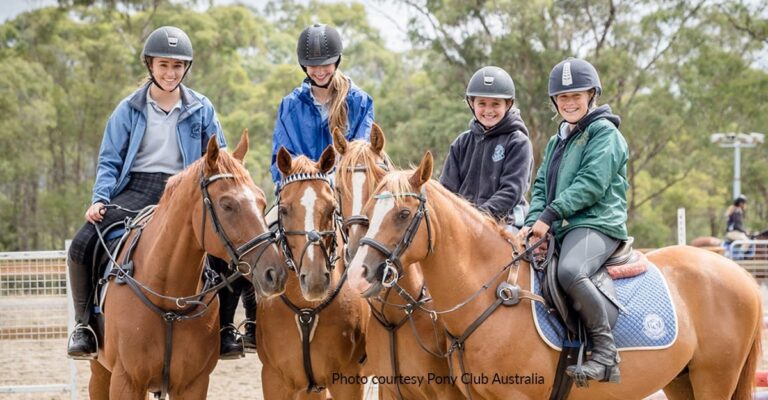
Pony Club Australia has developed a new education and training course for Preliminary coaches.

The new PCANCAS Preliminary Coach course is aligned with the PCA rider syllabus and brings together a range of material produced since the launch of the new PCA rider syllabus in September 2019.

The new Course Outline has been structured around the format used by the Australian Skills Quality Authority and has been developed in association with state Pony Club Association representatives working on the Pony Club Australia Coaching Advisory Council.

The course outline available on the PCA website will guide candidates on the course content and assessment requirements.

PCA recognises that horse riding is a unique sport that involves teaching riders, training horses and teaching riders how to train and care for horses. Pony Club coaches require a broad skill set to teach riders pursuing a large number of different horse sports, from beginners to high level competitors, and in a group teaching environment. They need to manage the physical and mental safety of riders as well as horses.

To help Pony Club coaches meet these challenges with confidence and enthusiasm, the Preliminary Coach course includes resources adapted from Sport Australia, such as teaching older riders and teaching indigenous riders. It also includes recent advances in veterinary understandings of horses’ digestive systems and how horses express pain or comfort.

“We are confident that our new Preliminary Coach course will increase the effectiveness of coaches, the performance of riders and the welfare of horses around Australia”, PCA Participation and Development Manager Dr Kirrilly Thompson said.

The mentor system, and coach networks at the zone and state level, are important parts to support PCANCAS candidates.

“Pony Club is the grass roots of equestrian sport in Australia and our coaches are central to the aims of Pony Club to develop safe and competent riders who are also knowledgeable horse people”, Kirrilly said.

PCA is increasing the amount of online education content for riders and coaches to make it available to our members across Australia and work is in progress on the PCANCAS Level 1 Coach course. Kirrilly explained that “COVID19 has made the need for flexibility content delivery apparent, but the mentor system, and coach networks at the zone and state level, will always remain important parts of the support we provide to PCANCAS candidates”.

What’s new in the PCANCAS 2021 Preliminary Coach Qualification?

The 2021 PCANCAS Preliminary Coach Manual contains the following updates:

Pony Club Coaching

  • The history of Pony Club in Australia
  • How to motivate young people
  • Explaining and self-monitoring for coaching bias
  • Identifying the needs of older riders
  • Identifying the needs of Indigenous riders.

Risk Management

  • Tools for estimating and mitigating risk
  • Incident reporting
  • Knowing how to manage a horse exhibiting flight response
  • Knowing a loose horse-protocol.

Horse Care

  • Recognising and interpreting horse body language (previously recognising aggression)
  • Hosing the hot horse
  • Knowing how to use the six-point body scoring chart to evaluate a horse’s condition
  • Recognising signs of pain in horses
  • Using a taper gauge to check noseband fit
  • Understanding the five freedoms
  • Knowing how to take the horse’s vital signs
  • Knowing how to make scientifically informed decisions about rugging horses
  • Fitting, storage, maintenance and care of rugs
  • Understanding the importance of horses as grazing animals.

Horse Riding and Training

  • Knowing how to respond to a horse that stops or runs out
  • Understanding and explaining the concept of self-carriage
  • Communicating position corrections to riders in an effective manner
  • Giving a basic description of Equitation Science
  • Knowing the main traits of horses and explaining and identifying their flight response
  • Knowing the 10 Equitation Science principles of training
  • Explaining pressure-release training (negative reinforcement)
  • Explaining reward training (positive reinforcement)
  • Explaining punishment and why it should be avoided
  • Explaining habituation
  • Explaining the importance of safe groundwork and what that entails
  • Knowing Positions 1 and 2 for conducting groundwork
  • Knowing the aids for the first three foundation responses on the ground
  • Knowing some exercises for teaching the first three foundation responses on the ground
  • Understanding why ‘following’ should be discouraged
  • Explaining how to use the whip as a training tool and not as a form of punishment
  • Being familiar with the Equitation Science training scale.

Alongside these additions, some sections have been removed from the PCANCAS Preliminary Coach Qualification and will be integrated into the PCANCAS Level 1 Coach Qualification, including but not limited to: removing a shoe, weighing a horse, and advanced arena figures and tracks which are not required for teaching riders up to and including D*.

Download the PCA Preliminary Coaching Course Outline here. 

Learn more about the PCA syllabus

Citizen Science: Your Contribution to E-BARQ Already Giving Back

E-BARQ, the citizen science project on horse behaviour and management is already giving back, thanks to the contributions of thousands of horse owners.

While 2020 offered fewer opportunities for us to be out and about with our horses, behind the scenes, equine researchers have been gathering data to provide an evidence-base for our training and management decisions.

Studies using the Equine Behavior Assessment and Research Questionnaire (E-BARQ) to which many Horses and People readers are contributing, have now been published.

They reveal how horses age, how their behaviour in-hand can predict dangerous behaviours under saddle, how the numbers of riders they have can compromise training, and even how their exposure to male riders and handlers can affect their behaviour.

For those who haven’t already heard, E-BARQ, a citizen science project, is an online report form available to all horse owners, regardless of the horse’s breed, discipline, age or experience.

You can find the questionnaire here.

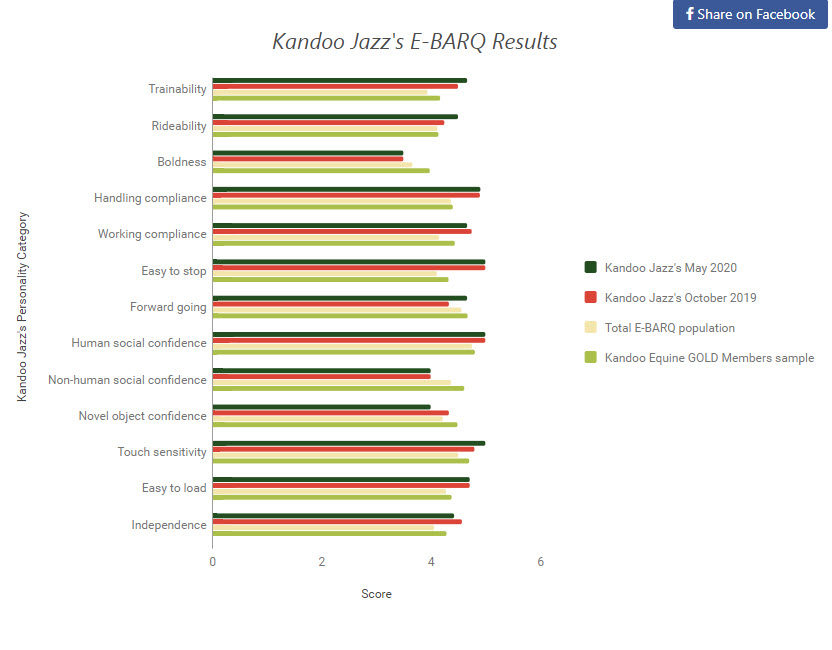
It takes between 20 and 30 minutes to complete and when you have done so, you will receive a report describing your horse’s behaviour in thirteen different categories, including;

  • Trainability,
  • Rideability,
  • Boldness,
  • Independence,
  • Compliance and,
  • Confidence.

Known as a Share-&-Compare graph, this first report on your horse will act as a benchmarking tool from which to monitor your horse’s behaviour and training.

Initially, the Share-&-Compare graph will compare your horse’s behaviour with the E-BARQ population of several thousand horses. Best of all, because E-BARQ is an ongoing study, you can update your report every six months.

This means that each new set of scores will be displayed in your results, allowing you to easily spot behavioural improvements or training shortfalls.

What does the research say?

We know that horse behaviour impacts welfare, that is, horses with poor or dangerous behaviour are likely to have compromised welfare.

Furthermore, some treatments for common problem behaviours in domestic horses can directly compromise horse welfare. Such behaviours can be the manifestation of pain, confusion and conflict.

In contrast, among the desirable attributes in horses, boldness and independence are two important behavioural traits that affect the fearfulness, assertiveness and sociability of horses when interacting with their environment, objects, conspecifics and humans. Shy and socially dependent horses are generally more difficult to manage and train than their bold and independent counterparts.

Previous studies have shown how certain basic temperament traits predict the behavioural output of horses, but few have investigated how the age of the horse and their age when they started being trained under saddle affect behaviour.

E-BARQ is a citizen science project
The E-BARQ Share-&-Compare graph acts as a benchmarking tool from which to monitor your horse’s behaviour and training. It lets you compare your horse’s behaviour with the E-BARQ population of several thousand horses, and you can update your report every six months to easily spot behavioural improvements or training shortfalls.

Age-related behaviour

Using 1940 responses to E-BARQ, our team explored the behavioural evidence of boldness and independence in horses and how these related to the age of the horse. Results revealed significant age-related effects on boldness and independence of horses.

Older horses were bolder than younger horses, as one might predict. However, horses started under saddle at an older age were less bold and independent than those started at a younger age.

Additionally, significant differences in boldness and independence relating to specific breeds and primary equestrian disciplines also emerged. Understanding how horses’ ages affect behavioural traits can improve horse–rider matching and potentially also optimise welfare.

The research article, which is titled: Age-Related Changes in the Behaviour of Domestic Horses as Reported by Owners can be downloaded free of charge here. 

Predicting unwanted or dangerous ridden behaviours

Dangerous ridden behaviour in horses, such as bolting, rearing and bucking, are common and may reflect various aspects of the horses’ immediate experience, history and health.

Although dangerous under-saddle behaviours, such as bucking, rearing and bolting, clearly pose a risk to rider safety, the more insidious impact may be on horse welfare as a result of popular treatments for so-called ‘problem horses’.

For this topic, our study aimed to identify any in-hand behaviours associated with these dangerous ridden behaviours based on 1584 responses to the E-BARQ.

First, declining reports of bolting were associated with decreasing problems loading horses onto transporters, increasing social confidence with other horses and other animals, improved leading behaviour and increased tolerance of restraint.

Secondly, declining reports of rearing were associated with decreasing loading problems, increasing social confidence with other animals and increasing tolerance of restraint.

Finally, declining reports of bucking were associated with decreasing loading problems and increasing social confidence with horses and other animals, improved leading behaviour, increasing tolerance of restraint and increasing tolerance of head handling (when bridling/haltering).

These findings could help riders and trainers predict dangerous ridden behaviour before they manifest fully, allowing for remediation that avoids the escalation of force in the training of misunderstood horses and thus improving safety and welfare for both horses and riders.

The research article is titled: Associations between Owners’ Reports of Unwanted Ridden Behaviour and In-Hand Behaviour in Horses and can be downloaded freely here.

The effect of multiple riders

Successful horse training depends on riders giving clear and consistent cues. When cues are inconsistent, the horse may become confused, frustrated, or unresponsive. Of course, each rider or horse trainer differs, to at least some extent, in the way they deliver training cues because humans vary in their weight, height, riding style, handedness, experience, and skill level.

This study explored relationships between the number of people to ride or handle a horse and the horse’s response to training cues. Reports on 1819 horses and ponies were obtained from the E-BARQ.

The number of riders or handlers a horse is exposed to showed a significant relationship with two behavioural indices.

Specifically, as the number of riders or handlers increased, horses were more difficult to accelerate and less difficult to decelerate than horses with fewer riders or handlers.

This suggests that an increase in rider or handler numbers is associated with horses becoming relatively more unresponsive to leg and whip cues than to rein cues.

You can find more detail in the research article, which is titled: Equine Responses to Acceleration and Deceleration Cues May Reflect Their Exposure to Multiple Riders, and can be downloaded for free here.

Does behaviour change depending on the sex of the human?

Any influence of the sex of the human partner in human–horse interactions on the behaviour of horses is currently largely anecdotal.

Associations between the sex of humans and equine behaviour may have welfare implications if, for example, mares are all inadvertently branded with a reputation for being difficult.

Our study investigated observations of ridden and non-ridden horse behaviour, as reported by 1420 E-BARQ respondents.

Results reveal some human sex-related differences between horses handled and ridden by male and female humans.

Horses ridden or handled by male humans were generally more difficult to catch and defensive when approached, but less likely to pull on the reins/brace the neck or toss their head.

These are fascinating results and will prompt further enquiries along these lines. They confirm the importance of considering the sex of the rider or handler when investigating equine behaviour.

This research article is titled: The Impact of the Sex of Handlers and Riders on the Reported Social Confidence, Compliance and Touch Sensitivity of Horses in Their Care. It can be downloaded here 

Going forward

As the numbers of horses described in E-BARQ continues to grow, and translations into French, Spanish and Chinese go online, the database promises to deliver countless insights into the welfare of horses and the safety of the humans who ride and care for them.

Team E-BARQ is excited about welcoming more owners and riders to become E-BARQ collaborators.

Be sure to include your horse in E-BARQ by visiting the E-BARQ website.

Also, for Facebook users, stay up to date with all the latest equine behaviour research on the E-BARQ Facebook page: https://www.facebook.com/EBARQsurvey!

E-BARQ, the citizen science project on horse behaviour and management is already giving back, thanks to the contributions of thousands of horse owners.

The E-BARQ Share-&-Compare graph acts as a benchmarking tool from which to monitor your horse’s behaviour and training. It lets you compare  your horse’s behaviour with the E-BARQ population of several thousand horses, and you can update your report every six months to easily spot behavioural improvements or training shortfalls.


Natural and Sustainable Horse Management

In this article, Jane and Stuart Myers explain natural horse behaviour and how to use it to implement a natural and sustainable management system. The more you learn about what’s natural for horses, the easier it will be for you to customise a sustainable management system that suits your own property and situation.

Jane and Stuart developed The Equicentral System as a complete approach to sustainable horse and land management and today, hundreds of happy horse owners have learnt to use their horses’ natural behaviours as an advantage. As a result, they achieve many things; enhance the health and wellbeing of the horses themselves, the land they live on and the environment at large. They also save time!

This is part of a series of articles especially commissioned to help owners keep horses in more natural, healthier conditions.

Are horses bad for the land?

Horses are generally regarded as being ‘bad’ for the land, but this is actually not true. Like all grazing animals, horses are excellent for the land when they are allowed to carry out their natural behaviours and, for this reason, in many areas of the world, they are being used for conservation grazing.

The more you understand about what naturally-living horses do with their time, when and why they do certain behaviours, and how these behaviours can lead to land degradation in a domestic setting, the more motivated you will become to make positive changes. It will also be easier to find solutions that fit with your particular situation.

The major causes of wear and tear on the land by horses results from a combination of the following:

  • Over-grazing the pasture
  • Standing around behaviour (loafing)
  • Tracking behaviour
  • Horses damage the land when they are allowed to over-graze the pastures – either by having too many horses in a given area or by keeping them on a given area for too long (set-stocking).

You must adapt your property layout and grazing management in ways that minimise the impact horses have on the land, while allowing them to express their natural behaviours. To do this, let’s look at what is healthy and natural for horses.

Grazing behaviour

Horses have one of the longest daily grazing periods of all the plant eating herbivores because they do not ruminate (regurgitate and re-chew their food). The food they are meant to eat is high in fibre, low in calories and takes a long time to collect, chew and digest.

Naturally-living horses have access to fibre most, if not all the time (even when this fibre is very poor quality and low in energy, such as leaves and twigs). Fibrous foods increase chewing time and saliva production, and help buffer the stomach acid that horses continually produce, which causes ulcers on empty stomachs.

A horse’s need for fibre (and associated chewing time) is so great they will eat anything available, such as poisonous plants, bark, wood shavings, etc., if they don’t have enough.

Time budget

You may already know it is natural for horses to graze between 12 and 16 hours out of 24, but what you also need to consider is that horses graze in ‘bouts’ of between one and a half to three hours long, and that each grazing bout is interspersed with time spent socialising, sleeping and loafing.

The length of each grazing bout is partly determined by how fibrous (filling) the pasture is. Older grasses that are more fibrous and bulky make the horse ‘feel fuller’ sooner, so the grazing bouts will tend to be shorter and more frequent. On younger, less fibrous pasture, the grazing bouts are longer and less frequent. This means that time spent grazing will vary through the year depending on how the season and climate conditions are affecting the plants they eat.

Naturally-living horses self-regulate their daily time budget according to the conditions – making good decisions of when to graze, how long to graze for, and when to rest and sleep. Domestic horses can also self-regulate if we encourage a natural variation in condition through the Winter, and we provide them with a more natural environment, plenty of exercise and healthy pastures.

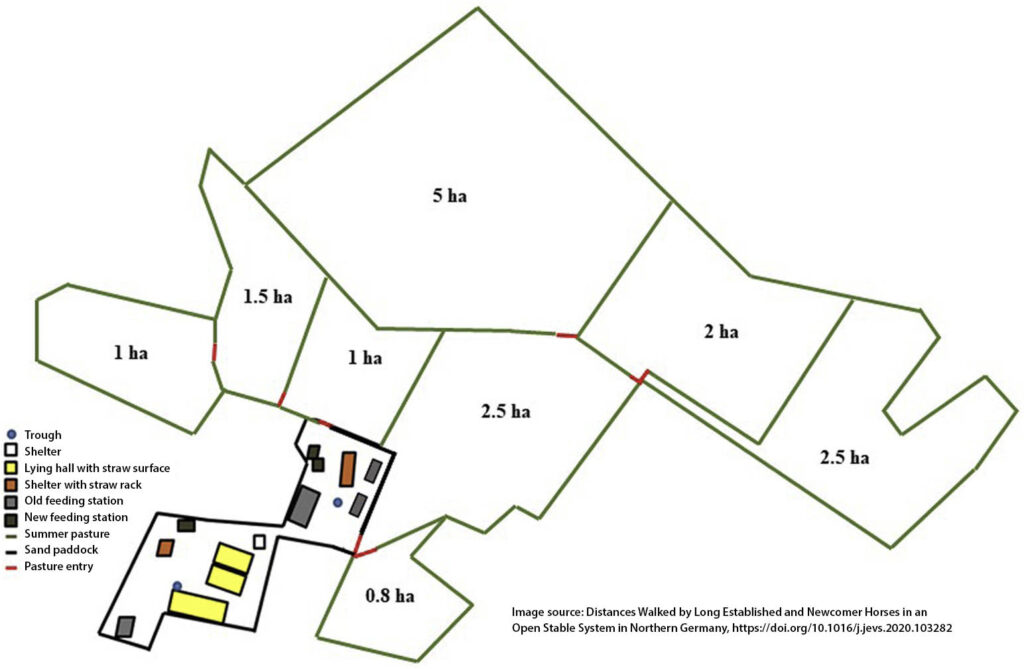
Read a report that shows horses living in an ‘active stable’ walk and run distances that are similar to those travelled by free-roaming horses!

Variety is the spice of life

Grass is a horse’s main staple, but horses will readily eat other plants including certain bushes, trees, berries and other fruits. Naturally-living horses are thought to eat as many as 100 different plant species throughout the year. Their diet is not balanced daily, but it becomes balanced throughout the year as different plants are available to them.

Horses like to forage for variety (this also keeps them moving as they graze), and this aspect is why you should aim to increase the variety of species in your pasture and, certainly, ensure that your pasture is not a mono-culture.

A good pasture for horses contains legumes, herb, sedges, etc., as well as several species of grass.

You can promote biodiversity by seeding more species, but to maintain it, you will have to develop your ‘grass farming’ skills and use strategies like rotation, cross grazing, learn when to graze and rest, and when to allow the plants to set seed, as well as improving your soil. This sounds complicated and it is probably harder than sitting on the couch, but it is no different to tending a garden.

Dunging behaviours

Like many other grazing herbivores, horses avoid grazing near any dung piles from their own species, but will graze near that of other species. This is thought to be an innate parasitic worm avoidance strategy. In addition, horses will ‘group’ their dung in areas within a pasture (the ‘roughs’), and graze in others (the ‘lawns’), which leads to a situation known as ‘horse-sick’ pasture.

Horse-sick pastures progressively encroach on the grazing areas and disrupt the nutrient balance. They increase the number of parasitic worms, result in monocultures of short, stressed grass in the lawns, and weeds in the roughs, and make your property unsightly.

In a naturally-living situation, horses have a very large home range and they are not forced to graze over their own manure. Horse-sick pastures are common on small properties and set-stocking situations, unless the manure is cleaned up daily.

Resting the pasture by subdividing the available land into more paddocks, slashing and harrowing the resting paddocks, cross grazing with other animals like cows and sheep, and encouraging dung beetles, are some of the ways of maintaining a healthy pasture.

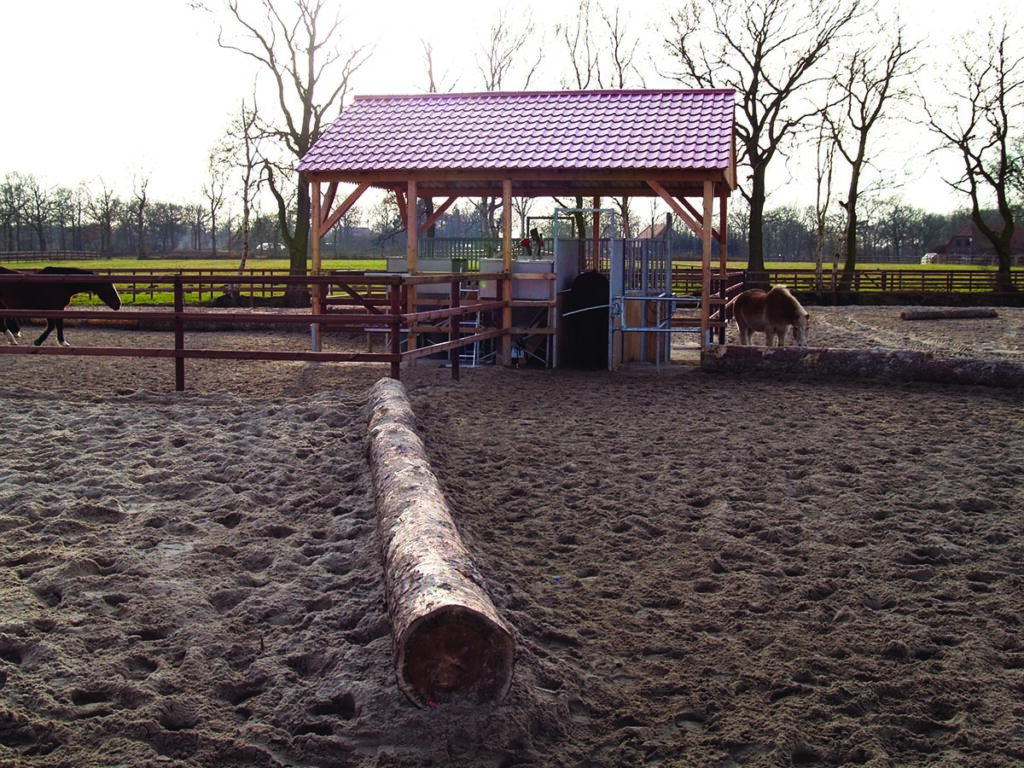
In an Equicentral System, you can actually tap into the horses’ natural tendency to dung in the same spot and set up a designated toiletting area. Horses will readily urinate and dung on a thick layer of woodchips, old hay or straw, which can then be maintained as a ‘deep litter bed’ where you can remove some of the manure and wet materials, leave some and add fresh materials on top as necessary. You can even set this up in your holding yard to keep the mess to one place – it’s also easier to clean up.

Non-grazing behaviours

From a land management perspective, we need to pay attention to what horses do when they are not grazing – the 4 to 12 hours they spend socialising, standing around, sleeping or ‘tracking’ to get to and from the pasture.

Horses will often have a favourite ‘hang out’ area, such as somewhere that is shady/sheltered, near resources such as water, a high, level area with good views or near a gateway (where they can see you coming!).

You can easily spot their favourite ‘hang out’ spot by looking for the areas that have become bare of grass. Standing around in one area begins a vicious cycle of land degradation – loss of grass cover and compaction (where the soil turns to dust when dry, and mud when wet and is lost through erosion).

Factors that increase the amount of time horses spend loafing are:

  • Over-grazed pasture – Grazing and walking are linked behaviours, so if there is no pasture to eat, the horses will simply stand around when they’ve burned off excess energy.
  • Monoculture – When there are only one or two types of plant to eat, the horses will reduce the time spent foraging (seeking variety) and increase the time spent loafing.
  • Supplementary feed – Horses that are fed will stand around near the gateway long before feed time, in anticipation of the feed coming. This is why gateways in horse properties are always bare, and turn to dust when dry and mud when wet.

In a domestic situation, we can either allow the standing behaviours to become a problem and degrade the land in each paddock, or we can adapt our system and use them to our advantage.

Luxury loafing facilities

Why not create a surfaced yard where the horses can carry out their loafing behaviour and receive their supplementary feed and water?

Place it in a position that is logical for the horse – which is usually the first place they see you coming with food. Observing where your horses hang out or where they are trying to get to, makes choosing the position easy. Make the yard accessible from all your paddocks, and leave the gate open from the pasture they are currently grazing, to allow them free access from the pasture to the yard.

Remember that, in this system, horses are never locked in a paddock but they are sometimes locked out.

Make this their favourite place by providing what they value –  shade, shelter (from wind and driving or heavy rain), views (which either helps them feel safe or helps them keep an eye on you), water and an all-weather, dry, level surface to rest on – preferably one they will readily want to lie down on.

As well as loafing essentials, you can add some luxuries like grass hay, which ensures they always have fibre and encourages them to stay there longer, further reducing grazing pressure. This is essential in smaller properties.

Supplementary feeding can also be done in the loafing area and will definitely make it their favourite spot! You can also build separate yards within the holding yard to feed them individually.

The more of these valued resources your holding yard provides, the more likely your horses will voluntarily remove themselves from the pasture after each feeding bout, the longer they will stay there and the less pressure on your grazing land.

Tracking behaviour

Horses create tracks in areas they frequently travel. In addition to the land management issues outlined above, these tracks cause erosion because they provide a pathway in which water is able to move faster. This faster moving water causes erosion, which then creates a vicious circle of events as it removes more soil, creates a deeper channel and so on.

Horses create these tracks in the following situations:

  • A separated horse will walk a fence line to try and get to other horses. In this case, this behaviour could also eventually undermine a fence as the ever deepening track cuts into the soil that is holding the fence posts in the ground. Separated stallions in particular will carry out this behaviour.
  • Keeping your horses in cohesive, stable groups will help. If this is not possible (e.g. with a stallion or if a horse has to be separated for other reasons), you can design your paddocks and shelter so that separated horses can ‘hang out’ together in adjoining loafing yards and enjoy some social contact.
  • Horses will create tracks between areas that they frequent such as the water trough and a shade/shelter or favourite loafing area.
  • When moving around the home-range, the horses often move in single file to make it easier to travel over the terrain, however, once they begin grazing, the band spreads itself out, searching for and selecting a wide variety of plants.

An Equicentral System where the pasture in use has direct access to the surfaced holding/loafing yard will minimise the tracking behaviour and associated land degradation issues.

In the Equicentral System we aim to reduce or, preferably, eliminate the use of laneways and track systems because of the land degradation issues mentioned.

In some situations though, laneways are necessary, such as in the case of a long narrow property, or when having to get horses through a gully, or around a dam, but the aim should be not to have them.

The Equicentral System for natural and sustainable horse management
The Equicentral System basics are simple to understand and implement, yet they provide so many benefits! From saving your time to improving your horses’ health and the health of your land. From a single small acreage paddock to a large-scale professional setup, the system can be adapted and will work in almost any situation and climate.

Responsible horse ownership

As horse owners we need to understand that, by restricting natural behaviours, we are creating stress in horses.

Horses do not show outward signs of stress in the same way other animals do, because as a prey animal, a horse does not want to signal that they are in pain for fear that they will be seen as vulnerable and, therefore, more likely to be singled out by a predator.

We can, however, learn to recognise some of the subtle signs of stress and pain in horses, and advances such as the description of the ‘Equine Pain Face’ and the ‘Discomfort Ethogram’, can really help. But the more we facilitate what is natural- allow horses to socialise with other horses, forage whilst moving, rest and sleep, and feel safe – the healthier and happier they will be.

This article summarises information that you can find in more detail in Jane and Stuart Myers’ new and free access video series. Sign up on the Equiculture website for a free mini-course where you will start to learn more about this subject.

The Equicentral System Basics

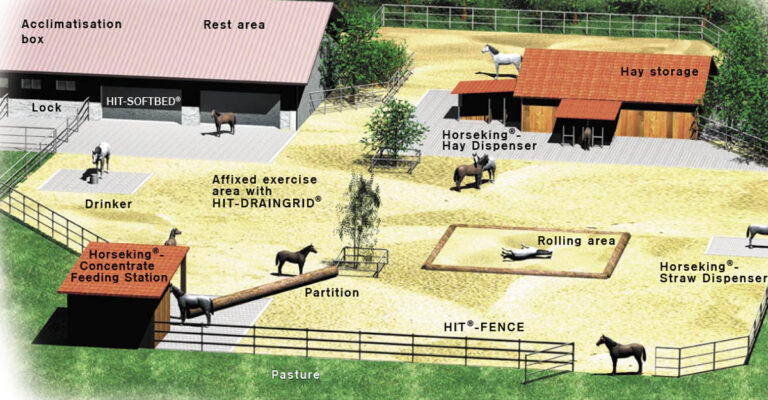
The main facilities, water, shade and shelter, hay and supplementary feeding are positioned in a central, surfaced holding yard, so the horses can always return to them from the pasture they are grazing.

All the paddocks are linked directly to this surfaced holding yard area, although only one paddock is in use at any time.

The gate to the paddock that is in use is always open, so the horses can always get themselves back to the water, shade and shelter.

The only watering points are in the surfaced holding yard, instead of there being one trough in each paddock.

Occasionally, the horses may be locked-up or held in the surfaced holding yard with hay, but this is usually to prevent damage to the land (for example, during extremes, such as drought or wet conditions), to control pasture intake by overweight horses and to increase healthy pasture production.

Apart from the trees or shrubs situated in and around the paddocks, the only shade or shelter is in the surfaced holding yard. The shade or shelter provided should be large enough for the whole herd to benefit from it at the same time.

Read a report that shows horses living in an ‘active stable’ walk and run distances that are similar to those travelled by free-roaming horses!

This article appeared in the January-February 2021 edition of Horses and People magazine, you can order a copy here. 

Body Language a More Reliable Indicator of Mild Pain

General body language may be more reliable as an indicator of mild pain than the equine pain face.

What if you could tell your horse were lame, even mildly, just by watching his behaviour at rest?

According to Swedish researchers, it could be possible. At least in their experimental conditions, they could detect lameness by paying attention to horses’ resting body language. By observing your horse’s posture, head position, location in a box stall, focus, and interactive behaviour—and possibly facial expressions as well—you might be able to pick up on signs of low-grade lameness before you even take the horse out for a lameness check.

Their findings are published in the open access journal Animals.

“Horses cannot self-report, and their pain behaviour is probably what comes closest to a self-report,” said Katrina Ask, DVM, PhD candidate at the Swedish University of Agricultural Sciences in Uppsala. “We just have to learn to understand what they communicate to us.”

In their new study, Ask and her fellow researchers found that horses can give clear behavioural signs that their legs hurt, even when that pain is minor, mainly through the way they stand, where they stand, and how they react to sights and sounds while standing.

In eight horses with mild pain in a single hindlimb, they saw that the horses tended to stand rigidly, with a low, flat head carriage, she said. They also generally stood in the back of a box stall or in the middle of the stall while facing backwards, and were less interactive—meaning they paid less attention to humans and to sights and sounds around them.

The pain-related posture they saw has already been described in two science-based pain scales: the Equine Pain Scale (EPS), suggested in 2015 by Danish researchers, and the Composite Pain Scale (CPS), developed in 2008 by French and Canadian researchers. The EPS has also outlined the stall-position criteria, and both EPS and CPS have described the changes in interactive behaviour.

The EPS and CPS are two of four recognised pain scales described specifically for orthopaedic pain in horses, Ask said. The other two—the 2015 Equine Utrecht University Scale of Facial Assessment of Pain (EQUUS-FAP) and the 2014Horse Grimace Scale (HGS)—both focus on facial expressions of pain.

While each pain scale has its merit in different kinds of equine pain, Ask and her fellow researchers aimed to find out which aspects of each pain scale could point specifically to mild orthopaedic pain in horses at rest.

To do so, they injected one hock joint with a biological inflammatory to induce mild to moderate short-term arthritis in each of eight healthy, sound horses of an average age of 14 years old. They had three trained observers watch the horses’ behaviours at rest both before and after pain induction. Within days, all the horses had made a full recovery, Ask said.

They found that full-bodied behaviour like posture, stall-standing position, and interaction levels were more consistently graded by the observers and pointed to discomfort, Ask said. Although the horses also clearly showed facial expressions of their pain, the trained observers didn’t always agree with what they saw, making it more difficult to come to a consensus.

As such, the more general body language was more reliable as an indicator of mild pain, according to Ask.

“In our study, we saw that facial expressions were important but apparently more difficult to assess precisely than body behaviour, since the observers disagreed more often on what they saw,” said Ask. “Body behaviours seemed easier to assess and were in this study more associated to orthopaedic pain. Whether this is due to the fact that only trained observers can reliably assess facial behaviours, or due to the presence of specific orthopaedic pain is something we are working on.

“With only a little training, assessment of orthopaedic pain would therefore benefit from including body behaviours also during undisturbed rest in the box stall, and not only during movement as in the lameness exam,” she continued. “In pain scales based only on facial expressions, the facial expressions may not be recognised by the untrained observer or during situations with many external inputs (for instance during stress) in horses with mild orthopaedic pain, as pain of higher intensity may.”

The findings are particularly important for application in the home stable, according to Ask. Because horses are less likely to hide signs of pain at home, where they feel more comfortable, owners could be at the front line of recognizing these subtle indications of mild pain.

“We believe that our research should be transformed into education – and we think that the owner is the closest to monitor changes in their horse’s behaviours and facial expressions over a long time,” said Ask.

“Pain assessment can be challenging for clinicians since they often observe the horse at the hospital, where the horse may be stressed and nervous,” she said. “These are affects that can mask the pain assessment. By increasing the time for pain assessment and register both facial expressions and behaviour, the quality of the assessment may improve.”

The ethics of inducing mild, temporary pain in horses for research

Are you concerned about the eight horses who underwent mild inflammatory pain in their hocks for this study? While research sometimes leads to discomfort for a few individuals, national ethics boards oversee scientific study procedures and weigh the costs and benefits for both human and animal subjects. The Swedish ethics board doesn’t take animal research lightly, according to Ask. The horses in her study were scrupulously cared for, and their mild pain contributed to a much larger good for horses worldwide.

“The number of horses, the amount of pain, and the chance for a normal life after the study are all thoroughly considered before approval [of the study by the ethics board],” Ask told Horses and People.

“The reason for inducing orthopaedic pain is that there is no gold standard for whether a horse experiences pain or not,” she continued. “In this way, we achieve a standardised and controlled pain experience which can allow us to use the smallest possible number of horses. We chose a pain model with a temporary and fully reversible pain type. All horses returned to soundness again within 24-72 hours.

Humane endpoints were included, meaning that if the lameness degree exceeded 3 on a scale of 5, analgesic treatment had to be provided. In this way, we could closely monitor the change in pain intensity over time to understand how facial expressions and behaviours change with pain intensity. We could also obtain information on what behaviours and facial expressions that were normal for each horse – their baseline.

“The data collected can be used for several studies and will rescue the many horses suffering from unidentified pain, and also those horses being regarded as ‘stupid’ or non-collaborative, being punished for trying to cope with their painful orthopaedic diseases,” Ask added. “It’s a utilitarian ethical framework, where the few suffer a little for the great benefit of the many.”

This study is published in Animals. It is titled: Identification of Body Behaviors and Facial Expressions Associated with Induced Orthopedic Pain in Four Equine Pain Scales by Katrina Ask, Marie Rhodin, Lena-Mari Tamminen, Elin Hernlund and Pia Haubro Andersen. You can read it here.

Download the Equine Pain Face poster here. 

Learn to recognise subtle signs of pain here.

Read our report on the Horse Grimace Scale research. 


Active Stables Really do Encourage Movement

When horses live in certain open stable systems with functional areas and pasture access, they walk and run distances that are close to, or even the same as, those covered by many free-roaming equids.

According to German researchers, domestic horses move an average of 8.43 kilometres per day when housed on a Hinrichs Innovation + Technik (HIT) Active Stable system, which includes multiple feeding, watering, and resting stations spread out between different paddocks and pastures.

Read this article to learn what Jane and Stuart Myers say about the HIT Active Stable

That’s less than the 16 kilometres and 28 kilometres tracked in Australian brumby studies, but it’s comparable to the 9 kilometres covered by mustang mares in the U.S. and the 8.5 kilometres travelled by donkeys in Mongolia.

And it’s even better than the 6.5 kilometres that Polish koniks walk in the forest (only 2.6 on meadows) and the 3.5 kilometres that Przewalskis traverse in the steppes.

“A well conceptualized, well-planned stable with different functional areas can motivate horses to move,” said Irena Czycholl, PhD, of the Christian-Albrechts-University Kiel Institute of Animal Breeding and Husbandry, in Germany.

Czycholl and her fellow researchers equipped 51 horses of different ages, breeds, and sexes with GPS collars over a nine-month period. They lived in a single HIT active stable with automatic feeding stations activated by microchip reading or collar sensors, separated from watering areas, resting areas, and grazing pastures in a design that encourages movement.

“HIT active stables are conceptualised in a way that motivates the horses to more movement,” she explained. “Hence, a feeding station releases the horse into another functional area, so it has to walk to the resting area, for example, and then again to the feeding station, and then to the waterer, and so on.”

The idea is to have “a lot of slow movement,” according to Czycholl. “It’s sort of like in office jobs where advice is given to place the bin a few steps away from the desk or the printer, for example, so that workers have to stand up and walk a few steps instead of just sitting in their office chairs all day.”

Active Stable layout encourages movement
Diagram of the observation farm. Image source: Distances Walked by Long Established and Newcomer Horses in an Open Stable System in Northern Germany, https://doi.org/10.1016/j.jevs.2020.103282

Their study revealed that in warmer seasons when the horses could go to pasture, the horses moved 9.4 kilometres per day on average. In winter, when they had to share a one-hectare sand paddock without access to pasture, they averaged 6.4 kilometres per day.

But there were lots of individual differences, mainly related to breed and age, Czycholl said. For example, an 11-year-old Friesian covered more than twice as much distance as an 18-year-old Fjord. Generally, horses moved about 0.1 kilometres/day less for every year older they were, she said.

Horses also varied significantly from day to day, she added. In some cases, some horses covered 20 kilometres in a single 24-hour period. Critically, it’s worth noting that the stable design provided the opportunity to move, for those horses who really wanted to move, she said.

The design and layout of active stables really does encourage movement. Image courtesy HIT Active Stable.
In HIT Active Stables, the feeding sheds are typically in a central surfaced yard, adjacent to pastures, and the facilities are laid out specifically to maximise movement. Image courtesy of HIT Active Stables.

Pasture time encouraged more movement because the horses had to cover certain distances just to access the pasture gate, she said. And once they were in the pastures, they moved slowly for hours while grazing, and sometimes they took off galloping as a herd, especially when spurred by unexpected sights and sounds.

“More high-speed movement occurred on larger pastures especially by young, playful geldings, and the larger the pasture, the higher the chance that other members of the herd joined in,” Czycholl told Horses and People. “Moreover, the horses were more spread out when the pasture was larger. The main reason [they moved more in our study], however, was probably due to a relatively warm summer with relatively little grass available due to heat stress in the plants. Hence, the horses probably explored the area to find good spots during their grazing behaviour.”

Even so, the active stable design appears to encourage even more movement than pasture alone, she said. And it’s certainly far better than keeping horses in stalls, where average daily movement is only 0.2 kilometres according to previous studies. And horses in open stables without “functional areas” averaged about 2 kilometres of movement per day in earlier studies.

“Compared to other husbandry systems, this is quite a good achievement,” Czycholl said.

Even so, it’s important to keep in mind that this is a study of these particular horses in this particular stable. While the theory is promising, it’s not necessarily the reality in different stables. “In practical conditions, this may work better or not as well, depending on the real conditions in each specific stable,” she said.

Still, it’s an important beginning to what is hopefully a long series of studies on how horses behave in different housing systems, according to Czycholl.

“To really understand the behaviour of the horses in these stable systems and to analyse the exact effects of certain management interventions on the welfare of the horses, more studies in other stables are needed,” she said.

“Besides the behaviour of the horses and the travelled distances that we analysed in this study (which is, in fact, part of a larger study), other study questions were: what is the social structure within the large group?” she continued.

“Most [natural] herds are rather small, such as three to four mares and one stallion. So one of our research questions was: what happens in such a large group of horses? Are there different, individual groups living next to each other? Is it one large group?”

Her team also hopes to determine whether GPS data can reveal more precise details about the horses’ movement, Czycholl said. “In cows, a research group recently succeeded in distinguishing the movement patterns from grazing behaviour to walking behaviour, but in horses, this is not so easy,” she said. “This may be due to the accuracy of the sensors we used but also to the different grazing behaviour of the different species.”

The article by Frederik Hildebrandt, Joachim Krieter, Kathrin Büttner, Jennifer Salau, Irena Czycholl, Distances Walked by Long Established and Newcomer Horses in an Open Stable System in Northern Germany, is published in the Journal of Equine Veterinary Science and can be found here.

Read this article to learn what Jane and Stuart Myers say about the HIT Active Stable

Tough Decisions and Community Support Key in Fighting EHV-1 Outbreak

The official death toll from the EHV-1 outbreak has risen to 17, with three more horses dying in Germany, two in Belgium, and one more horse dying in a Valencia equine hospital.

The FEI is following through with their promise of full transparency and improved communication as they navigate tough decisions needed to protect horses and control the spread.

International competitions in 12 European countries have been cancelled as confirmed cases are reported in ten nations; Belgium, Denmark, Spain, France, Germany, Italy, Qatar, Slovakia, Sweden and Switzerland.

Read more about Equine Herpes virus here.

On Friday 18th March, FEI Veterinary Director, Dr Göran Åkerström explained the work achieved so far, the strategies and decision making processes that are being followed. His full message:

The recent outbreak of the neurological form of the Equine Herpes Virus (EHV-1 neurological form) in Europe has tragically resulted in the death of a number of horses and there are many still being treated for this very aggressive strain of the virus. One death is one too many, and we must do everything in our power to stop the spread of this terrible virus.


When the FEI was first notified on 20 February, we set out to minimise transmission of EHV-1 by tracing and blocking all in-contact horses, but as the severity and the geographical spread of the outbreak became apparent, we took tougher measures and shut down all international events across all disciplines in mainland Europe for four weeks up until 28 March.


On 12 March, that lockdown of international events was extended to 11 April and the FEI has urged all member National Federations to follow suit with their national competitions and training events.
These were not decisions that we took lightly, and we are extremely grateful for all the support we have received from the community, especially as we are all aware of the ramifications this extended shutdown means for our sport, our members and stakeholders. The willingness of the community to accept and even welcome the prolonged lockdown is testimony to our collective dedication to the safety and welfare of our horses.


To date, we have blocked almost 4,000 horses on the FEI Database, meaning they must be kept in isolation, and a negative PCR test will need to be provided prior to them being unblocked and cleared for competition.


While EHV-1 is endemic in many countries, the current outbreak of the neurological form is the worst we have seen in decades, and it has clearly tested our biosecurity processes and our resilience. Nobody wants to see an outbreak like this ever again. And we will continue to monitor EHV-1 outbreaks through the FEI Veterinary Epidemiology Working Group, composed of world-leading EHV specialists, members of the FEI Veterinary team and supported by the Chair of the FEI Veterinary Committee.


Communication is crucial when dealing with an outbreak, and we will keep the community informed on the Working Group findings with a weekly report and recommendations published on the dedicated FEI EHV-1 hub where we have been and continue to post all our latest updates and information.


It is also very important for us to receive all the correct information for our risk assessments and decisions. For this we need your support. By informing us of positive EHV-1 test results and sick horses you contribute to our combined efforts to ensure a safe return to competition on 12 April 2021. Please send us this information, including the positive PCR result to [email protected] I guarantee you and your horse anonymity.


We understand that the current situation is creating a lot of uncertainty and worry within our community. The current outbreak is still a problem and we must all be part of the solution. Each of our actions will reduce the severity and the duration of this outbreak and make possible a safe restart of competition.


There will be a comprehensive and fully transparent investigation into every aspect of this outbreak and the way it has been handled, and we will be putting in place enhanced protocols to allow a safe return to play once the virus is under control.


The response to this crisis has clearly reflected the true community spirit for which the equestrian world is renowned, and we have seen members of the community rally together and provide incredible levels of support. We must continue working together to keep our horses safe.


Yours sincerely,
Göran Åkerström, D.V.M.
FEI Veterinary Director

The letter was posted at the conclusion of the first meeting of the FEI Veterinary Epidemiology Working Group, whose individual members have been working with the FEI since the start of the EHV-1 outbreak. They met to discuss the progress being made on identifying the genetic group of this virus, the evolution of the outbreak, return to competition protocols and preventive measures.

The Group is composed of leading EHV experts Professor Ann Cullinan (IRL), Dr Richard Newton (GBR) and Dr Gittan Gröndahl (SWE), the FEI Veterinary Director Dr Göran Åkerström and FEI Senior Veterinary Advisor Dr Caterina Termine, supported by Dr Jenny Hall, Chair of the FEI Veterinary Committee.

The Group discussed epidemiological links between events where positive cases have been reported, and further known transmission of the disease at horses’ home stables. The need for improved network tracing was identified, which would require the FEI being granted a greater jurisdiction at FEI events in the event of an EHV outbreak.

The Group noted that EHV is an endemic disease worldwide and is notifiable in only a few countries. Concern was raised that should the disease become notifiable in more countries it could lead to reduced reporting, meaning that outbreaks could become more difficult to manage.

Expected future risks

Regarding the evolution of the outbreak, the Group agreed that the following risk factors could be expected within the next two weeks:

Transport of horses (potentially causing raised stress levels) may result in further recurrence of the virus and more confirmed cases;

Circulation of active virus is expected to continue because this virus often moves more slowly through groups of horses compared to a virus such as Equine Influenza. Therefore, it may take some time for more recently infected groups of horses to be released from isolation.

Efforts must be focused on both preventing the incursion of virus positive horses at events and contingency planning to mitigate the impact of such an incursion, should it occur.

Resumption of Competition

The Group determined that safe resumption of competition involves two key areas: conditions for entry and the management of horses within the venue.

Recommendations include:

  • health certificates issued before the horse travels;
  • pre-movement testing;
  • enhanced examination on arrival;
  • restrictions on event size;
  • good separation between horses;
  • routine health monitoring.

Many rules are already in place to support these measures.

Laboratory analysis of samples

Several laboratories in Europe have analysed PCR positive samples from horses that returned from competitions in Spain. The virus identified does not have the N752D amino acid substitution in the DNA polymerase that has been shown in the past to be associated with neurological disease.

Work on identifying the clade or genetic group to which this virus belongs is ongoing and will assist in tracking the spread of the virus and differentiating it from many other strains of EHV-1 in circulation.

For up to date reports from the FEI, click here.