fbpx
Home Blog Page 49

Biological Pasture Management: Part 1 Roughage and Pasture

Part 1 of a 3 part series on biological pasture management for horse properties.

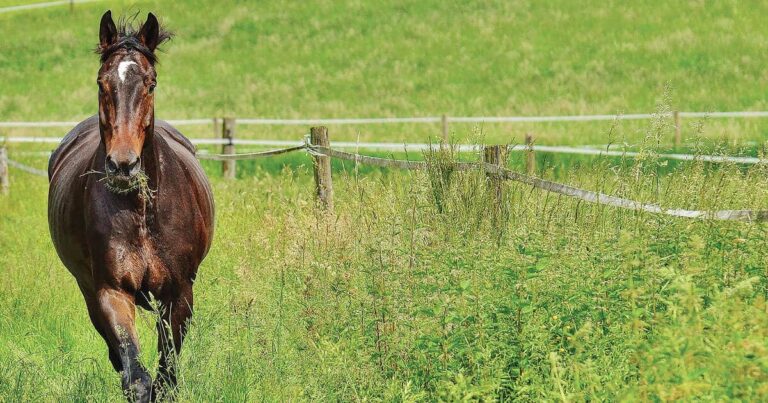
There are many commercial manufactured feeds for horses available. Horse feed companies promote their muesli or pelleted feeds in colourful bags and many horse owners see these as the ultimate feed for horses to improve health and performance, but… if we go back to basics, what is the most important ingredient in the horse’s diet?

What keeps a horse a healthy horse?

The horse evolved primarily as a grazing herbivore, eating a diet based on fibre, mainly grass. Grass-only diets are usually not sufficient to maintain the working horse, and as a result, cereals, cereal by-products and oils have been added to the majority of equine diets. These have many benefits but can also potentially cause a lot of health problems.

Fresh grass and conserved forages are the most important ingredients in your horse’s diet and should be your first focus if you think about feeding strategies to maintain health and improve your horse’s performance.

This article will describe the role of fibre in the diet of the horse and will illustrate biodynamic pasture management to obtain the right combination of grass species and to maximize the nutrient content of your grass.

The role of fibre in diet of the horse

Horses are non-ruminant herbivores with a continual microbial fermentation within the caecum and colon. Herbivores, because of the symbiotic relationship with microorganisms, are able to gain energy indirectly from fibrous materials i.e. non-starch polysaccharides (NSP). The microorganisms in their digestive systems are able to break down the plant polymers to monomers and oligomers primarily by exogenous microbial enzymes. The products of this hydrolysis process are engulfed by microbes and converted to pyruvate in intracellular metabolism. Pyruvate is converted into volatile fatty acids (VFA’s: propionate, butyrate and acetate), CO2 and methane.  The microbes cannot fully utilize these products. However the host animals, horses, are able to absorb and gain energy from VFAs.

Today most horses are used for sports and a grass-only diet is usually not adequate to cover energy demands. Many commercial manufactured pelleted feeds are added to equine diets to supply the horse with energy, protein and micronutrients, but are based on cereal grains containing abundant starch. Starch plays a minor role in the natural diet of the horse; as they are grazing herbivores and receive most carbohydrates in the form of fructans and non-starch polysaccharides (NSP).

Several studies associate excess feeding of grain concentrates with a number of digestive and metabolic disorders, including, acidosis, laminitis, gastric ulcers, developmental orthopedic disease and some forms of exertional rhabdomyolysis. However, it should also be stated that excess amount of fructans from lush pastures can also cause these digestive and metabolic disorders. To achieve optimal hind gut health, fibre intake should be maximised and the intake of simple sugars and starch should be minimised. Providing your horse with quality grasses and roughage is essential for an optimal nutrient supply. So have good look at your pasture. What can you do to get the right combination of grass species and maximize nutrients for your horse.

Biodynamic pasture management

Farming and soil quality

200 years ago pasture management techniques were introduced from Europe and the mother country England, from a landscape far different to the one we know in Australia. Farmers began clearing and ploughing land, draining wetlands. After World War 2 came the Green Revolution and chemical salt based fertilisers, herbicides and pesticides. These changes had a profound effect on the soil quality.

As a result of ploughing, soil and nutrients where lost through soil oxidation and erosion. Exposed soil ran off the land or was blown away to sea by rain and strong desert winds. Multinational fertiliser companies started to promote their fertilisers to improve the soil and pasture quality, but these salt based fertilisers make the soil poorer, and initiated a new problem; weeds. To control weeds herbicides were invented and sprayed at anything that was not the crop or pasture of choice.

Over the years environmental concerns are prompting both researchers and growers to look at alternative farming methods that offer good yields and profits while at the same time reducing the use of chemical inputs. This was the start of what has been coined as Prescription Farming. Prescription Farming means applying inputs such as fertilizers, herbicides, pesticides, fungicides and irrigation water with more precision than has generally been used. Farmers routinely apply fertilisers using an average rate based on a field’s past yield and condition. Even though used with more precision,  fertilisers, herbicides and pesticides will always have a dramatic effect on the soil quality. Soil should be full of life – roots, microbes, fungi and insects. If you place fertiliser or herbicides on one spot what will happen with the soil system on that particular spot and around it? Will this improve your pasture and nutrient content?

The role of weeds in the management of your pastures

The reason weeds grow in your pasture is that you have POORLY managed soil or no topsoil at all. Go and grab a spade right now, go to your most degraded paddock! Could you even get the shovel in? Did you dig up clay or straight subsoil? If your topsoil is not black, dark brown, have more than 25 earth worms per spade and over 200mm thick even on hilly country, then you need to read on! (Note: Red volcanic soil is not topsoil, if you have straight red soil it is subsoil caused by past management, the topsoil wasa probably eroded down a creek and out to the ocean.)

With the spraying of Glyphosphate based herbicides, pesticides and fungicides we start killing the essential life in the soil that grows soil and looks after your plants. The definition of ‘cide’ (Latin) means a suffix; kill, killer; murder, to cause death, slayer; cutter; “to cut down”. By using fungicides we start losing all beneficial fungi that breaks down organic matter like weeds. Weeds are hyper accumulators of minerals from the soil which fungi convert to plant available trace minerals, which then become available to your horse in the pasture he ingests. Fungi, along with beneficial bacteria and microbes, forms complex associations with the plant, whereby the plant provides sugars down to the roots from photosynthesis. In turn, fungi and microbes help plants absorb nutrients and water. Fungi and microbes form a symbiotic association with the roots of nearly all plants to help them grow.

Chemical (prescription) farming and poor pasture management lead to poor quality grass and can cause health problems for horses due to the highly toxic Anaerobic (No Oxygen) soils. This leads  owners to a constant cycle of increased costs of buying feeds and calling the vet.

Simply looking at a paddock from a distance over time a trained eye can instantly identify the condition and what your soil is doing or not doing. Deep tap rooted weeds like thistles indicate hard compacted soils. Where shallow fine surface roots indicate that the soil has no structure (the surface roots are trying to keep the soil together). Weeds in pasture should be looked at as tools, and can be effectively used to speed up topsoil generation and fertility of horse pastures.

All horse owners’ small and large need to ask themselves:

  1. Are my pastures and management or lack of, affecting the health of my horse?
  2. Do I have the skills to improve my pasture management or will I revert to feeding my horse more of the ‘fast food’ manufactured diets?

Good pasture management can assist with maximising the nutrient content of your grasses. Fresh feeds and roughage are the best diet for your horse and will also reduce your feeding costs. With pasture planning you can increase soil fertility and grow your own forage systems.

Increased life in your soils, will then naturally increase the diversity of grass species through birds, animals and insects dropping seed on their travels across your pasture.

“Weeds CANNOT grow out of control in healthy soil full stop”

One of the ways to get the soil healthy again is by composting all animal waste, home kitchen waste and paper and old hay. Development of simple composting methods such as making compost tea with your compost, growing fungi, good bacteria and soil microbes, can improve your soil quality and can even be added to your horses water in small amounts for your horse’s digestive health.


To Whip or Not to Whip a Racehorse

0

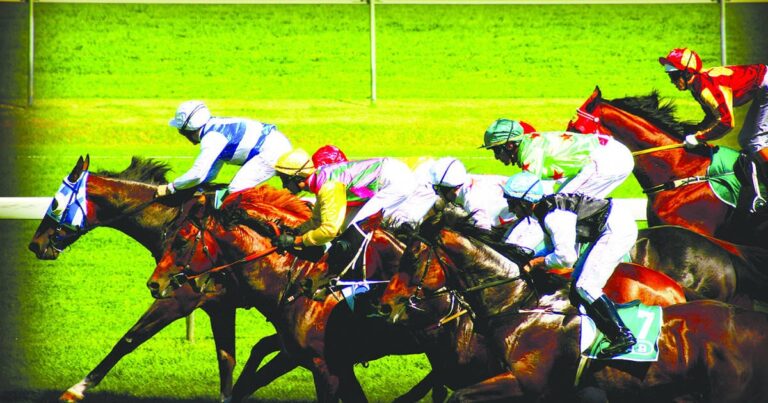
A debate on the use of whips was a highlight of the 2010 Australian Veterinary Association (AVA) Annual Conference. Andrew Harding, CEO of the Australian Racing Board (ARB) and Dr Andrew McLean, from the Australian Equine Behaviour Centre (AEBC) were invited to expose their views on this contentious topic. 

The debate’s inclusion in the conference program intrigued me because, on 18th May this year, the ARB had announced there would be no further changes to whip rules, and by organising the debate, the AVA were openly stating that the issue is not over and there is more to discuss.

AVA President, Dr Barry Smith, told Horses and People: “This is a topical issue and the debate was organized to provide an opportunity for the issue to be discussed in a public forum for the benefit of AVA members, and allow differing perspectives to be put out in the open and an exchange of ideas for the future.”

Back in August 2009, to address concerns about whip use and improve public perception, the ARB introduced new rules which resulted in huge attention from the media when a month later, jockeys in four states held snap strikes and threatened to disrupt the Spring Racing Carnival if the new rules came into effect. The rules were relaxed which pacified the racing industry, but not welfare organizations or the AVA it seems.

Andrew Harding was keen to point out that it was the ARB “as diligent self-regulator” who was responsible for initiating the discussion on whip use, explaining that prior to 2008 there was very little debate, and they had received a lot of criticism from both camps for opening up the issue.

So why did the ARB feel the need to act? Because attendance and public interest in racing is waning. Mr Harding said “…[the ARB] were of a view that in terms of speaking to future generations X, Y, etc, the sight of the whip in the fashion it was being used in Australian Racing was a turn off…”

I commend the ARB for recognising that whip use is of concern and their attempt to do something, (even if the motivation is commercial rather than ethical) but is it fair to rely on regulation to moderate where and how horses are hit?

The industry is adamant that whips cannot be banned because they are necessary for ‘safety, correction and encouragement’, so the ARB feels the only option is trying to ‘control’ whip use with rule reforms. The new rules attempt to:

  1. Control the number of strikes a horse can receive – the whip can only be used forehand, on non-consecutive strides, and only 5 times until the last 100m after when the jockey can use his/her discretion. (This means it is ok to strike the horse around 18 times.)
  2. Limit the force with which jockeys strike – by specifying the jockey’s arm must not be raised higher than shoulder level.
  3. Reduce the pain those strikes can inflict – by using padded “shock absorbing” whips which are now mandatory.

But, rather than try to ‘control’ whip use by limiting the number of times, the force of the strikes or the pain they cause to horses, and pretend that whips are used for ‘safety, correction and encouragement’, the racing industry could start by calling a spade a spade and admit that the way jockeys and track riders use the whip as they approach the finish line equates to punishment for failing to perform.

In times when most of us enjoy a high standard of living and uphold high moral values it would follow that we  should apply the basic right to be free of pain to all animals. This however, seems to offend many, who consider the whole whip debate ‘political correctness gone mad’. But ethics aside, with just a little education, even those who defend the right to whip would find it hard to argue against the fact that punishment is a very inefficient way to train horses. There is more than enough research that shows it inhibits learning, and that punished animals don’t try new responses.

This is what Dr Andrew McLean explained to the debate’s audience – There is a much more efficient and effective way to train horses, and horse people just need to be more educated.

So why is this message so difficult to get across? Probably because the horse industry is still chained to 6000 year-old traditions and a majority is reluctant to admit there is an urgent need for education – particularly education in learning theory. The generalized poor understanding of how horses learn leads to poor training results and behaviour problems that in turn lead to wastage and reduced welfare.

“…if jockeys and trainers really understood how horses learn, they would find much better ways to train them to accelerate. They would also find there is no need to use whips, certainly no place for punishment, and this better training would have better results.”  Dr McLean said and he proposed that trainers and jockeys should be focusing on training acceleration, rather than relying on fear to improve a horse’s performance on the race track.

Do horses run faster when they are scared?

“Yes, if you hurt a horse with the whip it will run away” said Dr McLean, “but is it using the best biomechanics and its physiology to the maximum advantage? By using the whip you don’t end up producing the best athletic performance in racing, you simply elicit a fear response, it makes much more sense to train”.

So horses can race without whips?

“Horses learn to stop and go by responding to the rider’s legs and rein pressure/release signals, including galloping, so well trained horses should not need whips. Thoroughbreds are generally hyper-reactive by nature, so it’s not difficult to teach them to go forward without whips at all. Because they have a high flight response, they are easy to encourage forward… more than 90% are quite easily motivated to run. A whip ban would force trainers and jockeys to become real trainers.”

But in the real world, are hands and heels enough to ‘remind’ the horse he needs to try harder? There’s a lot of money at stake!

“Well in some cases it won’t be, but that’s the horse that won’t be the winner, the one that shouldn’t win and be bred from. Only some horses win in the current punishment system, so yes there will be some that don’t.”

Don’t you use whips in your training system?

“There would be no welfare issue with whips if we use them via negative reinforcement (pressure/release), which is where we reduce the pressures to small cues… I think a long whip is really handy to train certain things because you can’t reach the area you want to tap with your hand for example, but the whip as a punisher should be banned in all sports. At the moment jockeys and track riders are using the whip in a haphazard fashion, thinking that the animal knows what it should do, and it knows what the whip will do, therefore they just have to use it to make it go faster and if it doesn’t go faster when they use the whip it doesn’t really matter, maybe they tried.”

“What they don’t recognise is that when they stop using the whip, when the whip is withdrawn and the horse didn’t go faster they are actually de-training acceleration. They need to recognize they only need to train it as a light cue, but I don’t see there is a necessity to use it to be honest, because I think if the horse is trained very well to go from the rider’s leg, and you can teach him to accelerate from the rider’s leg, I don’t see that the whip is going to be a better cue.”

Dr McLean says that if the riders feel they have to use the whip, they should simply use it with a tap-tap-tapping motion that gets faster until the horse goes, and the important thing is to stop tapping the instant he goes or gives an acceleration response, that’s really the key. If the timing of the release is not immediate and clear, some horses won’t know what was being reinforced. He said that learning theory could really offer the golden age of training in all horse sports if only people could see how this technology could be used. “We’re a long way from that, but I think that’s what we should be heading towards” he added.

Dr McLean finished the debate asking for: “some commitment from Andrew Harding on a move towards an education system for perhaps licencing trainers and jockeys. Understanding of learning theory is a new understanding of how animals learn things, how you can reinforce a behaviour, and that’s what we need – for trainers to ask: how can I reinforce this horse’s acceleration? This has huge potential.”

Andrew Harding did not take up the challenge: “I’m not going to dodge the question and I’m not going to give a commitment that I’m going to go and tell Bart Cummings how to train horses, I’m just not”. He finished saying that the next step the ARB was taking on the issue was funding research on the effect of padded whips.

I asked the AVA for their position, Dr Barry Smith said: “The carriage and use of whips is a longstanding practice in the horse industry, however the welfare of horses is paramount.

“There are differing views on the need for whips and the AVA would encourage research to define whether whips are necessary or not. The views of all concerned must be taken into account during discussions – jockeys, trainers, owners, regulators, equine behaviourists and so on.

“The AVA would support a program of ongoing education of horse trainers in modern aspects of behaviour theories which should be used when educating and training horses. This would also have positive flow-on effects to OH&S issues for people who work with horses as better educated and trained horses are more predictable and less likely to injure people who work with them”.

My view? There would still be winners without whips, and the notion that people would find better ways to train horses has to be a win-win situation. Finding ways to improve and safeguard the welfare  of horses is not just something that makes me feel better, it is essential to ensure we see the horse sports we all enjoy continue and thrive in the future.


Setting Good Ground Rules Part 2 – Stop and Go

Setting Good Ground Rules Part 2
Stop and Go

In this Part 2 of our series I will explain how I train the basic responses of “go forward” and “stop” from the ground.

Before you start

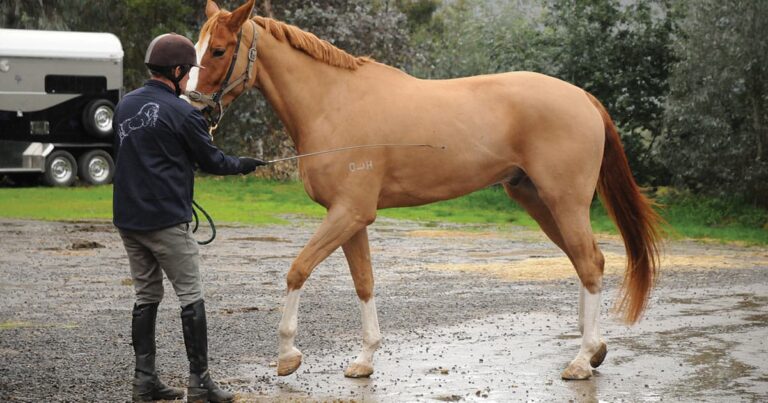
Make sure you are wearing gloves, a safety helmet and appropriate boots, and work in an enclosed area with safe footing. Your horse should wear a suitable halter and lead rope or a bridle, and you should have a long dressage whip available.

Handler position:

Stand facing the horse level with his head. In the early stages of training you want to face the horse so you can clearly see what he does with his feet. Hold the lead rope just below the clip. Don’t worry if your horse is looking around, don’t try to control his head movements at this stage, concentrate only on what his legs are doing. Looking around is just a sign that the horse is insecure, and when he starts to understand the training, he will become more relaxed.

Training “stop” is first trained with a step back. As we explained last month, the muscles a horse uses to stop, slow down and step back are the same, and the step back is actually a deeper response to stop. I therefore normally start the session by seeing if I can get the horse to step back one single step from light backward pressure from the lead rope or reins, and one step with each front leg.

“Step Back” – The basic Attempt

You are aiming to get the horse to step back, even just one small step. That’s what we call a basic attempt, which must be rewarded with a release of pressure. From there you can repeat the exercise until he takes a larger, clearer step, one step at a time.

With pressure, the basic rule is to apply a light pressure and if within two seconds you don’t get a response, increase it with a vibration of the rein and release at the first sign of a basic attempt.

Make sure the horse has completed a single step back before asking him to do another. Asking for multiple steps “back-back-back” is likely to confuse him. As you work on each step from each front leg, you may notice that one leg takes a smaller step than the other one, or he is a bit heavier when responding with one leg (it takes more pressure to get him to step back with one leg than the other), and the next stage would be to get him to take equal size steps with each leg, and to make him a little lighter. This is taking the response from a basic attempt to “obedience level”, but before I do that I prefer to work on “go” at basic attempt level.

“Go” – The basic attempt

To train the horse to lead forward from pressure, you need to remain standing in the same position as before, facing the horse and with your shoulder level with his head, so you can watch what his legs are doing, and you can clearly release the pressure at the exact right moment when your horse takes the step that you are asking for. Apply a light forward pressure on the lead rope, this will apply pressure to his poll. If he does not take a step forward straight away, you might need to pull the lead rope to the side a bit or towards you (taking care to stay clear of his feet). Pulling sideways can make it easier to get that first attempt to step forward which you can reward by releasing the pressure. Once again repeat the exercise until your horse takes a single step forward from light lead pressure.

Progress to obedience level

At this time I need to take the “step back” and the “go” responses to obedience level. At obedience level you are aiming for two clear steps (back or forward) from light pressure. This is when the long dressage whip comes in handy.

We train the whip as a signal using pressure-release in the same way we train the lead, reins or leg signals. We do it because it tends to be more motivating and harder for the horse to ignore than other signals. You only need to use it with light taps, but they need to be quite close together, using a “tap-tap-tap” motion. You want to hold the whip not how you ride with it, but more how you would hold a tennis racket, with your index finger pointing down the shaft of the whip.

The long whip – habituation first

The first thing to do, is to make sure your horse is not afraid of the whip contact. You should be able to rest the whip on your horse’s body maybe around his wither area and if he should move forwards you can use your stop aid while keeping the whip in contact with his body. The horse should not learn that whip contact means “move”. Make sure he accepts the whip on his shoulder area, on his ribcage, and even on his chest, correcting any steps forwards that he might take. If your horse is oversensitive to the whip contact, make sure you spend enough time and be careful not to “tickle” him or bump him with it, rest the whip quite firmly against his body. When you can repeatedly remove the whip and rest it on his body again, you know you can start to train the whip as an aid and train him to step back or step forward from a light whip-tap.

“Step back” from the whip

You will be tapping below the knee, on the front of the canon bone area. You first apply your light lead pressure, and if the horse is delayed, or heavy, then you “tap-tap-tap…” one leg until it steps back, and stop tapping the moment he does. Think about which leg he is likely to move first and target that one (normally the one which is slightly in front). If the horse tries to go forward you might have to correct him with the lead rein, you may need a small vibration, keep tapping until he does take a step back, and stop tapping the moment he does. You are teaching your horse that when he feels light pressure on his nose, he should step back to avoid the “tap-tap” on his legs, or the stronger vibration on his nose. If you are really consistent with timing the increase of pressure and the release of pressure, the horse will learn this very quickly.

Remember to work just one step at a time with each leg, one foot – one complete step back and release, and then the other foot.

You can also operant condition the whip taps without applying any initial lead pressure. This means you only tap without giving any other signal, until the horse attempts a step back and stop tapping when he does. This makes it very clear to the horse that the tap on the canon bone means he should step back.

Once your horse can do one step backwards from the whip with each front leg, you then aim to get two steps backwards from light pressure. When he takes a step back with one foot you tap the other so he takes that one back and stop tapping to reward the complete stride. When your horse responds to the light lead pressure with two clear even steps, you are at obedience level.

“Go” from the whip

You start by resting the whip on the horse’s ribcage, in the area where your legs will be when you ride him. Make sure you can first rest the whip on him, correcting any forward or backward steps he takes. Your dressage whip should be long enough, about 1 to 1.1 m so you can still stand at your horse’s head, holding the rein under his chin, with the whip resting on his belly. Apply a light lead pressure on the rein forward, and if you feel there is no response, start tapping lightly, until the moment that he does take a step forward when you immediately stop tapping and point the whip down to the ground. He may do more than one step forward, that’s ok, you just ask him to stop. We train our horses not to follow us, but to only respond to the pressure, so we ask for the step forward without walking forward ourselves.

As he learns that the whip taps mean go, he may not let you rest the whip on his body anymore, preferring to step forward, and here it is important that you go back to whip contact, asking him to stand still before you ask him to step forward again with a light tap. If you don’t he will start moving as soon as he sees the whip coming, and he will learn to be scared of it. The acceptance of the contact of the whip is almost more important in the early stages than the response to the tapping. he must be completely relaxed about having the whip touch all over his body. Once he is relaxed he will find it much easier to discriminate between neutral contact and the aid/tap. Again with consistent timing, your horse will quickly learn to avoid the whip tap by responding to the light forward pressure of the halter, and this is when you have trained go to obedience level.

The time taken to train each response to obedience level depends on the horse and the situation. Often, horses a more controlled by the environment than their handler, and in that case it will take longer. You need to be aware that in the beginning, every time you change the surroundings, even if you turn him around and he sees a different view, he may again be more controlled by the environment and you may need to go back over what you thought he already had learned. If your timing is quite good this basic training in hand shouldn’t take long.

Relaxation is a sign of progress

You should notice that your horse starts to relax as he understands the stop and go, he may lick his lips, snort, shake his head, this is all normal, other signs of relaxation are lowering the head, not looking around as much and slowing the blinking down.

The next stage in the training is to train and test “park”, and this will be the subject of next month’s article.

[wpdm_package id=60790 template=”link-template-calltoaction3.php”]

Setting Good Ground Rules Part 1 – Introduction

Setting Good Ground Rules
Part 1 – Introduction

This is Part 1 of a series of articles about training the horse in-hand. The AEBC has recently published “Academic Horse Training” by Andrew and Manuela McLean which covers all the aspects of this effective, evidence based system.

Ground work is an essential part of the horse’s training, we lead it to and from the paddock every day and we want to make sure he leads obediently, stays by our side, parks without moving while we brush him, rug or un-rug him, handle his feet etc. We also need to teach the horse to move forwards, backwards and side to side so we can move him around while we work around him. Teaching the horse to stop makes it easier to habituate him to all the different things he will have to deal with, from equipment and rugs to having a rider on his back, because the stop deletes any quickening or flight responses and speeds up the habituation process.

When to start…

Depending on the situation, with young foals, I like to do some basic handling and leading early, especially if the mare is going to be bred again while the foal is at foot. Ideally also, we would have worked the mare in hand before the foal was born, because the foal will to some extent learn from its mum, so we need to make sure she is used to standing calmly and follows the instructions of her handler. This being the case, we would bring the mare into a confined area and have a helper stand her in a safe position while we work on habituating the foal to human contact. We do this by placing a hand around the wither area and removing it when the foal stands still. Doing this reinforces the standing still behaviour and we will work quietly this way and gradually progress from the hand contact to the feel of the equipment first around the neck and shoulder, then towards the head until we can put on the halter. Starting early is the ideal, but there are cases where we don’t get the chance to work with the foal until near weaning time. In any case the habituation process would be very similar.

The setting…

It is always a good idea to start in a stable or a small yard say 4-6 metres diametre with safe footing and fencing, then progress on to an arena before going on to more open spaces. If possible you should choose a quiet location where there aren’t too many distractions.

The equipment…

I prefer to train the foals and young naive horses with a normal webbing halter. I feel that when young ones are learning everything from scratch there is no need to use a rope halter or anything more severe because they don’t understand pressure and how to respond. You should however train using something stronger like a rope halter or a bit if it is part of the equipment you will use for competing for example, or to re-train a horse. With the young ones, we introduce the bit at around 18months. This process is partly habituation but they also need to learn how to respond to the bit pressure. I like to use a straight mouthed rubber coated stallion bit for various reasons, one is that a straight mouthpiece is easier to slip into their mouth, the other is the rubber coating is less harsh against the teeth than a metal mouthpiece.

For a lead rope I prefer a lightweight nylon braided one (like the one pictured top right). I find cotton leadropes too stretchy, the stretch makes the pressure/release less clear, and the yatching type ropes are too heavy and make it harder for the horse to feel a release clearly.

You will also need a long (dressage) whip, and one which is stiff enough so you it will clearly stop tapping when you do. It also has a more obvious contact when you place it against the horse’s body during the habituation process.

You should always wear gloves, a safety helmet and boots for training in hand.

The basic training goals…

At the most basic level, during the first training sessions we teach the horse to ‘go’, ‘stop’, ‘step back’, and ‘park’. Which one we train first depends on the horse. In the case of a foal we normally start from a standstill, so we can target training single forward steps from each front leg. Young horses tend to take one maybe two steps and stop of their own accord, which is great because we can do more repetitions of ‘go’ and keep the lesson simple. In the case of re-training we may not be able to train just ‘go’ or just ‘stop’, we may need to work on both. We may need to start training stop first, for example if the horse is ‘pushy’, or if he is what people call ‘lazy’, we might start with ‘go’.

Training ‘stop’ is most important because it deletes any quickening and flight responses. The muscles a horse uses to stop, slow down and step back are the same. The step back in fact is a deeper response to the stop, so training horses to step backwards to a light pressure on the noseband or the bit actually improves their stop. The step back is in itself very useful to correct any unwanted movements, and this also ties in with the ‘park’ response where we teach the horse to stand still until we ask him to move with the leadrope. He must not move even if we walk away. ‘Park’ can be used many times and it also teaches the horse to stand in the float, in the barriers, tie up areas, it is a very useful tool, and if the horse understands stop and step back, park is easy to train.

It is important to keep the training sessions short, especially with young horses, and it seems that the most effective way is to work in sets of between 3 and 5 repetitions with a break between each set, aiming to finish each task with 3 consecutive, correct or improved responses. Young foals should be trained for very short periods.

You may notice that at the start of the training the horse is distracted and tense but you should notice that as he begins to understand the lesson and respond to lighter aids, he also starts to show signs of relaxation, he may chew, lick his lips, snort, shake or lower his head. These are all signs that you are making progress.

[wpdm_package id=60774 template=”link-template-calltoaction3.php”]

Strangles

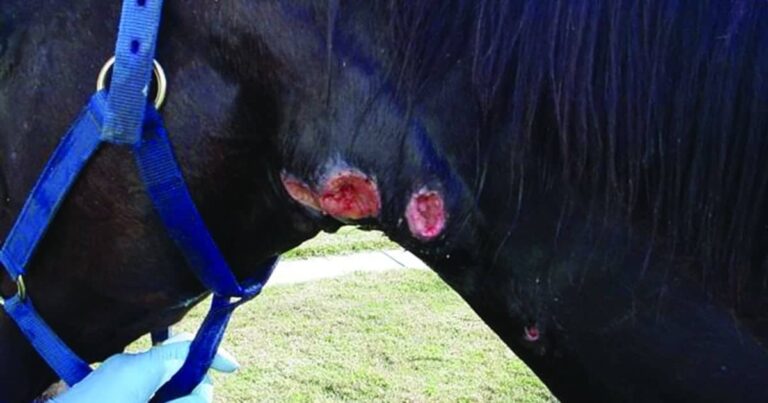
Strangles is a contagious disease of horses caused by the bacterium Streptococcus equi. Typical signs include fever, loss of appetite, soft cough, purulent nasal discharge and swollen lymph nodes of the face, which may often abscessate and burst.

The swollen glands can restrict the airways – hence the name “Strangles”. In some cases, however, the disease may be very mild, causing only slight nasal discharge without a raised temperature or swollen glands. A carrier state without any obvious clinical signs is also possible.

Horses of any age can be affected. Younger animals (up to 5 years of age) are more often affected as they have had less opportunity to develop resistance. The disease occurs throughout the world and causes heavy economic loss in terms of the cost of treatment, quarantine measures and occasionally the death of affected animals. It is one of the most frequently diagnosed infectious diseases of horses.

What causes Strangles?

Streptococcus equi is a gram-postive bacterium, classified as Lancefield group C. It is not a normal inhabitant of the upper airway of the horse, and does not require prior infection with viruses to allow it to become established and cause disease. There are two features of the organism that contribute to its ability to cause disease:

  • It is surrounded by a capsule of hyaluronate, which has a strong negative charge that appears to repell phagocytic cells (such as neutrophils – one of the white blood cells). Hyaluronate is also widepread throughout the body and its presence in the bacterium is likely to help “disguise” it from the body`s defence mechanisms.
  • M-protein- a component of the cell wall – enables the organism to adhere to the epithelial cells of the nose and throat. It also protects the bacterium from digestion by phagocytes.

The severity of cases of strangles can vary. This may be because of differences in immunity in the animal or different strains of the bacteria. In one group of outbreaks, nearly a quarter of the S equi isolated lacked 20% of the surface M-protein but were still able to cause strangles.

What are the signs of strangles?

The incubation period may be as short as 3 days or as long as 14 days. The first sign may be fever and a clear nasal discharge, which soon becomes purulent. Swelling develops in lymph nodes of the head . The swelling may be so severe that the horse has difficulty breathing. The affected lymph nodes usually take 7 – 10 days to rupture. In uncomplicated cases, the disease usually runs its course in about 3 weeks. Infection is usually restricted to the head and neck and most horses recover uneventfully.

In up to 8% of cases, it may spread to other organs, when it is known as “bastard strangles”, and can be fatal. Abscesses can occur anywhere in the body, but are most often found in the lungs, abdominal lymph nodes, liver, kidney, spleen and brain. Another complication which is usually fatal, but less common, is “purpura haemorrhagica”. This is an immunecomplex reaction to the streptococcal antigen.

Affected horses are depressed, and have marked swelling of the legs and belly. They may bleed into the gums and other organs such as the lungs.

Other complications that have been reported include laryngeal paralysis, infection of the heart (endocarditis, myocarditis) and brochopneumonia.

How does it spread?

The most important way strangles spreads is by direct contact between infected and susceptible animals. This requires fairly close contact between the horses. Indirect transmission is also common. S. equi will live for long periods in shared water sources. As a result, the disease can spread quickly in grazing animals sharing the water supply. The infection can also spread on tack or handlers and their clothes. Particular care should be taken with sleeves and other areas likely to come into contact with the horse’s face. The ease with which the disease spreads through groups of animals depends largely on management practices. The incubation period of strangles is usually less than 14 days. However, the interval between new cases in an outbreak can be far longer – up to 3 weeks or more – because infected horses can excrete S. equi for long periods after clinical signs have disappeared.

Strangles can appear without the introduction of obviously sick horses. There is increasing evidence that carrier horses play an important role in the spread of infection to susceptible animals. A recent study found that 15 / 22 outbreaks (68%) produced at least one horse from which S equi could be isolated more than 4 weeks after the disappearance of clinical signs.

The guttural pouches are the main site of S. equi colonisation. Carrier animals may remain a potential source of infection for a considerable time. An earlier investigation found that some horses continued to harbour S. equi for many months after signs had gone.

One horse remained infected for over three years. Carriers are often released into a susceptible population in the belief that they no longer present a risk. So, many outbreaks of strangles occur after new animals, which are unknown carriers, are introduced into groups. According to Richard Newton of the Animal Health Trust in Newmarket, England, “People can’t rely on the fact that horses just get over strangles and no longer pose an infectious threat after a particular period of time. This is a concept that veterinarians are only just coming to terms with, and so it may be quite new to most horse owners.”

How is it diagnosed?

The clinical signs are characteristic. A horse with a swollen throat and a thick yellow purulent discharge almost certainly has strangles. The diagnosis should be confirmed by culturing pus from abscessed lymph nodes, nasal discharge or throat swabs. “Nasopharyngeal” swabs, taken from the back of the nose and throat, are most likely to detect the organism .

All confirmed cases of S. equi infection, in Thoroughbreds or animals in contact with Thoroughbred horses should be notified to the Thoroughbred Breeders’ Association. Cases in non-Thoroughbreds should be reported to the Australian Horse Industry Council.

Identification of carrier animals

Animals carrying S. equi can be difficult to detect and a negative result from bacteriological culture of a single nasopharyngeal swab does not prove absence of infection. Three consecutive swabs over a 2-week period greatly increase the chance of detecting a carrier, particularly if the horse has only recently recovered from the disease. Established carriers, however, can go undetected by culture of repeated nasopharyngeal swabs for 2-3 months.

Researchers at the UK Animal Health Trust have developed a PCR test to detect the DNA of S. equi.4 Polymerase chain reaction (PCR ) is a very sensitive technique. It can detect an individual molecule of target DNA, and so is able to identify a single organism. PCR in conjunction with culture is much more sensitive than culture of swabs alone.

The PCR test on nasopharyngeal swabs is most useful as a screening test to indicate which horses warrant further investigation. The next step in detecting carriers is to examine the guttural pouches. Most carrier animals show signs of disease in the guttural pouches – either purulent discharge or “chondroids”. “Chondroids” are hard dried aggregates of purulent material.) S. equi can be cultured from washings taken from the pouches.

How is strangles treated?

1. Treatment of individual animals.

Strangles is difficult to treat effectively because antibiotics do not penetrate the centre of an abscess where there is no blood supply. However, resistance to antibiotics commonly used against S equi is very rare, and so early treatment with antibiotics may be helpful if lymph nodes have not become enlarged. Each case should be assessed individually.

  • In the early stages of the disease, before abscesses have started forming, penicillin is very effective at killing the bacteria responsible.
  • Once an abscess has formed it is best to allow the absecces to burst. Antibiotics at this stage tend to “damp down” the infection, but not eradicate it completely, so it may flare up again once treatment stops. Fomenting the abscessed lymph nodes with hot cloths or compresses may encourage them to burst and drain. Most cases recover completely and are soon free from infection.

2. Prevention of further spread.

The spread of infection can be controlled by detecting infected horses early and isolating them until they are free from infection. Shedding of S. equi usually ends rapidly after recovery but may be intermittent. To detect carrier horses, it is recommended to take three nasopharyngeal swabs at 5-7 day intervals over a two week period and culture the swabs for S. equi. Three negative swabs indicate freedom from infection in the great majority of cases – but not all. Recovered cases may still be carriers despite undergoing three negative swab tests.

Young animals are most susceptible to infection and should be monitored closely. One approach to controlling an outbreak is based on that used successfully by workers at the Animal Health Trust (UK):

  • Isolate infected horses and those that had been incontact with them. Strict hygiene measures should be employed: eg dedicated equipment for each group, disinfection for stable staff, thorough disinfection of stable and equipment. Stop all movement of horses on and off the premises.
  • Monitor horses that have been in contact with sick animals or have shared the same pasture. Check their temperatures twice daily. An increase in temperature might indicate that the horse is about to develop the disease. Antibiotic treatment is likely to be effective at this stage.
  • Take nasopharyngeal swabs from recovered cases and in-contact animals on three occasions at weekly intervals. These samples should be cultured for Streptococcus equi. They can also be tested by PCR, for evidence of S equi M-protein, which is more sensitive.

 Place the horses in two groups according to the results of the swabs:

1. non-infectious :(S equi is not cultured, and at least the last PCR test is negative.)

2. potentially infectious: (S equi is cultured or detected on PCR.)

• Monitor the infected group by examining the guttural pouches. Carry out bacterial culture and PCR on samples from the guttural pouches.

• Treat any carriers:

1. flush the guttural pouches to remove any infectious discharges, and remove any “chondroids”.

2. give antibiotics (usually penicillin or potentiated sulphonamides.)

Is there a vaccine?

Over the years there have been many attempts to produce a vaccine to protect against strangles. No vaccine is currently available in the UK. Most of the commercially available strangles vaccines available worldwide contain the M-protein from the S equi cell surface- either in an extracted form or as part of the inactivated whole cell. These vaccines, however, frequently produce adverse effects and induce poor immunity against experimental infection. Recent research carried out in the Netherlands and Ireland in the search for a safe and effective vaccine against strangles has produced encouraging results.

Dr Tom Jacobs and his colleagues tested three different vaccines and three different vaccination routes in Shetland ponies. Two weeks after the last vaccination the ponies were challenged by intra-nasal application of a virulent strain of S. equi. A live vaccine, produced from genetically modified S equi and administered by injection on the inside of the upper lip appeared to be a safe and effective method of vaccination.

Researchers at the Animal Health Trust are currently working to identify different sub-types of S. equi using a variety of techniques including pulsed field gel electrophoresis and DNA analysis. They hope that by correlating their findings with information on the severity of the disease caused by each subtype they may be able to locate the genes which are responsible for severe disease. Hopefully this information will allow them to develop an effective vaccine.

NOTE FROM HORSES AND PEOPLE EDITORS:

In Australia there is a vaccine that is injected intramuscularly. This vaccine, like all strangles vaccines worldwide, does not claim to completely prevent infection but is expected to reduce the likelihood and severity of infection if used properly. Like other vaccines, it can also cause reactions in some horses.

Horses affected with strangles or known to have strangles within the past year should not be vaccinated, due to the possibility of developing an immune reaction. During an outbreak, only horses unlikely to have been in direct or indirect contact with infected animals should be vaccinated. 

Strangles is a highly-contagious disease with potentially devastating consequences. Horses likely to have contact with a variety of other horses should be considered for vaccination. Decisions regarding vaccination should take into account risk of exposure, any possible reactions and the consequences of infection, and are best taken in consultation with your veterinarian.