fbpx
Home Blog Page 48

Greasy Heel (also known as Mud Fever)

2

Greasy Heel

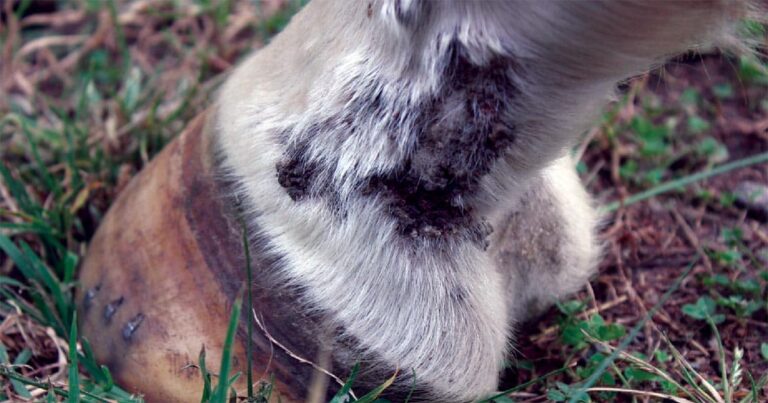
Greasy Heel, also known as Mud Fever, Swamp Fever, Mud Rash or Cracked Heels, is a descriptive term, not a diagnosis. Although it’s a relatively common presentation, horse owners tend to underestimate how complex this skin disorder may be, particularly in chronic cases. From minor infections to chronic granulomatous lesions, this is an extremely painful condition that requires immediate treatment and ongoing management.

Download your Fact Sheet…

[wpdm_package id=59901 template=”link-template-button.php”]


Recommended Reading:

Check out our ‘Ask the Experts’ article where we ask the question “Why Does My Horse Get Scabby Legs When it’s Wet?

Setting Good Ground Rules Part 3 – Training Park

Setting Good Ground Rules Part 3
Training Park

Many people wrongly expect the horse will know he is supposed to stand still when he is tied up or is in a horse box, when in reality we should first train every horse that once you ask him to stop, he should not move nor follow you until you ask him to do so with your lead rope or reins. This is what we call ‘Park’.  

Park is a fantastic technique to maintain and improve relaxation and it also helps to consolidate the halt.  It is great for horses that tend to fidget around, that are anxious, want to push into you, paw the ground when tied up, or generally don’t know how to stand still. It is also important because standing still is a must for all sorts of daily procedures, grooming, picking up their feet, saddling, bridling, mounting etc, and these tasks are all a lot easier when the horse has been trained to park. 

Park is also part of training the horse to stand during travel, to stand quietly in the racing barriers and in the vet crush.

I explained how the progress from a basic attempt to obedience level happens by training the “go” and “step back” responses to the whip tap. Once you have reached obedience level in “stop” and “go” you are ready to train “park”.

Obedience level in “stop” in hand means that your horse is able to stop in 1.5 steps (from walk) or step back two clear steps (from halt) immediately from light backward lead rein pressure, he should also step back from a single light whip tap. Obedience level for “go” in hand means he steps forwards immediately from a light forward lead pressure.

With the ‘park’ response you are aiming to teach the horse that once you have asked him to stop, he’s not to move or follow you, even if you move away, unless you ask him to do so with your lead or reins. We only want the horse to follow us after we give him the aid to move.

Some trainers specifically train their horses to follow them, but there are many times when you need the horse to stand still while you move around, and it is too difficult for the horse to differentiate when he should follow and when not.

Say you wanted to move a couple of steps away to pick up a brush, you don’t want the horse to follow you, for a start he might be tied up. If you move towards his hindquarters say to pick his feet, again you want him to stand still in one spot, you don’t want him to be backing away from you or moving sideways around you. So I specifically train horses to always stand still until I give them the aid or cue to move.

TRAINING PARK

To train park we will still start facing the horse, so we can see clearly what he does with his feet. Start your “park” training in an area where your horse feels reasonably comfortable. Lead him to the spot where you want him to park and give him the stop aid (a light backwards pressure from the lead rein). He should stop in one and a half steps (if he doesn’t, or he feels heavy, you may need to refresh the “stop” lesson until you achieve obedience level again). Once he has stopped, move away from him, say 1m still holding on to your reins but without applying any pressure, and have your dressage whip ready to correct any forward steps he may take.

When you move away he will probably take a step towards you, the moment that he does, tap the canon bone of the leg he has moved until he takes a step back. It is important that he does take a step back and not just stop. He should step back to the position he was in. If he takes a step sideways with a front or hind leg, you also want to tap his canon bone and ask him take a step back. If he takes more than two steps forwards, you may have to use your lead rein pressure to make him stop, and then use the whip again to make him step back to where he was.

STEP-BACK FROM THE WHIP

You may have noticed that I am asking the horse to step back using only the whip, and no rein pressure. This is because the whip allows me to reach the horse without having to move towards him. The whip is like an extension of our arm, and from 1m away we can still use it effectively to achieve a step back. If we were to use rein pressure, we would have to approach the horse first, and instead of learning to stand still, we may instead teach him to step back when we walk towards him.

Once you have corrected him with a step back, move towards him again at least to where his head is, and then back away 1m again, he will probably take a step towards you again, so correct him again with a tap, making sure he does actually step back, and then move towards him again. Repeat this a few times, if you consistently achieve a step back each time he moves a foot, he will soon figure out that he is better off standing still, and you will be able to progressively move away further and further each time, until you reach the end of the lead rein or the buckle of the reins.

Try also going from one side to the other side in front of him. Basically you should be able to move anywhere the length of your reins allows while the horse stands still, but be sure to never put any pressure at all on the reins and be ready to correct him if he moves.

MAKING PROGRESS

When your horse is parking well, turn around and face in the same direction as him and without putting any rein pressure, walk forward from his shoulder, being ready to correct any forward steps with the whip if he should follow you. You should be able to walk past your horse without him moving, and can even take it further to doing some small running steps, again making sure you don’t accidentally put pressure on the reins. The reins have got to remain loopy at all stages.

Another useful exercise is to ask the horse to park, and while he stands still, back away to the end of the reins, then ask him to move forward with light forward rein pressure until he comes up to you. When he does, ask him to stop and re-park, then back away again to the end of the reins.

If the horse wants to look around, that’s fine, he’s allowed to look around as long as he doesn’t move his feet.

Many people have problems training their horses to stand still because they try to control the horse’s head and they do so by putting pressure on the horse’s mouth without making him move his feet, which becomes very confusing to him.

Be careful not to correct the horse’s head from moving, really, once they understand the task, which is that their legs are staying still, they will relax and they will tend to look around less. Looking around is a sign of insecurity that will dissipate when he keeps his legs under your stimulus control.

PROOF: PARK ANYWHERE, ANY TIME

Once you have your horse parking well in one area, you can progress by asking him to park in different places. You can start by turning him around so that he is facing in a different direction where he has a different view, then go and train him in other places and keep progressing until you can park anywhere and anytime.

When your horse has reached obedience level in “stop”, “go” and “park” and is focusing on you a bit more, you can also start to add voice commands like “stand” for park, “walk on” for go and “whoa” for stop. You say “stand” and walk away.

This is classical conditioning, and for the horse to learn the voice command, timing is important, you need to give the voice aid very slightly before and as you give the actual pressure aid. Even for “good boy” there’s no point saying good boy, waiting five seconds and then rubbing his wither, you have to do both at the same time for the horse to learn the association. For step back, say the word “baack!” and tap the canon bone as you say the last half of the word.

In the next article Part 4 we will explain about yielding and how to train it – both the shoulders and the hind quarters as this is a great way to achieve straightness and prepare the horse for turns and lateral work under saddle.

[wpdm_package id=60794 template=”link-template-calltoaction3.php”]

Why Does My Horse Get Scabby Legs When it’s Wet?

2

Why Does My Horse Get Scabby Legs When it’s Wet? A common problem seen when we have rain. Lets see what our 4 experts have to say about it.

Dr Craig Simon BVSc, All Horses Vet Services

Why Does My Horse Get Scabby Legs When it’s Wet?

The skin normally provides a protective barrier to the body, but if this barrier is broken, infection can occur resulting in scabby and inflamed legs. A common site for this infection to occur is on the back of the pasterns or heel areas, and white haired areas are often involved.

Mud fever is the common term used to describe this condition. It is essentially a form of dermatitis, which can be very painful causing swelling, crusting and lameness in some horses.

The bacterium that is normally involved is called Dermatophilus congolensis. The bacteria flourish in areas on the body that are subjected to moist conditions as constant wetting causes damage to the surface layer of the skin allowing infection to develop in the deeper tissues. Left untreated the skin can get very inflamed, thick, scabby and painful. Other bacteria can then invade causing secondary and mixed infections.

As moist conditions predispose horses to this disease, prevention is geared towards reducing or removing contact with wet grass or stables. Good stable management is very important, ensuring the bedding is kept clean and dry. If possible avoid prolonged wetting during rainy periods by allowing access to stables or high ground. Even the dew on long grass in the morning can lead to mud fever. If your horse is this sensitive then it is sensible to wait until the grass dries before turning the horse out.

Linn Higgins, Herbalist, www.herbs4horses.net

Why Does My Horse Get Scabby Legs When it’s Wet?

It sounds as if your horse has Greasy Heel, also known as Mud Fever. Symptoms include scabs around the heel and pasterns. This tends to occur in horses on boggy ground, or after extended periods of rain, when the pasture becomes muddy. This sets the ideal conditions for fungal infections to flourish.

Natural treatment includes washing down the legs with natural shampoo to remove any mud and to clean the area. Rinse well with clean water. For the final rinse, add 20 drops of Lavender Essential oil to 1 cup of water. Lavender has traditionally been used herbally for its antiseptic, wound healing and insect repellent qualities.

Gently pat the legs dry and apply a herbal cream. Anything that contains Calendula is best; the flowers of this plant have been used for centuries for their antifungal, antiseptic and wound healing qualities. Cover cream with plastic wrap and then lightly bandage.

Leave 24 hours, remove bandage, then wash away any scabs that come off easily. Avoid pulling scabs off (very painful for your horse). Repeat this process daily. When all the scabs are off, continue this regime daily, but leave un-bandaged, until all the hair has grown back in.

My favourite cream for Greasy Heel is Herbal Healer for Horses. It contains high concentrations of Calendula and has been thickened with shea butter, so it won’t slide off open sores. It also has essential oils regarded as natural insect repellents.

CAUTION: Watch closely as Greasy Heel can progress into cellulitis, which is very serious, and requires urgent veterinary treatment.

Sally Hart, www.chemkol.com.au

Why Does My Horse Get Scabby Legs When it’s Wet?

Greasy heel appears on lower legs as patches of scurf beneath hair that looks matted or sticky. Under the scurf the skin will be red, and oozing. Greasy heel is also sometimes known as mud fever. Cracked skin in the pastern areas can be difficult to heal since the area is always flexing as the horse walks. The pain from the inflamed skin can cause the horse to appear lame.

Left untreated the skin can become deeply cracked, and infected. If paddocks are muddy, it may be hard to provide a place where the horse’s hoofs and legs aren’t wet. But if the horse’s legs are constantly damp the bacteria that causes grease heel can thrive. Washing daily with Anivac Pure oxygen fungal wash will prevent greasy heel and other bacterial infections in poor conditions including muddy paddocks or damp stables.

Greasy heel may be more prevalent in the spring when paddocks are muddy and damp. Don’t allow Dampness from urine to build up in stables. Mild to extreme greasy heel can be treated by brushing away any dirt and dead hair, soaking with Anivac Pure Oxygen Fungal wash. Leave the Pure oxygen on the skin and Keep the area clean and dry, continue daily treatment until the condition is gone. Don’t apply wraps or bandages that may hold in dampness. Keep the horse in a clean dry area to prevent recurrence. Any brushes or equipment used on a horse with grease heel should also be cleaned in Pure Oxygen fungal wash before use on another horse. It may be easier to keep a separate set of brushes for each horse being treated to prevent cross-contamination.

Anivac Pure oxygen Fungal wash is a safe blend of Accelerated Hydrogen Peroxide and fungicidal solution which was away bacteria quickly and easily. Just soak in and leave to dry. See results in less than 24hrs. 100% money back guarantee.

Cathy Tighe, Homeopath, www.healwithease.com

Why Does My Horse Get Scabby Legs When it’s Wet?

This condition is generally related to but not always the Streptococcus bacteria or the Dermatophilus Congolensis bacteria. It is know as either mudfever or greasy heel and generally presents as painful sores and scabs, with inflammation, swelling and sometimes infection.

It is one of those issues that settles well with antibiotics. The antibiotics suppress the symptoms back into the body but don’t actually release the bacteria. When conditions are right – wet, humid, high grass, etc we see the mudfever flair up again.

Using energy remedies to treat symptoms and release the bacteria we can stop the ongoing cycle and achieve a long term healing result, without adding more toxins to the body.

If this has been a long term issue with your horse and you have tried lots of chemicals over the period, it will take time to work back through the layers and achieve a good healing.

Read this article complete with pictures [wpdm_package id=59891 template=”link-template-button.php”]

Check out our Greasy Heel Factsheet here.

Holistic Management for Horse Properties: Part 5 Practical Guidelines

Management guidelines. In the previous edition we discussed the process of decision-making and the seven tests that assist you with determining if you are making economically, ecologically and socially sound decisions for your horse property. This has been so far very theoretically, and in real life things may turn out differently.

 In this part, I will highlight some practical guidelines for management to help you better use the tools to manage the ecosystem processes on your property.

The management guidelines will influence any further decisions you test because they in fact help to shape those decisions – providing definition and detail that might otherwise be lacking.

 MANAGEMENT TOOLS

So first an update about which tools are available to us to manage the four ecosystem processes:

Money & Labour: One or both of these tools is always required.

Human Creativity: Key to using all the tools effectively.

Fire:  The most ancient tool.

Rest: The most misunderstood tool.

Grazing: The most abused tool.

Animal Impact: The least used tool.

Living Organisms: The most complex tool.

Technology: The most used tool.

MANAGEMENT GUIDELINES

The following insights and ideas derive from the practical experience of people who are using these tools. The different guidelines apply different tools or situations:

Learning & Practice (Shifting Paradigms) relates to Human Creativity.

Learning how to manage your property holistically is very much a practical exercise. The theory that was provided in the previous articles may help you in understanding the concepts, but in action we can see the results. There is no doubt that you will encounter challenges when you change your plans and management on your property. For example, you may have managed your property for a long time in a certain way, so trying the new approaches may feel daunting; however by practicing you will find out what works and what doesn’t – this is what the feedback loop (see page 46) is all about. It helps us in monitoring the decisions and plans we have made for restoring and improving our horse’s pastures.

Organization & Leadership (Nurturing Creativity) relates to Human Creativity.

Holistic Management is a proactive process that will ensure that what you want to happen actually does happen. Your ability as an organiser to for example, make your property a better environment for your horses, will depend largely on how you think, plan and create. You therefore have to at times be creative and change your plans to get a more desirable outcome (feedback loop). If you are running a (horse) business you may have to review your leadership skills and practices to be able to support creativity in your organisation.

Marketing (Developing A Strategy in Line with Your Holistic Goal) relates to Human Creativity.

This guideline will apply for people that run a (horse) business and include the basic steps to develop a marketing strategy for your products or services.

You need to develop a product (if you are looking at starting a business or adding a services or product to your business); identify your customers and meet their needs; get the product/services to the customers; promote your products and services; establish a price for your products and services; and retain your customers.

In the Holistic Management framework however, you have to test your strategy to make sure that it is in line with your holistic goal.

Human creativity is dynamic and every person will use the formula that best applies to their situation – there is no right or wrong answer. You will have to test your new developed plans or actions and by using the feedback loop (described in more detail later) you will adjust accordingly to achieve your personal, property and horse goals.

Now lets move on to the guidelines that specifically address the management of land, livestock, wildlife, crops, and populations of living organisms.

Time (When To Expose & Re-expose Plants to Soils) relates to Grazing.

If you own horses (even if you don’t have your own property) you will be connected to the land, and will benefit from the optimum functioning of all four ecosystem processes (see part 3).

When managing paddocks and pastures it is important to safeguard enough foliage for your horse’s dietary needs and avoid overgrazing, compaction and all those other problems we regularly encounter on horse properties.

In part 2 of this series we talked about the 4 key insights in Holistic Management – one of these insights was that overgrazing is linked to the time plants are exposed to animals rather than the numbers of animals. So what does this mean?

If you manage 4 horses who live together in 5 acre paddocks and have a rotational grazing system of 3 months per paddock, unless you carefully look at how your grasses are responding over time, you actually have a set-stocking situation.

In natural systems herbivorous herds will move in large numbers to different foraging areas and will only spend a short time in each area before moving on – so you have high impact but only for short time. This is something Holistic Management takes as a guideline and why they refer to ‘time grazing’ rather than ‘rotational grazing’.

But how do we time the exposure and re-exposure of plants and our horses?

There are a number of variable factors that affect one’s ability to plan the moves of animals to minimise overgrazing, so a systematic accounting for time is nearly impossible.

Grazing animals select different plants and different parts of plants in different seasons. Different plants recover at different rates and the plants on the different parts of your land will have different growing conditions. So the best we can do is to monitor the results, and modify necessarily. Monitoring, growth rates, recovery periods and time grazing will be described in more detail in following articles dedicated to Holistic Grazing Planning.

Stock Density & Herd Effect (Using Animals to Shape the Landscape) relates to Animal Impact.

Animal impact refers to all things grazing animals do besides eat. It includes trampling, dunging, urinating, salivating and rubbing. Some of these things have generally been considered as inconvenient – but can be a very important tool to restoring land, especially in brittle environments.

What does animal impact do?

Hoofed animals tend to compact soil, as at every step they concentrate a big weight on a small foot. Herds of animals have been used to compact road beds and earthworks.

When animals are excited or closely bunched, their trampling causes breaks and irregularities.

Animals tend to speed the breakdown and reduce the volume of plant material returned to the soil surface through their dung and urine. They also speed the return of uneaten old plant material to the soil surface by trampling the litter down.

Whether any of these tendencies works good or ill on the land depends entirely on management, particular time factor, not their intrinsic nature.

A long hold belief is that the ‘numbers’ of animals are the cause of the problems we experience on our properties and land. However it is ‘time’ that is the most important factor!

When herds of animals are exposed for short periods to the pastures and land you can see rapid recovery and growth of plants during the resting period. In contrast, if you set-stock and don’t time the grazing period of your animals, you may find that grasses are so damaged that the recovery time is slow or no growth is happening at all due to the compaction and erosion

 Burning

(When & How, and What To Do Before & After) relates to Fire.

Monitoring the soil surface for change will help you determine how frequent a burn should be. When a periodic fire every twenty to fifty years can do well, a burn every two years, by exposing soil, can lead to tragedy. So have a look at the ‘cause and effect’ before you use fire as a tool to manage your property (see part 4).


When you manage holistically, the most common justifications for burning include:

  • To invigorate or freshen mature or senescent grass plants, for some reason, animals cannot use, or in cases where you want to sustain fire-dependent vegetation.
  • To invigorate and thicken up bush as cover or feed for wildlife
  • To expose soil in patches to create different communities that can support greater diversity of plants & animals.
  • To reduce woody species that are fire sensitive
  • To provide intense disturbance to a community n which many dead plants are hindering growth.

Population Management & Cropping (Look to Age Structure Instead of Numbers, Diversity Instead of Single Species) relates to Living Organisms.

The living organisms tool, involves all life i.e. plants & animals; and plays a role in the forms of production and the future resource base you described in your holistic goals, regardless of the type of business or institution you manage.

When we nurture crops or domestic animals we tend to forget that these living organisms are the context of a dynamic community. We assume that the communities they inhibit will adapt and sustain themselves – which is generally not the case. We then hope that technology will enable us to protect our harvest, or improve our pastures (chemical pesticides and fertilisers).

It is best to take some time to understand ecological processes and how they function in order to better understand the relationships that exist among the living organisms that populate any biological community. This will enable you to concentrate more on preventing the problems and less on developing band aid cures that, in damaging ecosystem processes, only create more problems.

These guidelines help you work with Nature (and humans) more effectively in using the tools to move you toward your holistic goal.

The Feedback Loop

Once you create your plan, or implement a decision, you should determine what you will monitor to ensure the plan is on track or the decision was the correct one. If you find you are going off track, then you need to implement some form of control (change what you’re doing) to get back on track, or replan entirely if things have gone too far.

You must monitor to produce the result you desire, not to see what happens. The feedback loop is essential to creating a responsive plan. People usually make a decision or develop a plan and then hope for the best. If you recognize that creating a feedback loop is actually part of the decision, then you develop a habit of determining monitoring criteria as part of your plan or decision so you can easily correct course at the earliest point rather than waiting until there is a train wreck. The key is to discern the earliest indicator of change and be sure to complete the feedback loop by controlling or replanning when things go off track.

When your plan or decision concerns the environment, always assume you are wrong— because nature’s complexity is more than we can ever fathom. In monitoring your financial plan, you know you will never come out right on the money, so monthly control is imperative. In a social situation, don’t assume you are wrong at the outset because a negative attitude can seriously affect morale, but still monitor carefully.

[wpdm_package id=52330 template=”link-template-calltoaction3.php”]

Holistic Management for Horse Properties: Part 4 The Seven Testing Questions

Socially and environmentally responsible. In order to support horses and provide the food they are designed to eat, we must take care of our land. To create healthy pastures and adequate food for our horses (and for ourselves) we must ensure that our decisions are socially and environmentally sound.

In the first 3 parts of this series we have been concentrating on the framework that guides holistic decision making:

The definition of the whole to be managed, for example your household, lifestyle horse property, and/or (horse) business).

The formation of the holistic goal (e.g. spending more quality time with your horses or build a sustainable horse property),  The four ecosystem processes that serve as the foundation on which the holistic goal rests (water & mineral cycle, community dynamics and energy flow), the tools for managing ecosystem processes (human creativity, money & labour, fire, rest, grazing, animal impact, living organism and technology), and the different effects some of these tools produce in brittle and non-brittle environments.

Now we can put holistic decision making into practice.

In this article we will review the seven guidelines for testing to ensure that our decisions are economically, socially and environmentally sound and will take you towards your personal, property and horse goals.

THE SEVEN Testing questions

Decision-making can be complex particularly in group situations such as family or if you run a (horse) business the employees. The seven tests supplement all the factors that are normally considered when making a decision: conventional research, peer pressure, gut feel, legal concerns, cash flow, intuition, etc.

Having seven tests that address both thinking questions and feeling questions, as well as short-term consequences and long-term consequences, helps to make sure the decision is a sound one and addresses the complexity effectively.

Testing also tends to bring up questions that may have been missed in the first round of exploring a decision or plan. You can play with the order of how you ask the questions, but try to move quickly through the tests and not get mired. If you do get stuck, you probably need to do more research. Always save the society and culture test for last, as it is the one feeling question that brings the decision back to your gut or heart.

 1. Cause and Effect

Does this action address the root cause of the problem?

This question forces you to define the problem and the root cause. Be sure you’ve defined the problem correctly. If it’s a resource issue, try to figure out which of the ecosystem processes is most affected, although in most cases it will involve more than one – e.g. erosion/compaction in your paddocks probably points to a problem with the

water cycle (run off, mud), mineral cycle (lack of healthy top soil) and community dynamics (loss of ground cover). If it’s a human issue, look towards the structure, design and management of your property.

2. Weakest Link

In testing the weak links, we will have to look at the social, biological and financial implications.

a. Social: Have you considered and/or addressed any confusion, anger, or opposition this action could create with people whose support you will need in the near or distant future?

It doesn’t matter if your decision is right when you don’t have support from others, or cause conflict.

This question helps you figure out how to make sure you don’t make any enemies or create misunderstanding. For example – you decide not to use herbicides to control your weeds, but rather use other tools. This view may not be shared with your neighbours who are conventional farmers and want to “safeguard” the improved pastures for their livestock. You should acknowledge this fact, not necessarily be put off by it, but in order to see if there are ways to successfully address your neighbours concerns.

b. Biological: Does this action address the weakest point in the life cycle of this organism?

By determining the weakest link in the life cycle you increase your ability to effectively improve the ability of the organism to either survive or reduce its numbers if it is a “problem” organism. For example: with this testing question you can research if the ‘biological’ methods for reducing weeds can be successful.

c. Financial: Does this action strengthen the weakest link in the chain of production?

This test is done in conjunction with financial planning when you determine the weak link in your household, lifestyle property and/or business.

The chain of production has three links to which human creativity is applied:

Resource Conversion: If it’s an issue of having insufficient ability to convert sunlight into raw resources (growing pasture and conserved forages for your horses) and/or not having sufficient raw resources (including money, capacity, talent, etc.), then it is a resource conversion weak link.

Product Conversion: This applies much more to the situation when you are trying to make money from your animals (e.g. livestock farming). However, horse businesses that breed horses and sell them, may encounter issues with product conversion. If your raw resources are plentiful, but you lack the capacity to convert them to a marketable form, you have a product conversion weak link (e.g., if you have more than enough forage, but lack enough animals (e.g. broodmares) to capitalise on).

Marketing (Money) Conversion: If you can’t sell the products or services you have produced, then you have a marketing conversion weak link.

 3. Marginal Reaction

(Comparing two or more actions):

Which action provides the greatest return, in terms of my/our holistic goal for the time and money spent?

It helps you prioritize your efforts and expenditures so you can maximize progress toward your holistic goal. For example, if your goal is to have a more sustainable property (better environment for your horses), that over time can reduce inputs, you may have to review the decision to redesign your current property or sell your property and buy another property with greater options to make it more sustainable over time. Or you can review your tools or management strategies for reducing weeds or compaction in your paddocks.

4. Gross Profit Analysis

(Comparing two or more enterprises)

Which enterprises contribute the most to covering the overheads of the business?

This is applies largely to those that run horse businesses or other businesses that you derive income from. This test is used to select those products or services from which you derive your income that, after associated costs and risks have been factored in, produce the most income.

Lets say you run a horse business with a number of services. By reviewing the different areas of your business you will have better idea of which one derives the most income. It may mean that you have to decide to focus more on one area and reduce the services that are costing you money or time. Financial planning for horse businesses and household or lifestyle properties will be discussed in more detail in a future article.

5. Energy/Money, Source & Use

Is the energy or money to be used in this action derived from the most appropriate source in terms of your holistic goal? Will the way in which the energy or money is to be used lead toward your holistic goal?

You want to favour renewable or environmentally benign sources of energy and avoid non-renewable or environmentally damaging sources whenever possible. Money derived internally, that is generated by your (horse) business, salary or savings, usually leaves you better off than money derived externally (from a lender).

Energy and money used to build infrastructure are preferable, as are uses for a one-time investment that will then sustain itself. What you want to avoid are consumptive uses of energy or money that achieve no lasting effect, or worse, uses that become addictive in that, once initiated, you risk an undesirable dependence.

6. Sustainability

If you take this action, will it lead you toward or away from the future resource base described in your holistic goal?

This question helps you keep in mind the long-term consequences of your actions in the context of your holistic goal. For example – your decision to use biological tools and methods versus chemical products to reduce weeds.

 7. Society & Culture

How do you feel about this action now?

This is the feeling question that processes all the information you have analysed in the other six tests bearing in mind the quality of life you’ve described in your holistic goal.

We have now covered all of the testing guidelines that will help you evaluating any action you plan to take. Although some of these questions appear to apply much more to a situation when you run a (horse) business, it still will have useful applications for your household and/or lifestyle property. By going over these questions it will help you preventing costly and unsound decisions. Ideally, all actions should pass all tests, but in reality it won’t always have that outcome. However, those questions/actions that test almost all certainly will give economically, ecologically and socially sound results. Any action that might fail this year may pass later as your management takes effect and affect the whole situations.

Remember to move quickly through the tests and not get mired. If you do get stuck, you probably need to do more research. And always test towards your (holistic) goals otherwise the tests become meaningless.

Even if your decision passes all the tests it could still prove wrong, so you will have to monitor what you have planned. In the next edition we will go into more detail about the feedback loop and provide you with some management guidelines.

 References:

Adams, A & Butterfield, J. 2004. The Essence of Holistic Management. In Practice.

Butterfield, J. 2000. Tools to manage ecosystems processes. In Holistic Management International – Getting Started with Holistic Management. (http://www.holisticmanagement.org)

Savory, A & Butterfield, J. 1999. Holistic Management – A New Framework for Decision Making. 2nd edition, Island Press, Washington, DC. (http://www.savory.global)

[wpdm_package id=52328 template=”link-template-calltoaction3.php”]
Holistic Management for Horse Properties: Part 3 Ecosystems Processes

Ecosystems Processes. As horse owners we are taking care of large herbivorous animals. In order to support horses and provide the food they are designed to eat, we must take care of our land.

In turn, to be able to make the right decisions and create healthy pastures and adequate food for our horses (and for ourselves) we must understand our global ecosystem and its functions.

To work with nature’s inherent complexity we must focus on the four fundamental processes that operate in any ecosystem:

The Water Cycle

The Mineral Cycle

The Solar Energy Flow

The Community Dynamics

(the patterns of change and development within communities of living organisms).

Consciously modify any one of these processes, and you automatically change all of them in some way because, in reality, they are only different aspects of the same thing. It helps if you think of them as four different windows through which you can observe the same room – our ecosystem as it functions.

You cannot have an effective water or mineral cycle or adequate energy flow without communities of living organisms, and vice versa. If you wanted to change the water cycle on a piece of land you would plan which tools to use and how to use them.

But before going further, you would also consider how those tools would affect the mineral cycle, energy flow and community dynamics. All of us—not just the people that are directly managing land—must begin to acquire a basic understanding of the fundamental processes through which our ecosystem functions, if only to better understand our dependence on them.

The four ecosystem processes

THE WATER CYCLE

An effective water cycle requires a covered and biologically active soil.

When effective, most water soaks in quickly where it falls. Later, it is released slowly through plants that transpire it, or through rivers, springs and aquifers that collect, through seepage, what the plants do not take. When soil is openly exposed, and biological activity is reduced, most water runs off and floods. The small amount that does soak in is released rapidly through evaporation which draws moisture back up through the soil surface.

An effective mineral cycle also requires a covered and biologically active soil. When effective (left), many nutrients cycle between living plants and living soil continually. When soil is exposed and biological activity low (right), nutrients become trapped at various points in the cycle or are lost to wind and water erosion.

COMMUNITY DYNAMICS

With few exceptions, natural communities strive to develop toward ever-greater complexity and thus stability. From unstable bare ground, where biological activity is low, stable range or forest communities develop over time.

When humans reduce this complexity by planting monoculture crops or lawns, for instance, they so defy the principles of nature that they can only be maintained by unnatural means, and then only temporarily.

As components within nature, humans cannot escape this principle any more than other organisms can.

THE ENERGY CYCLE

Almost all life requires the energy that flows daily from the sun. The basic conversion of this solar energy to usable form takes place through plant material on land and in water. That’s why plants form the base of the energy pyramid depicted here.

As the energy passes from plants to whatever eats them, and in turn heats the eaters of the plants, some is lost as heat, and eventually all the energy is lost. Thus, energy doesn’t cycle; it flows through the ecosystem until it’s used up.

The Tools

To be able to review the tools that are available to us for managing ecosystems we have to include again the Holistic Management Framework model (figure 1)

Human creativity as well as money and labour bracket the other six tool headings in the model because both come into play in the use of the other tools.

Money and labour are listed together because the once simple combination of labour, creativity, and resources frequently operates through the agency of money.

Inside the brackets are Technology, Rest, Fire, Grazing, Animal Impact, and Living Organisms. Those tools inside the brackets are the only tools (or categories of tools) humans can use to modify the ecosystem processes. One or both of the tools outside the brackets have to be used in association with the tools inside the brackets.

The dotted line around Living Organisms in the tools line and around Community Dynamics on the Ecosystem Processes line reminds people that when you use the tool of living organisms, you are by default affecting the dynamics of the biological community; they are same thing.

Understanding the tools and their effect on the ecosystem processes is essential for diagnosing a resource management problem.

Money & Labour—One or both of these tools is always required.

Human Creativity—Key to using all the tools effectively.

Fire—The most ancient tool.

Rest—The most misunderstood tool.

Grazing—The most abused tool.

Animal Impact—The least used tool.

Living Organisms—The most complex tool.

Technology—The most used tool.

In conventional management, the tools available for altering any one of the ecosystem processes were limited to four broad categories: rest, fire, living organisms, and technology. In the more brittle environments, however, these tools alone were inadequate to maintain or improve the functioning of the four ecosystem processes. Allan Savory found a remedy to this shortcoming in the behaviours of the large herding and grazing animals that had helped to maintain these environments for eons. Though the value of their dung for increasing soil fertility had long been recognized, most people had rejected the most vital parts of the animals—their hooves and mouths— which could be harnessed as tools—animal impact and grazing—for improving water and mineral cycles, energy flow and community dynamics.

When managing holistically, all tools are equal. No tool is good or bad and no judgments on any tool or action should be made outside the context of the whole under management. Only when the holistic goal and the degree of brittleness of the environment are known, together with the many other factors having a bearing on the situation, is any tool finally judged suitable or unsuitable. A careful consideration of the testing and management guidelines helps us finally decide which tools are best to apply in a given situation. Even then, we always assume we could be wrong, and monitor to ensure the tools selected achieve what we want them to achieve.

The seven guidelines for testing to ensure your decisions are socially, environmentally, and economically sound and will take you toward your holistic goal will be discussed in more detail in the next edition.

[wpdm_package id=52324 template=”link-template-calltoaction3.php”]
Holistic Management for Horse Properties: Part 2 Forming a holistic goal

Forming a holistic goal. To be able to make economically, environmentally and socially sound decisions in our lives and for our horses and properties we must have a look at the four key insights, that when taken together, proved to be critical to the development of the Holistic Management model.

 The Four Key Insights

That a holistic perspective is essential in management – was derived from the work of South African statesman-scholar Jan Smuts, who coined the word holism in 1926.

“The world functions in wholes, whose qualities cannot be predicted by studying any aspect in isolation; one has to see the whole first.

We would know very little about water, for instance, by making an exhaustive study of hydrogen or oxygen, even though every molecule of water is composed of both.”

Likewise, we could never manage a piece of land in isolation from the people who work it, or the economy in which both the land and the people are enmeshed. This insight enabled us to see that our decision making lacked an organizing framework.

The next three insights contradicted long-held beliefs about the causes of land deterioration in different parts of the world, and enabled us to complete the new framework.

There are two broad categories of environment we hadn’t recognized before that evolved in different ways and responded differently to the same influences. In brittle environments, rainfall and humidity are distributed erratically throughout the year, and dead vegetation breaks down slowly. In non-brittle environments rainfall and humidity are perennial and dead vegetation breaks down rapidly. Resting land restores it in non-brittle environments but damages it in brittle environments.

In brittle environments, relatively high numbers of large, herding animals, concentrated and moving as they naturally do in the presence of pack hunting predators, are vital to maintaining the health of the lands we thought they destroyed.

Much of the land deterioration that has occurred in the brittle environments of the world which encompass two-thirds of Earth’s land surface was initiated by humans when they severed the vital relationship between herding animals and their pack hunting predators. In any environment, overgrazing and damage from trampling bare little relationship to the number of animals, but rather to the amount of time plants and soil are exposed to the animals.

Armed with this new knowledge, we could more accurately predict how any piece of land might respond to our management. And this in turn influenced the decisions we made in determining which actions to take.

 WHAT ARE YOU MANAGING

Defining the Whole

Defining the boundaries of the whole that your management encompasses is critical, because in doing so you are identifying who will form the holistic goal, and what they will be responsible for managing. You can do this and still acknowledge that any whole you define includes lesser wholes and also lies within greater wholes, both of which will influence your management.

The minimum a whole must include in order to be manageable is:

 The Decision-Makers Involved

These are the people who will form the holistic goal. They should include anyone making day-to-day decisions in the family, business, corporate division, or whatever entity your whole is based on.

 The Resource Base

This includes the major physical resources from which you will generate revenue or derive support in achieving your holistic goal: the land, the horse facilities, arena, the office building, your home, or whatever is relevant in your case. These resources need not be owned, merely available to you. It also includes all the people you can think of who will/can influence or be influenced by the management decisions you make, but won’t have the power to veto or alter them—clients and customers, suppliers, advisors, neighbours, family, and so on.

 The Money Available

This might include cash on hand, money in a savings account, or available from relatives, shareholders, or a line of credit at the bank. And it would almost always include money that could be generated from the physical resources listed in your resource base. Don’t be sidetracked here by long and involved discussions on the meaning of money and wealth. Just think of money in terms of what you require to live on, or to run the business, or whatever entity you are dealing with. In defining your whole, try to keep your lists and notes brief. Great detail is not needed now, only big-picture clarity.

The result, no matter how rough, should be adequate to enable you to get on with forming your holistic goal.

Wholes Within Wholes

Those that run a large (horse) business and included a large group of people in the first part, may need to define smaller, more manageable, wholes within the greater whole. By doing this, you are giving the people within these smaller wholes the opportunity to form a holistic goal that relates to their specific management needs and the resources available to them. Each of these smaller wholes would have to meet the minimum whole requirement—i.e., include people who are directly responsible for making management decisions at that level, an identifiable resource base, and money available or that can be generated from that resource base.

Forming a Holistic Goal

What is it that you really want?

Having defined the “whole” under management, you are now ready to form a holistic goal. The next step is to develop a statement of purpose (if one is required).

 Statement of purpose

If you run a horse business, organisation or any other business that funds your horse goals or lifestyle, you must define your statement of purpose. The statement should reflect, in very few words, what you were formed to do. The statement of purpose will be reflected in your holistic goal, specifically in the quality of life statement, where you will refer to the outcomes that correspond to your purpose, and in the forms of production, where you will specify what you must produce in order to create those outcomes.

Quality of life

This portion of your holistic goal expresses the reasons you’re doing what you’re doing, what you are about, and what you want to become. It is a reflection of what motivates you. It speaks of needs you want to satisfy now, but also of the mission you seek to accomplish in the long run. It is your collective sense of what is important and why.

Be aware of the common mistakes we can make when defining our quality of life. Three of the most common mistakes people make when describing the quality of life in their holistic goal are:

Not expressing the underlying value or purpose, but describing the “stuff” that reflects the value or purpose. To get the value or purpose that underlies the desire, ask questions about what the desired object will do to enhance the quality of a person’s life. Those answers, in one form or another, are what go into the holistic goal.

Not being specific enough in describing the quality of life desired. Instead of saying, “We want leisure time,” you’d be better off saying, “We want to take time to do other things beside work,” or even “We want to take more time to spend with our horses.” If you want to live in an aesthetic environment, describe what you mean by “aesthetic.”

Not revising this aspect of the holistic goal. Because humans are dynamic and ever changing beings, their values change over time. To allow for that, you should re-evaluate the quality of life aspect of your holistic goal at least every year. When someone new becomes involved in the whole you are managing, you need to re-evaluate again.

 Forms of production

The things you have to produce to create the quality of life you envisage will take many forms, and thus we refer to this second part of the holistic goal as forms of production. Many of these “products” will be derived from the resource base defined in your whole, as well as from the money you have or can generate. Others will be derived solely from the creativity and skills of the decision-makers.

You need to figure out the basic ways in which you will produce your quality of life (and meet your purpose). These statements should address all your quality of life statements. This is where people are tempted to include specific how to’s. Keep these statements as open as possible so you don’t pigeon-hole yourself later.

Future resource base

In describing your future resource base you need to consider how it must be many years from now if it is to sustain what you have to produce to create the quality of life you want. When you later make decisions that deal with some of the immediate needs described in the first two parts of your holistic goal, you will be weighing them also against this longterm vision.

There are several different elements to consider in describing your future resource base. Two elements that should always be addressed are the people you included in the resource base when defining your whole, and the land, even if you did not make reference to it when defining your whole, and even when you operate a business that has no direct connection to the land. Other elements that you should consider, if they aren’t already listed in your resource base, are the community you live or work in and the services available in that community. There are likely to be more elements depending on the circumstances and the whole defined.

 HORSE OWNER’S GOALS

We all have our own personal goals, but as horse owners/managers we will have some goals in common. No matter if you just have horses for pleasure or you are running a horse business/stud we all must aim to safeguard the well-being of our horses and aim to create an environment where horses can express their natural behaviour. We are all connected with the land, especially if you own and manage grazing animals. We need to incorporate the management of our animals and pastures in our holistic goal and need to provide a fairly detailed description of what that land must look like far into the future and how the fundamental processes at work in any environment – water and mineral cycles, energy flow and community dynamics – will have to function to provide for ourselves and our horses (this is part of your future base description).

As highlighted in part 1 of the series, every time we choose, or choose not, to do anything, this affects the world around us. If you don’t review the way you are making decisions and managing your land, you may keep ending up with horse-sick paddocks and large expenses on vet bills, horse feeds and mechanical and chemical pasture improvement.

The information provided in the first two of article may sound for many horse people to farfetched as they don’t see their household or horse property establishment as an entity. However, this is not true; we all need to have a good look at where we stand in life and how we can reach our goals without depleting our environment! By using Holistic Management principles you are on your way to being able to create a better world for yourself, your family, your horses and other life forms on this planet.

In the next edition we will describe in more detail the four basic ecosystem processes: the water cycle, the mineral cycle, energy flow, and community dynamics (the relationship between organisms in an ecosystem), and the eight tools for managing these ecosystem processes.

[wpdm_package id=52322 template=”link-template-calltoaction3.php”]

Holistic Management for Horse Properties: Part 1 Introduction

Holistic Management for Horse Properties – Holistic Management is a new approach to decision-making and management that can be successfully incorporated in horse management. In this series of articles, Mariette van den Berg introduces the concept and goes on to discuss in more detail how we can apply this to horse property management.

Since the late 20th century the number of horses kept for professional sport as well as the pure pleasure of riding and keeping horses has grown considerably.

Many of us are able to afford horses and prefer to keep them on our own property or agist them at commercial equine facilities. The attractiveness of this way of caring for horses caused an increased demand for properties suitable for managing horses. This entails a new kind of farming that is generally different from the conventional agriculture and animal system management.

Horses are not cattle

For many years we have been managing horses in similar systems as livestock, but our purposes of keeping horses are generally different from those seen in livestock production. Horses require a different housing system and feeding management than livestock. Like cattle, horses are large herbivores that have adapted to grassland life, but they evolved different feeding strategies and digestive physiology than cattle.

The horse’s feeding strategy is to consume large quantities of poor quality forages (low energy and high fibre), whereas, cattle do better on medium/high quality forages that are relatively low in fibre.

Pasture Management

Pasture management for horses presents a number of challenges, which are different from those observed in conventional agriculture. Generally the main objectives are to provide sufficient amounts of good quality grass to meet the dietary needs of horses while grazing, and to grow adequate quantity of grass for conserved forage.

However, you may want to avoid over lush grass which is high in non-structural carbohydrate (NSC) and leads to ineffective use of pasture and the risk of development of digestive and metabolic disorders such as acidosis and laminitis.

In addition, you should maintain grass cover to provide cushioning for horses to exercise on and prevent problems with concussion, particular for young horses. All this depends on your establishment, goals, acreage and management.

Horse Sick Pastures

When horses graze they are very selective. They can eat down some areas until it’s almost bare, whilst leaving other areas in which they dung and urinate untouched. If these paddocks and pastures are not managed properly you can get over-grazing and “horse-sick” pastures with poor quality grasses, accumulation of weeds, compacted and eroded soils and populations of parasites. Horse-sick pastures may be more evident when there is insufficient land, but also larger horse properties can have these problems.

These horse-sick pastures not only affect the health of your horse, but also negatively influence the shape of the land and can reduce the value of your property or land to which it is attached.

A new approach is needed

The need for a new approach to these challenges of horse keeping is getting more  of a foot hold in the equine community and sport industry. To be able to make horse keeping more economically viable and productive we must develop a sustainable horse property and pasture management plan that caters for immediate and long-term needs, your own personal goals (social, economical), your horse’s well-being and the environment.

To be able to make new changes and improve the way we manage our horses today we must have a closer look at our goals and the decisions we make.

Decision making & Holistic Management

Our decision-making drives everything we do, from the simplest decisions made almost unconsciously, to the bigger decisions we ponder deeply. Every time we choose, or choose not, to do anything, it affects the world around us. And since our actions and behaviours are usually the result of our decisions, Holistic Management focuses first on decision-making – from a holistic point of view.

Holistic Management is a new approach to decision-making and management which was developed by Allan Savory. Holistic Management entails the use of a new decision-making framework that enables you to make decisions that satisfy immediate needs without putting at risk your future well-being, or the well-being of future generations.

One of the first things that need to be defined is the entity that you manage in terms of the people responsible for its management and the resources availableto you. So for example, if you own a life-style property and manage horses for pleasure then your household is your entity but if you own a horse business (e.g. breeding stud, equestrian centre etc) than your household and the horse business must be defined as your entity, which may include people that work in your horse business and you may even have partners/investors to consider as well. However, it may be that you have a life-style property and manage horses but own a business that has nothing to do with horses; even then you will include this business in your entity as it will be your resource to manage your property at home.

So once you established your entity, you then form what we refer to as a holistic goal which describes the quality of life you collectively seek (e.g. you, your household, employers or business partners), what you have to produce to create that quality of life, and a description of the resource base you depend upon as it will have to be, far into the future, to sustain what you must produce to create the quality of life you envision. For example: your income from your job, profits of your (horse) business or savings.

All the decisions you make in planning how to reach the holistic goal, or in addressing problems or opportunities that arise along the way, need to be evaluated to determine if the decisions you make in your household and/or business are economic, environmental, and social sound relative to the holistic goal you formed. In Holistic Management this is done by going over seven questions that will help you with the decision-making process.

In other words, any action taken to deal with a problem, to reach an objective, or to meet a basic need, should enhance progress toward your holistic goal. To ensure this happens, a feedback loop is established in Holistic Management, so that if monitoring shows the decision is not taking you where you want to go, you can act immediately and correct it.

A practical way forward

Holistic Management provides a practical way for individuals and organisations to develop a clear, focused vision for their future. This feedback system to decision making is common with many successful management approaches in leading edge corporations. However in Holistic Management the new decision-making framework originated from a drive to restore deteriorating environments, rather than to enhance the corporate bottom line alone.

However, Allan Savory soon found that it was impossible to make any real progress on the land unless we consistently examined the financial and social consequences of any decision, just as corporations increasingly find that black ink turns red when they don’t consider the environmental and social consequences of their decisions.

Horse owners who care about—and are deeply committed to—preserving or enhancing the environment of their properties are finding that Holistic Management provides them with a unique and practical means to account for and work with the complexity of nature, in balance with human needs and desires, and economic realities. However, those who are looking for the way to solve the ever escalating problems we face, won’t find it in Holistic Management.

There is no one way, and no one answer, to any problem, and never can be. There are millions of answers and potential solutions, and these have to be worked out case by case, situation by situation, by people who are driven by a desire for something better. Holistic Management merely empowers people to identify and achieve what is best for them.

Holistic Management for Horse Properties

The Holistic Management framework can successfully be incorporated in horse management, and in the next months we will discuss it in more detail and how we can apply this information for the management of our horse properties.

We will review the four key insights that proved to be critical to the development of the Holistic Management model. Second we have to define our whole; so what are we managing (e.g. life-style property/household, (horse) business), and we also need to form a holistic goal – so what is it that you really want (e.g. these are your aspirations and as horse owners will include for sure our wonderful animals).

All this goes beyond the management of your horse property. You will have to look at your whole life’s goal which will include your family and if your run a (horse) business also your staff, managers, and business partners.

To be able to make economically, environmentally and socially sound decisions we must have a look at the ecosystem that sustains us and the tools we have to use to manage our ecosystems.

Finally we will discuss the planning of three procedures which include holistic financial planning, holistic land planning and holistic grazing planning. In particular, we will focus on grass development, leaf area management and holistic grazing planning for horses.


References:

Horst, S & Butterfield, J. 2000. Changing the way we make decisions – An Introduction to Holistic Management. In Holistic Management International – Getting Started with Holistic Management. (http://www.holisticmanagement.org)

Savory, A & Butterfield, J. 1999. Holistic Management – A New Framework for Decision Making. 2nd edition, Island Press, Washington, DC. (http://www.savory.global)

Van den Berg, M & Huggins, N.L. 2011. Equine Permaculture; Regenerative Horse Property Design & Pasture Management. A Collection of Articles. MB Equine Services, Australia.

[wpdm_package id=52320 template=”link-template-calltoaction3.php”]
Sue-Ellen Lovett

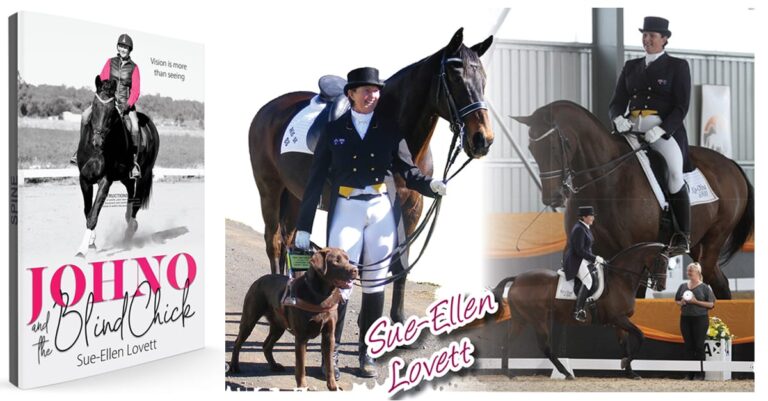
Mudgee born Sue-Ellen Lovett lives with husband Matthew on a property in Dubbo and is always accompanied by her guide dog.  Born in Mudgee, she continues to overcome the limitations of progressive blindness after being afflicted by the hereditary disease Retinitis Pigmentosa. Sue-Ellen doesn’t let her condition stop her achieving her goals, on and off the saddle. Sue-Ellen “lives to ride”, competes at FEI Inter 1 level, and training Grand Prix.

She represented Australia in the Atlanta 1996 and Sydney 2000 Paralympic Games, and the 1999 World Championships ranking 4th in the World. As well as riding, Sue-Ellen’s life is devoted to helping and motivating other disabled people and has been instrumental in raising over 3.1 million dollars for a number of charities by riding marathon distances on horseback.  During these rides, she has spoken at functions in well over 600 towns, giving inspirational talks to many people.

Editor’s Note: In 2020, Sue-Ellen published a heart-warming story about love, achievement, overcoming adversity and daring to dream through the eyes of her horse, Johno. Johno and the Blind Chick gives readers a unique insight into the remarkable journey of this beautiful horse and his once-in-a-lifetime rider, from the moment they met.

Proudly sponsored by Prydes EasiFeed and Horseland Dubbo, Sue-Ellen would like to thank all her supporters: “my wonder farrier Christian, Chiropractor Gazz, Bowen Lady Sue, Horse clipper and beautician Judy, the beautiful Moira Kelly who keeps the dream alive and the wonderful TEAM KO-Olina that are my white coats and hold the lights while I ride, this is a mammoth effort on the part of a great team to keep me riding. THANK YOU EVERY ONE and a big thank you to Matt, Lee, Melisa and Simmi”.

What do you do? Up until about 2 months ago I was an EFA NCAS Level Dressage Coach, I had done my Level 2 Riding and Level 2 Horse Management, but because of my extra loss of sight it has left me not being able to instruct, read or write. I have 2 wonderful horses in work Ko-Olina my FEI horse and Houston my new warmblood, who is going quite nicely and in between I am a wife and domestic goddess.

When and why did you start riding? I have been very fortunate I have always ridden. My Dad managed a property near Mudgee and from the time I could sit up, I was on the saddle, mustering cattle and driving sheep.

Who was your first pony? ‘Penticoss’, she was a 12.2hh, flee bitten grey mare, with not such a nice disposition, but I was lucky and got on well. Each day we would go our rabbit trapping with my Pop on the horses.

Which horse that you have owned or ridden would you consider to be the best? I have been blessed with my wonderful horses that have come in to my lifee, they are all memorable and special, BUT one very special little stock horse Mare called Mudgee shared 30 years of her 35 years on this earth with me and together we rode 9 long distance rides , covering a distance of over 16,000km and raising over 3..1 million dollars for charity. WHAT A HORSE… I lost my beautiful ‘Mudgee’ 4 years ago at the age of 35 years.

What are you passionate about? I am passionate about my riding and just love training and seeing the rewards, just so exciting seeing the changes in the horses as you train through the levels.

What are you working on right now? With beautiful Ko-Olina we are competing Prix St George and Inter 1 and loving it, but we are training with the one-time changes and the best we have so far is 12 which is very exciting, Ko-Olina has taken to the piaffe and passage like a duck to water, not bad to be learning all these things as a 22 year old gentleman… As for Houston we are just getting the basics and having a play with some of the medium movements, but with my lack of sight it a slow process getting to know a new horse.

What’s on the cards for the year ahead? Well Ko-Olina and I have already been to the CDI and competed in the INTER 1….. I was so chuffed with my scores from the international judges, the Judge at C had me placed 13th, I was sooooooo proud of my beautiful Ko-Olina. We are entering for the NSW state Champs to be held in Tamworth in September. With Houston, just one step at a time and we will see, we may have our first outing at the ORANA dressage comp in Dubbo in October, I will just see how we are travelling..

Where would you like to be in 5 years time? God willing, still have enough sight to be still riding.. I live to ride..

What achievements are you most proud of? I have 3 very special times I competed in the Atlanta 1996 and Sydney 2000 Paralympics and Riding against my peers at the CDI for the past 3 years, such a privilege…

Outside or competition, what would you consider your most memorable moment? Being appointed to the Board of Directors for the Sydney 2000 Paralympic Games by the Honourable Michael Knight, what an amazing experience and what an honour..

What motivates you to go out and train each day? The love of that beautiful animal the horse and the sheer exhilaration of being able to ride and be free, just like every one else..

How do you prepare mentally for an event? I focus and enjoy the ride. Every time I ride or compete may be my last. When I ride it makes me smile, very deep inside.

Something you would like to change in the horse world? That the Australian thoroughbred was not such a disposable commodity and the racing industry cared a little more about the horse!! My Ko-Olina is an Australian TB and is a treasure, there are a lot of wonderful treasures out there, not even found or cared about !!

What would you do if you weren’t working with horses? I HAVE NO IDEA, I would be lost !!

Who do you admire in the horse world? I admire no one in particular, but I do admire a beautiful bond between a horse and rider and it is a rarity..

Who have been your best supporters? My Husband Matthew, Coach and Mentor Judy Cubitt. My Mother-In-Law Lee and an amazing Friend Melisa Cantrall and a wonderful Lady Moira Kelly, who believed in the dream.

If you could have 4 people, over for dinner who would they be? I would invite my Team KO-Olina, because they believe and they keep the dream alive. But there would be more than 4 people at dinner.

What’s the most embarrassing thing that’s ever happened to you? Being blind as you can imagine there are many opportunities for embarrassing situations, but lots of my embarrassment is usually clothing inside out or going into the Gents loo, not such a good look.

What advice would you or do you give to young riders wanting to follow in your footsteps? Believe in yourself and dare to dream, who knows what is possible, who would have thought a blind bird from Mudgee would end up representing Australia. DARE TO DREAM !!!!!

What has been your biggest lesson? Learning to cope with loosing my sight, how to find the positives and make them work for you.

What’s one thing we should know about you? I Love a challenge!

Editor’s Note: This article was published in the August 2011 edition of Horses and People Magazine but Sue-Ellen is still riding and has kept busy as a motivational speaker, two-time Paralympian, Grand Prix-level dressage rider. 

In September 2019, Sue-Ellen started a Facebook page on behalf of her great friend, warm blood gelding Johno. Johno started sharing his experiences with his rider, ‘the blind chick’, recapping each day with stories and photos. Johno has a group of loyal followers who find his words uplifting and inspiring. Each story is a testament to the power of resilience and friendship.

In 2020, Sue-Ellen has published a heart-warming story about love, achievement, overcoming adversity and daring to dream through the eyes of her horse, Johno. Johno and the Blind Chick gives readers a unique insight into the remarkable journey of this beautiful horse and his once-in-a-lifetime rider, from the moment they met.

Find out more about Sue-Ellen Lovett here. 

Biological Pasture Management: Part 2 Healthy Soils

In part 1 we highlighted the importance of dietary fibre and pasture management for our horse’s health. The brief history that I presented on farming and pasture management methods should not be surprising, it is something that can be found on a simple internet search and is well documented, but even to this day, it often goes against the advice received through government departments.

WEEDS PLAY A ROLE

The role of weeds in a biodynamic pasture system is absolutely essential to successfully fast track the making of healthy soil. Beliefs play a big part in how we view weeds, and behind most beliefs there is a lie, such as the need to use chemical Glyphosphate (Herbicides) to kill weeds. By spraying weeds, what you are actually doing is selecting for weeds. Glyphosphate kills soil biology when it comes in contact with the ground, and when the biology is gone, what do you have left? Dead soils! And what’s the only thing that grows in dead soils? You guessed it WEEDS!

This is obviously a clever way to perpetuate the profits of the multinational companies that produce and sell these products, (not to mention the sales tax revenue for the governments) but not a sustainable way to manage your property and save money.

Apart from glyphosphate’s high salts content, commercial formulations contain surfactants, which vary in nature and concentration. As a result, human poisoning with these herbicides involves not just the main active ingredient, but other complex and variable mixtures. Imagine what this could be doing to your horse’s health or even your own.

Weeds are immigrants or NON Native, and hard working at that. Our land, Australia is very old. It is now understood by many in permaculture, that once a native landscape has been pushed past the point where it can no longer repair itself, as has happened to today’s Australian landscape, we need a hardworking immigrant (weeds) to fill the niche. Building soil through the breakdown of organic material and the hyper accumulation of minerals, weeds can be the tools in our natural resource tool shed that will restore the health of our horse pastures.

Healthy Soil = Healthy Pasture = Healthy Horse!

You never feed plants! You feed the soil they grow in through the process of breaking down organic matter with soil microbes, bacteria and fungi.  Plants produce food (simple sugars) that is made available at the end of the root tip, and made in their leaves through the process of photosynthesis. . Plants form associations with soil biology to trade foods. The sugars are the food soil microbes need and will be made available to them in exchange for all essential nutrients, minerals, fungi and even water that only these microscopic workers can deliver.

THE ESSENTIAL FUNGHI

Let’s look at fungi as an example. Plants send out chemical signals to fungi that say: “I need magnesium” an element essential to plant growth. Fungi networks – chains of microscopic mycelium (fungi) strands that have been recorded up to 1 – 10km long and deep – can search out the required nutrient and deliver it to the plant in exchange for the food (sugars and carbohydrates) the fungi needs to thrive.

When most people think of fungi they think of mushrooms, and they also think they are plants. A characteristic of plants is that they inhale carbon dioxide (Co2) and exhale oxygen (O2). Fungi actually breathe in oxygen (O2) and exhale Co2 just like humans. Fungi survived 2 mass extinctions, the last one 65 million years ago, and the only plants that also survived were the ones that formed associations with fungi.

By improving the management of our pastures, we are not just looking after our soils and the life that they contain, but also the health of our horses who are eating the grass grown in them.

The hardest part of teaching people about working with natural systems and improving pasture health is that it’s not something you can buy off the shelf from the local rural supplies, spread it or spray it and water it in. Soil health will be achieved when we restore the natural balance that allows the interaction of the soil food web as illustrated in the reference illustration (picture 1). Natural systems are a way of thinking, and the only science recognised by nature. When you don’t work with nature’s natural systems you suffer, and it will cost you money.

Compost & Tea Making:

Typically, clients call us and say “We just went to the rural supplies with our soil test and it says that our soils are deficient in (N) Nitrogen”. So they sold us a tone of High (N) Fertiliser to correct the problem. It’s cost a lot of money and we have no clear results, what can we do”?

Importing soil improvers starts a cycle of dependency on prescription farm management and high costs, and begins to kill our soils. Just imagine there was a way of recycling everything that your farm or pony club provided naturally to make your own fertiliser! It is possible, and over a short period of time, you never need to spend another cent on importing soil improvers.

Compost is made using the waste products of your animals’ manure, stable bedding, weeds from paddocks, lawn clippings, and household waste such as food scraps and paper (anything that was once living can be composted). These are mixed into a pile of around 2 cubic meters, just like making cake.

Hot Composting:

The Berkley Method of hot composting (Developed at the University of Berkley USA) is based on turning the compost pile regularly to encourage an aerobic (with oxygen) process and heating the pile with a balanced mixture of high nitrogen items like lawn clippings and manures, with carbon (straw or paper). The biology will heat the pile up and eat and break down organic matter, bringing the temp to an ideal range of 55oC to 65oC, which kills all bad pathogens in the animal manures, weed seeds etc… Temperature is critical in this process, and by turning the pile when the 65oC is reached it is possible to achieve highly fertile soil building compost rich and abundant in microbes, fungy and every element required, and this can all be achieved in just 28 days.

Compost Tea:

Once a level of closed system pasture management is reached, phase 2 of the cycle can begin. Compost Tea uses about 1kg of your nutrient rich compost and requires the use of a (1000ltr) tea brewer. The tea brewer enables us to soak the compost in water for 24hrs in a brewer bag while a high flow of air bubbling past it separates the soil biology from the compost, and attaches it to the highly oxygenated water which is then sprayed on to the soil.

(Note: please don’t try this by placing manure into still water! This is very dangerous as it breeds bad anaerobic bacteria which can be harmful to you and your horse.)

When tea is brewed the correct way (as researched and developed by the Soil Foodweb Institute (SFI) Worldwide and in Lismore, NSW), horse owners can achieve sustainability, get to know their soils as well as their horses, and save a lot of money in the process.

Another bonus is that it could also make you money! For example, a highly biology rich compost “Inoculum Compost” made by an experienced composter and sold for compost tea making is worth $150 per kg to biodynamic farmers. Imagine what a good fundraiser this would be for your Pony Club!

Click here to read the article on Pasture Hydration and Farm Design, Part 3 in this series.

Click here to read Part 1 of this series: Roughage and Pasture Management