fbpx
Home Blog Page 13

Your Horse’s Vital Signs: Part 1 of 2

It’s essential that every horse owner knows their horse’s normal vital signs; that is their healthy resting temperature, heart rate and respiration (breathing) rate.

As prey animals, horses can be very good at hiding signs of illness to avoid attracting unwanted attention, so checking your horse’s vital signs regularly will allow you to know what is normal and can help you to spot early on when something is wrong. 

If your horse becomes ill or injured, it can be helpful to quickly take their vital signs before calling your veterinarian to get a better idea of how ill your horse might be, and ensure accurate and prompt treatment, if required. 

Veterinarians assess the physiological parameters (vital signs included) of horses frequently to assist in the diagnosis and management of disease. However, not every horse will fall within the ‘normal range’, so it is important to know what is normal for your horse.

 A stethoscope is not essential; all you need is a watch that counts seconds, and a thermometer. 

Heart rate

Normal heart rate in an adult horse is 32-48 beats per minute (although this figure could be as low as 25 in a racing fit Thoroughbred and as high as 55 in a pony). You can use a stethoscope to listen to the heart low down on the left side of your horse, just behind the elbow in the girth area.

Each ‘lub-dub’ of the heart is one beat. If a stethoscope is not handy, you can take the pulse from the submandibular artery, which runs under the bottom side of the jaw bone beneath the cheek. If you use your fingers to gently press against it, you will feel the artery pulsing.

Take the pulse for 15 seconds then multiply that number by four to determine heart rate in beats per minute. The pulse can also be felt either side of the fetlock (digital artery), and can be useful when checking for lameness in the foot or signs of laminitis as the pulse may feel stronger than usual.

The heart rate will be increased if your horse is excited or nervous, or has recently exercised. However, a consistently elevated heart rate indicates your horse is sick or in pain.

Respiratory rate

Normal respiratory rate is 10-24 breaths per minute. Measure the respiratory rate by watching or feeling your horse’s flank move in and out (each inhale and exhale is one breath).

You could also use a stethoscope to listen to the breaths as the air travels across the trachea (windpipe) when your horse inhales and exhales. This should sound clear – any rasping or wheezing noises indicate a problem.

A normal horse at rest has quiet, steady breathing. Increased respiratory rate or increased effort (laboured breathing) indicates a problem. Take note if your horse is coughing frequently, and remember coughing in foals is abnormal and should be investigated.

Temperature

Normal temperature for adult horses should be between 37.0-38.5°C.

Take your horse’s temperature by using a thermometer dipped in a small amount of lubricant (e.g. mineral oil, petroleum jelly or liquid soap) and insert it gently up the rectum.

Make sure you hold the thermometer in place or clip a string attached to the thermometer to the tail. Your horse should be appropriately restrained while you do this, preferably with someone holding them.

A digital thermometer from the pharmacy that beeps when the reading is complete is safe, cheap and ideal for this job. The more regularly this is done, the better your horse will cope with the procedure. It helps to get them used to temperature checking regularly starting when they are still young.

Once you’ve finished, clean the thermometer to reduce the risk of spreading illness. Higher than normal readings are likely to be associated with inflammation or infection, and you should isolate your horse and call your veterinarian. Temperature can also be transiently higher than normal with exercise and over-heating.

Mucus membranes

The mucous membranes are the lining of your horse’s eyelids, their gums and the inside of their nostrils. Your horse’s gums should be moist and pink. Normal capillary refill time (the time it takes for capillaries in the gums to return to pink after being pressed with a finger) should be two seconds or less.

If the gums appear very pale, bright red, purple, greyish blue or yellow, call your veterinarian immediately for advice. Remember, dry or ‘tacky’ gums could be an indication of dehydration.

Gut sounds

Listen to your horse’s gut sounds by placing your ear or a stethoscope against both sides of the abdomen, behind the last rib, both high and low. A healthy horse’s gut sounds should be gurgling, with gas-like rumbles and tinkling fluid sounds. Prolonged silence indicates an abnormality and could be an indication of colic.

Attitude

Your horse should have a bright and alert demeanour. He should be interested in his surroundings and seem comfortable. A good appetite is also normal for a healthy horse. If a horse is disinterested in food, it could be an indicator there might be a problem and potentially an early sign of colic. A horse that is sick or painful may appear dull or listless. Other signs of pain include rolling, pawing and rapid respiration.

Nostrils

The nostrils should be free of discharge or have only a small volume of clear discharge. Alert your veterinarian if you notice a greenish, yellow or white ‘snotty’ discharge, or bleeding. This could indicate an infection of the respiratory tract or dental disease.

Eyes

Healthy horse eyes are open, clear and bright, and free of discharge. Any changes could indicate pain, trauma or infection. It is important any eye problems are investigated promptly as the delicate structures of the eye can be left irreversibly damaged if not treated.

Hydration

Normal horses drink at least 20 litres of water a day, and this will increase with exercise and in hot weather. Your horse should always have access to clean, fresh water. A well-hydrated horse will pass the skin tent test. To do this, pinch their neck skin and release – the skin should snap back to normal in one second. Any longer indicates dehydration. If your horse appears dehydrated, won’t drink, and seems dull or uncomfortable, call your veterinarian for advice.

Skin and coat

A glowing coat is a sign of good health. When grooming your horse, look for any bumps, scabs, dry skin or areas they have been rubbing. A long, curly coat that isn’t shed in the Summer months is pathognomonic for Equine Pars Pituitary Intermedia Dysfunction (Equine Cushing’s Disease) and should be investigated by your veterinarian.

Body condition score

Check your horse’s body condition by visually and manually assessing the fat covering their ribs, shoulder, withers, loin, tailhead and neck. Ideally, a healthy horse is about a 5 on the 1-9 scale (The Henneke System). Their ribs should be easily felt, but not visible.

Limbs

Your horse’s legs should be free of lumps or bumps. Any areas of heat or swelling over joints or tendons could indicate injury. When you’re grooming your horse, it is a good idea to check their legs over for any signs of heat, pain, swelling or cuts to the skin.

In addition, your horse’s hooves should be kept in good condition with regular visits from your farrier (every 4-6 weeks for most horses). Feet should be picked out and inspected daily. A healthy horse will have flowing, free movement, and will not show any signs of lameness or an irregular gait.

Common mistakes

  • Taking vital signs after exercise, transportation or on a nervous horse when pulse and respiration rates may be elevated.
  • Double-counting heartbeats when using a stethoscope. Remember, one lub-dub is one beat.
  • Not leaving the thermometer in long enough, resulting in a false low temperature reading. A digital thermometer will beep when the reading is ready, but glass thermometers need at least one minute for an accurate reading.
  • Not regularly practicing on your horse to know what is normal for them and, thus, not recognising problems or mistaking normal vital signs for problems.

Emergencies

When you encounter a condition that requires veterinary care, the most important thing is to remain calm.

Assess your horse’s condition to the best of your ability. If possible, take your horse’s vital signs, and be prepared to answer your veterinarian’s questions about your horse and their behaviour.

It is also a good idea to keep an emergency first aid kit. This can help you treat your horse while you wait for your veterinarian to arrive.

Basic first aid kit: 

  • Combine or gamgee roll,
  • Gauze swabs,
  • Crepe bandage,
  • Vet wrap bandage,
  • Sticky Elastoplast/Askinaplast bandage,
  • Non-stick dressing,
  • Hoof poultice,
  • Bandage scissors,
  • Digital rectal thermometer,
  • Surgical scrub, such as Iodine or Chlorhex,
  • Latex gloves,
  • Torch,
  • Phone number for your veterinarian, including their after hours number,
  • An up-to-date record of your horse’s vaccinations and medications.

Next month, we continue with a look at first aid for emergencies and injuries.
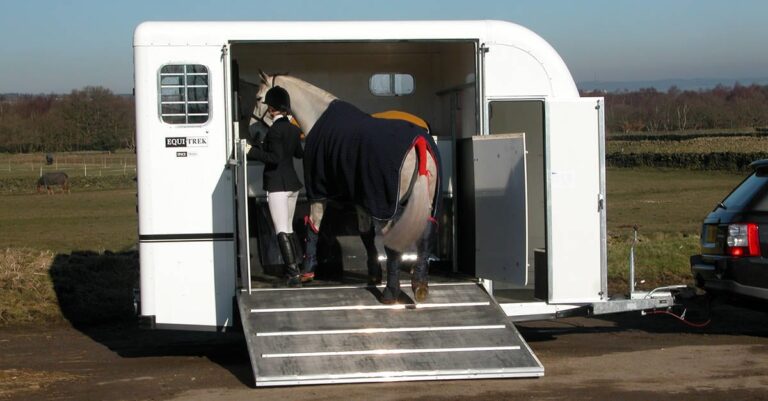
Protect Your Horse During Travel

HEALTH REPORT

SPONSORED BY Fitton HorseInsure

Top tips supported by recent research to help protect your horse during travel.

Transporting horses might be part of the daily routine for many owners and trainers, but for horses, it is stressful, exhausting and carries a significant risk.

There is a large amount of research that shows travelling is a major contributor to life-threatening injury and diseases like colic and pneumonia. Fortunately, there is also much we can do to prepare and protect our horses while they travel.

Some of the most recent scientific work in the area of equine transportation is being led by Dr Barbara Padalino, an Italian veterinarian and breeder of Standardbred racehorses who completed a PhD on this topic with the University of Sydney’s Faculty of Veterinary Science and who continues to publish in this area.

In a very comprehensive survey of almost 800 Australian horse owners involving over 300,000 individual horse transport events, Dr Padalino identified the most common transport related problems:

  • Traumatic injuries (45%),
  • Diarrhoea (20%),
  • Muscular problems (13%),
  • Respiratory problems (12.3%),
  • Over-heating (10.5%), and
  • Colic (10.3%).

Importantly, in the two years reviewed in the survey, Almost 10% of participants reported at least one case of transport-related pneumonia and 35 transported horses died, most commonly from fractures, colic or pneumonia.

Fitton HorseInsure, the insurance specialists for equestrians

During the course of her research, Dr Padalino had been interested in understanding why, during the same journey, some horses develop respiratory illness, while others don’t and, in a later study, her research team found that prior health status and stress-related behaviours during the journey could be used to identify those horses at risk of developing respiratory complications in the days after the journey.

It is now clear that transportation aggravates pre-existing respiratory disease; in other words, if you transport a sick horse, you will end up with a sicker horse at the other end.

What is less known but equally important is that stress and fatigue are also a major contributing factor, and horses that exhibit more stress-related behaviours during transport, like a high head carriage and losses of balance, are also more likely to develop health problems post-travel.

Here are Dr Padalino’s top tips for safe transport:

Preparing for any journey

  • Train your horse to self-load and to stand quietly, so all journeys start with minimum stress and fatigue.
  • Ensure your float design allows your horse to balance and lower their head during every journey.
  • Get to know your horse’s vital signs so you know what is ‘normal’ for your horse – well before travelling. (Learn how here.)
  • Install a camera inside your float to monitor your horse during every journey.

Before a long journey

  • Check your horse’s temperature before the journey. An elevated body temperature is one of the first symptoms of disease.
  • Check your horse’s capillary refill time. Press your index finger on the gum, above the third incisor and hold for 2-5 seconds then release. Count in seconds the time it takes for the capillaries to refill and the gum colour to return. The normal is less or equal to two seconds.
  • If you have any doubts about the health of your horse don’t travel and, instead, consult your vet. A sick horse will only get sicker during the journey.

During the journey

  • Make sure your horse can lower their head comfortably during every journey. If possible and safe, motivate this head lowering by placing some dampened hay or haylage low down.
  • Monitor your horse during every journey, noting signs of stress. Pay particular attention to the amount of time spent with the head above and below wither height.

After the journey

  • Check your horse’s vital signs and record them. (Learn how here).
  • Continue to monitor and check on your horse for the next 5-7 days after a long journey. Consult your vet immediately if you are in doubt.
  • Opaque, yellowish or greenish nasal discharge is a sign of bacterial infection. Call your vet without delay.
  • If your horse spent much of the long journey with a high head position, or displayed signs of stress and fatigue, follow up with a full vet examination and continue to monitor for early signs of disease.
  • Allow at least 24 hours rest after a long journey. In addition, put your horse out on pasture for 24 hours, so they can clear their airways naturally.

So there you have it. These top tips are supported by research and will help protect your horse during travel.

Fitton HorseInsure offers Equine, Bloodstock, Farm, Business & Personal insurance policies to help you protect what matters most.

You can read more about Dr Padalino’s researh on horse transportation here.

This article appeared in the September-October 2020 edition of Horses and People Magazine.

Learning Theory to Improve Equine Veterinarian Safety and Retention

A new program to teach horse handling methods based on learning theory to equine vets will make treatments safer.

Horses aren’t always the easiest of patients.

They kick; they bite; they bolt. They rear; they stomp their feet; they raise their heads so high you need a ladder. They pull back, break halters, and go running off kicking at everything in their path. And perhaps worst of all, they won’t stand still.

Obviously, not all equine patients are like this. But recent studies indicate that about 80% of veterinarians have suffered injury from a ‘difficult horse,’ and 37% of those veterinarians had lasting pain or disability from the injury.

With statistics like that, it’s no wonder many veterinarians choose to opt out of the equine field – and that there’s a real possibility of having too few equine veterinarians if the injury risks don’t change, according to Gemma Pearson, BVMS, Cert. AVP (EM), MScR, MRCVS, Horse Trust funded PhD student at the University of Edinburgh’s Royal (Dick) School of Veterinary Studies, in Scotland.

“Internationally, there is an awareness that there is a shortage of good quality large animal vets,” Pearson said.

That’s why she and her fellow researchers have been working on a new program to teach horse handling methods to veterinary students, based on equine learning theory. The project, carried out following a request by the British Equine Veterinary Association (BEVA), “aims to help reduce the number of good vets that are put off entering the profession or who leave it early,” Pearson said. “The fact that BEVA has invested in this project suggests that it is a significant issue.”

As part of her Masters thesis with the University of Edingurgh, Pearson and her fellow researchers recently tested the effects of a single lecture on practical learning theory tips for equine veterinarians on pre-final-year students. Pearson delivered a 45-minute classroom lesson on how horses learn and showed videos demonstrating how to apply that learning theory with equine patients. For example, she showed that simple negative reinforcement can work to get a resistant horse to lead into stocks. By lightly tapping the horse with a whip and then stopping the tapping as soon as she takes a step forward, the horse learns to move into the stock, Pearson said. Another of the approaches she explained was overshadowing—capturing the horse’s attention by having them perform a previously learned task (like stepping back on command), thereby drawing the attention away from the veterinary act (like a needle touching the skin). These techniques are always undertaken at a level where the horse can remain calm, she added.

Before and after the lecture, the students viewed videos of “difficult” horse patients and responded to questions about how to manage those patients, Pearson said. After the lecture, the students were more likely to suggest learning theory-based handling solutions. They also revealed that they had greater confidence in their ability to manage equine patients in general.

“This study suggests that a single lecture intervention has the potential to positively alter students’ perception of dealing with difficult horses in equine practice and may potentially influence the way they deal with difficult horses, thus creating a safer working environment,” the researchers stated.

Although some people—veterinarians and owners alike—might assume that it would take up too much time to actually train a horse during a vet call, effective use of learning theory actually ends up being faster (as well as safer) than traditional restraint methods, according to Pearson.

“For 95% of horses, spending from 30 seconds up to, say, two minutes training the horse is still quicker than fighting to restrain him, which may end up taking five to 10 minutes, to achieve the same thing,” she said. “For the really fearful horses, you do have to put much more time in, but you save time in the long run, while improving welfare and keeping everyone safe.”

That doesn’t mean owners need to leave all the work to their vets, though. Owners still have a duty to train their horses basic skills, like standing still and being touched, to help ensure the safety of the veterinary, according to study co-author Natalie Waran, PhD, a Fellow of the International Society for Equitation Science and Professor of One Welfare at Eastern Institute of Technology, in Napier, New Zealand.

“Owners should do all they can to prepare their horses for all they need to cope with in life, including vet checks and so on,” Waran said. “This is what a responsible owner should do.”

Read 6 Ethical Ways to De-spook your Horse by Dr Andrew McLean

Most importantly, owners should be sure their horses have acquired two main skills, Pearson added. “They should firstly learn to stand still unless cued otherwise, and secondly, to respond to basic cues from the lead rope to step forward or backwards, etc.,” she said. “This will be a safe horse for vets to deal with.”

Still, it’s “often difficult to train for everything,” Waran added. “And sometimes vets aren’t great at handling frightened or painful horses.”

And some horses that are “perfect” for their owners could actually be very difficult with veterinarians, Pearson added. “These horses were not born like this,” she said. “They have developed these aversions due to previous negative encounters with vets.”

When veterinarians arrive onsite with a ‘toolbox’ full of effective and ethical training skills, though, this can be win-win for everyone, the researchers agreed.

“Vets can apply low-stress techniques and learning theory to prevent problems from developing to start with,” Pearson said. “And when they come across horses that have already developed such problems, it’s the veterinarians who probably have to be the ones to resolve those problems, if the behaviour is context-specific to the presence of a veterinarian.”

“If veterinarians want to keep themselves safe and their clients confident and satisfied, they too need to up-skill using new techniques such as the application of learning theory,” added Waran.

The single 45-minute practical learning theory lecture was sufficient to give many veterinary students confidence and an understanding about how to safely work with horses—even if the practical skills might have to be further developed later depending on the person’s previous experience with horses, according to Pearson.

“I have received emails from students post-graduation to thank me for teaching them these techniques, as they have used them successfully on horses that were known to be dangerous or to have previously injured people,” she said. “As new graduates, it has given them the opportunity to impress both the owner and their new boss.”

The article titled: Incorporation of Equine Learning Theory into the Undergraduate Curriculum, by Gemma Pearson, Melanie Connor, John Keen, Richard Reardon, Natalie Waran is published in PubMed and the abstract can be read here.


Report of Bone Damage at Noseband Site

A new study has identified bone damage at the site of the noseband. This research has important ramifications regarding the use of this part of the bridle which is not only common, but compulsory in certain disciplines, like dressage and showing.

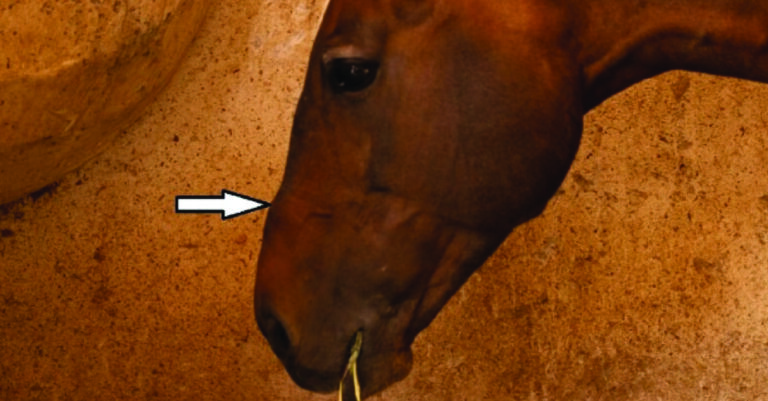
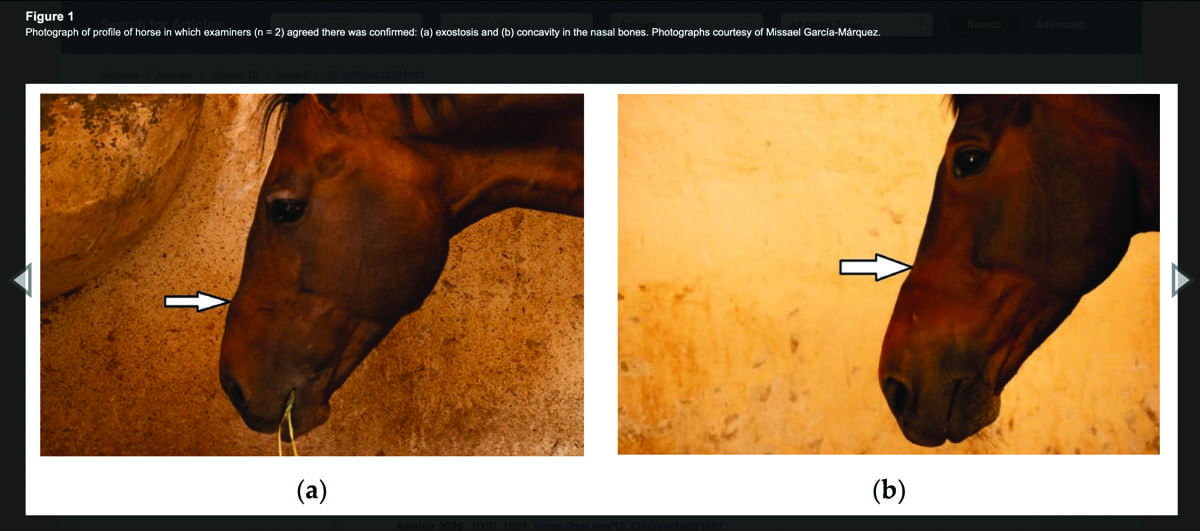
The changes were either thickening (exostoses) or thinning (concavity) of the nasal bone and/or the mandible and were   identified by palpation and with x-rays. The research was conducted by a seven-strong team from the National Autonomous University of Mexico and was led by veterinarian Lucia Pérez-Manrique.

They randomly selected 144 horses from a population of 700 cavalry horses housed at the Equine High-Performance Centre (CEAR) of the Mexican army, in Mexico City where they begin their working career and start being trained for dressage, showjumping and eventing. Some horses also participate in army parades.

Among this population of military horses, 37.5% had one or more radiographic changes to the nasal bones according to both radiologists, and 13.8% had one or more radiographic changes to the mandible.

While the study does not detail the equipment each horse uses, it notes that non-ceremonial gear for each horse depends on its equestrian activities and individual requirements. Ceremonial gear for this unit generally involves a curb bit and a cavesson noseband. Noseband tightness is not routinely checked with any taper gauge or similar device.

Two senior vet students working separately and blinded to the purpose of the study, were trained to examine the head of all horses for the presence of lesions, pain on palpation, and the presence of white hairs on the nasal bone at the site of the noseband and the lower jaw (mandible) at the sites of the noseband and curb chain.

The examiners were required to score the horse as normal or suspicious concavity, confirmed concavity, suspicious exostoses, or confirmed exostoses. They were also asked to note the colour of the horses and the presence of white hairs and skin damage at the site of the noseband and at the site of the curb chain.

Bone damage at site of noseband
Photograph of profile of horse in which both examiners confirmed: (a) exostosis and (b) concavity in the nasal bones. Photos courtesy of Missael Garcia-Marquez.

Approximately a week later, radiographs were taken and studied by two specialists in diagnostic imaging, who also worked separately and did not know the age, breed, and sex of the horses studied. They were asked to score the degree of bone deposition, bone lesions (lysis), bone homogeneity, fractures and swelling of surrounding soft tissue.

Two examples of bone damage at site of noseband
Radiographs showing the nasal bones of a horse in which both radiologists agreed there was bone thinning that was: (a) typical of affected horses and (b) moderate.

For the nasal bones, the two radiologists reported bone deposition in 6.9% and 8.3% of the horses, and bone thinning in 33.3% and 56.9% respectively.

The senior students who palpated the horses who also worked separately found that 82% and 84% had palpable bone deposition of the nasal bones and 32% and 33.4% had palpable bone thinning, respectively.

For the lower jaw, the radiologists reported increased bone deposition in 18.8% and 32.6% of the horses, but no bone thinning.

By palpation, the two students reported 30.67% and 32.7% of the horses had palpable bone deposition in the lower jaw, and 10.4% and 11.1% had bone thinning.

The x-ray results suggest that bone thinning is more apparent in the nasal bones than in the lower jaw, and that both palpable and radiographic bone deposition are more likely in the lower jaw than in the nasal bones.

These results suggest that radiographic bone thinning is more apparent in the nasal bones than in the mandible and that both palpable and radiographic bone deposition are more likely in the mandible than in the nasal bones.

The researchers remind us that correlation never implies causation, that is, the study is not intended as evidence that nosebands caused the bone remodelling but simply reports on bony changes at the site of the noseband.

Despite the standard disclaimer, it is difficult not to state that this study has important ramifications, particularly because it is adding to concerns raised over the last ten years which are captured by the International Society for Equitation Science in their position statement about the use of restrictive nosebands, and their recommendation that noseband tightness is carefully monitored.

The ISES recommends a minimum space of two fingers is achieved under the noseband strap and measured at the nasal bones. They designed a standardised, taper gauge that can be used by competition stewards to check noseband adjustment.

Researchers had already hinted that bone damage was likely but many dismissed the idea saying that bone changes at this site are rare, and if found, they are probably unrelated to noseband use and more likely caused by a single high impact event (like stepping on the lead rope when wearing a halter).

Finding changes in both, the nasal bones and lower jaw bones, doesn’t fit the ‘he stepped on the lead rope’ story.

When previous research led by Dr Orla Doherty warned that noseband peak pressures were much higher than what is deemed safe for tourniquet use, some argued that because the pressure peaks were intermittent (it peaks and troughs depending on the horse’s movement), one simply cannot make a comparison with the damage that can be caused by tourniquets.

The blind spot has been the effect of regular, single bouts of very high peak pressures on the same area of bone – over time. (And, since some of the horses in this latest study were as young as three, it doesn’t seem to take that much time either.)

Unfortunately, these findings could well mean that horses are inadvertently causing themselves bone-changing damage each and every time they open their mouths and come against the noseband strap (in their attempt to avoid or relieve bit pressures). Basically, as riders, by placing a noseband that restricts mouth opening, we are forcing horses to choose between two evils – pain inside the mouth or pain on the nose and lower jaw.

It pays to remember that in Dr Doherty’s study, the horse was wearing a noseband adjusted to allow a two fingers gap under the strap yet still recorded extremely high peaks. This finding should have resulted in compulsory checks that nosebands, across all disciplines in all countries, achieved a minimum space at the nasal bones, but this idea has only been adopted by a handful of nations.

Now the question has progressed to whether we should be using nosebands at all? Particularly since it is possible to train horses without them.

It’s a genuine question but it divides the equestrian public. While some riders never use nosebands or know they can have deleterious side effects, others are not prepared to consider it since they use it for aesthetic purposes like ‘framing the face’, or for control, particularly keeping the tongue under the bit. Will these recent findings sway their view?

Like all the best research, this latest study raises more questions and the researchers note that further studies on this horse population will be conducted and will keep adding evidence that links the bone damage to nosebands and/or training failures, like revealing the equipment they regularly use and how it is adjusted, as well as their E-BARQ scores.

But maybe we should be asking a different question altogether? Since the rules of the International Equestrian Federation (FEI) rules state that nosebands should not be adjusted in such a way as to cause the horse harm – could we ask the FEI to check horses more carefully and provide veterinary evidence that the equipment is not causing harm?

Thermographic cameras are routinely used at FEI showjumping events to check for sensitisation of the legs (sadly, some riders use irritants on their horses’ legs which increases the pain they feel when they touch the fence poles, to make them ‘more careful’). It is also proving to be a useful tool in helping assess saddle fit and highlight problems.

If nosebands are causing bone remodelling it is very likely they are leaving a heat trace that could be picked up thermographically. This non-invasive technique which is already in use, would flag the need for further investigation.

The well-being of horses in sport and recreation is under the spotlight. Governing bodies state that equines are partners in horse sports and have even introduced awards for the ‘happiest’ equine athlete. If we want to continue to enjoy horse sports, we should at the very least do everything we can to show we are not causing harm.

The open access study titled Prevalence and Distribution of Lesions in the Nasal Bones and Mandibles of a Sample of 144 Riding Horses by Lucia Pérez-Manrique, Karina León-Pérez, Emmanuel Zamora-Sánchez, Sarah Davies, Christopher Ober, Bethany Wilson and Paul McGreevy can be found here.


How Many Foals End up Racing?

Only 66% of Thoroughbred foals entered training in Australia and 5% were exported to other countries. What happened to the other the other 28%?

You see the ones that win. You even see the ones that lose. But if you’ve ever wondered where the rest of the racehorses are—the ones born into the industry but missing from the tracks—you’re not alone.

Australian researchers recently completed a five-year study tracking down the foals born in the racing Thoroughbred industry in 2014. Of those foals, only 66% entered training in Australia, and 5% were exported to other countries. What happened to the other 28%?

“Many of them died, mainly due to injury or illness,” said veterinarian and researcher, Meredith Flash of the Asia-Pacific Centre for Animal Health at the University of Melbourne in Parkville, Victoria, Australia1 Asia-Pacific Centre for Animal Health, Faculty of Veterinary and Agricultural Sciences, The University of Melbourne, Parkville, Victoria, Australia

Specifically, 38% of the group of horses that never trained didn’t live long enough to enter training, Flash said. “That seems like a lot, that 38%,” she said. “But it’s important to keep in mind that that’s only 11% of the whole foal crop, including those that did enter racing.”

With more than a third of the non-racing Thoroughbreds removed from the industry due to death, where did the other two-thirds go?

That’s what Flash and her fellow researchers set out to discover when they took on a sweeping evaluation of foaling records and racing records across the country in a single foaling year and surveyed breeders.

“There are a lot of horses that are born, and we have a reasonable idea of the proportion of those that end up training and racing,” she said. “But prior to officially registering with Racing Australia they are like ghosts in the system. There’s not a lot of visibility of those horses, particularly, what they’re doing, where they’re going, or what happens to them. This leads to a lot of speculation. We just wanted to put some data around that speculation.”

Their work represents a nationwide image of the Australian Thoroughbred racing industry, she said. The researchers examined official records of the Australian Stud Book to determine how many Thoroughbreds were born in each postal code of Australia in 2014. They then looked at how many of those horses had raced or trained in Australia by 2018, four years later, according to records provided by Racing Australia.

Racing records indicated that about 9000 of the nearly 14,000 Thoroughbreds born in 2014 entered training in Australia, she said. About 700 were exported outside the country (with unknown outcomes).

Meanwhile, 3880 horses (28%) from that entire 2014 foal crop had no record of entering training in Australia in those first four years of life, Flash said. Because they didn’t have records for those horses, the researchers decided to go directly to the breeders to ask them what became of their horses.

Instead of contacting the breeders of all 3880 horses, though, the scientists chose to create a representative sample based on geographical location. They surveyed more than 500 breeders, responding to the whereabouts of 633 horses born in 2014 that weren’t exported and never officially trained for racing. (Only 5% of the breeders contacted opted not to participate in the survey, she added.)

Surprisingly, 24% of these horses were actually training (or “spelling”—on break from training), despite not having official training records, their breeders reported.

Twenty of the horses (3%) were still going to be trained later to race, they said. About 25% of the horses had been sold on, rehomed, or retired outside of the racing industry, with no follow-up. Another 3% were being used as breeding stock, and for 6% of the horses, their situation was unknown, Flash said.

Lack of traceability, she said, is an important issue.

“I would think that the general public would expect that horses being sold at a Thoroughbred industry sale could be traced,” she said. “But these foals were born before traceability rules were introduced so, there wasn’t any requirement for the details of the change of ownership for horses being sold at a yearling or weanling sale to be registered with either the stud book or racing. There was just this assumption that if they were sold at these sales, they were sold for the purpose of racing and so they were going to just keep going on. But unfortunately, we just don’t have any more information on them.”

The new traceability rules will, hopefully, “close the gap” on these missing horses, said Flash. “What would be lovely is to redo this study afterwards and see if we can get some greater visibility,” she explained.

The majority of the horses discussed in these surveys, however, had died, according to their breeders. Twenty percent had died in the first year of life, and 18% had died between one and four years of age. “Most were due to injuries (not related to training) or illness, but some of the deaths, especially those in the first year of life, were due to congenital malformations or conformational issues,” Flash said.

Deaths in the first year of life represented about 6% of the full foal crop, she said. That’s comparable to studies in other countries that show early death rates of 5% in their Thoroughbreds. “It’s indicative of the general fragility of the young animal,” Flash explained. “Just like we have human babies in ICU and challenges around that, these horses have similar problems when they’re born, in that there is a certain proportion of those that are just not going to be successful in their lives. And that’s through no fault of anyone.”

Even so, knowledge about these death rates could be helpful, Flash added. “I think it would be useful for the industry to better understand the level of those congenital malformations and conformational defects that seriously derail horses’ life and career and get a better understanding of how prevalent they are in this Thoroughbred population,” she said.

There are no death rates published for other domestic breeds for comparison, she added.

The study results should provide people with a clearer view about the number of horses that the industry needs to produce in order to keep the sport active, according to Flash.

“There’s quite a lot of commentary about that they breed too many horses,” she said. “We need to have a better understanding of exactly how many horses are needed to maintain racing, and we need to understand that all the horses that are born are not necessarily available for that. As long as we take into consideration all those things, I think we can arrive at an appropriate breeding requirement for the Thoroughbred industry.”

This research article was published in PlosOne. You can find it here. It is titled: Barriers to entering race training before 4 years of age for Thoroughbred horses born in the 2014 Australian foal crop by Meredith L. Flash, Adelene S. M. Wong, Mark A. Stevenson, James R. Gilkerson


Racing Victoria wants progress on whip reform

0

Racing Victoria (RV) has today announced that it is seeking national action on whip reform in Australian thoroughbred racing prior to the end of 2020.

They say that a new framework is required to transition the industry to an ultimate prohibition on use of the whip for purposes other than to protect the safety of horses and jockeys.

RV will be seeking a vote at the November 2020 Racing Australia (RA) Board meeting that the transition commences with a significant reduction in the permitted use of the whip in a race.

RV will propose that, from 1 January 2021, riders are only permitted to use the whip on a maximum number of occasions throughout the entire race and never in a horse’s consecutive strides. RV is proposing that the maximum number be between five and eight occasions per race.

The current Australian Rules of Racing permit the use of the whip a maximum of five times in non-consecutive strides prior to the 100m mark and at the rider’s discretion in the final 100m of a race where its use in consecutive strides is permitted.

RV believes that the current national whip rules are no longer appropriate and not in the best interests of Victorian and Australian racing, both now and in the long-term.

In calling for whip reform, RV articulated that jockeys should be permitted to continue to carry whips at all times, but that the industry should be working towards a framework where their use is only permitted in circumstances necessary to protect the safety of riders and horses.

As part of its ongoing commitment to national policy discussions, RV formally tabled its view with Racing Australia in February 2020 that changes to the national whip rules are essential for the future of Victorian and Australian racing.

To this point, national consensus has not been reached on any reform to the use of the whip, leaving Australia lagging behind many other leading international racing jurisdictions who have significantly reduced their permitted use of the whip in recent years.

If national consensus on an amendment to the Australian Rules of Racing cannot be reached, RV will explore alternative approaches to achieve meaningful progress on whip reform.

The use of the whip in thoroughbred racing has long been a cause for debate both within the industry and the broader community. Despite the lack of evidence that whips don’t hurt, RV remains of the view that padded whips do not constitute a risk to equine welfare, however it is clear that their ongoing use is becoming less compatible with community expectations each year.

Ensuring that Australian racing retains its existing audiences and attracts new fans and employees is vital to securing the ongoing sustainability of the sport and locally, the 25,000 full-time equivalent jobs it supports in Victoria. To achieve that, the industry must continually reflect the values of the community in which it operates.

Racing Victoria’s Chief Executive, Giles Thompson said: “As industry leaders, we are charged with not only managing the sport today but ensuring that it remains vibrant and successful for generations to come.

“Making progress on whip reform is important if we want to retain our existing audiences and ensure that we’re an attractive option for the fans and employees of tomorrow.

“It is Racing Victoria’s view that progress on whip reform is needed now, and that the industry nationally, acting in its best long-term interests, should continue to work towards a prohibition on the use of the whip for purposes other than to protect the safety of horses and jockeys.

“It is critical that jockeys are permitted to carry a whip to ensure their safety and jockey safety is something that we will always advocate.

“We want to reduce the number of times the whip can be used in Victorian racing, and indeed nationally, from 2021. This would be an important step in the right direction for our industry, one that recognises the progression of community attitudes in the decade since padded whips were first introduced.

“Britain, Ireland, France, Germany and key states in the USA have either implemented or announced significant reductions in permitted whip use and have seen great competitive racing continue. At this time Australian racing has been left behind when it comes to reforms on whip use.

“The industry will always be best served by a national approach to whip reform and this is something that we desire, however to this point that has not been achievable. We believe that prompt progress on whip reform is in the best interests of Australian racing and we are encouraging the Racing Australia Board and other states to join us in making meaningful steps this year.

“In doing so, we will be consulting with our key stakeholder groups over the coming months on the implementation of specific rules that would see important whip reform achieved through a reduction in the permitted number of occasions that it can be used in a race.

Permitted whip use in the international jurisdictions referenced is as follows: Britain (7 times per race), Ireland (8), Germany (5), France (5) and in the USA, the states of California and Kentucky have announced reductions to (6). 

Update from the Editor: In March 28th 2021, all Thoroughbred races in the state of New Jersey are run under rules that prohibit the use of the whip for purposes other than to protect the safety of horses and jockeys. 

Anatomy of the Horse’s Digestive Tract, Part 3: The Large Intestine

The horse’s digestive system labelled and explained, with facts, figures and other important information that is relevant to their health.

In this three part series we dissect the equine gastrointestinal (GI) tract to gain a better understanding of the digestive process and learn how we should keep our horses, and what feeding management we should follow to maintain optimal (digestive) health in our horses.

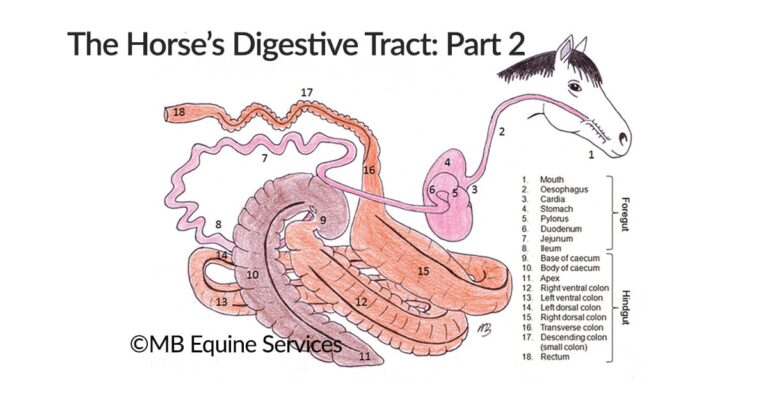
The GI tract of an adult horse (~500kg) is about 30 meters long and has a total volume of approximately 180 litres. The entire tract can be divided into two functional parts; the foregut and the hindgut (see fig 1). In part one and two (March and April issues) we described the digestive process in the foregut of the horse. In this, the last part of the series, we discuss the final stage of food digestion – the large intestine and fermentation process.

The large intestine

The large intestine (hindgut) of the horse has three parts: caecum, colon and rectum (figure 1). Horses have an enlarged caecum, a blind sac at the junction of the small and large intestine and an enlarged and sacculated (large) colon (see fig 1). In the adult horse (500kg) the caecum is about 1 m long and has a capacity of about 30-34 liters. Nearly all of the non-starch polysaccharides (NSP) and undigested soluble carbohydrates in feed passes from the small intestine into the caecum. Together with the colon (large intestine) it contains micro-organisms that hydrolyse (break down with water) much of the fiber and soluble carbohydrates that are ingested. After digestion the nutrients (volatile fatty acids (VFA)), are absorbed from the caecum and colon.

Digestion in the caecum and colon depends almost entirely on the activity of micro organisms. In contrast with the small intestine, the walls of the large intestine contain only mucus-secreting glands, and does not produce digestive enzymes. However, high alkaline phosphatase activity is found in the large intestine. This is not been seen in other species like cats, dogs and man and is known to be related to a high digestive and absorption action.

The colon consists of three parts; ascending, transverse and descending. The first part of the colon has the greatest capacity and is known as the large colon. In contrast, the descending part of the colon is known as the small colon. The large colon is 3 to 3.7 m long and has a capacity of 50 to 60 litres.

The large colon can be divided into four compartments; the right and left segments of the ventral colon and the left and right segments of the dorsal colon (see figure 1). The four parts of the large colon are connected by three flexures (bends) . The diameter of the different segments of the large colon varies abruptly (20 to 25 cm), but reaches a maximum in the right dorsal colon where it forms the large sacculation (sack) with a diameter of up to 50 cm. The small colon is about 3 m long with an average diameter of 7.5 to 10 cm and has a capacity of 18 to 19 liters. Together with the large colon it has a total capacity of 70 to 80 litres. The rectum is located at the end of the large colon and is about 0.3 m long and opens to the exterior at the anus.

Microbial population and fermentation

There appears to be little difference in the biochemisty of fermentation in all hoofed animals studied, whatever the affinities of the animal or the site of fermentation chamber. The taxonomic composition of micro-organisms in the digestive system of all animals is also apparently broadly similar.

Microorganisms (e.g. bacteria, protozoa and fungi) can live in most segments of the animal gut. But the rumen and hindgut provide a unique environment for microorganisms. The anaerobic (without oxygen) system, constant pH conditions and nutrient supply are ideal for the growth of microbes. The pH (6-7) remains relatively constant because fermentation acids are absorbed rapidly across the rumen and hindgut wall or neutralized by saliva.

The flora of the caecum and colon of horses and rumen of cattle consist mainly of bacteria. Protozoa and fungi are present in much lower numbers, because of the lower rates of turnover.

Bacteria make the greatest contribution to metabolic work during fermentation compared to protozoa and fungi, especially the small bacteria. Bacteria that colonize the hindgut or rumen are diverse.

Bacterial species can be divided based on the type of energy source used, type of fermentation products produced, thickness, structure and composition of the cell walls. However, there are only two major types of bacterial cell wall; whether a given cell has one or the other type of wall can be determined by the cell’s reaction to certain dyes (Hans Christian Gram method with violet and iodine staining). Bacteria which retain the dye are called Gram-positive bacteria; those which can be decolorized are called Gram-negative bacteria.

The majority of the bacteria in the rumen and hindgut are Gram-negative. The number of Gram-positive bacteria tends to increase if animals are fed a high-energy diet containing abundant carbohydrates. This is an important concept that is studied a lot in relation to digestive disorders such as hindgut acidosis and laminitis (see the full series on laminitis in the lameness section of the website.)

Herbivores, because of the symbiotic relationship with microorganisms, are able to gain energy indirectly from fibrous materials i.e. non-starch polysaccharides (NSP).The microorganisms are able to break down the plant polymers to monomers and oligomers primarily by exogenous (generated outside a system) microbial enzymes. The products of this hydrolysis process are engulfed by microbes and converted to pyruvate in intracellular metabolism. Pyruvate is converted into volatile fatty acids (VFA’s: propionate, butyrate and acetate), CO2 and methane. The microbes cannot fully utilize these products. However the host animals, are able to absorb and gain energy from VFAs. The absorption of VFAs takes place in the enlarged colon of the horse and in the rumen, reticulum and omasum of cattle. However as hindgut fermenters, horses have the advantage to first digest and absorb the simple nutritional compounds, such as starches to glucose in the small intestine (which we described in detail in part 2 of this series). This system is more metabolically efficient for energy utilisation than fermentation to VFAs, which is obligatory in the ruminant.

Today most horses are used for sports and a grass/plant-only diet is usually not adequate to cover energy demands. Many commercial manufactured pelleted feeds are added to equine diets to supply the horse with energy, protein and micronutrients, but are based on cereal grains containing abundant starch. Starch plays a minor role in the natural diet of the horse; as they are grazing/browing herbivores and receive most carbohydrates in the form of fructans and NSP.

Grain supplements may cause starch overload and can affect the physiology of the horse due to the lack of amylase to hydrolyse all the ingested starch. If starch is not well digested in the small intestine of the horse a proportion of the ingested starch will reach the hindgut and be rapidly fermented. The microbial degradation rate of starches is much faster than that of NPS. A change in the ratio of starch to fiber in the diet has a rapid impact on VFA yields.

With increasing starch in the diet (e.g. grains) more propionate and lactate are produced within a short time compared to that of other NSP’s, which leads to reduced digesta pH. Several studies associate excess feeding of grain concentrates with a number of digestive and metabolic disorders, including, acidosis, laminitis, gastric ulcers, developmental orthopedic disease and some forms of exertional rhabdomyolysis. However, it should also be stated that excess intake of lush pastures with high levels of fructans can also cause these digestive and metabolic disorders.

Digestive and metabolic disorders are very common in the domestic horse population all over the world and as you now understand the majority of the cases it can be traced back to the way we manage and feed our horses! The horse is designed to eat large quantities of fibre on a continuous basis. The concentrate diet should be mixed with a fibre source such as (low non-structural carbohydrate; NSC) chaff or super fibres. You can also offer roughage before the feeding of the concentrate diet to slow down the passage rate and facilitate fiber digestion. The main aim is that we maximise the fiber intake and minimise the NSC intake so that we promote healthy functioning of the digestive system of our horses.

Read Part 1: From the mouth to the stomack here.

Read Part 2: The small intestine here.

Learn more about nutrition at MB Equine Services

Anatomy of the Horse’s Digestive Tract, Part 2: The Small Intestine

The horse’s digestive system labelled and explained, with facts, figures and other important information that is relevant to their health.

In this three-part series we dissect the equine gastrointestinal (GI) tract to gain a better understanding of the digestive process and learn how we should keep our horses, and what feeding management we should follow to maintain optimal (digestive) health in our horses.

The GI tract of an adult horse (~500kg) is about 30 meters long and has a total volume of approximately 180 litres. The entire tract can be divided into two functional parts; the foregut and the hindgut (see fig 1). In the first part of the series on the anatomy of the digestive system (March issue) we discussed the first part of food digestion – from the mouth to the stomach of the horse. In this article we continue by having a closer look at the small intestine, and next month we will describe the large intestine.

The small intestine

The small intestine of an adult horse (500kg) is about 20-25m long, 7 to 10 cm in diameter and has a capacity of 50 to 70 litres. It has three parts; duodenum, jejunum and ileum (figure 1).

The duodenum is short, approximately 1 m, and can be separated into a cranial, descending and ascending portion. The jejunum covers the majority of the small intestine and the ileum is the shortest section (0.7 m) which opens into the caecum of the horse.

Although the small intestine has a relatively small diameter, the intestinal walls are covered with wrinkles or folds which contain millions of finger-like projections called villi, which are themselves studded with millions of smaller projections called microvilli (see figure 2). The presence of these villi on the inside of the small intestine means that the surface area is much larger than if the lining were just a flat surface. This increased surface area improves the small intestine’s ability to absorb nutrients.

The passage of food trough the small intestine is rapid; it reaches the caecum approximately 1 to 8 hours after ingestion. Much of the food moves through the small intestine at the rate of about 30cm/min. The passage rate is influenced by the type of feed consumed. Pelleted feeds have a faster rate of passage than hay. Also, fresh grass moves more rapidly than hay.

Feeding horses after a fasting period can also increase the transit of food from the stomach to the caecum. It is important to realise that fasting periods happen more often than people think.

Many horse owners feed their horses two meals per day, one before they go to work and one at the end of the day. Most of the time these feeds, especially sweet feeds, are very appetizing and horses will adapt to the routine and stop grazing hours before their meal arrives. This means that when you then feed your horse the evening meal the passage rate is very rapid, and food will not be effectively digested. As described in the previous part, to maintain proper digestive function it is important to feed fibre in order to slow down the gastric emptying as well as the passage rate through the intestines.

The digestion processes

When food is mixed and broken down in smaller particles it leaves the stomach and enters the duodenum. The presence of food in the stomach and gastric hydrochloric acid (HCl) in the duodenum stimulates the release of the hormone secretin into the blood, which regulates the secretion of pancreatic juice in the duodenum.

Pancreatic juice contains large quantities of fluid and sodium, potassium, chloride and bicarbonate ions. It has also some active digestive enzymes and helps with the digestion of carbohydrates and proteins.

Bile from the liver is added for the digestion and absorption of fats and fat-soluble vitamins. Stimulation of bile from the liver is also caused by the presence of gastric HCl in the duodenum. Bile is a complex alkaline fluid containing water, electrolytes and a number of organic molecules including bile acids, cholesterol, phospholipids and bilirubin. Unlike humans, horses don’t possess a gall bladder, so bile flows continuously through the biliary tract into the duodenum.

The biliary duct and pancreatic duct both open into the duodenum at the major duodenal papilla (figure 3). The horse also possesses an accessory pancreatic duct that opens on the minor duodenal papilla opposite the major papilla (see fig 3).

The alkali (ionic salts) in pancreatic juice and bile help preserve an optimal reaction in the intestine for the proper functioning of digestive enzymes secreted in the tract.

Food undergoing digestion leaving the stomach will quickly rise to a pH of 7.0 or slightly above. Much of the protein and fat, and about 50 to 70% of the soluble carbohydrate or nitrogen free extract are digested in the small intestine. Protein, carbohydrates fats and most of vitamins and minerals are absorbed also from the small intestine.

The Starch and Fructan challenge for the small intestine

In part one we discussed the popularity of including cereals, cereal by-products, protein meals and oils in the diet of the performance horse. Most of these high energy feeds for working horses contain high proportions of cereal starch. These have many benefits but can also potentially cause a lot of health problems.

The percentage of carbohydrates digested in the small intestine is largely influenced by feed processing, the properties of the starch granules, other food structures such as plant cell wall, transit time through the small intestine, the quantity fed in the meal, and the availability and concentrations of digestive enzymes.

As stated earlier about 50-70% of the soluble carbohydrates are digested in the small intestine, resistant starch together with undigested starch, will pass into the large intestine of the horse where it may be fermented to short chain fatty acids and lactate.

The fermentation process in the hindgut will be described in more detail in part three of the series. But as we highlighted in Part 1 and other nutrition articles, an overload of non-structural carbohydrates (NSC) such as starch into the hindgut can cause digestive disorders.

One of the ways to increase starch digestibility and reduce fermentation in the hindgut is to process the feed by cooking, which is done by many commercial feed manufacturers. The processes used include expansion or extrusion of products and infrared micronisation of cereals. Processing can significantly affect starch digestibility, the best example is that of corn, but the extent of the effect of processing depends largely on the nature of the process, equipment used and conditions of process.

Although, the cooking process improves the digestibility of starch in the small intestine, the digestion will decline as starch intake increases. So even if you feed products that are processed by cooking, they still can cause digestive dysfunction when you overfeed! It’s all about balance and moderation, feed little and often!

There is some research data that provides us with some guidelines on how much starch we can feed that is still considered ‘safe’. The studies suggest that the amount of starch per meal should not exceed 0.2-0.4% of the body weight. However, there are many variables that will affect this “safe” value such as the starch source, the interaction with other feed products, the transit time through the small intestine and the enzyme availability. There is also variability in each individual horses’ ability to digest starch, which can be linked to the way they chew their feeds. For example, horses that have bad teeth and/or eat fast will have a reduced digestibility of starch in the small intestine compared to horses that eat slower and grind their food to small particle sizes.

Another situation which challenges the digestive system of the horse is grazing lush pastures with high levels of NSC (fructan). Fructan cannot be digested by digestive enzymes in the small intestine, and if it escapes the hydrolysis in the stomach it will end up in the hindgut undegraded. The excess intake of fructans can cause similar problems to feeding an overload of starch.

To achieve optimal hind gut health, fibre intake should be maximised and the intake of simple sugars and starch (NSC) should be minimised. Starch intake can be easily managed but regulating the intake of fructan from grass remains a more complex problem that requires a holistic management of horse feeding and pastures. It is possible to create a proper plan to safeguard the well-being of the horse.

To read Part 3 click here

To read Part 1 click here

Further reading

  • Davies, Z. 2009. Introduction to horse nutrition. Wiley-Blackwell, 1st edition, United Kingdom
  • Frape, D. 2010. Equine Nutrition & Feeding. Wiley-Blackwell; 4th edition; United Kingdom.
  • Lewis, L.D. 1996. Feeding and care of the horse. 2nd edition, Lippincott Williams & Wilkins, USA.
  • More articles on nutrition and health at MB Equine Services


Anatomy of the Horse’s Digestive Tract, Part 1: From Mouth to Stomach

The horse’s digestive system labelled and explained, with facts, figures and other important information that is relevant to their health.

In this three part series we dissect the equine gastrointestinal (GI) tract to gain a better understanding of the digestive process and learn how we should keep our horses, and what feeding management we should follow to maintain optimal (digestive) health in our horses.

The horse evolved primarily as a grazing herbivore, eating a diet based on fibre, mainly grass and some browse (shrubs and other foliage). Horse owners are mostly aware of this, and we all try to offer our horses as much access to pasture as we can. Nevertheless, and with the best intentions, many owners manage their horses in a similar way to livestock, when in fact the purpose of keeping horses is generally very different.

Horses require a different housing system and feeding management than livestock. Horses may be similar to cattle in that they are large herbivores that have adaptated to grassland life, but they developed different feeding strategies and digestive physiology to cattle.

Horses evolved to consume large quantities of poor quality forages (low energy and high fibre), whereas cattle do better on medium or high quality forages that are relatively low in fibre.

By managing horses on pastures with high quality grasses that contain high levels of sugars and protein, we challenge our horses at a physiological level, and expose them to the risk of developing digestive and metabolic disorders such as insulin resistance, equine metabolic syndrome, hindgut acidosis, laminitis, tying up, developmental orthopaedic disease, colic and other related diseases.

An added issue is that grass/plant based-only diets are usually not sufficient to maintain the performance horse, and as a result, cereals, cereal by-products, protein meals and oils have been added to the majority of equine diets. These have many benefits but can also potentially cause a lot of health problems.

THE GASTROINTESTINAL TRACT

The GI tract of an adult horse (~500kg) is about 30 meters long and has a total volume of approximately 180 litres (see figure 1). The entire tract can be divided into two functional parts; the foregut and the hindgut (see fig 2). In this first part we will discuss the mouth to the stomach of the horse. In the second part we will continue with the small intestine and in the last part of the series we will describe the large intestine.

THE MOUTH

The digestive process starts when food enters the mouth. The lips and teeth of the horse are adapted for grazing and browsing. The upper lip is strong, mobile and sensitive and is used to place forage between the teeth. Horses have upper and lower incisors which enable them to shear off the grass/foliage close to the ground.

The tongue pushes the food to the molars and premolars where it is chewed to smaller particles. The jaw of the horse makes lateral and vertical movements facilitating mechanical grinding. When horses chew the feed in the mouth, saliva is produced to assist with the breakdown, swallowing and buffering of stomach acids. Under normal circumstances (when grazing and chewing fibrous material) horses will produce up to 10-20 litres of saliva a day. Saliva contains high levels of bicarbonate and other alkaline buffers to neutralise the acid in the stomach, as well as to lubricate the food.

When horses eat roughage they have to make more chewing movements than when they consume concentrates. Horses on average make between 3000-3500 chewing movements when they eat 1 kg of long hay, whereas 1kg of concentrate only requires 800-1200 chew movements (ponies have to work a bit harder).

Chewing and saliva production play important roles in the digestion of foods. Horses rely much more on their teeth than we do, and also more than cattle, sheep and goats, because they can’t regurgitate and re-chew food, so they need more time to chew. Ruminants don’t chew a lot and swallow the grass or hay first, which is fermented by bacteria in the rumen to disrupt the fibre. This process makes it easier to grind the foods to smaller particles during the second “chewing the cud”.

Horses that are fed high levels of concentrates and not enough fibre/roughage spend less time chewing and may even eat too fast, swallowing large parts of their ration at a time, which results in very little saliva production. Over time these high concentrate –fast food- diets with low fibre can cause teeth problems and can lead to digestive dysfunction such as colic and stomach ulcers (see text box).

THE OESOPHAGUS

The oesophagus is the passageway from the mouth to the stomach. It contains rings of muscles that relax and contract to move the food down towards the stomach, a process known as peristalsis.

THE STOMACH

The stomach is a sack-like expansion of the digestive system, between the oesophagus and the small intestine. Horses are monogastrics (they have one stomach) as opposed to the compartmentalized stomach of ruminants. A horse’s stomach is similar to that of humans and pigs.

In comparison to the horse’s body size the stomach is a small organ; its capacity is about 7.5 to 15 liters, 8% of the total volume of the GI tract of an adult horse (see fig 1 & 2). In the suckling foal, the stomach capacity represents a larger proportion of the total digestive tract. The smaller stomach limits the amount of feed the horse can eat at one time.

The horse stomach can be divided into two main (mucosa) regions, the (upper) non-glandular region and the (lower) glandular region. The lining of the stomach is divided by a ridge or fold of the mucosa called the margo plicatus.

The non-glandular region takes up the top third of the horse’s stomach. This region is covered by a thin tissue called epithelium similar to the oesophagus, and is very sensitive; it does not produce any acids and also does not have protective factors against them. This is why the majority of ulcers occur in this region.

The glandular region, covers the remaining (lower) two-thirds of the stomach and contains glands that secrete hydrochloric acid (HCL), pepsin, bicarbonate and mucus. This region has much tougher tissue than the non-glandular region and produces mucus to protect the stomach wall. Although solid particles are broken down by hydrochloric acid (HCl) and the enzyme pepsin in the stomach, relatively little digestion occurs in the stomach. In contrast with ruminants, horses cannot vomit or regurgitate material from the stomach. All feed ingested will normally pass on to the small intestine, which we will discuss next month.

In a natural environment…

  • Horses eat on a continuous basis spending between 16-20 hours per day grazing and browsing.
  • Their diet is rich in fibre and contains very small amounts of simple sugars. Fibrous foods stimulate chewing and saliva production which can buffer acids in the stomach.
  • Horses naturally eat slowly and chewing is prolonged, so the stomach receives only small portions of food at a time, yet remains partially filled all the time.

In the domestic horse it is therefore important…

  • To allow your horse to eat small amounts of feed on a continuous basis, and preferably feed high fibrous foods.
  • To mix the concentrate diet with a fibre source such as low in non-structural carbohydrate (NSC) chaff or super fibers.
  • To offer roughage before feeding of the concentrate diet to slow down the passage rate and facilitate fiber digestion.
  • To divide the concentrate ration into multiple meals when large quantities are fed.

FACTS ABOUT THE STOMACH:

  • Food in the stomach is held for a relatively short time.
  • High fibre foods tend to stay in the stomach for longer periods than liquid meals (watery or non-fibrous foods including grains and mashes).
  • Gastric emptying of liquid meals occurs approximately 30 minutes after ingestion, whereas complete gastric emptying of hay occurs in 24hrs. The actual emptying time of the stomach also depends on the size of the meal.
  • A large meal will empty faster than a small meal.
  • Feeding a large meal limits the mixing action of the stomach and may prevent feed from coming into sufficient contact with gastric secretions in the stomach. This can have a negative effect on feed digestion.
  • When food is swallowed it enters the stomach via the oesophagus. The cardia sphincter, a powerful muscular valve, guards the entrance to the stomach. This valve function is very effective and prevents the horse from vomiting. In the rare occasion that it occurs, such as when the stomach is ruptured, the food will rush out the nostrils.

Read Part 2: The small intestine here.

Read Part 3: The large intestine here.

FURTHER READING:

  • Davies, Z. 2009. Introduction to horse nutrition. Wiley-Blackwell, 1st edition, United Kingdom
  • Frape, D. 2010. Equine Nutrition & Feeding. Wiley-Blackwell; 4th edition; United Kingdom.
  • Lewis, L.D. 1996. Feeding and care of the horse. 2nd edition, Lippincott Williams & Wilkins, USA.
  • More articles on nutrition and health at MB Equine Services

3 Beneficial Stretches and Core Strengthening For Your Horse

3 beneficial stretches and core strengthening for your horse.

As we learn more about the horse’s body and how things are connected, therapists are finding better ways of keeping our fur-kids safe, healthy and, most importantly, happy.

There are many new fads that promise quick cures for imbalances, whether they are in the feet or the upper body. But to find a long-term solution, we must first realise that, inevitably, these imbalances have underlying causes…

Usually, the underlying cause is either pain, bad training, ill-fitting gear, an unbalanced rider or husbandry issue, and your aim should be to find the cause.

If the problem is a badly fitting saddle, a change in training is not going to help much. If the horse has grown unbalanced feet due to compensating for shoulder pain, feeding minerals for hoof growth is not the solution. And a horse that is kept isolated and develops stress-induced behaviour issues, will not become calm and happy with a chiropractic treatment.

A healthy and happy horse needs friends, forage, exercise and good nutrition, and it is all in your hands. Your horse’s long-term health and fitness relies on your commitment to becoming their best manager, personal trainer and even their life coach.

This article follows on from articles in the March-April 2020 magazine, which I wrote in collaboration with Hayley Chambers from Outback Equines. They contain a more thorough introduction into core strength, as well as three beneficial exercises.

If you missed the previous articles, you will find them here, here, and here.

Compensating is the horse’s way to hide pain

Horses are so good at compensating and hiding pain that it can be hard to notice when things start to go wrong. The good news is that, however much they try to hide their discomfort to appear sound and strong, there are clues in the horse’s body that we can use as a guide. And, if we are able to notice changes before they become a real problem, we can prevent more serious injury or even damage that is beyond repair.

In the previous articles I explained that horses need movement and although most of our horses move while they are in the paddock with their friends and while being ridden or trained, we can also add more specific, beneficial movements to their day.

Adding a few stretches and core strengthening exercises to your horse’s everyday routine has many benefits:

  • The appropriate exercises can improve your horse’s mobility, flexibility, stability and strength.
  • The interactions can help improve your own training skills and strengthen the bond between you and your horse, particularly if you shape the stretches gradually and, where appropriate, you use positive reinforcement techniques like target training. This is because when applied correctly, reward-based training can dramatically improve the way your horse feels about it.
  • Over time, you will get to know your horse’s body better. Each exercise session is an opportunity to evaluate their progress, watch how they respond and quickly notice when things are ‘not quite right’. If one day they are not as flexible as they were yesterday or a week ago, you have the opportunity to get these problems addressed before the rest of the body has to compensate too much.
  • With increased flexibility we also increase joint stability as well as overall mobility and we decrease the risk of injury.
  • Knowing where your horse’s weaknesses and strengths will also help you manage your training program.
  • Regardless of whether you compete at the highest level or you simply enjoy taking your horse on a trail ride once every few weeks, the stronger the core the healthier they will be.

Before practicing these stretches, refer to the article published in the March-April magazine to learn more about core strength, the multifidus muscles and the horse’s nervous system.

You will also find the first three recommended stretches together with helpful tips on how to teach your horse to perform the exercises using target training techniques.

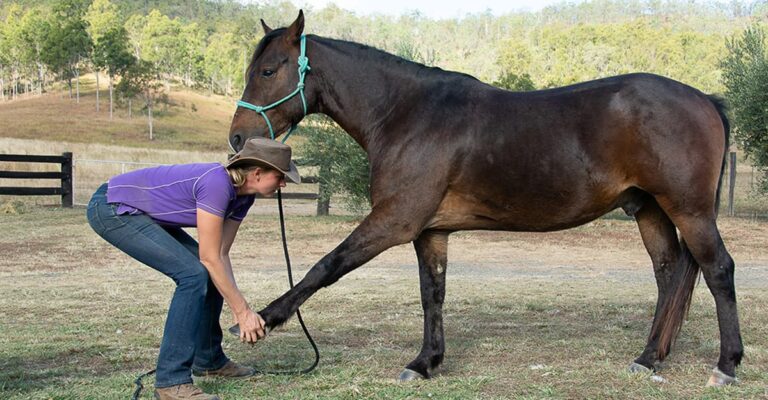
The following stretches can be done without special training or a target because you will act as therapist to facilitate the stretch. The only requirements are that your horse is lightlly warmed up, can park (stand still and square) and is used to being handled and having his legs picked up.

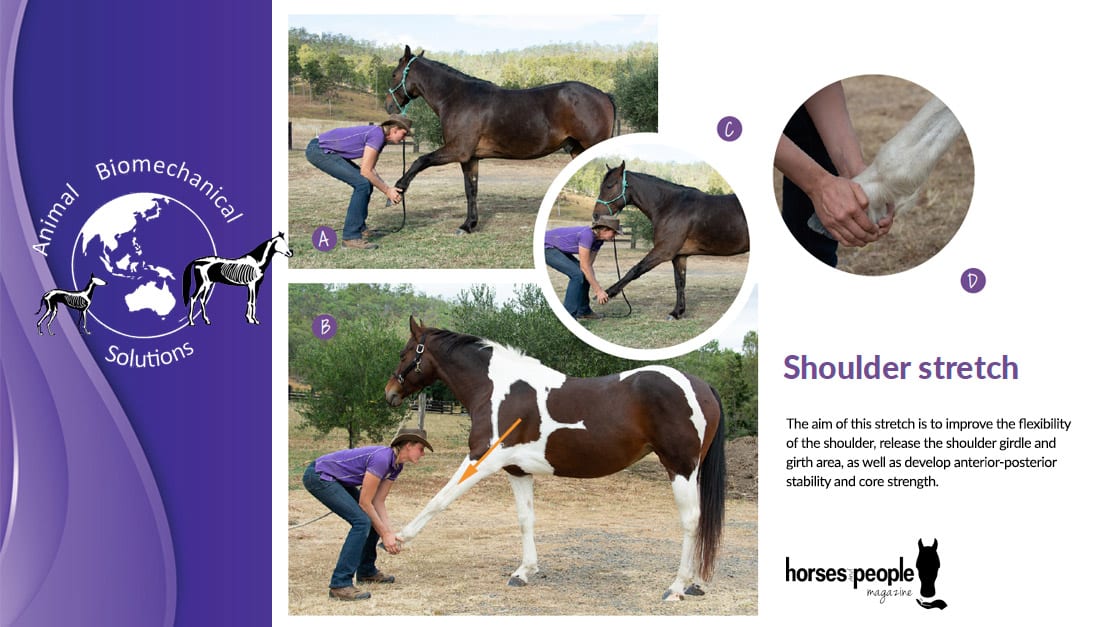
Shoulder stretch

The aim of this stretch is to improve the flexibility of the shoulder, release the shoulder girdle and girth area, and develop anterior-posterior stability and core strength.

Muscle groups that benefit: Triceps, pectoral muscles, flexor muscles in the front leg.

Recommended repetitions: One time each front leg, before work or once a day.

How to stretch:

You are going to pick up one front leg and stretch it forwards.

In order to protect your back, your final position will be with your legs apart, knees bent, back long and straight, and resting your elbows on your knees.

Start by picking up one front leg and adjusting your position until you are standing in front of the horse as shown.

Hold the hoof by wrapping your hands around the heel – this keeps your fingers safe should your horse put his foot down. As shown in Image C

Take the leg slowly forward, keeping it below the height of your own knees as shown in Image A.

Your horse will have his knee slightly bent or you may feel a restriction. Wait there until your horse releases the shoulder by pushing into the stretch and straightening the leg all the way through the heel. Image B.

This might take a moment so wait for the horse, don’t pull on the leg!

Dos: Make sure your horse is warmed-up (e.g. a few minutes walk), and standing square before starting the stretch. Make sure you are right in front of your horse. Keep the hoof low and straight and wait for the horse to push into the stretch. Always be mindful of your horse’s strengths and weaknesses, increase the duration of the stretch as the horse gets stronger.

Don’ts: Stretches are not for horses in the first three months after any surgery. Do not pull on the leg to stretch it but rather wait for the horse to push into your hands. Do not pull the leg sideways. Never push or pressure your horse past it’s comfort zone.

Variation: If the horse finds it difficult to release into this stretch, move his leg slightly and very slowly from side to side while bracing your back with your elbows on your knees. The movement does not need to be greater than 5 cm to either side and is very, very slow. Soon, you will find a sweet spot where the horse will start to release.

Shoulder release

The aim of this stretch is to improve the flexibility of the shoulder, release the shoulder girdle and shoulder blade, as well as release muscles around lower neck and wither.

Muscle groups that benefit: All the muscles around the shoulder area, lower neck and withers.

How to stretch:

Pick one front leg up, standing next to your horse, facing backwards.

Lower the toe gently towards the ground, placing it approximately level with the heel of the other leg, while keeping knee and fetlock bent.

As the horse begins to release and allow the shoulder blade to drop downwards, you can encourage the dorsal wall towards the ground.

See images above.

Many horses initially find it difficult to release the leg and will try to plant their foot down, probably because it’s a new experience and they have been trained to hold their legs up for trimming or cleaning, be patient.

You can help by keeping your hands on the leg, supporting the knee and the heel, or try stroking the leg to encourage your horse to relax it down.

It may take a few tries but, once your horse knows what you mean, they will start to release the shoulder blade and shoulder girdle muscles, allowing the shoulder blade to drop down.

Repetions: Once each leg, before work or once a day.

3 benefitial stretches and core strengthening for your horse

Duration: Start with a single second and work up to 30 seconds – for very advanced horses.

Dos: Make sure your horse is standing square before starting the stretch. Always be mindful of your horses strengths and weaknesses, increase the duration gradually as your horse gets stronger and more comfortable with the release.

Don’ts: Stretches are not recommended for horses in the first three months after any surgery. Don’t try and hold your horse’s leg in position with force. Don’t push your horse past their comfort zone, don’t stretch when the horse’s muscles are not warmed up.

Variation: You can do the same exercise with the hind legs to achieve a hip release. This exercise is particularly good for horses that favour one leg when resting.

The main difference between a single leg resting stance and the hip relsease is that when resting, the horse will normally place his toe forward (approx. level with the toe of the other hind leg), whereas for the stretch you place the toe further back, level with the heel of the other leg to allow the weight of the hip to drop down vertically.

Belly lift

The aim of this stretch is to improve flexibility in the back and around the withers as well as engage and strengthen the abdominal muscles, which improves core strength.

Muscle groups that benefit: All muscles around the back, the belly and withers.

How to stretch:

Stand facing your horse, level with his girth (see Image A). Place your fingers underneath the horse’s ribcage, where the girth would be. You will feel a little hollow in the midline between the pectoral muscles. (Image C).

Place your fingers in along the hollow and push gently, tickle or scratch your horse there. Your horse will lift and round his back, and tuck the belly.

Watch for the slightest lift and allow your horse to relax again. Image B.

Repetitions: Repeat twice, before work or once a day.

Dos: Make sure your horse is standing square before starting the stretch. Be gentle and only use your fingers. Always be mindful of your horses strength and weakness, increase duration as the horse gets stronger.

Don’ts: Not for horses in the first three months after any surgery. Do not use any tools to make the horse lift the back. Watch for the response and never push your horse past his comfort zone. Don’t stretch when the horse’s muscles are not warmed up.

Take care! Make sure you stand close to the horse and you start with very little pressure. If your horse is sore through the girth area, he may react and try kicking.

Less is more: Watch out for even the slightest movement upwards and then allow your horse to relax again. Stiff or sore horses might not be able to give you much lift at all to start with. Only ask for more when your horse becomes more relaxed and flexible.

Remember

Adding these 3 beneficial stretches and core strengthening exercises to your horse’s everyday routine doesn’t take long and has many benefits. Nevertheless, always check that these exercises will be appropriate for your horse with your vet or body worker.

This content is not intended to substitute the advice of a qualified equine health practitioner or veterinarian. Always seek professional advice with any questions you may have regarding the health condition of your horse. Never disregard professional advice or delay in seeking it because of something you have read on any website!

This article appeared in the July-August 2020 edition of Horses and People Magazine.