fbpx
Home Blog Page 12

The Ups and Downs of Horse Breeding

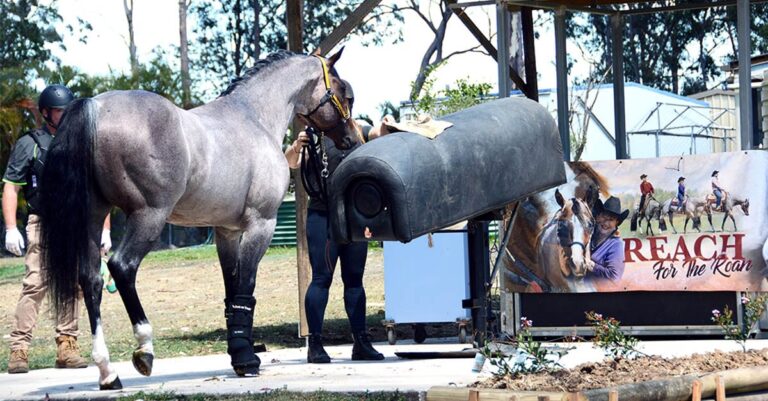
Most horse owners are attracted to the idea of breeding their own foal at some stage, especially those who own mares. Less common, however, is deciding to manage and educate a stallion with the prospect of using him as a sire.

Horses and People magazine’s editor, Cristina Wilkins asked Dr John Chopin, a Registered Specialist in Equine Reproduction based near Brisbane, Australia, some of the most frequently asked questions by both mare owners and those who may be considering managing and breeding a stallion.

What is the difference between artificial insemination with chilled or frozen semen and natural cover?

Stallions can be used for live cover (natural mating) or can have their semen collected for artificial breeding. This artificial breeding can be for fresh, chilled or frozen semen artificial insemination (AI) of the broodmare. The amount of processing the semen undertakes varies but generally increases between fresh and frozen.

Fresh AI is for relatively immediate use. Chilled AI allows storing/transporting semen for up to 48 hours. Frozen semen preserves semen indefinitely and allows both long-distance transport (especially internationally) and long-term storage.

Dr John Chopin, Equine Reproduction Specialist

Why has so much of the breeding moved away from live cover?

There are several reasons why stallions are not used for live cover as much these days and they vary, depending on the aim and wishes of the owner.

There are certain breed society restrictions on the use of artificial breeding. For example, the Thoroughbred industry does not allow any form of artificial breeding, and so, if genetics are to be imported, this requires the stallion to be transported. Today, there are many ‘shuttle stallions’ that travel from one hemisphere to the other and enjoy a very long breeding season!

Artificial breeding with fresh AI can be used when the stallion has too many mares to cover in one day, or it is more convenient for the stallion owner or breeding facility to collect once and inseminate several mares.

Fresh AI is also useful when the mare is not cooperative even though she looks to be at the correct stage of behavioural oestrus. An uncooperative mare is really one that is anxious, frightened and can be aggressive if not managed correctly.

A fearful mare can be a danger to the stallion, people and herself. A decision made by the stallion or the mare owner to collect the stallion and use fresh AI in the mare often saves much heartache in these situations.

Chilled AI allows semen to be transported from the stallion to the mare in a 24- to 48-hour period. This is reasonable when the mare owner cannot, or will not, transport the mare to the stallion and wants the option of having their mare inseminated at a facility of their choice.

Stallion owners who are not in a position to house and handle the mares might opt to drive the stallion to a breeding facility to have semen collected, assessed, processed and transported to the mare.

This option works well for stallions who have an ongoing performance or sports career, for various reasons. For example, the stallion can be conditioned to associate breeding behaviour only with the collecting facility and its staff, allowing the owner/rider to concentrate on their stallion’s training and maintain desired behaviour during competitions.

Training stallions in this way can minimise unwanted behaviours in both, the breeding and training settings, and really help improve a stallion’s mental wellbeing and the relationship he develops with his handlers and riders.

Frozen AI, or the collection of semen for frozen storage, is done for multiple reasons. As well as allowing long-term storage of semen, some stallion owners use frozen semen as an insurance policy, ensuring it is stored in case the stallion is no longer able to breed.

Some owners look to export semen and frozen storage is the most convenient method but requires semen to be collected in an approved facility with quarantine and health testing performed.

And some semen is collected and stored in speculation. For example, a young colt might show some promise, so the owner will store some frozen semen and then have the colt castrated.

How is a stallion collected?

The most common way to collect semen is to have the stallion mount either a mare or a dummy and direct his penis into an artificial vagina or AV. The semen is collected from the artificial vagina, assessed, processed, transported if necessary and inseminated into the mare.

There are other ways to collect semen, though. Some horses can be trained to collect on the ground, a procedure that can be used for an older stallion that might have hind limb pain that prevents him from mounting. Alternatively, chemically induced ejaculation can be used in select cases.

How many people does it take to collect a stallion?

With a very well-trained stallion and experienced personnel, it is possible to have one person handling and collecting the stallion. This, however, is the exception and it is much safer to have a dedicated stallion handler, a person collecting the semen, and a dedicated mare handler if a mare has to be present – making it a total of two or three people.

Is there an optimum reproductive age for stallions?

Stallions mature at different rates and different ages and there can also be some breed differences. Most stallions start puberty between 1-2 years of age, depending on the time of year in which they were born. Final maturation is usually around four years of age.

It is possible to reduce fertility by over-using a young stallion or with the administration of certain drugs. It is essential to carefully manage a young stallion that is breeding to ensure no damage is done to his fertility.

How important is soundness?

A mature stallion with a large breeding commitment needs to be healthy, fit and strong for the season.

Any soreness can become a problem with the stallion potentially refusing to mount, due to pain. Also, the quality and amount of semen can be reduced with a horse that is in pain.

The next point about soundness is an ethical dilemma. The physical appearance of a horse (conformation) is important in determining whether there are likely to have problems with soundness.

Physical characteristics and appearance are also passed on to the offspring therefore, their offspring can inherit the physical appearance of their parents, including some of the problems that may go with that.

How is a mare inseminated?

There are several methods to inseminate a mare. The general principles are cleanliness and no trauma. With a large volume of semen, the method is to use an insemination pipette to place the semen into the body of the uterus.

With smaller semen doses, the ideal is to place the semen further up the uterus, closer to the ovary. This might be achieved with different pipettes that are capable of bending around corners and might require manipulation via rectum, with or without sedation. With very low doses, it is possible to place semen at the very tip of the uterus. This can be done with an endoscope.

What are the pros and cons of these methods of insemination?

Large volume insemination is relatively easy and cheap. The more involved inseminations with low semen doses can be more complex and expensive, as they might require drugs and equipment to achieve insemination.

How long does semen last in the various types of storage?

Fresh semen should be used in a few hours. Chilled semen can last 24-72 hours, depending on the stallion and the way it is processed. Generally, it should be used within 24 hours. Frozen semen can last indefinitely, if it is looked after properly by a professional facility.

How do you ascertain if a stallion’s semen is viable and decent quality?

This can be very important for a number of reasons. If you are considering purchasing a stallion as a breeding prospect, then evaluating the fertility of the horse is very important. Also, if you want to have an idea of how many mares can be booked into a stallion for the season, then an evaluation is important.

If you are considering using chilled semen, there are a number of different extenders and processing methods. Having a test run of different methods will work out which one is the best and, that way, a quality product can be delivered to the mare owner. It is possible a stallion’s semen might not chill or freeze well. This is important to know before offering that stallion for those services.

How do you assess the quality of a stallion’s semen?

Semen is assessed by visual characteristics, volume, concentration and motility. Some of these can be done by eye; the rest need a microscope and associated slides. It is also possible to use computer-aided sperm analysis (CASA). Although CASA is not essential, it does allow some degree of objectivity and repeatability – all important for producing good, consistent results.

Do stallions need to stay at a reproduction facility?

Not necessarily. Some clients prefer to bring them in for collections when they are required. Other clients prefer to leave stallions at a collection facility. The first option reduces costs associated with agistment but places a burden on the owners to make the stallion available on request. The second option removes the need for the owner to drop everything and run the stallion to the reproduction facility, but the workload needs to be considered, so the agistment bill does not exceed income from services.

When is the best time of the year to collect and freeze semen?

Stallions can be collected any time of the year to freeze semen. Our preference is usually to do this at quieter times of the year. The process of freezing semen is more time involved and, in a busy reproduction centre, there is generally more time out of season.

Also, some of the horses who have frozen semen collected need to be trained to do so. It is nicer to work with a naïve stallion when everything is quiet and there is no time pressure that can occur during the breeding season. If semen is being collected and frozen for export, then the facilities and animals have to meet strict quarantine standards. The necessary quarantine isolation of the stallion might be easier to achieve without the heavy traffic flow that occurs during the breeding season.

What factors reduce the performance of a stallion and the quality of his semen?

The main factors that affect quality are age, pain and the use of drugs that impair fertility. A very young horse might not have good quality semen until he reaches maturity. From 14 years of age, semen quality deteriorates, but this is very individual. Some older stallions have very good semen quality, while others deteriorate at a relatively young age. The use of drugs and supplements in performance is a common cause.

Some of these will affect fertility, especially in a maturing individual. If you are unsure of the effect of a drug on a stallion’s potential fertility, consult your veterinarian for advice.

If mare owners choose to breed, how do they start and where do they find a suitable stallion?

Stallion selection can be very difficult and depends on the desired end product.  Evaluating your mare objectively, and matching her with a good stallion is both art and science. Advice from experienced and responsible breeders with a passion for producing quality over quantity, is worth its weight in gold.

Having a working knowledge of popular or performing stallions in your discipline and their bloodlines will help you make an informed decision. There will always be someone nearby who will have an opinion – but sorting the wheat from the chaff can be difficult!

Once the stallion has been selected, budget is a consideration and research into the entire costing of breeding, including service fee, agistment and veterinary fees, is important. These will vary depending on the type of breeding that is done.

Research into fertility results with your selected stallion might be difficult to obtain, but some stallion owners are very open about what they think their stallion fertility results are. Having your mare examined by a veterinarian is also important. Ideally, this should be done before or early in the season, so the veterinarian can identify any obvious problems and possibly correct them before too much time is lost.

Is there any post-breeding veterinary care that mare owners need to consider?

Most mares have uneventful pregnancies and births. If there is a history of problems with your mare, then discussion with your veterinarian can help come up with a management plan for pregnancy. Overall, keeping these mares in good to fat condition (not obese) produces the best foal possible with very little problems during pregnancy and birthing.

Developing a good working relationship with your equine reproduction specialist veterinarian will be useful if any problems should arise.

Horse Fencing: A Worthy Investment

SAFETY REPORT

SPONSORED BY Fitton HorseInsure

The best fence for horses will always be expensive, but did you know your farm insurance can cover fence repair and replacement?

Good safe fences are an essential part of a horse property. They don’t just keep horses secure but also serve to protect certain areas and maintain boundaries with neighbours and public roads.

Good horse fences also reduce the chance of accidents. They help you sleep at night knowing that your animals are safely confined on the property. When the fences are well laid out and aesthetically pleasing, they increase the value of the property.

The time spent planning, choosing the right materials and building is always money well spent. Yes, fencing is expensive but, are your fences insured? For example, Fitton HorseInsure offer the option of insuring only your boundary fences, only your internal fences or both together. This means that in case of damage, such as a bushfire, you will be able to repair and/or replace your fencing – and keep your horses safe. 

Fence types

There is no single type of fence that is ideal for all situations, climate, type of horse or budget. Traditionally, fences made the best use of local and easily available materials but today and within reason, it is possible to buy almost any type of fencing material wherever you live. Modern horse property owners have many choices and options.

Horse properties may also have several different kinds of fencing within the property as different areas often require different types of fencing.

The fencing used in each particular area depends on many factors, including;

  • the paddock or yard size,
  • the size and type of horses,
  • whether other types of livestock will be using the area and of course,
  • the budget.

Safety and management

Grazing management also influences the type of fence that can be used. If pastures are well maintained, the horses will spend time grazing rather than looking for ways to get into the next paddock, or trying to eat the greener grass on the other side of the fence!

Fitton HorseInsure, the insurance specialists for equestrians

If horses are kept in groups, they are not as likely to spend time at the fence looking for other horses, or even worse, playing with those over a fence. Good grazing and groups actually reduce the risk of fencing injuries and land degradation issues, such as tracking lines along fence lines.

The aim should be to strike a balance between having enough paddocks to rotate (so that grass gets a chance to rest, recover and grow), and not having too many small paddocks which are difficult to manage and costly to set up.

Safety should be the priority when designing fences for horses. While fences are costly, the most expensive options are not necessarily the safest or the best. Horses can and will injure themselves on any type of fence, so the aim should be to keep them away from each other!

Best practice recommendations

There are certain things you can do to reduce the risks:

  • Turn horses out together to reduce the incidence of horses walking fence lines and even challenging fences in an attempt to get to the other horses.
  • Use electric internal fences and add electric fencing to existing and boundary fences to keep horses away from the fence and therefore away from danger.

Whatever fencing material is used, it must be smooth and strong and have no projections. Gateways in particular are potentially very dangerous places for horses (and people) so have a good look at your existing fences and gateways and ‘risk assess’ them.

Double boundaries

The boundary fence, in many ways, is the most important fence on a property because it keeps horses (and any other animals) in the property, and can also help to keep intruders out (depending on the construction).

Internal fencing

The internal fences may not need to be as physically strong as the perimeter fence but still require good planning if the land is to be managed well.

The shape of the paddocks will be dictated by the available space and the topography (contours, features and shape of the landscape).

Poor subdivision of your land can be the start of problems such as soil erosion. Whenever possible, aim to fence along the contour lines to reduce erosion.

It is best practice to never have acute angles and even avoid right angle corners in paddocks where horses are kept in groups, as they can be cornered in them while playing. Corners can be eliminated easily by fencing across them with wire or tape, then planting the area with bushes or trees.

There are many options when it comes to choosing fencing. Each type has its pros and cons, but whatever type you choose, build good fences and gateways and they will pay dividends by giving you years of safe usage.

Remember, your perimeter fence is most important, make this a priority and build the best you can afford.

And, for peace of mind, regularly review the level of insurance cover you have for your property so you can protect yourself and your horses from unforeseen events and major loss.

Research shows whipping horses doesn’t make them run faster, straighter or safer — let’s cut it out

The horse racing whip debate just got harder…

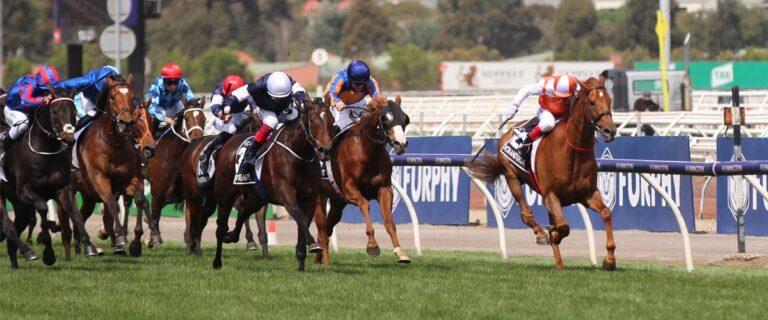
The Melbourne Cup is upon us. This year will be different due to COVID-19 — but one thing we don’t expect to change is concern about horses’ welfare, which seems to resurface each year.

Just days before the Cup, Victoria’s parliament has heard allegations that unwanted thoroughbreds continue to be slaughtered in knackeries and abattoirs in New South Wales, The Guardian reports.

Billionaire executive chair of Harvey Norman Gerry Harvey reportedly apologised after one of his ex-racehorses was sent to a pet food factory for slaughter, despite the state’s racing industry announcing rules against this in 2017. It’s not the first time we’ve heard of such gruesome cases.

Beyond this, there are persisting concerns about how racehorses have been ridden for more than a century. In particular, the use of the whip to “encourage” horses to run faster and straighter has been shown to potentially be both painful and dangerous.

For our research, published yesterday in the journal Animals, we analysed more than 100 race reports to determine exactly how whip use influences the dynamics of a race.

Read the original research article here.

We found whips make no difference to horse steering, jockey safety, or even a horse’s speed. Our study offers scientific findings that support Racing Victoria’s recently announced plan to gradually phase out whip use until whips are only being used when absolutely necessary.

Justifications from the racing industry

Advocates of whip use, such as Racing Australia and the British Horseracing Authority, claim it’s necessary for horse and rider safety. They argue it facilitates the steering necessary to reduce interference between horses on the course.

Another justification given is that whipping makes horses run faster. This is considered fundamental to racing integrity. In a billion-dollar industry that relies on gambling, all parties — including punters, trainers, breeders and owners — want to know the horse they’ve backed will be given every opportunity to win.

For many racing aficionados, breaches of “integrity” and the thought of a horse not being fully “ridden out” on its merits is just as corrupt as the horse being doped, or a race being fixed by some other means.

Read about whip injuries on the 2019 Melbourne Cup winner.

The growing importance of racehorse welfare

But animal welfare is also important to racing integrity, according to the International Federation of Horseracing Authorities and other racing bodies.

Racing stewards are in the unenviable position of enforcing horse welfare during races, while also having to ensure whips are used to give each horse full opportunity to win.

For all official races in Australia, there are detailed regulations for the number and style of whip strikes allowed at the different points of a course.

Research over past decades has concentrated on jockeys’ accuracy, compliance with whip rules, the link between whip use and catastrophic falls that can injure or kill horses or jockeys and simply whether or not whipping hurts.

But until now, few have stopped to ask whether whips actually work. That’s simply because there hasn’t been a way to scientifically test the culturally entrenched assumption they do.

Racing without using the whip

However, since 1999, a form of whipping-free racing has been conducted in Great Britain via the “hands and heels” racing series for apprentice jockeys. In this form of racing, jockeys are permitted to carry whips but can’t use them unless under exceptional circumstances, such as trying to avert a collision.

After races, stewards produce an official report noting any unusual or unorthodox jockey behaviour (which may or may not have affected race placings), jockey infringements, horse movement on the course, interference between horses, and veterinary issues.

We analysed reports for 126 races involving a total of 1,178 starters (horses and jockeys). These included all 67 hands and heels “whipping-free” races in the period starting January 2017 and ending December 2019. For these, we were able to case-match 59 traditional “whipping-permitted” races.

Thus, we were able to compare the performance of racehorses under both “whipping-free” and “whipping-permitted” conditions in real racing environments, to figure out whether whipping makes horses easier to steer, safer to ride and/or more likely to win.

Our results indicated no significant differences between horse movement on the course, interference on the course, the frequency of incidents related to jockey behaviour, or average race finishing times.

Put simply, whip use had no impact on steering, safety or speed. Contrary to longstanding beliefs, whipping racehorses just doesn’t work.

The way forward

Our findings reinforce the need for more support for whipping-free races. Importantly, they indicate whip use could potentially be banned without any adverse effect on horses, riders or racing integrity.

“Whipping-free” races are not the same as “whip-free” races. While some might argue for races with no whips at all, an agreeable compromise would be to let jockeys carry whips, but only use them if their safety is jeopardised.

This approach has already been adopted in Norway, where whipping-free races have been held for more than 30 years with no apparent negative consequences.

Given evolving social values, we believe transitioning to a whipping-free approach is essential for the future of an industry that relies on a social licence to operate.

Read the original research article here.

Read about whip injuries on the 2019 Melbourne Cup winner.

Kirrilly Thompson, Adjunt Senior Research Fellow, University of South Australia; Bethany Wilson, Honorary Affiliate, University of Sydney; Paul McGreevy, Professor of Animal Behaviour and Animal Welfare Science, University of Sydney, and Phil McManus, Professor of Urban and Environmental Geography: School of Geosciences, University of Sydney

This article is republished from The Conversation under a Creative Commons license. Read the original article.

Encouraging Dung Beetles on Horse Properties

Encouraging dung beetles in horse properties:

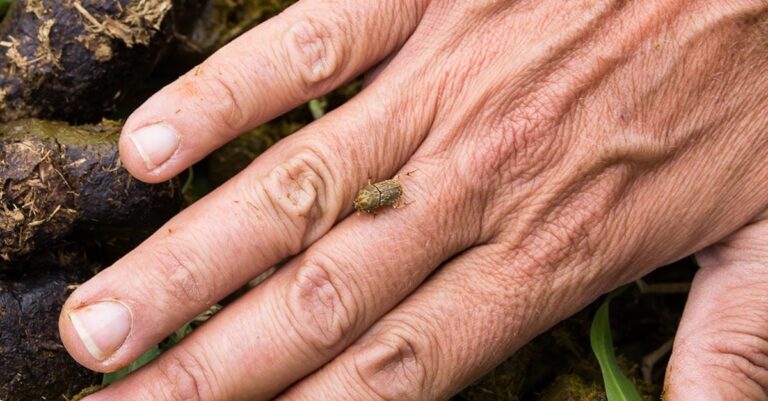
Dung beetles are very cool creatures! They eat and bury your horse or cattle’s poo, control insects and parasites, de-compact soil, cycle nutrients and hydrate your pasture – and they do it all for free.

Dung beetle behaviour has fascinated humans for thousands of years, including the ancient Egyptians, who accurately documented that dung beetles’ ball rolling is influenced by the sun.

We now know some species of dung beetles even use the moon and galaxies to navigate and roll their manure in straight lines! They are currently the only known non-human animal to orient themselves using the Milky Way.

If you have horses and manage them mostly on pasture, you want dung beetles! If you already have them on your property you undoubtedly noticed they are very active around the end of Spring and Summer.

While Summer is officially over, dung beetles are still active until the end of Autumn and there are also some species that are Winter-active.

Having dung beetles around as long as possible and throughout the year would be an ideal situation on all farms and horse properties, but it requires some thoughtful management.

In particular, this means we should try to manage our land and horse-worming regime all-year-round to benefit from these little creatures. In the following article, we will discuss dung beetles in Australia, how they specifically benefit horse properties and how we can keep them happy.

Dung beetles in Australia

Australia has more than 500 species of native dung beetles and 23 species of dung beetles introduced from Hawaii, Africa and southern Europe. The introduced dung beetles are very useful in Australia’s pastoral regions. Where they are well established, these dung beetles bury large volumes of cattle and horse dung. Some species can remove a pat in less than 24 hrs!

The burying of dung underground by beetles has many benefits for the soil, water and pasture, as well being a form of biological control for flies and parasitic worms – helping to protect our horses.

The Dung Beetle Project

Most Australian native dung beetle species eat marsupial dung (from kangaroos and wallabies) and don’t process the moist dung of domestic farm animals very well. Only a few native species can consume the moister dung of horses, sheep and cattle. Thus, as part of a larger Dung Beetle Project, about 40 species of exotic dung beetles have, so far, been introduced to break down the manures of farmed animals and, of the 40, just 23 have been successful.

The Australian Dung Beetle Project (1965-1985), conceived and led by Dr George Bornemissza of the Commonwealth Scientific and Industrial Research Organisation (CSIRO), was an international scientific research and biological control project, with the primary goal to control the polluting effects of cattle dung.

To see all the species that were released, click here.

And to find out about the latest 2020 arrival… click here.

What species?

Climatic and geographic limitations require 6-10 species be colonised on farms to get year-round activity in dung removal. Most dung beetle activity takes place in Spring, Summer and Autumn but, recently, Winter-active species have been identified (Bubas bison and Geotrupes spiniger or Blue dung beetle) for introduction to farm.

These Winter-active beetles are mainly found in parts of South Australia, Victoria, New South Wales and Western Australia. However, researchers are working on a new project to import more Winter-active species, but this will take some time, due to our strict quarantine policy.

Besides beetles, we could also benefit from earthworms as they are at their most active during the Winter – converting organic material into plant food, and aerating the soil.

A busy life

The life cycle of dung beetles sees beetles actively consuming dung and burying it for 2-3 months followed by a hibernation period. Only when similar seasonal conditions prevail do the beetles once again become active, coming out of dormancy from the eggs that were laid up to 300mm in the soil during the previous active season.

Depending on species, some dung beetles will go through 1-2 life cycles during an active season. Each mature female beetle will lay 60-80 eggs in a season, thereby increasing population by this factor in one generation. Dung beetles are known to spread up to 2km per year if unimpeded by bush or barrier, and will diminish in density for a period of time after their release before consolidating their population.

Dung beetles on horse properties

Dung beetles are very beneficial to our pastures, our horses and ourselves.

For us horse owners, they mean less cleaning paddocks and poo shoveling, and great soil development without cost or effort! They also help control fly and parasitic worm populations, which is superb news for our horses.

So, if you have dung beetles, take good care of them and, if you don’t think you have them, chances are you probably do have them in the ground, but you need to create the right conditions for them to establish and thrive (keep reading).

It is also possible to acquire dung beetles from organisations and institutions in your region that you can release. Check to make sure they suit your soil conditions as they are very fussy about the type of soil.

Did you know? A dung beetle can bury dung 250 times heavier than itself in one night. There is one species – Onthophagus taurus – that can pull a load 1,141 times its own weight! It’s considered the strongest insect in the world! Most dung beetles search for dung using their sensitive sense of smell. Some of the smaller species simply attach themselves to the dung-providers and wait for their reward to be delivered!

Taking care of dung beetles

Dung beetles help break down poo while transporting it underground, which helps with soil decompaction and fixing nitrogen. But, be aware that if your pastures are severely compacted, even dung beetles cannot do the work for you.

If the soil is too hard, they will die because the spikes on their legs get eroded and, without them, they cannot bury themselves into the ground.

So, if you find that you don’t have beetles or you have very small amounts, you may need to help them with some soil development strategies like  de-compacting using Keyline ploughing,  composting and mulching.

Dung beetles also require fresh dung, so it’s important you don’t remove all the good, fresh manure from pastures and yards. Only remove the older pats that have been left to decomposed for at least 3-4 days, and you can see the pat is all broken down, spread and only larger fibre components are visible. By this stage, they also have a greyish colour.

Care with wormers and other chemicals

Many treatments for the control of cattle or horse parasites and pests have negative effects on dung beetle survival, breeding capacity and activity.

A thorough review of the effect of macrocyclic lactone (ML) drenches on dung beetles has shown toxicity rankings against non-target species was greatest for doramectin, followed by ivermectin and eprinomectin, with moxidectin being significantly less toxic.

Ivermectin is a very effective anti-parasitic drug that has been used as a preventative in livestock since its discovery in 1981. Its use increased exponentially to become a standard drug in the treatment and prevention of common parasites, including in humans. While considered by the World Health Organization as an essential medication and proven very effective, its widespread use comes at a price.

The issue, researchers have found, is the ivermectin molecule can survive its journey through the animal and be excreted unchanged. Also, once on the ground, residues can remain active in animal dung for at least a month.

This means the drug hits the arthropod populations as hard as it does the parasites it is intended to prevent.

The ingestion of ivermectin affects even mature dung beetles, seriously compromising their mobility, orientation and reproductive capacities.

The findings contradict international veterinary manuals and yet, they offer a compelling explanation for the decline in dung beetle population levels reported in other research.

While invermectin may be harmful to beetles it is not to say you cannot use it, as many horse owners like them for the control of bots. You just have to be aware of the timing – either late Autumn (when it gets colder) or very early Spring before it warms up. This avoids the Summer period, which is when most dung beetles are active.

Other dewormers like fenbendazole and oxibendazole are also commonly used, but they are less toxic compared to invermectin or other avermectins.

Wormers with moxidectin aren’t as lethal to immature beetles and have a shorter time of toxicity (only three days after drenching). Choosing this drench will ensure management decisions for parasite control will have no effect on dung beetle activity. However, you will need to review the chemical used as resistance in horses is another factor you need to consider when choosing the type and brand of dewormer.

Before you take action and buy your dewormer, it’s advised you conduct a faecal egg count (FEC) for each horse on the property, which helps in identifying the severity of the worm burden. Faecal egg counts (FEC) of less than 200 eggs per gram is regarded as ‘low’ and no further action is required. So, often only a few horses require treatment. Remember though, an FEC won’t work for encysted worms, tapeworms or worms at the life-cycle stage where eggs are not being laid.

To ensure you don’t kill many dung beetles in your pasture, it’s generally advised to keep your horses for at least 3-7 days in a sacrifice area, central point or yards after drenching, so you can collect and dispose of the manure during this time. As mentioned earlier, avermectins (such as invermectin) may still be active for many weeks, but you will reduce some of the toxic effects.

Did you know? Many dung beetles, known as rollers, roll dung into round balls, which are used as a food source or as a chamber for their eggs. Others, known as tunnelers, bury the dung wherever they find it. A third group, the dwellers, neither roll nor burrow: they simply live in manure. Dung beetles can grow to 3cm long and 2cm wide. All the species belong to the superfamily Scarabaeoidea; most of them to the subfamilies Scarabaeinae and Aphodiinae of the family Scarabaeidae (scarab beetles). As most species of Scarabaeinae feed exclusively on faeces (some also on mushrooms, and decaying leaves and fruits), that subfamily is often dubbed true dung beetles. There are dung-feeding beetles which belong to other families, such as the Geotrupidae (the earth-boring dung beetle).

Pasture management

When horses graze, they are very selective. They can eat down some areas almost bare, while leaving other areas in which they dung and urinate untouched.

If these paddocks and pastures are not managed properly, you can get over-grazed and ‘horse-sick’ pastures with poor quality grasses, accumulation of weeds, compacted and eroded soils, manure build up and higher populations of parasites.

Horse-sick pastures may be more evident when there is insufficient land, but larger horse properties can also have these problems, despite their size.

These horse-sick pastures not only affect the health of your horse, but also negatively influence the shape of the land, and can reduce the value of your property or the adjacent land.

To manage both soil and parasites, pasture rotation, strip grazing and cross-grazing (alternating with livestock) are effective ways to reduce parasite survival.

Rotating horses to ‘fresh’ pastures ensures recovery of grazed pastures and allows you time to work on soil development (e.g. composting, mulching, keyline ploughing), which helps with keeping the soil healthy for your little soil workers – dung beetles.

As mentioned earlier, dung beetles cannot survive in severely compacted soils, so taking care of this problem is important for their longevity.

Understandably, we will never fully avoid compaction along boundaries, water and feeding points, but with timely grazing and moving animals frequently, this compaction is less severe and can be easily restored using mulching techniques, or just recovery time if you have healthy soils to start with.

Other management strategies

Another solution to minimise compaction in your pastures is to use tracks (laneways) and/or a sacrifice or central-point system that can take some of the regular congregating of animals.

As the word suggests, these are areas where you ‘sacrifice’ compaction for the benefit of pasture and plant growth in other parts of your property.

Such areas can provide a central space for loafing, watering, feeding or to remove horses from the pasture altogether to allow soil and plant recovery, or reduce your horses’ pasture intake.

The design of your sacrifice/central point will largely depend on the number of horses, space available and budget.

Footing and drainage

While you allow compaction to happen in these areas, it’s important you pay close attention to the drainage and footing to avoid mud build up, which can be very dangerous for you and your horses.

Consider the shape of the land, and review if you need to level and prepare this area in such away that it allows water to slowly drain, without causing quick run-off and erosion.

The sacrifice area will need to be fenced off and requires a border around the footing to avoid run-off. You can even build a (rock) rain garden that can take some of the extra run off water (See last month’s article).

There are many types of materials that can be used as footing and your choice will largely depend on your preferences, availability and budget.

River sand, pea rock gravel and wood chips are regularly used for their comfort and/or price, and can be applied to different areas.

You can also decide to use ground stabilising products, such as plastic pavers with a cell-like structure (honeycomb or diamond). Typically, sand or pea rock is used to fill the grid spaces, and this will allow water to pass through, without turning it into a muddy area. This system can be very useful for high impact areas, such as gateways, tracks and water points. However, it still needs to be managed and manure should be taken away regularly to avoid build up that can turn into a slurry.

The roll out

If you have horses and manage them mostly on pasture, you want dung beetles on your property!

They muck out your paddocks, build carbon, and increase the availability of nutrients and water.

Dung beetles, together with other soil workers, such as earthworms, fungi and bacteria, are all important for the health of our soils and pastures. We never feed plants directly – this happens through the process of breaking down organic matter, which is done by our soil workers.

Although they do all the work for free, we still need to remain involved, guiding the process in the right direction and creating conditions our soil workers thrive in.

This means we need to have an integrative approach for the management of our horses and our pasture. Selective worming, pasture rotation/resting and cross-grazing with livestock will all contribute to maintaining healthy soils, reducing parasite burden and resistance in horses.

A personal note

This year, I have been observing large quantities of dung beetles on our property in the New England region of New South Wales. In September 2015, my partner and I moved in to this 100-acre property but, it wasn’t until March 2016, that we stocked it with horses and cattle. When we did that, we saw Autumn dung beetles become immediately active.

Last year, before Spring, we boosted our soil using a biostimulant to increase nutrients and substrate for our soil workers, and this has been key to getting large activity from soil organisms and dung beetles this Spring and Summer!

On our property, we cell graze and rotate cattle and horses, focusing on allowing both soil and pasture to recover.

As an example, a cell that has been just been grazed may get 8-9 months recovery time before the horses return.

Only 50 to 60% of the horse manure is collected for composting and spot mulching compacted areas left in the cells (e.g. corners and fence lines). The remaining poo is left for dung beetles to break down.

In the peak of Summer if I collected horse poo in a wheelbarrow and tipped it out into areas where I did some mulching, I will have hundreds of different beetles at the bottom of my wheel barrow (I did return them to my soil and mulch).

Some of the species I was able to identify with the help of an entomologist from the University of New England were: Onitis pecuarius, Onthophagus binodis and Euoniticellus fulvus, so I have included some information about them.

Of these three species, the first two (bigger species) are most productive in making your poo disappear.

Poo is Cool

Believe it or not, it turns out poo is cool and dung beetles can be cute – even when standing on top of a stinking pile. When are beetles cute? When researchers decide to give them little green boots and test their poo-top dancing ability, all in the name of science! Yes, you heard right, little green boots…

Many species of boll-rolling dung beetles live in deserts, where the midday sun can heat the sand to temperatures of up to 60°C. For humans, this means serious discomfort and it’s no different for the little insects.

Dung beetles, it turns out, use the moist ball of dung as a refuge from the hot sand. The ball of dung can be several tens of degrees cooler than the sand so, by standing on top of it, they’re able to avoid getting fried.

The researchers discovered this by monitoring how many times dung beetles jump on top of their balls, given a certain ground temperature.

Below 50 degrees C, the beetles would simply push their balls in a straight line for 1.5m without stopping. But, above 50 degrees C, they would stop, jump on top of their dung and hang out for a bit. However, the researchers didn’t stop there; they wanted to know exactly what triggered this behaviour. And this is how researchers got to the tiny green beetle boots.

They had ‘beetle boots’ customised from dental silicon. These boots, which insulate the feet from the hot sand, were placed on the dung beetle to determine whether it was leg temperature or thorax (the part of the body of a mammal between the neck and the abdomen) temperature that was the thermoregulation trigger.

When the dung beetles wore their hipster-inspired leg wear, they were less likely to climb the ball of poop, even in hot temperatures!

Can you imagine being the scientist in charge of writing the grant application? “Um, we need the money to put little boots on some dung beetles to find out why they climb on their dung balls so often…” 

Check out their abstract here.

Dispelling Myths on Probiotics for Horses

Dispelling myths on probiotics for horses…

Horse catalogues and feed stores are loaded with a wide range of pre- and probiotics. But do they really help the horse?

In a presentation entitled ‘Hindgut Microbiome’, Dr Wendy Pearson, an assistant professor of equine physiology at the University of Guelph, discussed the role of microbes in digestion and the possible benefit of probiotics. Pearson’s presentation was a part of the Equine Summit hosted by Equine Guelph in Ontario, Canada.

The discussion begun outlining the anatomy and function of the horse’s digestive tract. Read more about the anatomy of the digestive tract here.

The first part, known as the foregut, consists of the stomach and duodenum. Horses are built to graze most of the time, consuming small amounts of roughage over a long period of time so the equine stomach capacity is just eight to fifteen litres. The first 8% of digestion happens in the stomach then the food moves on to the duodenum with a 6-litre capacity, the first and shortest segment of the small intestine. It carries out another 30% of the digestion process, turning food into energy without fermentation.

There is a small amount of microbial action in the foregut, but it is heavily influenced by diet, water, and the immediate environment. In this part of the gut, there is a physical and chemical breakdown of starches, and enzymes that enhance the breakdown of protein.

But in horses, most of the microbial action occurs in the hindgut: the caecum carries out 15% of digestion; the large colon 38% and the small colon 9%.

Fermentative digestion provides 35% of a horse’s daily energy needs through the production of fatty acids which are then used to produce ATP, the cell’s energy currency. The caecum is primarily responsible for fluid absorption.

Did you know? Since a horse salivates in response to chewing and horses are adapted to chew for many hours each day, an individual horse may produce up to 100 litres of saliva per day.

Fermentation begins in the large colon with the majority of cellulose fermentation occurring there.

The fibrolytic bacteria (the ones that specialise in breaking down fibre) prefer a high pH (alkaline) environment which is provided by roughage.

This is why a roughage-only diet increases the diversity of microbes in the hindgut.

In contrast, when starch is added to the diet in the form of grain or processed feed, most starch is digested in the foregut but some can travel to the hindgut. When this happens, the pH drops (becomes acidic), and fibrolytic bacteria become less efficient causing an increase in the numbers of lactic acid producing bacteria.

The build-up of lactic acid can result in a higher risk of laminitis, acidosis and colic, all of which can lead to serious health problems, or even death.

In her presentation, Dr Pearson who ran her own boarding and performance stable for many years, said that there are times when performance horses need starch (grain or processed feeds) to maintain condition. But warned that when starch is added to the horse’s natural (forage) diet, the digestive efficiency of the hindgut decreases so horses receive less nutrition from their hay and pasture. Additionally, if the amount of starch is too high, it is incompletely digested.

In draft horses and ponies, which evolved to live on low quality diets, adding starch to the diet can cause behavioural effects. Changes in diet can cause the vagus nerve to actually change taste receptors and also affect the horse’s emotional state. (The microbes can actually manipulate horse behaviour in an attempt to acquire what they need!)

Probiotics and prebiotics are advertised to increase digestive efficiency but, do they work?

Pearson said the answer is uncertain because there has not been enough research on horses. Most probiotic research has been on humans and humans have a very different digestive system.

Probiotics contain actual living microorganisms, either yeast or bacteria, which the manufacturers claim will benefit the health and digestion.

Prebiotics contain materials to enhance the bacterial performance—they are preferred feed substrates for the microorganisms. In other words, they are digested by the bacteria, not by the horse.

The first question we should ask of probiotics is whether or not they actually arrive in the hindgut alive and intact, or they are destroyed by antimicrobial enzymes.

If they survive, they could improve the nutrient absorption in low quality feedstuffs and possibly also enhance the immune system.

Anecdotal evidence would seem to imply that certain probiotics do indeed increase digestive efficiency and combat stress in animals which consume a high starch diet.

Pearson emphasises that users should follow manufacturers’ guidelines. Pearson said that a combination of probiotics and prebiotics is probably the most effective.

When asked which probiotics to use, she answered that consumers should look for companies and products with the most research behind them. She said that probiotics would be most effective for performance and possibly school horses with a high starch diet. Whereas a pleasure horse used for occasional riding needs nothing more than forage, salt and water. This is because a high forage diet enhances microbial performance, without the need for probiotics.

By understanding how digestion occurs in the hindgut, equine owners can make better decisions about feed choices. Adding starch to a horse’s diet may be appropriate to meet energy and condition needs, but it can result in a decrease in natural digestive pathways and greater risk of colic. Probiotics may, in some cases, reduce this risk.

Read more about the anatomy of the digestive tract here.

The 2020 Five Domains Model for Welfare Assessment

A new, updated version of the Five Domains Model, the gold standard in animal welfare assessment and monitoring, has just been published in the Open Access journal Animals.

Read a 2019 interview with Professor Emeritus David Mellor, the architect of the Five Domains Model and lead author of this new version.

This review is the latest in a succession of updates of the Five Domains Model, which, at each stage, has incorporated the latest evidence-based understanding of animal welfare assessment.

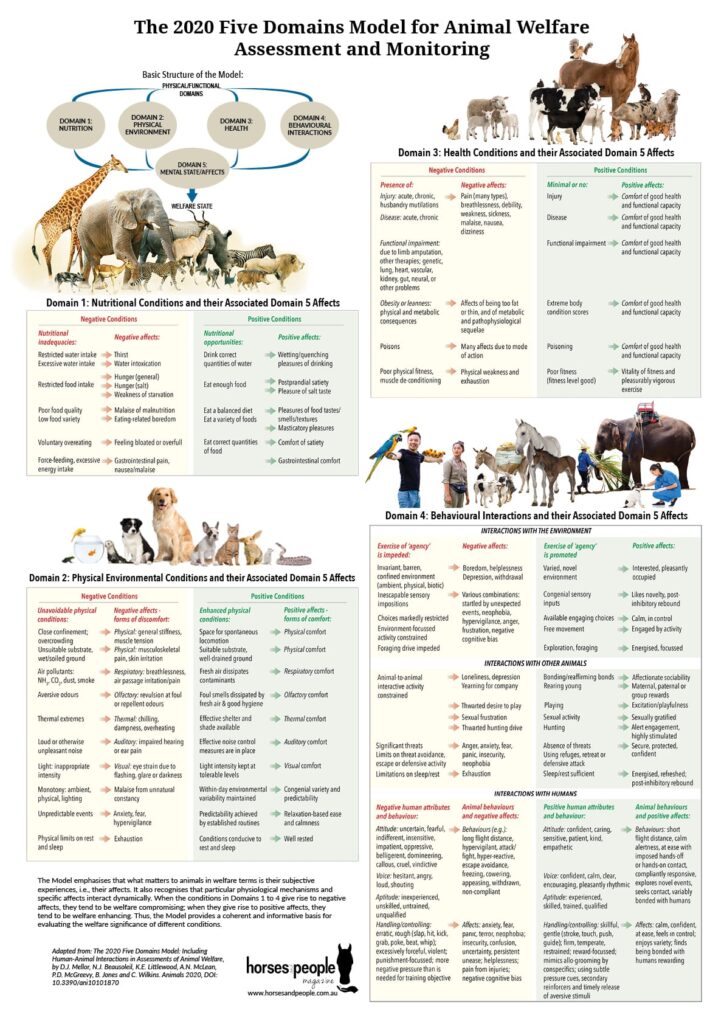
The Five Domains Model considers the animal’s subjective experience – how they might feel about the conditions we impose – and it is a tool for thoroughly assessing animal welfare in order to guide its management. It is therefore, very useful for anyone developing a welfare strategy and  for educating people about the welfare of horses or any other animal.

It includes 3 physiological domains – nutrition, living environment, and health and fitness, and 1 behaviour domain, with the 5th domain being the animal’s mental state.

The conditions in each domain have an impact on the animal’s subjective experience (the 5th domain, mental affect) from which you can assess if the animal has negative, neutral or positive welfare.

The 2020 Five Domains model adds much needed detail to the behaviour domain, which is now subdivided into 3 key areas: interactions with the environment, interactions with other animals, and interactions with humans. The physiological domains that detail the nutrition, living environment, and health and fitness remain the same as with the previous Model.

The 2020 Model includes specific guidance on how to evaluate the negative and/or positive impacts of human behaviour on animal welfare. Persons whose actions may be evaluated include, but are not limited to, livestock handlers, owners of draught animals, veterinary care staff, pound/shelter staff, zoo-keepers, wildlife managers, hunters, researchers, companion animal owners, owners of sport/recreational animals, animal trainers and service animal handlers.

Examples of situations where human–animal interactions may have negative welfare impacts include: when animals have had little or no prior human contact, when human presence adds to already threatening circumstances, when human actions are directly unpleasant, threatening and/or noxious, when humans’ prior actions are remembered as being aversive or noxious and when the actions of bonded humans cause unintended harms.

In contrast, situations where human–animal interactions may have positive welfare impacts include: when the companionable presence of humans provides company and feelings of safety, when humans provide preferred foods, tactile contacts and/or training reinforcements, when humans participate in enjoyable routine activities or in engaging variable activities, when the presence of familiar humans is calming in threatening circumstances and when humans act to end periods of deprivation, inhibition or harm.

In horses, for example, the new Model makes it easier to emphasise the 3 Fs – Friends, Forage and Freedom – as well as the quality of human-horse interactions.

The paper, which is open access and can be read here, has useful figures with examples of the conditions and human factors that contribute to negative mental states, and those that promote positive mental states.

Horses and People Magazine has summarised the Model into an accessible poster – perfect to print in A2 – is available for download by clicking here.

The article is titled: The 2020 Five Domains Model: Including Human–Animal Interactions in Assessments of Animal Welfare by David J. Mellor, Ngaio J. Beausoleil, Katherine E. Littlewood, Andrew N. McLean, Paul D. McGreevy, Bidda Jones and Cristina Wilkins. You can read it here.

2020 Five Domains Model for Welfare Assessment

It’s official: Horses are good for us, they get us close to nature

New research shows horses are good for the soul because they get us close to nature.

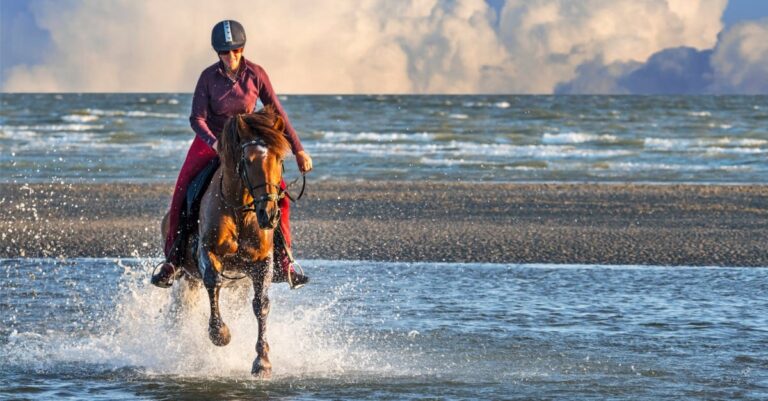
When you go for a ride, do you feel more “at one with nature”? If you do—and in particular if that makes you happy—you’re not alone. According to a new study, horseback riders feel more in touch with nature, and this has positive consequences for their well-being.

People who ride horses spend more time outdoors in “green” areas away from cities and generally feel better physically and mentally than people who don’t own any animals, said Gabriele Schwarzmüller-Erber, PhD candidate, of the Center for Public Health at Medical University Vienna and the University of Applied Sciences, both in Vienna, Austria.

Similar to dog ownership, horseback riding allows people to be more connected to nature, and activities with these animals in a natural environment “is a source of wellbeing, enjoyment, self-confidence, and social contacts,” Schwarzmüller-Erber said.

That’s of particular importance in middle-aged and older people, who often get so involved with work and routines that they find less time for exercise and outdoor activity. “Working periods increase, and, consequently, health-related problems increase as well,” she said. “Horseback riding acts as an opportunity for physical activity and mental relaxation.”

In their study; Schwarzmüller-Erber and her fellow researchers carried out extensive questionnaires with nearly 200 people over age 44 who either owned dogs, rode horses, or had no pets at all. There were 67 recreational horse riders, 57 dog owners, and 54 people without pets who answered 14 pages of written questions and spoke with researchers by phone or in person.

They found that dog owners and riders were equally attached to their animals, but dog owners referred more to “loving” their pets, she said. Both groups benefited from better moods and general well-being than people who had no animals. In particular, they noted these people had happy feelings when spending time with their animals and just afterwards.

Dog owners and horseback riders also had similar levels of connection with nature, Schwarzmüller-Erber said. Although they got about as much exercise as people without pets, horseback riders tended to feel like they had better physical health. That might be because horseback riding involves the use of multiple musculoskeletal regions, involving trunk stabilization and muscle strengthening. And in fact, the more horseback riders and dog owners felt connected to nature, the healthier they said they felt.

“Natural environments are associated with positive feelings, decreased depression, and higher perceived mental health,” she stated in her paper.

As a horseback rider herself, Schwarzmüller-Erber said she noticed that riders often preferred to ride outdoors instead of in an indoor arena even during inclement weather. “I asked myself whether this is due to nature relatedness, and I wanted to compare it to dog owners, who always have to walk with their dogs even in bad weather conditions,” she told Horses and People.

Her study underlines the fact that horses can bring both physical and mental wellbeing to humans, in particular as they reach more advanced ages. “Horseback riding makes it possible to reach the recommended activity levels (150 min of moderate-intensity aerobic exercise per week) even at an older age, and thereby to increase well-being (esp. physical and psychological),” Schwarzmüller-Erber said.

Her research did not include people who are both horseback riders and dog owners, she said, but she would like to see that pursued in a separate study.

This study is open access and can be read here – Nature Relatedness of Recreational Horseback Riders and Its Association with Mood and Wellbeing by by Gabriele Schwarzmüller-Erber, Harald Stummer, Manfred Maier and Michael Kundi.

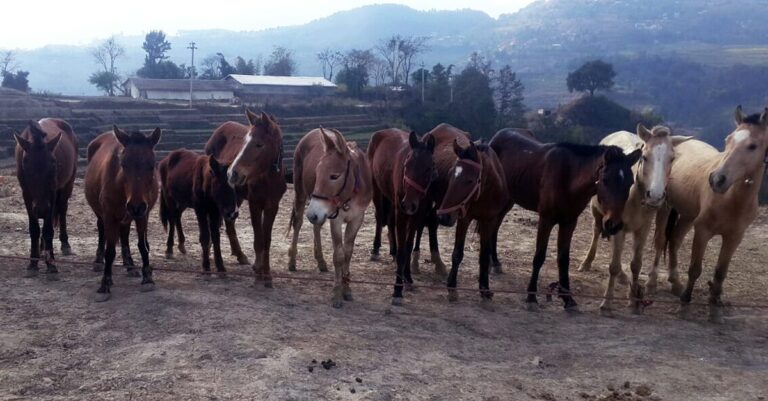
New Framework for Assessing the Welfare of Working Equids

The new framework aims to improve the lives of working equids in Nepalese brick kilns and beyond.

Horses, donkeys, and mules working in the brick-building factories of Nepal have generally good body condition, and most are sound. But more than half have scars, wounds, and other skin issues, and many lack adequate access to basic equine needs, according to a new international study.

Working up to nine hours a day six days a week, transporting loads of bricks across difficult terrains in hot, dry environments, the equids are provided little clean water or shelter during working hours, said Stuart Norris, PhD, Senior Statistician at The Donkey Sanctuary in Devon, the U.K.

Equipment is often poorly fitted to the animals, and the handlers don’t usually remove it during breaks, Norris said.

Many of the equids stay tethered when not working, restraining their freedom of movement and causing leg wounds, he added. Only a fourth of the animals have access to a field when they’re not working.

The observations come from a joint project with a local charity, Lalitpur-based Animal Nepal, which aims to improve the lives of working equids in hundreds of brick kilns across Nepal. Nestled between China and India, the country of Nepal produces four billion bricks per year in more than 1200 kilns. While some kilns rely on humans to transport bricks on their own backs, others use mules and horses, and to a lesser extent donkeys, for moving heavy loads of baked bricks.

Assessing animal welfare can seem too subjective or unreliable if it’s just based on personal or even professional impressions, according to Norris. So the researchers employed more objective welfare assessment tools based on evaluations of the Five Freedoms to investigate equine welfare in Nepal. The World Organization for Animal Health (OIE) promotes the principles of the “five freedoms” for horses and all other land animals. These freedoms include: freedom from hunger, malnutrition and thirst; freedom from fear and distress; freedom from heat stress or physical discomfort; freedom from pain, injury and disease; and freedom to express normal patterns of behaviour.

The researchers from The Donkey Sanctuary and Animal Nepal used the Equid Assessment, Research, and Scoping (EARS) tool to understand the health, behaviour, nutrition, housing, and working conditions of nearly 2500 working equids in 41 Nepalese brick kilns. Then in a second step, they used the Welfare Aggregation and Guidance (WAG) tool to analyze the data from the EARS tool, allowing the scientists to pinpoint areas of particular welfare concern and develop strategic ideas for improving those areas.

They found that 92% of the animals had medium to good body condition scores, said Norris. Three-fourths had medium to good nutrition. But less than 2% had free access to clean water in their housing areas; interestingly, there was actually a greater chance of having clean water at work—but even then, only 4% had that access. The majority had limited access to water, and the water wasn’t particularly clean.

Concerning management, 74% were kept indoors in stalls, he said. Still, in 72% of the cases, the environment was clean and free from hazards, and nearly 80% had adequately sized stables and a clean, dry, comfortable area to lie down.

Almost 95% of the equids worked between six and nine hours a day; more than nine hours is considered a bad welfare condition, Norris said. About 86% worked six days a week; most of the others worked every day. Most had limited access to shade during working hours, and while 88% had breaks during the working day, the majority of these did not have their equipment removed during the break.

Despite this, 94% of the equids showed no signs of lameness, and 84% showed no signs of illness, Norris said. Most of the health conditions were minor, primarily discharge from the eyes and/or nose. More than 90% had healthy coats—but they were blemished with scars (31%), hair loss (19%), and/or open wounds (10%).

As for emotional state, about three-fourths of the equids seemed “at ease,” with no visible signs of fear or distress, according to Norris. The animals’ behavior seemed to be directly linked to the attitude of the handlers; aggressive handlers tended to have more reactive equids showing conflict behaviors like threats, he said. But relaxed and confident handlers—which made up 91% of the handlers—had animals who seemed confident themselves, and even “friendly” towards humans.

The positive results found in the study might reflect prior interventions by non-government organizations—an encouraging sign that intervention is moving equine welfare in the right direction in these kilns, according to Norris. “The motivation for this study was previous work with Animal Nepal, which highlighted the poor working conditions that were experienced by equids in brick kilns,” he said. “The Donkey Sanctuary had previously provided support for building adequate shelters at specific kilns, but with the development of the EARS tool we were in the ideal position to assess a larger number of kilns to really understand the threats to welfare that these equids face.

“Collecting this information has then given us the ability to design further studies to tackle welfare issues in these kilns,” he continued. “This work is part of a longer term programme to improve the lives of equids working in Nepalese brick kilns and take the lessons we learn from this to be applied to other situations where there is suffering of equids.”

Actions arising from the study will primarily take place in two phases, Norris said. “Firstly, there needs to be an implementation of a programme to work closely with owners to improve their interaction with their equids, training for wound management, and training for harness design to ensure that the loads that the equids need to carry are not causing wounds,” he explained.

“Secondly, there needs to be long term monitoring of this work to ensure that the training is implemented by the owners into working practices and if not understand why, so these can be further developed into more effective training programs.”

The open access study A New Framework for Assessing Equid Welfare: A Case Study of Working Equids in Nepalese Brick Kilns by Stuart L. Norris, Laura M. Kubasiewicz, Tamlin L. Watson, Holly A. Little, Atish K. Yadav, Sajana Thapa, Zoe Raw 1 and Faith A. Burden. It was published in Animals in June 2020.

Researchers uncover scientific clue to the relationship between whorls and horse personality

Whorl judging of horse temperament and personality may have found its scientific grounding.

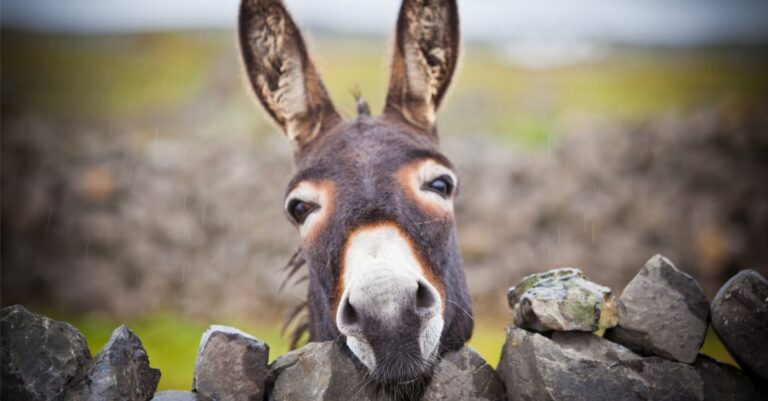
Ever notice that donkeys have very different temperaments compared to horses?

Ever notice that donkeys have very different heads compared to horses?

If you’re starting to think now that those differences could be linked, you might be right. According to Canadian and Australian researchers, the physical aspects of the skulls and the brains they house may have some connection with the personalities of these two kinds of equids.

Forehead width, the position of the olfactory lobes (small lobes in the front of the brain that process smell), and the location of hair whorls differ considerably between horses and donkeys, perhaps providing some neurophysiological basis for behavioral differences, said Katrina Merkies, PhD, associate professor and equine behavior researcher at the University of Guelph, in Canada.

“The idea of external landmarks with underlying anatomy and how that relates to behaviour is fascinating,” said Merkies, working in collaboration with Paul McGreevy, BVSc, PhD, MRCVS, MACVS (Animal Welfare), professor of animal behavior and animal welfare science at the University of Sydney. “So we were looking for a relationship between skull morphology and temperament, which has been previously documented in dogs. Our results supported these findings.”

Merkies and McGreevy, together with Georgios Paraschou, veterinary pathologist at the Donkey Sanctuary in the UK, examined the heads of 14 Standardbred horses and 16 donkeys of several breeds after they had been euthanized for other reasons. They took measurements of lengths, widths, and angles of various skull and brain features as bases for comparison.

They found that donkeys had a much greater cranial index than horses, she said. The cranial index is defined as the width across the forehead (between the “temples”) compared to the length of the face from the poll to the mouth. Essentially, this means that, proportionally speaking, donkeys have wider foreheads. While that may seem obvious to most people by looking at donkeys and horses, the scientific confirmation of that difference in width is important, Merkies explained.

What isn’t obvious to the naked eye, though, is the difference in position of the olfactory bulbs in the brain. While horses have fairly large olfactory bulbs located directly in front of the brain, the olfactory bulbs of donkeys are smaller and rotate more inward, she said. This could possibly affect the sense of smell, but it could also affect emotions, as the activity of the olfactory lobes is known to be associated with other parts of the brain related to social and emotional responses.

A rather unexpected, yet ‘serendipitous’ finding was the position of the hair whorls on these animals, said Merkies. Although their location on horse heads varied sometimes significantly from horse to horse, they always ended up being within about 1.5 cm of the location of that horse’s olfactory lobes hidden underneath the hair, skin, and bone. In donkeys, however, the whorl was always located much farther down the face from the olfactory lobes, seemingly unrelated to the position of the lobes themselves.

“I certainly didn’t start with that hypothesis, and in fact I wasn’t even looking at the whorl at first,” said Merkies. “It was only when I was taking the measurements of the olfactory bulb in the horse heads, and placing markers on the skull to identify the location of various structures in the photos I took, that I noticed that often, my marker was placed on the whorl. That was rather cool! Later, when I analyzed the donkey skulls, the whorl was noticeably distanced from the olfactory bulb.”

The finding might actually yield scientific credibility to commonly held beliefs about whorls, she added.

“There is already a lot of folklore surrounding whorl locations and patterns,” Merkies said. “It could be purely coincidental, but I don’t believe much in coincidence. The olfactory lobe does play a crucial role in social interactions, memory, and learning. It may be that those folklore tales do have some credibility if there is some causal relationship between whorl placement and influence of olfactory lobes on behaviour….”

That popular folklore suggests that a whorl above the eyes indicates a difficult horse, one between the eyes indicates a manageable, “uncomplicated” horse, and one below the eyes indicates an intelligent and less reactive horse. Given that the whorls and the olfactory bulbs develop from the same embryonic tissue at about the same time, the age-old concept of whorl-judging might have some scientific grounding, according to Merkies. And that would make sense in light of her new discovery about donkeys’ whorls, that they’re consistently positioned much farther underneath the eyes than what she’d seen in horses.

“The finding that whorls are located more down the nose in donkeys than in horses may be related to their less reactive temperaments,” she said.

Does that mean horses aren’t as “smart” as donkeys, then?

Not at all, according to Merkies. “The definition of ‘smart’ is based on our human interpretation,” she said. “I say that donkeys are really smart at being donkeys, and horses are really smart at being horses.”

More importantly, a better understanding of the temperaments of each equid could lead to more appropriate training for that individual, more realistic expectations, and, ultimately, better welfare, she said.

The study is open access: Morphometric Characteristics of the Skull in Horses and Donkeys—A Pilot Study by Katrina Merkies, Georgios Paraschou and Paul McGreevy

Your Horse’s Vital Signs Part 2: Emergencies

How to help your horse in an emergency.

Horse emergencies can be frightening but here’s how you should respond to ensure the best outcome for your horse.

This article is the second of a 2-part series. In the first part, Dr Rachel O’Higgins explained the vital signs and why it’s essential every horse owner knows their horse’s normal, healthy resting temperature, heart rate and respiration (breathing) rate, so let’s have a look at how to respond quickly in an emergency. 

Emergencies

When you encounter a condition that requires veterinary care, the most important thing is to remain calm.

Assess your horse’s condition to the best of your ability. If possible, take your horse’s vital signs, and be prepared to answer your veterinarian’s questions about your horse and their behaviour.

It is a good idea to keep an emergency first aid kit handy. This can help you treat your horse while you wait for your veterinarian to arrive.

Basic first aid kit 

  • Combine or gamgee roll
  • Gauze swabs
  • Crepe bandage
  • Vet wrap bandage
  • Sticky elastoplast/askinaplast bandage
  • Non-stick dressing
  • Hoof poultice
  • Bandage scissors
  • Digital rectal thermometer
  • Surgical scrub, such as iodine or chlorhex
  • Latex gloves
  • Torch
  • Phone number for your veterinarian
  • An up-to-date record of of your horse’s vaccinations/medications

Emergency situations

Wounds:

Call your vet if:

  • There appears to be excessive bleeding
  • The entire skin thickness is penetrated
  • A wound or puncture is near or over a joint or tendon sheath
  • Any structures underlying the skin are visible
  • The wound is severely contaminated
  • You suspect a broken bone

Consult your veterinarian before you attempt to clean the wound, or you remove debris or penetrating objects because you could do further damage or cause uncontrollable bleeding.

Penetrating foreign objects should be left in place, unless otherwise advised, and stabilised to avoid further movement. If advised, you can hose the wound to remove contamination while you wait for your veterinarian to arrive.

If there is excessive bleeding, you may be advised to hold a compress over the wound or apply a firm bandage to reduce blood loss. When cleaning wounds or changing bandages, avoid wound contamination by washing your hands and wearing gloves.

Do not give any medications to your horse or apply any topical treatments to the wound before your veterinarian arrives, unless he or she has advised you to do so.

Horses treated for lacerations or puncture wounds will usually require a tetanus booster.

Eyes

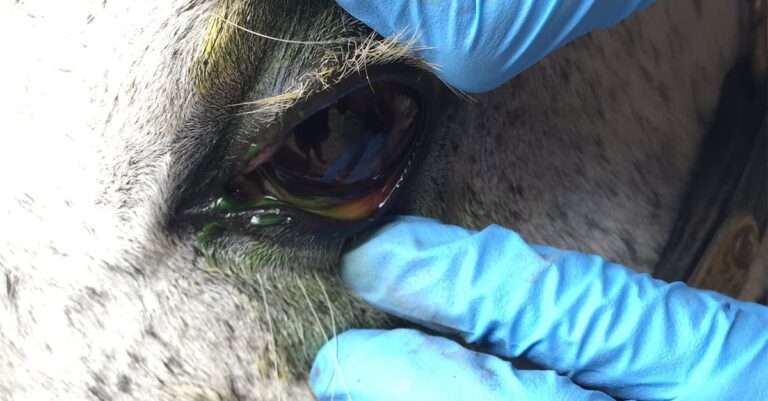
If the eye has been injured, consult your veterinarian immediately and do not attempt to treat yourself. Other signs of eye pain, such as squinting, excessive discharge and holding the eye closed require prompt attention. Try to keep your horse calm and quiet, and prevent them from rubbing the eye while you wait for your veterinarian.

Colic

Colic isn’t a disease in itself, but rather a symptom of abdominal pain, which can have many different causes.

Signs to look out for include:

  • Stretching
  • Lying down
  • Decreased manure output
  • Rolling
  • Pawing
  • Decreased appetite
  • Kicking at the abdomen
  • Looking at the flank

The heart rate and respiratory rate may be elevated, and gum colour may be abnormal. Report any of the above clinical signs to your veterinarian, along with your horse’s vital signs.

As you wait for your veterinarian to arrive, remove all access to feed, but provide clean water. If there is a danger the horse may injure themselves from rolling, you can try walking your horse until your veterinarian arrives.

If there is a chance your horse’s behaviour is going to put you in danger, then stay at a safe distance. You won’t be any assistance to your horse or your veterinarian if you become injured.

Don’t administer any medications unless advised, as these may mask symptoms causing a delay in potentially necessary and life-saving treatments.

To view our video on signs of colic, visit: http://bit.ly/2u8f0n7

Neurological emergency

Neurological emergencies are varied. They can occur from head and neck injuries after a kick or fall, or from infection from a disease, such as tetanus or hendra virus.

Symptoms can vary, but may include:

  • Ataxia (unsteady gait)
  • Depression
  • Circling
  • Head pressing
  • Weakness or an inability to stand
  • Excessive excitability

These emergencies require immediate veterinary assistance. Call your veterinarian for further instructions. However, without a clear history of trauma, it is not advisable to handle your horse while you await your veterinarian, due to the risk of hendra virus in certain parts of Australia.

Acute non-weight bearing lameness

The most common cause of acute non-weight bearing lameness is a hoof abscess. Other possible causes include fractures, or infection within a joint or tendon sheath.

You may find there is a strong digital pulse, and there can be heat in the hoof, and painful swelling at the coronary band or heels. You could apply a wet poultice, or get your horse to put the affected foot in a tub of warm water and Epsom salts while you wait for your veterinarian.

Your veterinarian or farrier will usually locate and carefully open the abscess on the solar surface of the hoof. Antibiotics are not usually required, but tetanus prophylaxis, and further poulticing or bandaging to keep the area clean is important for recovery.

If your horse steps on a nail or other sharp, penetrating object, and it remains in the hoof, consult your veterinarian. You will likely be advised to leave the object in place, unless there is a risk of the object penetrating deeper.

If you have been asked to remove the object, ensure you clean out the foot first then use tape or a marker pen to mark the point of entry on the foot. You should also mark the object at the depth to which it had penetrated. This will help your veterinarian assess the extent of the damage caused to the internal structures of the foot. Apply a wrap to the hoof to prevent further contamination while you wait for your veterinarian to arrive.

If there is a chance you think your horse may have a fracture, the best thing to do is to keep them quiet, still and confined to a fenced area until your veterinarian arrives to provide a diagnosis. If you have to move them, bring the float to the horse and travel him in a space that is as tight as possible, so he can lean up against the walls.

A badly applied splint can do more harm than good, so it may be a better idea to wait for your veterinarian who can apply one under sedation prior to moving the horse. This can be a high stress situation, but it is important to await diagnostics and try to not panic. It is absolutely true that some injuries cannot be managed successfully with current techniques, but many injuries can now be treated with consistent success.

Choke

Choke occurs when feed material becomes stuck in the oesophagus and obstructs it. A horse with choke will have saliva and feed material discharging from their nose and mouth, and they may be pawing and retching, or coughing. It can be distressing to watch, but the best thing to do is to remove all feed and water from your horse’s reach, and call your veterinarian.

Some horses will be able to pass the obstruction on their own within a few minutes. However, if this doesn’t happen, your veterinarian will be required to pass a nasogastric tube under heavy sedation to aid the passage of feed material into the stomach.

I recommend keeping track of your horse’s temperature and respiratory rate following an episode of choke. If readings are elevated, call your veterinarian for further advice as aspiration pneumonia can occur as a complication following an episode of choke.

Summary

  • STAY CALM. You can better help your horse when you’re calm and collected.
  • STAY SAFE. You won’t be able to help your horse if you get hurt.
  • KEEP YOUR HORSE VACCINATED. Current vaccinations help protect your horse from a range of conditions, including tetanus, which can be fatal.
  • KEEP YOUR VETERINARIAN’S CONTACT INFORMATION HANDY. Easy access to your veterinarian’s contact information is vital in any emergency situation. An up-to-date record of all your horse’s medications and vaccinations is also helpful.
  • CONSULT YOUR VETERINARIAN. If you are unsure whether it is an emergency or not, call your veterinarian anyway. We are always here to provide advice. Often, seemingly minor injuries or illness can become life-threatening if not treated early and correctly.
  • BE PREPARED. Emergencies occur irrespective of days, hours and location, so always be prepared.

Horse emergencies can be frightening but here’s how you should respond in an emergency to ensure the best outcome for your horse.

Learn how to take your horse’s vital signs.