fbpx
Home Blog Page 35

California leading the way with whip reforms in racing

Whip reforms in racing. Whip-free race finishes may soon be a reality for California’s Thoroughbreds. A complete ban on striking a horse with a whip for anything other than a safety reason, is one of the urgent welfare reforms that the California Horse Racing Board (CHRB) is expected to pass at their board members’ regular meeting this Thursday 28th March.

Editor’s Update: Click here to read the outcome of the meeting.

The rule is one of a package of reforms put forward by the owners of Santa Anita racetrack, The Stronach Group (TSG), who on March 5th cancelled all racing and training in order to investigate the dramatic spike in horse fatalities. Since the start of the year, 22 horses have been euthanised after suffering training injuries at the track.

While the initial focus of the investigation was on the track conditions, the interruption of racing provided the leadership with an opportunity to conduct a comprehensive evaluation of all existing safety measures and current protocols, including the aspects that damage the image of racing and threaten the sport’s social licence to operate.

Social licence to operate is, quite simply, public consent or tolerance for the activities of a group or industry. In many countries today, the majority of the population keep and regard pets as part of their family, and only a minority are still using animals for financial gain. In this age, the majority’s welfare expectations go beyond the physical and survival aspects to include the protection of all animal’s emotional wellbeing. In this landscape, activities like whipping horses during a race are impossible to defend.

The growing public concern for the welfare of animals poses a particular threat to U.S. horse racing because gambling is banned in most states, and the racing industry operates under a somewhat fragile legislative exemption (a ‘pari-mutuel’ agreement). This was originally extended during the Great Depression to provide revenue to the State, but can be easily withdrawn. The US greyhound industry is a good example: since 2001 and driven by public pressure, 30 greyhound tracks have closed and dog racing now operates in just 6 (soon to be 5) states.

The new whip rule is a proactive step in matching community expectations. Under the new whip rule, jockeys will still be allowed to carry a whip for safety purposes, but they won’t be allowed to strike the horse in any way except when they feel it is necessary for the safety of horse or rider.

In a recent article by Thoroughbred Daily News, CHRB Executive Director Rick Baedeker said the sanctions for whip rule breaches will also be stepped up and, not only will a jockey be fined and/or suspended should they whip a horse, but the horse they are riding could be disqualified from the race.

If a complete ban on whipping is implemented this week, California will be the first amongst the great racing regions to meet the expectations of animal welfare advocates around the world.

Previously, whip rules reforms in most countries, such as the UK and Australia, have focused on padded whips, controlling the number of strikes and/or the way the jockey holds and uses the whip, but these rules are regularly breached.

Racing insiders recognise the whip is having a negative impact on racing’s image but argue that punters will not gamble on races won without whips. Yet at least in Australia, a recent survey found it would have a small impact on gambling revenue and the move could greatly improve the public’s perception.

Paul McGreevy, Professor of Animal Behaviour and Animal Welfare Science at the University of Sydney, who has researched and published extensively on the topic (see below), sees the California reform as a decisive step forward:

“The whipping of tired horses on the streets of Victorian England is recognised as a major impetus to the birth of the animal protection movement as we know it today. So, this exciting news holds the promise of a major landmark in horse welfare and, if the CHRB pass the rule, it will represent a significant tipping point for animal protection in general.”

Interestingly, news of this historic whip rule reform have been somewhat drowned amongst the flurry of other urgent reforms proposed, particularly race-day medication.

When compared to other countries, the US racing rules are more lenient in regard to the quantities and types of drugs that can be administered to horses leading up to and including competition day. Racing commentators and veterinarians have been calling over-medication and, particularly the unregulated and ‘off label’ use of biphosphonates as a major cause of the recent spikes in fatal, long-bone limb fractures.

Biphosphonate is commercially sold as Tildren or Osphos and used to treat symptoms of navicular disease in older horses, but the drug should not be administered to horses under 4 or 5 years of age. As the Commercial Breeder’s Association (CBA) advises, the active constituent interferes with the development and growth of bone, reducing the bone’s ability to heal and making bone more susceptible to cracks.

It looks like we will be hearing and learning a lot more about biphosphonates as events unfold in US racing circles but, so far, media reports suggest that the drug’s ability to mask pain and improve radiographic findings short-term, coupled with the lack of regulation, have resulted in a rampant ‘off label’ use in the preparation of foals and yearlings for sale, and this could potentially mean hundreds, or even thousands, of racehorses at risk of catastrophic breakdowns leading to more horse deaths and, not least, putting jockeys in danger.

Since 2017, the British Horse Racing Authority (BHA) adopted strict rules, with lifetime bans for horses found to have been treated innapropriately with biphosphonates (before they are 42 months old). Australian Racing and the FEI have banned unlicenced biphosphonates although Tildren and Osphos remain in the Controlled Medications list.

Read the report from the CHRB meeting held 28th March, which was published on 1st April.

Further information:

On Social Licence and Racehorse Welfare (video presentations):

  1. McGreevy, P.D., Griffiths, M.D., Ascione, F.R., Wilson, B. 2018. Flogging tired horses: Who wants whipping and who would walk away if whipping horses were withheld? PLoS ONE. 13(2):e0192843.
  2. Wilson, B., McGreevy, P.D., Jones, B. 2018. Longitudinal trends in the frequency of medium and fast race winning times in Australian harness racing: relationships with rules moderating whip use. PLoS ONE 13(3): e0184091.https://doi.org/ 10.1371/journal.pone.0184091
  3. Hood, J., McDonald, C., Wilson, B., McManus, P., McGreevy, P. 2017. Whip rule breaches in a major Australian racing jurisdiction: welfare and regulatory implications. Animals. 7, 4; doi:10.3390/ani7010004
  4. Jones, B. Goodfellow, J., Yeates, J., McGreevy, P.D. 2015. A critical analysis of the British Horseracing Authority’s review of the use of the whip in horseracing. Animals 5(1), 138-150; doi:10.3390/ani5010138
  5. McGreevy, P.D., Hawson, L.A., Salvin, H., McLean, A.N., 2013. A note on the force of whip impacts delivered by jockeys using forehand and backhand strikes. Journal of Veterinary Behavior: Clinical Applications and Research. 8, 395-399.
  6. McGreevy, P.D., Corken, R.A., Salvin, H., Black, C. 2012. Whip use by jockeys in a sample of Australian Thoroughbred races – an observational study. PLoS One.  7 (3) e33398.
  7. McGreevy, P.D., Ralston, L., 2012. The distribution of whipping of Australian Thoroughbred racehorses in the penultimate 200 metres of races is influenced by jockeys’ experience. Journal of Veterinary Behavior: Clinical Applications and Research.  7, 186-190.
  8. McGreevy, P.D., Oddie, C.F. 2011. Holding the whip hand – a note on the distribution of jockeys’ whip-hand preferences in Australian Thoroughbred racing. Journal of Veterinary Behavior: Clinical Applications and Research. 6 (5), 287-289
  9. Evans, D.L., McGreevy, P.D. 2011. An investigation of racing performance and whip use by jockeys in Thoroughbred races. PLoS ONE 6(1): e15622. doi:10.1371/journal.pone.0015622


France bans the trimming of whiskers

France bans the trimming of whiskers. The French Equestrian Federation (FFE) has banned the removal of the horse’s whiskers on welfare grounds. It joins Germany and Switzerland in bringing into effect a rule that would disqualify any horse from competition if the whiskers have been removed.

On their website they state that vibrissae, the correct term for whiskers which are the long tactile hairs around the eye, nose and mouth of the horse, are sensory organs. And just like cat’s whiskers, they allow the horse to gather information about the environment. Around the eyes they serve as protection and, around the blind spot of the nose, they take over from their vision.

The FFE has incorporated a rule on this subject in their General Competition Regulations and, from early 2019 competing on a horse that has been deprived of his/her vibrissae is no longer permitted.

The new rule aligns with their official acknowledgement that horses do not perceive their environment in the same way humans do and we need to learn more about horse ethology and behaviour, which they promoted as the key to better management and training.

“The role of the FFE is to communicate good practices” says Déborah Bardou, ethologist and animal welfare mission manager at the FFE. “It is important that riders behave appropriately with the horse. They are the advocates for animal welfare and they underwrite the image of equestrian sports.”

Equine behaviourist Justine Harrison hopes other countries will follow with similar rules. “Whiskers help a horse navigate his world. They are super-sensitive, multi-functional sensory organs with densely packed nerves at their root that send sensory messages to the horse’s brain.

“These whiskers are so sensitive to vibration and changes in air current they can instantly inform the horse about his environment – for example helping him avoid injury by detecting nearby objects, differentiating between different textures, judging wind direction and identifying food. The horse has a blind spot beneath his muzzle and so his whiskers are a vital aid to his vision.

“From the horse’s point of view, removing these whiskers reduces his spatial awareness and leaves him partially handicapped. Many countries, including the UK and Australia, are very backward in many aspects of horse welfare and it’s time for us to catch up with France, Switzerland and Germany and ban the trimming of whiskers.

For more information about why horses need their whiskers click here.

Sleep Deprivation in Horses

Sleep deprivation in horses. Sleep is essential for life. The quality and quantity of a horse’s sleep directly affects their health and well-being. However, sleep is rarely considered as part of a horse’s management plan. But a new study has found that poor management or physical problems that discourage horses from lying down can lead to horses becoming sleep deprived and at risk of serious injury.

Sleep is a naturally occurring state involving both the body and the mind. While there is still a lot to be learnt about the complex function of sleep, it is performed by almost every species and is vital for the performance and well-being of an individual.

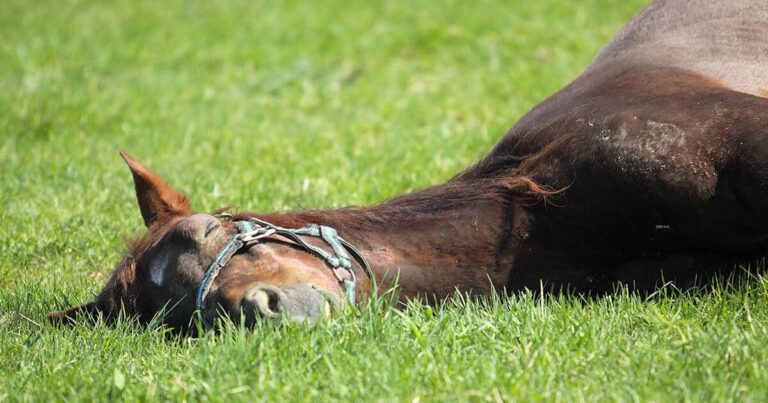
FACT: It is a myth that horses can always sleep standing up. Horses can complete some stages of sleep standing but a full sleep cycle includes REM-sleep which requires complete muscle relaxation. This can only be achieved lying down (in sternal or lateral recumbency). When horses fall into REM-sleep standing they collapse and this is what was filmed during this fascinating study.

Physiologically, during sleep, the individual enters a state of temporary unconsciousness and their muscles become inactive and relaxed.

In the behavioural sense, the animal will seek a sheltered environment, adopt a certain posture and stop responding to external stimuli.

There are three stages of physiological sleep and horses can achieve stages one (light sleep) and two (slow wave or deep sleep) while standing up. However, the third stage – rapid eye movement (REM) sleep – occurs only while the horse is lying down due to the complete muscle relaxation required.

Previous research has shown horses can achieve REM sleep in both sternal (with their head supported on the floor), as well as in lateral recumbency (as shown in the featured image).

Horses in stables have been shown to have a regular total sleep time of three and a half hours per night. The duration of the different sleep stages is relatively constant. REM sleep totals about 30 minutes a night (15% of the total sleep time) and slow-wave sleep takes up the most time at 65%. The rest of the total sleep time is spent in light sleep.

If horses don’t lie down for any reason, REM sleep deficiency (recumbent sleep deprivation) occurs. As a result, horses may fall into REM-sleep while standing, which consequently causes them to collapse due to the associated muscle relaxation. These collapses can cause severe injuries.

HOW MUCH SLEEP? Horses in stables have been shown to have a regular total sleep time of three and a half hours per night. The duration of the different sleep stages also is relatively constant. REM sleep totals about 30 minutes a night (15% of the total sleep time) and slow-wave sleep takes up the most time at 65%. The rest of the total sleep time is spent in light sleep.

Christine Fuchs and her team of scientists at the Ludwig-Maximilian-University of Munich, Germany set out to research sleep deprivation in horses. She presented their findings at the 14th International Society of Equitation Science (ISES) conference in Rome in September 2018.

To find subjects for the study, the research team recruited owners whose horses had shown signs of collapsing from readers of a German equestrian magazine. A detailed online questionnaire was completed by 177 respondents.

FACT: Sleep deprivation should not be confused with narcolepsy, which is a very rare chronic neurological disorder. Currently, there is no proof of narcolepsy in horses.

The research team visited 36 horses with collapses in their home environment and seven healthy, control-group horses. Each horse had a clinical examination, was observed for 24hrs and their management, stabling conditions and medical histories were documented.

Each horse was also fitted with a mobile sleep laboratory to take polysomnographic readings for the 24hr period. Polysomnography is a diagnostic tool that measures physiological functions during sleep. It simultaneously measures several body functions such as brain activity (electroencephalogram or EEG), eye movements (electrooculogram or EOG), and muscle tone (electromyogram or EMG), with which the depth and quality of sleep can be determined.

The results of the study provide important information:

  • The main causes of the lack of recumbent sleep were issues with the horse’s management or pain from a physical problem.
  • The online questionnaire showed a significant correlation between a change in the horse’s management or environment and their first collapses.
  • A third of the horses visited did not have enough space, according to the German guidelines for box stall dimensions.
  • In half of the horses visited, the onset of collapses was directly related to an event – a management change for example, a change of stable or a physical condition, such orthopaedic problems.
  • Over 90% of the horses studied showed injuries after collapsing. Injuries were mostly seen in the knees (72.4%) and the fetlocks (68.4%). Furthermore, 31.0% of the horses had head injuries and 18.4% had injuries to the hocks.
  • The examined horses collapsed a minimum of four and a maximum of 199 times during the 24hr observation period. The individual number of collapses depended significantly on how much that horse had laid down.
  • The horses who did lie down to sleep showed significantly fewer collapses.
  • The horses who collapsed had an altered and a very restless sleep profile – they spent notably less time in REM-sleep compared to those who did not collapse. Their REM sleep phases were shorter, they occurred while they were standing and in over 86% of cases were during, or immediately before the collapse.
  • Some of the horses in the study were not only suffering from physical issues but also from psychological problems. Stereotypic behaviours like weaving, cribbing and box walking were present in 25% of the horses from the questionnaire. Of the examined horses, eight demonstrated altered behaviour after their collapses had begun – some became listless and others extremely anxious.
  • Two years after the assessments were made, seven horses from the study have been euthanized due to injuries or behavioural problems supposedly caused by the sleep deprivation.

Given the importance of sleep, it is clear that REM-sleep deprivation leads to behavioural changes and related collapses can cause severe injuries. Treatment for the condition should involve identifying the reason of the horse’s reluctance to lie down, treating any underlying medical conditions and optimising their environment and management.

From researcher Christine Fuchs: “We were amazed and shocked at how many horses seemed to suffer from these kind of collapses. Initially, we thought we might find 10-20 horses. To date, approximately 300 horse owners have contacted us and sought our advice.

“It is amazing how easy it is to help some horses and how frustrating and difficult it can be to help others. The challenge is that every horse suffering from recumbent sleep deprivation is an individual and has its individual ‘reasons’ why it does not lie down.

“Horse owners need to be aware that the sleeping behaviour of horses is an important thing to consider. It is important to recognize the symptoms as soon as possible but prevention is essential.

“It was conspicuous that most horses seemed to have a problem after a change of stable. This is one thing we are looking at in a future study, especially the moving from a stable to an open communal barn. Open barns are obviously the most appropriate housing type for horses, but unfortunately, many of them have bad management and horses that were living in a stable for many years might not be able to cope with it.”

From Honorary President of the ISES, Janne Winther Christensen: “It was great to see this important subject being researched. Sleep is important for the welfare and performance of horses, and it would be very valuable to see more research on the various factors that influence sleep and sleep deprivation, for example, box sizes, flooring and bedding material, and the social environment. In nature, horses sleep within visual contact of each other and usually one horse remains standing whereas in the domestic environment, horses often sleep in single boxes with solid box walls where they are unable to see their neighbours while lying down.”

WHAT IS SLEEP?
Sleep can follow a physiological or behavioral definition.
In the physiological sense, sleep is a state characterized by reversible unconsciousness, special brainwave patterns, sporadic eye movement, loss of muscle tone (possibly with some exceptions, for example regarding the sleep of birds and of aquatic mammals), and a compensatory increase following deprivation[clarification needed] of the state. In the behavioral sense, sleep is characterized by minimal movement, non-responsiveness to external stimuli (i.e. increased sensory threshold), the adoption of a typical posture, and the occupation of a sheltered site, all of which is usually repeated on a 24-hour basis.

Reference:

Equine Recumbent Sleep Deprivation: Effects on Mental and Physical Health by C. Fuchs(1), L.C. Kiefner(1), S. Reese(2), M. Erhard(1) and A.C. Wöhr(1)

  1. Institute for Animal Welfare, Ethology,Animal Hygiene and Animal Husbandry, Faculty of Veterinary Medicine, Department of Veterinary Science, Ludwig-Maximilian-University of Munich, Germany.
  2. Institute of Veterinary Anatomy, Histology and Embryology, Faculty of Veterinary Medicine, Department of Veterinary Science, Ludwig-Maximilian-University of Munich, Germany

The abstract can be found in .

You can email study author Christine Fuchs: cfuchs@tierklinik-luesche.de

Monitoring Your Horse’s Condition

Monitoring Your Horse’s Condition – According to recent studies, horse owners are missing early signs their horses and ponies are becoming overweight until they are dangerously obese. This means they are putting their horses at risk and making weight loss programs more difficult

In this article, Dr Jennifer Stewart, an equine veterinarian and researcher who specialises in equine nutrition, discusses in detail the importance of keeping horses in a healthy condition, how the body condition scoring system is used to assess the state of each animal and the steps you can take to successfully monitor your horse’s body condition to maintain optimal health.

The illustrated version of this article contains tables and other useful information. 

The truth about fat

Obesity is becoming a major health concern in horses (and people) all around the world, and is increasingly recognised as a serious equine welfare issue because it compromises their long-term health and performance. In most instances, horses become overweight because they are given the opportunity to consume more calories than they need.

Certain breeds of horses are more prone to weight gain and require even more careful management to try to prevent this energy imbalance from occurring.

Horses (and ponies), like humans and other animals, will eat to meet their energy requirements. But, if the feed is palatable and high in energy-density, some horses – like individuals of all species – will eat more than is needed. Energy in excess of requirements is stored as fat (ah and don’t we know it!). And, fat is not an inert tissue.

Previously thought to be simply a way for the body to store fat, adipose tissue (the medical name for ‘fat’) is, in fact, a dynamic organ that produces hormones and chemicals.

Fat secretes many nasties with such horrifying names as tumour necrosis factor, cytokines and interleukins – all of which increase inflammation in the body. Fat cells also summon white blood cells to the fat tissue, further increasing production of inflammatory chemicals and compounds. Normally, these hormones and chemicals are activated in response to invading bacteria and infections. In obesity, however, they cause disease.

Overweight horses are more prone to colic, laminitis, foaling and hormonal problems, tire more easily, are less agile and have reduced reproductive ability.

Body condition scoring

The Body Conditioning Scoring (BCS) scale was developed in the 1980’s by Don Henneke, PhD, to evaluate the condition of broodmares. The scale goes from 1 to 9 – where 1 is emaciated and 9 is obese.

Although there are variations, depending on age, activity level and type of horse, (which will be discussed later in the article), a BCS of 5 in the Henneke scale is considered ideal for a horse that is receiving moderate exercise.

Mares with a body condition score (BCS) of 7 or above ovulate less frequently, reducing their ability to get in foal. Carrying excess weight also increases joint, tendon and ligament strain, cancer, skin, heart and circulatory difficulties, risk of strangulating lipoma (where accumulations of fat inside the body twist and cause colic) and decreases resistance to diseases – all of which reduce life expectancy and quality.

In people, obesity is related to high blood pressure, increased risk of cancer, circulatory problems, stroke and diabetes, to name just a few.
Although figures are not available for horses, in people, mortality at any age is 9%, 25%, 65%, 230% and 1,200% greater for people who are 15%, 25%, 40%, 55% or 100% overweight.

Whether obesity causes these effects in horses is unknown, but it probably does.

One of the few benefits of excess body fat is the improved ability of fat horses to keep warm in cold climates. Due to the insulating properties of body fat, as well as its availability as an energy source, horses BCS 7-9 require less supplemental feed during cold weather than horses of lower BCS. This, however, also causes increased heat stress in hot weather. Horses of BCS 7.5 have difficulty dissipating heat in a hot and humid environment (31.5oC, humidity 43.8%), compared to horses with BCS 5.2.

There are also negative relationships between body fat, athletic performance and soundness, including:

  • Horses of BCS 7.5 have higher heart rates and longer recovery times after exercise, than horses with BCS 5.2.
  • Fatter horses also have higher respiration rates following a 30-minute workout of walk, trot and canter in an indoor arena.

In overweight children, a reduction in body weight of just 5% increased exercise ability by almost 35%. A BCS of 4.5-5 is most consistently recommended for horses engaged in moderate to intense exercise.

The laminitis connection

From a veterinary perspective, there are only two types of pony in the world: ponies that have foundered and ponies that are going to founder!

Ponies evolved in the cold areas of northern Europe and England, surviving extremes of cold and a scarcity of feed. They evolved by adjusting their glucose metabolism, and developing a hearty appetite and the ability to shunt blood away from their feet.

One of the hormones released by fat cells is leptin. Its normal role is to shut down appetite. Obese horses and ponies are often resistant to leptin, and continue to be hungry and eat – even though leptin is pumped out at higher and higher levels.

Today, these traits increase risk of laminitis, making it important to prevent excess condition year-round, and identify increases as early as possible so you can change their management accordingly. Prevention is better than cure, and the sooner you can identify any weight increase, the earlier and easier it will be to get your horse or pony’s condition under control.

The link between obesity and laminitis has long been recognised and research found ponies of BCS 7.8-8.4 have a reduced ability to use glucose, which is instead stored as fat – and this progressively worsens. The reduced ability to use glucose, also known as ‘insulin resistance’ or dysregulation, is similar to diabetes in humans.

Laminitis and founder are, in simplified ways, the equine equivalent of diabetes – insulin resistance leading to impaired blood flow, blood clots, glucose starving, and the degeneration and breakdown of the laminae inside the hooves.

Obese horses with high body condition have high blood glucose, overproduction of insulin and abnormal thyroid levels – a hormonal profile similar to that of a type II diabetic human. In horses, body condition scores above 6 in the Henneke scale are a risk factor for metabolic syndrome, insulin resistance and laminitis.

Body condition and weight estimation in horses

Assessing ‘fatness’ is aided by the use of one of four systems:

  • The body condition scoring (BCS) system,
  • Measuring girth and length,
  • Weight tapes, and
  • Measuring girth, belly and rump.

To establish a relationship between body condition and body weight, in the 1980’s, Dr Henneke subsequently developed body condition scoring.

The BCS was originally developed to assess the fatness of pregnant Quarter Horse mares. It had been noted that, as horses gain weight, fat is laid down in a predictable pattern and the location of stored fat is a big clue as to how much excess fat the horse has.
First, horses will protect major organs with fat, then fat is laid down behind the shoulder, then over the ribs, on the rump, along the back and, finally, on the head and neck.

The BCS system is based on visual appraisal and palpable fat cover at six areas of the horse’s body.

The Henneke system assigns a number to fat deposits in specific sites on the horse’s body – the neck, withers, shoulder, ribs, loin and tailhead. (See images and table on the previous pages).

The neck allows for refining of the BCS. As horses gain condition, fat is firstly deposited along the top of the neck, followed by all the way round, then the crest and throat latch.

The shoulder also helps refine the BCS, especially if conformation factors have made other areas less helpful. As horses gain weight, fat is deposited around the shoulder, so it blends smoothly with the body. As condition increases, fat is deposited behind the shoulder, especially in the region behind the elbow.

The back and the rump both have a generous layer of fat on top of the muscle. Rump fat changes quicker than rib fat in weight gain and weight loss. Increasing fat depth at the rump or tailhead is correlated with an increasing body condition score – a one unit change in BCS corresponds to a 0.5cm alteration in rump fat thickness.

BCS is also affected by the horse’s diet and season

In Thoroughbred geldings, fewer body areas can be used to accurately predict BCS. You only need to assess the neck, shoulders, ribs and tailhead.

Wither and loin fat are less reliable indicators of percentage body fat, indicating that Thoroughbreds store fat on the neck before the loin, shoulder, ribs, tailhead and withers.

Horses store more fat on the neck and withers when they are on high-fat/high-fibre diets than when they are fed high-starch/high-sugar diets, and the neck score is often higher than the withers and loin through Autumn and Winter.

The loin area of Thoroughbreds and Quarter horses is affected by the level of exercise, which changes the musculature of the back and the appearance of the back as the muscles build. Loin area is also a poor guide in mares fed for weight gain and shows little change, even as they gain condition from BCS of 6 to 9.

In addition to the traditionally-evaluated areas of fat, it also helps to look at bone size. Light-boned horses tend to carry less fat and have longer, leaner muscles. They will look leaner overall than a horse with big bones and bulky muscles, and they will weigh less as well.
Using the Australian body condition scoring system of 1-5, the ideal score for endurance horses is 1.5-2.5, for polo ponies 2-2.5, equestrian horses 3-4, broodmares 2.5-4 and show horses 4.

An Australian study showed a positive relationship between girth and weight, and between length and weight, allowing estimation of body weight from these measures. Charts have been developed that use BCS and wither height. The tables on Page 66 show the body weight estimates for horses of different heights.

Different systems for predicting weight in horses

Weight tapes: These are available in most saddleries and feed shops. Measurements should be taken with the tape snugly around the girth at the end of respiratory expiration. Weight tapes, however, are unreliable for foals, miniatures and high-withered horses.

Measuring girth: When a weight tape is not available, an ordinary tape measure can be used with the table that appears on the next page, from ‘Feeding and Care of the Horse’ by Lon Lewis.

Measuring girth and length: Another method, which is reasonably accurate, uses length (from the point of the shoulder to the point of the buttock) and girth (taken immediately behind the elbow), and converts this with a formula. This is explained in detail on the Horses and People Weight Calculator.

Body composition studies have shown body fat percentages range from 5.1-19.9% in thin condition horses, 7.4-11% in moderately thin horses (BCS 4-4.9), 12-24% in moderate to fleshy horses (BCS 5-6.9) and 16.4-31.3% in fleshy to obese horses (BCS 7-9).

Mature mares, especially broodmares, have higher body fat percentages (12-16%) than other horses and younger mares (8-11%). So, horses with 7-9 BCS can have over 20% more fat, which means more inflammatory chemicals and greater risk of metabolic derangement.

BCS systems, which measure fat, may not be very accurate for assessing weight loss in ponies. They provide no information on muscle mass or tone, cardiovascular fitness or athletic conditioning, and do not tell you how fit your horse is for competitive performance.

A system to assess muscle development has been developed by Progressive Nutrition. Called Topline Evaluation System (TES), it rates the muscle mass over the back, loin, croup, hindquarters and stifles. For more information, go to: https://bit.ly/2WU4afC

Weight control

Gaining weight just requires an increase in calories, whereas losing weight requires a reduction in calories – a simple enough principle.
Restricting feed intake, however, results in loss of fat and muscle. So, whether we want to gain muscle or lose fat, the glycaemic index and the amino acid composition of the diet are important.

By reducing calorie (carbohydrate) intake, such as grains, pollard, rice-bran, etc., and fine-tuning protein intake, such as soybean meal, cottonseed meal, lucerne etc., we can reduce fat without losing muscle mass.

Reduction in the BCS of overweight horses is essential to their long-term health, performance and wellbeing.

Weight loss through feed restriction and/or exercise improves insulin sensitivity – reducing the chance of reproductive problems and laminitis, and improving exercise tolerance.

The key to managing equine obesity is to monitor body weight and/or BCS. While successful weight loss can be difficult to achieve and/or maintain with some horses and ponies, the simplest method is to reduce calorie intake.

Feeding 65-70% of the energy required for their ideal body weight will facilitate weight loss and should result in a reduction in BCS of one score per month.

Low- to medium-quality grass hay, plus a mixture of vitamins and minerals to balance the low copper, zinc, salt, selenium, vitamin E and vitamin A concentrations commonly found in mature forages, is a good and sound approach to healthy weight loss.

Horses on pasture can be fitted with grazing muzzles or just turned out from early to mid-morning when pasture sugar levels are lowest. Voluntary exercise can be encouraged by increasing paddock size and providing paddock mates.

Riding 3-4 times a week for 30 minutes is also beneficial, but take care when exercising overweight horses because they can have trouble breathing and overheat easily – keep it slow and gentle, with rests if respiration becomes rapid. Also keep an eye on their joints, tendons and ligaments.

Diets for weight loss should never include starvation – not even for six hours. Always provide roughage. Ponies are at risk for a usually fatal condition called hyperlipaemia, which is triggered by the withholding of feed. Always maintain roughage intake above 1% of bodyweight and spread the intake over as long a time as possible using slow feeding systems.

In overweight ponies, grassy meadow hays are an answer. They are high in fibre, they take a long time to chew, so the pony happily thinks it has eaten a lot and its gut does too, but calorie and protein intake have not been excessive. Hay made from sugar-rich grass can have high levels of sugar. These can be removed by soaking the biscuit for 16 hours. But don’t discard the water into dams or creeks because it has an oxygen demand many times that of sewerage and it will pollute the water.

Because horses have a great psychological need to chew, dieting can lead to an increase in weaving, wood-chewing, crib biting and bedding eating. Letting them have social contact, providing ‘toys’ and regular exercise will reduce the risk.

The article by Prof Simon Bailey, a leading researcher in the link between insulin and laminitis, also gives information and management tips and the good news is that reducing condition can prevent future laminitis episodes in at-risk horses and ponies.

Allowing body condition to fall below a score of 1.5 is likely to compromise a horse’s welfare. During Winter, a long, heavy hair coat can obscure body condition and you may need to run your hands over the horse to get an accurate body condition score.

Expert tip for checking the weight loss program is working:

According to Dr Pat Harris, equine nutrition specialist and lead researcher for the Waltham Centre for Pet Nutrition in the United Kingdom, a good way to monitor the progress of the weight-loss program for the more obese horses and ponies is to measure their heart girth (near the wither), belly girth (half way on the barrel) and rump width (over the top of the rump from point of hip to point of hip) regularly and keep a record.

Initially, this may work better than BCS, because in the early stages of the weight-loss programme, the horse’s BCS may not actually reduce despite them starting to lose weight.

This, most likely, is because at the early stages, they lose the ‘invisible’ internal fat first, rather than the external fat that you can feel and score during a BCS assessment.

In addition, periodic body weight measurement preferably using a calibrated weighbridge (e.g. at a local vet practice) can be very helpful.

  • When measuring, consistency is more important than detail.
  • Ensure the horse is fully comfortable with the process
  • Have the horse relaxed, standing in the same position in the same environment (ideally a flat surface)
  • Measure at the same time of day in relation to feeding and exercise.
  • Measure at the same site on the animal (as far as possible and in the same orientation, e.g. for weigh tapes you tend to measure at a slight angle but heart girth measurement tends to be more vertical).
  • Take several measurements and consistently at the end of and expiration, and calculate the average.

What about adding condition?

Poor body condition is not always due to lack of feed, but could be related to parasites, dental problems, chronic injury or illness or lack of mobility, due to arthritis or lameness affecting the horse’s ability to graze.

For healthy horses with low bodyweight, however, the most common cause is not feeding enough calories daily.

The first step should always be to estimate the horse’s weight, score his or her body condition, and do a calorie count. If the horse is emaciated, a veterinary examination and dental check-up are recommended.

When you calculate the amount of feed your horse requires each day, a good rule of thumb is to feed 1.5-2.5% of their body weight of feed and roughage.

For a 500kg horse, that is between 7.5 and 15kg daily. To increase weight, it may be necessary to feed up to 3% in bodyweight of roughage.
To avoid digestive disturbances and laminitis, weight gain should be managed gradually and with correct dietary management. An increase in condition on a healthy, but thin, horse can be easily achieved by feeding a balanced diet with adequate amounts of a nutrient-dense, highly digestible feed.

The wrap-up

So, now you know how to use the body condition scoring system! It is helpful to do it with friends, so you can discuss the scoring. The closer you agree, the more accurate and confident you will become.

Preventing horses from getting too forward in condition is always easier, cheaper, less time-consuming and less painful than trying to induce weight loss.

Becoming familiar and well-rehearsed with using the body condition scoring system provides valuable information on how your horse is doing, and whether you need to fine-tune and adjust energy intake to promote optimum health and performance for life.

[wpdm_package id=3159 template=”link-template-button.php”]

This article appeared in Horses and People March-April 2019 magazine.

Respiratory Conditions

Respiratory Conditions – Many horses are expected to perform like elite athletes, where peak performance demands an optimally functioning respiratory system. In this article, Dr Deryck Tan from Valley Equine Veterinary Centre gives an overview of the anatomy of the respiratory tract and the most common respiratory conditions that compromise its optimum performance.

Diseases affecting the respiratory tract

There are a number of diseases that affect the respiratory system and the clinical signs associated with respiratory disease are very varied. The causes of respiratory disease are just as numerous, with some having an allergic, parasitic or infectious component.

Veterinarians use many different techniques and tools to ‘work up’ (diagnose) a case of respiratory disease.
These diagnostic techniques and tools range from simple clinical examination to advanced imaging, such as CT scans. Some checks are done with the horse standing still, and others during exercise.

Treatment options for respiratory disease depend on the cause of the disease and, once a diagnosis is made, your veterinarian will be able to explain in greater detail the treatment options.

Coughs

Although it’s easy to identify, coughing is a very non-specific clinical sign in a horse. In general terms, a dry cough is usually caused by irritation of the respiratory tract and a wet or productive cough is usually caused by mucus or phlegm in the respiratory tract.

The irritation of the respiratory tract may be caused by a dusty environment, a viral or bacterial infection, or inflammatory or reactive airway disease.

Inflammatory Airway Disease (IAD), a non-infectious respiratory disease associated with exercise intolerance occurs in up to 50% of Thoroughbreds and Standardbreds and is a common cause of poor performance. The most common signs are a mucoid/purulent nasal discharge and chronic cough.

Nasal discharge

Nasal discharge can be unilateral or bilateral, continuous or intermittent, and can be serous, mucoid, purulent, haemorrhagic or feed contaminated.

Serous nasal discharge: A serous (pale yellow and transparent) nasal discharge is usually associated with allergic rhinitis (inflammation of the mucous membranes of the nasal passages) or a viral respiratory infection.

Mucoid, purulent nasal discharge: A mucoid to purulent discharge that contains pus and is yellow or green in colour may point to a bacterial infection. This may be coming from the lower respiratory tract, but in most cases, discharge originating from the lower respiratory tract is swallowed before it has a chance to exit through the nostrils.

Other causes of mucoid/purulent discharge are sinusitis (inflammation of the sinus), either primary or secondary. Discharge from a sinusitis is often unilateral and foul smelling.

Primary sinusitis is caused by defective clearance of mucus from the sinuses, usually as a result of viral or bacterial infection. Early primary sinusitis may respond to antibiotics, but some cases may require trephination – a surgical intervention where a hole is drilled into the sinuses to place a lavage system to wash out the mucus.

Secondary sinusitis may be a result of a tooth root abscess or oroantral fistula (where the hole left by an empty tooth socket has a direct connection into the sinus). When the cause is a tooth root abscess, the offending tooth must be extracted before the sinusitis can be resolved. In the case of an oroantral fistula, the fistula must be closed, which is a procedure fraught with difficulty and requires expert veterinary dental care.

A foul-smelling nasal discharge could also be caused by neoplasia (a tumour).

Guttural pouch empyema is an accumulation of purulent, septic fluid in the guttural pouch. It can present as bilateral purulent nasal discharge. The guttural pouch is a sac of air that expands from the Eustachian – a narrow passage leading from the pharynx to the cavity of the middle ear. In this case, there is a decrease in the clearance of mucus from the guttural pouch and secondary bacterial infection results in pus formation. The pus eventually turns into solid chondroids (tissue resembling cartilage).

Sinus cysts, abnormal fluid filled sacs that form in the sinuses, can also present as a foul-smelling discharge and can also be accompanied by facial swelling and nasal obstruction.

Another cause of nasal discharge and respiratory disease is transport-related pneumonia which is exacerbated during long journeys and when horses are stressed, fatigued or unable to lower their heads below the wither level for long periods.

To read about reducing the risk of .

Haemorrhagic nasal discharge

A bloody nasal discharge could be due to an ethmoidal haematoma, guttural pouch mycosis or head trauma.

Ethmoidal Haematomas originate from the ethmoidal bones and can be visualised by endoscopy. They can also reside in the maxillary sinuses, in which case radiography or sinuscopy will be needed for diagnosis. Treatment is by formalin injection or surgical removal.

For a more detailed article on .

Guttural Pouch Mycosis is a fungal infection in the guttural pouches that surround the pharynx. This is a life- threatening condition because major blood vessels and nerves traverse the pouch. Brown coloured, foul smelling discharge can be a sign of pneumonia or lung abscess.

Fresh blood from one or both nostrils after exercise could be due to Exercise Induced Pulmonary Haemorrhage (EIPH). EIPH, also known as ‘bleeding’ or a ‘bleeding attack’, occurs when horses bleed from the lungs during exercise. Research shows that up to 60% of racehorses bleed from the lungs but only a minority show blood at the nostrils (known as epistaxis).

For a more detailed article on .

Feed contaminated nasal discharge

If a feed contaminated nasal discharge is present in small amounts, the horse could be suffering from dysphagia (swallowing difficulty) or feed aspiration.

This could be a complication of ‘roarer’ or ‘tie back’ surgery, a condition called recurrent laryngeal neuropathy (RLN) or laryngeal hemiplegia which is caused when one or both arytenoid cartilages in the throat become paralysed and partially block the airway.

Feed contaminated nasal discharge could also be caused by an oronasal fistula where there is a direct communication between the oral and nasal cavity.

A cause of copious nasal discharge contaminated with feed is ‘choke’ or oesophageal obstruction. Although not a respiratory disease, it can result in a secondary pneumonia from inhalation of saliva and food material.

Choke is caused by food getting obstructed in the horse’s oesophagus, which is the connection between the mouth and the stomach. The nasal discharge is usually feed- contaminated.

Horses choke due to a variety of reasons. Some bolt down their food without chewing properly due to anxiety from hunger or because they feel threatened by a more dominant horse. Commonly, a horse does not chew properly due to oral or dental pain, hence the importance of proper and regular veterinary dentistry. Horses that are used to being fed a wet feed and are suddenly fed a dry feed may also choke. Most horses affected eventually swallow the obstructed bolus of food by themselves, if left in a quiet place with food withheld.

Offering water to a choked horse is a double-edged sword. Since the horse cannot swallow, attempts at drinking may result in water being inhaled into the lungs and causing a secondary pneumonia. However, water in the oesophagus may help soften the obstruction. If the obstruction is not cleared in one to two hours, veterinary intervention is advised.

For a more detailed article on .

Respiratory noise

Horses are obligatory nasal breathers, which means they are unable to breathe through their mouths.

Laryngeal hemiplegia (roaring) is a condition where one-half of the larynx becomes paralysed and decreases the flow of air. When one side is paralysed, the affected flapper is sucked into the airway when the horse inhales, thus obstructing airflow and makes a ‘roaring’ noise when the horse exhales.

Laryngeal hemiplegia usually affects the left arytenoid cartilage, one of several cartilages that allow air to pass into the trachea and protect the airway during swallowing.

Dorsal displacement of the soft palate (DDSP) is another condition that results in a ‘gurgling’ or ‘fluttering’ respiratory noise. The soft palate is an extension of the hard palate that divides the oral cavity and the nasal cavity. During swallowing, the soft palate forms a seal to prevent food from entering the lungs and during exercise, it moves down and opens to allow the maximum amount of air to pass into the lungs. In DDSP, the soft palate ‘flips’ up and partially obstructs the airway.

Other causes of respiratory noise are epiglottic entrapment, subepiglottic, pharyngeal and palatal cysts, arytenoid chondropathy, fourth branchial arch defects and epiglottic flaccidity.

Diagnosing these conditions may have to be done during exercise – on a treadmill or, if available, a dynamic endoscope.

Airway obstruction

Airway obstruction can be caused by recurrent airway obstruction (RAO), also known as ‘heaves’, by lungworms and/or a collapsed trachea.

RAO varies in clinical signs but, commonly, it is characterised by chronic cough, nasal discharge, exercise intolerance and respiratory difficulty. In contrast with inflammatory airway disease (IAD), horses with RAO are not normal at rest. Affected horses are sensitive to dusts and allergens and are now described as having equine asthma.

Tracheal collapse occurs mostly in Shetland ponies and Miniature horses. It is a congenital condition and, unfortunately, there is no treatment but obesity, exercise and pregnancy can exacerbate the signs. Some affected ponies make a honking respiratory sound.

Infectious respiratory diseases

Strangles is a highly contagious respiratory disease caused by Streptococcus equi subsp equi for which a vaccine is available.

As well as a fever, it causes the lymph nodes near the horse’s jaw to become abscessed and enlarged which may obstruct the airway (hence the name ‘Strangles’) and cause difficulty swallowing. Clinical signs include a high temperature and yellow coloured nasal discharge from both eyes and nostrils.

For a more detailed article about .

Equine Herpesvirus (Rhinopneumonitis) 1, 2 and 4 are also contagious respiratory diseases that can only be diagnosed with blood tests and nasopharyngeal swabs. EHV-2 is thought to cause pharyngeal lymphoid hyperplasia in young horses (meaning pharyngitis or inflammation of the pharynx) which causes difficulty swallowing, a cough and sometimes nasal discharge.

EHV-1 may result in neurological signs and abortion in broodmares. There is no treatment but it can be prevented and controlled with vaccination programs.

For more information on Equine herpesvirus and .

Equine influenza virus is another contagious respiratory disease which is not currently present in Australia and New Zealand. It spreads rapidly by direct contact causes a fever, nasal discharge, a dry hacking cough, depression, loss of appetite and weakness, and renders the infected horses susceptible to secondary bacterial infections.

Equine flu is common in other countries and horses are routinely immunised.

Equine viral arteritis is a contagious venereal disease which produces signs of respiratory disease as well as abortion, rhinitis, conjunctivitis, swelling of the limbs and ventral abdomen.

Clinical signs of Hendra virus are mainly respiratory and neurological. It causes a fatal pneumonia in horses and is known to be zoonotic infectious disease (naturally transmitted between animals and humans).

For more information on .

Rhodococcus equi and Streptococcus zooepidemicus cause bronchopneumonia in foals. Other organisms are Bordetalla bronchiseptica, Actinobacillus, Pasteurella, Klebsiella, Escherica coli, Aspergillus and Pneumocystis carinii.

Lungworms, Dictyocaulus arnfeldi, are parasites carried by donkeys and donkey crosses. They can spread to horses and cause airway obstruction and cough.

Diagnosing respiratory conditions

To investigate respiratory disease, your veterinarian will need a history of the disease progression. He or she will also conduct a general clinical examination and may perform additional procedures.

The lung fields may be percussed using a large spoon and rubber hammer. Normal lungs will give off a resonant sound.

A rebreathing procedure may be performed using a large bag over the muzzle of the horse. This is useful to work out the borders of the lung, as well as to intensify any abnormal lung sounds.

Endoscopy is a procedure that allows the veterinarian to look inside the body using  a long, flexible tube with a lens at one end and a video camera at the other.

The examination can be performed at rest and during exercise usually on a treadmill, although there are remote controlled versions that can be attached to a normal bridle and used under more natural exercise conditions.

To examine the paranasal sinuses, trephination into the sinuses is necessary. This procedure involves drilling a hole (trephination) into the sinuses to allow passage of the endoscope.

Bronchoalveolar lavage is where a tube is inserted into the trachea, sterile fluid is injected and the wash collected. The collected sample is then sent to a laboratory for cytologic examination – to look for viral infections in the cells.

Transtracheal aspiration is a procedure which involves collecting a sample from the trachea using a catheter via a cannula through the trachea.

Thoracocentesis is the collection of a sample from the pleural space between the lungs and the chest wall using a trocar and chest tube. Samples collected are submitted for cytology, gram stain and culture.

The lungs can be imaged using ultrasound or radiography. Nuclear scintigraphy, CT imaging or MRI of the head region can also be performed to identify tooth root abscesses not detected by radiography.

Where neoplasia (abnormal growths of tissue) is suspected, surgical exploration and biopsy is sometimes necessary so the biopsy sample can be sent for histopathology.

Prevention is better…

Prevention of respiratory disease includes vaccination where vaccines are available (for example Strangles, EHV and Hendra virus), and biosecurity/hygiene measures to minimise the risk of picking up an infection from another horse.

.

When infections are present and/or when a new horse arrives at a property, quarantine measures may be necessary, particularly where the disease is highly contagious.

To learn how to apply practical and effective biosecurity on a horse property click here.

Allowing horses to graze at pasture and keeping their built environments ventilated but as dust and ammonia-free as possible will also help keep your horse’s respiratory system healthy.

.

An appropriate worming program will help ensure that lungworms will not invade your horse’s respiratory tract.

To download a seasonal guide to evidence-based worming click here.

When horses have to travel long distances it is important to take steps to minimise the risks of transport-related pneumonia. Ensure horses are healthy before they travel, allow and encourage them to lower their heads during the trip, break up the long journeys and allow 24 to 48 hours of recovery, encouraging grazing to clear the airway.

Read this article for more details on transport related pneumonia.

Regular dentistry by a trained equine dental veterinarian will also help identify early, if not prevent, respiratory diseases associated with teeth and sinuses.

Your equine dental vet can also do a health check during his visit and help you clarify any concerns you may have.

This article was published in Horses and People March-April 2019 magazine.

End of Tight Nosebands for Dutch Horses

1

End of Tight Nosebands for Dutch Horses – From April 1st 2019, in The Netherlands, nosebands will have to be loose enough to allow a 1.5 cm gap between the strap and the nose bones in all disciplines regulated by the Royal Dutch Equestrian Federation (KNHS).

The KNHS follows a handful of other countries in limiting noseband tightness with a standard measure, however, their rule and official statement is ground-breaking because it is the first time that an official sports-governing body acknowledges that tight nosebands restrict natural behaviours that horses must be allowed to perform, such as swallowing, chewing, yawning and relaxing the lower jaw.

The KNHS is also the first official body to recognise the validity of important scientific findings from a study published in 2013  which showed that tight nosebands increase pain and sensitivity to bit pressure, and a study from 2016 that showed tight nosebands cause a stress response in horses. Previously, such studies had been dismissed and criticised in public forums.

The KNHS has followed the Danish Horse Rider’s Federation rule in specifying a space of 1.5 cms, which they demonstrate as loose enough to insert two adult fingers under the strap.

The Swiss Equestrian Federation, announced a rule for all disciplines that specifies a spacing of 2 cms, but their rule will not be in effect until January 2020.

Dressage New Zealand have also implemented a rule but, because tack checks are not compulsory, they failed to specify an objective measure.

Importantly, all the countries who are implementing an objective rule and a limit to tightness have specified that it must be checked at the nasal bones. This is important, because the nose and the jaw bones are the only points where pressure will be definite and highest. This is due to the so-called ‘hammock effect’ – where a hammock can be loose in the middle but pulls on the two solid posts it’s attached to.

In their official statement, the KNHS say:

Research has shown that horses that wear an over-tight noseband, can suffer stress, are more sensitive to the pressure of the bit and have poorer blood flow. The consequences [of over-tight nosebands] are that the horse is not comfortable, has pain or tissue damage, or can not function properly.

There are many different types of nosebands. In all cases they must not be adjusted too tightly. From 1st April 2019, the KNHS will apply the rule that at least 1.5 cm space must be achieved between noseband and nose bone.

The noseband is considered well adjusted if:

  • There is at least 1.5 cm of space between the noseband and the nose bone;
  • There is enough space between the lower tip of the cheekbone and the noseband;
  • The noseband is located under the ‘foramen infraorbital’ (the opening in the skull halfway up the upper jaw). From the foramen infraorbital come all the nerves and blood vessels;
  • The noseband does not restrict the breathing of the horse;
  • The noseband is not lower than the ‘processus nasalis ossis incisivi’ (the notch of the nasal bone).

Is the noseband good, then:

  • The horse can move the body well.
  • The horse can show natural behaviour, such as swallowing, chewing, yawning and relaxing the lower jaw.
  • The horse does not suffer any pain due to the pinching of the structures or the restriction of movement.


Tips for Exercising Horses Safely in Summer

With another hot Summer ahead in the Southern Hemisphere and last year’s record temperatures, it’s important to make sure you’re up to date on the latest, evidence-based advice on prevention of dehydration, heat stress and heat exhaustion.

Exercise physiologist and scientific consultant Dr David Marlin was involved in extensive research in equine thermoregulation, transport, air-conditioning and cooling in preparation for the Olympic Games of Atlanta and Beijing. He is currently consulting for the FEI on climate and event management in the lead up to the Tokyo 2020 Olympics. He shares his expert advice, so you can help your horse cope and recover in the heat.

In general terms, when it’s warm, it’s better to be small and, when it’s cold, it’s better to be large. It’s better to be a Polar Bear in Winter than a small Mouse, and in Summer, it’s better to be the Mouse.

Yet, horses are a little different in that they can cope well in the Siberian Winter and the heat of the desert. They’re large, so that gives them the advantage in Winter as the ratio between skin surface area and weight is low (around 1m2 for every 100kg, compared with 1m2 for every 40kg for a human), meaning heat is lost slowly.

When it comes to hot weather, horses should be at a disadvantage because of their size (large animals lose heat slowly), but horses have two unique adaptations that allow them to cope.

Firstly, they can actually tolerate much higher body temperature than we can. After exercising, a rectal temperature of 41°C for a horse – whilst elevated – does not present much of a health risk, but for a human, this would be a serious cause for concern.

The other advantage the horse has is being able to sweat faster than any other animal. A square cm of horse skin can produce sweat around three times as fast as a square cm of human skin. The only risk in relying on sweating to keep cool is that it becomes less effective the higher the humidity. Sweat cools the skin down, and, in turn, the blood flowing through it, by evaporation.

In hot, dry air, the sweat evaporates very quickly but, as the humidity increases, the speed at which sweat evaporates becomes less effective. When the air is saturated with moisture (100% humidity), sweat does not evaporate at all. Fortunately, in the United Kingdom, we rarely, if ever, experience such conditions, but that is not the same for Australia and other parts of the world.

Fast Fact: Cold water on a hot horse does not cause constriction of blood vessels in a way that prevents the horse cooling down.

Sweating and dehydration

One of the risks of being able to sweat at high rates is that horses are at risk of dehydration. As a result, dehydration can increase the risk of certain health problems, such as colic and respiratory disease. If there is less water in the body, then food material in the gastrointestinal tract becomes firmer and moves more slowly through the intestines, increasing the risk of impaction colic.

With dehydration, the mucus in the airways of the lungs becomes thicker and moves more slowly, leading to greater accumulation of allergens, and even bacteria or viruses. This may lead to inflammation or infection. And, with increased sweating, there is increased loss of electrolytes. Horse sweat contains around 11g of electrolytes per litre and is much more concentrated than human sweat.

Over a period of weeks and months, this can lead to electrolyte depletion or imbalance (depending on what is being provided by the diet as horses cannot make electrolytes, but must get them from food) and an increased risk of problems, such as reduced performance, tying-up (exertional rhabdomyolysis) and thumps (synchronous diaphragmatic flutter); the latter is most common in endurance horses, but does occur in racehorses and eventing horses.

Fast Fact: Hosing down with cold water (0oC to 5oC) does not cause muscle cramps or tying-up

Getting acclimatised to heat

Long periods of warm weather present less of a health risk to horses than sudden changes. For example, a sudden increase in temperature the week before Badminton Horse Trials in the United Kingdom has caused some problems for horses on the cross-country course in past years. The event is held during Spring when its, generally, around 10°C but has been known to suddenly shoot up to 25°C.

The reason for this is the horses are simply not used to or not ‘acclimatised’ to the heat. Horses, like people, can acclimatise to heat – either by living in a warmer climate, or living and exercising in it. The benefit of living in a warm climate is, however, perhaps only 10-20% of the benefit that comes from living and exercising in the heat.

The process of heat acclimatisation (if a horse is suddenly taken from a cool climate to a warm one) takes place in around 2-3 weeks if exercise is carried out each day. One of the risks for horses to fail to cope with warm weather is where training is done in the Summer in the cooler parts of the day (i.e. early morning and evening), but the horse competes or races during the hottest part of the day.

If you want to compete in the heat, then you do need to train in the heat to, at least, maintain performance and, at best, reduce the risk of any heat-related illness.

Fast Fact: When cooling your horse with water, you should NOT concentrate on large veins, arteries or muscle groups. This is much less effective than continually pouring cold water over the whole body until the horse cools down. In very hot horses, after intense exercise, this can take 10 minutes or more of continuous cooling.

Problems with hot weather

We have already mentioned hot weather carries a risk of horses becoming dehydrated. Horses will sweat more and, of all the electrolytes, its sodium (from ordinary salt) that is likely to be limiting as forages and feeds are naturally low in sodium, but high in potassium. Providing a salt block is a good thing to do, but controlled studies show the majority of horses do not balance their sodium needs correctly from access to salt blocks alone.

A better way is to add some table salt to the diet. As a general guide, ½-1 25ml scoop per day for horses that are not in work, 1-2 25ml scoops per day for horses in medium work and 2-3 25ml scoops per day for horses in hard work.

Water intake may increase significantly in hot weather, so it’s important to supply at least two 15 litre buckets and check them at least twice daily. If it’s very hot during the day, your horse may be better off stabled for all or the hottest part of the day, and turned out morning and evening, or overnight. However, this is only if the conditions and temperature inside the stable or shelter are better than under the shade of a tree in the horse’s pasture.

The orientation, type of construction materials, ventilation and insulation properties of the building will have a dramatic effect on a stable or shelter’s inside temperature, and this has to be taken into account. In some cases, it can also be easier to reduce irritation from flies and other biting insects inside (e.g. spraying the wood around doors and windows with insect repellent).

Hot weather can lead to feed going off quicker than normal. This is especially true for feeds that contain oil. Heat causes oils to degrade (oxidise) more quickly. This can lead to your horse refusing to eat. Heat will also degrade the vitamin content of feeds and supplements. Another problem with hot weather is it increases how much energy horses use, even at rest to try and control their body temperature (thermoregulation), and so, horses may lose some weight in hot weather.

A horse’s capacity for exercise may also be reduced in hot weather and they may tire earlier than expected when training or competing. Large horses (e.g. dressage and show jumping horses), heavier breeds and overweight horses are at greater risk of heat-related problems in hot weather, especially if they are training or competing. Hot weather and calm days are also often associated with a decrease in air quality and an increase in levels of pollutants. This can present a challenge to horses with chronic respiratory disease, particularly recurrent airway obstruction (RAO) now known as equine asthma.

Horses with pink areas of skin, especially on the face, may be prone to sunburn, so use a good factor 50 SPF sunblock and/or a flymask to reduce the risk of sunburn. Remember, anything black absorbs more heat and heats up more than anything white.

Fast Fact: You do NOT need to scrape off water. If the water sits there, it will evaporate and contribute to cooling the horse. Especially when dealing with a severely hyperthermic horse (very hot to touch, blowing hard and unsteady on their feet), you will cool them more effectively if you continue to apply cold water, rather than stopping to scrape.

What to look out for when training or competing in hot weather

Signs your horse may be suffering from the heat include:

  • Lethargy and being unsteady, especially when pulling up after exercise (ataxia).
  • Blowing (deep and moderately fast breathing) excessively for a prolonged time after exercise.
  • Panting (faster shallow breathing)
  • Nostril flaring
  • Feeling very hot to touch
  • Increased rectal temperature
  • Very prominent blood vessels visible on the skin.
  • Decreased appetite and thirst
  • Dark urine
  • Reduced urination
  • Reduced performance
  • Dark mucous membranes
  • Muscle spasms
  • Thumps (synchronous diaphragmatic flutter) read more about it here.
  • Abnormal (irregular) heart rhythm
  • Slow recovery after exercise

This is often referred to as heat exhaustion but, if it’s not managed properly and quickly, it can progress to heat stroke. This may include ataxia and/or collapse.

If you are at all concerned your horse may have severe heat stroke, then it’s important you seek vetetinary advice as soon as possible.

Severe heat stroke or heat exhaustion can lead to renal failure, colic, myopathy (muscle damage), laminitis, liver failure and may be fatal if not treated promptly.

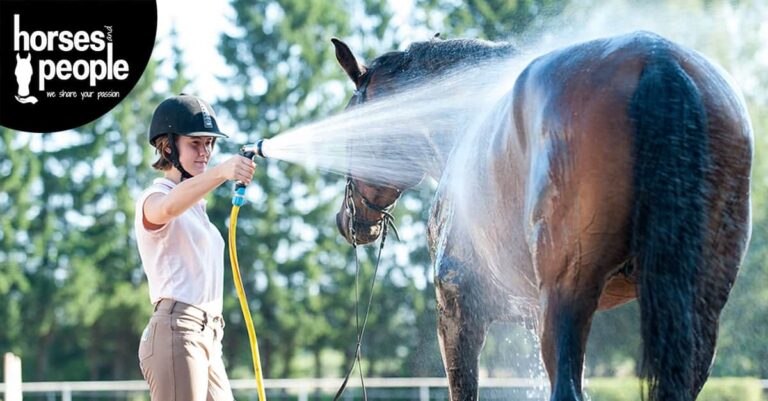
If you think your horse may be suffering heat-related illness, move them into the shade and start to cool them by pouring large amounts of water all over the body. If a hose is available, then use that. If ice is available, then use that to cool the water further. Do not worry about scraping the water off, just apply more cool water.

If your horse has developed heat exhaustion or heat stroke, you may need to cool continuously for 10-15 minutes before you start to see an effect. You are unlikely to do any harm and your horse is at much greater risk from not being cooled. If shade is available nearby and your horse is steady on their feet, move into the shade whilst continuing to cool.

Did you know? We developed cooling systems for the 2008 Beijing Olympics. They consisted of hand-held spray heads that pumped ice water from reservoirs. No scraping! The horses were sprayed continually until they started to cool down, then they were taken for a short walk.  This study shows that cooling takes place effectively even when horses are not scraped. And that the skin continues to cool in between applications of cold water (blue blocks)

How to help your horse cope during hot weather

Clipping you horse is an obvious step. Keeping your horse sheltered in a cool stable during the hottest part of the day and turning out overnight may be an option if your stables are well insulated and ventilated.

If you will not be competing or racing in the heat, then riding early morning or late evening will reduce the risks of heat-related illness.

If you are transporting your horse, leaving very early or very late not only avoids the heat of the day, but also the traffic. Whilst you are moving, the ventilation will be better; the last thing you want is to be stuck in traffic on a hot day.

When training or competing, offer water immediately after exercising as this is the time when a horse’s thirst is strongest. Try to avoid ice cold water, but don’t restrict intake. It does not cause colic in healthy horses. If you are competing, then leave water in the stable right up until the time you are going to tack-up. If you have warmed-up, then there is no harm in washing your horse down and allowing them to drink before competing.

Feeding electrolytes daily will help keep your horse hydrated and reduce the risk of tying-up, colic and respiratory disease. If you have to compete in the heat of the day, then train at least 3-4 days a week in the heat. Remember, even if your horse is ‘acclimatised’ to the heat, they will not be able to perform at the same level as in cooler weather.

Summary

Hot weather can present a challenge to horses, especially if they are competing, are old or overweight, or have existing health problems. Sensible management in hot weather can help reduce the risk of heat-related problems.

Horses can acclimatise to perform in the heat, but only if they are exercised in the heat. When acclimatised, horses will be at less risk of heat-related illness, but exercise capacity will still be reduced, compared with capacity for exercise in cooler weather.

Learning to identify the signs of heat-related illness, knowing how to cool horses effectively and when to call for veterinary help can save lives.

Top Tips for Riders and Trainers:

1. Working and competing in the heat

Accept your horse will not be able to do the same amount of exercise in the heat as they would in cooler weather. Your horse will produce more adrenaline in hot weather and use up muscle energy stores (glycogen) more quickly. Dehydration also increases adrenaline, which further compounds the problem. Therefore, your horse will tire earlier. You simply can’t expect to compete as hard as you would in cooler weather.

2. Acclimatisation

Horses need 2-3 weeks of regular exercising in the heat to acclimatise. Beware in the first three to five days, their ability to deal with heat and exercise gets worse before they start to improve.Competing whilst not acclimatised, such as during a sudden heat wave, is a major health risk.

3. Travelling on hot days

Leave as early or as late as possible (after sunset) as it will be cooler and, generally, there will be less traffic. Horses can lose 3-5kgs per hour in warm weather, as a result becoming considerably dehydrated after a 4-5 hour journey in the heat.

4. Never withhold water

Your horse may drink considerably more in hot weather. If you rely on buckets for watering your horse (e.g. at shows) add an extra bucket. Allow your horse water right up until the time you are going to compete. You can also allow them to drink after warming-up and before competing. After exercise, they will have a strong urge to drink – let them drink! There are many myths about water and exercise. Cold water does not cause problems! Large volumes of water do distend the stomach, but that is also the mechanism by which the stomach knows to empty and allow the water through the small intestine.

5. Warming-up

In hot weather, soft tissues (muscles, tendon, ligaments, etc.) need less time to warm-up, so aim to reduce your warm-up time by 50%. When you are standing around waiting to compete, find shade to stand under, and cool your horse with water and ice. Reducing your horse’s body temperature does not counteract the physiological effects of warming-up. There is also no reason why you cannot go into competition with a horse that has been wetted. Covering the horse with water means he doesn’t have to use as much of his own sweat to cool down during the competition.

6. Cooling down

The most effective way to cool a horse is pouring cold water (15oC or less and ideally 5oC) all over the body’s surface, particularly in front of and behind the saddle if you are riding, or all over if you have finished and removed the gear. If ice is available, use it to cool down the water. It doesn’t matter how you get the water on! Buckets and hoses are best. Sponges are okay.

Remember, warm water is no good for cooling down horses. In northern parts of Australia, it is common for tap/town water to be above 20oC, and may not be as effective in cooling a hot horse.

Electrolytes Do’s and Dont’s

  • DO provide the correct amount of a balanced electrolyte regularly to your horse (e.g. 50g split between two feeds daily).
  • You can provide electrolytes dry in the feed, in a paste or in water. There is no difference in speed of uptake between electrolytes in water or dry electrolytes given in feed.
  • If you provide electrolytes in water, give your horse the option to drink plain water as well. (e.g. offer the electrolyte water first and, if refused, offer the plain water). Aim for a ratio of 5-6g per litre of water. Studies have shown decreased acceptance when the ratio increases above this – meaning more horses will refuse to drink water with 9-10g electrolytes per litre).
  • DO NOT try to suddenly load in large amounts of electrolytes (e.g. 100-200g) if you haven’t been feeding them on a regular basis. It will not replace any bodily deficits, and may cause gastrointestinal upset and feed refusal. Instead of loading electrolytes before or on the day of competition; start feeding up to 50g split between two meals per day a couple of weeks earlier.

[wpdm_package id=56011 template=”link-template-calltoaction3.php”]

Worth Their Weight in Gold

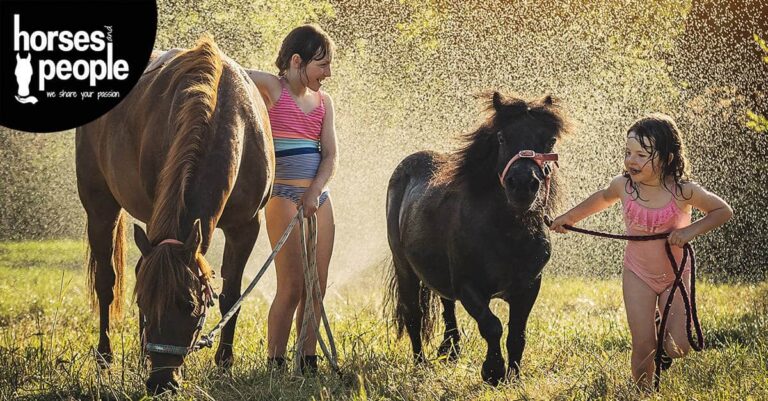
On our January-February edition cover, professional equine portrait photographer and mum, Louise Sedgman has captured a moment of family fun as her daughters Grace and Emma play under the sprinklers with their ‘worth-their-weight-in-gold’ ponies Petal and Midnight on a hot summer’s evening. 

Born in England and based in Drouin, Victoria, Louise says she’s loved horses her whole life; “I’m completely obsessed!” she laughs. “I got my first pony at age 5 and have had horses in my life ever since.” Although her direct family was not into horses at all, Louise was lucky enough to have cousins who were, and her first pony Gina, “a sweet Skewbald Welsh cross pony with spunk” came from them and taught Louise a lot.

The winner of the prestigious Australian Institute of Professional Photographers 2018 Pet/Animal Photographer of the Year, Louise is passionate about three things: family, photography and her horses. “In my teens and early twenties, I used to draw horses in pastel and wanted to capture my own subject matter” she explains. “My mum bought my first film SLR camera when I was 23… the rest is history. I fell in love, completely! That was 22 years ago. I haven’t drawn for years now, but I photograph a lot!

Louise loves everything about horses and says she is fascinated by the way they move. “They are beautiful, graceful (well, most of the time anyway!). The way their feet move and the sound they make. I could watch a horse move all day.” Louise’s photos have graced many of Horses and People Magazine’s covers in the past few years. She has a special talent for capturing that special magic that happens when people are close to their horses and for her, capturing that moment is a deeply personal purpose.

“I had a beautiful horse that I got when I was about 10 years old, her name was Ebony. I lost her 4 days before my 30th Birthday and she was a huge part of my life. I shared so many experiences with her and I have barely anything but the memories in my head to remind me of her. “I wish every day that I had more photos of us together. That’s what I create now. Beautiful memories of the special relationships people have with their horses. At the end of the day, that’s often all we have left” says Louise.

Close friends and family are Louise’s strong support network; “Family is important to me and with two girls, 6 and 9, I’m a busy working mum. My days are about getting them ready for school, then coming home and working. That might be shooting, editing, creating, teaching or all of the above. I don’t get to ride much, but with a better work life balance in the process, I’ll be back in the saddle asap.”

She says the best advice she’s received for navigating life’s challenges has been to always be the best you can be. Stick to your guns and follow through. Be kind, uplift others, take risks and work hard. “Professionally, I definitely find the business side of things a bit tricky. But, with an amazing network of people around me and my fabulous business mentor Annie Murray, I’m much better at it now! “Personally, riding with fear issues is hard. I can’t afford to get hurt and that’s a tough hurdle to leap but I’m working on it! My husband and girls, along with the rest of our family, have been amazing and are always there to support me in every way. My dear friends Ruth and Ken inspire, motivate and encourage me every day too, and my world is what it is because of their support.

And Louise has some advice for anyone wanting to follow in her footsteps. “Be prepared to work hard. Keep your mind open to new learning all the time. Constantly grow your network and surround yourself with positive people. Challenge yourself, don’t let the doubt stop you and do what you love every day.”

[wpdm_package id=56008 template=”link-template-calltoaction3.php”]

The Unicorn’s Appeal

…And “the Loveliest of All” was the Unicorn! This month we explore the unicorn; from its distinctly not-so-cute past in myth, art and history to its sparkly, commodified image today.

One characteristic of the unicorn that rings true for today’s horse people lies in the unicorn’s perennial concern in helping humans in our endeavours, even at the risk of its own wellbeing.

Unicorns are generous spirited, playful, kind, elusive, and magical. The unicorn, this little horse-ette ‘with benefits’ [the horn] is currently a global craze; blink, and you will see a logo of one.

However, back in the mists of time, the unicorn was far more than a new addition to the social media emoji palette – it was a powerful symbol that captured people’s imaginations, maybe because it was such a positive, yet shapeshifting and mysterious motif.

Even now, despite being hopelessly commercialised, it still manages to symbolise optimism, hope and harmony in uncertain times.

In order to understand why the unicorn is such a shape-shifter, or such a multivalent image – we need to go back into its past. Was it ever real?

During the Middle Ages, its existence was considered a zoological fact. It was essentially, physically speaking, the consequence of a set of ‘Chinese whispers’ accounts from word of mouth, then written down by Europeans of what strange animals travellers had seen in India, and Africa. In the period before mass travel, these accounts were ‘good enough’ for the figure of unicorn, or Monoceros, to take root.

The unicorn was first described by Ctesias the Ancient Greek doctor in his book on India, five hundred years before the birth of Christ. The creature he described was white, a bit like an ass crossed with a horse, with a red head, and a twirly, black, white and red single horn, one ‘cubit’ or 27 inches long. It was swift and beautiful in motion, and nearly impossible to capture. Its horn could cure epilepsy, and purify tainted water.

Accordingly, paranoid monarchs in sixteenth century France insisted all their food and drink was ‘tested’ by a unicorn horn. These were easier to come by than we might think. From the thirteenth to the fifteenth centuries, crafty Hanseatic League traders had been passing off narwhal tusks as unicorn horns, and ‘genuine relics’ of this holiest of beasts.

Unicorns are mentioned several times in the Bible and other Gnostic texts through the medieval period. These texts place them firmly in the Garden of Eden as real animals. So nobody questioned for a very long time whether they really existed or not. This shaped its character as being an exceptionally wild creature, a ‘strange beast only accessible through hunting or taming and only touchable by virgins’.

The Medieval period was a great time for unicorns and unicorn imagery, and the little horned horse came to symbolize Christ Our Lord, and it circulated both the Western and Eastern worlds as an image of purity, sacrifice, healing and uniqueness. Moreover, while unicorn legends evolved in the West, in the East, similar creatures emerged in folklore.

The Japanese unicorn, or kirin (after which the beer is named) was a fierce creature able to root out criminals, instantly punishing them by piercing them through the heart with its horn.

In China, the similarly named qilin was far gentler. It was incapable of harm and its presence is considered a good omen.

The unicorn was, therefore, cross-culturally, able to function as an allegory for powerful moral behaviours, with the added twist that it did so by invoking and inscribing the very nub of animal-human relationships, the tension between taming and wildness, trust and fear.

As unicorn scholar Julia Weitbrecht points out; we do not usually think of the unicorn as a ‘biblical creature,’ but it can indeed be found in Bible translations from Late Antiquity …

The mere existence of the unicorn in biblical lore is an important factor in how the unicorn has been integrated into Christian symbolism. Appearing as an elusive hybrid creature throughout time, the unicorn, nonetheless, avoided objectification through its (imagined) desire to associate with humans.’

As Weitrecht also points out ‘In antiquity, natural history regarded it as a chimera that defied essentialist description. According to Pliny the Elder, “the body resembles a horse, but in the head a stag, in the feet, an elephant, and in the tail a boar”. Despite its small size, it is considered to be “the fiercest animal”. (Pliny, Natural History 8.76, 56f.).

The idea that the unicorn, or monoceros, is only tameable by a beautiful virgin goes back to Ancient Greek texts. The influential narrative of the unicorn being first found in the Greek Physiologus tradition: “The hunter cannot approach him because he is extremely strong. How then do they hunt the beast? Hunters place a chaste virgin before him. He bounds forth into her lap and she warms and nourishes the animal and takes him into the palace of kings”.

Here we see one of the most beautiful and precious art works that depict these elements of ‘unicorn lore’; the Musée de Cluny’s exquisite ‘Lady and the Unicorn’ tapestry. The Lady and the Unicorn (French: La Dame à la licorne) is the modern title given to a series of six tapestries woven in Flanders of wool and silk, from designs (“cartoons”) drawn in Paris in the late fifteenth century.

The suite is often considered one of the greatest works of art of the Middle Ages in Europe. We think it might illustrate the five senses, with the last being the sense of ‘the heart and soul’. This tapestry has recently been cleaned by conservators and features in their current exhibition “Magical Unicorns”.

The Metropolitan Museum of Art in New York City also has a tapestry from the same era, ‘The Hunt of the Unicorn’ with one final panel showing the unicorn captured in a round yard, set within a lavishly flowery ‘hortus conclusus’ or enclosed garden.

Both of these works turn on the notion of the unicorn being tameable only by a beautiful virgin, an idea further worked through to a greater degree by Raphael in his 1506 work ‘Young Woman with Unicorn’ (see previous page), where we see a solemn young aristocratic girl of marriageable age caressing what looks like a super cute baby unicorn that snuggles on her lap.

These earlier representations of unicorns are so richly relevant for current horse people because they echo so strongly ordinarily daily horse behaviour, from the runaway horse darting towards the spectator in the crowd whose body language is the most gentle and submissive, to the role of horses in providing therapy for humans with PTSD and other stress related disorders.

It’s reflected in a thousand multi-viewed YouTube horse trainer workshops where the trainer shapes the need for a quiet and composed body language response to bringing a wild or freshly trained horse into human contact.

‘Millennial Unicorns’ might be mere cute logos adorning pencil cases and backpacks for children the world over, but I think they still have real meaning for us in the horse world: how many times do we see in ‘wanted to buy’ horse-sales sites the phrase ‘looking for my unicorn’?

Unicorns appear on our riding t-shirts, clip-on horns can be purchased from horse gear outlets [what my sensible schoolmaster would think of one of these doesn’t bear description!]; and affectionate young owners with their horses often unwittingly pose themselves for double selfies with their equine partners in very much the same gestures as artists and tapestry designers have done with young woman and unicorn imagery over more than two millennia.

So, in this sense, the unicorn remains an enduring image as, for us, they represent the mystery and marvel of the equine species. The unicorn’s horse-like qualities continue to resonate – with those of us who work daily with horses, and who will respond to the myth as it is played out in daily life.

Once their basic needs as horses are met (and these are more complex, as equine science is showing us, than might be first thought), horses’ unicorn-like helpfulness, with regard to our own desires, could, and should, make us humbler, and, therefore, better humans. Our unicorns are closer than we think!

[wpdm_package id=3163 template=”link-template-button.php”]

This article was published in Horses and People March-April 2019 magazine.
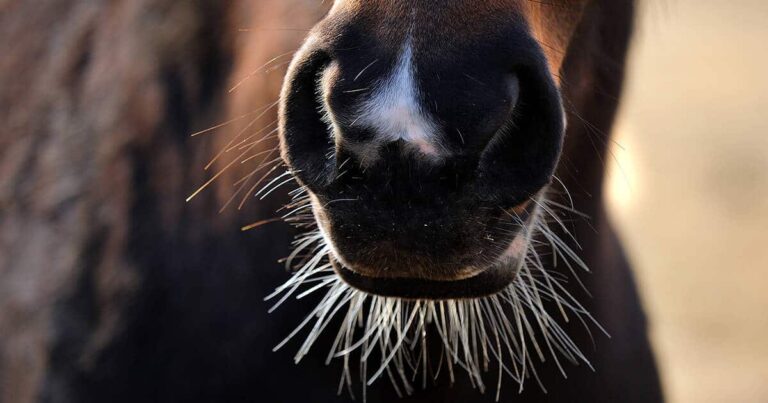
You’re anthropomorphising! And… is it really that bad?

It might be a mouthful to pronounce, but anthropomorphism needn’t be hard to swallow. In this article, Dr Kirrilly Thompson moves away from a discussion about whether or not attributing human characteristics to horses is bad, to a consideration of when and how it can produce positive or negative outcomes for horses.

Anthropomorphisation is, literally, the application of human (anthropos) form (morpho) to animals and is, essentially, the attribution of human characteristics to animals. An example would be to interpret our feature photo as two horses laughing at the camera. Anthropomorphising is understanding animals on human terms – not their own.

Given that animals are different to humans, anthropomorphising is usually considered as false and misleading – something of a barrier to understanding how animals might perceive their own world.

However, humans are animals too and this is where things get interesting. The negative view of anthropomorphisation with which we are usually faced is only one side of the story.

Can anthropomorphisation actually help humans understand non-human animals like horses?

In this article, I move away from a discussion about whether or not anthropomorphism is bad, to a consideration of when and how it can produce positive or negative outcomes for horses.

We are often told that anthropomorphising animals is an error that should be avoided, on the grounds that it is unscientific and leads to poor animal welfare outcomes. These concerns are well justified. They come from the scientific study of animals by biologists, ethologists and animal behaviourists seeking to understand animal behaviour without projecting their own human interpretations. This is incredibly important, as animals have their own species-specific life worlds.

We also know that there are significant differences in the brains of humans and other animals that prevent us from thinking and processing information in the same ways.

What distinguishes humans from horses, for example, is our highly developed pre-frontal cortex. We use ours for executive functioning such as planning, reasoning and rationalising. So, to a large extent it is true that horses experience and make sense of the world in ways which are different to ours. And it is here that the line is usually drawn which asserts that humans should not anthropomorphise horses.

In many ways, saying that we should not anthropomorphise horses, is like saying that the human-horse species boundary is so great, that horses are fundamentally unknowable to humans and we can never really know what it is like to be a horse.

Ironically, the implications of these kinds of arguments against anthropomorphising horses can be just as great as the implications of only seeing horses in anthropomorphic (human) terms.

If we think we can never know what it might be like to be a horse, we may stop trying to understand what their world and their interactions with humans might be like.

However, there is more to the story and this is the important point; whilst we may not know if horses make sense of their world in similar ways to us, neither can we say they do not.

As noted by Charles Darwin, ‘the difference in mind between man and the higher animals, great as it is, is certainly one of degree and not of kind’ (1871: 101). That is, horses are not humans, but humans and horses are both animals, and both are mammals.

As such, humans and horses may experience the world in many common ways. Anthropomorphism could then be an appropriate way to consider those shared ways of being in the world.

As such, anthropomorphism is not necessarily the erroneous attribution of human characteristics to horses, but an acknowledgment of doubt that neither can we be sure that they are not like humans.

It is anthropomorphising to say that horses are friends with one another, as some critics would say that humans have friendships but horses form bonds. But calling out this instance of anthropomorphisation does not mean that horses cannot have friends. Rather, it means that we are not certain that horses experience friendships with one another in the same way in which humans experience it.

When we see anthropomorphism as an expression of doubt, rather than an error, we move from making horses unknowable to us to creating the possibility that humans can know, empathise and understand horses – maybe even create a shared language with them – and vice versa. And this can provide the motivation for us to try.

In the past few years, progress in research design and methods have allowed scientists to recognise that horses can do many things previously thought particular only to humans.

For example, a 2016 article reported that horses have many complex facial movements in common with humans.

Papers from 2018 report that horses can read submissive and dominant body language in humans, that they can recognise human emotions from facial expressions and they can remember the emotions of individual humans. Just like (most of) us!

Of course, due to cognitive and physiological differences, there are many things that horses and humans can never have in common, but this is not to say that there may be many that we do share; feelings of love, sadness and confusion, for example.

Some forms of anthropomorphisation can indeed contribute to negative welfare outcomes for horses – examples of these are over-rugging, punishing a horse that is assumed to have ‘known better’ or assuming that a horse is not in pain if they still have an appetite.

Some forms of anthropomorphism are indeed completely inappropriate such as assuming a horse is being vindictive, doing something to annoy you or taking revenge. Scientific research suggests that these are probably human-only traits.

Projecting these kinds of complex anthropomorphic interpretations onto horse behaviour often lead to questionable or unethical practices. For example, facing a horse at a jump it has just refused for the purpose of whipping it, has no relationship to how horse’s learn (and would not be acceptable for teaching humans either).

However, there are forms of anthropomorphisation that can contribute to positive welfare outcomes for horses. Just like humans, they can experience pain from equipment, bits, whips and spurs.

So, instead of just calling out anthropomorphism, perhaps we need to move the discussion to the implications of specific types of anthropomorphism relative to the impacts on equine health and wellbeing.
We might then begin to differentiate when anthropomorphism is appropriate/inappropriate,  useful/not useful or good/bad for equine welfare. After all, some of history’s most tragic events are characterised by humans not recognising their similarities with other animals (and other humans for that matter).

It only follows that some of humanity’s most noble and compassionate achievements have come from recognising what we have in common with those who may at first glance seem so different.

The ideas in this article are explored in greater depth in ‘Thompson, Kirrilly, and Clarkson, Larissa. “How owners determine if the social and behavioral needs of their horses are being met: Findings from an Australian online survey.” JVB (2018)’ or by request to: kirrilly.thompson@gmail.com.

References:

  • Smith, Amy Victoria, et al. “Functionally Relevant Responses to Human Facial Expressions of Emotion in the Domestic Horse (Equus Caballus).” Biology letters 12 2 (2016).
  • Smith, Amy Victoria, et al. “Domestic Horses (Equus Caballus) Prefer to Approach Humans Displaying a Submissive Body Posture Rather Than a Dominant Body Posture.” Animal Cognition 21 2 (2018): 307-12.
  • Proops, Leanne, et al. “Animals Remember Previous Facial Expressions That Specific Humans Have Exhibited.” Current Biology 28 9 (2018): 1428-32.e4.
  • Bekoff, M. (2010). The emotional lives of animals: A leading scientist explores animal joy, sorrow, and empathy—and why they matter. New World Library.

[wpdm_package id=3166 template=”link-template-button.php”]

This article was published in Horses and People March-April 2019 magazine.