Jiggers in horse racing: Trainer Darren Weir will not contest three charges for alleged possession of electronic devices used to give shocks to horses, according to a statement released by Racing Victoria earlier today.
The statement says assistant trainer Jarrod McLean will contest a charge for allegedly possessing a similar electric shocking device.
The charges against both are to be heard on a date to be fixed by the Racing Appeals and Disciplinary Board. They stem from January raids at Victorian properties when Victoria Police seized four electric devices, known as “jiggers”.
But this latest issue highlights inconsistencies in our attitudes to the use of aversive devices on animals in general.
Racing Victoria’s chief executive Giles Thompson said today the incident was a “bruising for the reputation of the industry”.
One of Australia’s most respected equine veterinary surgeons said previously that such “cruel, medieval measures” threatened the future of Victorian racing. Meanwhile trainers were said to be outraged at allegations that every trainer would have a jigger in their stable.
We agree that any violence towards animals can never be condoned.
That said, whipping is still allowed in Australian thoroughbred racing, despite a recent poll showing three-quarters of those quizzed were against its use.
Training horses to respond to unusual cues
Jiggers refer to illegal battery-powered shock devices. They were commonly used in Australian horse racing until the quality of stewards’ surveillance improved with the introduction of video recording.
Nowadays, those inclined to apply them must rely on illegal training prior to a race. This involves classical (Pavlovian) conditioning designed to ensure that a horse anticipates the delivery of a shock following some kind of stimulus that can be applied during a race.
Most anecdotal accounts describe jiggers as being applied to the horse’s neck. The horse feels the pressure of the device before it discharges its electric shock, a pressure similar to that of the butt of a jockey’s whip.
This is critical, because the jockey must be able to apply a similar cue in the same anatomical area of a horse on race day. Through classical conditioning, the pressure cue means that the horse will anticipate a shock when it feels the butt of the whip during the race.
Additional associative learning is involved when an item of equipment that the horse wears is linked to the application of the shocks.
For example, if blinkers are fitted whenever jigger conditioning is carried out, when the horse races with the blinkers (a change that must be approved by the stewards and declared to punters), it associates the equipment with the shocks it received in training.
In learning theory, stimuli like the blinkers are known as occasion setters, ones that increase the strength of a conditioned reaction.
Races are recorded so that stewards can spot tell-tale signs of rule-breaking such as the butt of the whip being pressed against a horse’s neck. That said, filming from just one side of the course is almost universal, so that up to 50% of the jockeys’ interactions with their horses may go unrecorded.
Electricity in animal training
Jiggers are just one of a number of what are called electric pulse training aids (EPTAs) – devices that apply an electric current to the skin of an animal.
The number of these devices used in Australia is not known. They are illegal in South Australia and the ACT, whereas in New South Wales they are permitted for containment of dogs by invisible boundaries.
The UK’s Companion Animal Welfare Council (CAWC) produced a report on these devices in 2012 in which it said:
It has been suggested that there are currently around 350,000 EPTAs in the UK, although the number in active use is unknown.
The report concluded there were “sound animal welfare-based arguments both for and against the use of EPTAs in theory”, but there was also a substantial lack of relevant research to inform the conclusions of those from either side of the debate.
A subsequent study published in 2014 found dogs that had been shocked with remote-controlled devices were more tense, yawned more often, and engaged in less environmental interaction than dogs trained without shocks.
No research to date has compared the effects of EPTAs with other aversive devices – for example, the use of choke chains that are a far more common instrument of abuse in dogs.
The CAWC report identified an inconsistency in attitudes towards the use of shock, in that electric fences to contain livestock are generally accepted.
The aversiveness of jiggers relative to strikes from padded whips will depend on the voltage discharged, not to mention the wetness (and therefore conductivity) of the haircoat of a horse.
So there is no such thing as a standard jigger zap, just as there is no such thing as a standard whip strike. And while there are some limits on the number of whip strikes that can be inflicted on a horse during a race, there are none for whipping at home in training.
It may one day be shown that random events of violent force from whips on tired horses are worse than random shocks to fresh horses during track work.
The industry may then regret the current outcry on jiggers, unless it has by then accepted that the whipping of tired horses is just as bad for the image of racing.
This article about the use of jiggers in horse racing is republished from The Conversation under a Creative Commons license. Read the original article.
Riding arenas and training yards: An all-weather surfaced area for training and exercising horses can be very useful, many would say essential on a horse property. It all depends on what you do with your horses. Here are some considerations and tips to help you decide and plan a suitable arena or training yard for your situation. They should be seen as a guide, because you will also need advice from local earthworks experts.
Planning
At the planning stage you should think about the following factors:
How often will you use this all-weather surface? Will it be once or twice a week or will you use it on a daily basis for many hours a day?
Will this area be used solely for riding and training or will it also be used as a surfaced holding yard?
The latter is an important consideration if you have a limited budget and/or space is at a premium, as is the case in most small horse properties, having a multi-purpose arena makes a lot of sense (and will be discussed in more detail later).
Are you planning on having a riding arena or a training yard, or both? You may be able to manage with just one area or you may need several, each fulfilling a different purpose.
Is it going to be outdoor or indoor? Will you start with an outdoor all-weather arena surface and put a roof on it later?
Are you planning on having all the work carried out by a professional company or, are you planning to do some or all of the work yourself, DIY?
You will need to do some research before starting your project. As mentioned before, when planning and building any horse facilities, it is a good idea to talk to other people who have carried out similar projects and see what you can learn from them. If possible, have a look at their all-weather surface.
Ask questions about the construction of it, for example:
Did they construct the all-weather surface themselves or did they employ a contractor?
Have they had any problems with the base or the surface?
Have they changed or added anything to the surface since it was constructed?
Would they like to change anything?
Did they encounter any problems during the construction?
The answers to these and any other questions you can think of will be invaluable in helping you make decisions.
Keep in mind that the weather conditions vary from area to are and materials from one quarry will not be identical to materials from another, therefore, just because a particular base and surface has worked well in one instance, it does not necessarily mean it will work in another.
Many of the issues when planning and constructing an all-weather surface are the same for both, a riding arena or a training yard, but some are different. At the planning stage you need to think about what size and shape the all-weather surface will be and what the top surface will be made of.
You also need to think about whether it will be fenced and, if so, what with. You also need to think about the positioning of an all-weather surface.
Check with your local authority prior to the planning and construction of an all-weather surface, as there are often considerable earthworks involved that could impact on the local water catchment, on protected trees or have other environmental implications. There may be other council regulations relating to personal vs. commercial use, which you should find out about before you start building.
Do you really need one?
If you are a professional coach or trainer or you train your horses regularly, then a proper all-weather surface is likely to be essential for you. On the other hand, many horse people think they need an all-weather surface when, in fact, they can manage without one.
For example, if you already transport your horse to lessons or riding club facilities, you may not get enough use out of having an all-weather surface to warrant the expense. If a neighbour already has one and is happy to let you use it (for free or for a fee), this may be better (and cheaper) than building one.
On average, a privately owned all-weather arena is used for less than seven hours a week if the owner works off the property and only has time to ride after work. On the other hand, on a commercial property, arenas are used for many hours a day and without them, the business would probably not be viable.
You need to decide how much expense you can justify, because a dedicated all-weather surface can be costly. Can you also justify the large amount of space this area will take up?
Work out the costs and benefits, taking into account how many hours a week you ride/train, bearing in mind this figure may increase once you have a proper all-weather surface to ride/train on.
Can this area be multi-purpose?
If your budget is limited or space is a factor, it may be easier to justify an all-weather surface if it can be used for more than one purpose.
There is no reason why a properly constructed all-weather surface cannot also be used as a surfaced holding yard. (See our previous articles on The Equicentral System).
A surfaced holding yard can be quite expensive to construct – as can an all-weather riding/training surface, therefore, it makes sense to, where possible, combine the two.
If you plan to use an all-weather surface as a surfaced holding yard, then a feeding and watering area can be constructed at one end or down one side. Large rubber mats can be used for feeding on so that hay and other organic matter does not get mixed-in with the surface.
In addition, large hay feeders, hay nets or both can be used. Smaller individual holding yards can be build around the all-weather surface for confining horses when the surface is being used to work a horse. These smaller surfaced holding yards will also be useful for feeding any concentrates to individual horses.
If your budget allows it, a large roof can cover the smaller individual holding yards and the hay feeding area, and can also extend partially over the riding/training area so that you have a partially covered all-weather surface.
You will find that, even though horses have access to the whole area, they spend most of their time loafing where the hay and water is, especially if they can see human activity from the same spot. Horses soon learn that human activity means there may be about to have their hay topped up, or better still, be fed some tasty concentrates! This is the main reason why horses that are fed supplements spend hours standing at the gateway to a paddock, even when there is grass. So, when planning, make the feeding/loafing area closest to the house or feed storage area.
You can also put a retractable electric fence partway across the arena if you feel you need to confine your horses to one end and this fence can then be retracted when you ride/train.
Other uses for an all-weather surface include using the area for occasional stock work with other animals such as cattle. You will need additional facilities such as a race, crush, ramps, etc., But once again, it is possible to double up and save expenses.
Riding arena, training yard or both?
If your budget or the available space will accommodate an arena or a training yard but not both, you need to think carefully about which would be best.
A training yard usually costs less to build than a riding arena due to its smaller size. You can do a lot with a surfaced 20 x 20m square training yard. Conversely, if you do construct a larger area, you have the option of reducing its size to make a smaller area if required.
For example, even dressage riders can usually manage with a standard dressage arena 20 x 40m rather than an Olympic size one 20 x 60m. For the occasions where you need to practice a competition test, you can always mark out the area on a flat piece of grass, or you could travel to nearby facility – which has the added advantage of getting your horse out and about, and used to going to new places.
Indoor or outdoor? The climate in which you live also has some bearing on the answer to this question, although if you do not have the huge budget needed for an indoor arena (and that includes most of us!), Then this is probably a redundant question, even if where you live has extreme weather conditions.
As well as protection from inclement weather, a roof protects against the sun in hot climates. Again though, unless your budget allows for such an expensive structure, you will have to time your outdoor pursuits so that you are not working your horse when the sun is overhead or it is pouring with rain.
If you think you may be going to put a roof on your all-weather surface in the future, you need to research roof truss sizes at this stage, so that you will not have to make alterations to the size and shape of the surface later.
If you do plan to cover your surface, keep in mind that a half or partly covered arena or training yard can work really well, is cheaper and gives you the best of both worlds.
It means you will have somewhere to retreat to in inclement weather and, on days that are really wet you can simply stay in the area that is under the roof.
An indoor arena or training yard is, of course, out of the budget of many horse property owners but it may be that, even though you cannot afford to roof the area now, you may be able to in the future, so keep that in mind when planning this facility.
Sometimes, a good compromise is to have a riding/training surface that is partially covered. For example, if you are planning on having a combined riding surface/surfaced holding yard as described earlier, a large roof that provides shelter for the surfaced holding yards may also provide shelter for the all-weather surface.
All-weather surface, size and shape
Size and shape: A riding arena can be any size or shape you like but, there are certain sizes and shapes that are commonly used.
A standard dressage arena is 20m x 40m and an Olympic sized dressage arena is 20m x 60m. If space is at a premium, you may decide that the standard size is fine for training and you will hire a full size one for practicing the full test before a competition if there is one you can travel to from your area.
For jumping, an arena will usually need to be at least 40m x 60m or as large as 60m x 100m. It all depends on how seriously you follow your chosen pursuit. Again, you can have a smaller, everyday training area and travel to a large arena for certain activities.
For driving, an arena about 40m x 60m will be required.
Western pursuits require about 30m x 60m for reining and 40m x 60m for roping. Campdrafting arenas need to be much larger.
These arena sizes are just a guide. Unless you are already experienced in your particular chosen pursuit, it is important to speak with a professional (such as your coach) about what makes a good size and shape arena for your particular discipline. As well as the size and shape, the surface and fencing requirements change across different disciplines too, so find out as much as you can before making any decisions.
Training yard size and shape
Training yards can be round, square or a blend of the two. A ‘round yard’ is often used for ‘starting’ horses. For this purpose it is usually quite small – about 11m diameter. Unless you ‘start’ horses professionally, a training yard of this size is usually too small for general use. A more useful size for a training yard is between 18m and 22m diameter.
As a guide, an 18 meter circle is roughly the circumference required to lunge a horse. Some people find a similar sized (about 20m x 20m) square training yard more useful because then there are straight edges for certain exercises, particularly close contact ‘in-hand’ ground work.
A square training yard can be easily made round if necessary by using panels or rails to temporarily round the corners off. Yet another alternative is to have a training yard that is a combination of round and square with one or two right angle corners and the rest rounded off, or four straight sides with rounded corners. Such a training yard can be very versatile.
Remember that this is all a guide. You will need to ask around and do more research. If you are planning on creating an all-weather surface yourself, you are better off starting with a smaller area, perhaps an area that can be used as a combined holding area and riding/training area.
This article was published in Horses and People January-February 2019 magazine.
Choosing the right fence. From a practical and safety point of view, boundary and internal fencing are the most obvious structures that require attention when laying out your property to meet the needs of your horses (and potentially other animals).
When you start exploring what type of fencing you should consider for your property you will find that fences are much like horse supplements… There are hundreds of different options you could choose from! And, just like supplements, some of those fences are totally not suited or required for your horses. To determine which ones are appropriate for your property, you will have to assess each property on an individual basis, like you would do with the nutritional needs of your horses.
There are many factors that will determine which fence types are most suitable for your property and circumstances. Aspects such as climate, land shape, size of property, number of horses, horse types, new or existing layout, commercial or private purpose, maintenance and costs/budget will all have to be factored in.
Because each horse property is different, this article aims to assist you with your decision-making process, allowing you to evaluate the different aspects relevant to you and how to weigh these all up to make your final decision.
Let’s start by looking at some fencing requirements and common horse fence types to put it all into perspective!
Main fencing requirements
Visibility. For horses, fence visibility is of paramount importance. They are prone to run into fences at considerable speed, especially if the ground is damp and slippery. The resulting damage to both the horse and the fence can be expensive. However, the level of visibility required will largely depends on factors such as horse temperament, herd behaviour and age of horses. The level of visibility should be greater when dealing with large groups of horses or younger (untrained) animals. However, as horses mature and get exposed to, for example, electric wire, you may find that only one or two strands of wire become sufficient.
Height. All field fences should be between 4 ½ (1.4 m) and 5 (1.5 m) feet tall (at minimum) to safely contain horses. For larger horses, yards and smaller paddocks you should consider 5.4 (1.65 m) to 6 ft (1.8 m) height. The bottom part of the fence should be 6 (15 cm) to 8 inches (20 cm) off the ground, which will prevent foals from rolling out of the field (if you have them); it will also discourage horses from pushing their heads under the fence to graze. The fence height from the ground may vary, which is linked to how much visibility and containment you require (i.e. number of panels or wires).
Materials. Fences should be made of materials that have durability and minimise damage to skin/body (although that cannot always be prevented). Review also fencing accessories; these can help with covering sharp edges, such as steel star-picket caps. If you are intending to use electric fences you will need to factor additional materials that deliver the electricity to the fence and isolators to prevent shorting out.
Gates. Do not forget gates! They form part of your fence, as you will have to move horses, people and/or machinery in an out of fields and paddocks. Consider how wide a gate needs to be, where you locate it, how well you support it with heavy posts and well-constructed braces, how well it swings open and closed, and how secure and horse-proof its latch is – these are all variables that can affect its safety and cost, both upfront and long-term.
Fence types
Post and rail: Wood
Wood is the most traditional fencing material and has long been a popular choice among horse owners. Your classic horse fence, wooden rail fence consists of wooden boards (typically 3 or 4 for horses), secured on wooden fence posts.
If properly cared for, wood fencing has a life expectancy of about 25 years. The planks used for horse fencing are typically made of soft wood (pine, popular) or hardwood (black locust, redwood, cedar, oak, or cypress). The wood type that is most available will depend on your geographical location. Pine boards, which are softer and cheaper than hardwood, need to be treated with chemicals to be durable enough for horse fencing, but when treatment starts to wear off, horses may start nibbling on the tasty pinewood. Like pine, poplar is a softer and less expensive wood.
Wood fences are often painted with paint or a preservative, which is a fairly messy and time-consuming process. In addition, often anti crib biting properties are added to paints, to prevent wood chewing by horses.
Care should be taken when selecting chemicals for wood treatments, some are not recommended to be used in application where it will be direct contact with horses (licking/biting), feed, hay or drinking water. If you have competition horses, some of the chemicals used to treat wood are swabbable and could land you in trouble with the sport.
Advantages: Wooden rail fence is strong, creating a solid barrier between horse pastures and the surrounding area. Disadvantages: Wooden rail fencing is expensive, and also requires regular ongoing maintenance and high chemical and/or paint input.
Post and rail: Plastic
The plastic used for fencing should be weather resistant and sunlight stabilized. Polyethylene (PE), polyvinyl chloride (PVC) and fiberglass are the most common materials.
Plastic tends to become brittle as it gets cold and may soften if it gets extremely hot. Plastic used for fencing should be formulated to resist these extremes. Some plastic fencing is intended for residential application only. This type of fencing uses thinner material, which is often hollow and is not suitable to contain horses.
Be sure to select fencing designed for farm or horse fencing. If in doubt, request test data from the manufacturer for fence materials that you are considering.
PVC (polyvinyl chloride) planking looks like wood from a distance. You can tell the difference once you’re close up, although the industry is working hard to have its products resemble wood.
The difference in maintenance and lifetime, however, is huge; vinyl will pretty much last forever. You won’t need to repaint as you would with wood, although vinyl does need to be cleaned, usually with a bleach solution, as it’s prone to gathering dirt and gray mildew, especially in muggy climates.
Only buy PVC fencing with a UV inhibitor or protectant, which is pretty standard nowadays. Without a protectant, vinyl will get brittle and worn. Recent trends for PVC fencing include more colors, often chosen to match a shed or other outbuildings, and textured materials, which look even more like wood.
Advantages: Vinyl is almost maintenance-free and is highly durable. It is also very safe, since it is both visible and will give way under a strong impact.Disadvantages: Vinyl fences are more expensive than their wooden counterparts regarding upfront cost. Vinyl rail is not indestructible, and rails can pop out of their fence posts.
Flexible Vinyl Rail or High Tensile Polymer Rail
Flexible vinyl or also called High Tensile Polymer (HTP) Rail looks less like wood fencing than vinyl planking. The vinyl bands stretch between posts like planks.
Often, the flex boards are electrifiable, which adds an element of security. HTP fencing features high tensile steel wires that are coated in polymer that is UV stabilised. The wires lend the fence great strength and durability, while the polymer coating means that the fence has a flexible finish that will absorb the horse’s impact, rather than shattering or breaking.
HTP fencing is available in a variety of styles, including HTP coated rail and HTP wire (see next paragraph). The HTP coated rails come in both electrifiable rail and non-conductive rail and is available in a variety of colours.
The rail size (width) ranges from 10 cm to 15 cm and depends on the number of wires. You can get them in 2, 3 and 4 wires. The top and bottom wire can conduct the electricity to provide the shock. Keep in mind that HTP fencing cannot be tensioned around corners, so you will have to factor additional materials such as steel or wood to maintain tension.
Advantages: HTP fencing provides a very visible and more forgiving barrier than wood or PVC, and requires little maintenance. It withstands weather-prompted expansions without splintering.Disadvantages: If you choose the electrified option, the initial set up is more expensive than PVC. Because HTP incorporates electricity, its setup takes more time and materials than installing a more basic fence like HTP non-conductive rail or PVC. Powering HTP also results in a (slight) increase to your monthly electric bills or you may want to run it off your solar power grid.
High tensile wire fence
High-tensile wire is stretched tight between posts and comes in different forms. Smooth wire is bare metal that is galvanized (coated in zinc) to protect against rusting. The thicker the zinc coating, the longer the wire will last before rusting.
The official standards for zinc coatings rank from Class 1, the thinnest, to Class 3, which is the thickest and will last the longest. The wire is also measured in gauges, which refers to its thickness. The lower the gauge number, the stronger (and more unforgiving) the wire fence will be. High-tensile wire may also be coated in white or coloured polymers (HTP) that make the fencing more visible to the animals and also less likely to cause injuries to them.
A full fence of smooth or polymer-coated wire contains four to seven strands; some types have 10 to 12 stands. It can be difficult to see the wires from a distance, so many horse people add a top rail or pole for better visibility. You can also add one or more electrified wires to increase the horses’ respect for the fence.
(High) tensile fences can also be set up with solely polymer lines. Polymer line consists of only polymer (compared to HTP line, which is wire covered with polymer), creating a safe, lightweight fence that does not rust.
Advantages: It is a cheaper fence option compared to the post and rail systems. The fence doesn’t rust, stretch, or fade, and is highly durable, even in harsh climates. HTP line is strong, and will work to keep horses in.Disadvantages: Because HT line is thin, its visibility isn’t as great as that of a wider board fence.
Electric fence
Electric is undoubtedly the most important form of fencing. Electric fencing provides a psychological barrier, giving horses an electric shock when they touch it. It comes in rope, braided wire and tape forms. These products incorporate conductive wire weaved in other materials – plastics, polyesters, nylon, etc. – to create electrified fencing that is also more visible. Tapes come in different widths, most between 2 cm and 12.5 cm wide, to create a look that mimics wood rails. Ropes are rounded and generally less than 2 cm in diameter. Clearly the wider the strands of the tape or rope, the better the physical barrier and the more visible.
Tapes can be used for perimeter fencing in larger pastures or for temporary fencing. The number of strands used ranges from 1 to 4 wires depending on its purpose. Even a single or double wire design may be sufficient if it is energised. An existing fence can be upgraded to help reduce damage by reducing the pressure on it and can be electrified simply and effectively with the use of an insulated outrigger wire.You’ll find products in different colors, from white, to stand out, to browns and blacks that blend in with the terrain. All of these products can be mounted on all matter of permanent or temporary posts, including wood, metal or fiberglass. Insulators are needed on steel posts; the strongest are porcelain and the easiest are plastic pin -lock types, but are susceptible when fires occur.
Advantages: Electric fencing is often the cheapest form of fencing and can be used with solar energizers. Electric tape is more visible than traditional electric wire, which is a major advantage when you are using it to contain horses. Installation of electric fencing is relatively easy and can be done by you. Disadvantages: Over time wire can weather or get damaged. The vegetation under the fence needs to be controlled, and it’s important to check the electricity flow regularly.
Wire mesh
There are two types of wire mesh suited for use with horses: no-climb and v-mesh. No-climb is made of steel wire knotted together into 5-by-10 cm openings.
V-mesh or diamond mesh uses two wires that are twisted together in a 5-by-10 cm diamond formation to create smaller openings than no-climb. The diamond mesh fences are more popular with horse owners especially that breed horses.
Both fences provide strength and a springy texture to protect horses from injury. However V-mesh is typically more expensive than no-climb. Both types are strong, durable, and very safe when installed correctly. Due to the small wire spacing they can be used as a property perimeter fence as it is not only very secure for keeping horses and other livestock inside the property, but it keeps out small predators, unwanted neighbourhood dogs, and other unwelcome visitors. Choose the best class three galvanizing product for longevity.
You should use a top barrier to help prevent sagging from horses leaning over it. This can be a board, to give a more finished look, or an electric wire. Mesh fences are also available in a poly material. Like vinyl products, these need to have UV inhibitors to avoid weakening. Poly mesh can be used with basically any kind of post.
Advantages: Creates a solid barrier between your horse and the outside area. One major advantage of no-climb fencing is the fact that other animals, like dogs cannot easily access the pasture.Disadvantages: Requires regular maintenance and must be tightened seasonally to prevent gaps from forming. Additionally, you need to check the fence’s perimeter on a regular basis to make sure that trees are not growing into and warping the fence. Installing no-climb fencing over uneven terrain can be a challenge, and no-climb fencing is best for straight lines on flat land.
Which aspects matter to you when it comes to fencing?
There are a few aspects that you will have to consider when determining the most appropriate fence for your horses and those relevant sections of the property. And it is not only costs and looks!
In the table below, I have highlighted some key aspects you should consider, however, not all of these features may be relevant to you and the weight of importance may differ.
This is why it is very useful to work through these aspects using a scoring system that allows you to prioritise and weigh up what features are most important to you.
The table on these pages provides a list in order of assessment and how you could score these. To do this, rate each of the following aspects on a scale from 1 to 5, with one being very low priority and 5 being very high priority. After you score the distinctive aspects that are relevant or important to you, review them to see which received the highest score. These are your top priorities.
You may score differently for different sections of the property, such as for house yards/paddocks, mare and foal paddocks or large paddocks at the back of the property.
To really narrow down your selection, you will have to weigh up those priorities. But before you do this you will need to do some research, as you will have to find out, for example, the costs of different fence types and fencing contractor hire.
The cost of rural or horse fences per metre including posts and accessories varies largely depending on the type, post spacing and complexity. Costs can start at $2.50 per metre for electric fence to over $200 per metre for galvanized steel fences. If you cannot install the fence yourself, you will have to add installation as an extra cost.
A single installer might cost around $66.00 per hour or two installers might cost $99.00 per hour. Two installers can work faster than one and may be more appropriate for bigger jobs. Two installers can be less expensive than one because of the price difference. Check if the hourly rates include travel time.
The number of work-hours will depend on the size of the fence and the topography of the area. Fences on flat land will be easier to install than on land that has hills and gullies. Other factors will also have an affect on installation times. If concrete needs to be poured, it will add expense and time as it has to dry before the fence can be completed.
The best way to estimate how much a fence will cost is to get quotes for fences from rural fencing suppliers. Describe the length of the fence, the type of fence you need and any topographical features the fence builder would need to know about. These initial quotes may be estimates, but helps you narrow down the options until the fence installer will come to your property and inspect the area that needs to be fenced. They can then give you a firm quote.
Let’s weigh up your requirements
Now that you have an idea of the costs, lets go back to your list of top priorities and check which trade-offs make sense for your situation. The trade-off should be considered for each section of the property as many fencing dilemmas can be solved with a combination of products. For example yards and paddocks at the front of the property could be set up with more of an aesthetic/ low maintenance focus, whereas the paddocks in the back could be set up on a lower budget such a electric fencing or high-tensile wire.
Summary
Clearly, there is a lot of choice out there when it comes to fencing for horse properties! Do your homework and make sure you go through your key features list so that you narrow down your options.
Keep in mind additional environmental factors such as climate, land shape and soil conditions as this may impact your selection. And remember to include gates.
When you have a clear picture of the type of fences that will work for you and the different areas of the property, do your due diligence as a shopper. Ask distributors to refer you to previous customers in your area, so you can see how well the fence is working for them (if this is possible). And check product warranties because they range from one to 20 years.
If you’re buying a metal product, find out how rustproof it is. If the product contains synthetic materials, ask if they include mould and UV inhibitors and won’t get brittle and crack, chip or shatter in cold and hot weather. Some synthetic products’ colours fade over time; so if aesthetics are a top priority for you, ask about color guarantees, too.
If you are not able to install the fences yourself, carefully select your installers. Some product types such as HTP fences come often with a package and include installation costs. Whereas with other more common fence types you may have to source your own skilled labour. Ask for references and go to see some of the fences they’ve put up if you can.
No matter what type of fence you end up with you will need to maintain it. Make sure you check your fencing regularly, not only for maintenance but also for damage by vegetation, fallen branches or simply to check that your horses are safe and the fence is doing everything it should do – that is keep your horses safe and in!
Happy fencing!
Fencing safety vs. strength
Horses will have encounters with fences! A safe fence is not always the strongest fence. Steel or wooden post and rail are strong, but are less forgiving than flexible materials, such as HTP rails. On the other hand horses may escape if fences are too flexible and stretch too much. Therefore you will have to review your horse dynamics, horse requirements and the type of paddock you are setting up. Steel post and rail could be an excellent choice for smaller enclosed spaces such as smaller yards, whereas electric tape or HTP rail could be used for the larger paddocks.
Costs of materials and installation vs. maintenance input
Many of the low maintenance fences are also the priciest. However if you are in a position to frequently check your fences and repairing damages immediately, a more affordable initial investment such as electric fences might better serve your needs.
Aesthetics vs. maintenance expenses
The look of the fence will be a personal choice such as colours and type of material. It will also depend if you are running a commercial facility and have many visitors /clients coming and going. However it is important that you weight up the looks against the maintenance costs. For example traditionally looking post and rail white wooden fences require more maintenance then other products such as high-tensile electric fences or PVC rails with UV inhibitors.
The horse in Australia has played a central role in the formation of our national identity. The distinctive Australian values of mateship, toughness, anti-authoritarianism, and concern for the ‘battler’ were carved out in the presence of horses.
From the ponies who arrived here on the First Fleet in January 1788, and the others who joined them and were bred here, in peace and war, in sport and leisure, in work and play, horses and their riders have been fundamental to our collective sense of Australian-ness.
In the colonial period, skill with horses and firearms made the mounted bush worker something more than a mere labourer, since a trained horseman always had the makings of a gentleman.
A. B. ‘Banjo’ Paterson reflects the prestige accorded the remarkable horseman in his great poem, The Man from Snowy River’ (1890). The ‘Man’, an amalgam of three great stockmen known to the poet, Jack Riley, Owen Cummins, and Charlie McKeahnie, pursues another aristocrat, a thoroughbred racehorse ‘the colt from old Regret’ – “he was worth a thousand pound” who had run off to join the wild bush horses.
“… the man from Snowy River never shifted in his seat — It was grand to see that mountain horseman ride … The man from Snowy River is a household word to-day, And the stockmen tell the story of his ride.”
Bushrangers were equally famed for their horsemanship, and their feats in the saddle have made a handful of them household names; the Kelly Gang, Captain Starlight [both of them!], ‘Mad Dog’ Morgan, and Captain Thunderbolt. From 1788 to 1901 over 1,200 of them ‘lived in the bush and subsisted by robbery by violence’.
Captain Thunderbolt, (Frederick Ward) who we see here on the chestnut gelding on the far left in Bailed Up, is in fact also depicted seated with effortless grace on a plunging horse in a commemorative statue made in 1988 by Dennis Adams. It stands on the corner of the New England Highway and Thunderbolt’s Way, Uralla.
Ned Kelly too was ‘eloquent in the saddle’, a fact even frustrated troopers had to admit. Elsewhere, in central/northern NSW a ‘second generation’ of bushrangers lured by discovery of gold in the 1850s, were also famed horsemen. Here the most notorious gang was led by Frank Gardiner, Ben Hall and John Gilbert. ‘All three were excellent horsemen, often using stolen racehorses to outrun the police. Their greatest robbery was of the Forbes gold escort at Eugowra Rocks on its way to Sydney in June 1862. The gang got away with £14,000 in cash and gold.’
Bushrangers were popular subject matter for both artists, poets and illustrators. In William Strutt’s Bushrangers of 1852 we see a line of handcuffed and hapless victims sitting on the ground while their tormentors filch gold, coins, and other valuables.
Leading colonial artist Samuel Thomas Gill also produced dozens of dramatic and exciting prints and watercolours of mail coaches being robbed, as in Attacking the Mail, 1865, and in many others depicting mounted police in pursuit of bushrangers.
Condensing all of these ideas is Tom Roberts’ masterpiece, the iconic Bailed Up, 1895 which has been described as ‘the greatest Australian landscape ever painted’. Many of us know it better from posters, calendars, placemats, greeting cards, and school project kits than from the original, which hangs in the Art Gallery of New South Wales (AGNSW).
Bailed up is ‘set’ in 1865, some thirty years before the date of its production, so it is what we call an ‘anachronistic’ image. Roberts, as he’d done with Shearing the Rams, and A Breakaway, was making a self-consciously historical painting in order to talk about the past. He approached the historical dimension of the picture with his usual almost ‘forensic’ research skills to ensure that every detail in it was correct; from the people’s clothing, to the horses’ saddlery, and to the guns carried [Martini-Henrys were actually not available in 1865, a rare slip up]. He even built a viewing platform over his chosen robbery site on the road half-way between Newstead Station Inverell, and another station, Paradise, so he could construct the scene in an actual landscape.
In 1895 when Bailed Up was painted, the ‘bush’ itself was becoming less remote. Much of it around Sydney and Melbourne had been penetrated by the laying down of new railway lines. Those that ran to Heidelberg from Melbourne actually made it possible for the Australian Impressionists; Tom Roberts, Fred McCubbin, Arthur Streeton and Charles Conder, to get quickly and cheaply to their legendary campsites at Eaglemont and elsewhere. Moreover by now attacks by bushrangers, while not eradicated, were basically ‘consigned to the past’. The so-called ‘last bushranger’ Jimmy Governor was hung in 1901.
Bailed Up shows the dramatic moment of an actual hold-up as recounted to Roberts by a local Inverell man, ‘Silent Bob Bates’ an ex Cobb and Co driver who had been held up thirty years earlier by Captain Thunderbolt (aka Fred Ward) and his gang. In gratitude, Roberts based the appearance of the driver on Silent Bob.
In the stillness of a bush midday the tension never quite boils over into tragedy – and this point is also factually accurate; Captain Thunderbolt, the ‘gentleman’ bushranger, seemingly never shot at victims of robbery – but the danger of violence is quite clear.
If we visually divide the painting into three zones; right, centre and left, we can almost perceive three distinct emotional ‘micro-climates.’ On the far right, we see an elderly man seated on a rock, peeking out just behind the grey bushranger’s horse. He is smoking a pipe and even appears to have a book on his lap.
Beside him is a small boy in sunhat and short pants, whose anxious gaze is fixed on the gun that lays across the saddle of the bushranger on the grey horse.
Psychologically, only this little boy, and, at the other end of the picture, the lead grey carriage horse in the Cobb and Co team, raising its head and striking out with a forelimb, who express the emotional reality of the situation. Too young and too equine to be constrained by societal dictates, they are the ‘canaries in the mine’; the only ones who express with natural and authentic feeling, the danger in which their group is in.
Further along reading right to left; the lady inside the coach (her appearance purportedly based on local hotelier Isabella Caldow), seems to be amused by something the dis-mounted bushranger holding the dark brown mare, has just said. His mare idly sniffs the ground for stray forage.
Atop the carriage, the driver sits stiff and mortified, a pistol trained at his head by the bushranger on the white horse behind the carriage horses. The tension in this section of the painting is palpable.
The far left hand section features the curious forward-leaning posture on the part of Captain Thunderbolt mounted on his chestnut gelding. It’s not clear what Roberts envisioned here in terms of a reading – maybe the Captain is horse-whispering to the grey carriage horse (he did spent the first half of his life as a master horse-breaker), however, beholding the gun held slantwise over the bushranger’s lap, the upset grey carriage horse, won’t be talked down.
Roberts ‘considered this painting to be his “big gem” but few agreed and it failed to find a buyer for thirty years. Eventually a Mr Maund bought it, and loaned it, and then later sold it to the AGSNW, after which generations of fresh, modern-eyed audiences and curators have since hailed it as a masterpiece.
Now 123 years old, it’s had a life as hard as the subjects it depicts. In the 1950s it famously fell off the back of the truck transporting it from Sydney to Melbourne for an exhibition tied in to the Olympics, but with skilled conservation, and x-rays, (that revealed Roberts’ 1927 ‘changes’ that flattened and modernised it), it lives on to intrigue current and future viewers.
Bailed Up will remain, I hope, as Roberts intended it, a complex and sophisticated rendering of real historical events in the Australian bush, and one that highlights horses as key players.
The power of change. Human beings are creatures of habit. Rather than looking for change, we generally prefer things to stay the same. However, change is an important part of growing and, therefore, necessary.
If you keep doing the same things you will get the same outcomes. If you keep training in the same way you easily get stuck in the same problems.
Change is essential to keep things fresh and clear.
So, how can we become more comfortable with change and how do we make the unknown our friend rather than fearing it?
The first step is to understand where the reluctance to change comes from.
The reluctance to change can be linked to a fear that results from:
Bad experiences with change in the past (yours or of others).
Lack of experience in changing or having been too much of the same.
Holding on to the past and not wanting to let go.
A lack of belief in yourself and, therefore, doubt and fear of making new decisions.
So, how do we conquer these fears?
Bad experiences with change in the past
Our thoughts can easily get stuck on the bad experiences and this leads to us re-living these memories over and over again. You have to remember, however, that for every bad memory there are also countless good memories.
Start by reminding yourself of a time when you changed something and it led to a good outcome.
This could be a big change or just a little change, it doesn’t matter. The important thing is to recall the positive memories around change.
And don’t just think of the positive changes you have made in your riding but also all the positive changes in other areas of your life.
Lack of experience in changing
This can easily happen when we have been avoiding change for a long time and we have been getting stuck in the same thing for a long time.
If this is you, then start slowly. Change can be achieved one small step at a time, there’s no need to take big leaps.
When we attempt too much too quick we can easily set ourselves up for failure. The fear sets in and we stop again. This creates more negative memories and makes change even harder.
Rather than sabotage yourself take your time and change one thing at a time.
Holding on to the past and not wanting to let go
Ask yourself, what are you holding on to? The fear in this case is generally not fear of the change itself but, more likely, what you might lose when you make changes.
This is why the next question needs to be: Are you really losing something when you undergo change? Instead of thinking of losing, can you change and think about it as growing, building on or expanding?
Lack of belief in yourself and therefore doubt and fear of making new decisions
There is never a guarantee that your change will be successful but that’s never a good enough reason to avoid change altogether.
Change doesn’t mean you jump blindly into it without thinking. Change can be thought through and planned. Make the best decision possible and trust your own instinct.
Think about the decisions you are about to make and put yourself into your shoes 10 years from now…
How will you feel about it and, how do you think your decision to change will have worked out?
Making change happen
To help you act on making changes think about your previous patterns of avoiding changes.
If you know you are good at procrastination, set deadlines.
If you have talked yourself out of making changes, remember all the good changes you have made in the past.
If you doubt that you can make the change get support from family and friends
Change is necessary for progress so let’s make sure that change becomes your friend rather then remains your enemy.
In her latest book, Tanja offers a valuable self-development tool, empowering the rider to take control and ownership of their riding, and assist in finding a solid training foundation from which to build. Inside this book, you’ll learn:
Rider’s Training Scale, a guideline for correct riding;
Horse’s Training Scale, a training guideline on how to correctly educate a horse while keeping the rider’s position in mind;
Mindset Training Scale, a guideline for riders, coaches, and trainers to help them to understand and work through personal issues.
Very well-established in countries like the United Kingdom, where forage-based diets have been the traditional norm, feed balancers are becoming very popular in Australia as more and more horse owners get in step with the fibre-feeding mantra and move towards healthier, low-starch forage-rich diets for their horses and ponies. We know that forage-based diets are the most natural and the ideal scenario for most horses and ponies but they may not provide all the essential nutrients required.
Researchers continue to emphasise the need for providing additional supplementation, such as a feed balancer, to maintain good health and well-being.
In this interview, our editor, Cristina Wilkins interviews Anita Budgeon, co-owner and founder of Fibregenix, a specialist Australian feed balancer company to find out what to expect from a good feed balancer.
What is a feed balancer?
A feed balancer is an easy-to-use, all–in-one, low-intake, non-heating concentrated source of easily absorbed protein, vitamins and minerals and other essential nutrients, designed for all classes of horses when additional calories are not required.
Often mistaken for hard feed or just a vitamin and mineral supplement, a good feed balancer is a highly specialised feed product. It differs greatly in the amount of protein and macro minerals that it adds to your horse’s diet and should provide additional benefits such as digestive and gut health optimisers (eg probiotics/prebiotics) as well as hoof and coat supplements.
A feed balancer is also very palatable and incorporates raw materials that may be found in a horse feed such as fibre and oils. The most useful feed balancers should also help owners reduce starch intake and will be free from whole cereal and molasses.
In essence, feed balancers are a way to simplify your horse’s diet without compromising his or her performance, condition, looks and, more importantly, long-term well-being.
When are feed balancers most indicated?
Feed balancers give you the option of feeding a forage-only diet or a lower energy mix or cube, then topping up the nutrient (but not the starch-derived energy) levels to ‘bridge the nutritional gaps’.
They are typically used and work very well in the following situations:
Fed alongside a forage-only diet as a low-calorie source of protein, vitamins and minerals.
Combined with ‘straights’ (e.g., grains and/or legumes such as barley, oats or lupins) and other fibre sources such as beet pulp, to balance out nutrient deficiencies.
To top up nutrients when you are already feeding a hard feed but not at the recommended rate – whether it is because you want to keep weight down or to avoid compromising the horse’s digestive system which can lead to hot, fizzy behaviour.
Hard feeds are formulated for different energy and nutrient requirements such as performance, leisure, veteran etc and most are high in starch and sugars containing not just one but often three or even four different grains. The vitamin and mineral content, however, will be at lower rates per kilo of product than a balancer, hence recommended daily serves of hard feed will usually be in multiple kilos.
Commonly, horse owners feed their horses well under the recommended daily serve indicated on the feed bags. This means the horse’s essential nutrient intake is reduced and in many cases needs addressing with some additional form of supplementation.
In this situation, feed balancers are a good way to provide the essential nutrients needed for health and performance without additional energy and calories.
How do feed balancers differ from vitamin and mineral supplements in powder or granule form?
There are many ways in which feed balancers differ from powder or granule-form vitamin and mineral supplements, even those designed to ‘balance’ a horse’s diet.
For example, supplements in powder or granule form are not always palatable and can be easily sifted out by the horse. A good feed balancer contains raw materials that are highly palatable to horses and readily consumed – straight out of your hand.
When you examine the labels, vitamin and mineral supplements often provide nutrients at excessive levels which are then either excreted as the horse is only able to absorb a certain amount or, in a worst case scenario, where excessive levels of some nutrients have the potential for toxicity if they cannot be excreted.
Unlike a feed balancer pellet, a standard vitamin and mineral supplement does not provide additional fibre or fatty acids. Specific gut health supplements (eg probiotics and prebiotics) are also often missing in these formulations.
There are those that claim to contain ‘yeasts’ but it is often a case of’ buyer beware’ – do your research and ask the company questions – unless they can specify the type and form, you won’t know if they will have any effect or if it’s actually approved for equine use.
How do feed balancers compare with other supplements?
As with many things, form always defines the function. For a supplement to be highly effective, the form of the ingredients is key and price then becomes a factor. A good balancer, however, will ultimately prove far more cost effective than supplying individual supplements.
The word ‘quality’ is often a much over-used cliché but, within the feed industry, it is a fact that some, though certainly not all, feed companies may employ ‘least cost mixing’ – this is where the energy, protein, vitamin and mineral levels of the feed are set, but the manufacturer is at liberty to choose from any number of ingredients at hand to make up the feed at least cost to them.
Because of the way they are made, least cost feeds can have widely varying protein quality and starch contents from batch to batch, something which is not ideal for horses.
While there is certainly nothing unethical about feeds being made via least cost, experience has shown that, while two feeds may look comparable ‘on paper’, feeds that are made using set recipes perform a lot better in the field.
Much of this can be put down to protein quality. The quality of protein used in a feed is a major determinant of how well a horse does on that feed.
How should horse owners choose a suitable feed balancer?
Check that the feed balancer employs a set recipe where the energy, protein, vitamin and mineral levels and the raw materials used are specified and remain consistent, unless it is a tailored range catering for different types of horses and their specific metabolic and nutrient requirements.
Ideally, choose a balancer that is free from whole cereal grains and molasses.
Check the quality of the protein source and avoid least cost formulated products. Despite some negative press, soybean meal generally has an amino acid profile and digestibility that is superior to most other seed meals. Whereas cottonseed meal (a ‘least cost ingredient’ and poorly digested), safflower meal and canola meal are all comparatively low in the essential amino acid lysine.
Look at the levels of the vitamins and minerals provided – these should be more per kilo than what you would find in a commercial hard feed.
Check the form of the nutrients – are the minerals in the more bioavailable forms such as chelates or glycinates? These forms are more expensive than non-chelate forms but they are absorbed and utilised better by the horse, so they are more cost-effective.
Check the balancer provides functional ingredients. These are often the cost drivers of any feed or supplement product but their value cannot be underestimated. A functional ingredient is an ingredient that has a higher contribution to nutrient supply to the animal over and above what would be expected from its chemical analysis. Example of these would be live yeast probiotics, nucleotides, and prebiotics such as mannanoligosaccharides (MOS) and fructooligosaccharides (FOS).
Don’t be afraid to ask! Talk directly to the makers of the products and assess their integrity – do they actually understand what their ingredients do, how they perform and why they would be considered better than others? Can they explain the relevance of their product and how is the product going to help you solve your horse’s nutritional dilemmas?
TOP TIPS FOR SUPPLEMENTING
Let your horse be your guide – does he have access to biodiverse, healthy pasture, a shiny coat, great hooves, digestion, temperament and keeps good weight? If so, the chances are he or she is doing absolutely fine!
If you are going to supplement, make sure the forms of ingredients contained in the product are going to do the job they say they will. Do your research!
Ask questions! And when you ask for advice on supplementing your horse’s diet… Check the advice is coming from a reliable source. Instead of asking for opinions about ‘x’ supplement on social media, internet forums and groups, get in touch with an equine nutritionist. Just because you heard someone say they had ‘a good result’ doesn’t’ mean it will suit your horse.
Check the labels of all your feed and supplements and don’t double up unnecessarily on supplements – you could potentially be creating a toxicity situation.
If you use a computer-based feed programme to check what your horse is getting from a nutrient perspective, remember you have to account for the hay and pasture that your horse is consuming – the best software diet analysis is worth nothing without having a laboratory analysis of pasture and hay.
If you’re really concerned about a specific condition or deficiency, never try and second guess what your horse might be lacking – always get a blood test as well as specialist veterinary and nutrition advice.
TOP TIPS FOR FEEDING HORSES
Keep your horse’s diet simple, primarily forage-based just as nature intended.
Be realistic about the amount of exercise your horse does, feed for the work done and not what you think your horse is going to do.
Always weigh feed in the first instance. Weigh your horse’s hay every single time you feed and know the weight of the chaff you are feeding.
When making dietary changes, change only one thing at a time and do it gradually over, at least, a couple of weeks.
Weigh your horse using a weight tape or on a weighbridge, and body condition score your horse at least every month or so keeping a record.
Don’t feed ponies any type of hard feed – ever!
If you suspect your horse has ulcers, get the vet in, have your horse scoped, follow the advice and stay away from grain-based hard feeds.
Prepare your horse for spelling periods, especially if he has been used to hard feed over a period of time by increasing fibre and decreasing hard feed before turning away. During the summer months, when paddocks dry out, this is an ideal time to feed a balancer along with some supplemental fibre to provide essential nutrients that are lost in pasture due to summer heat.
When bringing a horse back in from a long spell, work him/her up gradually over a long period – you can’t take him the following weekend out to compete.
With off the track racehorses, don’t just suddenly turn them out into a paddock and expect them to get on with it! Follow the golden rule of making changes one at a time and gradually, over at least two weeks.
Today it’s just me and the horses. No one else is around. I go into the paddock and say hello to the herd one by one – Tango, the beautiful, athletic palomino; Magic, the retired Standardbred; Cruiser, young fit and curious; Floss, my old girl, eyeing me to see if I have carrots and not very interested in me if I don’t; and Dante, my young boy, my green pony.
I put a halter on Floss and take her out of the paddock. I find a patch of nice grass and let her graze for a bit while I brush the worst of the sand and loose hair from her. Back at the tack shed, I finish grooming her and saddle up. We hit the trail together; she and me and sunshine.
We take it easy. She’s been stiff and sore this winter and suddenly isn’t loving being out and about as much as she has previously. She’s 23 now and I wonder if she’s asking to retire. I think the small amount of exercise she gets is good for her but I’m willing to change my mind on that at any time. She owes me nothing; I owe her a lot.
After I put Floss back in the paddock, I take Dante out. He’s filthy. Sand and dirt seem to stick in his coat. I brush and brush and brush and still dirt is flying everywhere. I’m covered in it but he still is as well. I keep brushing, finding his itchy spots as I go, watching his lip quiver with pleasure.
It’s over five years since I stood in a farmhouse looking out the window at some horses standing in the rain and hatched the idea that the foal lying on the grass beside his mother could one day be mine. I had gone to the farm with my friend Helen; she was looking at a yearling and I had gone to be the ‘voice of reason’.
We stood at the window looking out and Helen asked if I thought she should buy the yearling. “Yes!” I said. “And we’ll come back next year and buy his baby brother for me!”
And so we did. That crazy idea came to pass. Helen’s horse Cruiser is now a strapping six-year-old and Dante is five. We’ve come a long way in those years.
I have been pushed to the limits of my skills and beyond, stepping onto new ground. My emotions have been tested. I’ve laughed and cried. I’ve been scared and delighted. I’ve felt incompetent and capable; disappointed and elated – sometimes all in the same ride.
It has been a wilder journey than I’d expected that day I looked out the window at the foal Dante in the paddock with his mother. It has been both more difficult and more rewarding.
Buying Dante was a crazy, rash thing to do in many ways. The learning curve at times has felt impossibly steep, but in the process of slowly inching up it, I have learnt so much about horses and about myself. I wouldn’t change it for quids. It has been, and continues to be, a hell of a ride.
Green Pony chronicles the adventures of Jill Griffiths and her young horse, Dante, who Jill ‘accidentally’ bought as a yearling in 2014. The fist instalment appeared in Horses and People in February 2016 and the series continues monthly.
Lameness is one of the top three areas of equine veterinary medicine, along with colic and reproduction. Joint disease is the most common cause of lameness and results from pain during movement. The onset of pain can be sudden or long-term, and may result in an obvious lameness or the horse ‘just not being right’. Osteoarthritis, commonly shortened to arthritis, can result from a range of factors, but all result in joint inflammation and degradation. We’ll take a look at how this happens and what we can do about it.
Let’s get technical, technical!
Who doesn’t love a good Olivia Newton-John reference? But, seriously, before we can begin diagnosing and treating osteoarthritis, we must understand how it forms.
Thorough knowledge of joint anatomy and function will allow us to know exactly where our treatments are being focused.
The purpose of joints is to join skeletal structures, and allow for movement and shock absorption. They consist of three main structures: a joint capsule, bone ends (subchondral bone) covered with articular cartilage and synovial (joint) fluid. Articular cartilage is, by far, the most important structure in arthritis.
Normal articular cartilage
Articular cartilage has no nerves or blood vessels, but receives its nutrients from both the bone it sits on and the fluid around it. It is made up of specialised cells (chondrocytes), collagen fibres and groups of proteoglycans (protein molecules).
It is important to note that only the protein molecules can be reproduced once damaged; the cells and collagen are almost never replaced.
Now, hold onto your horses, there’s some big words in the next bit, but they will revolutionise your understanding of arthritis treatment. Let’s focus on the proteoglycans.
Long strands of non-polysulfated glycosaminoglycan (hyaluron) acts as a core, which has many smaller polysulfated glycosaminoglycans (i.e. chondroitin sulfate) attached to it in a bottlebrush-like structure. This structure holds onto water and provides the major cushioning force during movement.
Hyaluron? Glucosamine? Polysulfated glycans? Sounding familiar? That’s because they make up the majority of our arthritis treatments.
Normal joint fluid
The other component of joint health to consider is the fluid. Synovial fluid comes from plasma in the blood and is supplemented with proteoglycans produced by the cells in the joint.
Hyaluronate and glycoprotein in the fluid, along with hydration of the articular cartilage, form the lubrication system for the joint. It is important for it to be a thick, viscous fluid for this system.
Conditions and factors that can result in joint damage and disease
Such stress and/or disease leads to death of the specialised cells in the cartilage. As they die, they cause inflammation in the joint fluid, and enzymes start to breakdown the proteoglycans and collagen present.
Injury to the cartilage can be partial or full thickness. Partial thickness cartilage erosion neither heals, nor progresses, very quickly. However, once the bone is exposed, the body rapidly works to fill the defect with fibrocartilage. As there are no nerves present in the articular cartilage, partial thickness defects tend not to be painful, but inflammation and bone exposure will result in pain, which we see as lameness.
Diagnosing joint disease
Right, we have a lameness, what do we do with it? Treat it! Wait, hang on… You’ve locked in the wrong answer. How can we treat it if we don’t know what is causing it?
The first question that should spring to mind is: “Where is it?” A very good question you might say, but how do we find that out? Your local veterinarian has been trained and likely spent years honing their skills in lameness examination and diagnosis, and they should be your first port of call. Once we know where the problem is, we can treat it and/or refer the management on to other professionals as required.
Back to Olivia Newton-John, it’s now time to get physical. As many of you will have experienced, a thorough lameness examination can be quite in-depth and take many methods, such as joint flexion, local anaesthetic blocks and lunging, to narrow down the source of the issue.
The aim is to methodically stress individual joints and assess the degree of lameness exhibited to determine which one is the most affected. Local blocks can then be used to block out the pain and, hopefully, see an improvement in the lameness.
Once the affected joint(s) have been located, we then need to try to determine what is affecting them. To do this, we will often need to use something to see ‘inside’ the joint.
The most common imaging technique is radiographs or ‘x-rays’. X-rays show us the bony structures within the joint and might provide insight into bony reactions, bone chips, fractures, and much more.
Ultrasound may also be utilised to image the soft tissue structures, such as ligaments and joint capsules.
If you are lucky enough to live near a large hospital (and have a healthy wallet), you may also get the chance to use Magnetic Resonance Imaging (MRI) or scintigraphy. These advanced imaging methods are superb at showing different types of skeletal and soft tissue injury, and can be invaluable in looking at difficult to reach areas.
Joint disease treatment
Now in to the fun stuff! We all love to DO something, so let’s get treating. First cab off the rank is surgery…
Surgery
There’s something about surgery that just gets veterinarians going and, thankfully, it can be quite useful in arthritis.
An arthroscope can be used to look inside the joint while your horse is under general anaesthetic and can assess the degree of cartilage damage. Once there, damaged cartilage can be removed to promote production of that fibrocartilage mentioned earlier. Bone fragments and excessive soft tissue can also be removed during surgery.
Arthrodesis – or joint fusion – can also be performed and is quite useful in ‘low-motion’ joints. By fusing two levels of joint and removing the friction, there is no longer the pain, and hence lameness, associated with the bone-on-bone movement.
Bute! Yes, you finally get to crack out that tub of bute that’s been sitting at the back of the feed shed. Phenylbutazone, more commonly referred to as ‘bute’, is a frequently used NSAID to reduce the pain and inflammation associated with arthritis.
It works by blocking the enzyme pathways in inflammation, but unfortunately these are important for normal body function as well.
Long-term use can potentially result in gastrointestinal damage and must be managed carefully. Other members of the NSAID group, such as meloxicam, may potentially have less detrimental effects than bute and may be a viable option for long-term pain relief.
Joint injections
You might ask: “It’s only one joint that’s affected, why am I treating the whole body?”
Thankfully, you have asked the right question and there are ways we can treat specific joints alone. Joint injections are frequently performed and often contain glucocorticoids (steroids) and/or hyaluronic acid. Steroids are powerful anti-inflammatory agents, and act to decrease the pain and inflammation in the joint.
Hyaluronic acid brings us back to our list of big words at the beginning; it is the building block of the proteoglycan structure that gives articular cartilage its absorbency and keeps joint fluid healthy.
It has been shown that, by injecting hyaluron into the joint, you not only supplement the levels in the joint fluid, but can potentially stimulate increased production by the joint cells. These injections can be extremely useful in management of arthritis and may last up to six months or more before needing to be re-administered.
There are a number of treatments also available that derive their activity from the horse itself. The most common are interleukin 1 receptor antagonist protein (IRAP), platelet rich plasma (PRP) and stem cells. The ideology behind them is to separate the body’s natural healing products, concentrate them and place them where they are needed.
Originally designed for humans, their use varies regionally and upon veterinarians’ preferred techniques. Stem cells also potentially give us the ability to replace the chondrocytes that don’t normally grow back.
Injectable supplements
If you’re dealing with a mild case of arthritis or you’ve got a horse with more busted joints than good, you might want to consider systemic injectable supplements. These can be given either into the muscle or vein, and act to promote widespread joint health without the complications of NSAID use. These supplements commonly consist of polysulfated glycosaminoglycans, which you will remember forms the bottlebrush-like structure with hyaluronic acid.
The most common of these is pentosan polysulfate, a plant derived product that many people have seen great success with. It works on multiple fronts by inhibiting inflammation, stimulating chondrocytes and fibrocartilage, and improving joint fluid.
Not all of these products are equal though, so discuss the most suitable option with your veterinarian.
Oral supplements
Right for those of you that love adding a pinch of this and a spoon of that, here’s the section for you. There are as many oral joint supplements on the market as there are kids’ cereals and it can be difficult to sort the forest from the trees.
My rule of thumb is if it doesn’t have a listed active ingredient then don’t buy it! What that means is if it doesn’t have a listed active ingredient then they don’t actually know what, if any, works.
While this doesn’t guarantee the product will work, it does mean someone has sat down and tried to determine what is effective and what is actually safe to give.
Along that line, the most common (and safe) supplement is glycosamine. The ‘glycosamin’ part of ‘glycosaminoglycan’ should point to the relative importance of this compound in joint health. It can be bought in a range of forms that have been safely distilled, so you know what you’re buying and how much you need to give.
Keep in mind that there are limited studies of efficacy on even these products and the amounts you actually need to give your horse can be quite expensive. However, these products can be useful in individual cases and may benefit other treatments such as pentosan or joint injections.
If the label says ‘a cup’ though, it’s probably more due to convenience to the guy packaging it, than it is to how much your horse actually needs.
Exercise and rest
We discussed partial versus full thickness articular cartilage damage and full thickness loss is replaced with fibrocartilage. This process can be hastened by exercise or prolonged passive motion.
Once this diagnosis has been made, you can work with your veterinarian, physiotherapist and/or chiropractor to develop suitable rehabilitation programs.
Other factors, such as suitable warm-up and cool-down periods while riding, can help mitigate the impact arthritis has on your horse’s comfort.
Finally, you can never beat good ol’ rest periods to give the body time to heal.
Conclusion
Arthritis leading to lameness is one of the most common conditions affecting our equine companions and can result in significant pain during movement.
Once located and the extent of the damage determined, there are a range of treatment options available. Ranging from specific joint medications to systemic anti-inflammatories, there are options suitable for the lawnmower to the elite athlete.
Joint disease process
Joint damage and disease results from the disruption of tissue due to mechanical stress. This stress exceeds the body’s normal absorptive mechanisms discussed in the article, and can result from a range of problems, including:
Trauma (i.e. fracture, bone chips)
Ligament/joint capsule tears
Repetitive loading (i.e. racing, jumping)
Poor conformation
Congenital abnormalities (i.e. angular limb deformities, subchondral bone cysts)
Lameness
Excessive body condition
Damage can also occur under normal stress when there is pre-existing damage to the cartilage, such as:
The healing of fungal infections; allergies, asthma, bronchitis, colds, coughs, respiratory infections and pneumonia; and may also reduce fevers. It has reportedly been used to assist colitis, poor and weak digestion and hepatitis; studies report that is regulates and sometimes reduces sexual desire, as well as, promoting menstruation, assisting with PMS symptoms and menstrual cramping. It is also known to encourage the expulsion of afterbirth.
It may assist all exhausted or depressed conditions. It will help support and nourish the nervous system, calm and relieve stress and relax the central nervous system. Skullcap may give relief, support and strengthen all acute and chronic diseases that affect the nervous system and help to heal frayed nerves. It can also benefit neurological and neuromotor conditions. Beneficial for agitation, anxiety, depression, epilepsy, excitability, hyperactivity, mild hypertension, hysteria, irritability, restlessness, stress, tension and prevents seizures.
Precautions:
AVOID using the tincture of this herb unless under professional supervision. It has caused giddiness in humans and may well affect some horses in the same way.
Notes:
This herb combines well with valerian.
Herbal supplements should not replace good management and this article is not intended as veterinary advice. We encourage you to make healthcare decisions for your horse based upon research and in partnership with a qualified equine veterinarian.
It’s that time of year again when we set goals and make resolutions. It’s an exciting time and setting goals can be invigorating. However, more often than not, such resolutions only last a few short weeks or a handful of days. In this article, we’ll discuss your goals and provide ways in which you can, not only achieve your goals, but have fun doing it!
During the holidays we sometimes don’t ride as often as we thought we would and we also usually eat more than we told ourselves we would. Come January, we then have two goals to set – a riding/training goal and a health/fitness goal.
Have you got a horse sitting in the field that you’ve been promising yourself you’d get to work with?
Also, if you’re anything like me, you’ll have put on a few pounds over the holidays, confident in the idea that you can lose it later.
Does this feel a bit like déjà vu, only that extra five pounds is now an extra ten and the three-year-old in the field is now six?
As equestrians, we often need to set both riding and fitness goals for ourselves at this time of the year.
So, how do we ensure that this time we achieve our goals and not throw them into the too-hard basket after a few days?
Some of the best ways are to set yourself SMART goals, to write your goals down, to track your progress, to acknowledge your small wins and to get an accountability partner or join a group.
Let’s start with the SMART goal setting formula. In order to set yourself up for success, it’s important to address each of the five categories listed in the SMART Goal Formula.
By working through each item and writing your goal down you can really begin to see how you will achieve it – this is your action plan.
In the example here, the basic goal is to train a horse to do good canter transition because the horse currently rushes into canter and throws its head up (see image of Completed SMART template in the attached PDF).
Our example rider has just signed up for the Kandoo Online Training but this would work equally well with an instructor or friend to help and support you when needed.
1) Specific
Here you need to define exactly what it is you are aiming for. It’s not good enough to say “I want a better performance” because we can’t measure that and so won’t know when we’ve achieved such a vague goal.
Define what the result is you are looking for – clean flying changes or a horse that loads on to the trailer in 30 seconds.
Write down where and how you are going to do this – are you doing it yourself or could you enlist some help?
2) Measurable
If we can’t measure our goal, we won’t know when we’ve achieved it. With this example we will want every transition to be clean and for the horse to maintain posture and tempo. Our trailer loading example is similarly measureable as the horse either loads or doesn’t load in the allowed time.
3) Attainable
This is an important consideration with horse training as it’s unfair on the horse to expect it to perform maneuvers when it doesn’t have the foundation work in place. If there are steps that you need to teach your horse before you can achieve your goal, then these need to be stated here. With the trailer loading example, we would need the horse to have learned ‘go forward’ and ‘go back’ before presenting the trailer.
4) Relevant
With the canter transition example, we can see that the goal is relevant as the horse’s behaviour has become dangerous and difficult to ride.
Making your goal relevant is important because it makes it more likely that you will continue to work towards it. If your horse isn’t loading on to the trailer and you have a show to go to next month, you will definitely be working towards that goal.
5) Time-based
It’s important that you set a time to accomplish your goal. If it’s a particularly big goal, you might consider breaking it down into more manageable chunks and putting a shorter time frame on each of the phases.
Break it down
Breaking your goals down is, of course, a wonderful approach for those ‘big picture’ people who like to take the five-year view, three-year, one-year, six-month view. There is no doubt that the more you can break your goals down, the more likely you are to achieve them.
Tracking
The next factor that greatly increases our ability to attain our goals is tracking.
Working towards your goal is simply a matter of forming new habits and repeating these behaviours. If your goal is to teach your horse to trailer load, you will have a list of behaviours that the horse needs to do and you will need to work on establishing these behaviours over time.
When we are training our own horses it’s often difficult to see our progress because the horse makes small behaivoural changes.
For example, the horse rarely goes from not loading on to the trailer to suddenly loading. Rather, with each session of practice the horse will become more relaxed, step further up the ramp and stand longer in the trailer.
I like to use a checklist (see the example on the opposite page) with a traffic light system to record the horse’s progress through the lesson.
In the beginning, the horse often has no idea what is wanted so I will put a red mark in the box.
After a while, as the pattern begins to become clear to the horse, I will mark the box orange.
I can then put a green mark in the box when the horse has mastered the lesson.
This gives me a quick and clear visual aid to see how I am progressing towards my training goal.
Gratitude
Another useful trick is to develop a gratitude practice around your horse and its training. At the end of every session, I think about three things that I really liked about how the horse behaved during the session.
This practice keeps you present and feeling positive. Even after a difficult session, you can always find three things and hopefully many more. By focusing on the positive we become more proactive and less reactive trainers and riders.
Accountability
The final factor is accountability. Find yourself an accountability partner or buddy. This might be your instructor, a friend or someone online.
Sharing your progress and your trials is very helpful. If you do venture online for an accountability partner be sure to find a nice supportive community. You’re always welcome in the Kandoo Equine Community, come and find us on Facebook.
Well… That covers the horses, now for the people!
Your own goals
Research has shown that horses can carry a maximum of 20% of their own weight as rider (and tack) weight. Once you exceed this limit, you risk injuring your horse. While it is often argued that better, more balanced riders are easier on the horse’s back, this doesn’t alter the 20% rule.
As responsible owners, we owe it to our horses to do the very best by them and keep them safe and injury-free. That can mean making adjustments with our own diet and fitness regime to accommodate the horse.
Your horse’s welfare is certainly a good motivator for your own health and fitness journey. Riding uses specific muscle groups (something which can be obvious if you ride infrequently and cause repetitive strain injuries if you’re a very regular rider).
A fitness program designed to build good core strength, balance, flexibility, symmetry, cardiovascular strength and stamina, and which heightens your level of proprioception is ideal for the rider.
Core strength, flexibility and symmetry are particularly important for the rider because, even with the correct weight ratio for the horse, our posture and stability on the horse are likely to have a massive influence on its back.
If the rider is crooked, has on dropped hip or carries more weight in one stirrup than the other, then even a perfectly fitted saddle will not be able to compensate for such irregularity.
When we want our horse to lose weight, we put them on a strict diet. To gain weight we simply increase their calorie intake. To get our horses fitter, we design a training program. Why then, is it seemingly so much more difficult when it comes to our own health and fitness?
I think one of the major problems is the lack of planning and, as we all know because Benjamin Franklin told us, ‘if you fail to plan, you are planning to fail’.
Without a SMART goal you are not likely to reach your health and fitness targets so let’s see how we can go about setting you up for success.
When setting your health and fitness goals it’s a good idea to make a note of your benchmark figures. These include your weight, body measurements, physical capabilities, sleep and so on. From here you can begin to formulate your SMART goals.
Let’s have a look at an example:
Perhaps your goal is to be able to ride for a 45-minute lesson while maintaining good posture with your shoulders back, a pain-free lower back and without getting out of breath.
You also feel a bit heavier after the holidays and would like to lose ten pounds so your jodhpurs weren’t so tight and you were a lighter load for your horse.
Your fitness and diet goals should be formulated separately. Download the SMART goal setting template here: , and write out your new horse training, diet and fitness goals. The new year has already passed, so when is the best time to get started on your goals? Right now!
Your support community
If you would like to join the Kandoo Equine Eat, Ride, Love Course, guiding you through achieving your horse training, health and fitness goals, then pop along to www.kandooequine.com and join the 100 Day Email series and you’ll be notified when the course opens for registration.



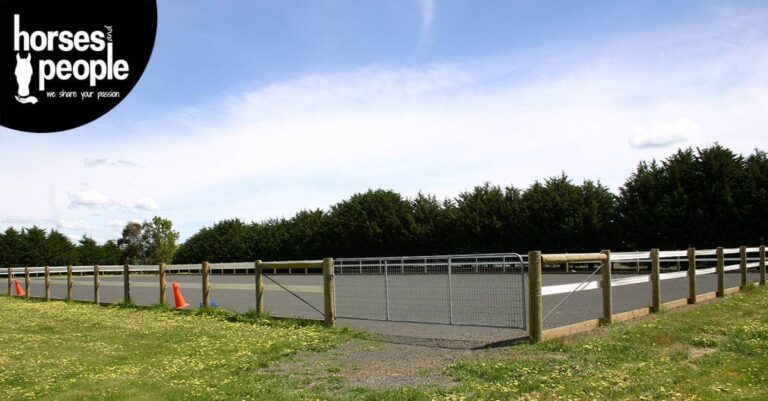


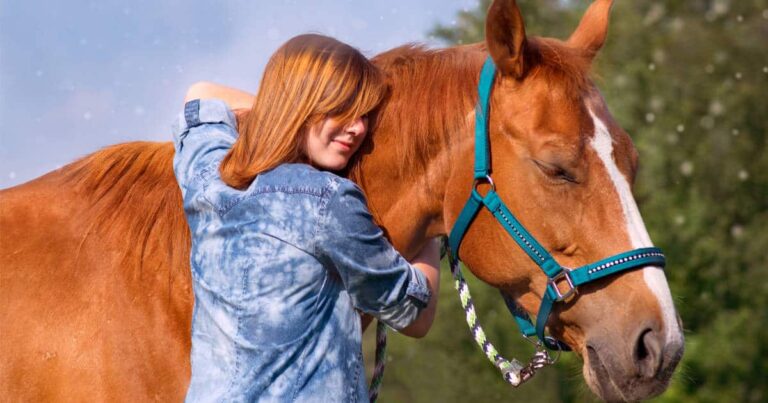
 We recommend: