fbpx
Home Blog Page 20

Racing Australia to ban stocking-style tongue ties

1

Tongue Ties

In what looks like an effort to standardise the materials used for tying horses’ tongues, Racing Australia have amended the rules, specifically banning nylon stockings and listing rubber bands and leather straps of a minimum 15mm, and lycra or neoprene ties of a minimum 50mm as the only materials permitted. The new rule comes into effect on April 1st.

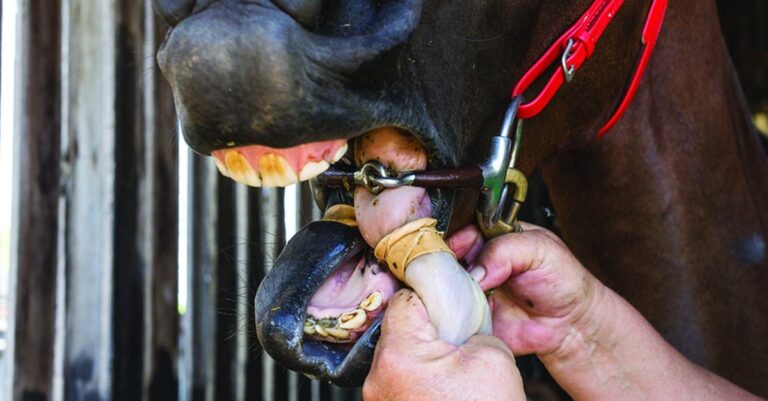
A tongue tie is a strap that is tightly wrapped around a horse’s tongue and then tied to the lower jaw to keep the tongue in place during horse racing and training.

They provide more control over a horse that, in an effort to relieve bit-induced pressure, retracts and/or gets the tongue over the bit. Despite weak evidence of their effectiveness, tying the tongue is a conservative treatment for upper airway obstruction, a common condition affecting racehorse performance.

It is estimated that over 20% of horses race with tongue ties and, to date, there is limited research to show they improve racing performance while the evidence they can have adverse welfare affects is mounting.

Tongue ties are only permitted under the rules of horse racing, polocrosse and polo, although some countries, like Germany, have already imposed a blanket ban on the practice.

Despite the rule change, racing regulations are still vague, failing to specify how tightly tongue ties can be applied and for how long.

Read our in-depth article on tongue ties.

Read Dr Robert Cook’s feature on improving respiratory function in performance horses.

Find out why horses retract and/or put their tongue over the bit.

The RSPCA has been calling for all Australian horse racing codes to address the widespread use of tongue ties highlighting serious and unnecessary animal welfare concerns. They argue that tongue ties restrict blood flow to the tongue, causing pain and distress, as well as difficulty swallowing and accommodating the bit.

The move by Racing Australia has surprised trainers and other stakeholders, who took to Twitter asking why the rule was introduced without consultation and what had prompted the change, especially since they are allowing lycra bands which are made of a similar material as stockings.

In Australia, many consider tongue ties an essential risk-management tool that can enhance performance and jockey safety and consider these benefits outweigh the costs to horse welfare.

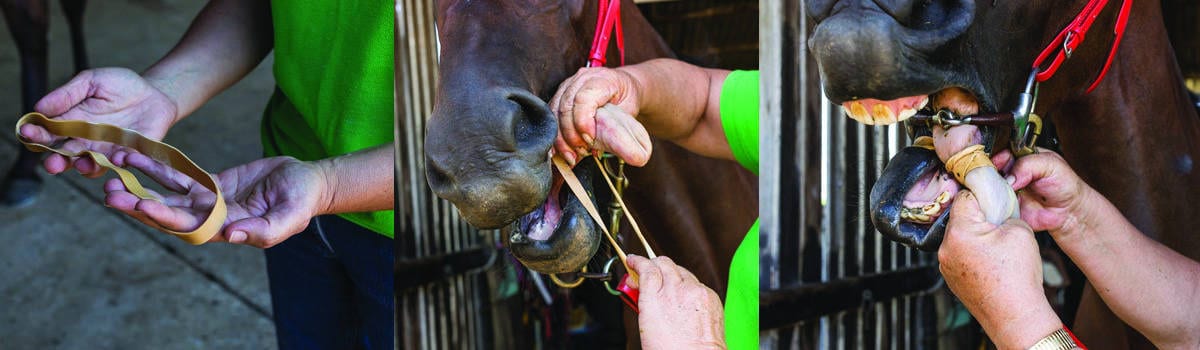
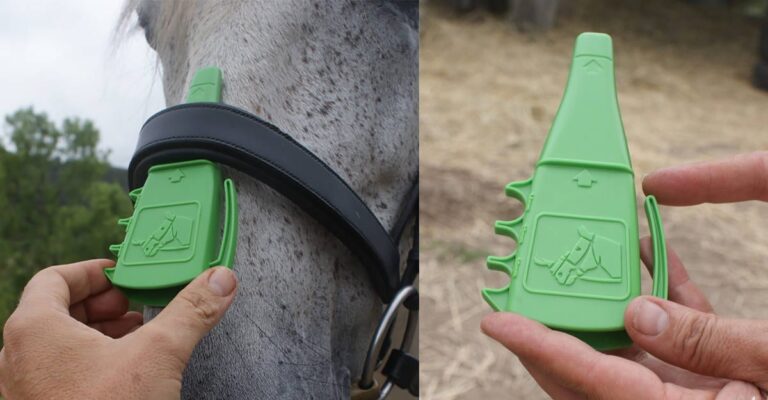
Fitting an elastic style tongue tie:

A series of images describing how a tongue tie is fitted.
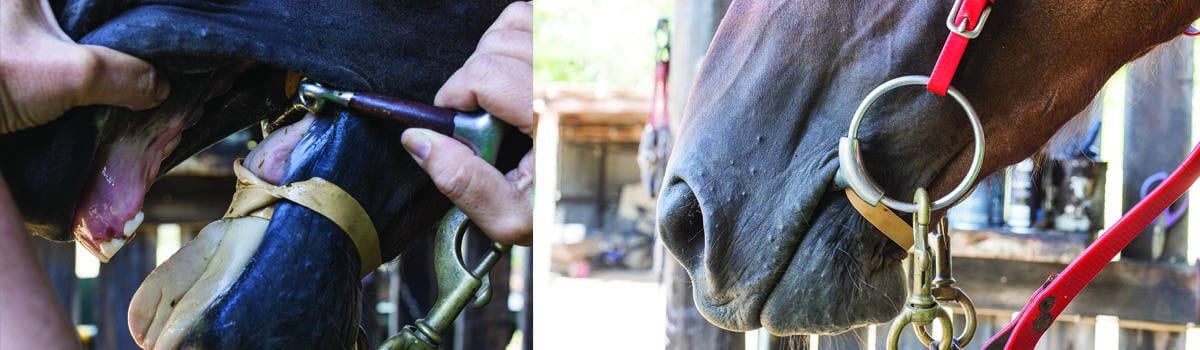
Fitting an elastic tongue tie is a messy and slippery affair. After firmly grabbing the tongue outside the mouth, the band is wrapped once or more times around the tongue then around the lower jaw, securing the tongue in place.
Fitting a tongue tie
Once fitted, tongue ties are fairly inconspicuous, but the tightness restricts the blood flow to the tongue, causing pain. It is also likely to make swallowing difficult, and by squeezing the tongue at the level of the bit’s mouthpiece, it reduces the cushioning effect the tongue has over the bars of the mouth, which may increase the risk of injury and bruising caused by bit pressure. Reports of injuries and lacerations to the tongue are not uncommon. Images Horses and People Magazine.

Horses recognise our disgust and they don’t like it!

Horses recognise disgust in humans.

Disgusted? Don’t show your horse.

In keeping with the findings by Léa Lansade’s team in France, a Japanese study has found that horses recognise when humans show facial and vocal expressions of disgust—and they change their behaviour because of it.

“Horses are sensitive to humans’ negative emotional cues, so we do not think that people should show negative emotions to horses carelessly in their daily life because horses may receive stress from human negative emotions,” said Ayaka Takimoto-Inose, PhD, of the Department of Behavioural Science in the Graduate School of Humanities and Human Sciences, and the Centre for Experimental Research in Social Sciences, both at Hokkaido University in Sapporo, Japan.

Takimoto-Inose and her colleagues tested 14 horses to observe their behaviours when a human expressed either happiness, neutrality, or disgust in reaction to a looking behind a black screen. The experimenters had set up black opaque barriers to give the horses the impression that something was hidden behind the barriers. Then one researcher would look behind the barrier and act happy (smiling and saying, “Wow!”), neutral (no reaction), or disgusted (crinkling the face and saying, “Eww!”).

They found that generally speaking, the horses followed the human’s gaze less frequently and for a shorter period of time when the human expressed disgust, Takimoto-Inose said. “Maybe they were avoiding the hidden object because the human found it disgusting, or maybe they were avoiding the human because she was making expressions of disgust; we don’t know,” she explained.

To the researchers’ surprise, however, the horses actually didn’t show any significant differences in behaviour between the happy and neutral expressions. This might have been because the horses lived in groups at pasture and spent little time with humans. “It’s possible they didn’t have enough exposure to humans to connect their facial and vocal expressions with positive emotions,” she said. Negative emotions might be more critical for them to recognize since they could indicate a threat, she added. “Dogs have also been shown to have difficulty distinguishing between neutral and positive facial expressions in humans, so it might not be as easy for animals as the negative emotions are,” Takimoto-Inose explained.

This test with the neutral expression was an important feature of their study compared to several other studies on horses’ reactions to human emotions, according to the researchers. “In other studies, the scientists didn’t compare horses’ responses in the two conditions (positive and negative) with those in the neutral condition,” Takimoto-Inose said. “We tested horses’ responses in all three conditions. This allowed us to show that horses can evaluate the human disgust emotion as a negative emotion absolutely (as opposed to just being “not happy”).”

The effects of human emotions on horses and other domestic animals represent an essential field of scientific study, she explained. “Domestic animals, especially dogs and horses, have built a close and cooperative relationship with humans, which suggests that social signals, such as emotional information, play important roles in how these animals live and interact with humans,” said Takimoto-Inose. “Therefore, how these animals perceive emotional signals and what roles the signals play are important questions to investigate.”

The study is published in Animals: Are Horses (Equus caballus) Sensitive to Human Emotional Cues? by Chihiro Baba, Masahito Kawai and Ayaka Takimoto-Inose. It is open access and can be read in full here.

The Challenges of Recognising Stress in Horses

Recognising stress in horses.

Can you recognize stress in a horse during a veterinary exam? Your observations might not be as accurate as you think. Physiological stress parameter measurements could give more reliable information about equine stress—but they have to be interpreted correctly, according to Scottish researchers.

“We can only have confidence in scientific results if the data is accurate, but that requires validation and calibration of the equipment,” said Gemma Pearson, BVMS, Cert. AVP (EM), MScR, MRCVS, Horse Trust funded PhD student at the University of Edinburgh’s Royal (Dick) School of Veterinary Studies, in Scotland.

In their recent study, Pearson and her fellow researchers noted “a lot of individual variation” among equine veterinarians, as well as equitation scientists and non-equine behaviour scientists, about how stressed horses are when they’re undergoing veterinary procedures.

“They don’t agree on which horses are stressed, their level of stress, or how to manage that stress,” Pearson said during her presentation at the 15th conference of the International Society for Equitation Science (ISES), held August 19-21 2019, in Guelph, Ontario, Canada.

Because of that disagreement, it makes sense to use objective measurements for evaluating physiological signs of stress, she said. Common parameters include salivary cortisol (SC), heart rate (HR), heart rate variability (HRV), and surface eye temperature (SET). However, the measurement equipment for these parameters is subject to multiple sources of error or misinterpretation, and can yield widely varying data.

“Salivary cortisol is a good parameter, but it mostly shows changes over time rather than immediate stress states,” said Pearson. Furthermore, horses can produce coloured saliva when given special licking treats like molasses-based “lollipops” for horses, for example. These treats help horses associate veterinary exams with a more positive experience, but the resulting saliva production would render their cortisol readings invalid. “The test for cortisol is an ELISA test, so it’s based on optical density,” she explained.

HRV—the variations in cardiac rhythm—can give useful data about immediate stress, she said. But this parameter is particularly hard to measure reliably, in part because the equipment is mostly designed for humans. “Many of the equine waves get misinterpreted as the wrong kinds of waves,” she said. Some commercial equipment is designed to “correct” these kinds of errors, but the algorithms they use are unclear. “I contacted one manufacturer to ask about their algorithms but did not receive an answer,” said Pearson. Trying to calibrate the commercial equipment to the “gold standard”—ECG—was a complex process that was essentially unsuccessful, she added. “It seems the best way to be sure that all the data is accurate is to use an ECG and then manually correct each reading.”

With heart rate monitors Horse hair can also affect readings, interfering with the electrical signal, causing a reduced signal, leading to misinterpretations, according to Pearson. Clipping can help, but horses aren’t always clipped for this purpose. Furthermore, horses can have irregular heart rates—called arrhythmias which can lead to inaccuracies, even though many are harmless. “Fortunately some arrhythmias can be easy to pick up with a basic stethoscope,” she said. “Others, however, but can be intermittent and easy to miss. It’s important to actually check each horse before carrying out measurements. You don’t want to waste time collecting data on these cases.” For other irregularities, though, the scientists would need to evaluate the readings to detect such problems.

While HRV might be unreliable using any equipment other than an ECG, commercial heart rate monitors can still provide useful readings about heart rate alone, Pearson added.

As for SET, it requires “a lot of money” for a good camera as well as detailed calibration, taking into consideration temperature and relative humidity. Focus is critical, Pearson explained. “You have to be at the correct angle and at the correct distance, and like all cameras, it takes a second to focus,” she said. “That’s really hard if you’ve got a horse that is stressed and is moving his head around. You just can’t get data from that.” Furthermore, any wind or even breeze can skew the results. “In certain climates that means you have to do it completely indoors or just forget about it.”

Although Pearson’s research has revealed “weaknesses” in the collection of scientific data for stress parameters in horses, that doesn’t mean previous research is invalidated, she said. “We don’t need to throw out these earlier studies,” she explained, pointing to worthwhile trends and comparisons overall that remain robust. “But the way forward needs to include careful study designs and good validation and calibration of any equipment used. Hopefully this will help people think about the research they’re doing.”

Click here to check out our article about how owners commonly fail to recognise signs of stress in horses.


Have you ever wondered how your horse compares to others?

Horse behaviour research.

The International Society for Equitation Science is proud to announce that Honorary Fellow, Professor Paul McGreevy has been awarded the Fulbright Future Scholarship, funded by The Kinghorn Foundation. The scholarship will allow Prof. McGreevy to spend three months at Colorado State University (CSU), promoting the Equine Behaviour Assessment Research Questionnaire (E-BARQ) project.

The E-BARQ Project

Since ancient times, horse behaviour, and the bond between horses and humans, has been a source of intrigue and fascination.

The horse-lore that has accumulated over the centuries is a rich mix of both useful practice (approaching horses from their left side, making them slightly less reactive) and unsubstantiated myth, such as the one that chestnut horses are especially difficult to deal with.

This is why Prof. McGreevy and his team at the University of Sydney have launched the Equine Behavior Assessment and Research Questionnaire (E-BARQ), a global database of horse behaviour. The study explores how horse training and management interact with behaviour. It will reveal invaluable information on how our training and management affects behaviour and how, in turn, behaviour affects horse welfare. Beyond the immediate and direct horse behaviour research outcomes, E-BARQ also offers great benefits to horse owners, riders and trainers.

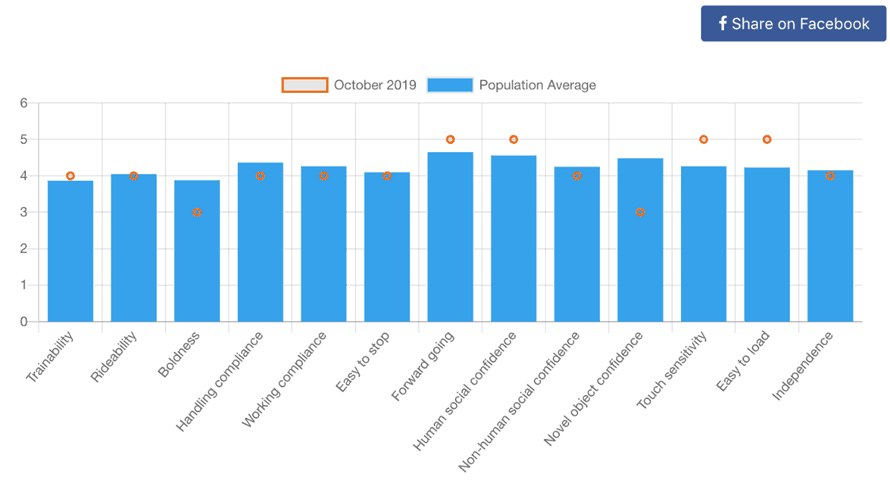
On completion of the questionnaire, contributors receive a graph that compares their horse with 1000’s of other horses across various attributes. They also receive a private dashboard where they can log each of their horses and view their E-BARQ results. This innovative tool is completely free of charge.

Horse owners can upload photographs to a custom-built app, recording their horse’s progress in training over time. For the first time, they’ll also be able to compare their horse’s behaviour with that of other horses. The “share-&-compare” graphs will reveal attributes such as trainability, rideability, handling, compliance, boldness, and human social confidence.

E-BARQ’s main benefits:

  1. E-BARQ is open to all horse owners/handlers, regardless of their horses’ breed, height or age, and provides users with a free dashboard to store their horses’ results and track their progress.
  2. E-BARQ participants can compare their horses’ behaviour to others around the world, giving them a useful benchmark.
  3. E-BARQ participants can monitor their horse’s progress over time as they can return to their E-BARQ dashboard every 6 months and re-take the questionnaire, updating their scores.
  4. E-BARQ participants will obtain a new insight into which areas their horses are performing well in and where they may require help.
  5. E-BARQ participants can monitor the consequences of different training methods over time, so E-BARQ data can be a powerful tool for advancing horse welfare. E-BARQ data will also inform evidence-based judgements on the ethics and sustainability of horse sports.
  6. E-BARQ will reveal the true impact of ancient traditions and modern trends. This can be used by everyone, from the general riding public to equine scientists and veterinarians.
  7. This project builds on a similar project for dogs (C-BARQ), which has collected information on over 85,000 dogs and been used in more than 70 research studies that have revealed behavioural differences that relate to head and body shape and the astonishing effect of de-sexing on behaviour. Without doubt, C-BARQ has revolutionised our understanding of dog behaviour.

After 8 years of planning, we are very excited about E-BARQ. It is a not-for-profit project that allows the global horse-folk community to donate their observational data to the University of Sydney and gain useful benefits in return.

You can access E-BARQ here: https://e-barq.com/ 

You can access an E-BARQ how-to video here: https://www.youtube.com/watch?v=TBKry6Wz2gc

The questionnaire and app will expose how training and management influences horse behaviour, and vice versa. They will reveal how breeds differ in responses and illuminate breed-typical personality types, how male and female horses differ, how horses used in different disciplines (such as show-jumping versus dressage) differ in their behaviour and how horse behaviour changes with maturation and training.

E-BARQ. Upon completion of the questionnaire, contributors receive a graph that compares their horse with 1000's of other horses across various different categories.
On completion of the questionnaire, E-BARQ contributors receive a graph that compares their horse with 1000’s of other horses across various different categories.

Information provided by E-BARQ could potentially help buyers identify warning signs of dangerous behaviours and make more informed choices. E-BARQ also holds great promise in tracking, welfare monitoring, promoting early intervention and the education of new owners in the areas of horse rescue and re-homing.

The current focus of McGreevy group’s equine work is firmly on E-BARQ (launched late last year) and horseslogbook (to be launched later this year). Both of these data collection systems have University of Sydney ethics committee approval. They lend themselves to student data collection and to citizen science programs.

Prof. McGreevy will use his time in Colorado to ensure that US horses and their humans obtain maximal benefit from the EBARQ initiative. He will be based in the Equine Sciences Program at Fort Collins, working with Dr Jerry Black and Sarah Matlock who are building the program’s horse behaviour research capacity in equine behaviour and welfare. The trip to the US will allow Prof. McGreevy and the CSU team to explore interactions between management regimes and observed behaviour. As an enthusiastic teacher, Prof. McGreevy is particularly excited about the prospect of working with US students to appreciate the potential of E-BARQ.

For further information, please do not hesitate to contact the E-BARQ research team at info@e-barq.com and be sure to complete an E-BARQ for your horse at https://e-barq.com/. To find out more about Fulbright Australia, click here: https://www.fulbright.org.au/.

Save the date!

The 16th International Society for Equitation Science Conference will be held on August 11-14, 2020 at Hartpury University, United Kingdom under the theme: “Succeed with science: performance, practice and positive wellbeing”

For more information click here

War on Waste: Horse Feedbags

War on waste horse feedbags.

Material:

Feedbags are (generally) made from woven polypropylene.

Abbreviated as PP, it is a recyclable thermoplastic polymer widely used in many different products. PP is rugged and resistant to different chemical solvents, acids, and bases.

Reusable:

Yes! Used, empty feedbags can be turned into a number of practical items. Our favourite ideas are making them into reusable shopping bags and growing potatoes! But search online for some awesome inspiration.

Recyclable:

Yes! polypropylene is fully recyclable. The bags often display a number 5 and the initials PP in the recycle symbol.

Recyclable in Australia?

Yes, although collection systems are a major challenge, particularly for large volumes of bags, and it is likely that existing recycling plants would not cope with the number of bags consumed by the entire horse industry and/or livestock producers.

Collection system?

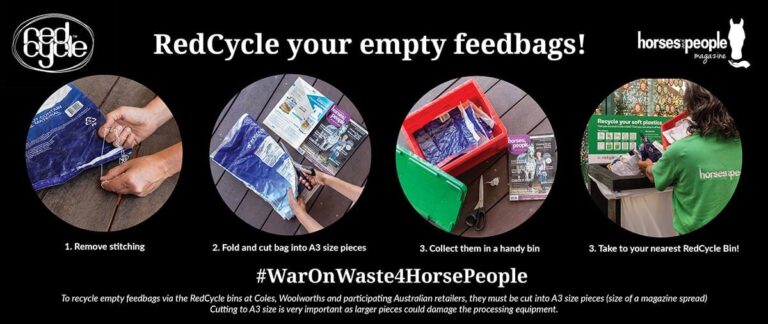
Yes! Woven polypropylene is one of the materials recovered through the RedCycle bins (at Coles and Woolworths supermarkets and other retailers) – but in order to be accepted and processed, the bags must be cut into pieces no bigger than A3 (the size of a Horses and People magazine spread).

Cutting to size is important as bigger pieces can jam the recycling machinery causing expensive damage.

If you deal with large volumes of feedbags the collection options become quite limited, but you can ask your local council and/or check the Business Recycling website –  or Recycling Near You –  to find alternative removal solutions.

Creating jobs in Australia?

Yes! Through RedCycle, the product stewardship scheme that has partnered with some of Australia’s leading food brands and major stores and supermarkets to provide collection points throughout Australia.

RedCycle is a working example of plastic product stewardship, and at the time of writing, it seems to be working successfully in Australia. It’s a circular economy in action.

RedCycle has teamed up with a large number of well-known food brands to establish collection points for soft ‘scrunchable’ plastics at supermarkets throughout Australia. Basically if you can scrunch the plastic into a ball, you can redcycle it, although it pays to have a look on their website. Everyone pays a voluntary levy to cover the responsible collection and recycling of packaging.

And one of those materials they can recover is the quality woven polypropylene film that is used to package most horse feeds. The materials they recover are delivered to Australian manufacturing plants for recycling into a variety of secondary products (but they can’t be turned into their former selves).

When you are done, buy their recycled form!

The materials recovered through RedCycle are processed and recycled by a small number of Australian manufacturing plants, such as:

Replas that produces a wide range of timber-alternative products – like fence posts, garden furniture and decking boards.

Downer (also known as Close the Loop) use the soft plastic as a component of Reconophalt, an alternative to asphalt that is made almost entirely from recycled materials, including soft plastics.

Another Australian manufacturer that takes RedCycled products is Plastic Forests who use it to make a variety of useful products like the Green Monster garden edging – check it out! – and Mini Wheel Stops.

And remember to take the time to cut your bags into A3 size pieces, otherwise the material will be rejected at some stage in the process and end up in landfill. Just what you were trying to avoid…

Remember: “If it can’t be reduced, reused, repaired, rebuilt, refurbished, refinished, resold, recycled or composted, then it should be restricted, redesigned or removed from production” – Pete Seeger.

Read more about the circular economy and keeping waste out of landfill here.


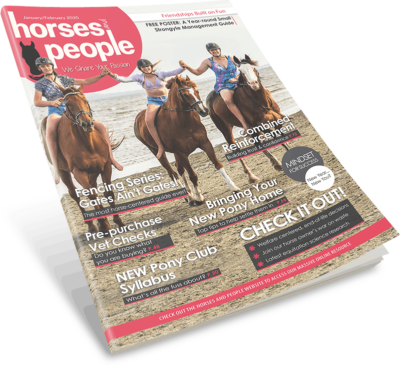
This article was published in the January-February 2020 Horses and People Magazine.

War on Waste for Horse Owners: A Circular Economy

War on Waste for horse owners.

The planet is drowning in plastic and, while a lot could be done at all levels to rein the tide in, right now, it seems that the plastics manufacturing industries want to lock us into uncontrolled plastic production for decades to come. Everything we buy is wrapped in one or more layers of plastic!

Horse people, like everyone else, are end consumers of plastics so is there anything we can do to reduce the amount of plastic that is sent to landfill?  And can we contribute to a more sustainable future?

The circular economy

“If it can’t be reduced, reused, repaired, rebuilt, refurbished, refinished, resold, recycled or composted, then it should be restricted, redesigned or removed from production” say the lyrics of the song by Pete Seeger. And when I first dreamed that we should offer readers a range of constructive ways to reduce, reuse and recycle plastic to stop it going to landfill, I was relying on the premise that virtually all plastics can be recycled – that is, they can (at least in theory) be ‘melted down’ and re-birthed into new plastic products – this is what is known as a circular economy.

There is a lot of information on the circular economy. And in my research, I came across excellent government funded reports (from Australia and around the world) that agree we all need to urgently transition into a circular economy.

Essentially, the objective of a circular economy is to keep resources in use for as long as possible, extract the maximum value from them whilst in use, then recover and regenerate products and materials at the end of each service life, in doing so, it reduces the consumption of virgin materials and the generation of waste.

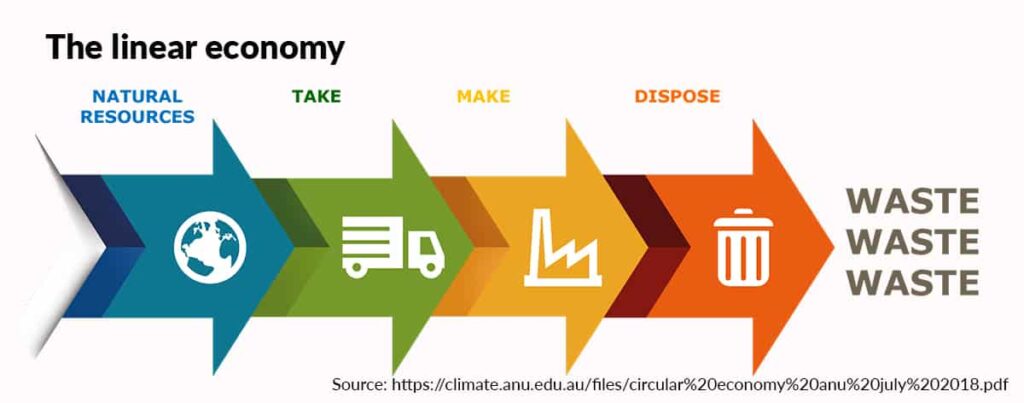
In Australia, our use of resources generally exists in what can be called a linear economy, where we take resources to make into products that we then use and dispose of as ‘waste’.

Yet circular economies already exist for some materials – a good example being steel. In the US, for example, the biggest steel companies are based on recycled steel which in 2013, produced more than 60% of the total raw steel in the country.

Interestingly, plastics are currently much more valuable by weight than steel. They are even more versatile than steel so the experts say there are no real reasons why the plastics industry could not follow the lead already set by steel manufacturers.

The main obstacle to transitioning towards a circular economy is motivation. At a local and federal level, government leaders cannot see past a possible increase in waste recovery and management costs. This is despite the economic opportunities such as greater employment in Australia.

In a submission to the Senate inquiry into the waste and recycling industry, the Waste Management Association of Australia states that ‘for every 10,000 tonnes of waste recycled within Australia, 9.2 jobs are created’. South Australian data has also revealed that some 25,000 jobs would be created over five years if waste was recycled and reused, rather than dumped or exported.

There are two primary business models under the circular economy:
Those that foster reuse and extend the life of a product through repair, re-manufacture, upgrades and retrofits; and,
Those that turn old goods at the end of their service life into as-new resources by recycling the materials they contain.
They both rely on responsible use by everyone involved in producing, selling, using and recycling of the product/material at the end of its useful life.

In the past, Australia was simply exporting all recyclable waste (metals, paper and cardboard) to a number of Asian countries, with China taking almost 4.5 mega tonnes in 2016-17. Their decision to ban the import of foreign waste from January 2018 has had a direct impact on recycling and waste management practices in Australia, leading to many recyclables being buried in landfills throughout most states.

But, for all the doom and gloom, there is a system that is working well in Australia and it is championed by a ‘Product Stewardship’ scheme.


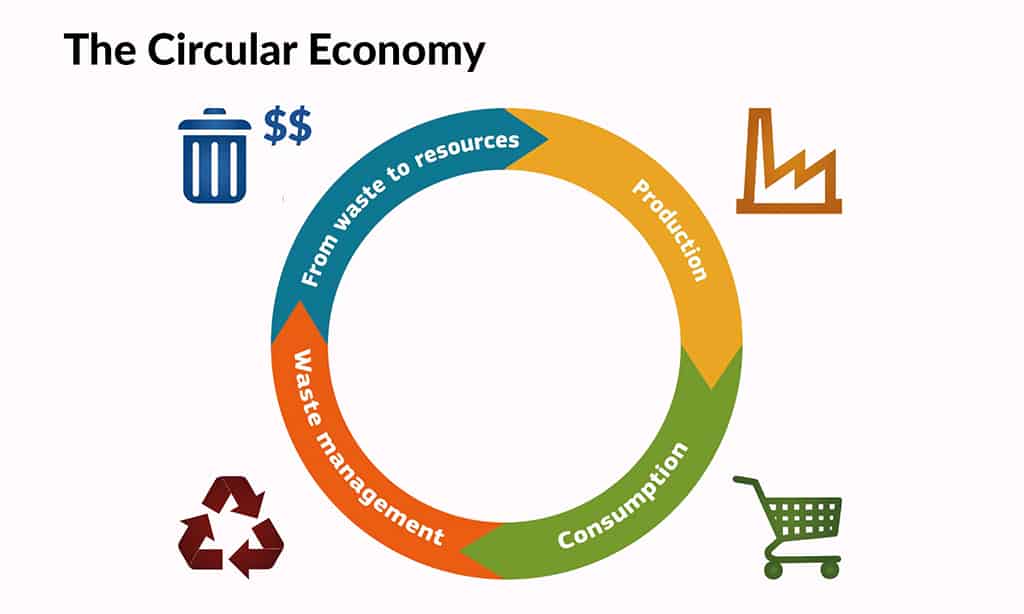
The linear economy takes natural resources and produces waste. War on waste for horse owners
The linear economy uses natural resources to make new products that are disposable and end up as waste. But waste is a valuable resource!
The circular economy keeps resources in use for as long as possible, extract the maximum value from them whilst in use, then recover and regenerate products and materials at the end of each service life. War on waste for horse owners
The circular economy aims to keep resources in use for as long as possible, to extract the maximum value from them whilst in use, then recover and regenerate products and materials at the end of each service life.

Product stewardship schemes

Product stewardship is a way of managing the impacts of certain products and materials through the agreement that everyone involved in producing, selling, using and disposing of products has a shared responsibility to ensure that those products or materials are managed in a way that reduces their negative impact – throughout their lifecycle, on the environment and on health and safety.

RedCycle is a working example of plastic product stewardship, and at the time of writing, it seems to be working successfully in Australia.

RedCycle has teamed up with a large number of well-known food brands to establish collection points for soft ‘scrunchable’ plastics at supermarkets throughout Australia. Everyone pays a voluntary levy to cover the responsible collection and recycling of packaging.

And one of those materials they can recover is the quality woven polypropylene film that is used to package most horse feeds (read more about this here).

The materials they recover are delivered to Australian manufacturing plants for recycling into a variety of secondary products (but they can’t be turned into their former selves).

Buy quality and reuse! Good quality plastic has many advantages. Products made with quality plastic can be repaired and reused for other purposes. Good quality plastic is also more easily recycled. Cheap plastic becomes brittle, breaks up into micro plastics that end up in landfill or washed away into waterways.
So, if you love the convenience of plastic products, choose trusted brands and products made with quality plastic, then find ways to reuse and/or recycle.

You can check the range of products made by companies like Replas (who sell a wide variety of timber-like products), as well as Downer or Close the Loop, who use the soft plastic to build roads made completely from recycled materials.

And while this system is an example of success, there are still many challenges.

I spoke with David Hodges, Managing Director of Plastic Forests, an Australian owned and operated business manufacturing products such as garden edging and wheel stops from soft plastics recovered by RedCycle.

“The biggest thing we are lacking is people buying recycled products” he says. “We can have a farmer send us three tonnes of plastic mulching film but they don’t buy three tonnes of recycled plastic products in return.”

He explains that some products are made more cheaply overseas using virgin plastic and there is an urgent need to establish more stewardship programs and other incentives to make Australian recycled products more competitive in the market.

“I can be the recycling hero and take all the [empty feedbags] from the horse industry” says Hodges, “but all the time horse people don’t buy Australian made recycled products in return, [because the cost of collection and processing makes them more expensive than the imported ones], we are losing the battle.

“We’re saving landfills, we’re creating jobs, there’s an economic benefit doing this in Australia” he continues. “But we are competing against imported products and this is why we don’t have a manufacturing and recycling industry in Australia.”

Over to you…

It seems the so-called ‘war on waste’ will have to be led by us – the end users – because plastic producers (oil companies) are planning to drown us in it. As demand for gasoline and diesel fuels wanes (think electric vehicles), fossil fuel companies are set to increase the production of petrochemicals (i.e., plastics).

Click here for how you can contribute to the circular economy with your empty feedbags

How does the circular economy work?

  • You encourage the design and manufacture products that are made from recycled materials (rather than virgin resources), that can be repaired and/or recycled back into the system;
  • You establish repair centres as part of this design and manufacture process, so that items can be repaired;
  • You establish collection systems so that items unable to be repaired are collected, rather than disposed of in landfill;
  • You ensure that there is adequate and appropriate recycling facility infrastructure in place, taking into account location and sorting capacity; and
  • You encourage manufacturers to purchase recycled materials, thereby closing the production loop.

This article appeared in the January-February 2020 edition of Horses and People Magazine.

Future Proofing Pony Club with an Evidence Base

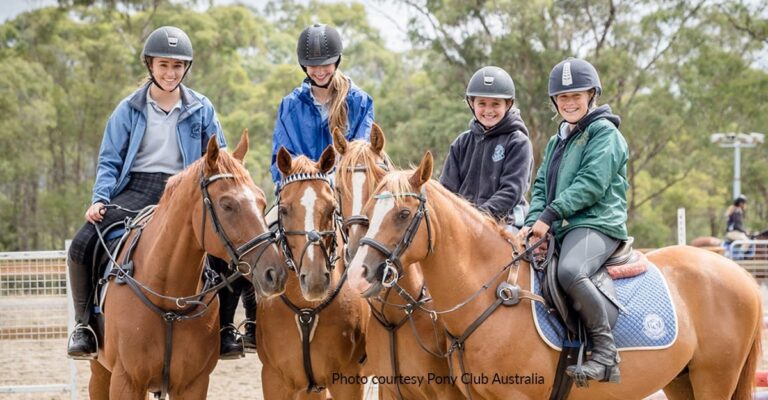
Pony Club Australia (PCA) recently celebrated its 80th birthday, but with the release of a new and updated syllabus that incorporates the latest, evidence-based knowledge in equine welfare and equitation, the institution is in no danger of becoming old fashioned or irrelevant.

Future Proofing Pony Club. With over 23,000 riders and 40,000  members (including volunteers and coaches) and 850 clubs, Pony Club is one of Australia’s largest youth sporting bodies. It is also unique, because it doesn’t only focus on the Olympic disciplines of dressage, show jumping and eventing, but encompasses a diversity of participants from disciplines such as mounted games, tent pegging and mounted archery.

Pony Club’s primary aim is to produce students who are competent across a broad range of equestrian disciplines and who have a thorough understanding of horse management and care. 

This approach has been extremely successful – ask any of Australia’s top riders where they began riding and there’s a very good chance they will say Pony Club.

Safety first

Dr Catherine Ainsworth, CEO of Pony Club Australia is determined to ensure that Pony Club maintains its pivotal role in shaping the future of equestrian endeavour in Australia and she has identified improving rider safety as one of the key areas of focus for the future.

Unfortunately, 25% of all fatalities in children’s sport are caused by activities involving horses and the recent inquest into the tragic deaths of Olivia Inglis and Caitlyn Fischer, who both died while competing in equestrian events, has foregrounded the need for all equestrian bodies to work tirelessly to improve safety standards.

Dr Ainsworth and her board are leading from the front in the quest to improve safety with a world first – the introduction of an entirely new syllabus based on Equitation Science.

Independent, peer reviewed studies have shown that implementing an Equitation Science based training program is the most effective way to date of maximising rider safety and horse welfare.

The new syllabus has been written to both honour the contributions and knowledge of the past eighty years, while embracing the improvements that science brings, not only to safety, but also to training effectiveness and horse welfare.

Dr Ainsworth, explaining the board’s decision to implement an Equitation Science based syllabus commented, “Equitation Science provides an understanding of the way that horses perceive the world, think, behave and react. It is the kindest way to train horses and the safest way to train riders.”

Equitation Science is a relatively new scientific discipline that aims to explain and codify the interactions of horses and people. Emerging in the late 20th century, it is now one of the fastest growing sciences and is practiced all around the world.

By relying on scientific evidence Equitation Science can identify which training techniques are ineffective or painful, it can improve the relationship between horse and rider by refining the tools of communication used and it can help to solve common training problems with the use of learning theory.

Equitation Science is multi disciplinary and incorporates knowledge from a wide range of fields including veterinary medicine, psychology, ethology, zoology and engineering.

PCA board member, Dr Andrew McLean, has reviewed and helped shape the direction of the new syllabus. Dr McLean is an internationally renowned clinician, lecturer and horse trainer, author of eight books and over 55 published papers.

“Equitation Science is not a method,” he points out. “It is a scientifically validated body of knowledge that gives us an understanding of the ways in which horses learn and what they need to make their lives worth living.

“When a student has an understanding of Equitation Science, they can objectively assess any training system or method for efficiency, safety and welfare.

In this way, Equitation Science doesn’t exclude any training methods that adhere to the scientifically correct principles of learning – it provides a framework that can be applied by riders of all disciplines and skill levels.”

Welfare and social licence to operate

As well as safety, Equitation Science can also assist horse owners in making good decisions regarding welfare. This is not only good news for horses but also for the horse industry as a whole, especially in the light of increasing discussions regarding the industry’s social licence to operate. In short, social licence to operate is the public’s ongoing acceptance of practices within the industry.

The objectivity that Equitation Science brings can identify what is best practice for welfare and to also help manage the public’s perceptions of welfare.

Dr Ainsworth, pointed out that education is an effective way to improve welfare.

“Pony Club Australia is the foundation of equestrian sport,” she said. “We recognise the critical role we play in education, and the role of education in promoting horse welfare.” In the new syllabus students will learn how to manage their horses in ways that are informed by current research and are consistent with the community’s expectations of animal welfare.

As an example, older students will learn about the Five Domains model of animal welfare assessment and monitoring, a tool that is taught at university level and used by animal industries as a way of assessing the impact of our interactions and practices on an animal’s welfare.

The Five Domains are: nutrition, environment, health, behaviour and human interaction, and mental state.

This approach allows a distinction to be made between the physiological aspects of an animal’s welfare and the mental state that results from these.

It is now understood that even if the animal has excellent physical care (adequate food, shelter, water, vet care etc.), if their needs for social interaction, clear communication with caregivers (good training), movement and foraging are not met, then they will not be experiencing good welfare.

In an era of increasing public scrutiny, this kind of informed and objective approach will become vital when addressing the horse industry’s social license to operate.

Specific changes to the syllabus

The PCA education system is based on a series of certificates, structured to suit students at all stages of their education. The first assessment is the E certificate, which is for students just beginning their horsemanship journey.

The highest level a student can achieve is the A certificate which demands a high level of riding ability and provides an in depth knowledge of horse management that includes first aid and health care, lunging, saddlery and transport.

The A certificate is held in extremely high esteem in the equestrian world and is an excellent preparation for both high level competition and a career in the horse industry. However, PCA recognises that not all students are focused on a career with horses and so it is possible to still enjoy all the benefits of Pony Club without necessarily studying for the higher level certificates.

In the new syllabus, students will learn about the horse’s ethology. This is the study of an animal’s behaviour under natural conditions.

At E certificate level the ethology is simplified and includes a lesson on the horse’s ability to sleep standing up and his very sensitive hearing and sight.

By the time the students complete their A certificate they will have learned a great deal more – in fact they will know more about horse behaviour than most other professionals in the horse industry.

While in the new syllabus students will still learn (as they did in the previous syllabus) to ride and handle the horse safely, the new syllabus includes more formalised handling on the ground. This ground work begins simply with basic control and develops, as the student gains more experience, to step back, park, head down and leg yield. The use of voice commands is also introduced.

It is in this part of the new syllabus that students will learn about pressure-release and reward, with many practical exercises on effective ways to reward horses during training sessions.

The ground work component of the syllabus provides a blueprint for correct training under saddle and is an important contribution to improving safety, especially since many serious horse related accidents occur while the horse is being handled on the ground.

The theory of learning is included in the new syllabus even as early as the E certificate, although in a very simple form and in easy to understand language.

By the time the students are working towards their A Certificate they will have an understanding of learning theory at least as in depth as students who study foundation units of behaviour at university level. In the early certificates the language used to describe the forms of learning is very simple (for example, positive reinforcement is referred to as reward) but this develops as the students progress through the levels.

The learning in the new syllabus is very hands-on and PCA coaches have been provided with lesson plans and other ideas on ways to incorporate it into their practical lessons.

Another aspect of the new syllabus worthy of attention is the introduction of a whip and spur license. This means that students will need to explain to their coach the correct use of the whip and/or spurs and if, at any time, the coach believes that the student’s use is inappropriate, the license can be revoked. This allows coaches to more thoroughly safeguard welfare while encouraging students to think about how they use tools that can be highly punitive when they are used incorrectly.

Much of the new syllabus has been based around the ten training principles that have been developed by the International Society for Equitation Science and identify best practice when training horses. These are:

  1. Always remember that the horse’s brain is different to ours. While sometimes it might seem as though your horse is being deliberately naughty, it is important to see disobedience as a failure of training not a failure of the horse.
  2. Understand how training works, particularly pressure – release and reward training.
  3. Make sure that every aid you use is distinct and different so there is no confusion for the horse. For example, your turn aids should be quite different from your stop aid.
  4. Have realistic expectations when first training your horse. Reward small improvements.
  5. Only ever give one aid at a time. Horses can’t do two things at once so don’t ask them to.
  6. Each aid should only produce one response. So, for example, pressure on both reins should only ever be used for slowing/stopping, it shouldn’t be used to ask the horse to lower his head.
  7. Be consistent all of the time. Remember that one of your main goals when training is to create stable or reliable habits.
  8. Always focus on self carriage. This means your horse should maintain the speed you want without constantly being asked to either slow down or speed up. You should be able to control his speed with very light aids.
  9. Learn what the flight response looks like and how to prevent it.
  10. Remember that your ultimate goal is to have a calm and obedient horse at all times.

The new syllabus in action

The new syllabus has already been rolled out across most of Australia with workshops being conducted for Pony Club coaches in each state. The certificate manuals are also available for purchase online. Coaches will have other resources such as coaching manuals and a YouTube channel that will assist them in implementing the new syllabus.

While the change may seem daunting to some, when it is examined closely, most coaches will see that much of the new syllabus is familiar to them. There is, however, some material that coaches will have to engage with, as changes have been made to both improve the safety of young riders and safeguard the welfare of horses – thus helping to ensure the future of horse sports in Australia. PCA is confident that their dedicated coaches will rise to the challenge.

This article was published in Horses and People January-February 2020 magazine.

The Standardbred’s Track-to-Hack Journey Part 10 (Final): The Training Principles

The Standardbred’s Track-to-Hack Journey Part 10 (Final): The Training Principles

Welcome to the last article in the Unharnessed Potential series, an education and awareness campaign to promote the re-training and re-homing of Standardbreds when they retire from a racing career. 

Throughout this series, Alistair McLean has documented the entire re-training process from track to hack. The articles have covered everything, from settling-in to the new training environment to backing, teaching the pacer to trot and canter, consolidating and improving the responses, strengthening and further education all the way to the first outings. 

This article is a summary of Andy’s re-training journey against the backdrop of the First Principles of Horse Training.

A summary of Andy’s re-training 

When you compare Andy now to when he first arrived at the Australian Equine Behaviour Centre, it is easy to see that he has had 10 months of training. It is, nevertheless, hard for me to believe that he has been with us for 10 months!

His current weight of 515 kgs shows how much his shape has changed and means he has put on almost 65 kgs since his arrival. However, the biggest difference is in his nature.

While he will always be a slightly timid and nervy horse, you can clearly see that his behaviour in certain situations has changed. The days of him getting a fright at the slightest of noises are gone as a result of training and consolidating responses in those situations. This has produced a more calm and confident horse just 10 months later.

Some training tasks, such as a basic trot, took a lot longer than expected to train, but he has also exceeded my expectations in some areas, such as his lateral work. Since fine-tuning his lateral work in trot, his canter, a gait that does not come naturally to Andy or any Standardbred pacer for that matter, has equally improved.

The canter, not surprisingly, has been the most challenging part of his training and, although he is now beginning to canter correctly, he still needs time to develop physically and there is still a way to go before it is consolidated enough to work in different environments.

This will be the real test at Equitana. All of his training at AEBC has never been truly tested in an environment such as Equitana, so it will be interesting to see how he copes. I am not expecting him to be perfect, after all he is still only a five-year-old and all of his outings except for one have been from his adrenalised harness racing days. It will certainly be interesting to see what an environment like this does to his normally consolidated responses. Either way, I’m sure I have trained the tools well enough to remind him of the rules.

The Training (and Re-Training) Principles

In this last article, I will explain the training principles that I have followed whilst educating Andy. These principles must be upheld for the rest of Andy’s training, regardless of the disciplines his subsequent new owner and rider wishes to pursue. Although these principles may not have been followed during Andy’s harness racing career, they are now well and truly a part of his re-training. If these training principles are not followed, we run the risk of him turning back into the horse he was 10 months ago.

The Training Principles were one of the outcomes of my father’s, Dr Andrew McLean’s, PhD thesis and were presented for the first time at the satellite meeting of the 2003 congress of the International Society of Applied Ethology held in Abano-terme, Italy. They are described in more detail in the book ‘Academic Horse Training’ by Andrew and Manuela McLean. Here, I present excerpts from the book and how they have related to Andy’s re-training.

The eight training principles: 

Regardless of whether a horse is used for sport, work or leisure, certain solid training principles arise from an understanding of his natural behaviour, mental ability and learning capacities. These principles determine success, part success or failure in training. They can be encapsulated into eight key principles and these should be adhered to at all times.

1. Appreciate the similarities and differences in mental abilities between horses and humans 

Horses and humans share a long and mutually dependent history, they are as much a part of our heritage as we are of theirs. In our interactions with the horse, it is understandable that we focus on the qualities that our species share and the similarities between us. However, failing to acknowledge and understand the fundamental differences in the equine and human brain can lead to problems.

Like us, the horse is highly social and being isolated from others can be extremely stressful for both species. We also share an ability to learn rapidly via trial-and-error learning, classical conditioning and habituation. However, unlike us, the horse cannot voluntarily recall his memories, neither can he imagine, develop abstract ideas or reconstruct events, and it is unlikely that he can think to the future. The horse’s memory is inextricably linked to his senses and must be triggered by a sight, sound or physical cue. Trainers should be careful how they describe horses because so much human language implies higher levels of reasoning that have negative consequences for the horse.

2. Train and always maintain only one consistent response from its associated aid(s) 

It makes sense to recognise that confusion can occur when a single aid has more than one response associated with it.

For example, many riders use their reins to change the horse’s outline or head carriage. Yet, the earliest lessons the horse should learn are that pressure from the two reins means to slow. To train something different is highly confusing – it’s like telling a child that the letter ‘A’ doesn’t always mean ‘A’ anymore, it can mean something different.

Pressure on two reins should always mean slowing, so if you want to train head-carriage using the reins, you must insist on slowing the horse simultaneously, so that roundness of the outline is a shaped component of the stop response. All basic responses must remain intact.

Similarily, when riders attempt to bend the horse’s neck using a single rein, the horse’s turn response is disconnected to some extent. The horse no longer follows the line dictated by the direct rein, but instead learns to ignore it and drift out. Soon after, the only remedy is to use other aids, such as legs, to hold the horse together while he is turning. This represents greater complexity of aids for the horse to interpret and loss of self-carriage.

In Andy’s particular case and probably for a lot of other horses out there, he often shortens his neck instead of slowing his legs when I squeeze the reins. This is a confusion that comes from his early training and often results in him becoming tense. This highlights the necessity to keep his stop response in tune but, more importantly, to separate the aid for ‘roundness’, which should be trained through lateral flexion.

3. Reduce pressure required to elicit responses to very light versions of pressure before using positive reinforcement and before adding other cues 

Negative reinforcement (also known as pressure/release) is the most effective way to train reliable behaviours in the horse.

When negative reinforcement is applied correctly, the motivating pressures will reduce to light and subtle cues. When the horse responds from light aids (which occurs after obedience level) positive reinforcement should be incorporated (first continuously then occasionally) to maintain responses, and to help develop some rapport between horse and human. 

It is important to remember that any pressures used (leg, rein, whip-tap, etc.) should be maintained or escalated over a short time-frame until the motivating level is reached and the horse responds. Pressure must then be reduced. The pressure/release scenario should be of no more than 3 seconds duration so that the horse is able to learn the light aid effectively. Timing and reinforcement problems account for almost all behaviour problems.

The use of pressure/release and then the aids themselves should coincide with the steps (walk and trot) and the strides (canter and gallop) of the horse to maintain consistency, to avoid confusion and to develop habits.

4. Shape the quality of responses progressively 

All complex animal training and, therefore, equestrian disciplines involve shaping responses toward the optimal response.

Trainers should not expect perfect responses to emerge from the onset of training, but should gradually shape the horse’s responses by ‘raising the bar’ of their expectations over time. Each stage of shaping should consist of a precise response that is identifiable for both horse and trainer in order to be repeated and reach consolidation.

Developing steps, then strides, then the gait itself fulfils this requirement. The horse’s head and neck is symptomatic of problems with the training of the legs, so it will be seen that when the legs are properly trained, head and neck problems tend to disappear. If this does not occur because of conformation or for habitual reasons, train the head and neck later, and as part of the shaping of the stop, go and turn responses. A workable and universal shaping scale is essential for acceptable modern horse training in every discipline.

The shaping of Andy’s canter was a long process. hHowever, it was important to only ask for small improvements. The incorrect shaping of Andy’s canter could have led to problematic behaviours that may have taken longer to correct than the time it took to shape Andy’s canter the proper way.

5. Never ask for opposing responses at the same time 

Horses cannot simultaneously accelerate and decelerate, so using leg aids and rein aids at the same time can cause:

  • Losses of responding,
  • Acute stress resulting in raised muscle tension and fearful behaviours, 
  • Conflict behaviours, such as bucking, bolting, shying and rearing, 
  • Chronic stress resulting in physiological and immunological deterioration, 
  • Learned helplessness where the horse tolerates pain with severe welfare compromises, or 
  • Wastage where the horse is removed from the population (i.e. sent to the abattoirs). 

When two pressures compete for the horse’s attention, overshadowing occurs. In the ridden horse, this manifests as habituation (heaviness) to the bit and to the rider’s legs. Some trainers incorrectly interpret this as a loss of ‘willingness to please’, laziness, sourness, resistance and evasion.

Remember the old French maxim (which holds true to this day): ‘Hands without legs, legs without hands’. This should be re-embraced as an important ideal that allows optimal learning and eliminates the potential for confusion for all equitation disciplines.

6. Identify and diminish expressions of the flight response 

Fear responses, such as bucking, bolting and tension, are more indelible and difficult to re-train than others. If horses express these responses in training, flight responses become persistent. Research shows that preventing the expression of fear facilitates habituation. Therefore, it is important for reasons of safety for both horse and rider that such behaviours are never provoked nor maintained. It is also likely that practicing such behaviours has negative welfare implications leading to chronic stress, learned helplessness and behavioural wastage.

Horses that are unclear in their acceleration and deceleration responses, both in-hand and under-saddle, are at a high risk of conflict behaviours caused by the flight response. This suggests that re-training a horse’s basic responses must form part of the rehabilitation process for such ‘problem’ horses. Interestingly, the way the horse responds to pressure signals in-hand and under-saddle can serve as diagnostic tests that are predictive of conflict behaviours.

In re-training and preventing undesirable fear responses, riders should use downward transitions to slow the horse’s legs during episodes of flight response behaviour, rather than simply ignoring them or accelerating. Current practices, such as round-pen techniques, lungeing, driving or chasing horses for any reason, are detrimental if they induce fear and elicit a flight response. Such responses are not difficult to distinguish because they generally involve raised head-carriage, hollowed loins, short choppy steps and tendencies to quicken.

This is one of the more important principles when it comes to a re-trainer, like Andy, who used to have quite an expressive flight response. It is important to note the correcting the horse’s flight response by decelerating does not have an immediate effect on the horse’s behaviour.

Andy’s flight response has not gone completely. However, over time, it has reduced to only small signs of flight that, with further correct training, will result in a complete suppression of the flight response.

Teaching a horse not to respond to external stimuli is all about overshadowing. Overshadowing external stimuli requires clear operant responses. As our operant responses improve, so too will our ability to overshadow the external stimuli with them.

7. Train responses to be proportional to the intensity of the cue 

In a trained horse, a small amount of leg aid should lead to a small amount of go (say, pressure 2 on the scale from 0-10), while a slightly stronger light aid (say pressure 4 on that scale) should provoke a stronger response. Similarly, a small amount of rein pressure should lead to a small amount of stop or slow and a larger amount should lead to more. These are all trained by the subtleties of pressure/release.

Skill at using such proportional aids is a feature of highly skilled trainers. Under-saddle, it arises only when the rider’s balance is exceptional.

Proportional aids become associated with other aids, such as postural aids (i.e. seat), and give the horse the greatest level of assurance and security because of the solid predictability of the range of aids.

8. Aim for your horse to achieve self-carriage at every stage of training 

Because ridden and led horses must respond to the rider’s aids and sometimes continue responding for extended periods, it is important that they continue responding until signalled otherwise. This is the essence of self-carriage.

This principle is essential for good welfare as it protects the horse from continuous (painful) rein and/or leg signals. The horse should be trained to maintain his rhythm and tempo, line and straightness, and head and neck outline. Trainers should continuously test for self-carriage by completely releasing the reins or taking the legs away from the horse’s sides for two steps in the walk and trot, and two strides in the canter and gallop. In this short time-frame, the horse should not lose gait, rhythm, tempo, line, straightness or head-carriage.

A new beginning for Andy 

By always following these essential training principles, we can ensure that horses like Andy go through the smoothest possible re-training process.

Re-training, in general, is certainly not the easiest type of training for anyone to undertake. However, the Standardbred’s temperament, from what I have experienced, seems to be one of the more forgiving temperaments out there, which should make them favourable when considering to take on a horse off-the-track.

It is very difficult not to make mistakes when handling and riding horses. In particular, it is easy to release the pressure for the wrong response, which makes it seem as though re-trainers often oppose a lot of the basic aids, and causes a lot of confusion and tension in any horse. However, even a sensitive horse like Andy (who is the most sensitive I have felt) has never really put a foot wrong, which is amazing when you consider all the stressful experiences he has been through from his racing days to now.

Seeing him go to a new owner will be very sad as I have really enjoyed training him. He has definitely become one of the horses I look forward to riding. As re-trainers, our responsibility is to find all horses a suitable and forever home, matching them to exactly the right lucky owner. After all, re-training is all about new beginnings – second chances for horses after racing.

It has been a pleasure to be involved in the Unharnessed Potential project. It certainly has been, in my opinion, a great success in terms of how well Andy’s re-training has progressed. However, the real success of this project is in raising everyone’s awareness of the greater cause – the unharnessed potential of the Standardbred horse.

I hope these articles have shed some light on the re-training process, and that people choose wisely when looking for their next off-the-track prospect and when making decisions about their re-training.

The Unharnessed Potential Project is possible thanks to the following sponsors – Australian Equine Behaviour Centre | Greg Grant Saddlery | NRG Team | Harness Racing Australia | Southern Cross Horse Transport | Advanced Equine Dentistry | The Barefoot Blacksmith | Raising the Standards | Kilmore Equine Clinic | Manuka Haylage | Horses and People Magazine | Strong Step Hoof Care | Kompeet to Win

 

Horse Rider Weight Gain: If you gained some holiday weight, don’t give up horse riding

Horse rider weight gain.

It happens to the best of us. We think we’re maintaining our weight, trying to get fit, hoping we don’t look too bad in our riding breeches and especially not weighing down our poor horses. Then come the holidays. Family events. Work parties, memorable nights on the town…. Then we step on the scales. Extra kilos, ugh.

As we work to drop the weight off again, we don’t have to scratch equitation from our sports plan. Science suggests those few extra kilos won’t hurt our horses—and in fact, many of us can probably gain 10 kilos or more without consequences for our mount.

“Within a set weight ratio range and during light to moderate exercise, acute increases in rider weight did not induce changes in the stress parameters we analysed in our study,” said Janne Winther Christensen, PhD, of Aarhus University, in Tjele, Denmark. She presented her group’s research project during the 15th annual conference of the International Society for Equitation Science (ISES), held last August in Guelph, Ontario, Canada.

The effect of rider weight has been studied previously, with results showing that rider-weight ratios of between 25% and 30% could cause a horse to have asymmetric gaits—suggesting the load is getting too heavy, according to Christensen.

Rider-weight ratio is the measure of the rider’s body weight compared to the horse’s body weight. For example, a 600-kg horse carrying a 50-kg rider plus 10 kg of tack would have a rider-weight ratio of 10%.

Other studies have focused on adding more weight to the horse’s back, or using lighter versus heavier riders—which would reveal the horses’ reactions to different riders regardless of weight difference. However, Christensen and her fellow researchers designed a test that would allow the same rider to “gain” weight; the scientists could then study the differences in that single horse-rider pair and determine the unique effect of added weight to the rider, Christensen explained.

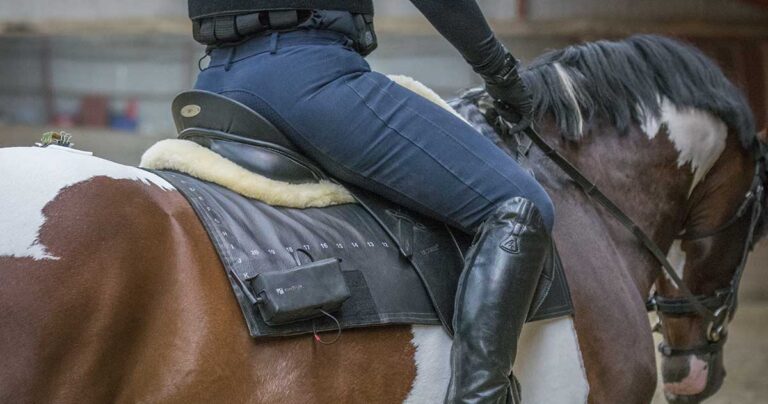
The researchers had the 20 female study riders “gain” weight by slipping 1-kg metal weights into weight pockets on a body vest, adding up to 15% and 25% of each rider’s normal body weight. “We wanted to see what would happen with the weight added to the rider’s body, moving dynamically with the rider in the most realistic way possible,” Christensen told Horses and People.

Each of the riders rode her own regular mount (mostly Warmbloods and sport ponies) without weights and with the two levels of added weight. Researchers observed the horses as they were lunged and ridden with the various weight treatments in a basic three-gait dressage test, over a period of several days. They looked for behavioural signs of stress following a behaviour ethogram (tail swishing, mouth opening, ears laid back, etc.), and they monitored the horses’ salivary cortisol levels and heart rate.

They found that, despite increasing the rider-to-horse weight ratios from a range of 12 to 19%, to a range of 15-23%, the horses appeared unaffected by the increases, Christensen said. Salivary cortisol levels were slightly increased with increased weight, but not enough to be significant. Behaviour only differed from one horse to another, but not within the same horse. And heart rates were very similar despite the horse rider weight gain.

“We expected the heart rate to increase, just as a physiological response alone to the effort of carrying the extra weight,” Christensen explained. “But actually there was no real effect on their cardiac rates.”

These results don’t mean riders can just ride without concern for their weight, however, she added. Adding weight to a horse/rider pair with an already elevated rider-weight ratio could yield different results. And long-term effects haven’t been studied.

“These are short-term findings measured at a relatively low exercise intensity, and what happens at higher intensities, during different disciplines such as show jumping, in addition to long-term consequences, are worth investigating as well,” Christensen said.

When in doubt, riders can keep exercise levels moderate and/or give the horse regular breaks, she said.

Noseband design significantly affects pressure on horse’s nose

Noseband design.

If you use a flash or drop noseband, you may be surprised at the results of a recent preliminary equine study.

Jayne Peters from Bishop Burton College, UK and her research team, investigated three different noseband designs for their effect on rein tension and the force being exerted on the horse’s frontal nasal plane whilst being ridden. 

The preliminary findings of their pilot study were presented at the 15th annual International Society for Equitation Science (ISES) conference, Aug 19, 2019, at the University of Guelph.

All three nosebands were adjusted using the ‘two-finger rule’ as measured with the ISES noseband taper gauge, a device that mimics two average adult fingers. However, the flash and drop nosebands showed significantly higher average pressures on the front of the horse’s nose as compared to a cavesson type. The flash created the highest pressure.

Peters says initial findings suggests that the common perception that restrictive noseband designs allow a lighter rein aid may be inaccurate and warrant further investigation.

According to the study, there was no significant change in rein tension when comparing the three nosebands.

Rein tension was measured using a Telerein tension gauge and a Pliance pressure system determined the amount of pressure caused by each noseband on the front of the horse’s nose.

All horses were fitted using the ‘two-finger rule’, checked with an ISES taper gauge for accuracy and were ridden by their owner, in a snaffle bridle.

This study raises equine welfare concerns when it comes to using nosebands with designs meant to restrict the horse’s ability to open the mouth. With flash nosebands being the most prevalent design seen in international competition (Doherty et al., PloS One. 12:1, 2017), continuing investigation into potential damaging effects is needed.

ISES council member, Kate Fenner agrees with the welfare concern relaying findings from her own study, “Restrictive nosebands are a welfare concern as they can inhibit natural oral behaviour and cause stress.” (Fenner et al., PloS One. 11:5, 2016).

Internationally renowned researcher and co-founder of ISES, Paul McGreevy has also studied restrictive nosebands citing they can cause stress and possible tissue damage (McGreevy et al., 2012).

Peters closed her presentation at the ISES conference encouraging more focus on correct training than equipment.  Currently, investigations reveal that the effect of tack is not yet fully understood. Scientific evidence may lead to industry perceptions being re-evaluated.

The abstract is published in the conference proceedings which you can download here.

Save the date:

The 16th International Society for Equitation Science Conference will take place on August 11-14, 2020 at Hartpury University, United Kingdom, under the theme: “Succeed with science: performance, practice and positive wellbeing”.

Visit the Conference website for more information.