fbpx
Home Blog Page 38

Researchers Study the Effect of Different Rugs on Skin Temperature

Horse core body temperature and the effect of rugs on skin temperature.

Many horse owners rug their horses all year round, however, a preliminary study, warns that the ambient temperatures expected and the type of rug needs to be carefully considered as horses can easily overheat.

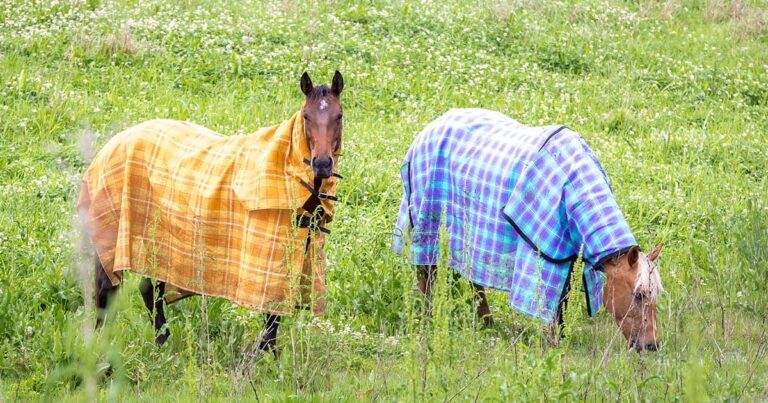
It has become routine (and even fashionable) for many domestic horses to be rugged all year round – in fly-sheets, all-weather turnouts, stable rugs, fleeces or perhaps even a onesie. Rugs can be useful in protecting horses in adverse weather conditions and from biting insects, however, until now, there has been no study into the effect of different types of rugs on a horse’s body temperature.

Like humans, horses have a ‘thermoneutral zone’ (TNZ) – the range of ambient temperatures where the body can maintain its core temperature stable solely through regulating skin blood flow and without expending energy.

Adult horses in mild climates can maintain their core body temperature without expending energy when ambient temperatures are between 5ºC and 25ºC.

Humans (naked), on the other hand, have a more limited TNZ of between 25ºC – 30ºC. This means that when we feel cold, horses are still well within their comfortable zone. Despite this, we tend to make decisions about rugging our horses based on whether we feel cold ourselves, so we may well be using a rug on our horse when it really is not necessary, and this can cause horses to overheat. Overheating under rugs is a serious welfare concern.

A team of students from Duchy College, UK set out to investigate
how the use of rugs affects horse temperature, and therefore how this impacts horse welfare. M.S.c student Kim Hodgess presented her findings at the 14th International Society of Equitation Science (ISES) conference in Rome.

The research team studied horses who were routinely rugged as part of their management routine, ten kept stabled indoors and two at pasture.

  • Three of the horses wore sweet itch rugs (lightweight, woven polyester, non-waterproof rug covering the majority of the horse’s body including the neck and belly),
  • six wore fleece rugs with no neck,
  • two wore light quilted rugs with no neck, and
  • two control horses were unrugged (one stabled and one at pasture).

The surface temperature of each horse was taken by taping a small temperature data logger directly on to each horse, just below the point of their hip. The environmental temperature was also recorded using temperature data loggers attached to either the horse’s stable door or to a wooden mounting block in the pasture.

All temperatures were recorded every minute for twenty-four hours.

(Note: For this study the researchers focused on skin temperature, not core body temperature as a way to detect changes in thermoregulation. They explain that, while there is limited research on the correlation between skin temperature and core body temperature, taking core temperatures was avoided because it requires using invasive methods that may cause the horse stress. They based their decision on a previous study that had found consistent correlations between a prototype non-contact thermography device, a thermal imaging camera at the horse’s girth and flank, and rectal temperature. As skin temperature varies depending on whether the horse is trying to conserve or lose heat to maintain its core temperature stable, for the purpose of this study, skin temperature was used as a way to detect changes in thermoregulation and was not intended to provide a reflection of core body temperature.)

The results showed significant differences between the temperature of the horses wearing different rugs.

Those wearing sweet itch rugs had little change in their temperature. However, those wearing fleece and light quilted rugs were found to have a significant increase in surface temperature.

When the environmental temperature had fallen below the TNZ to 0.5ºC–4.5ºC, four rugged horses had surface temperatures between 24ºC–30ºC, compared to the control (unrugged) horses at 12.5ºC–18.5ºC.

  • 

The horses wearing sweet itch rugs had an average temperature increase of 4.2°C,
  • those wearing fleeces 11.2°C and,
  • those wearing light quilted rugs had an average increase of 15.8°C.

When the ambient temperatures were between 5oC and 21oC – which are within the horse’s TNZ, the results were as follows:

  • For horses wearing sweet itch rugs, the skin temperature increased by 4.2oC
  • for horses wearing fleece rugs it increased by 8oC
  • those wearing light quilted rug increased by 12.2oC

The researchers concluded that some types of rugs can significantly increase horse surface temperature and could, therefore, compromise the horses’ capacity to regulate their own temperature.

While the use of rugs and blankets is necessary for some horses, this study shows that selecting the right type and weight of rug for your horse and his/her individual conditions is vital. Appropriate use and application must be seriously considered to ensure the rugs do not have a detrimental impact on horse welfare.

Researcher Kim Hodgess says: “This study was interesting for me as it has left me asking many more questions about the welfare of rugged horses. Questions that remain unanswered are: do dark coloured sweet itch rugs increase horse temperature, do rugs interfere with mutual grooming and can skin condition deteriorate with prolonged use of rugs?

“Although this study found sweet itch rugs had no impact on thermoregulation, I feel further research with a larger number of horses, in hotter weather conditions, with a mix of dark and light coloured sweet itch rugs is required before we can be certain there are no negative impacts on equine welfare.

“I would like to continue this area of research, as there is a lot more that could be investigated. A greater understanding of the impact rugs have on horse thermoregulation would help inform our rugging descisions, which has the potential to improve horse welfare.”

Interestingly, a previous, pilot study by Barbara Padalino and colleagues presented at the 2017 Equitation Science Conference in Wagga Wagga, Australia, showed that lightweight, ripstop cotton rugs of the type  commonly used as ‘summer rugs’ in Australia, increased rectal temperature and sweat production considerably compared to non-rugged horses. The study warned that, despite providing fly protection (horses showed less tail swishing and discomfort behaviours), cotton rugs can still cause horses to overheat when environmental temperatures exceed 25oC and there is no adequate shade. (Download the proceedings here.)

Further studies using larger sample populations, in a wider range of ambient temperatures, with more variety of rugs and, possibly, in different countries, are required before scientists get a better picture of the effect of all different rugs in different situations. But in the meantime, think twice before you rug and choose the type of rug wisely.

For another great article on rugging decisions click here.

Save the date of August 19-21 for the 2019 International Society for Equitation Science Conference being held in Guelph, Ontario, Canada. The theme of “Bringing science to the stable” will explore our relationship with horses through the past, present and future. Check the ISES website for conference updates https://equitationscience.com/conferences/.

Starting Romeo Part 8: Mounting

In this exclusive training series, Kate Fenner from Kandoo Equine is taking  us deep into the essential foundation lessons for any horse.

Whether your horse is un-started or already going under saddle, but you feel these are areas that need a little work, you’re in the right place.

On this series of articles, Romeo has learned basic handling, including haltering, grooming, picking up feet, tying up and ‘give to the bit’, both at a standstill and at the walk. He also learnt shoulder control in hand and has been habituated to the girth and saddle cloth. He has worked through the long-reining lessons and has been habituated to the saddle.

This month we’re looking at preparing Romeo for safe mounting.

Romeo is now comfortable wearing the saddle (read Part 7), is soft and responsive in the bridle (read Part 2  and Part 3) and he has learned the verbal cues for walk and trot while long-reining (see Part 6).

The next step is to prepare Romeo for the mounting habituation work.

I want to mount Romeo from the mounting block or fence rather than the ground because of the damage we can do to the horse’s back when getting on from the ground. Also, as you’ve probably noticed, I think it’s important that your horse learns to ‘stand’ until being asked to move, so I don’t want anyone to have to hold Romeo while I mount.

The final objective of this lesson is to habituate Romeo to having me ‘above’ him, something that has traditionally been done by riding a horse next to your un-started horse – a process commonly referred to as ‘snubbing up’.

This is an interesting lesson because we are teaching the horse to move ‘into’ pressure. Many people initially think this might confuse their horse because we mostly teach horses to move away from pressure (but not always), however, I feel it is an excellent example of how easily your horse can learn something new when your lesson plan is clear.

Top Tip: I teach this lesson to every horse I ride and usually only require that initial whip-to-hip cue a few times before I replace the cue with a click of my fingers (and later the cue becomes stepping up on the mounting block). If you are worried that cueing from the hip might confuse your horse then I suggest you point the whip to lower down the hind leg, somewhere between the hip and the hock.

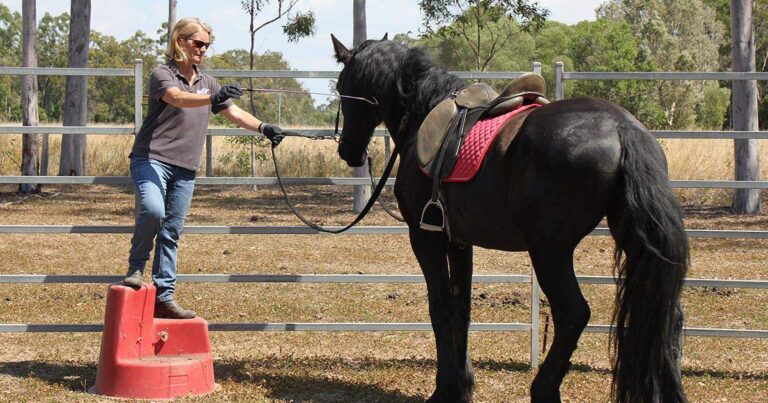
The aim of the lesson is to, while standing on the mounting block and holding the left rein in your hand, cue your horse to move its left hind towards you so that he/she positions themselves parallel to you and ready to mount.

Once in this position, the horse will stand and relax before we either mount or, in Romeo’s case today, step down and lead him away from the right rein.

Have your horse saddled for this lesson as you will have the opportunity to do some additional saddle habituation at the mounting block.

You will also need a dressage whip.

Breaking the Lesson Down:

  • The SPOT on the horse we want to move: the left hind foot
  • The DIRECTION we want that to go: to the left
  • The MOTIVATION for moving it: tapping of the dressage whip
  • The REWARD for the correct response: release of pressure, praise and a scratch
  • The Final Pattern: You step on to the mounting block, the horse moves its hips over to you, you mount and the horse stands at the mounting block until asked to step right and away.

The lesson is taught against a solid fence of some kind. An arena fence is ideal as it is relatively low. The round pen fence I am using here makes it a little difficult for the horse to move its head to the right so if you have the option, use the lower fence where possible.

The horse’s left hind, the spot we are moving, can move in six directions (up, down, back, forward, right and left). To help your horse select the correct direction we are going to make three of those possibilities more difficult. We limit his choice of back and forward by holding close to the bit and standing at the horse’s head.

We can almost eliminate the option of stepping right by placing the horse against the fence (with the fence to his/her right side) to start the lesson. This leaves up, down and step left as the remaining choices, simplifying it enormously for the horse.

Step 1:

Line your horse up against the fence, standing on his/her left side, holding the rein close to the bit.

Step 2:

Cue movement by raising the whip towards the hindquarters and tapping lightly if necessary. Now is the time to be aware of your horse’s emotional level.

Some horses will begin to move as soon as you raise the whip, others might need a few light taps. It’s important that your horse is in the engagement zone now – this means engaged enough to offer some movement in response to your tap but not so much movement as he/she runs backwards or pushes through you.

If you feel that your horse is getting agitated, you may need to move him/her forward a little, just to remind the horse that this is a ‘forward’ movement lesson.

Step 3:

Your horse will respond with some movement and you need to stop cueing and praise the horse as soon as you see that left hind move left.

The first couple of times that the horse steps left, it is unlikely to know which foot movement you were releasing on however the timelier your release, the faster your horse will connect the cue to the reward.

Step 4:

If your horse is either pushing forward or pulling back and away from you, then it is likely feeling trapped.
Try to prevent this by allowing some forward movement and, especially if your fence is high as mine is, by providing sufficient space between yourself and the fence.

You want your horse to remain as relaxed as possible during this lesson – enough engagement to look for an answer but not so much as to encouraging them to leave.

Step 5:

Be sure to reduce the pressure of your cue, the tapping or even simple the raising of the whip, as soon as you see the horse begin to connect the whip with moving the left hind to the left. Your horse will learn the pattern quickly and it shouldn’t be necessary to touch him/her with the whip.

Once you have a step or two away from the fence, walk your horse forward and ask again.

Step 6:

When your horse is responding with a couple of steps to the left, putting him/her at a 90-degree angle to the fence, you can then leave the rein over the neck, walk behind your horse, pick up the right rein and lead your horse away from the fence. Then begin again with your horse aligned at the fence.

This is important because if you carry on requesting a step left when the horse is already away from the fence, it’s very easy for the horse to step right, which is likely to cause confusion.

The added bonus of walking behind the horse at this stage is that it will demonstrate your horse’s level of relaxation and reinforce the idea that he/she ‘stand until being asked to move’.

For those of you that are starting your horses under saddle, this is especially beneficial because when you do mount you want your horse to stand still and then you will be stepping off to the right, away from the fence, as your first under saddle steps. You can see that you are already setting this pattern up for your horse now.

Step 7:

Once you feel your horse has mentally connected the whip with stepping the left hind to the left, ask for the hip movement at the same time as walking his/her shoulder forward. This will give you side-pass on the ground and also remind the horse that this is a forward moving lesson. If you simply step back and down the fence, your horse’s shoulders will follow the rein and you can cue the hindquarters to step left with the whip. This exercise also gives you a little bit of momentum needed for the following step.

Step 8:

In this step you will ask your horse to move a little faster which should result in a little more movement to the left and align the horse to the fence. If your horse is moving too much or too fast then he/she is probably too emotional and you will need to address that first.

Your horse should be very familiar with the pattern now so experiment with raising the whip and not touching or simply pointing to the hip or clicking your fingers at the hip. I use the latter as my cue.
When the horse is aligned with the fence, allow them to rest and praise them. Then, walk around the back of the horse and lead them away with the right rein.

Step 9:

If you are using a mounting block, place it by the fence in the position you have been cueing your horse to move to. If you are planning on climbing on to the fence to mount then you can climb on now. Begin as low as you can – either the bottom fence rail or lower step of the mounting block.

Cue your horse to move its hips to you from your newly elevated position. If your horse is reluctant to do so, simply step down and cue and then step up again.

Step 10:

Now you are ready to cue your horse to move its hips over to the mounting block when you are standing on the top step.

Once there, allow the horse to rest, praise and scratch the wither before stepping off the block, going around the back of the horse and leading it off to the right. Repeat this a few times, giving the horse plenty of time to relax at the block.

I like to teach this lesson as described here without doing any further saddle habituation at this stage. As most horses learn this lesson quickly it is good to end on that positive note with the horse being successful and relaxed.

Next month:

Next time we will look at what can be done once we have a relaxed horse at the mounting block.

To watch an example of this month’s lesson click here.

Pop along to the Kandoo Equine website to find video of all of Romeo’s lessons and more! And be sure to leave me a comment and tell me how you got on with your horse.

Check out Dr Kate Fenner’s podcast for more step-by-step, ethical and sustainable horse training courses.

This article was published in Horses and People October 2018 magazine or buy the whole series as a e-book.

The Ultimate Guide to Worming Your Horse

This article contains the 6 simple steps you can take to get your worming program to a great start. Spring is the best time to kick-start Evidence Based Worming on your horse properties. Most horse managers are, by now, very familiar with the narrative that small Strongyles – Cyathostomins – are becoming resistant to all of our current chemical anthelmintics. But, to date, this awareness is not yet transitioning into a more judicious use of anthelmintics across the industry and we really need to get our skates on!

Download our 6-Step Evidence Based Worming Guide. (sign up required)

My scary story…

In the mid 1980s I acquired a beautiful young warmblood gelding and, unknowingly, also acquired his cargo of resistant worms. No matter what I did, Argell was lethargic, disinterested and he couldn’t maintain good condition.

At the time, I knew nothing about worm ‘resistance’ but I maintained a regular, 6-weekly anthelmintic treatment according to accepted protocol. It always puzzled to me that Argell constantly voided thousands of small, dead Cyathostomins following every treatment. How could this be, given his non-pasture housing and careful health care?

My veterinarian, the late Dr Richard Chapman, soon solved the mystery as he’d been witnessing the progress of worm resistance in horses for some time.

For Argell, it was pure luck that the first of the macrocyclic lactone family, Ivermectin, was just becoming available on the market in a form that could be used safely in horses. Richard acquired and administered Ivermectin and, within a relatively short time, Argell was thriving.

Knowing what I now know about worm resistance, Argell was very lucky but, uh oh… Here we go again!

30 years on from his story, we are again facing the growth of worm resistance. This time, however, the resistance is to the anthelmintic group of drugs that saved his life – the macrocyclic lactones. The significant and concerning difference is that, today, there are no new chemical anthelmintics coming onto the market.

Left unaddressed, worm resistance will continue to advance, having the potential to become an enormous economic, logistical and emotional burden within the horse industry. Significantly, our veterinarians will bear the brunt of this problem and will likely be spending more of their precious time working to save non-thriving horses such as Argell.

Some background

Two excellent articles by Dr Anne Beasley, a parasitologist and researcher from the University of Queensland’s School of Veterinary Science, have appeared in the May 2015 (Resistance on the Rise) and June 2018 (The Big Problem with Small Strongyles) editions of Horses and People.

Read A New Era in Worm Control here.

They are highly recommended as a background to this present article which aims to increase uptake of EBW by providing practical strategies for all horse managers so that, together, we will succeed in slowing – or even halting – the insidious progression of resistance.

Opinions abound about how best to deal with increasing resistance but, in my view, the way forward must be underpinned by good science.

Fortunately, veterinary parasitologists have come up with a practical way to combat resistance but it comes with an alert: It requires a considerable shift in our current mindsets around traditional worm treatment methods.

Evidence Based Worming

EBW is based on the humble faecal egg count (FEC) test that has been around for many years.

This test is proving to be a particularly useful means for combatting resistance when used as an environmental worm management tool as it can identify ‘high egg-shedding’ horses that contribute most to pasture contamination with Cyathostomin eggs.

High egg-shedding horses are those with Cyathostomin egg counts of 200 eggs per gram (EPG) or higher, and they comprise only 16-20% of all horses.

Once identified, these horses are targeted for anthelmintic treatment and, in this way, EBW results in a more judicious use of anthelmintics so they will remain viable into the future.

How does EBW counteract the development of resistant worms?

The less frequently Cyathostomins are exposed to chemicals, the longer resistance takes to develop.
EBW works by looking after the population of non-resistant worms known as ‘refugia’. Now, of course we can’t just ask them “are you a resistant worm? (here… take this lethal concoction…)”, “or a non-resistant worm? (please make yourself at home in my horse…)”. We have to approach our management scientifically.
Basically, it’s a numbers game: the larger the percentage of refugia there are in the environment, the smaller will be the percentage of resistant worms – it must add up to 100%.

Is EBW for all horses?

No. It’s important to know that EBW is aimed at healthy, adult horses, ie, most horses.

What we tend to forget is that horses and their parasitic worm passengers co-evolved and that they may even have a role in boosting the horse immune system. So, if a horse does record some eggs in a FEC test but is obviously very healthy, there is not usually much benefit in an anthelmintic treatment. We must also remember that horses may still have worms even though FECs never spot an egg in a sample!

  • EBW is not for foals and young horses up to 3 years. Foals require special attention to the potentially lethal roundworm (Parascaris equorum) and a FEC may not necessarily identify that these parasites are present. The other reason EBW should not be relied upon for youngsters is that they are in the process of developing their natural immunity to worms which is important for their ongoing health. Young horses will usually have high egg counts and, therefore, should be treated with anthelmintics 3-4 times a year.
  • EBW is not for breeding mares, aged and immuno-compromised horses – these also require special treatment. Although it is still good management to monitor these horses with FECs, this group will benefit from a tailored worming approach. Horses with Cushings Disease come into this category.

Most importantly, veterinary advice always takes precedence over FECs where there is doubt about a horse’s wellbeing.

It doesn’t have to be confusing!

The key to effective EBW is to sneak a peek at the Cyathostomin lifecycle in order to target their vulnerabilities. Their strengths lie in their ability to lay thousands of eggs daily when conditions are just right for providing the greatest chance of survival for their offspring. They love –

  • mild-warm, moist conditions (regardless of season) conducive to good pasture growth
  • high stock density which gives a greater chance for their infective offspring to be ingested
  • a lack of cross-grazing with other species because they can’t complete their lifecycles inside a cow or a sheep
  • poor pasture hygiene – lots of horse manure provides great shelter for developing worms
  • pastures that are never spelled/rested
  • inappropriate anthelmintic usage leading to resistance.

Effective, integrated pasture hygiene will address most of these situations, but EBW can strike the lethal blow. It’s time to get on board with EBW the easy way!

GET GOING IN 6 EASY STEPS!

Step 1: Establish your baseline.

Obtain a FEC for each horse that you are responsible for. The best time to do this for the first time is in spring after the weather warms up a bit and there has been a bit of rain. This is when Cyathostomin egg counts will likely be at their highest.

Step 2: Treat the high-shedders.

Horses with a result of 200 EPG (eggs per gram) or higher, should be treated with an anthelmintic. (Spoiler Alert: if you have been routinely treating horses for a long time, it will require all of your self-control not to treat your horses when they register egg counts less than 200 EPG!)

Step 3: Set up a record for each horse.

A simple Excel spreadsheet is perfect for this. (Hint: name your paddocks and match these this with your horse results – this will alert you that a particular paddock might have a worm issue)

Step 4: Re-test high shedders at the end of the treatment efficacy period.

This will assist you to monitor what is happening with their egg counts, so you can treat them again if necessary. For various reasons, some horses will always be high-shedders.

Step 5: Establish a FEC routine.

Low-shedding horses (less than 200 EPG) in the herd will need less frequent FECs; high shedders will need more frequent FECs. You will build up a picture of the shedding status of each of your horses over time.

Step 6: Treat all horses once a year (usually in late autumn) for other parasites.

It is important not to forget that even low egg-shedders will need the occasional targeted treatment to remove tapeworms and bot larvae.

How often should I test?

Initially, aim for 4 times a year,

  • more frequently during the warmer, wetter conditions; less frequently when it’s dry and cold, or dry and hot.
  • test the high egg-shedders more frequently; low shedders, less frequently.

Here is a simple strategy

  • Gear up in Spring
  • Exercise restraint in Summer
  • Treat for other parasites in late Autumn
  • Have a break in Winter

The best way to remember is:

“When the grass is growing actively, the worms are on the move.”

The simplicity of this easy-to-remember sentence has broad applications because it encompasses:

  • seasonal variation
  • tropical climates
  • irrigated pastures
  • pasture around damp courses such as dams, rivers and streams.

What happens to the worms in drought?

From a horse worm perspective, there is one small piece of good news associated with drought – the chance of ingestion of infective L3 Cyathostomin larvae will be quite low at this time. The refugia populations we want to look after will also be under pressure at this time so, during drought, it is important to only treat horses when it is absolutely necessary.

When the drought does end, this is the time to be worm-vigilant as Cyathostomins have an impressive evolutionary trick – they can encyst themselves (burrow) within the lining of the horses’ digestive tract and can stay this way for long periods – 2 years or more – emerging when environmental conditions improve.

Even during a drought, there is one equine parasite that cannot be forgotten. The eggs of the foal roundworm, P. equorum, are extremely resilient and can survive in dry environments for years. You must always assume their presence and treat your young horses accordingly.

Who does FEC testing?

FECs can be undertaken by your veterinarian, the NSW Department of Primary Industries and private providers, such as myself.

Shop around, prices vary greatly, particularly if your vet sends the samples to a diagnostic laboratory.
They can also be undertaken by you, the horse owner, with the right equipment, access to a microscope and a small amount of training.

Undertaking FECs for your own horses will put you into the driver’s seat of Cyathostomin management, result in the use of less chemicals and save you money on unnecessary anthelmintic treatments over time.

Evidence Based Worming has released a stress-free, do-it-yourself guide to undertaking faecal egg counts for horses – Count Your Eggs Before They Hatch which you can purchase here.

Further information:

  • Count Your Eggs Before They Hatch
  • Handbook of Equine Parasite Control (Martin K. Nielsen and Craig R. Reinemeyer) 2018
  • American Association of Equine Practitioners (AAEP) Parasite Control Guidelines
  • www.evidencebasedworming.com.au

Laminitis: A New Age of Understanding

Laminitis… A condition that strikes fear into every horse owner. 

Long recognised as a cause of lameness, laminitis can have debilitating long-term effects on horses and ponies. It often becomes an insidious, chronic issue that requires careful management, including a constant evaluation of the diet and specialised hoof care.

Despite its widespread prevalence, especially amongst native and pony breeds, and despite a very large and impressive body of scientific study, we still don’t have a clear picture of all the modalities, triggers nor the progression of this painful condition. 

Laminitis is still an enigma and a fascinating area of research that offers scientists opportunities for making important breakthroughs in understanding that may soon lead to new treatments. 

Earlier this year, The Veterinary Journal published a comprehensive review of ‘what we know so far’ and how our understanding of laminitis is changing as science continues to provide a better and more complete picture. 

‘Paradigm shifts in understanding equine laminitis’ by Janet Patterson-Kane, Ninja Karikoski and Professor Cathy McGowan is a thorough literature review and shows where the future of laminitis research should be heading.

Historically, ‘classic’ laminitis was linked to systemic inflammatory response syndrome (SIRS) most often related to carbohydrate overload of the gastrointestinal tract, however, it is now recognised that almost 90% of laminitis cases are caused by endocrine (hormonal) disease – high insulin levels. 

An example of SIRS caused laminitis occurs when the horse gets into the feed room or breaks into a lush, spring grass paddock and gorges on carbohydrate rich feed and plants. 

When this happens, the small intestine is overwhelmed and loses its capacity to digest the carbohydrate component which flows into the large intestine where it is rapidly fermented by the bacteria, fungi and protozoa that inhabit the space. The acidic environment that results (acidosis) triggers an inflammatory chain of events that has been studied extensively and results in the well-known clinical signs of laminitis. 

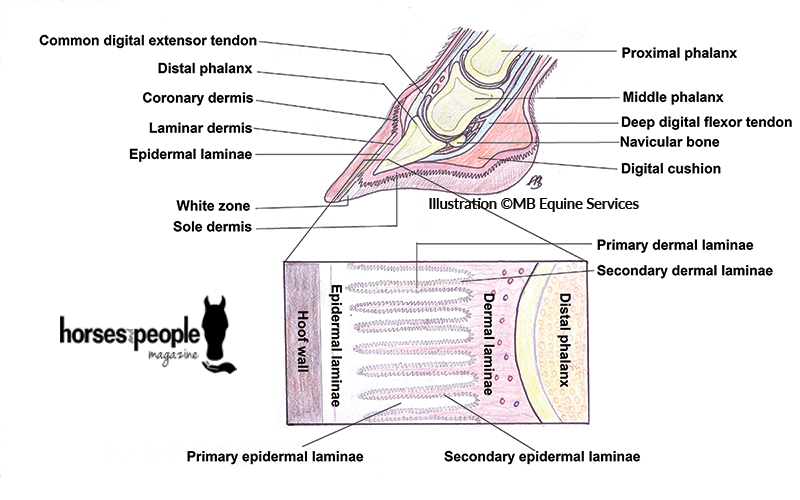
The internal structures of the equine hoof
Anatomy of the equine hoof showing the laminae in detail. Image ©MB Equine Services.

Other causes of SIRS have also been described (but studied less thoroughly), including metritis (inflammation of the uterine wall in broodmares) as well as supporting limb lameness.  

Today we know the vast majority of laminitis cases are linked with hyperinsulenaemia (high insulin). This was first hypothesised in the 1980s when researchers noticed that insulin resistance was commonly associated with laminitis, especially in pony breeds, and led to the description of  ‘endocrinopathic laminitis’.

Despite this discovery, researchers continued investigating the SIRS model of laminitis until 2006, when a ground breaking study found a fivefold increase in baseline blood insulin levels at the onset of a carbohydrate induced laminitis episode (Treiber et al., 2006). 

Meanwhile, Prof. Cathy McGowan’s team published another important paper emphasising hormonal-related laminitis after studying horses with pituitary pars intermedia dysfunction (PPID, formerly known as ‘Cushings’) and other endocrine (hormonal) diseases now known as equine metabolic syndrome (EMS). 

By studying the clinical findings, they were able to develop an experimental model of laminitis resulting from consistently elevated blood levels of insulin (hyperinsulinaemic laminitis).

More recent studies have suggested that the clinical management of laminitis, particularly as a result of the new knowledge of spontaneous endocrinopathic laminitis (laminitis that is apparently brought-on by nothing other than abnormal insulin regulation) warrants re-evaluation.

So, where does this lead? 

A research review published in The Veterinary Journal outlines three major shifts in thinking about laminitis which are important for veterinarians and clinicians to understand in order to offer the most suitable treatment plan.

1. Laminitis is a clinical syndrome (not a disease)

Laminitis is no longer described as a ‘discrete disease process’, but rather, a clinical syndrome, that is, a collection or set of signs and symptoms that characterise a disease process. 

In the case of laminitis, the symptoms can result from several systemic diseases, from opposing limb lameness and from endocrine disease. 

The change of description from disease process to syndrome might seem unimportant, but in veterinary and research terms it’s a game changer. It comes as a result of multiple studies repeating the results of Asplin et al. the research team overseen by Prof. Cathy McGowan who showed in 2007 that laminitis could be induced in 5 out of 5 previously healthy horses following exposure to prolonged periods of increased blood insulin levels.  

This means that in order to implement suitable management and give realistic prognosis of prevention and recurrence of laminitis, veterinarians must first make an accurate diagnosis of the associated causes and disease.

To treat endocrinopathic laminitis we must understand how to control insulin levels and exactly how insulin causes hoof tissue damage. 

2. Endocrinopathic laminitis predominates in lame horses

Hormone related laminitis is now understood to be the most common form of naturally occurring laminitis in developed countries. 

Earlier, there was a misunderstanding that laminitis was predominantly the result of SIRS because of an apparent prevalence of SIRS type laminitis seen in lame horses presented at veterinary referral hospitals. 

When further research conducted amongst the general population of horses and ponies showed that SIRS type laminitis represented only 12% of the laminitic cases reported by horse owners, the interest in the new model of laminitis caused by insulin disregulation and hyperinsulinemia grew. 

Further studies corroborated these findings, identifying endocrinopathic laminitis in 90% of horses and ponies presenting for lameness. It became clear that the SIRS model of laminitis was less prevalent than originally thought and that future research should concentrate on hormone-related laminitis.

We now know that the major hormonal disorders associated with laminitis are EMS and PPID. 

Field studies have shown that the prevalence of hyperinsulinaemia and laminitis is greater in horses with PPID than in age-matched controls. However EMS is emerging as the predominant endocrine cause of laminitis.

The next frontier will be controlling insulin levels in horses reliably, and early trials are being conducted with drugs currently used in humans. 

At this stage, the best recommendations for lowering insulin are medication for PPID horses, as much exercise as possible and a diet that is lower than 10% in sugar and (ESC) starch.  

3. The pathology of laminitis

Are endocrinopathic and SIRS associated laminitis different or is it just a matter of degree?

Lastly, the paper explains that our understanding of the pathology (causes and effects) of laminitis has changed with the identification of lamellar cell stretch as a potentially early warning sign.

Researchers have compared the effects on the hooves at a cellular level from both, SIRS and endocrinopathic laminitis affected horses. 

The progression of disease is different in each type since SIRS associated laminitis is often rapid-onset and follows a distinct and often severe pattern of disease, while endocrinopathic laminitis is often slow-onset, becoming chronic having a long phase of development before clinical symptoms are seen.

Scientists studying the cells of hoof tissue in affected individuals found that the lesions associated with either type of laminitis were not particularly marked but were similar for each type. 

They did, however, add a ‘disclaimer’ saying that the endocrinopathic laminitis experimental (artificially induced) model requires a sudden increase in blood insulin levels and this may differ from the gradual increase over time which occurs with naturally occurring endocrinopathic laminitis. Nevertheless, the lamellar structures appear to be an early target in the disease process.

Equine hoof laminae under microscope
IMAGES A & B show normal or ‘standard’ lamellae of the equine hoof under microscope. Note the orientation of the lamellae ‘fingers’ is more perpendicular. IMAGES C & D show the contrasting stretching and acute angling that has been associated with laminitic lamellae. (PEL stands for primary epidermal lamellae and SEL is the secondary epidermal lamellae.) Images sourced from The Veterinary Journal.

The study of the cellular structures of the hoof and the possible development of a ‘grading’ system to classify the severity of laminitis is made even more complicated by the fact that there appears to be a large degree of natural variation even in ‘healthy’ ‘normal’ feet. Without having defined a ‘normal’ with which to compare, it is very difficult to contrast cytological (cell) samples.

Early changes at cellular level that have been noted in both SIRS and endocrinopathic laminitis include a veering away from the perpendicular (up-down) orientation of the secondary epidermal lamellar nuclei relative to their basement membranes.

This means that the cells shift their orientation, with their nuclei (central core) becoming more centralised within the cell. The cells were noted to lengthen, narrow and develop tapered tips, making it difficult to distinguish the primary from the secondary epidermal lamellae.

This stretching of the cells is now thought to be a key early event in the onset of laminitis and might be the primary event leading to the later symptoms noted by the observer.

Changes ahead

The paper asks whether, with what we now know, the terminology itself should be changed to reflect the new understanding.  

Whilst laminitis caused by carbohydrate overload shows some significant indicators of inflammation, these same pointers do not exist in hormone related laminitis. In fact, endocrinopathic laminitis is associated with minimal inflammation, unlike the SIRS model. 

Furthermore, the amount of inflammation seen at a cellular level with either type of laminitis is far less than that seen in many other tissues undergoing similar stress and compromise.

The question then is whether the suffix ‘itis’ (meaning inflammation) is even warranted for the syndrome. The authors ask if it might be more appropriate for the term ‘laminopathy’ to be used for endocrinopathic laminitis.

Before the model for endocrinopathic laminitis had been fully developed, the research focus and primary damage was generally accepted to be a failure of the basement membrane (BM) within the hoof capsule. 

This membrane (which effectively intersects and ‘joins’ the primary and secondary lamellae) was thought to be compromised leading to the partial or complete failure of the lamellar attachment and the ‘degloving’ of the hoof which most of us associate with the disease process of laminitis.

However, BM separation was not found in all of the carbohydrate overload-based models, being still intact and attached during the acute phase of the process in one study. It has also been noted that in most hyperinsulinaemic models, the BM damage was minimal. 

The research has failed to show a solid primary role of BM pathology and, although there is no question that is plays a role in the cascade of lesions following initial onset, there is now strong debate about the role of BM breakdown as a primary contributor to either SIRS or endocrinopathic laminitis.

It is important to note, that the only available way to study the inner structures of hooves affected by SIRS and endocrinopathic laminitis thus far, has been in an experimental setting. In this setting, horses and ponies are artificially subjected to either a digestive system overload of carbs or a rapid-onset blood elevation of insulin. These can only somewhat imitate the effects which might be seen in naturally occurring endocrinopathic laminitis.

In 2015, the histopathology (cellular abnormalities) of 14 cases of naturally occurring endocrinopathic laminitis were compared with 25 age and breed matched controls (Karikoski et al.). 

Microscopic areas of abnormal change (lesions) were noted close to the hoof wall. Cell death, lamellar fusion, cell proliferation and partial replacement with unusual keratinised material were all recorded in the samples of the laminitic horses. In some horses, there was evidence of tearing close to the hoof wall which invariably involved the BM, primary and secondary epidermal lamellae, compared to SIRS induced laminitis where tearing was seen to exclusively involve the BM and was at a deeper level of the lamellar structure.

Whilst these findings are interesting and not yet fully understood, it remains unclear whether naturally occurring endocrinopathic laminitis and SIRS-associated laminitis are fundamentally different diseases. 

The good news 

What is very encouraging about all this work is that, chronically developing hormonal laminitis, seems to have a protracted pre-clinical stage (a time where the disease process is in force but the  clinical symptoms have not yet appeared). This affords us a good window of opportunity for intervention and preventative management. 

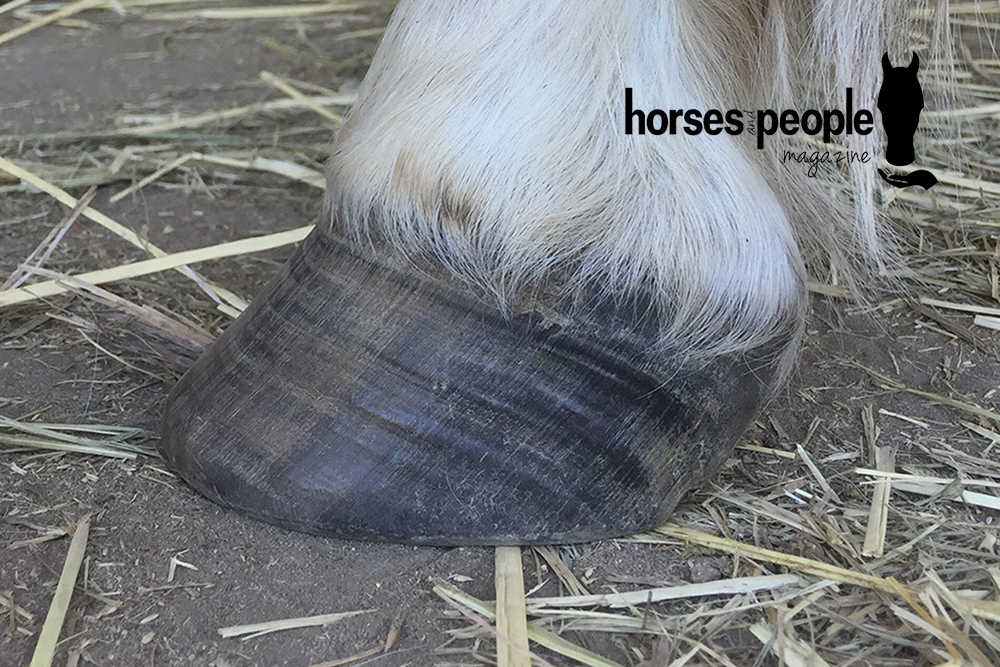
Divergent hoof rings were seen in all but one of the 14 horses studied. By intervening at the early stage – when hoof rings are noted – the prevention of the critical lamellar stretching and associated pathology may be possible.

Laminitis rings
The tell-tale signs of a laminitic hoof – regardless whether the horse seems sound, don’t delay act now! Photo by Cristina Wilkins.

The future 

Future research will focus on the mechanisms of laminitis at the cellular level, investigating the relationship between insulin and cellular changes, as well as possible intervention methods at critical time periods during the acute phase of laminitis. 

Lamellar epithelial cell stretching as a key early event will be the focus of future studies investigating how and why this stretching occurs and whether it is preventable. The possibility of preventative drugs and treatment regimens is still beyond reach, but every study brings us that little bit closer to the day that laminitis becomes a manageable and preventable condition.

This paper is important because it highlights recent advances in our understanding of laminitis and suggests future research avenues to continue our understanding. 

Laminitis is now considered to be a syndrome most commonly resulting from endocrine diseases such as PPID and EMS. 

There is a long period of time where no symptoms of laminitis are evident but can be noticed by the development of divergent hoof rings. 

Noticing these hoof rings gives the owner, hoof care professional and veterinarian a window of opportunity to intervene with treatments where appropriate, exercise, diet and management changes.

There is still a lot to learn though, so it is hoped that laminitis will continue to receive scientific attention. 

Reference

The article titled: Paradigm shifts in understanding equine laminitis by J.C. Patterson-Kane, N.P. Karikoski and C.M. McGowan is open access and available on this link: https://doi.org/10.1016/j.tvjl.2017.11.011

6 Ways to Improve Your Horse’s Resilience During Emergencies

In this article, you will find six basic principles you can incorporate into your daily interactions with your horses to help you prepare for extraordinary events and improve your horse’s survival and resilience during natural disasters and other extraordinary events.

Since 2010, Dr Kirrilly Thompson has been researching the ways in which animals and animal ownership impact human preparedness and responses to natural disasters.

The research

Pet ownership has long been considered a risk for natural disaster survival. In households without children, pet owners and carers are more likely to fail to evacuate their homes. If they evacuate without their pets, they often return prematurely to try to save them.

The desire to put one’s own life at risk to save pets is well intentioned but it can put human and animal lives at risk. Trying to evacuate at the last minute, for example, can increase the chance of death in a vehicle or a road block that puts many other humans and animals in danger.

All of the risks of animal ownership and natural disaster survival are magnified when the animal is as large as a horse.

Dogs, cats, birds, rabbits and frogs can be accommodated in most vehicles and evacuation locations. Horses are a different kettle of fish altogether.

Horses require specialised transport and equipment, experienced handlers and large holding infrastructure. Moreover, they are often kept on properties other than home.

This means that, as a fire is approaching, horse owners are tempted to drive into a natural disaster threat, as occurred during the 2003 Canberra bushfires.

Their aim is – of course – to successfully evacuate or defend animals. However, they can create congestion and confusion that threatens the lives of horses, owners and first responders.

Most state emergency services have resources to help horse owners prepare for natural disasters such as fire and flood. They provide important information for preparing properties, checklists and survival plans. For many horse owners, these can be seen as special preparations.

In 2015, I evacuated three of my horses from the same property due to the threat of the South Australian Pinery fire in SA. In 2018, a structure caught fire on the property where my competition horse was agisted.
These personal experiences, coupled with my academic research, have helped me to see how there are a number of principles which horse owners and carers can integrate into their everyday horse training and management practices to make them and their horses more resilient to natural disasters.

Most – if not all – of these principles justify keeping horse management simple and prioritising thorough horse training.

1. Train your horse to be easily handled by anyone

You can’t guarantee that you will be available to handle your horse in the event of a disaster.

Your horse might need to be handled by strangers in response to a disaster or in the aftermath of a disaster, when you may not be allowed to enter a recently affected area.

Your horse may need to be handled for veterinary attention, to be moved or to be documented for identification. If your horse is easily handled by anyone – including a firefighter in full uniform, it will have a better chance of being treated, moved and located.

As noted by Tom Roberts in the book The Young Horse:

If you are fond of a horse and wish to do him a real favour – train him well. Teach him good manners, good habits, both in the stable and under the saddle. You need never worry about the future of such a horse if, for any reason, you may have to part with him. You assure him of friends wherever he goes. Perhaps the greatest kindness you can do any horse is to educate him well.

It turns out that Tom’s wisdom might also help us worry less about how a natural disaster might impact our horses too. And in the tragic event that you do not survive a disaster (let us not pretend this cannot happen), your horse will have a better chance of finding a great home.

2. Train your horse to stand, tie, load and travel – and practice regularly

Many horses come with specific instructions for being tied, loaded and transported. In 2015, I had one float and three horses to move (I have since avoided keeping all three at the same property). There was a chance I would only be able to move two horses if the fire prevented me from returning.

The first two horses I put in the float were the ones who I knew would be easy to load – two retired horses.
I had to leave my most valuable competition horse for my friend to try and load because I knew she could not be relied upon to load quickly at the best of times – let alone with a blackened sky and humans working under pressure.

If a good Samaritan had arrived to load her (as often occurs following social media calls for help), they may have wasted time that could have been spent relocating two other horses, or they may have just given up.
Luckily, the two horses I moved first had been transported in the prior 6 months, so they were ‘in practice’. Some retired horses may not have been transported for years.

Whereas once they were reliable, time, stress and injuries may make them a liability to load and transport. This means that you need to practice loading and transporting regularly.

If you only ever use a float and you have the chance to truck your horse (or vice versa), then take it. The more experience your horse has with different forms of transport, the easier they are to transport when it counts.

Likewise, train all of your horses to stand and tie reliably. You may find yourself at an evacuation site or safer place of refuge where there are no yards to hold horses, or even places to tie.

Natural disasters can ruin fencing – you may simply not have any yards or fences to keep horses contained, and you may need to keep stock separate from one another – such as mares and stallions.

  • To learn how to train or re-train any horse for easy haltering and tying go click here.
  • To learn how to train or re-train any horse for easy loading click here.

3. Keep your feeding regime simple

In the aftermath of a disaster, you may not be able to feed your horse the diet to which they are accustomed. You may not be able to access your horse if they are lost, you are injured or you are unable to access the property. You may not be able to access your usual feed because supply has been lost or your horse has been moved to another area where those feeds are unavailable.

Good Samaritans or animal rescue teams may be in charge of feeding your horse with no prior knowledge of your horse’s specific diet.

Keep this in mind when you make decisions about what to feed your horse, so that a rapid change in diet does not compound the other potential stressors facing your horse following a natural disaster. You may want to use feed that is widely available, for example, and avoid a monoculture hay/pasture diet so that a change of hay or pasture will be less of a shock to your horse’s digestive system.

4. Keep your rugging regime simple

Most rug-related natural disaster advice is around removing rugs on catastrophic fire days or rising flood waters to reduce the risk of horses burning or drowning. However, it may also help to keep your rugging in general very simple.

In the aftermath of a disaster, you may be separated from your horse for an unknown period of time. You may have no control over who is caring for your horse or how your horse is being cared for. You may not even know where your horse is. This could mean that your horse will be wearing whatever rugs he had on prior to the disaster. And remember to remove rugs, fly masks and halters on high fire risk days as these can increase the risks of burns.

Keeping your rugging regime simple and in good repair (and your horse in good body condition), will reduce the risk of horses becoming caught in their rugs, overheated or cold if they can’t be attended to in the aftermath of a disaster.

5. Socialise your horse

Under the threat of a natural disaster, you horse might be taken to a property without substantial fencing, yards and stables, or the disaster might have burnt or washed away local fencing.

For whatever reason, your horse might end up in a group housing situation with other horses. This is a very good reason to socialise your horses (and all young horses), so that they have the social skills they may need to tolerate temporary accommodation. This is also an excellent reason to geld horses who are not intended for breeding purposes.

6. Expose your horse to novel stimuli and environments

Firefighting appliances or other large emergency vehicles may attend your horse’s place of residence to defend against disasters.

Graders might come on site to create fire breaks. There may be flashing lights and crowds of people shouting.

Whilst it is not possible to desensitise your horse to all the potential stimuli it may face in the event of a natural disaster, there are many training techniques and approaches available to help your horse develop confidence facing novel stimuli.

This will reduce the risk of stress in horses which can lead to undesirable physiological responses such as stress colic or laminitis, as well as undesirable behavioural responses such as running through fences or being difficult to stand, tie or load.

To learn about the recommended habituation and desensitisation techniques click here.

Make the commitment

These six measures can be incorporated into your horse handling and training every day, all year round to improve your horse’s natural disaster resilience and chances of survival.

They will also make the lives of you and your horses easier, safer and happier.

What they do require is attention to basic principles of horse training and management as well as a commitment to achieving basic standards for all your horses – especially the ones that come with a special set of instructions.

References:

[wpdm_package id=59818 template=”link-template-button.php”]


This article about building your horses’ resilience to emergencies was published in Horses and People October 2018 magazine.

Starting Romeo Part 7: Saddle Up!

Saddle up! Whether your horse is un-started or already going under saddle, but you feel these are areas that need a little work, you’re in the right place. In this exclusive training series, Kate Fenner from Kandoo Equine is taking  us deep into the essential foundation lessons for any horse.

In the last six months of articles on this series, Romeo has learned basic handling, including haltering, grooming, picking up feet, tying up and ‘give to the bit’, both at a standstill and at the walk. He also learnt shoulder control in hand and has been habituated to the girth and saddle cloth. Last month he worked through the long-reining lessons.

This month we’re looking at Romeo’s first saddling lesson. The first saddling lesson will be very straight forward for us because Romeo has already been taught about a girth in the Long-Reining lesson.

This allows us to also do some saddle habituation work with Romeo which will increase his confidence with the saddle and later the rider.

Saddling

You will notice that in all the images, Romeo is standing quietly, unrestrained during the saddling. It is important that your horse can do this because it clearly demonstrates his/her level of relaxation, attention and cognition.

If your horse is not yet ready to be saddled, he/she will not stand and may even leave in a hurry when you approach with the saddle. If your horse is not engaged with you, in the engagement zone, it may well wander off and graze.

Click here to learn more about The Engagement Zone.

Having been habituated to the surcingle, Romeo is already familiar with the girth, so the main purpose of this lesson is to introduce the additional size and weight of the saddle and the stirrups.

Top Tip: Horses repeat the things they practice – those behaviours that give them a release of pressure. If your horse is cantering and bucking during the first saddling then it is likely to repeat that behaviour in the future. It is better if you never encourage your horse to exercise its flight instinct in this way because it’s a behaviour that is very difficult to extinguish.

Step 1:

Always make sure you are using a saddle that fits your horse!

Remove the girth and stirrups and place the saddle on the horse’s back to check the fit.

If you are not very knowledgeable in this area or don’t have access to some guidance (such as the Kandoo Equine Online Training Saddle Fitting Videos: https://www.kandooequine.com/), then I suggest you get a saddle fitter out to do this properly.

One of the biggest and most dangerous mistakes you can make with your horse is to ride, or even sit on, a saddle that doesn’t fit the horse properly – it’s not fair and it’s not worth the risk to you or your horse.

Top Tip: If you feel there is any risk that your horse might become too emotional and kick or buck, attach a long rein to the bridle so that you can keep him/her away from the fence. Of course, this shouldn’t happen as your horse has been worked in a girth when long-reining and if they do react then I suggest you go back a step and long-rein for a few minutes before continuing with the lesson.

Step 2:

With your horse bridled, in a safe enclosure, place the saddle cloth and saddle on its back. Go around to the offside (the right side) to lower the girth. Coming back to the near side, fasten the girth. Be sure to do the first buckle up securely enough to hold the saddle in position should your horse move off.

Reward your horse for standing with a scratch and quiet word, and complete fastening the saddle. Do this slowly, praising the horse for standing with each increase in tightness.

Your horse is learning a new pattern – stand and be praised while being saddled. It’s an important and easy habit to establish when you are careful to fasten the girth slowly and remain attentive to your horse’s emotional level.

If your horse does move off at this point, then it’s likely that he/she received inadequate habituation work in the Long-Reining session, so go back a step and revisit that lesson.

Step 3:

Cue your horse to move away from you and around the yard at walk in both directions. Here Romeo is working around the pen without the aid of a long line to hold him off the fence. This is because he became well-habituated to the girth with the long-reining lessons. However, if you feel that your horse might be more emotional than Romeo and be likely to kick out, then I suggest you attach a long line to the bit as you did in the Long-Reining lesson. This will keep your horse from kicking the fence and greatly reduce the risk of them injuring themselves.

Once your horse is walking calmly in both directions, ask him/her up to trot. You don’t need a power trot; a gentle jog will do at this stage.

I do not suggest you ask your horse to canter at this stage, as it may encourage kicking or bucking. In these early stages, canter is best done on the long-reins.

Step 4:

Now that your horse is relaxed and travelling around the pen at trot, we’re going to make the exercise a little more challenging.

Attach a long rein to the left hand side of the bit, if you haven’t done so already.

Next, thread a lariat or stiff rope through the left stirrup, holding the long line in your left hand and both ends of the lariat in your right. Ask your horse to move around you in a small (10-15 metre) circle.
Flap the stirrup up and down using the lariat. Start very gently and, if your horse remains relaxed, increase the movement.

You’ll know your horse is relaxed enough if it is not increasing speed before asked and not looking around at the stirrup.

If this is not the case, keep your horse in walk, the circle around you small and allow the horse time to process the lesson. You should see your horse settle within a few minutes and then you can make the circle bigger and move up to trot.

Step 5:

Aim to do this at walk and trot, from both sides. While your horse is travelling around, put some pressure on the lariat and allow the horse to feel that new sensation. You can move the stirrup in five directions – up and down, back towards the flank and forwards towards the shoulder as well as towards you.

This exercise will help habituate your horse to your moving leg when riding and the feel of your weight moving in the saddle. Begin with small movements and gradually increase their range.

When pulling the stirrup towards you, to simulate weight in the saddle, be sure to also start with a gentle movement (and a well-fitted saddle, as mentioned earlier.

Top Tip: This is a great time to practice your verbal cues and walk-trot transitions. Your horse is more likely to increase speed and become anxious if allowed to simply trot in one direction and not transition back and forth from walk. By practicing your transitions, you are better able to maintain horse horse’s attention and keep him/her in the engagement zone. You will, of course, also reap huge benefits from establishing these verbal cues once you are ready to ride.

Step 6:

To further habituate your horse to the saddle and sensations around the saddle area, now is an opportune time to do some tarpaulin habituation work.

Just as when we habituated the horse to the long lines, we want to break this new habituation lesson down in the same way. The aim is to have the horse in the engagement zone, attentive and listening, not fearful or wanting to leave.

Tarpaulins are large, mobile and noisy – not exactly most horse’s favourite things. The smaller you can make the tarpaulin, by rolling or folding it up, the easier this lesson will be in the beginning.

Start with a small tarpaulin, or rolled large one, and rub the horse with it. This is the same lesson as we have done before when habituating Romeo to any new equipment or sensation. As your horse settles with this small object, gradually increase its size and your range of motion.

Step 7:

Gradually make the tarp larger. If your horse has worn a rug in the past, this may be an easy lesson for him/her. If not, it may be more challenging.

It’s important that you don’t, at any stage, tie the tarpaulin to the horse. When you are ready to drape the tarpaulin over the horse, cue the horse to move around you in a small circle, keeping the tarpaulin in easy reach should it be necessary to remove at any stage.

Step 8:

Once your horse is relaxed with this exercise, place part of the tarpaulin under the saddle flap and increase the size of your circle.

Again, never tie the tarpaulin to your horse or the saddle because if you have misjudged your horse’s emotional level then this can become very dangerous, very fast.

Attaching an additional long line to the tarpaulin will help you remove it quickly, should you need to.

Cue your horse to walk and trot around you carrying the tarpaulin partially tucked under the saddle flap. I like to have it hanging quite low as this helps to habituate the horse to feeling objects around the legs.
The tarpaulin may slide to the ground from time to time and again, this helps to habituate the horse to a new feeling, sound and sight, all of which is useful foundation work.

Next month we’ll be saddling up and mounting!

Learn more… Read more about habituation and, particularly, about systematic desensitisation in the article by Dr Andrew McLean, also in this issue.

To watch this month’s video lesson including the tarpaulin habituation work, click here: https://www.kandooequine.com/blog/romeo-saddle-up.

Check out Dr Kate Fenner’s podcast for more step-by-step, ethical and sustainable horse training courses.

This article was published in Horses and People September 2018 magazine or buy the whole series as an e-book.

The Mysterious Origins of Domestic Horses

Why it’s so hard to unravel the mysterious origins of domestic horses.

There’s still a lot we don’t know about how, and where, horses were first domesticated. Experts long thought that all modern horses were probably descended from a group of animals that belonged to the Botai culture, which flourished in Kazakhstan around 5,500 years ago.

But now, a new study published in Science suggests that the Botai horses were not the ancestors of our modern equine companions – and challenges what we thought we knew about one of the only “wild” horse species left today: the Przewalski’s horse.

There are now very few, if any, genuinely wild species of horse, which have never been domesticated. Scientists have known that Przewalski’s horse is not an ancestor of modern domestic horses, since studies were carried out on equine mitochondrial DNA in 2002. But now it seems that far from being the last remnants of a truly wild horse species, the Przewalski’s horse is the feral descendant of the domesticated Botai horses.

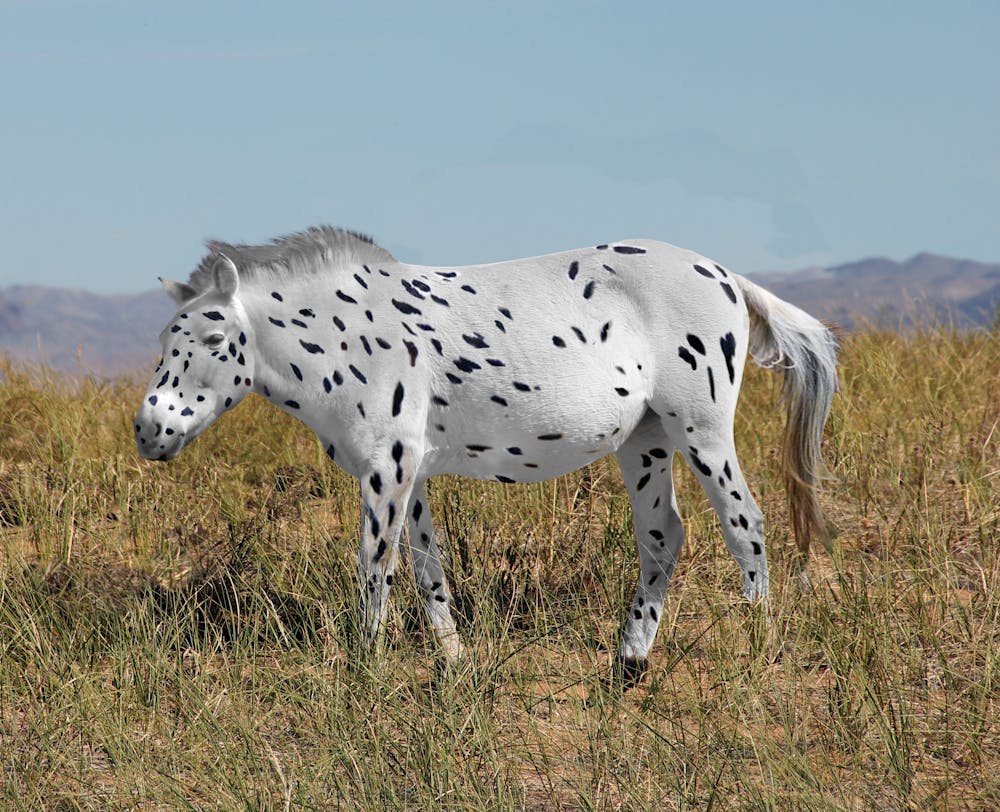
Study authors imagine what Przewalski’s ancient ancestors would have looked like. Ludovic Orlando, Seas Goddard, Alan Outram., CC BY

Let’s take a look at the science.

Born wild?

Led by Charleen Gaunitz from the Natural History Museum of Denmark, the study’s 47 authors sequenced the genomes of 42 ancient horses from Kazakhstan and various sites in Eurasia, and compared them with published data from 46 ancient and modern horses.

Their analysis showed that Przewalski’s horse and the most ancient horses from Eurasia were not genetically similar, as might be expected. In fact, the Przewalski’s horse were found to be most closely related to the Botai horses, while all modern domesticated horses belong to a separate group. If this is right, it turns what we thought we knew about wild and domestic horses on its head.

But one of the difficulties of drawing conclusions from the DNA of a modern Przewalski’s horse, is that the species suffered a massive decline in the first half of the 20th century. The last one seen in the wild was spotted back in the 1960s, and it was declared extinct in the wild. A captive breeding programme began, and all of today’s Przewalski’s horses trace their ancestry back to 13 individuals, which were in zoos around the world at the time. Equus ferus przewalskii was reintroduced to the wild at the end of the 20th century.

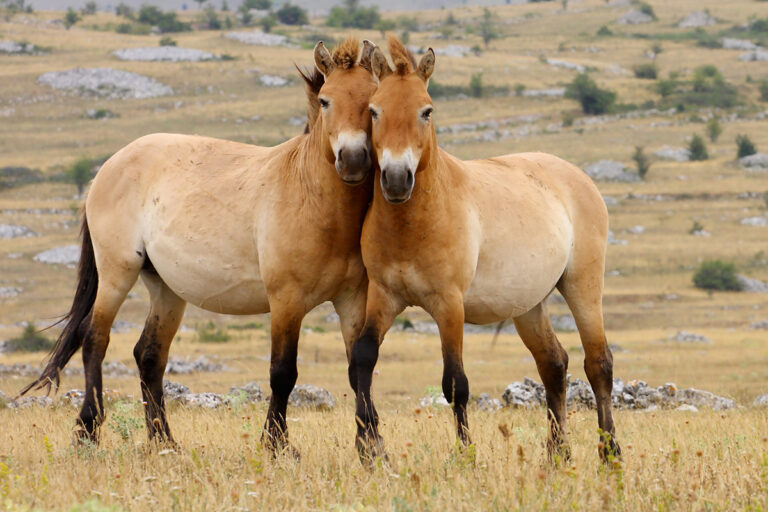
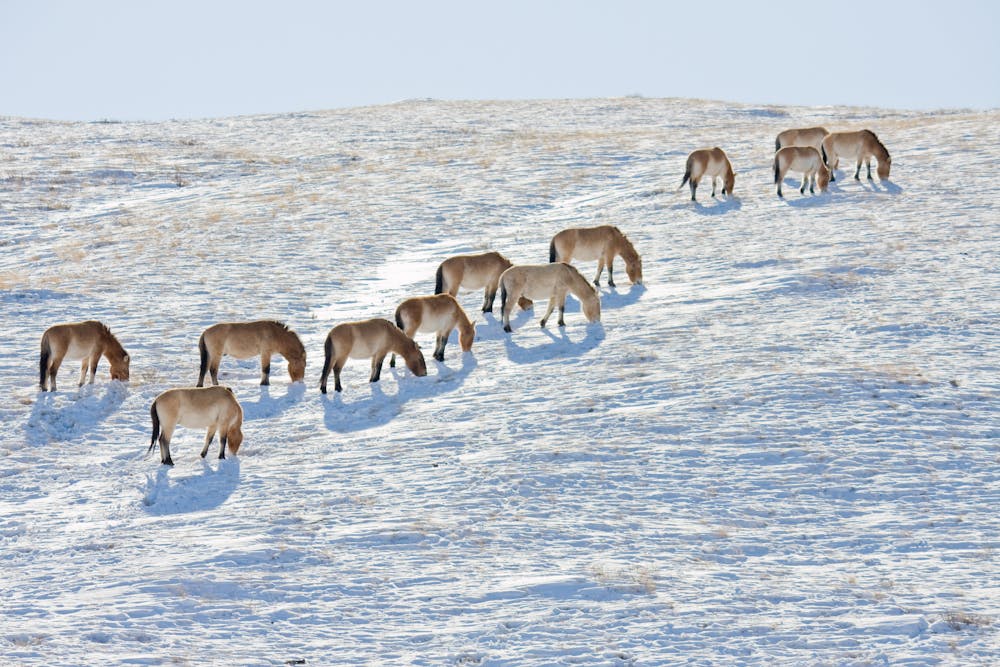
Back where they belong: Przewalski’s horses in the Mongolian wilderness. gsz/Flickr, CC BY-NC-ND

Gaunitz and her colleagues suggest that there has been considerable invasion of modern horse genes into the species. But the team were fortunate enough to have DNA from one specimen dating to the 19th century, before the population collapse occurred. This allowed them to show that the Botai horses were direct ancestors of another breed of horse from the early bronze age, called Borly4, and that these Borly4 horses were the direct ancestors of the pre-collapse Przewalski’s horse.

Unsolved mysteries

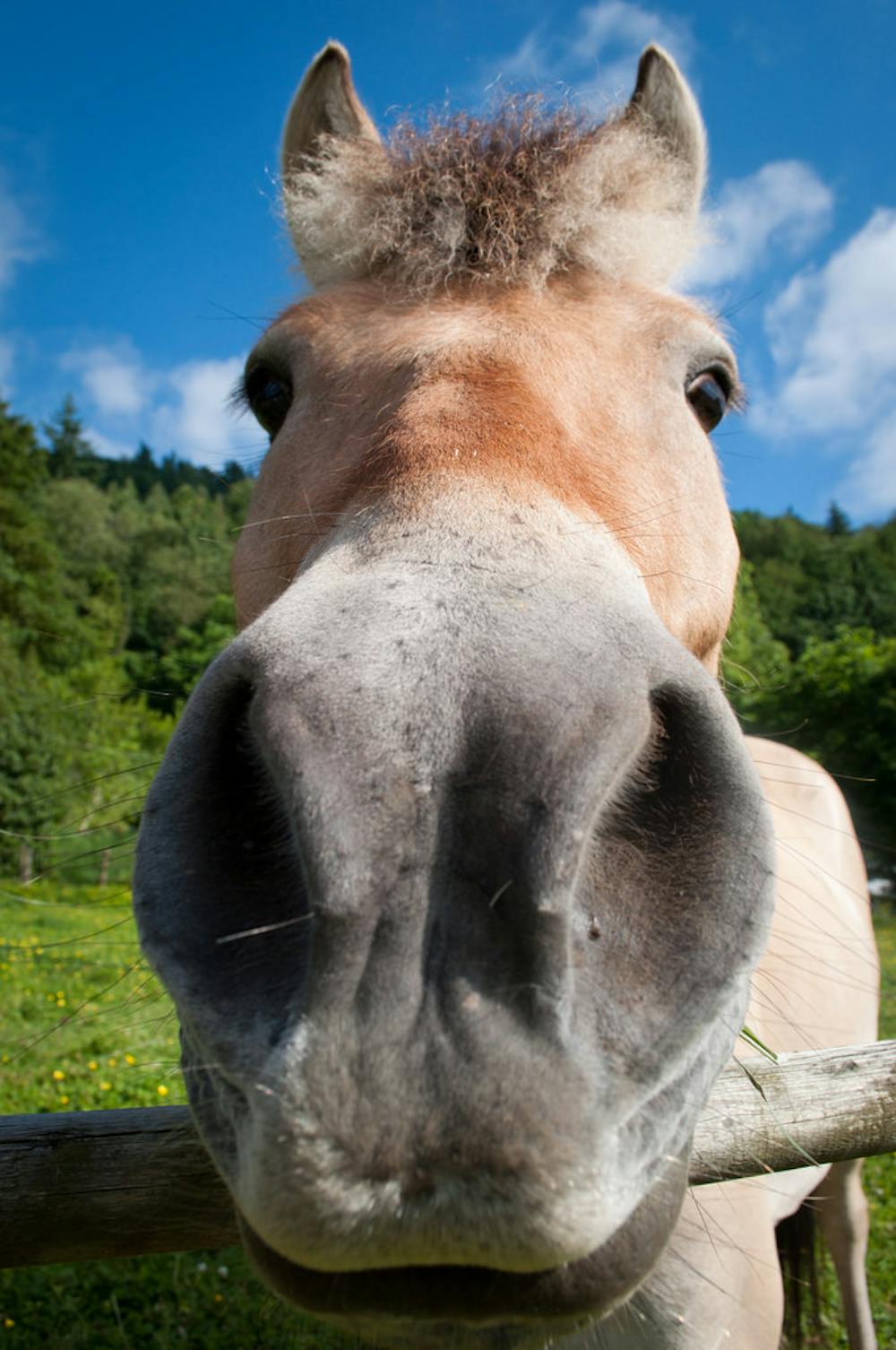
Who nose? RPatts/Flickr, CC BY-NC-ND

This leaves the origins of modern horses shrouded in mystery. It seems they are descended from a completely different group of horses, but the genomic analysis suggests that they managed to interbreed with the Botai horses to a small degree as the population expanded across the continental landmass. The authors of the study suggest that Hungary, in Eastern Europe, might be one of a number of places where the ancestors of modern horses were first domesticated, because the oldest horse remains were recovered from there.

Earlier studies have suggested Iberia, North Africa and Eurasia as possible sites of domestication. And it seems likely that horses – like dogs – were independently domesticated in a number of different places and over a long period of time.

Scientists – and horse owners – often wonder exactly how horses were domesticated. It has been suggested that they were originally prey animals that humans began to protect and breed to ensure a steady supply of meat. Over time their keepers began to use them for milk, hides and transport. Alternatively, they may have been deliberately brought under human control to help with the hunting of wild horse herds.

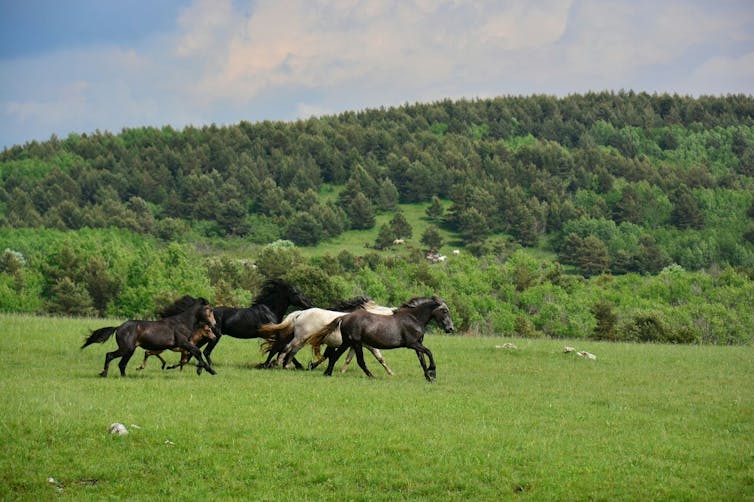
Catch us if you can. Brian395/Flickr, CC BY

Whatever the method, it now seems likely that the very robust horses of the Botai were not the ultimate ancestors of the delicate modern thoroughbred racehorse, nor of the heavy draft horses that were the staple workforce of agriculture in many parts of the world until the beginning of the 20th century.

The Botai horse genes are preserved only in the small and precarious populations of Przewalski’s horse, which struggle to survive in the areas of the Gobi desert and the mountain steppe regions of Mongolia where they were reintroduced. All the more reason then, to continue to ensure the survival of this species – possibly the last repository of ancient horse DNA.The Conversation

Jan Hoole is a Lecturer in Biology at Keele University

This article is republished from The Conversation under a Creative Commons license. Read the original article.

Starting Romeo Part 6: Long-reining

Long-reining. In this exclusive training series, Kate Fenner from Kandoo Equine is taking  us deep into the essential foundation lessons for any horse. In the last five months of articles on this series, Romeo has learned basic handling (including haltering, grooming, picking up feet abd tying up), ‘give to the bit’ (at a standstill and at the walk in-hand). He has learned shoulder control in hand and has been habituated to the girth and saddle cloth. Now, he is ready for the long-reining lesson.

Whether your horse is un-started or already going under saddle and you feel these are areas that need a little work, you’re in the right place.

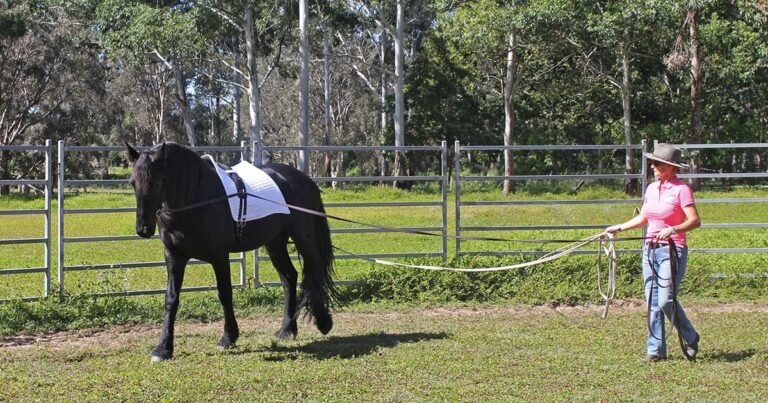
Long-Reining

Long-reining is a wonderful and educational tool. Whether you’re starting your horse under saddle, changing riding discipline, coming back into work after a spell or you just want to improve how your horse moves under saddle, I encourage you to give long-reining a try.

Long-reining has a reputation of being difficult and something that only very experienced horse handlers should attempt, however, if you’ve been following the Romeo series and implementing each of the lesson steps, you’ll be in a good position to get the most out of long-reining.

Top Tip: This is a learning process for both you and your horse. While long-reining can look very easy, the first time you take up those reins you may feel very uncoordinated. Follow the lesson steps and keep the pace slow and steady.

Step 1: Habituation to the lines around the hindquarters

We’re going to teach long-reining with the line passing behind the horse, resting above the hocks. I teach it this way because it makes it difficult for the horse to turn and face you, should you get too in front of the horse’s movement. Also, horses that have done a lot of lunging have often developed a pattern of turning and facing the handler as it results in a release of pressure.

Once your horse is familiar with the long-reining pattern, the reins can then be attached through the ‘D’ rings at the wither but I suggest you start here to make it easier for both you and your horse.
Begin the habituation work by rubbing the lead rope over the horse (See images in the illustrated pdf version of this article). Start at the neck and work your way down to the hindquarters.

If your horse remains calm and does not move away, you can go on to throwing the rope over the horse and dragging it back again. Be sure to pay particular attention to habituating the horse to having the rope over the hindquarters.

Top Tip: In the images you will see that Romeo is unrestrained during the habituation phase. This is because I know that, if I get the emotional level wrong (let’s say he is too emotional), he will leave. If he is not emotional enough (if he’s having a wee nap), he will graze or wander off. Romeo is engaged, listening and attentive to everything that is going on but he is also relaxed enough to be learning.
By leaving him unrestrained during the habituation work I can see that Romeo is in the Engagement Zone. To learn more click here.

Step 2: Feeling the rope above the hocks

Make a large loop with the long-rein, holding the buckle in your hand and loop it around your horse’s hindquarters. Now practice ‘give to the bit’ (if you missed the article click here), in a small circle and move the looped line so that your horse can feel the line against its sides and legs.

Allow the line to fall off and over the horse’s hindquarters to be sure he/she is not afraid of that feeling.
It’s very important that your horse does not move faster when he feels the rope behind him because once you get long-reining properly the lines will be in this position. Horses that have been taught to lead in this way may take more habituating than those that have not.

Step 3: Both sides

Remember to repeat this pattern in both directions as the rope will feel different to your horse when you handle it from the other side and your horse will need to change directions when you long-rein.

Step 4: Your work area

A round pen is an ideal place to teach long-reining because you don’t have to worry too much about directional control in the beginning. If you don’t have a round pen, try to find a safe enclosed area such as an arena.

The hardest place to teach long-reining will be in an open field so, if that is your only choice, go to a corner of the field, because there you will have at least two fence sides to help your horse.

Step 5: Getting moving

Starting and stopping are often the hardest parts, however, if you’ve been following the Starting Romeo Series you’ll have noticed that Romeo stands still and relaxed until cued to move – Romeo is in the engagement zone.

Because we’ve had Romeo in the engagement zone for each and every lesson, where he is attentive and relaxed, we have also conditioned him to stand until cued to move. This is especially helpful when it comes to getting started with long-reining because it often takes us a while to ‘get organized’.

Long-reining is one of those activities that looks terribly easy when you watch someone else do it but when you try it for the first time yourself… not so much!

Run the buckle end of the long-rein from the back, through the ring on the surcingle at the side of the horse. Attach the off-side first and then place the excess line on the back of the horse while you attach the near-side. When you are ready to go, take one line in each hand and move towards the back of the horse.

Top Tip: It can be difficult to carry a whip at first but I encourage you to try as it is the best way to cue your horse to move forward (after your initial verbal cue). When changing direction, move the whip over first as this signals the horse that a change of direction is coming and sets you up ready to move off in the new direction. Your horse will learn this pattern quickly and begin to prepare for the change of direction when he/she sees the whip moving across.

Step 6: Small circle with shorter reins

Start slowly at walk with small circles and shortened reins as this will help you keep your horse in the engagement zone. As the circle size increases, the size of the bubble of communication will also need to increase.

Top Tip: Your horse will probably feel more confident when you are close to him/her so, make your circle bigger slowly and use a lot of verbal praise to keep your horse engaged and listening to you.

Step 7: Changing direction

We begin by ‘driving’ the horse. This means that we are a little behind the horse and directing movement. When you want to change direction, look at the horse’s tail because this will stop you from getting too far forward and encouraging your horse to turn and face you. Start your ‘driving’ session with lots of changes of direction and keep the horse at walk.

Step 8: Trot short distances

Once your horse is comfortable with the feel of the reins and changing direction you can put him/her on a circle around you. A 15 to 20 metre circle is ideal and if you are fortunate enough to have a round pen then this should be easy.

Practice your give to the bit work and when your horse is soft, relaxed and listening, cue him/her to trot. Only trot for half a circle to start with and practice your walk-trot transitions. Horses that have been lunged frequently may well be reluctant to come back to walk as they could be in the habit of trotting around and around for lengthy periods. We aren’t aiming to make the horse fit, just educated, so trotting in aimless circles is not for us.

Step 9: Your pattern

Soon your pattern looks like lunging but unlike with lunging, here you can feel that the horse is soft in the bridle, responsive to rein pressure, relaxed and listening to your cues.

Once your horse is responding well with walk-trot transitions and remaining calm and relaxed, you can try a canter. Again, don’t canter for too long, rather work on your trot-canter transitions.

Step 10: Your position

It’s important that, while you’re working your horse around you, you remain behind the ‘drive line’, that is, behind the girth. Your whip should be behind the horse and only raised when needed to encourage forward movement.

Stick to changing direction in walk until you are feeling more confident handling the lines.

Step 11: Can I ride this?

For those of you that are re-training a horse that is already started under saddle, long-reining is a good time to ask yourself ‘can I ride this’ or, more importantly, ‘do I want to ride this’? If your horse is calm, relaxed, soft, focused and maintaining speed and tempo, the answer is probably ‘yes, you bet!’ but if not, you may, wisely, decide a little more education is in order.

One thing we do know – if it isn’t good on the lines it won’t be better under saddle, it will definitely be worse.

Step 12: Stopping

Remember we are always building patterns with our horses and for this reason it’s important that we are mindful of what we are teaching. Ask the horse to halt on the circle, facing forward and walk to the horse, rather than asking the horse in to you. This is important because we don’t want the horse to develop the habit of turning and facing us as discussed earlier.

And remember! It’s not about getting the horse fit, it’s about getting the horse in the engagement zone. It’s not about taking the ‘edge off’ the horse it’s about getting the horse to relax and focus on your cues.

Other considerations

As with all things, long-reining is not perfect and it does have its drawbacks. However, I feel it is worth pursuing as an educational tool if done at particular times in the horse’s career. I use it extensively when I am starting horses under saddle and then I will come back to it if a horse has been out of work for a time. It’s an excellent exercise for building top-line muscle and teaching relaxation through transitions.

The biggest drawback with long-reining is the weight and length of the rein. When the horse is light and you ‘give’ the rein, it has a long distance to travel to reach the horse and even then the horse never gets a full release of pressure because of the weight of the rein itself. This does mean that if your horse is already light in the bridle and in self-carriage, long-reining is likely to undo some of that training.

If you feel this is a risk but would still like to give long-reining a go, then I suggest you go ahead but do five minutes of give to the bit after long-reining. This will remind your horse about self-carriage and remaining soft in the bridle. As a rule, I do five minutes of in-hand bridle work at the end of each long-reining session for this reason.

Long-reining pros and cons at a glance:

Pros:

  • No rider balance to contend with    
  • No rider cues to confuse the horse    
  • Builds top-line    
  • Encourages self-carriage

Cons:

  • No shoulder control (reverse arc)
  • Limited directional control
  • Not 100% release of pressure
  • No tactile positive reinforcement (wither scratches)

Watch this lesson: Don’t forget to pop along to the blog and watch the video of Romeo learning to long-rein: https://www.kandooequine.com/blog/romeo-long-reining.

Check out Dr Kate Fenner’s podcast for more step-by-step, ethical and sustainable horse training courses.

This article was published in Horses and People August 2018 magazine or buy the whole series as an e-book.

Starting Romeo Part 5: First Girth

First Girth. In this exclusive training series, Kate Fenner from Kandoo Equine is taking  you deep into the essential foundation lessons for any horse. 

If you missed Parts 1-4, you can catch up on www.horsesandpeople.com.au or via the following links: 

So far, Romeo has learned basic handling, including haltering, grooming, picking up feet, tying up and ‘give to the bit’, both at a standstill and at the walk. 

Join us and watch the un-started, five-year-old Friesian gelding, gradually work through each of the lessons – and why not follow along with your own horse?

Whether your horse is un-started or already going under saddle, but you feel these are areas that need a little work, you’re in the right place.

First girth

The first girthing is not often given the attention it truly requires and, as such, can result in dangerous and unwanted behaviours. All too frequently, horses are strapped into saddles and moved off to ‘buck it out’ and, apparently, discover they can’t remove the saddle. Thus, an assumption is made the saddle has been accepted and the trainer progresses to the next phase of training.

This is known as ‘flooding’ and there are several problems with this approach; not all of which will be immediately apparent.

Firstly, learning the saddle is difficult or impossible to remove is quite a different thing from being relaxed or happy to have it there.

Secondly, what patterns are unwittingly being established by the trainer? Could the horse be experiencing a release of pressure with the bucking behaviour, making it likely to continue well beyond this first girthing stage?

Further potential problems lie in the risks associated with the ‘bucking it out’ behaviour and include musculoskeletal damage from collision, falling or the bucking itself.

For these reasons, we’re going to break the lesson down very carefully for your horse, as shown by Romeo here.

Rather than flood the horse with the new experience, we’re going to systematically habituate Romeo to the feeling of wearing a girth. As with each of the lessons, our aim is to have Romeo in the Engagement Zone (if you missed that article, you can read it here), relaxed and attentive, as we work through the sequence of steps in the lesson.

Even if your horse is already wearing a saddle, this is a great lesson to do and should only take a few minutes. While you’re working through the lesson, check your horse’s emotional level at each stage. Does your horse remain relaxed throughout the lesson? If so, that’s great news and they obviously have a good solid foundation here. If not, perhaps you notice your horse’s head elevation increase at different times during the process, or perhaps your horse goes to nip you when you fasten the girth, then take the opportunity to establish this lesson now.

Before you begin:

Have your horse in the bridle. The bridle gives you a lot more control than a head collar, should you need it, and also allows you to practice ‘give to the bit’ and shoulder control once we have the girth bucked up.

Step 1:

Using a long, soft lead rope, habituate your horse to having the rope over their body. You will have covered this in lesson 1, so this should just be a refresher.

(To read Part 1 click here)

Try to neither creep around or be overly animated, just go about it as you would with an older or more experienced horse. If your horse raises their head or moves their feet, you’ve probably gone too far too fast, so go back a little and begin the lesson again.

Ideally, your horse will stand as Romeo is doing, but if you’re having trouble holding your horse’s attention, or they are trying to graze, then simply hold the end of the lead rope.

Be sure to habituate your horse to having the lead rope around their legs. This is important, because we are going to use a long line later and, should things not go completely according to plan, you don’t want your horse taking fright if the line is dragged on the ground by their legs.

Step 2:

Use your long, soft lead rope – a 12-foot line is ideal – to wrap around your horse’s girth. Initially, lower the buckle over the horse from the lefthand side and take it, as you would a girth, from under the horse’s barrel. Simply pull the rope over and around the horse a few times.

Once your horse is relaxed with this, hold the buckle in your hand and grasp the rope in the same hand, so it is now around the horse’s girth. You want to always hold the buckle in your hand, because they are often heavy, and could potentially hurt you or the horse should it move suddenly and swing around.

Tighten and loosen the ‘girth’ using both hands, praising the horse for standing. Assuming your horse remains relaxed with this process, you shouldn’t need more than a few repetitions.

Step 3:

Now it’s time to get moving. We need movement to train, and your horse will already be experienced with the ‘give to the bit’ lesson and moving around you in small circles (see Part 3). Begin on the lefthand side of the horse, with your left hand on the rein and your right hand holding the lead rope around your horse’s girth (the buckle end also in your hand).

Cue your horse to walk around you while practicing ‘give to the bit’, and slightly tighten and loosen the girth as you go. If your horse reacts with an increase in emotional level, simplify the step by asking them to stand again, and repeat the tightening and loosening action. If your horse remains relaxed, continue and add some reverse-arc shoulder control to the exercise. Remember to do this on both sides of your horse.

Step 4:

The next step is to habituate your horse to both the saddle cloth and the roller.

Again, it’s important not to creep around, being overly cautious. However, if your horse appears a little anxious, then you can make it easier by folding the saddle cloth in half or quarters to make it smaller.

Rub the cloth on your horse as you would a brush. Cover the whole body from the ears to the tail, and down the legs. As you notice your horse visibly relax, make the saddle cloth bigger by unfolding it and continue the lesson.

At the end of your habituation period, you should be able to throw the saddle cloth over the horse, into position and not see an increase in emotional level. Again, this lesson should be done from both sides of your horse.

Step 5:

Put the saddle cloth aside for the time being, and get the roller or surcingle. I use this as a first girth as it is a good stepping stone to a saddle, without the complication of flaps, stirrups, heavy weight and larger surface area.

Habituate your horse to the surcingle in the same way as you did the saddle cloth. I like to make sure I drop it on the ground a few times too, not something you want to do with your saddle, I imagine!

Step 6:

In this step, we’re going to buckle up the girth, so now’s the time to clip the lunge line to the left side of the bit.

We need this in case we’ve misjudged the horse’s emotional level for some reason and they take flight. It’s important your horse doesn’t get away, because if they do buck, they may injure themselves, and you’ll have a lot more control with the long line and the bridle. Of course, if you’ve worked through steps 1 to 5 well, it’s not likely to occur, but it’s always better to err on the side of caution.

Most surcingles have two buckles and the most important thing to remember is to get one properly fastened before fastening the second one. Later, once the horse has habituated to the girthing process, we can do the girth up one hole, one strap at a time, but for now, it’s more important the girth is secure, in case the horse moves off.

Pull the strap through the buckle a few times without fastening it to ensure they remain relaxed. When you do fasten the girth for the first time, make sure it’s tight enough to hold the surcingle securely in place, should your horse try to leave and buck. Then, fasten the second buckle if there are two.

Step 7:

Ask your horse to move off at walk around you. After a few circles, swap sides by changing the line to the other side and asking for walk again. Once your horse is relaxed circling around you in walk, ask for trot, and be sure to change directions by stopping and changing sides.

Remember, this is a habituation exercise. We’re getting the horse used to the feeling of wearing the girth, not trying to tire them. For this reason, transitions are great, because they keep the horse engaged with you and also change how the girth feels around them.

If your horse is progressing well and remaining calm, ask for canter in both directions. I wouldn’t ask for a long canter, rather a few transitions from trot to canter, and back.

When this lesson is done well and your horse remains in the Engagement Zone, there is no reason it should raise a sweat. Chasing the horse around a round pen, trying to ‘get the buck out’ will only confuse, frighten or frustrate them, and make the horse associate being girthed with such an experience.

Cue your horse in and lavish with praise!

Step 8:

Congratulate yourself! You have worked quietly through a lesson that is often very traumatic for a horse, well done.

By breaking this lesson down for your horse and guiding them through it, you have set them up for success for the remainder of their foundation training.

Next lesson…

In the next lesson (in the August 2018 issue of Horses and People), we’re going to teach Romeo to long-rein, drawing on everything he has learned in the previous lessons.

Check out Dr Kate Fenner’s podcast for more step-by-step, ethical and sustainable horse training courses.

This article was published in Horses and People July 2018 magazine or buy the whole series as an e-book.


All About Soil. Part 5, Using soil tests to improve horse pastures

Soil tests. In this All About Soil series, we have been ‘digging deeper into soils’ and explored what soils are, how soil is formed, the different types of soil (Part 1) and how they sustain life through the soil-food-web (Part 2)

We learned about sampling and DIY home soil tests (Part 3), which allowed us to get a first glimpse of what our soils are doing or not doing! To get a more detailed profile and a quality check of our soils, we explained the importance of soil lab testing and what the results may tell us (Part 4)

So far, we have gathered a lot of soil information, but this is of little use if we are not implementing it on our properties. Even though soil tests results may vary from place to place in the same paddock, and between seasons (when sampled at the same point), we can still use them as a general reference and help guide us in developing our soils. 

In this, the last part of this series, we will explain how these test results can assist you in your soil and pasture management on your property and, specifically, what tools and materials may be required in order to improve the nutrients and health of your pastures. 

Evolution of soil tests and modern agriculture

Soil tests are often used in conventional farming as an explicit directive of the required inputs for crops or pastures (what fertiliser, seeds and chemicals to add), and inform on their potential yield. Agronomists interpret these lab results and inputs, and make recommendations to improve the soil and pasture. This is known as ‘prescription’ agriculture or farming, and it has been very effective in increasing yield and mass food production around the globe. Unfortunately, it has often resulted in a loss of overall soil health, particularly a loss of soil carbon.

Over time, prescription farming has become a more streamlined process and has evolved into precision farming. Incorporating ‘smart technologies’, along with modern GPS/rate controlling equipment, has led to more fine-tuning of seeding prescriptions, nutrient application and pest/weed control.

Using precision farming via GPS, the farmer has the ability to locate their precise position in a field, allowing for the creation of maps of the spatial variability of as many variables as can be measured by sensor technologies (for example, crop/pasture yield, terrain features/topography, organic matter content, moisture levels, nitrogen levels, pH, EC, Mg, K, and others.

Using this technology, the old lab soil tests may seem redundant and, to a certain degree, this may be the case for large production farms moving fully to these types of precision farming layouts.

Nevertheless, for accuracy and to get a greater profile of your soils status, the ‘old-school’ lab soil tests will always play a role and also allow for accurate calibration of these sensor technologies.

In addition, even with precision farming technology, it will be impossible to quantify the microbiological health of soils – we still require laboratory analysis, including DNA tests, to identify bacteria, fungi and protozoa species. Keep in mind soil biology (the soil-food-web) has been understudied compared to the above ground biology, yet it is vital for the health of our crops, pastures and forests (as discussed in Part Two of this series). This highlights the importance of close human observation of soil quality and dynamics at the soil-food-web level.

Permaculture and soil tests

Permaculture prioritises the restoration of soil health because healthy soils produce healthy plants and grasses, which, in turn, help produce healthy crops and animals.

Permaculture, as well as other organic/alternative farming principles, approaches soil health from an understanding of fundamental ecosystem processes, with special attention to soil microbiology and closed system management.

Soil tests are essential in permaculture and, initially, the approach is to use DIY soil tests and observations. Soil lab testing is typically used as a follow-up tool after the initial observations to obtain a more complete picture of the nutrient availability, contaminations in certain regions of the farm and, specifically, to check the microbiology profiles of soils.

Lab results can also be used as a starting reference, but often, visual and DIY testing alone make it obvious the soil is in poor condition. It is more likely, therefore, that lab soil tests are used during the soil development phase to identify improvements when different strategies and inputs have been adopted.

Permaculture and other organic farming principles work on supporting and enhancing natural ecosystem processes to improve soil and pasture health. There is a main focus on close system management techniques and reducing the need to use/import fertilisers (especially chemical-based products) and pesticides, or even totally eliminating these products.

When we talk about closed system management, it is important to realise, within an ecosystem, a number of fundamental processes play a role in the recycling of nutrients, including:

  • The water cycle,
  • The mineral cycle,
  • The community dynamics (i.e. the relationship between organisms in the ecosystem), and
  • The energy flow.

In a natural system, many species of plants and animals play a role in these processes (See Part Two of this series). However, on horse properties, the manager (which is you!) is responsible for overseeing the animals and returning waste (via compost or mulch) to the soil and plants.

Actively creating soil in pastures becomes the property owner’s role, whereas in nature, many other processes and species carry out that function. In permaculture, the intent is to actively support these fundamental processes by using systems and species that can actively restore soil (providing they are not locally rampant and invasive).

Soil issues and how to fix them using the Permaculture approach

As a landholder, you will encounter many soil (and pasture) issues, but some are more common than others, especially on horse properties and, in this article, I focus on the three most common issues you may have identified either through your DIY tests or soil lab analysis.

1. Soil organic matter

In your lab soil tests, this will be mentioned as estimated soil organic matter (OM), which is a surrogate for soil carbon and is measured as a reflection of overall soil health. Levels of soil OM are measured/estimated by soil testing for soil organic carbon (SOC), as soil OM is composed of approximately 60% carbon.

Organic matter results from partly decayed plant and animal residues in various degrees of decomposition. Soil OM matters for several reasons. First, soil OM holds up to 90% of its own weight in water, so it acts like a giant sponge. Soil scientists have found a one percentage point increase in soil OM can increase the soil’s water holding capacity by 75,000 to 100,000 litres of water per acre, which is nearly one acre-inch of water going back into your soils!

Soil OM is also a sponge for nutrients. It can hold up to 20 times more nutrients than an equivalent weight of sand, silt or clay. As soil OM increases, so does the soil ability to hold cations (positively charged ions), such as calcium, magnesium, sodium and potassium, as well as the soil total nitrogen (N) content. OM also provides the energy source for micro-organisms in the soil, and improves the structural stability and pH buffering capacity of the soil.

When monitored for several years, it gives an indication whether soil quality of your pastures is improving or degrading.

If soil is low in organic matter, the soil test will result in a low organic carbon level. Preferred organic carbon levels are above 2%, but this also depends on the rainfall. For low rainfall pastures, 2-3% is considered normal and for high rainfall pastures, 3-6% is considered normal. Anything above this is considered high.

Organic residue, such as leaf matter deposited in or on the soil, is the most active pool of OM, but may be rapidly lost (has low stability). Just think about when you mow your grass and how quickly it is broken down.

Humus (made up of resistant compounds derived from decayed organic residues) is a slow, more stable pool. Charcoal is very stable, but is not biologically active and, therefore, is an inert or passive pool.

Soil cultivation and soil degradation result in losses of organic carbon, which is released as CO2 into the atmosphere. Land clearing and over-grazing also contribute to the loss of soil carbon.

So, how can we increase soil organic matter in our soils?

Soil OM is in a constant state of turnover, where it is decomposed and replaced by new organic material. The balance between inputs and the rate of loss will determine the relative flux in soil OM content. In many instances, soil OM is still declining and in ‘negative feedback’ mode; thus, current land management is typically taking more from the system than it returns and this should be carefully managed. We do this by implementing the following practices:

  1. Growing roots: To produce more soil OM, one must stimulate new root growth. The roots of grasslands, whether in a pasture, hay or silage field, should be regularly turned over. The frequency of this turnover is dependent upon how frequently the pasture is cut or grazed. As regrowth begins, new roots are formed and a new flush of exudates is released. But, you don’t have to worry about the root exudates from the last growth cycle. Research suggests many of the root exudates may last for over 50 years in the soil if it remains in grass, and is not tilled or aerated. Even the roots themselves take a while to deteriorate, as their lignin content is more than two times greater than the lignin concentration in the above-ground mass.
  2. Perennial plants: Deep-rooted plants, like perennial grasses (but also shrubs and trees), provide continuous carbon input and store more carbon than shallow plants, because their longer roots are surrounded by a nutrient-rich region of soil where micro-organisms convert CO2 into organic matter in a process called soil carbon sequestration. We can jump-start this process by spreading grasslands with a layer of compost (see point 4), which seeds the soil with good micro-organisms, resulting in more soil carbon sequestration.
  3. Mulching and slashing: As roots grow underground, we also want to stimulate the leaf area and grass cover above ground, as the defoliation will return plant residues to the soil. Therefore, any standing tuffs and weeds that are not grazed by your horses should be slashed and turned into mulch. This is extremely beneficial before Autumn and Spring (when we have rains and good temperatures), or before Summer in (sub)tropical regions. If you have limited grass cover or even bare areas in the paddock, you can also bring in mulch, such as old hay or straw, to start covering these areas to add organic matter and, at the same time, retain moisture and create an ideal environment for seed germination and regrowth.
  4. Compost/manure: In addition to returning plant residue (mulch), you can also add other organic waste products that add organic matter and nutrients to the soil, such as manure and compost. If you are managing horses, you have manure! You can harrow this or spread it onto your pasture, but be aware not to return any horses to the pasture until the manure has been broken down and taken up by the soil, otherwise you may create parasite problems. Add some brown organic waste to your manure and you can start making compost, which, if done correctly, is high in nutrients and beneficial micro-organisms, and can be directly spread on to pastures.
  5. Irrigation: Blue (water) before Green (pastures) before Black (soil). We need water to grow plants, but water is also essential for the soil workers that break down the plant and other organic residues to humus. Therefore, water management on your property is important. Irrigating pastures after slashing, mulching and/or composting will help speed up the breakdown, and increase nutrient infiltration and seed germination.
  6. Adding soil workers: By introducing soil workers, such as earthworms and beneficial bacteria (for example, using biological ferments, such as compost tea), you can speed up soil creation, and increase soil carbon levels and water infiltration.
  7. Ground cover: You must maintain and conserve ground cover. In order to maximise wind erosion control, grass stubble should cover a minimum of 70% of the soil surface and preferably be standing (anchored by its roots).
  8. Grazing management (leaf area management): Avoid over-grazing your pastures below 4-5cm for temperate grasses and 9-10cm for tropical grasses. If pasture plants are grazed too short, the roots will also reduce in length and become less efficient in obtaining water and nutrients (resulting in decreased vigour). Grazing regimes that encourage pasture regeneration, such as ‘graze and spell rotation’, are effective contributors to the maintenance of higher organic carbon levels. If you have limited rotation/spell options, then it’s important to incorporate sacrifice/loafing areas where you can manage your horses for short or longer term to allow pasture to rest, and to work on improving soil organic matter and pasture growth!

Soil pH level

Soil pH is the measure of the acidity or alkalinity level of the soil. It affects plant growth, as it determines the availability of plant nutrients in the soil. Soil pH is measured on a scale from 0-14, with 7 being neutral. A highly acidic soil can have as low as pH 3, while a highly alkaline soil can be close to pH 10.

Most soils have a pH 6-8 range and plant growth is usually best in a soil of pH 6-7. So, what can you do when you have less than the ideal range?

To raise soil pH

In all acid soils, pH can be raised by the combined use of organic matter and the addition of calcium ions in the form of dolomite or lime.

  • Agricultural lime – (Calcium carbonate) is finely ground limestone (chalk). Mined limestone, i.e. not chemically treated, is a safe choice to raise pH in pastures and garden beds. Although it takes several weeks to have an effect, it is longer acting than other sources of lime and can be watered in around plants.

It takes less lime to raise the pH of sandy soils than it does to change clay soils. A basic recommendation is to apply at regular rates of 1 tonne/ha until top and subsoils have reached the required levels. Approximately 1 tonne/ha of agriculture lime increases pH in 10cm depth of soil by around 0.7 units in sandy loam, 0.4 units in loam and 0.2 units in clay. To avoid an excess amount of calcium in soil, apply rates based on outcomes of your soil tests (consult with soil scientist or pasture consultant), and test soil a few months later.

  • Dolomite – (Calcium magnesium carbonate) is limestone with a higher proportion of magnesium than agricultural lime, and is applied in the same way. It is a good way to raise soil pH on sandy soils with fairly low organic matter content, because both calcium and magnesium leach easily from these soils. In soils with high magnesium content, agricultural lime is the preferred way to raise soil pH.
  • Gypsum – Known as calcium sulphate, it can be used to amend soil acidity and is also useful for lightening the structure of heavy clays.

To lower soil pH

Adding organic matter as compost, green manures and animal manures without including lime or dolomite can be enough to adjust the pH of slightly alkaline soils, because organic matter produces hydrogen ions as it decomposes.

Manure from cows, horses and sheep that have grazed on herbicide-free pasture can be used more liberally on alkaline soils. It has been calculated 2-3kg of manure per square metre of pasture will reduce soil pH from 8.0 to 7.0. Manure release hydrogen ions as it breaks down, replacing calcium ions on the charged sites.

Elemental sulphur, sometimes sold as flowers of sulphur, can assist organic matter in reducing soil pH in more alkaline soils. However, it reacts slowly and may take several months as soil bacteria convert the sulfur to sulfuric acid. It often requires multiple applications to see results and is best applied in warmer months when soil activity is greatest.

The soil texture or percent sand, silt or clay determines how much sulfur is needed to lower the pH. Elemental sulphur is available from produce stores/ agriculture wholesellers. The application rate will largely depend on the soil type, alkalinity and to what pH you want to bring it down to. The application rate per acre could be over 100kg. Test soil after two to three months to see if further applications are necessary.

Acidic fertiliser (eco or organic) can assist when alkaline topsoil contains some organic matter and herbicide-free manures are not available. The concentrate is very acidic and diluting it in water should modify the acidity somewhat. It can be watered into the soil or used as a foliar feed for plants in alkaline soils.

Nutrient levels

For plants to be healthy, they need a steady supply of nutrients from the soil. Nitrogen (N), phosphorus (P), potassium (K), sulfur (S), calcium (Ca) and magnesium (Mg) are required in relatively large quantities (known as macronutrients). Others are required in small quantities (these are micronutrients or trace elements), such as copper (Cu), zinc (Zn) and manganese (Mn).

A shortage or absence of any one of these essential nutrients can severely hinder plant growth. Too many nutrients can be as bad as too few.

Soil tests results can be viewed in three categories, including:

  • Low or yes, a fertiliser addition will likely increase growth and productivity;
  • High or no, a fertiliser addition will not likely increase growth or yield;
  • Intermediate or maybe, a fertiliser addition may increase growth or productivity.

This categorisation is based on the sufficiency/optimal level range, and is often displayed per soil types, or can be presented in a bar figure for selected soil type or crop types. Categorisation of soil test results into ‘Yes (low)’, ‘No (high)’, and ‘Maybe (medium)’ assists in understanding the limits and benefits of using soil test results for making nutrient and soil management recommendations.

So, what can you do to improve your nutrient levels?

When your soil test results show low nutrient levels, it will be beneficial to apply a fertiliser to your soil/pasture, as this will support greater plant vigour and increase biomass for your horses to graze, or for hay harvesting! There is variety of fertilisers, soil conditioners and bio-stimulants to choose from.

A fertiliser, soil conditioner or bio stimulant is any material added to the soil, or applied to a plant to improve the supply of nutrients and promote plant growth. This definition includes both inorganic and organic fertilisers and soil conditioners, such as lime and gypsum, which may promote plant growth by increasing the availability of nutrients that are already in the soil or by changing the soil’s physical structure. Soil conditioners are materials that make the soil more suitable for the growth of plants, including increasing microbiology activity. Most organic amendments function as a fertiliser and soil conditioner.

Inorganic fertilisers

  • Sometimes called commercial or artificial fertilisers, they mostly contain chemicals with the essential plant nutrients in available forms – the production of which involves some industrial process. Examples include urea, superphosphate and muriate of potash. These do not have an ability to condition the soil.

Organic fertilisers

  • Often referred to as natural fertilisers, they include natural soil conditioners, bio stimulants or recycled organics.
  • Are made up of organic material containing carbon from animal and plant products. These materials are usually generated from livestock operations and municipal authorities.
  • Examples include blood and bone, biochar, seaweed liquid, biosolids, compost, livestock/horse manure, dairy factory effluent and fishmeal products.

Using organic fertilisers and soil conditioners

There is growing landholder interest in using alternative nutrient sources, such as natural or organic fertilisers and soil conditioners, instead of traditional manufactured fertiliser, to improve productivity and soil health. Organic fertilisers provide nutrients to promote plant growth (fertiliser), whilst also improving the physical and biological composition of the soil (soil conditioner).

Inorganic fertilisers generally do not have the ability to condition the soil. Nutrients in organic fertilisers are available more slowly, over a longer period, than those in most manufactured fertilisers. This may be a disadvantage when plants have an immediate need for nutrients, but it can be an advantage under high leaching conditions, in that nutrient loss from the soil is reduced.

The benefits of improved soil health using these natural alternative sources are widely accepted. However, there are numerous questions around whether the products being sold to improve soil health actually change soil biological activity and, ultimately, are cost effective in maintaining or increasing production. It is, therefore, important you check your suppliers, ask about the typical analysis/composition and what results they have generated with other landholders.

Organic wastes (composted manures and recycled organics)

Uncomposted animal manures have a higher proportion of immediately available nutrients, like nitrogen (as ammonium), phosphorus, potassium and micronutrients than composted materials. Consequently, the plant production benefits of compost may not be as be apparent until several years after application, but can significantly help with increasing organic matter in short-term.

Composting is the biological decomposition of organic materials by micro-organisms under controlled, aerobic conditions to a relatively stable humus-like material called compost. Composting may be done successfully in numerous ways using a variety of materials, methods, equipment and scales of operation.

For agricultural operations, the common materials or feedstocks that are composted are livestock manures and bedding, and various residual plant materials (straw, garden clippings, on-farm processing wastes, and so on). Compost is a valuable source of organic matter for soils and contains nutrients that are slowly available for plant growth.

Like every production process, the quality of your compost largely depends on the quality of the organic materials you start with. If it is done properly, the high temperatures of the composting process can sterilise weed seeds and pathogens that may be present in the raw organic materials. On-farm-based composting can be done relatively cheaply if the right equipment is available or you can design passive composting systems that require minimal human input.

Summary

In this article, we only provided a few management practices you could implement on your property to improve the overall health of your soils and, ultimately, your pasture plants. Some of these we have discussed in more detail in previous articles. It is important to acknowledge each farm will have its own soil profile and soil/pasture problems that may require a different solution due to limitations, such as climate.

The strategies we may adopt will also largely depend on the available time we have to develop our soils/pastures, or available budget for soil improvement. So, keep learning about soil and, where possible, consult with soil scientists and pasture consultants who can take you in the right direction for your property.

The most important take-home message when it comes to pasture and soil development is we should prioritise repairing soils’ healthy food web! When practicing pasture management, it’s not the plants that are replenished, but the soil, through the process of breaking down organic matter with the help of soil micro-organisms!

It is our great duty to shepherd the basic building blocks of soil, bacteria and fungi, so the higher predators (nematodes, micro-arthropods and earthworms) can take part in this soil-food-web connection. These beneficial interactions produce plant-available nutrients, which create conditions for optimal photosynthesis to occur.

When the food web is strong, the plants are strong, which helps with pest and disease resistance and, with richer soils and diversity of plants, we can outcompete weeds. When we eliminate the need for pesticides because we have used diversity, we improve the hydrological cycle, and bio-diversity flourishes above and below the soil surface. As the plants build in complexity and diversity, they become carbon cyclers through root exudates, and they deliver carbohydrates to the root zones that micro-organisms use and exchange for nutrients the plants require (a symbiosis relationship).

The growth and decay process are a continual flux of energy – mixing the energies of the sun’s light and heat with the Earth’s minerals and nutrients, and the force that connects them: water. Water feeds and loosens the paths of soil micro-organisms, and is perspired out plants to help bring more rain. It’s stored extensively in the soil, in the plants and is all around us in varying states of composition. There is no separation between soil, water and vegetation!

However, it is not to say we cannot help nature along the way, and correct and speed up fundamental processes, so we can benefit quicker from richer soils, and greater pasture diversity and cover. Using tools and ingredients (including those imported onto the farm) to facilitate this are all part of the overall management plan, and go hand in hand with your horse management to maintain pasture availability and avoiding over-grazing.

DIY soil tests, including observational analysis, as well as soil lab testing, play an important role in monitoring the progression of your soil development and pasture management, and allow you to adjust your inputs or management practices! So, keep this ‘All About Soil’ series as reference and start soil building!

[wpdm_package id=49066 template=”link-template-button”]

This article, titled “All About Soil: Part 5 Get into Action” was published in Horses and People July 2018 magazine.